The Achieve Podcast - Mallory Palisch (Craft Education System)
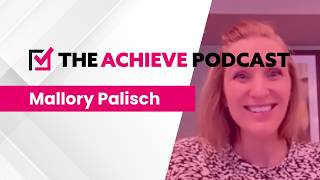
In this episode of the Achieve Podcast, host Stephen Bunker interviews Mallory Palisch, president and founder of Craft Education, a nonprofit public data utility that links educational training with workforce experience to create earn‑and‑learn pathways. Mallory recounts her personal origin story—growing up in an Irish‑Catholic family where her father’s lack of a degree limited his economic mobility after a flood destroyed his business—and explains how that experience sparked a career dedicated to bridging education and work. She outlines the four organizations she has founded, each focused on social entrepreneurship and earn‑and‑learn models, culminating in Craft Education’s role as a data‑layer that enables any employer or institution in the U.S. to combine training programs with on‑the‑job experience. The conversation moves to the current growth engine: employer appetite in the care economy (teaching, nursing, social work) where skilled labor shortages intersect with degree requirements. Mallory describes systemic barriers, especially higher‑ed elitism and misconceptions about credit‑for‑prior‑learning, and argues that the real ROI debate centers on the cost (denominator) of college rather than its earnings benefit (numerator). She shares concrete AI applications that automate the credit‑for‑prior‑learning crosswalk, dramatically reducing time and cost. Looking ahead, Mallory envisions scaling degree‑apprenticeship models beyond the care sector into finance and other industries, leveraging international apprenticeship frameworks. Throughout, she reflects on turning points, the importance of talent acquisition and development, and the need for long‑term, decade‑scale goal setting for mission‑driven enterprises. The episode closes with advice for entrepreneurs about realistic expectations, talent challenges, and perseverance.
Chapters
Welcome to the Achieve Podcast, the show where we highlight the leaders, creators, and entrepreneurs who are building meaningful businesses and shaping their industries. I'm your host, Stephen Bunker, and today we're excited to learn from Mallory, president with Craft Education. So Mallory, for those getting to know you, can you give us just a quick backstory of your business and organization?
Absolutely. I am a serial entrepreneur and this organization is the fourth one that I founded, all connected to one another. So, and, and I should say the second thing about, um, the organizations that I've started is they're all in the same space, which is social, social entrepreneurship in the form of earn and learn educational pathways. So I started as the founder of a nonprofit charter school in the San Francisco Bay Area that focused on helping high school students many of whom, and actually now the majority of whom, are coming into schools as newcomers, find meaning in education by also having meaningful opportunities to go out and work. So that was the first organization. The second one is a nonprofit public university called Reach University that focuses on one thing and one thing only, and that is teaching apprenticeships. I guess they're actually now about to start a new degree in clinical counseling, but also still start— Okay. Schools, uh, but the idea here is that someone can again be working, this time as a, you know, a dedicated aide, a high-dosage tutor, an after-school support worker in a school system, and they can turn that job into an apprenticeship that confers college credits, get paid the whole time, and earn their college degree. Um, alongside that, I started another entity that is based out in the United Kingdom that focuses on the pedagogy and curriculum for creating these sorts of earn and learn pathways. But all three of those systems together created, uh, an awareness for me of how hard it was to bring together education and work, even when everyone wanted to do that, because the underlying data systems were never meant to talk to each other, right? We have educational data systems, like your learning management system, your student information system, and then we have workforce systems, like your HR information system, like your applicant tracking system. but we never have those two things. They were, they were never built to talk to one another. And so the fourth and final entity that I lead now full-time is the Craft Education System. Uh, it started as a venture capital-backed entity, but then was acquired about two years ago and turned into a nonprofit public data utility that enables any institution, any employer, um, anywhere in America to combine their training programs with similar work experiences to facilitate earn and learn working.
Oh, okay. This is awesome. So I see a common thread though, right? The common thread across all of these is the learn and earn kind of overall theme. How did you get into that initially?
You know, I think it's my family's own background. So I grew up in a very traditional Irish Catholic family. Mom stayed home with the kids, dad worked. My dad did not have a college degree. He was very smart, but life circumstances just did not afford that possibility for him. And at first he was, he didn't need it. He was doing great on his own. He started his own outdoor power equipment store, um, and Doin' All Outdoor Power Equipment, or DOPE for short. And, um, and that was going really well for him. But then the Mississippi River floods of the early '90s destroyed our business, my family's business, destroyed our home. And so my dad found himself in a spot of having to provide for a wife and 3 young kids. At a time when he didn't have any assets, didn't have any resources, and his business was gone. And so he had to go take jobs working for people with far less experience than him, far less knowledge on the space than him, earning far less than he deserved. And, you know, what he would need to provide for a family because all of his experience had come through on-the-job work and learning. But because that didn't confer a college degree, it didn't get credit in the ways that it deserved. And I saw the impact that had on him and on my family. And it just didn't seem right or fair to me. And so that's, that's been my origin story.
Wow. Okay. And with your business currently, like, what would you say is the core driver of growth for you right now?
Is the employer appetite. You know, we focus specifically on the care economy. So teachers, nurses, social workers, people in that space where there is a massive shortage of skilled professionals in that space. And you have to have a college degree to have that job, right? And, and that was actually something that was really frustrating for me as a school principal was I would have people in my building every day who I knew were great with kids and I knew they were smart enough to have a college degree, but they didn't because they couldn't afford 4 years out of the workforce. They couldn't afford, they paying tuition. They couldn't afford to have childcare so that they could go to night classes. And, um, and I knew those people would be my best teachers, but I couldn't just make them into teachers without getting them that college degree. And so what we're seeing is this moment where professions that require a college degree are facing acute shortages, and they want people who have lived experiences similar to the students to the patients, to the communities that they're serving. And they know that these individuals are working in their buildings every day, just not in those skilled positions. And so the growth that we're seeing is coming from those employers saying, "Hey, I've got people already working in my building that I want to be my teacher, that I want to move from being my certified nursing assistant to being my actual registered nurse. I need your help getting them there." And that's where the growth is coming from.
Okay. So those partnerships, that's powerful.
That's right.
So looking back for you personally, and we kind of covered this a little bit, but what have been the turning points, both negative and positive, that have changed how you think or even just like your thought process about how to run an organization?
Yeah. You know, I, um, I believed that an education would take me to all of the places that my dad wasn't allowed to go. And so. I went and got all of the degrees, right? After my bachelor's degree, I went and got my PhD, and then after that I did my MBA. And I thought that that would teach me how to run a business, right? Because the story, um, that I grew up with was my dad wasn't allowed to do those things because he didn't have the education that was supposed to teach you how to manage a business. Um, and that was just silly. He, he absolutely knew how to do all of those things, and I went and got those degrees and quickly got into a world where I found out that my degrees didn't actually enable me to do a whole lot. It was the experience, it was the learning that happened on the job that really taught me how to do my job. And so, you know, I'd say one early turning point in my career before getting into actually running a business was running a classroom, right? So I got my bachelor's degree, got my PhD in education, became a teacher. And was, as a first-year teacher, terrible at my job. I was so bad at it. And there was a woman in my building who was a dedicated sort of float aide support between classrooms who was always coming in and running my classroom for me. And she did not have a college degree. She would— she'd gone to school in that same neighborhood. She was plenty smart to get a college degree. But again, that story of she was a single mom, she couldn't afford to go back to school. School, and watching the way in which I was suddenly living my dad's story, but with the shoe on the other foot. I had no idea what I was doing, even though I had all of the pieces of paper, I had all of the credentials. I had no idea what I was doing. And this other person was having to come in and teach me how to do it while getting paid a third the salary that I was getting paid. And so I think that was sort of that first jumping-off moment of, realizing that degrees aren't bad, but I think we definitely over-index on what they teach you how to do, and we definitely under-index on what real-world experience counts for. And that was my first experience in the working world. And, and every day since, going from being a teacher to being the operator of a school, the operator of a university, the operator of a data company, um, I have at every turn experienced that, uh, knowing how to run a business comes from running a business and, and usually from failing in that, um, not from sitting in classes.
Yes, that's very true. Um, as you try and grow and expand, like, what are the biggest bottlenecks or assumptions that keep getting in the way of just like— yeah, because I can imagine that you deal with some assumptions just in the marketplace around what you do.
Yes. Um, so I— it has been the same problem over and over again. Which is this unearned elitism, in my opinion, in the higher ed world, that learning from the job could not possibly be as rigorous or as good as the learning they provide. Right? And so it started when I was starting the Teacher Training University. Um, I was a school principal where I was paying the salaries of these people. I was watching them work in my building every day, and I would send them to a community college or a 4-year institution to get them that college degree. And what they were getting taught was not as good as what I was investing in teaching them every day. Because, you know, that university might be teaching them the theory of how you work with a high school student who is having a meltdown. That is very different than actually being in front of a high school student who is having a meltdown and knowing what to do with them. I think it was Mike Tyson who has the quote of, "Everyone has a plan until they get punched in the face," right? Like, everything makes sense in theory until it's right there happening in real time, and it's way messier and way harder. And it eventually reached a point where it was easier to start my own university that honored the experience that these paraprofessionals and classroom aides were bringing in from their schools than to try to convince universities that that experience was worth being honored. And that's been the battle ever since, right? It's convincing other, you know, now my job is not to advance one university. It's trying to convince colleges and universities across the country that they should offer these pathways because I think that this should be a real pathway that anyone anywhere in America should be able to choose, right? If you want to go to a traditional nursing school, great. But if that's not for you, It should be just as open and available that you go through a nursing apprenticeship. Same with social work, same with teaching, etc. And trying to convince these universities that the work that's happening in the real world is as valuable as what they're teaching in the classroom and potentially even more valuable is a very hard campaign that is a lot more about hearts and minds than it is about the actual facts and figures.
Do you think that there's kind of a cultural transition underway that's like I mean, not necessarily devaluing, but I, I kind of see it.
I'm—
it's been a while since I've been in school, but like a reassessment of the value of college. Would that be the right way of saying it?
I think there is a reassessment. And you know, anytime I talk to business folks, the thing that I always bring it back to is ROI. That's a concept that we all know very well. And ROI has a numerator and it has a denominator. I don't question the value of the numerator of college, right? Of like, does, does it actually increase your lifetime earnings? Does it actually provide you all of these opportunities? I'll say, even as we look at new reports about the number of people who graduate from college who are underemployed or unemployed in their first years, that, that's troubling. And the long-term value of that numerator has been pretty consistent and pretty stable. And I think that is worth saying and lauding about higher education. The challenge that has everybody questioning the value of higher education is the denominator, right? How much did it cost you to unlock that value? And people having to spend 4 years out of the workforce, right, which is opportunity cost, it is optionality. And then on top of that, you hear about students graduating with hundreds of thousands of dollars of debt with either no degree or a degree that does not have market value. Or a degree that even if it has market value, like teaching is an incredibly valuable role, it is not going to pay you enough to ever justify going $200,000 in debt to get it. And so I think that there is a cultural moment and I think it's merited and I think it's warranted. And the conversation that I'm trying to have with institutions is we need to focus on the denominator here. No, no one's questioning the numerator in the ROI. The problem is whether or not that is sufficient unto itself when you've got this runaway cost in your denominator.
Okay. So when it comes to just like that outreach, how do you reach out to these schools and communicate this message?
Yeah, it's usually through our employers, you know, because of the moment that we're having combined with a demographic shift where there are fewer and fewer young people. And of those young people, fewer and fewer are seriously considering college. A lot of higher ed is in trouble. They are, they are looking around and they are realizing that they are also a business and they are looking at untenable financials if they don't have a fix. And so what we've seen be the most successful is coming to them with employers, schools, hospitals, social work, state agencies who have vacancies and who are saying like, we will send 15, 20 people from our individual school 1,500 to 2,000 people from our multi-state hospital system through these programs, but we need them to actually make sense for us, right? We need them to be giving credit for work. We need them to have capped costs. We need them to be aligned with our workforce demands. And going to those institutions and saying, look, you need students. Do you need enrollment or not? And if you do, you can choose not to serve these folks. No one can tell you you have to. But then don't complain and lament the fact that you're going out of business because we're bringing you students. We're just telling you what needs to be true for this to work.
Yeah, that's really interesting. So kind of a side topic a little bit, with all the buzz around like AI and automation, have you found ways to use that productively?
Absolutely. So, um, I'll give a couple of very concrete examples, but then zooming out to the bigger picture. One of the things that I see has so much potential is this concept in higher ed called credit for prior learning, right? This idea of if you've learned something on the job, can you get credit for that? Or if you've learned something from another institution or from another experience in the military, whatever it might be. That used to be such a slow and laborious process because for that to happen, you had to give people some documentation on what that experience was. and then they had to go through and read through their entire course catalog of the degree you were applying for and manually decide, okay, what does that look most similar to in our degree program? How much credit should that be worth, etc.? Um, because that was such a slow manual process and required someone with a PhD to do it, it was also really expensive. Um, and as a result, a lot of times people just wouldn't even try, or they would get no credit for they deserved. AI has allowed us to dramatically speed that up and to do that crosswalking in an automated way that takes seconds as opposed to weeks and to do it at virtually no cost other than, you know, the cost of server farms, etc., which are real but not as expensive as someone with a PhD giving hours of their day. And so that is one concrete example we're seeing that, that's really accelerating the field. I will say in general, I do not buy the doomsday analysis around AI, including in workforce development, which is at its core what I'm doing. I think we're going to see the economy shift. I think people are going to have to be agile. But I, I think that this has the potential, if we harness it well, to be a boom for workforce development and not a bust.
That's awesome. So when you think about like the next stage of your business, what are you excited about?
Yeah. Here's what really excites me is we focus right now on the care economy, right? Things like teaching, nursing, social work, as I've mentioned, because you have to have a college degree to hold those positions. But when I think about other industries like financial services as one example, there are lots of large employers out there, large banks that have apprenticeships in other countries. They have apprenticeships in their UK sites, in their German sites, in their Austrian or Swiss sites, and then they don't have them here in the United States because our ecosystem, our workforce and higher education systems don't talk to one another. What excites me is this possibility of bringing what they call the degree academy, or the degree apprenticeship in the UK, or the Berufsakademie in like Germany and Switzerland, bringing that to scale in the US not just for the care economy, but for all of these other professions where the value proposition is clear and not just to the sector, but to some of these same employers who are doing this in other countries. Can we get them to create those pathways across sectors in America? Because again, I think the talent is out there. People like my dad, my dad didn't want to be a teacher or a nurse or a social worker. He wanted to be a business owner. He wanted to be in finance. And if there were ways that he could have accessed the, what felt like an apprenticeship, but what conferred the knowledge and skills of our degree economy and our white-collar economy, that would have changed his life. And that early signs of traction is what really excites me.
That is awesome. I think there's like this, it seems like there's an inflection point at which there's a sufficient amount of colleges and institutions to get involved. At which it becomes the norm. Do you think? And so it's really just a matter of like winning enough hearts and minds.
I think that's right. And I think, you know, there's a boogeyman out there for colleges and universities of accreditors, right? Oh, I want to do this, but my, my accreditor won't let me. And that's not true at all. Uh, we work with every single institutional accreditor out there. There's 6 big institutional accreditors, um, and then there's dozens and hundreds actually of these what are called programmatic accreditors who specialize in like accrediting nursing programs, accrediting teaching programs. I've yet to meet an accreditor who isn't excited about the ideas of apprenticeships in their degree space, actually bringing more rigor to the field, right? There's a reason why people don't want to hire— as a principal, I didn't want to hire a first-year teacher, right? The hospitals don't want first-year nurses because they know that gap between the the theory of how something works versus actually going out and having the experience and doing it. And accreditors understand that we can make these programs— we're not diluting rigor, we can actually elevate rigor by having people do serious clinical experience from day one of their degree through these apprenticeship pathways. And I think the more we get those accreditors to accept and embrace these pathways as they already are, and then have individual institutions show what success looks like, I think that will create the conditions of life for other institutions that were previously fearful of this or at best indifferent to it, to take a second look and, and really consider embracing these pathways.
Awesome. What about just like your journey? When you look at like the wins and the mistakes that you've made, like what lessons have stood out to you?
Oh my Lord. I mean, I've made so many mistakes, it's hard to count. And, you know, again, any, any time I talk to any entrepreneur, entrepreneur, for it, it feels like the Babe Ruth analogy or the Michael Jordan analogy in sports where like they'll talk about for every one home run they had, they had like more strikeouts than just about anybody, but they were willing, you know, and for every one, you know, shot they sunk, they had multiple like free throw, like easy layup misses. I have had so many mistakes that along this way, I'll say it's ironic to me or maybe it's just like poetic that my biggest mistakes have been around talent, right? The— you make mistakes around your finance and your budget, you make like, you fix them, right? Those— it's usually a— it might be a big painful to-do, but it's an item that you can check off a to-do list in the course of days or weeks of fixing that. Hiring the wrong people, not investing in training people well, not investing in promoting people well, and not being brave enough to let go of people who weren't the right sooner have been the mistakes that led us down a wrong path that really took time to turn around. And it was, it was not a simple fix. It was undoing layers and layers over the course of months and years to, to amend that are the mistakes that have stuck the most with me is, is around talent.
Oh yeah. I'd say every business owner I've ever worked with and met with, that's been a common denominator, especially the more the more successful they become. I think the more talent becomes the core bottleneck.
Well, and that has been the other hard learning for me that, you know, I was, I was really fortunate. Will the podcast have video? Because I'm about to make gestures with my hand.
Oh, you're good. Yes, it will. Okay.
So someone was telling me that, like, you know, and this was someone who's one of the earliest employees at Apple and went along to become, you know, a senior leader under Steve Jobs, fabulously wealthy. And one of his first lessons that he taught me is he's like, you know, when you first start an organization and it's down here and the people that you can attract have talent that is up to that task. And then as you grow, your org grows like this, but their talent curve might only grow like this. Not everyone, but for some people. Or they're— maybe they have the talent, but they're in a phase of life. And I don't say this disparagingly. I'm a mom with two young kids. They might not be willing to work 90 hours a week, they might not be willing to go travel all over the country. And so more to the point, your company goes like this and what they can provide you is here. How do you deal with the fact that even if you get talent right today, 10 years from now, that talent might be the wrong talent for you, but it's talent that has been loyal to you, that has been honest, that has done right by you. Like, these are, these are hard questions. That don't have good answers of, you know, you never solve the talent problem. You just evolve what version of it you're dealing with when, when your company evolves over time.
Oh yeah, I think especially depending on the stage you're at, because especially when you're early, I think you have to find ways to arbitrage the talent because it's like you might not be able to go out there and hire somebody who's in their 30s or 40s who has a high degree of talent or expertise. Because the market has already priced that in. And yet, if you want to recruit somebody who's brand new, the market might not have data to say this person's talented or not. And I think that having systems that enable you to hire people and train people who might not already be, quote unquote, indexed by the market is a way to arbitrage and find opportunities that are completely invisible to other companies.
That is absolutely right. And again, when you're holding a hammer, everything looks like a nail. But I believe in, you know, the power of apprenticeships, especially when they confer the credentials of value that like maybe it's a college degree, maybe it's certification of some kind, but something that that person can take with them that signals, I know how to do something right. Like in the age where college is so expensive, employers who are able to provide apprenticeship degrees on the job can go attract really hungry young people who have the ambition, who have the talent, being able to offer apprenticeship MBAs, right? Like apprenticeship degrees in the postgraduate space can attract that really hungry late 20-something who wants to go do this work, but maybe has a young family, maybe, you know, doesn't want to go into debt, maybe just likes working and doesn't want to go spend another 2 years out of the workforce. I think the ability to like that, like, you know, seeking alpha, finding those arbitrage opportunities. I think there's something structural there by offering people access to the experiences and then the credentials that they can take with them that signal and internalize those experiences wherever life takes them.
This has been a really fun conversation, Mallory. Do you have any final thoughts or advice that you'd give other leaders who are on a similar journey as yourself?
Yeah, I would say it— there's this quotation of people tend to overestimate what they can do in 1 year and underestimate what they can do in 10. And so I, and I have found that to be very true. I will find myself perpetually frustrated by the places that I thought I was going to be a year ago, but then when I look back 10 years ago, I'm so much further ahead on any sort startup for, um, that startup gaining market traction, that startup having a successful exit, whatever it is, than I would have ever imagined a decade ago. And so I think my advice would be setting your horizons with that 10 years in mind, right? Like making big ambitious goals for yourself and then tracking those 1-year metrics, but really not beating yourself up over them and really indexing on what's happening on the course of, you know, the, the decade time horizon.
That's very valuable advice, Mallory. And I want to just say thank you so much for sharing your insights with us today. This has been a very enjoyable conversation.
Absolutely. Uh, Stephen, thank you, and, uh, thank you to all the entrepreneurs listening in and business leaders listening in. It is, I, I would say, like, putting a final word to it, my dad eventually went back into entrepreneurship and, um, ran his own cabinet company with my mom and my— he passed away about 10 years ago and my mom still leads and runs that cabinet company as someone who was a stay-at-home mom, who was not someone who had, you know, degrees and training in construction management or anything else. And she has in the last 10 years led that company to its most profitable, its most successful years. And so, and along the way has employed hundreds of people. So I am this big believer that business is really the backbone of how you make everyone's life better and that anyone can do it, but everyone won't do it. It is really hard. It takes a lot of days of uncertainty, of crying in your car, not being sure what you're going to do to make it work. So to all the entrepreneurs out there who are, who are doing some version of that, My hat is off to you because it is what makes our country great. It is what gives people opportunities, but it is not easy.
Thank you so much for that. That was amazing. And to learn more about Craft Education, visit crafteducationdeck.com. And that wraps up today's episode of the Achieve Podcast. A big thank you to our sponsors, Achieve Fractional, which provides fractional leadership services for growing businesses, as well as Achieve Bootcamps, where entrepreneurs can learn hands-on how to build their own AI-powered marketing systems and automations. If you enjoyed today's conversation, follow the show and share it with another entrepreneur who'd find value in it. Again, thank you for listening, and we'll see you on the next episode of the Achieve Podcast.









