The Achieve Podcast - Mark Sutter (Impact Sales Advisor)
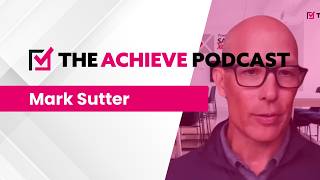
Mark Sutter, a fractional sales leader with 25 years in B2B sales, helps mid-size businesses boost revenue 25-35% through short-term engagements. He emphasizes starting with buyer outcomes rather than features, warns that AI tools fail without solid strategy first, and says lead generation remains the hardest problem with no quick fix.
Chapters
Welcome to another episode of the Achieve Podcast, the show where we highlight leaders, creators, and entrepreneurs who are building meaningful businesses, shaping their industries, and having an impact. I'm Taylor Baker Baker, your host, and today we're excited to learn from Mark Sutter, founder of Impact Sales Advisor. Now, Mark, give us a backstory. How did you get into this space? How long you've been here? And who is your current target audience?
Well, first of all, thank you, Taylor, for having me on today's podcast. It's, uh, I'm grateful to be here. I spent about 25 years of corporate enterprise B2B sales leadership, sales management, uh, global client director type of roles. And for the last 5 years, I've done similar work, really just working on a fractional basis, helping CEOs and leaders who need to improve sales performance. And my focus is really on mid-sized companies and small businesses that truly do need to improve sales performance. Perhaps they're stuck, perhaps they need to scale, perhaps they've hired a new leader, perhaps they're that founder that's trying to get out of sales. And so those are the situations that I'm typically involved with, is one of those scenarios. Um, but the common denominator is that they want to fix sales performance and they're a little bit stuck because they've tried a few things and they need to move the ball forward, or there are some consequences. So I come in and fix that, fix sick patient, if you will.
That makes sense. That makes a lot of sense. And there's been a big move towards that fractional model, as we've seen with a fractional approach, you, you're a lot more of a blitz mode where you show up and you deliver because it's not a cushy position. My job's secure. It's like I've got to deliver results month after month.
Yeah. And in many cases we take over sales, but in other cases we're working just alongside the owner or the head of sales. Where they need some outside perspective and expertise to get them over to the next hump. If you think about a lot of companies that grow from 5 to 10 or 10 to 20 and so forth, what they did before oftentimes doesn't get them to the next level, and they may just be stuck in their own status quo or limited by the expertise that is in-house. And so one of the benefits of several of a fractional model is to bring it inside that, uh, bring it inside that outside expertise on a temporary basis to work for and with your team for a period of months to, um, help bring some of that insight that is necessary to grow sales into your organization.
It's so true. And again, that blitz model, that expertise coming in, you'll see often a lot of studies show 25-35% bump almost immediately. Yeah, that production. So that's phenomenal. Now, for you, what's been driving growth for your organization?
Really, I— most of my growth comes from referrals. So I work with a lot of other fractional CFOs and CMOs and business coaches and so forth. And I'm really targeting, you know, West Coast and other companies in the Southwest specifically. But as I network and help companies, it's sort of grown that way. Other people like me oftentimes grow their business through some online work and things like that, or even some outbound traditional sales, as we would call it, of course. But I've gotten all my business for the last 5 years through referrals. And I like it. It's pretty intimate. It's a good cohesive model. And I certainly try to help my partners as well.
Oh, that's awesome. And to build off of referrals, that says a lot about the business model you're bringing. Like, you're bringing value people want to pass along.
So yeah, certainly it's always about helping other people. And oftentimes people may not need what I do at this moment, they need something else. So I try to keep a good cachet of other experts in my network that I could try to find the right fit for them, be it a CMO like yourself or a COO or something like that. So I try to be very mindful of what they need when they need it, and then always try to bring those people to, to the front.
I love that. I love that. Now, as you try to grow and expand, what are the biggest bottlenecks or obstacles that keep showing up and getting in the way?
Yeah, for a lot of companies, when they try to grow and expand, it really comes down to a sales strategy, right? Are they trying to grow the way they've grown in the past? Are they trying to expand? Is that expansion new customers, a different segment potentially? Is it a different product or service? And those strategy questions are really key. And then within that, they may need to update and revalidate what the value proposition could be in that conversation. And so in that strategy bucket, there's probably several different things about the targeting, the messaging, you know, with the value prop, the very specific targeting of people and personas within that. And then it's all about execution and having the right people on board to do that. And it can be a lot. There's several layers there, and sometimes you're not sure where to start or what's broken. And so, but I usually start with strategy. And even really from a 0.0 perspective, we might even start at the beginning of assessing your current success and/or failures, right? What is the attribution of how you got to where you are today? And then what is a realistic goal, right? Is it really realistic to get 10 new customers Or is it more realistic to expand wallet share of 10 more customers, for example? And those are the conversations and trade-offs I think a lot of founders and CEOs need to think about in terms of being mindful of what's the best path to growth in today's market, which could have different headwinds and tailwinds and so forth. And I think that evolving sales strategy of every year to 3 years, looking over things in some detail, is, is super helpful.
So true, so true. Now, when it comes to messaging and outreach marketing systems, what do you feel has been working well, and where do you see the biggest gaps and frustrations?
I think the most helpful thing that people miss oftentimes is really starting with the buyer in mind. Oftentimes we're very focused on what we offer and what we sell and what we like to talk about in terms of features and things like that. But at the end of the day, it's really about targeting the right customer and what's important to them. So what are the outcomes that they're looking for? And in a crowded marketplace, you have to stand out by really meeting the customer where they're at. So are they, are they doing research? And what information do you provide when they're researching? Are they looking at different providers? And, you know, what information do you provide them there? Or are they really getting down to the nitty-gritty of the requirements that they have, the very specific, um, you know, attributes of what the solution that they're looking for, and how do you, how do you message that and so forth? So I think understanding the needs of your customer the business outcomes specifically that they're looking for and maybe the milestones and timelines that they're working under is super helpful. It's really helping them buy, right? Versus almost trying to sell them too much, if that makes sense.
That makes sense. That does make sense. And I love that approach where when you think about the end user, the buyer, and like, what are they looking for? Not what are you passionate about, right?
You know, every company like your company, my company, they're trying to operate on a 1 to 3 year plan. And they have different strategies, right? So how can you help them achieve that? And there's different people in the organization that have goals and objectives in that year to achieve that. So what are you doing to enable them to achieve those 1 to 3 goals per year? Many cases it's maybe a growth metric, right? Or some value metric. In other cases, it's something regarding taking some risk off the table. So understanding again the company, the marketplace that they're in, and the job duties of that particular persona that you're selling to, and how do you help them achieve that?
I love that, and I love that, that, that, that key statement you said— what risk are you taking off the table? So often it's not adding more, it's like, what can you remove, right?
Right. Yeah, there's a lot of different ways to grow revenue and profit, and, and a lot of it's about getting the right alignment of goals for the, for the short term and the long term. And I do think you can refresh your strategies, right, every quarter, every couple quarters, within a certain range, of course, but being mindful of what the options are is helpful. And then, yeah, it's choosing the right game plan for the next 6 months to a year or so.
So true. Now, there's a lot of buzz and talk around AI and automation. Where have you found ways to utilize it? Where do you still see opportunity on the table?
Yeah, I think there's a lot of upside in the future. In the near term, I think there's been a lot of, I guess, success around just some of the automation around note-taking, leveraging notes into the CRM and things like that. From a research perspective, it's super helpful to understand the marketplace, the competitors, even things like DISC profiles and other personality profiles of the people that you're targeting. I think it's a great tool for executing on those things to help some of the admin tasks, uh, be taken off of the, uh, the plate of the salesperson. And then you can combine that with marketing, of course. But at the end of the day, if you don't have those other more foundational elements that we talked about in the first place around having the right strategy and the right process and place, some of the AI execution tools can be a distraction or could be lost in the shuffle. And so I find that many customers that I work with, any companies I talk to, still need sort of that foundational blueprint operating system first before they start adding too many tools, because they might get distracted by, you know, the shiny penny that, um, maybe in some cases eliminates some productivity versus adding to it.
So true. And then you see them task switching, like, well, I had this app for this, this app for this. And it's like, hold on, you have, you have tech bloat. Let's cut out some of it.
That's right. Less is more in some cases. But I do think, yeah, once you nail down the other foundational things, you could really look at, hey, what would be the 1 or 2 things that would really drive productivity, um, or success in a different way? And so you could start looking at some very specific tools potentially to do that.
I love that. Now, when you think about the next stages of the business for you, what are you most excited about, and what do you feel like you need to build or fix to get, get you to the next peak?
Well, for me, it's all about quality versus quantity. So I'm always looking to work with just a handful of clients that are pretty mindful about, uh, treating their employees well and having sustainable growth. And so for me, at my size, since I'm not building a mega business or a large agency, I, I get the ability to work with people that do want to make change for their employees and other communities and so forth. And so I like striving to have a good variety of clients that I work with each year. Maybe it's a tech company next to a construction company, the next project, and so forth. And so, uh, it's really serving people through referral and through my community that come to me. And the common denominator is really they need sales performance. It's less about the number of clients that I serve or spe— a specific type. It's more about sort of the quality of the people and the ability to help them, that they do really need help, um, whether it's working with me directly or again, maybe it's just an introduction I can make for somebody else that, uh, can help them in a different way.
I love that. Now, when you look back at your own journey, the wins, the mistakes, what lessons stand out to you and what do you wish you understood sooner?
Boy, the main lesson probably is to stay very curious and always be learning. I think learning through research, through conversations, through experience is really critical. I think what has benefited me is being a student of business first, being a student of people. So leadership, management, that business systems approach, really. So I read a lot, I talked to a lot of people, and then of course I did it. And having a framework or two or three in your back pocket, super helpful. Um, business like sales is a lot like nutrition or fitness, right? There's just your, your current state of health or fitness, right? But that is only meaningful when you apply it to some sort of metric or framework in the marketplace. And so understanding that healthy tension of where am I versus where I'm going is really helpful. And so I've really spent a lifetime of learning all about that. So I'm trying to continue to figure that out. I'm really excited about learning more and more about that. I think the next generation is things like AI to help speed up the process, right? And make it hyper-personalized, right? And be able to anticipate where the hockey puck is going even faster. So faster value, better value, you know, more efficiency for people, but hopefully more meaning and purpose as well, right? I would love to work with clients in the future, we give everybody more time back so they could spend time with their families and their communities, right? And go home at 3 o'clock instead of 5 or 6 o'clock on a workday. But you got all the work done, right? You serve all your clients, they're happy. So that'd be kind of a cool world if we could do that, I suppose.
I love that. I love that. And I love that the concept, stay curious and always be learning, reminds me of John Maxwell quote where he talks about too many people view education as a period in life. And not a way of life.
That's right. I like that quote. It's a good one. Yeah. Yeah.
I love that. So great philosophy to live by. Now, Mark, if you had to pick one constraint to solve, to focus in and solve for the next 90 days, what would it be?
One constraint? Well, I think a constraint that I see a lot of people struggling with that is really hard to solve for, honestly, is the lead generation part of it. And there's no magic bullet. This is where marketing comes in. This is where AI can come in. This is where outbound selling can come in. But consumers and, and businesses are so overwhelmed by all the messaging out there that buyers are overwhelmed. And we're always experimenting. There's this new technique to outreach this, and I get my inbox flooded like yours is about, I can book all these appointments for you. I could do this or that. And the number of buyers hasn't really increased that much, but the outbound and the noise to them is really been very noisy. And so solving for that continuously is a very difficult thing. So fine-tuning messaging, fine-tuning, you know, the research, fine-tuning what people really want and need is really an ongoing thing. And I think that's something that as a sales VP on the fractional basis, and I think a lot of marketers and a lot of companies, I get asked that a lot is how do we solve for lead generation? And it's a tough one. You just have to keep working it, and you do need the right people on the bus. You need the right technology at times, and you need the right strategy. So I wish there was a silver bullet that we could solve for everybody across multiple industries at the same time, but you just can't. You really just have to put your nose to the grindstone and work together as a team and be very focused on it. And then it just moves a little bit, and what worked last quarter or last year doesn't work again. So you might need to retarget, right, and reevaluate where you would do some of the growth searching for your business. And so I think that is— I'd love to solve for that on a, on an easier basis, but I just think that's a timeless challenge that we'll always have in business development and sales is, you know, the buyers shift, they moved, um, you know, their needs and wants change and you have to move with them. So we need to adapt.
I love that. I love that. Now, for those who want to learn more, Mark, they can reach out to you on LinkedIn. Is the best place to find you?
That's the best place, probably. Yep, there's LinkedIn.
Okay, so Mark Sutter, and so we'll put that in the show notes so they can find you there. Again, thank you for coming on and sharing your wisdom and insight with the different companies you've worked with and the organizational tools that are available. And so if you have questions, reach out to Mark and the team, uh, on LinkedIn. And thank you again to our sponsors of today's episode: Achieve Fractional, which provides fractional executive leadership for growing businesses, And if you enjoyed today's episode, share it with a friend, with a leader, with somebody who has questions about their, their sales and they need some coaching, reach out to Mark and the team and he'll get you taken care of. And we'll see you in the next episode of the Achieve Podcast.









