The Achieve Podcast - Matthew Watson (LegalFee Consultants)
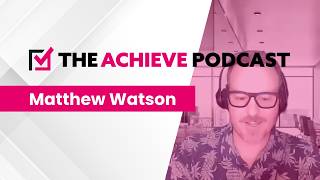
Matt Watson started Legal Fee Consultants after losing his job, growing it to 20 people serving eight clients in 18 months. He's using AI to catch billing errors while keeping humans in charge, and learned the hard way to model profitability before taking contracts. Word-of-mouth drives sales; cold outreach barely works.
Chapters
Welcome to the Achieve Podcast, the show where we highlight the leaders, creators, and entrepreneurs who are building meaningful businesses and shaping their industries. My name is Jesse Warner, and we're excited to have Matt Watson, President of Legal Fee Consultants, with us today. Matt, welcome to the show.
Hi, Jesse. Thank you for having me here. I'm, I'm very excited.
So our audience can get to know you a little bit better, give us a quick backstory of your business. What do you do and, and how did it all get started?
Absolutely. So the name of the company is Legal Fee Consultants, and we are billing experts, uh, for primarily law firms but also service providers. And how I got into that business, a couple years ago I found myself unemployed at a moment's notice. And while I was searching for employment, I had a couple of acquaintances in the industry say, you know what, you know what you're doing. You know exactly the beginning and the end. You've been sort of running the show at your last company. I was number 2, just under the owner. You should go ahead and just take the leap. And, uh, boy, I never once thought I would ever be a business owner. Um, I, I've usually been a follower. I, I'm prior military myself. I'm really good at taking orders. I'm really good at doing the work, but to actually lead, um, and, and be, you know, the primary marketing person, the HR person, to, to have those client relationships and, and to build those strategic partnerships, I, uh, it terrified me, but I, I, I, uh, based on the advice of 2 or 3 very close people, um, that I just trust and, and respect, I took their advice. And here we are 18 months later. Uh, we have about 20 employees now, 8 clients, and business is, is booming. So it's, it's been a, an incredible journey. And, um, sometimes I still have to pinch myself to to make sure that this is, this is real.
Well, first of all, congratulations on the growth over 18 months, right? That's a, that's a pretty significant growth from— to go from 1 employee to 20 employees and, and to be managing 8 clients like that. Talk to me a little bit about how the business has changed from when you started versus what it looks like today.
Sure, you know, um, 18 months isn't too much time, but I mean, at the same time, given our industry, it's billing and accounting. New software comes up. You know, the clients of our clients are always changing their requirements, their deadlines. And because of that, we always need to be flexible. We need to be compliant with all of their regulations. We're in an industry that is closely monitored by federal regulations. It's usually mortgage servicing. And, you know, we have to make sure that things are dialed in and things are billed properly. So it's only getting harder, you know, when it comes to billing compliance, especially with, you know, government regulations that come out. It does not get any easier. And so I would say Because of that, we've had to hire more staff. We're starting to explore AI to make our, our billing operations just more efficient.
Let's talk about AI for a minute. Obviously, there's a lot of buzz around AI right now, automation, using it in different ways. Tell us how you're using AI today in your business.
Well, right now we're still in the exploring stages, but I We are pursuing, I guess it's two angles. One is what we would call like a robotic process automation where AI is essentially doing the invoice submission process. And even then, it's, it's not a human job replacement. If anything, it should be considered, you know, to enhance our our quality, but never a replacement. And I think other companies have tried to get away with replacing, you know, full-time resources with AI, and they have failed miserably. There should always be those quality control checks, quality assurance, just making sure that things are getting submitted properly. Otherwise, you know, you could potentially make a fatal error that could cost your client, you know, to end up in hot water with their client. So I will always back up and say that, hey, this is— AI should only be explored as an enhancement to the job functions that we are doing on a daily basis. So in turn, we are exploring robotic process automation to take the human submission process out of it. There's a— it's a very manual process for billing and accounting. And so we're trying to explore the human aspect to be more of an oversight role. And then of course, there is more of like a compliance standpoint where, you know, you're submitting invoices. They have to be compliant with client guidelines. And it's best to, instead of having humans review an invoice manually and making sure that it's compliant with the client guidelines, that AI can actually identify that very quickly if there's any fatal errors or issues. And once it gets validated, you would be able to submit it without any issues.
Let's talk about sales and marketing and your go-to-market strategy a little bit.
What—
when you look at sales, marketing, outreach, where are you seeing the most traction? What's working for you and what's not?
I think what's working for our company is word of mouth. And I've been very blessed to have some, some good strategic partnerships with people that are, that have good sales backgrounds in my industry. And they, they go out, they do the marketing, they are familiar with those companies that might need billing and accounting services. And, you know, it's, it's gotten us a lot of a lot of business in the door. Another thing that we've been exploring is attending industry events and conferences. I will always say, if you're able to go to like a seminar or a conference that's in your area, or, you know, us being in Carlsbad, California, I think the hotbed of our industry is actually in Dallas. So I try to go there once a quarter and try to have that face-to-face with, with leads that are attending these industry events. So that's been very helpful. Rarely have we had much success with cold outreach. LinkedIn is a very big platform in our industry, and we have yet to be successful with any real outreach. And I think it's just because you know, you're talking about companies' essentially lifeline. I mean, every company runs on revenue, and that starts with their billing, billing and accounting services. And so it's a very touchy subject. And, you know, I think a lot of potential leads are reluctant to actually explore, you know, who's this person randomly reaching out to me. I, I don't, I don't know you, and, um, I don't know anything about your company. So a lot of it is through what I would call warm connections, that, you know, they know somebody who can, who knows me, and that has proven to be successful.
As you try to scale, what are some of the constraints that keep showing up? Time, people, systems, capital, leadership, things like that. What, what are the constraints? What do you, what do you keep bumping into?
Some of the issues that we continue to bump into is going to be a lack of experience. And I say that because, um, it's a very niche market and, um, you know, we almost always have to start with, uh, essentially an entry-level employee and have to train them from the ground up. And I think that's probably going to be our, our largest hurdle to get around. Another thing is, you know, we look for top candidates and some of those candidates that have, that do have the experience, they are, you know, they're expensive. And I will always say we're still very new. We're, we've only been here for 18 months and I want to continue to scale. And I think In order to do that, you need to make sure that your service, the quality of it is top-notch, and that isn't cheap as a company. My overhead is very expensive and there's not a lot of net profit in it yet, but that's only because I'm reinvesting everything into the company to make sure that we do have a successful, you know, 5 years from now, 10 years from now. So I'm really investing in the longevity and I, at the same time, I'm probably looking at that as a hurdle as well. There's not much opportunity to, you know, to do other things with that revenue just because there's not much.
As you look towards your next stage of growth, what are you most excited about?
You know, I am most excited about getting into more community involvement. And so we've been very fortunate to, to be sponsors in some of some community events. Being Southern California based, I love doing beach cleanups. And so I want to get more involved as a company. I want to be a company that gives back. So as we continue to scale, I really want to take a more aggressive approach on, on volunteering, even being sponsors to big events. So Most notably, we attended a military charity event last year, and it was such a big deal to be able to donate $25,000 to a charity that, that just supports wounded military service members. So that's— I will always continue to have my eyes set on community involvement and donations.
And it sounds like the culture you're trying to build, right, is, you know, make sure you hire people that also have those same kind of values, right?
Absolutely. I mean, that's so important.
When you look at your journey, some of the wins and the mistakes, what are some of the lessons that stand out to you?
Boy, that's a great question, uh, because I've made a lot of them. And, uh, I feel like for any business owners, new business owners, entrepreneurs that haven't yet taken the leap. It's, it's so critical, and you could save a lot of money by learning from others' mistakes. And I think when I was very new to this, I mean, I would take and accept any kind of work that would come, and sometimes it barely paid, but I was in it just to prove myself and develop a positive reputation. And I think most notably there was one contract that the profit margins were very, very thin, and I probably bit off more than I could chew. And at one point I was living off of savings and almost— I was taking a loss at the time for about 6 months. Thankfully, we're now in a position to, to see a profit in that. But I mean, for a while it hurt. And I always looked back on that negotiation stage with that client, and they're very happy now. I mean, it's a very solid, healthy contract, but that was probably the biggest learning lesson that I had experienced, which was do the math, you know, make sure that you have everything dialed in, that you know, you see a profit yourself, the company is able to put some money in the savings account, and you're able to pay your employees, which that was never a question to me, but it was more of a question of, am I going to be able to pay myself during this, or am I going to have to float payroll, um, you know, to— for my own personal savings, which I, I did have to do for a while.
Last question for you: what advice would you give to other leaders or entrepreneurs who are on a similar journey to you?
The advice that I would give to them is, uh, go slow and, um, really pace yourself. I think you start and, uh, you throw yourself out there, you market yourself to to everyone, which is great. And you're, you're going to fail, you're going to stutter on sales calls, and you're going to get a lot of nos before you get that yes. But once you do start getting that yes, you get to start getting that business. Um, I think it's, it's wise to pace yourself. And I've been very fortunate to continue to grow, and, and things are, are slowing down a little bit just because we've had a tremendous growth spurt. But at the same time, I mean, it's, it's best to also not go on this journey alone. I, you know, although I'm the president and I'm the owner, I don't really have a— I don't have a co-founder. I do have some really good mentors that I'm aligned with that I can bounce these ideas off of. And don't find everyone that agrees with you. Try to find someone who can challenge you, can can tell you, um, that's not a good idea. Those are the ones that you want to listen to because they'll give you a great other perspective on some of the, some of the ideas that you might have.
Well, Matt, I really appreciate you joining us today and sharing your story and your insights. For those listening, if you want to learn more about what Matt is doing, you can visit legalfee-consultants.com. And again, his company is Legal Fee Consultants. LLC. Uh, Matt, pleasure having you on the show. Big, big thank you to our sponsor Achieve Fractional, which provides fractional executives for growing businesses. And if you enjoyed today's show, join the conversation, follow the show, share with other entrepreneurs who'd also find value in it. And again, thanks for listening. That will wrap up today's episode of the Achieve Podcast.









