The Achieve Podcast - Melissa Rosenthal (Outlever)
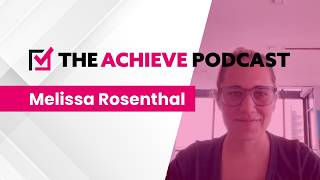
In this episode of the Achieve Podcast, host Jesse Warner interviews Melissa Rosenthal, co‑founder of Outlever. Melissa recounts her career path from early roles at BuzzFeed and Cheddar to leading brand marketing at ClickUp, and how those experiences inspired the creation of Outlever – a company that transforms B2B enterprises into AI‑native media engines. She explains the company’s mission: to enable firms to own their narrative by producing journalistic‑style content at scale using proprietary AI tools. The conversation covers Outlever’s rapid evolution over the past 18 months, growing from a handful of early adopters to about 50 enterprise customers with a team of 25 employees plus contractors. Melissa details the three‑pronged growth engine that has driven this traction: founder‑led LinkedIn thought leadership, an inbound interview‑driven pipeline that creates journalistic pieces for clients, and a strong referral network. She describes the AI‑native workflow, including a real‑time interview assistant named “Oliver” that suggests questions, gauges sentiment, and drafts first‑pass articles, as well as custom tools that replace traditional meeting recordings. Scaling challenges are highlighted, especially the current limits of AI in making nuanced human judgments and the difficulty of hiring the right talent for a tech‑enabled service model. Melissa shares lessons learned—rapid market entry, the importance of hiring deliberately, and the distinction between founder‑market fit and true product‑market fit—and offers advice to other founders to rethink marketing channels, avoid AI‑saturation pitfalls, and get early customer feedback, even for free. The episode ends with a call to action to learn more at outlever.com.
Chapters
Welcome to the Achieve Podcast, the show where we highlight the leaders, creators, and entrepreneurs who are building meaningful businesses and shaping their industries. My name is Jesse Warner. I'll be your host today. Today we're excited to have Melissa Rosenthal, who's the co-founder of Outlever, as our guest today. Melissa, welcome to the show.
Yeah, thank you so much for having me. Excited to be here.
So our audience can get to know you a little bit better. Give us the quick backstory on your business. What do you do? How did it all get started?
Yeah, we effectively turn companies into media engines and media ecosystems. And the quick backstory is that my career has spanned both media and SaaS technology companies. So my early, my early career was at BuzzFeed. I was one of the first 10 employees. And then I went over to start my own company with a co-founder called Cheddar. And Cheddar was a live streaming media news network. And then I transitioned over to SaaS and ran marketing at ClickUp for 4 years. And the experience that I had both in media and SaaS was very interesting and really informed what I'm doing now. And in media, it was a fascinating time because media companies were doing quite well. We were doing well as a company at Cheddar, but, and a lot of companies, B2B specifically, were spending a ton of money with us, advertising money. And I always was thinking, you know, if they took a fraction of the money they're spending with us and they invested this in their own ecosystem, their own authority engine, their own credibility, then the idea of a flighted media spend when the money is, you know, not being spent on ads, you know, that doesn't compound anymore. That just kind of dies on the vine. Is there a better way for them to invest some of this into something that compounds for them and grows exponentially over time. Not the right time to think about that and have that conversation because media was doing quite well. Revenue is flowing in, eyeballs were there, so it wasn't the perfect time for that. But then fast forward, I transitioned over to B2B SaaS, brand marketing at ClickUp. And what I found troubling or challenging rather, is that it was really hard to have scaled conversations with the right high-level executives that were your ICPs across many different industries at scale. It was just really hard to do that. Um, it, it's not a matter of budget or even having like a solid marketing team. It's really just the fact that it's a hard thing to do. So the, the, the challenges I was seeing during the media industry and kind of what I thought the opportunity was and what I struggled with at ClickUp kind of really converged in the past 2 years with AI and the abilities to technically back a foundation that allows you to scale content in a really journalistic way. And also media companies can't really exist anymore because the advertising dollars that used to flow into them are no longer there. So we have this kind of perfect storm where companies really want to own these narratives. There's a great opportunity for them to now almost become the trade publications of their industry. And now there's a lot of technology that allows us to create that. So we, again, we turn our, our customers into, into media companies, media engines, and we're enabled to do that by tech-enabled services in which we provide. So it's kind of this perfect storm, perfect timing, uh, you know, perfect marriage of the things that I experienced during my media days and then also during SaaS.
Well, it sounds like you've had quite the journey. Some of those names very familiar to us, right? So Cheddar and ClickUp, these are pretty big companies. They're doing some great things and your experience there is great. Talk to us a little bit about how your business has changed when you started it. What year did you start your company?
We started it a year and a half ago. So yeah, been, been around a year and a half, really building since then.
Okay, talk to us a little bit about your journey over the last year and a half. What, what did it look like when you started and what does it look like today?
When we started, you know, you don't have product market fit, you have an idea and you have an idea of what you can do and you do a lot of those things very manually until the tech actually catches up for you to be able to scale. So, you know, we, we sat around kind of discussing like on product side, should we wait until this is more Is this perfected? Should we kind of build this out further, or should we just go into market and see what happens? And, you know, those early days are really messy. You're trying to figure out what sticks. You're trying to figure out what works from a sales perspective. You're trying to figure out how to scale the tech and what to scale the tech and like what, what that kind of like perfect convergence is. And the reality is that you only find that when you're working with customers. So, you know, the early decision to kind of go out very quickly and at least you know, dip our toe in the water and get a couple of early adopters and then work through where we should take the product through them. You know, that kind of changed everything for us. I think that we, we probably, we probably wouldn't have done what we did in the way that we did it if we didn't have like customers almost shaping, shaping the products moving forward. So yeah, I would say like we've directionally shifted a lot because of the the information and because of the feedback that we got in the early stages of the company. So we look a lot different now. Then we had, you know, maybe 2 or 3 customers that we were working towards. The product was a little bit all over the place. We had the ideas of where we wanted to take it. Some of those things realized and some of them we killed because we realized they were not as valuable. And now we're 50 customers in, mostly enterprises. We're scaling really fast. We have a team of 25 people plus a big network of contractors we work with. So, yeah, I mean, from early days to where we are, it's a completely different world. It's a different company. We're very still early, you know, we're, we're, I think, 5% of the way of what we want to actually build and realize. But, you know, having now 50 customers, it, it certainly, we've hit scale on, on certain aspects of our product and we understand, I think, where, where our North Star is and where we're headed.
Well, congratulations. That's phenomenal growth in a year and a half and Thank you. To take an idea to market, and I'm sure as an entrepreneur, that's very rewarding to feel like, hey, I've got real customers that are solving real problems for them and bringing success. When you look at sales, marketing, and outreach, where are you seeing the most traction? What's working for you?
Yeah, a couple of things. Um, it's kind of like a trifecta right now. So, um, we're definitely thinking about the next phase of what marketing looks like for us, but the way that we've been able to hit what we currently have hit is kind of this, this trifecta of both inbound from our, from my LinkedIn engine, which has been pretty, pretty powerful. Basically, like, I've been writing on LinkedIn, posting for many, many years. And my goal and like kind of my view on everything is that if you're doing the right thing over time, it compounds and creates an engine and something that becomes more valuable. And, you know, posting on LinkedIn for 8 years almost regularly has alongside my career trajectory has definitely gotten me a nice amount of attention. People pay attention to what I do. So when I write regularly about it, it creates a really nice inbound engine. So I'm a big fan and proponent of, you know, it's never too late to start doing founder-led growth and founder-led marketing on LinkedIn. That has worked like phenomenally for us. That was our first 20 customers. That continues to be a great flow of leads and a great flow of revenue. The second piece is our actual motion for our customers is an inbound engine for us, which is very unique to us. But what a part of what we do for our customers is we go out and we do interviews with our, with their ICPs and perform interviews that we turn into journalistic pieces for their own media publications. And as a result of that, you know, you speak to some people that are very curious about what is happening and who we are and what we do. And it gets into business conversations. So that is another funnel that we found pretty successful. And then the third is referrals. We've We have a very strong referral network. I would say every customer has introduced us to at least 2 people. And, you know, it's a, it's kind of a nice, a nice up and to the right with, with customers when they're happy referring us to others. So those are the 3 kind of legs of the stool right now. We're not spending anything on marketing, which is like very nice in the early days. We are, we have actually a big, big marketing rollout that we're going to be doing over the next month that involves dogfooding our own product even more, which is very cool. Like, I think having the ability to own a media engine is very success, like very unique, which is why we do it for our customers. Customers, but we're also going to be starting to build that for ourselves.
And I imagine your background with Cheddar is definitely going to help with all of that, right?
I mean, it's already—
that's your whole business, right?
Yeah, yeah, exactly, exactly.
There's a lot of buzz right now around AI automation. How are you using AI today in your business?
I mean, our business is built on AI. Everything we do has been building models around how we enable our team and our journalists to be faster. So I deeply believe in empowering people to do the most human work possible, but in a much faster way. It's funny because it's like we're AI native. It's not just like we're using a tool, we're using another tool. We're fully AI native. All of our tools are built on utilization of technologies that we've built that use our own models and then Claude and others. But we, you know, effectively this meeting right now, it's a Zoom recording, right? We've built our own version of Fireflies, our own version of Zoom that records and works in real time. We have a kind of what we call Oliver, who is our, our side brain that works alongside of our journalists in every interview to think about, you know, we've done 5,000 or 6,000 interviews and it thinks about Okay, what are the questions that should be asked next? How is this person responding? How is the sentiment? It's really thinking in real time as a ride-along with our journalist so that it makes the conversation as high quality as it can. And then coming out of that, what are the insights and takeaways? And also, how do we turn that into a journalistic first draft so that when they're editing a piece of content, they are super efficient, super fast? And then there's pieces of that that they have to plug, you know, humanity and, and their own perspectives into. But it's very It's very efficient. So that's one piece of it. The other is that in order for our entire system to work, the entire thing needs to talk to itself and talk to it like constantly be syncing and referring back to models and understanding prompts and understanding what is important at the moment in time that it's important. It's a lot, but I would just say like the TL;DR is we are entirely AI native and everything that we do is built on AI tools that allows our team to operate the way we were. If we weren't, we would not be able to do what we're doing today. We are definitely like a a company of the future in the capacity that this would not have been able to exist a few years ago.
And what a fun time to be alive, right, Melissa? The capabilities, the speed at which we're doing, especially in the SaaS industry, right? We, we knew that this used to take a long time, right? You'd have the product team, the product management team that would define the requirements and then they'd build, you know, they'd give it to the engineers and you'd have to have a big engineer team.
And now one person can pretty much do that, right? We're shipping things within an hour, right? We have lots of like, we have a CTO who's amazing and brilliant, and we have lots of agents working alongside him to operate and kind of flesh out really fast, quick wins on the engineering side. And, you know, as he architects product, it's definitely a completely different world, especially on, you know, to your point on the building side. Engineering is, you know, 100x where it was even a year ago.
As you try to scale, what are some of the constraints that keep showing up for you? Time, people, systems, capital, leadership? What, what, what are those constraints that you're seeing?
Um, I would say that it's really that our motion is so uniquely human backed by technology that the technology almost needs to think like a person, which is still very challenging. It's definitely not there, like, when it needs to make real technical judgment calls on, like, human perspective. Um, and that I think is actually the biggest challenge for us because we're sort of— there's parts of it that have to remain manual until the technology ever catches up to that, which means other parts of our product can scale, but that part sort of, like, has to go like this. Because it's just, it's impossible, you know, like, will the technology ever catch up to like the way that a person thinks, right? Like that is, it's so nuanced. I don't know, maybe, I really hope so. Like we found efficiencies in pretty much everything else, but you know, that is definitely the challenge. It's that we are so kind of technically backed and that our, you know, we don't wanna, we wanna be able to scale this too. A lot of revenue and a lot of customers and an amazing product without scaling it to be a 500-person company. I think that's our goal, and I think that's the way AI-native companies can build today. I think there's a lot of noise, though. I do want to clarify that. Like, I think there's a lot of noise out there that says things are happening in certain areas that it's not happening as fast as, especially in marketing. Like, companies aren't like fully team-led, enabled by technology or AI. And like, that is such a— I think it's just very far from like the narrative that's being told to market. But the reality is that there are very human things that AI still cannot replicate, and we need those to catch up. So until then, that's our constraint. Everything else is very— doing very well. We're self-funded. We decided to do that because we believe that tech-enabled services were the way forward. And, you know, it's gonna be challenging to get people to log into tools. Maybe that's a contrarian take, but It seems like VC is now catching up to that narrative and understanding that the value consumed by services far outweighs those of self-serve products, which has been a very interesting model. But yeah, I, you know, we had to do that, right? Like VC wasn't really interested in this type of a model. And I don't know if our vision would, you know, it just, it was a faster pace to self-fund and just try to get out there and try to do what we do. So it's really the tech side, you know, we're trying to scale the technology to match the aspirations of where we're headed.
When you look at the next stage of growth, what are you most excited about?
All of it. I'm, I'm so excited about our product every day. Like, some of our customers are, you know, big companies, enterprise companies, telling us that we're catching lightning in a bottle. And, uh, that's, that's like something that really fuels me. There's so much opportunity out there, and so many teams and marketing teams are siloed and trying to connect the dots that I think we connect, um, in a really cool, meaningful way that is honestly the most exciting thing I've seen in marketing in years. And I've been in marketing in years, so for years. So I'm pretty excited about what we're building. But yes, it's all of it. It's the opportunities that are unlocked, the conversations with customers that shape the future of the product. That always just like is the most jazzy thing in the world. It's the best, best feeling and just scale and building something that is meaningful and makes an impact and helps people and helps marketing and creates real human interactions and conversations in a world where like A lot of content is now commoditized. I think what we're doing is human and unique and special. And yeah, I'm very excited for that.
Let's look back at your journey for a minute. Some of the wins and the mistakes that you've made. What are some of the lessons that stand out to you?
Um, going again, going into market fast and quick is always really ideal. Like, you, you can talk about things ad nauseam with your co-founder or your CTO, but until you're actually out there, like, in really working with real customers, like, you don't get the type of feedback that is imperative to, like, move the needle internally and actually drive and directionally understand, like, where you should be building towards. I think that's just, like, the best lesson that I could have learned. Do it fast. Like, go to market, put something in market. You know, mistakes. We've hired some wrong people. We've made some hiring mistakes. The people that we thought we wanted to hire, like, weren't actually the right people for the role, which is really interesting. Like, we had a profile that didn't map out to, like, what the actual, you know, skill set would be. We need people that are future thinking and not afraid to challenge the past and the status quo. And I think that's a different type of person than we thought we were looking for. That's one. So, you know, scaling with the wrong people, scaling with the right people is so important. Hiring slow is kind of like honestly a better way of moving forward. I think like really understanding what the role is and what you need and growing people. That's one. I mean, there are so many lessons, you know, working with the right customers, like, you know, finding your ICP and your product market fit. One thing is that founder market fit and network market fit is not product market fit, which means, you know, the initial folks that came through my network were probably not our right ICP. CP, they weren't our perfect customers, but they allowed us to get in market enough to understand where we were headed. And I think that was maybe also a really critical point. When I thought we had product market fit early on, it was really just because people trusted me and my advice and my network over the years of seeing my work, right? And I think like that's a humbling thing because you're like, oh, we were in, we have, you know, 10 customers, it's amazing. And that's the reality is that you haven't found product market fit. So Understanding the difference of what is actually product-market fit. And then, yeah, all the challenges with scaling, which, you know, we continue to face because it's— the business is growing faster sometimes than we are able to scale to it. So it's just balancing that and understanding what the right ways to handle that are, you know, and in traditional VC models, sometimes it's like hire 1,000 people and figure it out and scale. And I think For us, it's let's make the right decisions at the right pace because we're only outrunning ourselves here. There's no one else doing what we're doing and where we want to head is a very like ambitious future. And I wanna make sure that we don't drown ourselves making mistakes now. So it's a lot, but yeah, a lot of lessons every day, I'd say. Last question for you as we wrap up.
What advice would you give to other entrepreneurs who are on a similar journey?
Think differently about marketing. It doesn't— the same stuff doesn't work. You have to create new channels. Like, new channels are imperative. The channels that even worked a year ago are not, not delivering in the same efficiency that they were. Think differently about how you speak about yourself in market. I see— I think we're in a bubble of like AI companies trying to create a little agentic solutions for like micro problems. And I think there's going to be a like a, an AI saturation at specific levels that's going to happen pretty soon. So the more that you can differentiate yourself and maybe not.ai add-on to your company, like, do it. Like, the human companies are going to win, I think, with that, are tech-enabled and tech-backed. But the idea that an agentic solution can just do everything from A to Z for you is not reality. So I think, think about positioning, it's really important. And then get out there as soon as you possibly can and start working with customers that just trust you, even doing it for free if you need to for a couple of months, and really just getting that feedback in market is critical.
Well, Melissa, thank you for sharing your story with us and your insights. Really enjoyed the conversation. For those listening, if you want to learn more about what Melissa is building, you can visit outlever.com. And that'll wrap up today's episode of the Achieve podcast. A big thank you to our sponsor Achieve Fractional, which provides fractional executives for growing businesses. And if you enjoyed today's conversation, follow the show, share with other entrepreneurs who'd also find value in it. And again, thanks for listening, and we'll see you on the next episode of the Achieve Podcast.









