The Achieve Podcast - Michael Mikho (Voosh Digital Agency)
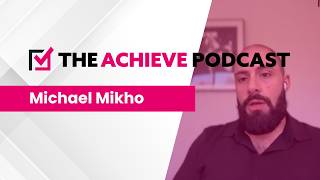
In this episode of the Achieve Podcast, host Taylor Baker interviews Michael Mikho, co‑founder of Voosh Digital (also known as Vouch Digital). Michael outlines how he and his brother, Canon, transitioned from corporate roles into a boutique agency focused on solving strategic, technological, and scaling challenges for senior leadership. They discuss the agency’s size (30‑50 staff, many contractors), the pivotal role of strategic partnerships in driving growth, and the shift from a designer mindset to a business‑leader mindset after leaving corporate life. Michael emphasizes a design philosophy rooted in curiosity, data‑driven questioning, and transparency, which underpins their client acquisition strategy built on referrals, trust, and candidness. The conversation explores how AI is used internally for design research and content creation, the current gap in their content strategy, and the ongoing effort to refine their ideal customer profile after a pandemic‑induced pivot away from a legal‑industry focus. Michael shares lessons about risk tolerance, the importance of being able to pivot quickly, and future excitement about tackling unique problems for mid‑market to enterprise clients, especially in reaching Gen Z via TikTok versus traditional channels amid a volatile economic and AI‑driven landscape. The episode concludes with contact information for Voosh Digital.
Chapters
Welcome to another episode of the Achieve Podcast, the show where we highlight leaders, creators, and entrepreneurs, those who are shaking up their industries and having an impact. I'm Taylor Baker Baker, your host, and today excited to be joined by Michael, Miko, the co-founder of Vouch Digital Agency. You can find them at vouchdigital.com. So Michael, for those getting to know you, Give us the backstory real quick on how you got to this point, cuz you guys in a bit of a niche and you've helped out some major brands.
Yeah. So, uh, thanks for that, Taylor. Um, so a little bit background about, uh, me, myself, and, and Voosh Digital. Uh, my name is Michael and I'm the co-founder of Voosh. The other half is my brother, uh, and business partner, Canon Miko. And so I'm the creative half of Voosh and he is the marketing, um, strategic brain of Voosh. Uh, and Together we decided, you know, both of us were, were working, we were in the corporate world before. He was working with agencies, I was working with corporate major corporations and then startups, uh, towards the latter half of my career. And we just saw a lot of, um, gaps in the systems and strategic decision-making that, uh, senior leadership would make at these companies. A lot of them were facing existential issues, uh, some of them were were facing kind of technological issues where they were just too big to scale fast enough or to change, pivot fast enough. And we just decided to bring our expertise to the clients that we serve today. And we work very well doing that. We work very nimbly and we're able to do that because of our size. And we're also able to stay kind of abreast of modern technologies, you know, AI and new, new kinds of systems and workflows. So we're pretty agile in that sense. Um, yeah. And it's a bit more of an intimate relationship than you would have with a larger company.
That makes a lot of sense. And how big is the team? Is it just you and your brother at the moment right now?
No, we have about, uh, we scale back and forth between around 30 to 50, um, total, total employees. Some of them, most of them contractors. We have a few, uh, stateside full-timers. Um, so yeah, we're about that size.
That's awesome. And for you with a team in the organization, what would you say has been the biggest factor in driving growth recently?
Partnerships. Uh, partnerships have been really big for us because, um, you know, as a marketing agency, it's funny, uh, we, we give all this advice on how to market for other, for our clients, but marketing agencies themselves have a bit of a unique, uh, kind of position where the traditional methods don't necessarily work very well just cuz it's so saturated. And, and it, there's a big trust barrier that needs to be overcome. So partnerships have been really instrumental. It's kind of the main, the main revenue, main channel of referrals that we get. And they're strategic. They're not just like, hey, some, you know, some friend of mine that has a connection or a few connections with people. We have a partnership with softwares that we use. We have partnerships with a particular partnership I mentioned to you earlier, um, with a startup accelerator, and that's been exposing us to some AI companies that are getting off the ground, which is really interesting. We're very excited about the kind of— we get to see a lot of the tech, the AI tech that's going to be emerging into the market. So that's been really cool. Um, and then, yeah, and then we just kind of like partner with other companies that don't provide the services that we do.
That makes a lot of sense. And then you're very right where it's a bit of a niche and how you can market your own services being a marketing company. It's interesting.
Yeah, yeah.
It's almost like the cobbler's kids don't have shoes. It's like you're busy taking everybody else's needs. Strategic partnerships, very effective.
Yeah.
Now looking back over your journey, what would you say some of the biggest turning points have molded or shaped the way you think about running the organization?
Oh man, you're asking a great question. Um, so one thing that was really difficult for me was getting my brain out of the corporate mindset. So I spent most of my life working within corporate systems, trying to climb the corporate ladder, leading corporate teams. And then when I decided, okay, time to become my own boss, time to become an entrepreneur, I was very much fell into the stereotype of working in my business instead of on my business. So for the last 2 years, I've really had to completely flip the mindset is that I'm no longer a designer. I am a business leader. So I've spent a lot of time just learning about systems, scaling businesses, and really getting to focus a lot more on what are the unique challenges that are potential clients, our current clients are facing. Um, so it's, it's been a lot more, um, just learning about customers, learning about business owners, learning about marketing directors, CMOs, uh, what kind of challenges are they facing in today's markets and how can we help.
That makes a lot of sense.
Yeah.
And it's a different skill set entirely.
It is. Yeah. I mean, there is a lot of carryover from design. Uh, I, I am blessed that my background is in design because design forces you to ask tons of questions if you want to be an effective designer. So for anyone who's listening who has an aspiration to be a designer, which is a, that's kind of an interesting field to be in right now with how AI is playing out. But what makes a good designer is one who's curious. We're not quick to be, we should not be quick to be prescriptive. We should, just as much as a salesperson or a researcher would be curious to validate a problem before assuming what it is, we need to inquire. That's the main part of design because it's the data that informs good design. And it's not until then that you can create not just good, subjectively good, but effective. Design to your clients. So a lot of that transfers over to so many other skills because what you need is data. You need, you need to know, you need feedback. You need to know what's, you know, who's your customer? Do you really know who your customer is? Let's take a closer look at that. Are you effectively reaching your customer? And like, there's a lot of that, not to, not to labor the, the topic.
No, it was very good. Very good. And it kind of goes, segues the next question. It's kind of a two-part question. When it comes to your marketing systems, your outreach, messaging, what has been working really well at attracting and maintaining customers?
So maintaining customers, that's a— I'll answer that one first. Um, it's really just showing one, the being transparent in, in the data that we are, that we are finding. So luckily most of our clients are seeing, you know, pretty steady growth. Like just 2 months ago, we reported to one of our clients, yay, congratulations, you just hit a 5x ROI. And within the next month, we went from 5 to 9. So there's scaling. Um, so there's a lot of scale. It's, it's a continued steady growth as opposed to just peaks. Their peaks happen, but that, and you know, the second part of that is when we do have issues or when there are gaps in, in, in, in growth, we're able to kind of attack that quickly. Let's understand where this gap is coming from. Let's pivot within, within an hour, within hours of, of finding that issue, whether it's an ad or specific email perhaps that we're working on. Hopefully that answers that part of your question. And to the first part, when it comes to attracting It's a bit unique because we attract our customers in a few different ways because as I mentioned earlier, a lot of our clients are coming in through referrals. So there's already kind of an expectation and we try to, again, not be quick to be prescriptive when they come to us with a problem. Okay, let's, first of all, let's make sure you understand what your problem actually is. And then let's illuminate, let's educate you on perhaps on what your, um, um, misconceived notions might be or what you're— these are often business owners will just kind of— business owners or business operators, team leaders will come in with just a hypothesis. And lots of times that hypothesis is just kind of a shot in the dark. So we come in with the perspective of like, hey, you have a problem that's actually kind of similar to some of our other clients that were, you know, experiencing something similar, and this might apply to you. This is the way we're going to validate it. This is the way we're going to find it out. And then if it's a more of a clear-cut problem that has a templated approach, or more of a standard approach, I should say, then they want to feel confident in the fact that we are being candid with them. Again, I mentioned to you earlier, marketing agencies, our main selling point is trust. They need to be able to trust us because there's so much, um, the market is so diluted and unfortunately, uh, it's diluted with a lot of agencies that overpromise and underdeliver in order simply to acquire the client. And we've turned away a lot of our clients. We tell them, hey, you're not ready, you'd be better doing this internally, better off. Um, or, you know, Come back and, come back and talk to us after you set this in place. Come back and talk to us, um, you know, in a couple months. Um, so they really appreciate that candidness, and that's been, that's been a great way for us to keep the clients that we start conversations with.
Oh, that's beautiful. I love that. Now, when it comes to your sales and marketing, where do you feel like there's still opportunity or money on the table?
As in terms of us acquiring clients or providing the service? Okay. Um, yeah, and when it comes to us internally, I guess, um, we're— we haven't really gotten into the content space yet. Uh, we're, we're building our kind of library. Um, and we're also just— the AI is moving so fast, and that seems to be what a lot of our a lot of everyone's content is being centered around. We're still trying to figure that out ourselves. I mean, AI's been around in, in marketing for forever. ChatGPT just kind of gave it a new face, gave it a new interface for us to, to interact with it. But marketers are not, they're not, it's nothing new to them. It's just kind of evolved. So It's been interesting to see what, what everyone else's content is and try to figure out where the value really is. What do, what do, um, different customer types, different personas, what do they resonate with? Uh, what's, what do people seem to care about and what actually moves the needle in businesses? Because lots of times implementing AI systems becomes a big, uh, learning curve and end up costs, ends up costing more time, more effort, more learning than, than people expect. And I won't say that it's not worth it, but more than, more than people expect.
Yeah, absolutely. I can see that. Now with all the talk around AI and automation, where have you guys found ways to utilize it internally?
I'll speak on behalf of my team, my design team. AI has really disrupted the design space, especially when it comes to image and video creation. I mean, we are kind of fortunate enough where the major social channels are, have come out publicly and stated that they're not going to be really pushing AI-generated content. And we're seeing this, lots of accounts, lots of brands that are really implementing AI-generated content don't see traction. And so a lot of people don't know that. So there's companies that will kind of invest in that and then realize like, hey, why aren't I getting, the impressions or the, um, you know, the engagement that I was looking for. And it's because we— the consensus is that we don't want to be living in an AI world where AI is replacing us. Now, that's not— unfortunately, that's not being applied everywhere, but at least when it comes to the creative, we're grateful for that. Um, when it comes to research, it's been a big help for us. Um, so we'll do that where we would normally have to, uh, do a lot of analysis on any kind of if there's any kind of user research that we're conducting and then collecting. Once we collect it all, we're able to use AI tools to kind of analyze and summarize all of that information that we're getting, which would take us a lot longer beforehand. So that's been really helpful in that sense. Yeah. Okay.
So Michael, if you had to pick one constraint to focus on and solve, over the next 90 days that would have a big impact on the trajectory of the business, what would it be?
Um, it's, it's an interesting question because we're just working on our goals for the quarter, um, and I find myself pivoting. Um, a big part of it right now for us is trying to one, bring in more leads and, um, trying to better understand what our true ICP is because we had an ICP before COVID um, and it was the, uh, it was attorneys. We were, we were servicing attorneys in the Chicago area for very successfully for that, um, for a few years. And COVID came in and clogged up all of the courtroom's dockets. And attorneys were not able to really invest in themselves because their cases were being delayed. Um, so business came to a halt and we kind of told ourselves like, we're not sure if we really want to niche down to this specific of a market where we're servicing just one industry. Um, because if God forbid something like this happens again, markets, um, fluctuate, markets become compromised, then we're not diversified in that sense. So that's put us in the last few years in a position where we are very diversified. And now we beg the question of like, okay, is there something more specific that we can offer? Do we even need to? Because we've been finding success just as diverse as we are. But it's still, it's a fundamental aspect of business. You want to specify, you want to find your niche. And really our niche, if I had to label one, is marketing leaders that are experiencing unique bottlenecks that they themselves can't find the solutions. They've already tried. They're trying to find solutions to X, Y, and Z problem. And lots of times it's just different with every client we have. We don't really, I mean, we have We have the kind of standard things where certain clients just kind of grow too big for the current systems that they are in, or they need, they just need help with fulfillment because their teams are lean or focusing on other efforts. But sometimes there are some unique problems that they are facing that they just, they're at the end of their wit and they come to us because we kind of have that. That's something that we kind of do specialize in. Is how do we solve unique problems? And we've been very successful with that. So that might be the direction that we go this year and figuring out how we communicate to, or how we find and communicate to those potential customers is going to be, potential clients is going to be something to think about. Otherwise, I think I kind of mentioned to you earlier, content is gonna be something I, I'd like to focus on. It's just what's that content going to be? Mm-hmm. Yeah. Yeah.
I can see that. So when you look back at your own journey, the wins, the mistakes, what lessons stand out to you and which ones do you feel like took longer to learn than they probably should have?
Every lesson feels like it takes too long to learn. Especially for someone like me who's, uh, you know, creatives are perfectionists and we're also very hard on ourselves. So we find ourselves like, I brought up the good point of like, hey, we need to ask questions. Well, sometimes we can ask too many questions and just end up in a constant circle of questions. Um, thinking back to your question for a second, um, risk-taking is a big thing. To be more brave, to kind of not have to have all the answers always when it comes to your personal growth, personal business growth. There's just certain times where if you have to sit and constantly collect research and contemplate what's the right decision, and so much time goes on, Well, then you would have gathered more information if you had just made the decision and failed, and then you would have known that that solution A does not work. Let's move on to solution B. So I think I'm answering your question.
Yeah, whatever lessons stand out to you.
Yeah, I think that's a big lesson for me is just being more tolerant of risk. But finding that balance, of course, like we want to jump into risk with at least some, some kind of foundation of information so you know what, what the downside is. And that was one issue that we really faced in the corporate— the companies that I worked for, because they're so large and they were often, um, public, so you have your shareholders to think about, um, making taking risky decisions was very costly. So they were just— weren't in a position to be able to do that, even though it was existentially required for those companies, which is— it's a dangerous position to put themselves in. So I urge every business owner to think very carefully about the environment that they put themselves in and to never allow themselves to be in a position where you can't make pivots that put you in a state of a little fear. You should— the business should always kind of be in a place where, hey, we're doing well, we're sustainable, but markets change. Markets are, you know, businesses die because markets can't pivot fast enough. You think of Blockbuster, um, and, and we need to be able to do that. So putting yourself in a position where you're able to do that is, uh, this is, I think, something that I would share with anyone, any other business owner.
Beautiful lesson there. I love that. So last question for you: when you think about the next stages of the business, what are you most excited about?
Um, I am most excited about, um, discovering what, what are the unique problems that, uh, that we're gonna find from our mid-market, mid-market to enterprise businesses are who we are communicating with now. And they're having trouble. A lot of them are having trouble trying to reach the next generation of their clientele. TikTok is the big place where everyone's going for to reach Gen Z. And social media is becoming a bit problematic because it's just very loud. It's very loud. It's— there's a lot going on. We're trying to figure out when is it right to tap into social, uh, when is it right to tap into traditional channels like email and SMS. Um, and, uh, and companies have to find a balance of that because there's growth and then there's sustainability. Um, and so I'm really excited about how this is going to play as the market changes with AI, as the market changes with major economic growth, major economic changes. We're kind of living in a pretty volatile time politically, economically. There's a lot of that going on. So anytime you're— anytime the economy is in a situation like this, new markets emerge, and there's usually big tech technological advances, very entrepreneurial innovations. And we're seeing that a lot with AI. I feel like there's it's the full, the full jury is still out. Um, so it's, it's just a big question mark right now. And I'm really curious to see what, uh, what's just gonna happen even in this next quarter.
Yeah. Yeah. Wow. So much potential. So many questions. That's good. So for those who wanna learn more, they can reach out again. That's V-O-O-S-H-D-I-G-I-T-A-L. Vouchdigital.com, LinkedIn, anywhere else you want to send them?
LinkedIn's great. LinkedIn. They can follow us on Instagram, but LinkedIn's our main, main channel. And thank you so much for the conversation, Taylor Baker Baker.
Oh, absolutely. Thank you for joining me. And thank you to our sponsors of today's episode, Achieve Fractional, which provides fractional executive leadership for growing businesses. And if you enjoyed the episode, share it with a friend, with a colleague, If your business is growing and you're not sure where to go, how to get more clients, reach out to Michael and the team and just make a phone call, see how they can help you out. And we'll see you all in the next episode of the Achieve Podcast.









