The Achieve Podcast - Michael Tribolet (Yip TV)
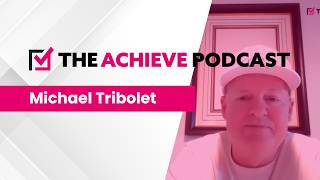
Michael Tribolet built Dialpad to 10 million users, Vonage to $1 billion in revenue in four years, and MagicJack. He talks about embedding AI in consumer products, lowering customer acquisition costs, and creating ambient AI environments that adapt lighting and climate to individual users.
Chapters
Welcome to another episode of the Achieve Podcast, a show where we highlight leaders, creators, entrepreneurs, those who are shaking up their industries and having an impact. I'm Taylor Baker Baker, your host, and today excited to be joined by Mike Triplett, the founder and I guess CEO of a lot of organizations. Mike, you've done a lot of things over the years. Please, for those getting to know you, Give us the backstory and first, thanks for joining us.
Oh, thank you for having me. Great to be here and I'll try to do in 1 minute or less the background, but basically came out of college, went to work for a systems integration company for Fortune 50. So we were doing from mainframes down to individual computers for Swiss Bank Corp, Credit Suisse, De Beers Diamond Mines. So these were very worldwide, large networks. So right off the— out of the gate, so to speak, I was able to understand how to scale, you know, businesses on a global basis. And then this is where the collision of the internet happened as well. So I started an ISP as well. So now not only do we have all this corporate experience, now we have the individual consumer experience. Then I go to the very first PC-to-phone company in Silicon Valley. We create a company called Dialpad, 0 to 10 million customers making phone calls from their PCs. Get recruited out of there, go to a company called Vonage. We created that, took it from zero to a billion in 4 years in revenue. That's when I had hair from doing that. But yeah, so it was great because we basically were able to, through Vonage, actually provide real telco services. We were able to— we were the first one to interconnect to 911, which is important. To have that in a home network-based business. So from that, I seem to get recruited out a lot. So from Vonage, I go on to Europe, run almost about $500 million a year of home-based services, the internet, mobile. Actually, we were into mobile phones at the time as well. Then, and I lived over in Europe during that period of time, so not only have I run worldwide operations, I've operated from outside the US. Came back to MagicJack, 10 million customers strong, making through a little USB device plugged into a phone or PC and/or laptop, allowing them to have the services. And then saw the advent of IPTV. Got into that with Yip TV, so basically distributing content from Hispanic broadcasters, whether it's movie, news, or local, into the Hispanic community. And then just now moved back to Phoenix, Arizona, where I'm home-based. I'm able to help companies, whether they want to come into the US, exit the US, to enter foreign markets, understand their strategy. So kind of the— I hate to say the word jack of all trades, but get Been there, done that, and have a tattoo for it. I love that.
Wow, that is quite a rich history, Mike. And so right now with the team, the organization you're leading, I mean, how big is that? I guess because you've ran million-dollar, billion-dollar companies.
So yeah, no, I've done everything from the, you know, 10 people to the, you know, 2,500 employees up to the 4,500 employees. So each one's different level of management style, uh, recruiting interaction. And things like that. And now I'm— I have— I actually enjoy more helping startup companies and get those going. There's a lot of innovation around AI right now. Is that, you know, good news? I can spell that one. So it's, it's, it's amazing what AI is getting put into. I don't care if it's your Amazon device at home, I don't care if it's your mobile phone. You've got like ChatGPT. You can ask it a question and pop out You know, I wish I had this in college. I never would have gotten less than an A with AI today. No pun intended.
That's amazing. Now, what would you say is driving growth for you right now with what you're doing?
Yeah, I think right now, consolidation. So you take a look, there's a lot of scattered pieces out there. So what we're doing is wrapping up a lot of the pieces, kind of like a baseball mitt, putting it together, and then we're going to stitch Stitch it with one thread. I think that's the back office. The back office leads into AI. And then even though there may be a particular vertical for a customer base, you can just plug into it. So for lack of a better term, it's becoming the jack of all trades. But on the consumer side, it's where I think the explosive growth is right now.
Gotcha. I like that analogy. It's the thread that ties all the pieces together. Now, looking back for you, what turning points have had the greatest impact or changed the way you think about running organizations?
I think making difficult decisions. The simple ones or the easy ones, they just go through. But I think it's whether it's a direction, so we've got to do a lot of market research, you've got to do a lot of customer research because a lot of it is just an educated guess if it's going to work out. And you just take the data. So you look at the consumer behavioral patterns, then you can say, okay, is the business going to act the same way, or is a certain segment or a certain country— because you have to take a look at all of the intercultural relationships to technology and how they interact with it. So I think there's— it's a hodgepodge of different things that go into the bag that you mix up and then you try to come out of it with an ingredient that says, okay, this is gonna work well. And it's really focusing it then on those customers, do that well 1 million, 2 million, 10 million times, and then you just get better at it. And that's the other thing too, on the technology trend, you have to be able to adapt, you have to be able to move, you have to be able to develop around that. And what you are today is not what you're gonna be tomorrow.
Yes, yes, that is so true. So the next question is kind of a two-part question. The first was, what do you— for messaging, marketing, getting the, the word out there— what have you found that works really well at attracting and keeping clients?
Yeah, I think the number one is to make it what we call sticky, is absolutely, um, something that they will use in their daily lives and And I think that's just because you can make it doesn't mean they'll come. This isn't the field of dreams, so to speak. You have to make it so that it's relevant. And I think once you make something relevant and then you make it sticky by getting them to interacting with you and utilizing service, you'll find that's where the vein, so to speak, the vein of gold is when they're digging for it. The pioneers were, they just follow that vein. And same thing here. You'll find a pattern. And once you find that pattern, It's something that you can emulate. It's something that you can count on, but also the same thing is you can track. And that's really, you know, if you looked at all the companies we started, we started out in different areas and ended up, you know, out in right field or left field, you know, through that process. Wow.
Now, when it comes to your sales and marketing, where do you feel like there's still opportunity or money on the table?
I think right now where the money is on the table tends to be where people forget is, you know, you take a look at your, your 30 to 50-year-old individual. Women and men are very different when you look at how you go after it, but, um, whichever you go after, if you, you go after the, you know, female market, all of a sudden the male market will follow, or vice versa. So it's really understanding those elements and What are the markers that you're seeing from the technologies? Because trust me, like when we started out some of these companies, we thought we were going to be completely 180 degrees different, but we didn't fight— don't fight the flow, just kind of go with it. I mean, that's generic to say, but it's so true.
Gotcha. Now, as you mentioned earlier, with all the talk around AI and automation, where have you found ways to use it and internally and where you start exploring?
Yeah, I mean, I'll start at home. So I've got my Amazon, um, device here that basically, uh, when I don't want to talk to anyone, I talk to it. Um, at the same time, you can say turn on your lights, turn on your, you know, your oven. You can actually now look into your fridge. I mean, it's— these are very basic elements, but you can see if you've got the milk, you got whatever you're missing. Or your store, you can actually queue in, which— so you're more efficient because sometimes you go and buy another gallon of milk, you already have 2. So, you know, that's, you know, when you look at the consumer level, I think you can control your lights, you can control your thermostat now through multiple types of devices, but also now you can provide security no matter where you're at because you can now have it outside, inside, and view, view everything. And then like all— like most of us that use Amazon, sometimes you can now either have them come into the garage because you can open it, or you can leave it at the door and unlock it, have them put it in, and then when they leave, you know, shut it. You can lock it and everything's— I, I don't like to say spying on, but it's just supervision. I think that's the, the key thing. And I even had one incident where, um, the police were going by when I was living in Brooklyn. They noticed we had a camera and we helped them solve an issue with somebody getting their card stolen because it was all caught. Now, we didn't— weren't looking for it, just happened to be there, a byproduct of them canvassing the neighborhood.
Yeah. So, Mike, if you had to pick one constraint to focus on and solve over the next 90 days that would have the greatest impact in trajectory of the business, what would it be?
Great question. Meal prep. You know, I, I, I— it's funny, it's, it's what we all You know, it's a matter of how do I get everything organized? I can go buy Factor, I can buy all these other different food services. But one of the pain in the neck things for me is, you know, like, what am I going to eat? You know, it's funny, but it's something that touches everyone's life daily. And then also when you step out, you go to work, what do you take? You know, that's— but I'm always thinking on the consumer side of things, not on, you know, the business side of things are completely different. Animal. And if I were on the business side thinking with that cap on, it's more how do I lower my cost of acquisition for customers? How do I, you know, build the brand? And, you know, where do I go to just promote it? You know, I think now everything's very hyper-focused. There's no, you know, build it and they'll come type thing. It's you've got to be hyper-focused, do something well 10 million times, and that's it. You know, you're not You'll learn and you'd be able to maybe take a left or a right, but I think the key thing is truly getting that in-depthness, so to speak, with all the analytics.
That makes a lot of sense. Yeah, you don't just do a broad market approach anymore. It's very—
No, and that's usually back in the '80s and '90s, even early 2000s, that's what it was. Just shoot it out, see what sticks on the wall, and then go for it. But now it's too— too micro and too skinny or narrow of a focus.
Yeah. And AI is just compounding that.
Yeah, AI. And look, I don't know where AI is going to go, but it's going to embed in all of our lives. As we get older, we're going to say, I need to have my medication. I need to have this particular diet. It'll become a habitual pattern to it. And I think the younger generation They're the ones that are going to be clever with it because their mind isn't tainted or their mind isn't in a direction yet, but it can help them evolve into the type of person they want or change behavioral pattern because that's something I think AI is going to do. It's going to get rooted in the younger generation. It's going to already be built into the phones. And instead of you know, let me go to the app to order, you know, Taco Bell. They're just going to order Taco Bell.
No, that's wild. So, Mike, when you look at your own journey, the wins, the mistakes, what lessons stand out to you and seem like they took longer to learn than they should have?
Don't ever believe you can't do something. That's the number one thing. I, I, I, if I had a dollar for every time I was told Vonage was going to be a zero, MagicJack was going to be a zero, everything was going to be a zero. I'd be a rich guy. So when you're in an area and people are telling you you can't do it, you're in the right spot. And because you believe in it and you can execute to it, I think that to me is the best advice I can give to everybody and anybody is great. Okay, you don't believe, but so, you know, and you just take that fuel and you fire yourself up because you believe and therefore you can't. I think the biggest— there's so many ideas that just get shelved because, oh, it's too hard, or I'm getting told I'm stupid. I— nobody wants to be stupid, but if you believe in it, go for it. That's my number one thing I always tell people is, if you have a lot of naysayers and they say, yeah, you're in the right place, because they don't think it can be done because they can't do it themselves. And don't let someone take you down. With that thought.
I like that. Now, when you think about the next stages of business, what are you most excited about?
Uh, you know, I, I am— because I'm such a techie, I want to get to the point where whether I'm carrying a phone, I don't care if it's a pen on my shirt, I want to walk into a room and then that room adapt to me. Meaning the lights adapt to me, the air conditioning adapts to me, the car is ready for me when I get heading that direction. Here in Phoenix, you don't need to worry about the heat, but in Brooklyn, it was freezing cold. Or I get to the grocery store or I'm heading towards an event. Everything is right there on the edge, meaning I've got my tickets to get into the venue. I've got my menu of things I like and what I can order at a restaurant. So there's a lot of things that can preempt itself. And I think of it being in a bubble or a sphere and AI, you just kind of push it and then it knows and it'll build that habitual pattern of what you do. Because we're all human, we all have our pattern, we have our thing we do constantly. So it preps you and it prepares you and it puts you in the right frame so that you're more efficient with your time because I think we always a lot of time. Well, some of us wondering, some of us caring, some of us not caring. It's— there is a lot of wasted time when you look at the human, uh, element to things.
Yeah, yeah. And to have that prep like that and just be maximizing your efficiency.
Yeah, yeah. And I think, and two, it'll build— the other thing is it's filling a void where it's giving you historical knowledge so that when you get down the path, it knows what your decision was from before or what you liked or where you wanted to go. So I think, you know, people are fearing it right now, like Big Brother and all the other crap. Uh, you know, here come the android robots, they're going to take us over. No, they, they're not. Well, one, they still will require human beings to make sure they're doing okay. Um, but I think that that's, that's this phase of life we're in, in this generation. And this is probably most And I can't spell this word— cataclysmic shift. It's going to happen, but it's happening now, and it's only going to get better. In my opinion, it's only going to get better.
Wow. Well, Mike, again, thank you so much for coming on. And for those who want to learn more, they can go to LinkedIn and find you on there. Again, that's Michael T-R-I-B-O-L-E-T.
Right.
Any other projects you got coming up you're working on, or anything else you want to share?
Yeah, no, there's some stuff because here there's more stuff. It's ironic over in Europe where I think it's more regulated than here, but also Asia right now. Everything going on over there is fascinating to me because they've already begun that process probably 5, 10 years ago. And now AI is beginning to be that single thread through everything. So that's where I like to look for the future. But there are cool things going on here in the US. No disrespect. But I just think we're slower due to government regulations that, that can slow things down while people try to figure things out.
Wow, there's so much excitement about the future. I just— learn about it, get ahead of it, and be aware. So absolutely, man. Well, Mike, thank you again for coming on and sharing your wisdom and your experiences internationally and all that you've done.
And so No, thank you very much for having me. Happy to come back anytime and throw my 2.5 cents in.
I appreciate that. And thank you to our sponsors of today's episode, Achieve Fractional, which provides fractional executive leadership for growing businesses. And if you enjoyed the episode, share it with a friend, with a colleague. If you're curious about the newest and latest and what's happening internationally, reach out to Mike and the team and they'll keep you up to speed and help you out. So, and we'll see you all next episode of the Achieve Podcast.









