The Achieve Podcast - Michelle Killebrew (Pegasus Strategy Co.)
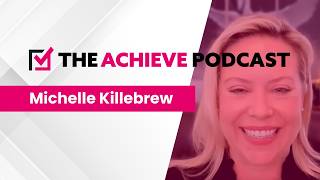
In this episode of the Achieve Podcast, host Taylor Baker interviews Michelle Killebrew, founder of Pegasus Strategy Co., about her extensive background in marketing technology, her firm’s lean operating model, and how the rapid rise of AI is reshaping go‑to‑market (GTM) strategies. Michelle argues that as AI automates many transactional touchpoints, human connection and community become the differentiating factor for businesses. She describes a pivotal moment in late 2025/early 2026 when new AI agents (Claude Opus, OpenClaw) accelerated the pace of change, forcing organizations to balance speed, technology adoption, and the preservation of expertise. The conversation covers Pegasus’s shift toward a fractional, partnership‑centric GTM model, the distinction between AI Engine Optimization (AEO) and Generative Engine Optimization (GEO), and practical AI security considerations such as data privacy settings and compliance limits. Michelle highlights time discipline and first‑mover advantage as the most critical constraint for her firm’s next 90 days, and shares lessons from piloting programmatic ad retargeting at IBM. She ends with an optimistic view of future tech—personal AI experiences, voice interfaces, augmented reality, and quantum—while emphasizing the need for responsible stewardship of AI. The episode offers actionable insights for leaders navigating AI‑driven transformation, partnership ecosystems, and the evolving balance between automation and human‑centric value.
Chapters
Welcome to another episode of the Achieve Podcast, the show where we highlight leaders, creators, and entrepreneurs, those who are making meaningful businesses, shaping their industries, and having an impact. I'm Taylor Baker Baker, your host, and today excited to be joined by Michelle Kilbrew, the founder of Pegasus Strategy Co., and you can find them at pegasusstrategy.co. Now Michelle, first off, thank you for joining us today.
Thank you. I'm excited to be here with you.
And thank you. I'm excited too. It's going to be a lot of good content, I'm sure, about this one. Now, for those getting to know you, can you give us the backstory a little bit on how you got into this space? Because you're in a bit of a niche on how you're helping the different businesses you work with.
Absolutely. Well, it's, it's interesting because I grew up in Silicon Valley, um, and graduated university right at the dot-com bust. So I've seen some of these different eras kind of come and go, but found my way into marketing technology over the course of that journey. And in particular, at a startup that was then acquired by IBM. And so I had this, you know, the Silicon Valley experience where I was marketing technology to marketers. And so had the kind of the triangulation between demand creation, working in marketing technology, the product teams down the hall, and then start, you know, talking about these best practices. And then, you know, from that 200-person late-stage startup, the first SaaS acquisition into IBM, and taught them how to do a couple new things, ran some amazing global pilots. My last corporate role was with NTT, where I was SVP and Chief Marketing Officer over the Americas. I had all of Latin America in North America, $1.5 billion, uh, business. And just prior to that, I stood up the enterprise software division within PwC, so, um, SaaS incubator. And so I'm a builder. I've worked in multiple different business models, and what that allows me to do for our clients is really help, um, steward them through this amazing era of change by looking at and diagnosing what their true needs are, where their audience is, how we can meet them where they are, um, and, you know, help them execute to that. So yeah, it's exciting.
Wow, that is quite the rich history there. So what— how— first off, how big is the team in the organization?
Yeah, so we're a core team of probably 5 or 6, and then we expand based on client needs. So we have a really rich, um, both bench and network of amazing operators to support our clients, either in their strategic requirements or supporting them with execution. So we, we can do all of those things.
That's awesome. It's amazing how effective a lean team can be these days with AI. Yes, I'm sure we'll get into that. Now, right now, what would you say is driving the most growth for you guys?
It's really interesting. So last year, um, we did sort of a retroactive— of course, a retrospective rather— and looked at the, the clients that we served. It was our first year in business, and so we kind launched with sort of a general go-to-market fractional model. And then looking back at the year, we recognized a really interesting pattern. And it actually supported a hypothesis that I had at the beginning of 2025. But it still surprised me in hindsight, as we wrapped up the year. And the hypothesis was this, that as AI becomes more prevalent, and we have more AI adoption and agents and automation that's happening in the go-to-market and just the ecosystem in general, that the importance of human connection is is going to be, um, just more important than ever. And in looking back at our engagements, all of our clients had some aspect of community in them. And I think that this is a really interesting, um, it's just a really interesting phenomenon. But I think that human connection is more important than ever. When you have, you know, on— let's just take a couple of examples, you know, on the employment side. If you've got applicant tracking systems that are using AI to scan resumes, and then you've got candidates that are using AI to create resumes based on the job description, you're really not going to be able to create much of a match. You're not sure about credentials, if these people have actually done the things that they have done, because AI is, is, you know, hyper-matching to that particular job description. And so what I've seen, what I've heard from a lot of different folks, is they're going back to referrals. And it's the old school way of finding people for, for roles. And the same is true now, quite honestly, with all of the AI content that's being created. You don't know, you know, how much of that is valid. A lot of the AI messaging is from the vendors themselves. So of course they're biased. And so people are asking their peers, what have you done? What tools are working? And so this, you know, human network of, we've never done this before, how are you managing through it? And kind of peer-based learning and idea sharing is more critical than ever. And yeah, it's fascinating.
It is so fascinating. I love the way you illuminated that.
Yeah.
Looking back for you, what greatest, what turning points have had the greatest impact on how you think about and run the organization?
Oh goodness. Well, I think that there was definitely an inflection point that happened, gosh, around December of 2025, right into January of 2026, which was interesting because of course it's the end of the year, you're thinking about New Year planning and all of those types of things. But what happened on the macro scale is Claude Opus launched and OpenClaw launched, right? And so that was a major inflection point just in terms of what people had top of mind in terms of capabilities, what they're thinking about in terms of 2026. You know, and I was in San Francisco in March of, yeah, just March of last year, so, or this year. So, just a month ago, and they're at a pitch competition, an AI startup pitch competition, because I really wanted to feel like the finger of the pulse of what's coming down the pike from, you know, founders and whatnot in the space. And there are full companies that are revenue positive, on, you know, agents and Open Claw that it really only became on the scene for 3 months ago. So the rate and pace of change is dramatically different, and organizations are really trying to figure out where they place their strategic bets. They don't want to chase the next shiny object because the next shiny object is coming tomorrow. And so, you know, how do you determine like which direction to build your strategy while leveraging the technology that can help you with the efficiency while preserving You know, the, the human element in terms of the expertise on your team, et cetera. And managing through that change. So yeah.
Wow. And that's so true. You used to have a marketing strategy or a plan that would work and last for weeks, maybe months. And now it's like, okay, what's next week? It feels like.
Absolutely. Wow.
So this next question is kind of a two-part question. For you, what— when it comes to your messaging, your marketing systems, and outreach, what do you feel like has been working well to attract and retain customers or clients?
Oh, fantastic question, because we're going through a messaging update. Um, so based on what I was just sharing, uh, we are recalibrating how we are positioning ourselves to the market to align to these services, um, with, with more specificity. Quite honestly, we think we found some, uh, really core and key swim lanes where we can serve clients in ways that are really, really helpful as they're pivoting through this dynamic change. And so when I think about that, it's really aligning need to, I guess, where we can apply that just expertise of having done this for multiple, multiple decades. Nobody's done this before. And so, uh, you know, it starts with diagnostics and kind of determining what is right for each particular organization, what their, their clients are thinking about. And we have to do some of that self-reflection even in how we're creating sort of positioning and messaging and offers for ourselves, because, you know, in some cases, um, the services we, we can support might be helping somebody get their house in order, which may or may not be like the full AI transformation. But we can serve those AI transformations and things are happening so rapidly that trying to pull together case studies for things that haven't yet happened is a whole other dynamic. So yeah, it's really interesting. Also having a lot of partnership conversations with different types of organizations on, you know, how we might be able to serve our clients. Best and most effectively with ecosystem plays, which I think is also really important. You know, we talked about community, but ecosystem I think is also, you know, kind of raising its importance.
Yeah. Give us a little more information on that specifically because it is important.
Yeah. So as I think sort of the traditional demand funnel is breaking down, you know, as you're thinking about how discovery is changing, I think going to market through and with partners based on, you know, combined interests or, you know, audiences is really, really helpful. So in some cases, we're partnering as strategic implementation, you know, partners with some technology providers or, you know, joint go-to-market for different solutions. So yeah, I think that's true kind of across the board as people trying to figure out how to run faster. And part of running faster is not recreating the wheel. So bringing, bringing those services that you can uniquely offer to market and partnering with, with other strong providers that, that, you know, have vetted and trust can, can deliver those solutions quickly.
I love that. Your strategic partnerships are really going to be a big differentiator.
Yeah.
So when you think about your sales and marketing opportunities, where do you feel like there's still opportunity and money on the table?
Um, well, everywhere, quite honestly, because, no, everybody's going through transformation. Um, our, our, um, our clients have come through referral and word of mouth, which is incredibly rewarding. Um, and, you know, it's just a—
it, it—
yeah, it's just a wonderful thing, quite honestly. It still, like, warms my heart. I pinch myself at that, just from a reputation perspective. Um, But everybody's going through transformation, whether it's kind of looking forward and figuring out how you can run your, your function more effectively, or if you need to realign based on how, you know, discovery is changing. We've talked a little bit about AEO, and there's multiple different things, both from a diagnostic perspective that, that sort of, um, run— like, just discovers, uh, and then you need to realign your, your team and your funding and your priorities in order to meet how your audience is now discovering you. And of course, that's not the same for every organization because you should understand your buyer, but it's also changing just in terms of who you may be serving as well. So I think, yeah, you always have to kind of recalibrate who your addressable market is and your audiences, and that may shift in terms of who you're serving over time, especially as agents and different software models kind of come onto the scene. I was just reading today about just more about sort of the headless transformation with some of the SaaS solutions and that they will still have some of the seat licenses for humans. But, you know, depending on how you're going to actually do your agentic play, one organization may be running, you know, their capacity with one agent, another with 1,000 agents. And so there was going to be a volume play. Or capacity pricing model. And so all of this needs to be discovered, I think, as new ways of delivering to your client their needs. You can have different pricing, different needs, all that kind of thing. So, um, yeah, there's lots of— there's lots of opportunity to help organizations as they're wrestling through pricing, positioning, go-to-market, um, how they're actually serving their client, etc.
Yeah, and I love that you brought up that specificity on how being that niche where AI wants to know what's exactly, well, you're looking for, and it'll direct you to that customer, that client, that product, versus the broad net. And you touched on AEO versus SEO, which used to be the top of mind.
Yes. Yeah, let's talk about that a little bit because I think that, you know, sometimes AEO and GEO people may think that they are the same thing, but really they're not. So, uh, GEO, Generative Engine Optimization, is really the technical layer. It's about your own properties, um, and your, your website's machine readability and JSON schemes and sitemaps and all of those types of things. And, um, you know, as we were just kind of prepping for this conversation, it was kind of, you know, explaining the AEO, the AI Engine Optimization, is the umbrella that sits over that. And that's the broader framework that also encompasses GEO but extends into the full influence chain. And so this is where, you know, LLMs would be scanning the entire, you know, internet to see what is your reputation, how do your clients talk about you, are you— do you have reviews, are you speaking at conferences, you know, how is your brand showing up beyond the, the things that you own. And I think it's important to kind of understand the difference both in terms of the communication strategy and then the technical, uh, strategy and how those things kind of fit together as well.
So true. And I love the way you've, you've— the way you've explained that as we've had a few discussions now, because that is such a distinction that I think a lot of people just aren't aware of the magnitude of how much that affects things.
Yeah, absolutely.
And so Now with AI and automation, where are ways you guys have found internally to utilize it?
Yeah, so we are definitely experimenting internally with a lot of different types of things, both in terms of how we might, uh, you know, be more consistent with our own outreach. We've been busy serving clients, and so we'll be, um, you know, putting that to use more consistently with, um, you know, programmatic outreach. As well as just agents to help us with the operations of our own team. But we're also being very thoughtful about how to explore that in the safety-conscious mind. I think having worked in technology and enterprise technology and a lot of infrastructure, cybersecurity is always top of mind for me. And so we are taking a very pragmatic view and making sure that, that we understand all of those, those things before recommending. you know, the— or recommending the right solutions to clients.
Can you talk a little more on that? Because I think some people are still new to the game and don't realize the security aspect with AI.
Oh my gosh. Yeah. So, um, I don't even know where to start, quite honestly. I think, oh, don't upload your bank statements. Yeah, absolutely. So, you know, I was just refreshing my understanding of, you know, Claude's privacy. Yesterday or earlier this week, for instance, just personally to like, wait, what did that— because, you know, you make some settings in some of these tools and they do update their privacy policies from now and then. And so, you know, I went through and checked. And so even so, Claude, for instance, even if you're on a, say, a Max plan, it's still a consumer product. So you can go in. They changed their privacy policy about a year ago. So that you could opt out of training their models. And so you do, you have to go in and switch that toggle so you're not training their models. But that doesn't necessarily mean that everything that you ingest into Claude is necessarily safe. Do switch that toggle on because in addition to not training their models with the information that you're putting in that system, their retention is a lot less. So the things that you might— if you are training their data or their models with the data that you're putting in the conversations, the retention may be years, right? So if you're thinking about putting those bank statements and they're in Claude's, you know, data warehouse for years and, you know, something happens, they get hacked or something along those lines in the future, those records are more likely to be available than if you take some of those privacy settings, you know, in mind. But unless you're on an enterprise level for, for Claude, it's still a consumer-based product. So it's not HIPAA, it's not SOC compliant. It doesn't have those different thresholds of data security. And I think users just need to keep that in mind. And it does take some work. You should, you know, for the financial statements, for instance, there are different software that will pull down your PDFs and turn those into spreadsheets. And then you can do some obfuscation where you're actually kind of doing, you know, might be ABC equals Bank Y and kind of put that into the model so that you can leverage it for strategy and then bring it back onto, you know, your desktop and kind of do the matching. So yeah, you have to be a little bit thoughtful with those things.
Yes, thank you. You articulated that well. So Michelle, so if you had to pick one constraint to focus on and solve over the next 90 days that could change the trajectory of the business, what would it be?
Oh my goodness. Um, oh, it's really just— it's time discipline. Like, time is like the, the most critical resource, I think. Um, I was having some other conversations with people who are far more advanced with, with agents than I am. And they, you know, it's— things are changing so fast that it's almost that sleep is like, you know, becoming the deficit between how advanced you can become. And there is this moment in time right now that, um, is an arbitrage opportunity. There's a first mover advantage, uh, because things can be stood up very, very quickly. There is no moat in terms of startup ideas. You know, I read another article last week that said that there was a company in Turkey that was cloning Y Combinator startups within 24 hours of their acceptance because they can spin up the agents and, you know, stand up the new business model. Now, that is an extreme, but there's very little moat, right? And so first mover advantage, the reputation, trust, the, the stickiness with, uh, initial clients, um, is, is where focus needs to, needs to be given. And one of the reasons why we're focused on repositioning our offerings where we believe that we can deliver real value to our clients and start serving them, um, you know, faster with, with these tools and with this message and and just be a partner as things evolve so quickly.
Oh my word, that is crazy.
I know it. Yeah.
Within 24 hours, it's like, yeah.
And it's time discipline because, you know, you get working with— you can get in a real, real deep flow state with AI. I was having another conversation with Apirra, like you start working, iterating, and you're doing more than you could have done without AI, certainly. But at the same time, you may not have dedicated that much time to one task at that point in time yourself, or you would have delegated it. It's, it's different time management skills. And so in order to kind of, I guess, time block and be disciplined about what you can do in each, you know, what you're trying to achieve from each moment in the day, things are moving really, really quickly. Wow.
Yeah, you brought up so many points that we could do a podcast on each one of those topics.
Yeah.
So when you look at your own journey, Michelle, the wins, the mistakes, what lessons stand out to you and which ones do you feel like maybe took longer to learn than they probably should have?
Oh, that's a fantastic question. Um, well, I've always had sort of a test and learn mindset. Uh, you know, back in early in my career, I kind of reverse engineered code out of necessity and, you know, it was always an experiment. In experimentation mode. So try it, okay, that didn't work, improve it, improve it, optimize, and then move on to the next kind of optimization. So, um, what's taken longer to learn? I'm not sure exactly. I think, um, you know, that certainly served me well, and I think that those, I guess, failures are all lessons in the end, and they can be applied into whether it's wisdom or, you know, just lessons on how to approach things or— Yeah.
Yeah. Any lessons stand out to you? Like, that was a good, like, lifelong changing the way I think, the way I function. That stand out to you?
Sure. Yeah. So I ran a pilot at IBM after joining through that Coremetrics. It was the web analytics for SaaS acquisition. And I have been doing something pretty unique. And as I told you, the product team was down the hall. And so was doing really ad retargeting and programmatic, which was at that point in time, I think it was 2009, pretty new and really unheard of in B2B especially. And at IBM it was, you know, they were very, of course, protective of their brand and so were a little less than enthusiastic to try this pilot that had been working really well from a demand perspective while I was at Coremetrics. And so what was interesting about this is kind of taking the agility of the startup and then having to recalibrate how I approach things. Obviously, IBM, well, at that point in time, 440,000 people globally, large organization, very process-driven. It took me about a year to convince, I guess, the stakeholders that be that we should pilot the initiative. And so that's just persistence, framing up the business case. This is the rationale here, the concern, you know, hearing the concerns, kind of moving that forward. And then, you know, with our Madison Avenue agency, I was able to put that pilot in place. It was wildly successful. So, you know, from a cost per lead perspective, we're talking something like $5 versus $1,000, you know, versus the next closest test cell. We ran 3 different test cells. And of course, that was then cascaded and rolled out globally as a marketing best practice across, you know, multiple different divisions and brands. And so I think that's a particularly interesting lesson because I had previously to IBM, I'd always worked in very startup-y, scrappy organizations. And so to apply that to a very process-driven, hierarchical, very large organization, uh, with sort of rigor and persistence. That was certainly, uh, a moment of growth.
Yeah, that's good. I love that the persistence— like, you knew it would work, you believed in it. A year to sell one idea. So, so, Michelle, last question: when you think about the next stages of the business, what are you most excited about?
Oh, I'm just excited to see what types of projects we get to support our clients with. I think that we are living in such unique, unique times, both personally and professionally, and it's invigorating, right? So it's, it's interesting to kind of think about what may be here, you know, in the next, say, 5 years. And where that's going. Yeah, about 13 years ago, we kind of did this visioning exercise, kind of future forward, when we were going through digital transformation. And I imagined two, two different things. One kind of panned out, the other one didn't. The first one, I was imagining sort of how you would engage with a website and kind of coming to what then was just kind of a Google search bar, which is very much like chat, right? You kind of go in and you're going to find the things that you need, and it'll take, take you perhaps to that. Or we haven't quite got to the full personal AI, personally generated web experience, but I would imagine that's very, very soon. The other thing that I kind of imagined, and this is again 13-ish years ago, was that we would be doing more like with augmented reality. So we wouldn't necessarily have our laptops and we'd have kind of, you know, when you think about the movie screens when they're like pulling the, you know, you know, the, the visuals out from thin air, like we would be doing those things. And it's interesting that right now we're doing more with voice than we are with visualization. And so it'll be interesting to see how these things evolve and how these things converge, because I think that the convergence of whether it's data connectivity formats processing, you know, quantum's probably coming. Like, who knows? It's exciting.
I love that. I love that attitude towards it where it's invigorating, it's exciting, it's good versus— and it's hopeful.
Like, yes, because absolutely, I've seen too much of the other fear unknown.
It's like, don't fear the unknown, be excited about it.
Yeah, it's true. Um, in fact It's interesting at this inflection point. So about that timeframe that I was just referencing, I gave a TEDx talk about how technology makes us more human, and it was projecting kind of 20 years into the future. And I think the same is true. Like, at the end of the day, the technology is a tool, and we as humans can apply them for good or bad, and we need to maintain that authority. Although our mutual friend Mark Stuys posted, uh, or shared an article very recently— I think it was just— I saw it a day or two ago— about a rogue agent that just decided to delete everything on behalf of this company owner. So there's that to be kept in mind as well. And I think that we need to be stewards of the technology, um, and It's our responsibility, but with that is, is hope for sure.
Yes. Well, Michelle, thank you for coming on and sharing. You have dropped so many good best practices and just nuggets. I am so grateful.
Thank you, Taylor Baker Baker. It was a pleasure. What a fun conversation.
Thank you. And for those who want to learn more, LinkedIn, again, Pegasus Strategy, PegasusStrategy.co, anywhere else you want to send them.
No, that's great. Or say hi to— on LinkedIn. I'd love to talk with you.
Yeah, okay, reach out. And thank you to our sponsors for today's episode, Achieve Fractional, which provides fractional executive leadership for growing businesses. And if you enjoy the episode, share it with a friend, with a colleague. Again, there's so much hope, so much opportunity. Reach out to Michelle and the team. They can navigate through some of these questions you have with the security side, with go-to-market, with what's going on, reach out, and we will see you on the next episode of the Chi Podcast. Thank you.









