The Achieve Podcast - Mick McKeown (Penovia)
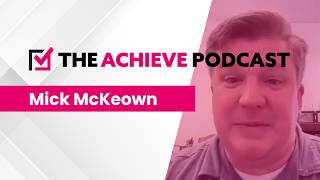
In this episode of the Achieve Podcast, host Taylor Baker interviews Mick McKeown, founder of Pennovia, a firm that helps small and medium‑sized businesses win city and federal contracts. Mick recounts his unconventional career path—from working at the Philadelphia Parking Authority to serving as a White House liaison and deputy at the Department of Homeland Security—before launching Pennovia in 2018. He explains how the new, business‑friendly administration has energized procurement activity and drives Pennovia’s growth. Mick describes his lean team structure (a core of two‑three people with contingent support) and shares personal turning points, including advice from his grandfather that shaped his work ethic. He identifies common bottlenecks in government contracting, such as founders acting as the biggest constraint, mismatched sales cycles, unrealistic timelines, and political interference. To overcome outreach challenges, Mick leverages personal networks, virtual office hours, a regular “coffee booth” in Falls Church, and community‑building events. He discusses practical AI use for short‑form correspondence and calendar‑driven email replies, while warning against over‑reliance on AI for lengthy documents. Looking ahead, Mick hopes to plateau for a sustainable period, build a service model that can operate without his constant presence, and focus on more face‑to‑face networking in the next 90 days. He closes with advice for aspiring government contractors: expect to “hurry up and wait,” recognize the lucrative, multi‑year nature of federal contracts, and tap into the government’s goal to spend roughly 30‑34% of procurement dollars on small businesses.
Chapters
Welcome to another episode of the Achieve Podcast, the show where we highlight leaders, creators, entrepreneurs who are building meaningful businesses, shaping their industries, and having an impact. I'm Taylor Baker Baker, your host, and today we're excited to be joined by Mick McEwen, the founder of Pennovia. You can find out pennovia.com, P-E-N-N-O-V-I-A. Now, Mick, Give us the backstory because you're in a bit of a niche here, helping cities or helping, uh, businesses get city and government contracts. How did you get into this space and who are you currently serving?
Yeah, sure. So, man, like, there's a, an old saying in the government world, um, specifically where I come from in Philadelphia, which is, um, you know, You don't find parking, parking finds you. And I ended up— I found myself struggling through school, got a job at the Philadelphia Parking Authority, and it's like the people who tow, boot, and ticket your car. And I ended up being there for 12 years. But in the time I got my undergrad, my graduate degree, and I learned procurement and— okay, it kind of felt like a place that kind of like Dunder Mifflin from The Office. You had this really weird knowledge of a very super specific type of thing. And, you know, that kind of got me a career. I moved down to D.C. because, um, pretty much I was in Philadelphia and the only way to move up was death or indictment, and the grand jury wasn't being held and everyone was healthy as a horse with all the new health insurance. So came down here, um, worked my way into being the, uh, White House liaison or the deputy White House liaison for General Kelly, then to be Secretary Kelly over at Homeland Security. Um, and after that, you know, I was the executive director of the Homeland Security Advisory Council, which was like the board of directors for DHS, and the campaign office. So I ran If You See Something, Say Something, the Blue Campaign, which was a piece of legislation I was able to get passed, and, uh, Be Cyber Smart, and a couple other, other campaigns. So anyway, 2018 Got the bill passed unanimously through the House, Senate, started the business, and then 2020, when COVID hit, I was just so focused on how to help small to medium-sized businesses that, you know, really been focusing on them to win government contracts. And we've had a pretty good success record so far.
That's awesome. That's awesome. And so what would you say is driving growth for the organization right now?
Within my organization? Yeah, um, I mean, I'm— I drive everything, right? So, um, pretty much for me, it's— we have this new administration, and not to be political in any way, shape, or form, but, you know, it's the— when you have a new admin, it kind of invigorates the procurement process because people want to get new things done. And specifically, we have a administration that's as business-friendly as this one is, it makes it more interesting and fun. So it's been super invigorating, politics aside, but you have a group of people who are in the inside who are trying their best to make things happen. So that part's fun.
That makes sense. And how big is your organization or your team right now?
Yeah, so I have a couple of players on my team. I pretty much work with 3 contingent players besides myself, and then I have another 2 or 3 that I kind of use on a, on a need-to-know basis. At one point we had up to 7 people, but I felt like I wasn't running a business. I was more managing a team and I didn't like it. And there was my one key person. I remember we had a call and I was just like, if I knock this down to just me and you, can we do it? And she was like, oh my God, that would be so much easier. And that's kind of what we did.
Yeah, that makes sense. Now, for you, as you look back at personally, what would you say, what turning points, positive or negative, have molded the way you think about running the organization?
So I, whenever I talk about business, um, I think of my grandfather, who I'm named after. He was the original Mick McEwen and then me. And the original Mick McEwen started his own business probably in his late 40s, early 50s.
Okay.
Ran it till he was in his 70s, saved it, gave it to his son, and then he probably made more money from 75 to 95 just being a real estate agent on his own without having to deal with the business. And one of the things he always said to me was, Mickey, as soon as your first employee walks in the door, your day is over. So he would be in the office at 5 AM and trying to like get as much work done between 5 and 9 as he could. And so, you know, when it came to like managing that type of stuff, I always thought about that. Like, when— so that's why predominantly my team is on the West Coast and I'm in Falls Church, Virginia. Yeah, I have a couple of hours every morning where I know that they're still asleep or they're doing whatever and I'm doing my thing.
That makes sense. That's smart. Now, as you guys try to grow and expand and help more businesses, what have been some of the biggest bottlenecks or obstacles that keep showing up?
Oh, whoever the founder, owner, CEO is, is always the biggest bottleneck. You know, like, it's because there's 3 things that people will do. One is they want to take a government sales cycle and put it to a corporate sales cycle or a business sales cycle. And you, you can't do that. Um, the, the, it's, it, the sales cycle are long. And, but like, the government, you know, can't— doesn't actually say can't— it rarely gets out of a contract. Even with the Doge stuff, like, there's, there's so many contracts that did survive because of the way they were written. So you have to, like, these things take time. You have to percolate. And I think that's kind of part one. Two is the sales mentality that, you know, the founders have. I haven't talked to this guy this week. The Deputy Assistant Secretary of Who Cares doesn't want to hear from you every 4 business days. They know what you have, they appreciate it, and when they get to it, that's when the conversation occurs. And one of the things that I found is that people create meaningless timelines, meaning that they create like, hey, we need to get this done by March 30th. What happens if we get done by March 31st? Well, nothing. I just want it done by March 30th. Okay, um, I understand the need to wanting to try and accomplish it, but yelling, screaming, and doing all those things aren't going to change anything. So I mean, like, there's some of the bottlenecks, and then the other ones are with people who are misguided who want to help 'Oh, I'll talk to my congressman.' Can you imagine being a procurement officer sitting there at your desk, like, having your croissant and your cup of coffee, and then all of a sudden Congressman Smith's office calls you from, you know, Oklahoma 4 saying, 'Hey, my brother-in-law,' like, 'Well, I'm not touching this now,' you know, like, 'The congressman's interested in this,' like, 'Dude, no, things we do not do.' Mm-hmm.
That's funny. That is such an interesting perspective because there's so many nuances dealing with those government contracts that are different. And so now, as you guys, when it comes to growing and expanding the business, your outreach, your marketing, getting the word out, what are you been finding that's been working for you, and where do you feel the gaps, frustrations?
So I have a ton of things that are working, and I'll go into that in a second. I think the gaps and frustrations first are when you're starting out, your name and your personal network can carry, I think, almost anybody in business for 24 to 36 months. And then it's month 37 that it's like, oh crud, like things are getting hard now. And I find that my personal network, while phenomenal in so many things, it's not necessarily the best for a referral service. So, and that's okay. Like, I get business from my network, but it's also kind of like, you have to be able to also make deposits into your network. And so if you're not able to make those deposits, yeah, things get a little, get a little dicey. Um, but yeah, but I mean, like, my— I think my frustrations are sometimes based upon also the amount of time you need to spend within your network. Um, and you know, you get into these things where these network calls become more of like they're not networking, they're more friend calls. And that's fine and that's great. And, you know, friends are amazing, especially when you're, you know, over 40 and a guy. Like, making friends is not like as easy as it was when we were 6 and we're like, look how high I can jump. So like, that part all makes sense. But like, there's a time and a place. And so one of the things I did do was like, for like, I had 3 to 4 guys that I would talk to regularly, and I, I, like, they're awesome. But I ended up opening up office hours, so I'm available, okay, virtually every Tuesday, 10 AM to 11. Stop by. And so a bunch of guys will stop by, we'll have coffee, like, virtually. It's great. And then for, like, the other pick your brain people that You know, you got to be on, uh, Broad Street in Falls Church, Virginia on Friday. I'm sitting in the back booth at the Starbucks, and I'm there from 9 to 9:45, and like, pop on in. Um, that's been super cool because like, you've got the most random people who've done it. I have people who are like Eisenhower Fellows or something. I don't even know what that does, but they're very smart, and why they were talking to me was beyond my recognition. Um, the press, like all these different people will pop in for a little bit and talk to you, and that's super fun. But it also kind of knocked out the 4 hourly phone calls I was having every week that were great from a social standpoint but not from a business standpoint, if that makes sense.
Yeah, that makes a lot of sense. Now, with all the talk around AI and automation, Where have you found ways to utilize it, and where do you still see opportunity with automation? Yeah, AI and automation.
Um, AI is phenomenal when it comes to, uh, like, correspondence. Um, I wouldn't necessarily use it for submission of paperwork or anything like that, but I would use it for like, hey George, it was great talking to you and I received your like, that stuff's great. Um, uh, I think that's like my, my key use of AI is just to kind of like not spend as much time. I probably spend 75% less time doing this with just using AI doing like certain— I, I mean, like Every week I have to do an email that's pretty much giving my availability to the government for an opportunity for a contract. And AI is able to like look at my calendar, see what times I've blocked off for this call for that week, and gives it to them. Like, it's great in that and on all that type of stuff instead of having to do that. Um, like the, the downside— and I don't say the downside, but I think what people do do is they over they over-rely on it, and people can read through it. So, you know, I think it's great for 5 to 7 sentences. I don't want to do it for 57 pages.
Yep, I like that. Good for 5. That's good. I like that. That's a good way to put it. Yeah, 7 pages. Now, when you think about the business and the next stages of growth, what are you most excited about?
I'm kind of— this is a weird thing to say, but I'm actually really excited to kind of quit the climb and hit a plateau for a little while, um, meaning that I would really enjoy having 18 months to 2 years of, um, just like, like this nice little steady incline that I've had kind of flatten out a little and, um, regroup. Um, because this is a very— this was supposed— this past administration was supposed to be a once in a lifetime. It ended up being twice in a lifetime. And like good, bad, and different. It would be— it's going to be nice to kind of like chill for a minute, do the climb again. But I mean, like, it's also kind of— I'm excited to create it or help put into a way where the services I'm providing, while I'm key, I'm not the big man. And like, it can be utilized by others with me not necessarily at the helm every moment of the day.
Gotcha, that makes sense. So Mick, when you look back at your own journey, the wins, the mistakes, what lessons stand out to you and what do you wish you understood sooner?
Youth is wasted on the young, bro. Youth is wasted on the young. Like, I, I really I'm glad where I ended up. No comp— like, no issues there. I think that the youth is wasted on the young in the sense of, like, take more chances, fail more. That, I think, is, um— I was so risk-averse because I didn't have my college degree when I was younger. I, I went at night and finished it, but it was, it was dumb, you know, because once you have experience no one really cares. Um, so I mean, like, that's kind of like the thing I, I, with that. And then I think the other thing is I am thoroughly thankful that I was able to create, or I was able to learn in a way that things stuck with me, meaning I don't feel like I had to relearn the same lessons over and over again, you know. And, um, and I learned my— like, some people learned them, you know, at Wharton School of Business or the Kennedy School of Government. I ended up learning a lot of my lessons at, you know, the Philadelphia International Airport travel pass lane 60 to 49. Like, they were like that, and like, that was— but that was a good way, the way you treat people, um, the importance of, you know, relationships and what your name is, um, how people— like, the benefit of the doubt, you know, and like, also like just the importance of staying in touch. Like, the most influential person for me when I moved to DC was a guy I met 15 years prior when I was in high school, and I volunteered on a political campaign above a Chinese restaurant on Frankfurt Avenue. And like, we stayed in touch, we were friendly, and like, when I came down to DC, he was like, oh my God, I've known you since you— like, since before you could vote. Yeah, I'll help you out. And it's, I think it's, it's the importance of that, like who answers your call and how important it is for you to, you know, be able to take the phone when certain people call.
Yeah. Wow. Wow. A lot of value there. Now, Mick, if you had to pick one constraint to focus on and solve over the next 90 days, what would it be?
Um, for myself?
Yeah. For you, the, for your organization.
Constraint. I mean, I would be— I mean, one of the things I love, and I haven't been as active on, and I'm ramping up my muscle, if you will, is, you know, introducing myself to more people and Like, I think that, you know, in our remote world, even though I work in an office, you know, motion creates emotion. And like, getting— like, I think getting back out and like seeing people face to face, shaking hands, you know, like being a little bit more, for lack of a better term, a politician and like, you know, kissing babies and stuff like that. I mean, don't do that without— unless you know them, but Um, you know, that I think is kind of where I'm at. Um, that's, you know, there's something to be said of getting back out there.
Yeah, the authentic communication, a connection, human connection.
Yeah, like, I haven't— I have a, um, I have a client, love them to death. And, um, the, the person I took this spot over for, like, never went and saw the government and never visited, never did anything. And it's like, no, you got to go up, you got to say hi, you know? Like, I know when these guys have their kids are getting christened, I, I, you know, like, I know when, you know, their, their youngest daughter's getting married. I understand, like You got like those types of things happen in elevators and, and, you know, the water cooler and, you know, around the coffee urn like that. Like that's the type of stuff you kind of got to be around and see and do, you know, stuff of that nature.
Wow. That is so true. And there's so, so much value to be said for that, that authentic connection. When you, when you see somebody's eyes, you know what's going on in their personal life. They trust you enough with it and you care enough to show up and acknowledge it.
Yeah.
So, wow. Well, Mick, I appreciate you coming on and sharing your story. And again, any other thoughts for our listeners, for other leaders who are wanting to get into government contracts? Any other suggestions?
Yeah, man, be prepared to hurry up and wait. Um, like, that's definitely a big part of it. And the other thing is, is that You know, the beauty of government contracting is that it can be very, very lucrative, obviously. Um, it just— that's like Boeing and Northrop Grumman, right? But it's also like a great way to create tentpole clients, and that, like, those clients are going to be there for 3, 5 years. It's that if you're looking to build a business, exit a business, like, those types of things are incredibly helpful in the value that you bring. And I think that's kind of the big, the big thing. And also the government's looking to spend, I think it's something like $0.32 or $0.34 per dollar on small businesses. Why not yours?
I like that. Why not yours? Why not yours? So for those who want to reach out and get to know more, learn more, they can reach out on LinkedIn or Panovia.com, anywhere else you want to send them.
Yeah, just those two places. I mean, look at my company page, Pennovia, P-E-N-N-O-V-I-A, on LinkedIn. You can find me, um, uh, like, I, you know, I, I, I'm a little, um, snarky and, um, in your face a little bit on LinkedIn. So yeah, I'm a big storyteller, in case you haven't noticed. Um, so yeah.
Oh, that's awesome, Nick. I appreciate that. Thank you so much.
Thanks, Taylor.
Thank you to our sponsors of today's episode, Achieve a Fractional, which provides fractional executive leadership for growing businesses. And if you enjoyed the episode, share it with a friend, with a colleague. If you're looking to get into government contracts and not sure where to start, reach out to Mick and the team and they'll help you out and kind of guide you down that path. So reach out and we'll see you in the next episode of the Achieve Podcast.









