The Achieve Podcast - Miguel Adao (Voler Systems)
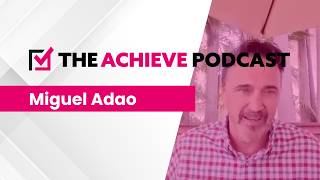
In this episode of the Achieve Podcast, host Jesse Warner interviews Miguel Adao, President and CEO of Volair Systems (also referred to as Alair/Valaire Systems). Miguel walks through the company’s 47‑year history as a hardware‑focused engineering services firm that designs and develops medical, wearable, and industrial IoT devices. He explains Volair’s lean operating model—about ten full‑time staff supported by a flexible pool of 20‑40 contract engineers—allowing the business to scale up and down with project demand. Miguel details how the firm shifted its lead generation from a reliance on repeat business and referrals (70 % of inbound) to a marketing‑driven engine that now supplies roughly 70 % of qualified leads, using paid search/SEO, high‑volume email campaigns, and both virtual and physical events. He discusses his cautious stance on AI, noting that while AI has limited impact on lead generation today, it shows promise for uncovering “look‑alike” prospects by mining four decades of project data. Scaling challenges are framed around a cash‑flow‑pipeline chicken‑and‑egg problem, the need for credit lines, and rigorous BANT qualification, especially the “budget” component. Miguel shares the recent acquisition of Volair by Canadian robotics and physical‑AI company Innovobot, highlighting new opportunities in physical AI, robotics, geographic expansion, and access to a venture arm. He reflects on his personal journey from Fortune‑500 B2C roles to leading a boutique B2B engineering firm, noting mistakes such as over‑relying on personal communication style, confusing flashy marketing with real outcomes, and learning to be more results‑focused. Finally, he offers advice to leaders: be kind to yourself, surround yourself with people who challenge you, and embrace calculated risk‑taking while maintaining grace for the team.
Chapters
Welcome to the Achieve Podcast, the show where we highlight the leaders, creators, and entrepreneurs who are building meaningful businesses and shaping their industries. My name is Jesse Warner and I'll be your host today. We're excited to have Miguel Adao with us. He's the president and CEO of Alair Systems. Miguel, it's a pleasure to have you on the show today.
Really nice to be here, Jesse. Thanks for the opportunity.
So our audience can get to know you a little bit better, give us a quick backstory of your business. What do you do and how did it all get started?
Yeah, very good. I've been with Volair Systems myself for 4 years, but Volair has been around for 47 years. It was founded in 1979 in Sunnyvale, right in the birthplace of Silicon Valley in California. The founder is still with us, he's my chairman, and we talk daily. Walt MacLeigh started Volair Systems, um, 4 and a half decades ago to help medical medical devices, wearable, IoT, industrial device companies develop their prototypes and their devices. So we do the hardware, the firmware, the software. We do the electrical engineering. We don't do mechanical. We don't make anything, but we help design and develop a lot of medical and industrial and wearable devices. That's what we do.
So it's been around for quite a while, over 40 years, is that what you said?
That's right. Yes.
Now, how long have you been with the company?
Myself, 4 years. Yeah, I joined in post-pandemic, uh, initially to run sales and marketing, uh, and then to run the whole company on behalf of the founder. And the exciting news is that we got acquired last month by a big, uh, a Canadian multinational. So we're very excited about this next chapter in our journey here.
Wow, congratulations on the acquisition.
Thank you.
Um, How big is your company?
So, we're actually quite lean and mean. I love the model because we're only about 10 full-time employees in the company, but we have on average anywhere between 20 and 40 engineers working on our projects. And so, we have a lot of contractors, consultants, 1099 guns for hire that come in and work our design and development projects. Depending on the needs. So this is a very cyclical business. It's time and materials. It can have a feast or famine. And so we're lean for those moments in between projects, in between new customer wins. Sometimes when we have a lot going on, then we need more engineering power. And that's where we can bring in all these folks who are either part-timers or fractional or retiree, retired engineers. And so it's a really solid model for this kind of design world.
Yeah, and I imagine with the smaller team, like you mentioned, you're able to ride the waves a little bit better, right? The feast and famine that you talked about.
Yeah, because cash is king, right? And your viewers probably feel this every day. Without bookings and billings and pipeline and cash flow, you're really in a tricky spot. And so, it's really important to be able to maintain a lean core structure when things go through a little bit of a dip in those cycles.
When you look at sales, marketing outreach, what's working for you right now? Where are you seeing traction?
Yeah, it's very interesting. When I joined 4 years ago, I would say 70% to 80% of our inbound and our engagements were generated by two sources: either repeat business, which we love because we don't have to work as hard to get it. They're just happy customers coming back for more projects, a next phase, a next device, a next generation of the existing device. Or it's referral business, word of mouth, friends of friends, the extended ecosystem bringing new possibilities for us. And that's great. Those are really great sources, but you can't rely— in my world of engineering design services, you cannot rely on just those two sources alone. And so we've turned it in the last 4 years. I'm very proud of the fact that we've turned it from 70% the folks, you know, either existing customers or referrals from folks, you know, and 30% marketing sourced. We've pivoted the the other way. So now 70% of our qualified leads, and we generate about 35 per month, 30 to 35 per month, which is a really healthy clip. These are marketing source now. And to answer your question, it's a combination of 3 things that are generating the biggest impact for our buck. One is paid search. We invest in Google AdWords. We invest in our SEO, SEM, our search engine optimization and management of our website. Keywords, make sure that they show up in the first searches in Google. And also now with the AI solutions, that's one big area where we invest time and effort in. Email marketing is still working. You have to know how to navigate the algorithms and all the craziness and all the noise out there. But email marketing still works very well. Now, it's a number of— it's a game of numbers, Jesse. You have to put out hundreds and thousands of emails to your target audiences in terms of verticals and personas and geographies. But we generate a lot of good quality leads that way. And I'll say the third piece, which is more expensive and therefore the ROI, the return on investment, is a little trickier to, to, to prove, is events, whether it's our own events, which we do a lot, We organize both physical and virtual events once a month or third-party events, pick those events that where our audiences are going to be and try to meet them there. So between paid search, also organic search, but search in general, email marketing and events, physical and virtual, I would say that would be— that would represent about 70-75% of our lead generation today.
Miguel, there's a lot of talk right now around AI, around automation. Uh, obviously it sounds like you're— imagine you're using in your platforms all the time as well as you're building and developing these, these products. Talk to me a little bit about how you're using AI in your business.
Yeah, I'm happy, and this could be another whole 20-minute, uh, topic of a podcast for us, Jesse, but I would say I'm in general I'm a laggard. I believe that there's a very fine line between leading edge and bleeding edge. And I've learned through many scars over the years to not be the first one to jump into the latest, shiniest object. And so, I've been by default and by a very conscientious purpose, been very late to the AI game. And so, Right now, I still do believe for lead generation, it's very much a lot of smoke and mirrors. It's a lot of hype. It's not really helping us that much. The exception is in finding lookalikes. This is where I'm seeing a really nice and hopeful linchpin for me when it comes to lead generation. Now, we can talk about AI and generating content, helping me write great blogs. Helping me even with the visual creatives. That's a different story. But in terms of pipeline building and lead generation, which is all I think about these days other than cash management, it's— it's the jury is still out there. Where I find a very interesting angle is if I feed AI and we work with Claude and Perplexity and ChatGPT, etc., but feed the tools our 1,000 projects over the last 40 years. And look for those lookalikes, companies that have similar setup. Were they at the same stage in their fundraising? Were they at their same stage in terms of hiring a CTO or VP of Engineering? What are those signals, those compelling events that have led us to close a deal in the past that we can replicate? This is where I'm finding AI to start to unearth and discover these nuggets, these needles in the haystacks, because otherwise, so far, I've been a little bit lukewarm about the ability for AI to help in the lead generation specifically. It can do a lot in terms of managing customer support and of course, creating valuable content. But in our world where we have long sales cycles, we are selling projects that range from $50,000 to $1 million. This is not SaaS. And it could be a 2-year cycle. And so, I need to be in front of the right audiences all the time because it's a very short window between they've got the buy-in from management, they have their money in place, they have their decision they're going to develop a device. That's when I want to be there, right there with them. Very often the ship has sailed. They're already ready to commercialize and manufacture. They don't need a device house anymore. So I need to drip all the time, but I need to talk to the right people at the right time with the right message. And if I can find— I'm still working hard to prove this theory, but with AI's help, if I can find, identify those lookalikes that mirror the same types of companies and job titles and, and instances of the past, there's value there.
So it sounds like you're using AI in a lot of different ways, obviously beyond, you know, the lead generation piece.
Yeah.
Well, let's look at— talk a little bit about some of the constraints that keep showing up as you try to scale your business. Where do you keep hitting that wall? Time, people, systems, capital, leadership. What are those things that are kind of preventing that growth?
Such a good question. We were talking about it at our management meeting this morning. It's chicken and egg. It's, it's this tricky balance in that I cannot invest more in marketing and sales and hiring people for our business development because the cash flow is not quite there. And I can't quite get the cash there if I don't invest in more sales and marketing motions. Right. So there's always this kind of balancing act. And so it's important for small businesses, regardless of what product or service or solution you offer, to have ideally some sort of a line of credit or bridge loan or some sort of financing or funding that can help you bridge those, those moments that can allow you to invest back into the business intelligently. And with a purpose so that you can then indeed start getting those returns. So for me, top of mind is always in a small organization. And now thankfully I'm part of a large organization with deeper pockets, but still I'm very much tasked to manage my own P&L. So I don't expect gifts from my new parent company. And so that doesn't change in terms of the focus to manage our cash flow properly, manage our lines of credit properly, and be very judicious in how we use— how we hire full-time versus part-time, permanent hires versus contractors, and also how we invest our marketing dollars. We try a lot of different things on LinkedIn, account-based marketing. We try gifting, we try direct mailing, and we do very small and inexpensive pilots by design so that we don't lose a lot of money in things that don't ultimately prove out. So, to answer your question, I would say cash flow and then in terms of the quality of the pipeline, we are very good at generating MQLs, marketing qualified leads. We use a kind of a generic BANT, B-A-N-T. Does the prospect have budgets? Does the project, the person we're talking to have the authority to make decisions? Do they have a clear need? Is there a timescale associated with that? So, BANT, those are the 4 kind of bullet points that I follow. Money, are we talking to the right person? Is there a need? Is there a time? Hopefully, a time in the now, in the near term. And if there is, then we have ourselves an MQL, marketing qualified lead, that we can pass to our technical sales for them to qualify further. What we're seeing is very often, Yes, we're talking to the right founder, the right head of the engineering or R&D team. Those are our personas. They have a clear need for outside help and they do want to move in within the next 1 to 9 months. Very often, however, they are unfunded or underfunded. So the B in the BANT is the biggest challenge. And this is again going back to marketing activities and lead generation and AI support. I need to do a better job at identifying prospects that not only have something of interesting that they want to develop, but also they have the ability to pay.
So you just got acquired, so obviously it changes things a little bit. But, but as you look at the next stage of growth, what are you most excited about?
I'm really excited about being acquired by, by this company called Innovobot. Innovobot has not just a technical side called Innovobot Labs, of which Valère Systems is now part of. They bring into the mix some exciting technologies, a lot around physical AI, which is finally coming. AI in hardware, not just in the software. Haptics, which is the vibration that you feel when you use your iPhone or when you use certain automotive or aviation technologies. They do a lot in robotics. These are very exciting spaces that Innovobot, our new parent company, has really mastered over the years. And so we bring in the medical devices, the wearable expertise. It's a really nice marriage. But also I'm very excited about the fact that Innovobot also has a ventures arm. They have both a VC and the private equity side of the house. And so there's an opportunity here and we have to be mindful and keep the two separate for fiduciary and responsible management of the funds, etc. But we are now in a, in a part of a bigger organization that also has the ability to fund these startups and scaleups that we talk to so often. So that's very exciting. There's also an opportunity to expand beyond the US into certainly Canada, where they're based. They're in Montreal. We're in California. I live in San Diego, but our company is up in the Bay Area and also explore opportunities even further afield into Europe and Asia. So, yeah, great opportunities to grow geographically in terms of company sizes, in terms of verticals and industries that we can tackle now.
Let's look back for a minute on your journey. So you're a little bit different kind of founder than I often talk to, right? You, you, uh, came in as sales and marketing, became the president of the company, and so a little bit of a different journey. But talk to me about some of the wins and the mistakes. What are some of the lessons you've learned along the way?
This is so good. I love this question, and none of this was rehearsed, was it? We just met, uh, 2 minutes before this podcast and you deliberately did not send me anything and it's perfect because it makes for a more authentic and genuine conversation. Yeah, interesting trajectory. I've lived in 9 countries. I'm originally from Portugal, moved around quite a bit. I spent 10 years in B2C. I spent 10 years in business-to-consumer companies, large companies, Pepsi-Cola, Procter Gamble, Hewlett-Packard. Then, I moved to B2B. With the business division of HP, but also went to Dell and VMware. I never had this entrepreneurial or founder or SMB type of experience or even drive. It was always Fortune 500 companies. And until a couple of years ago when I got the bug, I helped two companies go IPO, get quoted on the, on the Nasdaq. And that was a very fun experience to be part of two exits like that, smaller companies that went on to become public companies. And then I was recruited by the founder of Valaire Systems to help him grow sales and marketing and eventually help him appreciate the value of the company for an eventual exit, which we've succeeded in that regard. And now I will remain on board, still continuing to head up Volar Systems but also playing a bigger role in the new parent company, in Novobot as well. And I'm very thrilled from a personal career development and personal growth, professional growth. To answer your question, some mistakes. Oh my gosh, so many. One mistake I've made, which I often go back to, you can tell by my, the way I'm speaking, my body language, I'm very passionate, right? I made the mistake early in my career thinking that people would need to mirror my kind of body language and my kind of impetus and my kind of drive to be considered driven go-getters. And I've learned over the years actually that folks who are quiet and perhaps a little more demure— I don't even want to compare between introvert and extrovert. Because actually I'm an introvert by definition of the, of, of the term. The best definition I've heard of an introvert is somebody who needs to be by themselves to recharge and refuel, and that's me. I go for, uh, beach walks or hikes by myself. That's, uh, the, the ultimate definition of an introvert. But in, in, in the, uh, professional setting or in a podcast setting like right now, I'm certainly very outgoing, and I I learned over the years that actually people that don't have to have the same kind of personality, whether it's in communication but also in thinking and in strategic insight and analysis and delivery. And I've become a lot more empathetic. That was one of my blind spots throughout my career, understanding that people are not like me, then perhaps they're not as passionate or as committed to the end goal. And I've learned that's not the case at all. Other things I've learned along the way, I've learned that— I've mentioned this and alluded to it in our call here, in our podcast here today— is that just because you have a really sexy and compelling and colorful marketing campaign, it doesn't matter if you don't have results, right? And I often confused the program with the success of an outcome. And I've become a lot more, also because now I'm running a company, not just driving a marketing campaign or a marketing team. I've become more ruthless and hard on myself in understanding, is this really going to move the needle? Is this going to make us better, sell more, satisfy more customers? Introduce more potential blue oceans for us? Or do I just like it because my ego says that it's a really clever play on words or beautiful visuals? And so, I've learned to be more focused on results. And as a marketer by education and by most of my career, sometimes we get lost on the beauty, quote unquote, of the campaign or the program and not so focused on outcomes. And so, I've learned to become much more results and outcome focused.
All right, last question for you, Miguel. What advice would you give to other leaders who are on a similar journey to you?
Don't be so hard on yourself. We are, as leaders, as entrepreneurs, as founders, as executives, we are our worst enemies for sure. We beat ourselves up because things are not going as fast or as effectively as we'd like. We are trying our best, right? We are trying our best with the information we have. Surround yourself by folks who are better than you, that can say no. Don't be surrounded by yes people because then you think you're God's gift to mankind. Surround yourself by people who are not afraid to take risks, calculated risks, to course correct, if they have not gone. And to also challenge you and say, "Hey boss, leader! Is that really the right thing? Let's think it through. Let's game this out." And so, I would say, yeah, have some grace on yourself and on the team. And don't hesitate to bring folks along the journey that are willing to take those risks with you but are also willing to challenge or question if what we're deciding is the right thing.
Well, Miguel, thanks again for joining me today, for sharing your story, your insights. Definitely a little bit of a different take than some of our normal guests. I appreciate, you know, the insights as you've come in as the president of the company, help them grow and, and get to a point where you can get acquired. And you've got an awesome future ahead of you, so congratulations on that.
Thank you.
Uh, for those listening, if you want to learn more about what Miguel is doing at Valaire Systems, I invite you to visit their website, valairesystems.com. And that'll wrap up today's episode, episode of the Achieve Podcast. A big thank you to our sponsor Achieve Fractional, which provides fractional executives for growing businesses. And if you enjoyed today's conversation, follow the show, share with another entrepreneur who'd also find value in it. And again, thanks for listening. We'll see you on the next episode of the Achieve Podcast.









