The Achieve Podcast - Mike Ruffell & Kyle Hafen (Structured Homes)
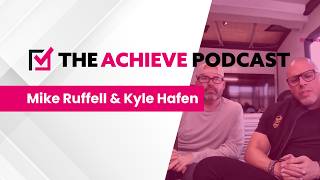
Kyle Hafen and Mike Ruffell of Structured Homes build homes from steel on-site instead of traditional wood framing. They claim their method is faster, cheaper, and more fire-resistant, and they use AI to generate designs and site plans so a small team can scale like a much larger company.
Chapters
Welcome to another episode of the Achieve Podcast, the show where we highlight leaders, creators, and entrepreneurs who are building meaningful businesses, shaping their industries, and having an impact. I'm Taylor Baker Baker, your host, and excited today to be joined by Kyle Hafen, founder and CEO, and Mike Graefel, COO of Structured Homes. And you can find them at structuredhomes.com. That's strxurehomes.com. So guys, give us the backstory, as we've talked off camera a little bit, with what you guys are doing and the change you're bringing to the home industry. How did you get here, and who are you currently serving?
Ah, perfect. Well, first of all, Taylor, thank you for, for having us. Um, I'm actually a little bit excited about this, maybe even a lot excited, truth be told. I know you and Mike have a history, and it was good to connect with you the other day, but appreciate the opportunity to be here.
My pleasure. And so tell us a little bit about what you guys are doing with these homes.
Yeah, so, uh, Structure Homes, um, I mean, there's, there's always a good story, and, and every good story starts with, you know, the typical line, so there I was. So, uh, there I was at my dad's house We were having just a family event and, and he said, hey, um, do you have any interest in, in buying a shipping container business? And I said, what? He's like, you know, a shipping container business. And I've been in real estate and land development for about 25 years and I peddled in some other entrepreneurial type things. And I said, yeah, that's probably a hard no. And he's like, well, it does pretty good. And I said, well, what does that at me, and we're from southern Utah close to Lake Powell. And he said, well, I think he's got a houseboat and he's got an airplane, he's got a pretty nice home. And I said, well, wait a second, you had me at houseboat, like give me the books. So he gave us the books and we looked at them, and, and about the same time as we started looking at them, you know, algorithms work, you know, I started seeing all these container homes popping up on Pinterest and on Instagram. And I'm like, man, that's really cool. And it kind of dovetails with real estate land development, right? And so I'm like, yeah, maybe there's something here. So I asked him if they did much, you know, customization, or if they, if they did any tiny homes. And he said no. So we, you know, solidified the deal and purchased the company and immediately dove into fabricating and working on this idea of putting these container homes out there. They were so cool. And as we did that, you know, we quickly learned some valuable lessons. As soon as you put two containers together, the structural integrity is compromised because you have to cut out a big side of that wall. And so you have to reinforce it with steel beams and headers, footers, and then you're basically rebuilding, you know, what once was a, a perfect rectangle or square box, um, to make it, you know, livable, to insulate it, to put power, electricity, so on and so forth in it. And the demand was actually quite high. There were a lot of people who were looking for— essentially, it was a more affordable way to, to have a house. And we also met some, you know, slight resistance with, uh, city and municipality ordinances and code in, in making sure that they were sound structures. And so through that process you know, it wasn't that it was too complicated, but as every great idea starts, there's got to be a better way. And so we kind of re-engineered, reverse-engineered the concept and said, hey, let's start with the steel beams, the steel posts, the steel floors, and see if we can't build something that's similar to a container but that is better. And that was about 3 years ago. And over the last 3 years, it has been one hell of a ride. I mean, it's been so fun and interesting and learning as we've taken this concept of a shipping container home completely changed. We are not a shipping container home company. We are a steel-built, built-on-site structure concept. And what we found is that we are more affordable we're, we're more eco-friendly, we have higher energy efficiency in our homes, and we build faster. And all of those things considering, we are more affordable than the traditional stick-built home.
Wow, that's, that's crazy. And with being metal, I'm sure it's a lot more fire resistant as well.
Yeah, exactly. Really good point. Uh, fire resistance, an interesting concept because Through this process, about 6 months ago, you know, I felt like I was on to something that could be like amazing.
Yeah.
And I've known Mike for a long time. I've coached his son for almost 10 years in baseball. Good friend of mine. And he was working for a company in northern Utah. And I realized I needed somebody like— I needed a dude. Someone that understood the backend side of running a business. You know, we're a small organization and they had the resources and contacts and even maybe more so than that, but the systems to help us become successful because the interest level was just increasing and increasing. So, I hit up Mike about 6 months ago, 9 months ago, and I said, "Dude, I'm doing something really cool, really exciting." You know, would you consider, you know, maybe coming and jumping on board? And I'll never forget the way he looked at me and what he said. He's like, bro, I love my job. And I knew that it wasn't— it didn't matter what I offered him financially. Like, there was no way I was going to get this guy. So we kept doing our thing, realizing that we needed some key players and As fate would have it, November comes along, his career situation changes. I hit him up again and he says, "Yeah, let's get together." And I know you know Mike and how detail-oriented he is. So, I tell him about what we're doing, tell him about the affordability of it. And he's just like, "Dude, there's no way this is true." So, we spent the next 5 days from 8 o'clock in the morning to 5 or 6 o'clock at night, locked in a conference room. And I felt like I was, you know, like a witness on it, being under trial. Like, it was crazy. I mean, he was so detailed in the questions that he was asking, and everything that he was able to find was just verifying the concept. And, you know, we, we figured out a way to make this work, and I think he got really excited. I'll let him tell that part. But it was, it was a huge business decision, perhaps, you know, even better than coming up with this idea, to, to bring Mike on board.
Well, that's awesome.
And thank you, Taylor Baker Baker. Like, you— I know you've heard the story, you know, I would be remiss if I didn't share. I just— it has been an incredible ride. And I remember, Kyle, what, you know, in having these conversations with me. And yeah, I didn't believe it. And, uh, you know, I decided to, you know, vet it up, down, left, right. And, and thank goodness I did, because it took me away from, you know, the real parts of life. And at that, that time of my life, if, if I'm being really honest, it was hard, man. It was— I was in a bad place mentally and emotionally, and depressed, and sometimes you don't know it until you look back. I remember Kyle, you know, bringing this to me, and I agreed to meet, and it was like this light turned on as I started to vet this and vet it more and get more excited and, and more passionate about the opportunity. It, it was just an incredible journey that, that I went down. And in the end, I, I landed in this place where it's like, this is, this is real. This is, this is more than real. And it's an opportunity. I mean, I'd be lying if I didn't say and wasn't excited about the opportunity to build wealth and to make money. You know, we professionally, we do those things often to make money. But for me, the thing that got me more excited was just the opportunity that I really felt like we could revolutionize the housing market and we can make real change. And, and that kind of hit me hard because I have kids, I have adult kids, 30, 26-year-old daughters and a 16-year-old son coming up, and, and they just can't afford to live, you know. Yeah, much less buy a house. And it's hard when we look at that that harsh truth. But that's— pardon me— that's the position that so many people are in right now, and especially these kids. And so for us, I, I would say our mission is pretty simple, and it's just to, to make homeownership attainable again for the masses.
I love that. That is a great mission. Now, for you guys' organization, I know you said it was smaller, but how big is the team? How big is the organization right now?
So the funnest part, or maybe the second funnest part— now come on, having your family involved, maybe it's a fourth or fifth— but we've got, uh, we've got my brother that works with us, and I've got one of my older sons and my eldest daughter that work with us. Um, we just brought on Mike's daughter, uh, a month ago to work with us, and, and then two more employees. And, uh, and so we are a small organization But, uh, but we're passionate and, uh, and it's fun, it's exciting. Everybody feels kind of what's happening. Um, it's, it's been really fun sharing these growing pains and growing excitement with people that you care about.
And that was a big piece for me too, Taylor, when we're talking about teams, is I, you know, there's sometimes you hire your family out of necessity, uh, sometimes you hire a family because you just are that confident in this being a great opportunity. And, you know, our daughters are the two that really come to mind. Macy, you know, she was— she had another good job, and, you know, Kyle brought her here and was bold enough to say, set aside the schooling that you've done and the things that you've learned and come here and join us. And she's been an amazing asset to this company. And my— the first time I ever toured this this, uh, uh, we call it the yard, um, our facility here. First time I toured it, that was the first person I called as I was, as I was touring. This was my daughter, who is a big— she's big into business and systems, processes, you know, pieces, parts that allow us to be duplicatable and repeatable. And, you know, I called her because I was that passionate about it. And that speaks volumes when you do it for those reasons and not just out of necessity.
Yeah, wow. Now for you guys, what would you say is driving growth for the organization right now?
Yeah, that's, you know, I would say it's pretty simple, and that is demand for housing. And, you know, housing is just so almost unattainable. Uh, yeah, there's this massive shortage in, in Utah. If we just talk about Utah, you know, we have 50,000 families right now that are just itching to get a house and they absolutely cannot afford it. You know, the cost of traditional construction is just so steep. And, you know, so the— that's the biggest challenge. But even a bigger challenge, I would say, is the mindset that people have. We are coming in, and for us to be able to say we have better home still built, it's stronger, we don't have to worry about termites and fire and our R-value, so just how energy efficient our homes are, is far beyond those of a traditional home, to be able to say those things and in the same sentence say that we are in almost all cases less money, more affordable, that's a great, it's a great, uh, you know, partnership.
Absolutely. Turning the construction industry on its head a little bit there, right, with all those options. Now, what would you guys say the turning points, positive or negative, have molded the way you think about running organization?
Yeah, so through this process, I, I think there's been, there's been multiple things. Um, one thing in particular is just reevaluating the way that the homes have been built, that, you know, everything in the world today is upgraded and updated with technology. Um, but of course you have homes that have, you know, some, some smart homes, as you want to call them, But really, the home building process just— it hasn't been moved. There's no needle mover that's really said, hey, let's reevaluate what we're doing here. And through the process of what we're doing, you often find where the other concepts or, you know, the other typical process is flawed or even broken. You know, when you're building stick-built homes, timing— hardly ever are they on time. Um, most often they're going over budget. The quality that you get from a home depends widely on what type and how good your crew is that's building the home. And those are all variables that are, that are hard to get, that are hard to control. And so when, when you're looking at the process of building something that's scalable and creating a system and utilizing the technology that we have now so that when we go and build a house, we have almost zero waste. And because of that, we're able to build faster, um, we're, we're, we're not having to cut and reuse and do different things. And we're able to, to better predict what the price and cost is going to be, which gives developers, investors, the end home buyer or user more confidence in knowing that Hey, this is a house I want to build, and when I'm done, it's not going to be $60,000 or $80,000 more than what we, what we started at, right? So, so all of that is building a better system that is duplicatable and that becomes more streamlined with, you know, with innovation and technology and modern building concepts that are a little bit different. As Mike talked earlier, you know, it is a mind shift that there's a change in that we've got to educate people and help them understand that we can build whatever you want. Uh, you know, we're building a 10,000-square-foot barndominium, we're building 400-square-foot, you know, VRBO vacation rental cabins to 2,400-square-foot, 5-bed, you know, 4-bath homes. And when people are starting to understand that, uh, it's light bulb for them, and it really is a fun experience when when they're able to actually start thinking, dang, I, I might be able to afford to buy a house.
And for me, it's, it's two things. I mean, I mean, there's a lot more than two, but I don't know how many meetings we've had. We'll call it 30. And I can just say that we haven't had one bad meeting. We haven't had one meeting where someone hasn't actually— it hasn't clicked for them and they're not excited and passionate about what, what we're doing. And that, that's humbling and exciting. The, the other time we, we were meeting with a builder up north, and a builder that builds multiple hundred homes a year, and he, he paused. He's like, you know, you guys, I don't know if you know what you have, but I, I would say this in short order is going to be a $100 million business. And then he stopped and said, actually, I think it'll be a billion-dollar business. Now, I don't say that to impress or to— I just say that to impress upon you and other people that for me, at that point, it, it became this, this thing that, that it wasn't just about building homes anymore. It wasn't about this incredible opportunity. It was about opportunity that to again revolutionize the home, the home building market. And we're able to build a system and a process that we can duplicate and we can grow and, and help other people. And that, that is when it gets really exciting.
I love that. I love that everything else in the world is getting upgraded, so why not the housing industry, right? You see with the cars and then just more efficiently everything, so it makes sense. And I can see I see that what you're saying, Mike, is it being a very large industry and taking the old way they've been building homes for 100 years and changing that massively. Now, as you guys try to grow and expand, what have been some of the biggest bottlenecks or obstacles that keep showing up?
I mean, I kind of sigh because anybody who thinks for a second that owning a business, businesses is a piece of cake, then they're just sadly mistaken because it is, it is hard. It is very hard. No matter how excited we can sit here and say that we are, um, it's, it's tough. And, um, so I would say though, with that out of the way, that one of our biggest bottlenecks is just changing the way this industry thinks, you know, kind of full circle what I was saying earlier. You know, the people, they, they know what they know, as I did when Kyle shared this. And I, I really didn't think for one second that he was going down this path that was going to lead to where we are today. But, um, you know, changing the way they think— we're not, we're not a container home. We have— we are a steel-built home. We're We're better, stronger, faster, and we can do that for less money. And getting people to really understand that is, is a challenge, you know, just changing their traditional construction mindset and, and educating them the right way.
I love that. Possibilities that you guys mentioned, Kyle, 10,000 square foot houses to little options. But go ahead, what were you going to say?
Yeah, just, just dovetailing that is, you know, anytime you're doing something innovative, innovation always takes longer than what you anticipate. You know, we've been working at this for 3 years, and, you know, only the last 6 months have we finally felt like we've had a product to go to market with. And so that's a long time. There's a lot of, you know, sorting out and figuring out and trying to you know, is this going to work and how can we make it work and still be, you know, structurally sound and, and not just equal to. We talk about that often, but we're not just equal to, we are better. And, and figuring out how to make that work and the education behind it and, and just exploring and visiting with people. And, you know, that there's, there's, there's skepticism, um, and then there's these phrases like modular or pre-manufactured that have these bad voodoo, stay away from this stuff. And that's not what we are either. We're built on site. We don't show up and drop a box. And so that education has been critical in helping get through that. That's the bottleneck that we're dealing with. We don't have, like we said, everything's a great story, Well, there's not enough of what we're doing out there right now to have people telling this story, but it's coming. I mean, chapter 1's being written right now. And, uh, and, and so then we will have a story to be told, and, and stories get told forever, you know. I mean, I'm excited for the first story to be told about what this person did, or this individual that's got one of the structure homes, and what their process was and sharing that with other people. Um, we had some clients in here a couple days ago, and before they left, they called their parents and said, hey, Mom, Dad, you guys are getting ready to build a house. Stop everything. You need to talk to Kyle and Mike. This is incredible. And within 30 minutes, we got a, we got a message from them and a set of plans from them. And, and so, you know, it really is going to be you know, something that, that changes the industry. And to be a part of that, I mean, that's wild.
That's awesome. And I, and I love it because of my, my roots in the construction industry. Now, when it comes to you guys' messages, your messaging and outreach and marketing systems, what's been working well and where do you feel the gaps and frustrations?
Uh, again, the same thing. We're kind of beating this up, but it's been education. It's just been trying to educate people We, we market on Facebook, for example, and we get inundated with phone calls. And the phone calls are a series of similar like-minded questions. You know, wait a second, you can't really do that for that price. You know, what is it that you're doing? What are we missing here? How does that process work? Is it financeable? You know, can we, can we, can we get a loan on this? And those are all valid questions because of some of the misunderstandings that are associated with steel structures or container homes, which again were not. Um, and so we actually had a, uh, we had an appraiser and a group of lenders come out and, and tour our site so they could see, you know, what our building looks like and go through the building. And everybody asked tons of questions, and they were super impressed with the ideas and the concepts. But really, it comes down to You know, are we able to finance these? And one of the lenders, you know, just kind of said, hey, Mr. Appraiser, you know, what type of deductions is this home going to have compared to a stick-built home? And the appraiser looked at him and said, zero. If there was a history of these homes, most likely I'm going to do them for more because there's just nothing to compare it to. It's built on site, same as a traditional stick-built home. And it was awesome to see, you know, the jaws drop on some of these lenders. You know, they went from, I don't know if we're going to be able to make this work, to, you know, as soon as the, the session was finished, hey Kyle, what do we got to do to be a preferred lender? You know, we want to work with you. Tell us what— tell us what you need. You know, how can we help? Um, so all of that's just an educational process, and that's part of the marketing and messaging that we're trying to get out, is that we are very different as far as quality and end product, but the same process as far as building from the ground up on a foundation, just like a stick-built home.
When their perspective drastically changes is when they can see it and touch it and feel it. When they, when, when they come into our building and do a home, then it's real, and it's like, oh my gosh, I, you know, so often they still can't quite believe it, but when they see it and touch it, then it's reality. And you see the lights come on, and that's fun.
That's awesome. Now, with just shifting gears here, with all the talk around AI and automation, using, using it, how have you guys found ways to utilize it internally, and where do you still see opportunity?
Yeah, that's a great question. I actually come from that world, from software world, before I, I came here. And tech in general, years with Micron, Dell Gateway, and took a span doing some, a bunch of other businesses. And most recently for the last 5 years was in software, and it's all about AI. And, you know, really came to a point where was, if we don't use AI, we're going to be left behind. Well, that is absolutely No different here. If we don't use AI, we will be left behind. And so we are an AI-first driven company. What we do, how we do it, is, is driven by AI, and it's becoming more and more like that every day. Uh, a typical home builder will take 2 to 6 weeks to get plans back and, and, uh, you know, go through all the their, their design tools and fabrication and system systems. And we're getting very close to a point to where we can do that in minutes and, you know, take their thoughts and their ideas and what they want and, and, and have it there for them within minutes.
And wow, it—
and I would say that's just the tip of the iceberg, Taylor Baker. Like, wow, we will be innovative We will make mistakes along the way. We will do things that are not perfect. But using that, using AI and being that driven or having that drive us, it will be revolutionary.
Yeah, even, even the concept of, you know, we mentioned how small our organization is. AI has afforded us the ability to operate as if we were a much larger, larger organization, a corporation. Where we're able to get more done in, in, in the hours that we have, and not just more done, but better. We're able to produce renderings, floor plans, elevations. AI is a huge tool in what we're doing. And the thing that's really crazy is when you start thinking about what AI's potential is going to be in the real estate development building world, right? I mean, imagine when you have a piece of ground and you're able to, to input the zoning, you know, stipulations for that, for that acreage, any infrastructure constraints, and then have AI generate the most efficient plan as far as development plan, number of lots, space utilization, and building design that's going to utilize the space the best and give the developer investor the best bang for their buck. In addition to making the prices affordable for the end home buyer. Like, it's crazy that that is not that far away. And, and being a part of that, particularly on the home side, I mean, come on, that sounds like— that sounds super fun.
There's not a day we don't go by that we don't have to pinch ourselves. Like, that— did we really just do that with AI? Is that really possible? And I, I think a lot of people are sitting in the chairs and they're using chat you know, as their new Google, and that's okay. But what it can really do is so far beyond that, that, you know, I think those that are sitting in this room don't even realize, you know, what can happen.
Yeah. Now, when you guys think about the next stages of the business, what are you most excited about?
Oh, dude, this has been so fun because anything that you have to work your ass off for is like the results when they come, there's nothing better. I mentioned I've been a coach for a long time and I've taught that to all of my players that it takes what it takes. And as an adult, we don't experience some of those things so much in the sports world or in studying as much, but in the business world, it takes what it takes and nothing ventured, nothing gained. And so this has been, you know, it's been a grind for 3 years. It's still a grind right now. But what excites me is being able to think about how affordable housing doesn't just affect the end homebuyer and their ability to buy a house. Affordable housing opens the door for that, that family to have extra money to maybe go do something on the weekend, to maybe put their kids into some sport activities or whatever arts that they enjoy that they couldn't afford to do before, maybe to save up for a rainy day, maybe to go on a vacation, like just to enjoy life. So it's not just about helping somebody be able to buy a home that's, that's energy efficient, that's built by Still, but, but you can change Communities, you can have an impact on— yeah, maybe it is the world, but knowing that you're going to help somebody. Most people's number one asset at retirement is their home. And there are so many people right now who are missing out on that opportunity. And so, being able to be impactful in that way, like, I mean, my kids call me a softie. I can cry over any good movie. Um, but like, and Mike mentioned this, of course we want to make money, you know, but, but it's not the most important thing, you know. Creating an opportunity in a system that, that is scalable, you know, projects will come and go, right? But, but something that's a system that's scalable, you know, that can be replicated and duplicated over and over again. And being a part of that and and where you can actually change people's lives, change their opportunity to even create wealth or generational wealth, like, man, that's powerful. And I'm so excited to see that element. You know, we met with some young, these same clients, they, you know, they were young and their idea that they were gonna be able to buy a home, you know, it was 10 years down the road from now. And they left here understanding that we can do this. It was so rewarding. I mean, it was, it was amazing.
That stuff, that, that stuff definitely excites me. And one of my favorite things about this is our yin and yang relationship, um, and we can land in a lot of places where we're exactly the same. I would say the thing that really excites me though is scalability and our ability to scale anywhere. We're building home in Hawaii. We, you know, this, um, it, it just doesn't matter. These meetings that I've talked about, people are like, can you do these? Can you do, uh, this, uh, in the Carolinas? 50, 50 complex in the Carolinas? Can— and, and the answer is absolutely. We are building a system that, that is scalable, duplicatable, repeatable, and, you know, not unlike the the McDonald's of the world. And, you know, they, they figured out a system that is exactly the same everywhere they go. And we're able to do that. And, and I, I get really excited when I think about that. And still the ability to be so precise and so strong and bigger, better, stronger for a more affordable price.
I love that. And, and you're hitting so many points as you go across the nation. With the different things like the termites, certain areas really struggle with the, the weather, the fire hazards, the insulation value, like all these problems adjust and you can adjust each one of those. It's not like you're stuck to one little niche, one little state. That's impressive.
You know, it's funny that when you make these comments, Ted, because that's the kind of things that we hear all the time, you know, just excitement. And then they start helping us market and sell and with all their ideas And it's, it is crazy. I've never been part of an organization ever where we're having so much success with no success yet. You know, we, we have houses being built, we have buildings, we have— but so many people are in the exact same spot where they're just pulling the trigger and they're so You know, we're— one thing we have to do is we have to be prepared for this scale and to be able to scale the right way.
Yeah. On that point, if you guys had to pick one constraint to focus on and solve over the next 90 days, what would it be?
Inside the business? Yeah. Or you talking globally?
Well, I guess you could do both if you want, but the business.
Yeah, inside the business, I I think something that's extremely difficult right now is managing the growth and, and trying to figure out how to do it and how to do it the right way, um, with, within, within the, within the, within what we could, what, what we're capable of doing. Um, we do have, as Mike indicated, we haven't had a bad meeting yet. We haven't had somebody come in and sit down and and go through the process and say, you know what, I, I don't think this is for me. And, and so trying to figure out how to streamline the process of, you know, strategically— well, I mean, it adds to it, like making sure that we have additional supply chains and strategic relationships with people, um, not just for product and materials, but lenders, investors, developers, municipalities, governments that are starting to source us and reach out to us. So trying to make sure that we can keep that chain streamlined and running efficient as we're trying to grow at the same time.
Wow, that's amazing. Now, for those who want to learn more, they can reach out. So they go to the website, maybe LinkedIn, other places. I know you guys, you mentioned in the beginning, do shipping containers. That's a different website, different company, but osscontainers.com, is that, that's a different organization versus the structuredhomes.com, correct?
Correct. That's correct. And structuredhomes.com/achieve, that's actually the best place for them to go. And we wanna take care of your customers. Well, anybody who's listening, we'll, we'll take care of them because we, we love and appreciate you, Taylor Baker Baker, um, and we'll take care of them regardless. But we, we do plan to enter them into a drawing. Anybody that comes and if they request some information or they set up a meeting, we're going to enter them into a drawing for $100 Amazon gift card. And, uh, we just, you know, want to say thank you to you and thank you to them, to them for listening and putting up with our, our jokes.
And, you know, Thank you guys so much. No, I appreciate that. So again, that's strxurehomes.com/achieve. Thank you. And thank you to our sponsors of today's episode, Achieve a Fractional, which provides fractional executive leadership for growing businesses. And if you enjoyed today's episode, share it with a friend, with a contractor, with anybody who's looking at building a house. Who feels stopped, reach out to Kyle and Mike and the team, and they will show you how it is attainable. And not only attainable, but it's desirable. It is a beautiful home. I've looked at their website, I've looked at their plans, like, I can vouch for them. So reach out to them, and we will see you on the next episode of the Achieve Podcast.









