The Achieve Podcast - Mike Schindler (The VUCA Principles)
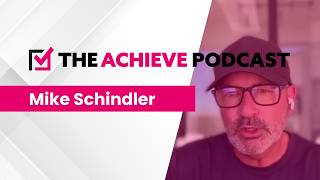
Mike Schindler, CEO of VUCA Principles, built a training program from a military concept (volatility, uncertainty, complexity, ambiguity) flipped into vision, understanding, clarity, adaptability. A 2011 financial crisis led him to adopt the "Rule of Five" for evaluating relationships, which shaped his leadership philosophy and his core belief: "My job isn't to impress you, it's to inspire you."
Chapters
Welcome to another episode of the Achieve Podcast, the show where we highlight leaders, creators, and entrepreneurs who are building meaningful businesses, shaping their industries, and having an impact. I'm Taylor Baker Baker, your host, and today excited to be joined by Mike Schindler, the CEO at the VUCA Principles, and you can find them at itsvuca.com.
I tsvucamax.com.
Now Mike, give us the backstory with what you guys are doing. A little bit of a niche here. How did you get into this space and who are you currently serving?
Yeah, it's a great question. So how I got into the space, I, I really starts like 3 generations ago. Uh, I'm third generation Navy. I got out, got into Seattle. That way, you're quite welcome. Yeah. Got out of the service and got into Seattle startups and a number of businesses and then kind of evolved. And I got, I got really fortunate in meeting an individual by the name of Chris Nolan out of California. And right at COVID, we were getting ready to do a film and things shifted. And he said, we got to do it on a principle I didn't remember from my military days called it's VUCA. Or VUCA, and it stands for volatility, uncertainty, complexity, and ambiguity. And the whole world was stopped, right? And I'm like, well, that's pretty interesting. And he said, yeah, but the cool part is there's a flip side. It's vision, understanding, clarity, and adaptability. And that's what you teach. Because I've been in the coaching industry for 15 years working with our military and veteran families. And so, we developed this film with 17 of America's top thought leaders, you know, business leaders, bestselling authors. You know, we were shooting during COVID The film gets signed and it goes global and people turned around and said, hey, this is kind of a cool film, but how do we apply it? And so, then we developed a whole training program behind it and that just kind of catapulted us to the next level. So, We work honestly now still with our military and veteran families, but with upper-level C-suite and mid-level managers. And our goal is to just really help them move from stuck to unstuck and deal with any sort of transition that they're going through, whether it's a personal transition or professional transition. And so our whole goal is to get them back on a path to success.
I love that. I love that. Now, how big is the team in the organization right now?
Well, we've got, I think, oh boy, I think we've got 10 or 12 individuals, coaches, executive coaches that have been trained up in the system. And I still take clients today. I kind of handpick the ones I want to work with. And Taylor, the cool part is we're developing a whole free program that people can take advantage of as well, like kind of the 7 steps to kind of get you back to level. Which I called the Human 1.0 to Human 10.0 training program. And it's— yeah, it's, you know, VUCA. If you look at VUCA, Taylor, it's pretty exciting because there's above the line and below the line. We talk about above the line, below the line. So below the line is volatility, uncertainty, complexity, ambiguity. That's external forces that are hitting us in the face, right? You can't really control those. but the positive, the vision, understanding, clarity, adaptability piece, you can control, right? That's internal. And so if you're below the line, I call that Human 1.0. You're still being impacted and affected, and you're still being influenced mostly by the negative part. And so Human 10.0 is you're living in the vision and the understanding, and you can adapt, and you have clarity, and And so, the purpose of that is to really help people kind of level set. And then, if they want to go deeper, we can go deeper with them. That's fine. But it was my experience working with military and veteran families and certainly in today's economy when people are kind of stressed out financially is I wanted to be able to provide a way that people could take advantage of what we've taught for years. And navigate that themselves. It takes discipline, but, you know, we wanted to make that available. And so we're launching that here very, very shortly. So they can still go there, that's available at michaelschindler.com, uh, and they can jump into some of the lessons that we already have in there. But yeah, it's, it's— I gotta tell you, I mean, Taylor, I, I do what I do because it's kind of a God-given mission. So I love that.
I love that. Making that impact the world for the better in so many ways. That's generational change. Now, at this stage of the business, what would you say is driving growth for the organization?
Uh, word of mouth. It's crazy. I mean, well, I, I think it's a combo. Um, you know, I'm posting tips on LinkedIn all the time with, with no agenda. And it's really just, you know, it's a platform to give back. And, you know, if people reach out, then they do. And sometimes people reach out. I still work pretty closely with our military veteran space. And so oftentimes I'm either doing keynotes or guest speaker or something along that line. And then, you know, when I'm working with big companies, you know, their management will pull me in and then Individuals would be like, well, hey, can you work with me individually? Right? So that's why I had to kind of hone it in because I was getting— personally, I was getting a little overwhelmed. And here I teach people how not to be overwhelmed. So a lot of it's word of mouth. A lot of it is certainly LinkedIn. You know, when we developed that movie, people still to this day, that movie is about 6 years old now, which is crazy. But it's even more relevant today than it was probably when we made it in 2020 because of all the things that are going on with the emergence of AI, with things that are going on in the Middle East, with things that are going on here in the United States. So, you know, that's why we say MAX, massively accelerating exponentially. The whole VUCA world is just, you know, 20 years ago, you might have some big news in a year. And now we have big news like every day. Yeah, people are like, I don't know how to— how do I navigate this? How do I process this? How do I— and, you know, I don't know, I guess I got my dad to think that, you know, I'm like a duck on water. I look calm and I'm paddling like hell underneath. And, you know, helping people understand how to just navigate it and just have a fresh spirit outlook on life.
I love that. That is such a beautiful sentiment there. Now, looking back for you personally, what would you say turning points, positive or negative, have molded the way you think about running the organization?
Turning points, that's a great, uh, that's a, that's a great question. A, a massive turning point for me, and I'll share this story, is Uh, I just got done doing a major project in Boise, and this is back in 2011, and I was stepping away from some pretty big income at that point, and I was just going back to my roots. And I had a number of contracts lined up, and the whole world changed in 2011 because they were all government contracts, and that was sequestration at that point. And now all of a sudden I don't have big income for my contracts. Get canceled. And I'm sitting on that, you know, I'm just like, I don't even know how I'm going to keep the lights on. Like, I, you know, my daughters are going to flip the switch one day and there's not going to be lights. And I'm freaking out. And I had a friend come over and said, I want to introduce you to a guy. And I said, okay, great, tell me a story. And he goes, I'm going to let him tell you his story. And so I had, what did I have, I had $14 left in my pocket. Taylor Baker Baker. And my friend had $20 and he's like, here's the deal. I'm going to pay for Seattle parking and you pay for lunch. So we go to this place called Dick's, Dick's Burgers, and we pull in and Buzz is a big guy and he orders what I thought was everything on the menu. And I'm used to having a lot of money and I'm like, man, I got $14. I'm calculating in my head what's going on. And I get there and I'm like, I'll just have a burger, no bun. Cup of water. And the gal looks at me, young gal, like college student, looks at me and she says, uh, that'll be $17. And I'm like, oh my gosh. Now I'm used to writing checks for charities. I'm used to being in the news. I'm used to— and I got no money, right? And so I still have ego. And now I'm sweating, right?
Yeah.
And she looks at me, Taylor, and she says, I got you. I got you, don't worry about it, and floats me the $3. And I step away and I'm— I've got tears in my eyes and I, and I look at Buzz and I'm like, man, she floated me. And he goes, that's favor. Don't ever forget to count your blessings. Get in the car. And we go and we go up this elevator and, you know, it's Seattle startup industry, right? And the doors open and there's this guy standing there that's got this, you know, like a t-shirt on, or I think it had a collar, but it was like a polo shirt. He's got a sports jacket on, he's got cargo shorts with tube socks and like, you know, these goofy looking shoes on there. And I'm like, my God, they're letting anybody in here, you know. And, and my friend Buzz goes, Jim, it's so good to see you. And Taylor Baker Baker, that was a pivotal moment in my life because remember I told you I had ego, right? And all of a sudden I'm judging this guy before I step off the elevator, not even knowing who he is. And that's the guy I'm meeting.
Wow.
And we sit down, we have this amazing conversation, and he taught me a lot about leadership. And he taught me something that was so profound. He taught me something called the Rule of Five, which I apply today. And Taylor Baker Baker, that was when we sat down, he was looking at one of my projects and he says, I'm going to give you 5 reasons why I think we should do business together. Now, he had made a fortune, okay? But he was unassuming. And I was excited because I was the guy that had no money, right? And he said, I'm going to give you 5 reasons why we should work together. And I'm like, this is stellar. And he goes, well, time out. Before you say yes, I'm going to give you 5 reasons why maybe you might not want to work with me. Jim, to this day, that's— I don't know how long ago that is, uh, 2011. I can't do the math. 10, 15 years ago, 15 years ago changed my life. And he taught me, number one, put my ego on the shelf. Number two, never judge. Okay? Be open. And number three, be sure people understand why they should work with you and why they shouldn't work with you. And that, from that point, is how I started running my organizations. And I teach my teams that too, because it's so important. And any project you take on, you should know why why you're going to add value to an organization. But you should also be very honest and understand why that organization might not want you, where you're not a good fit. Because today, when you look at the marketplace, 75% of people are out of alignment. Hey, they're struggling mentally, they're struggling in their jobs, they're not happy. And our goal is to create that alignment for people so that they become their true self. And every day when they wake up, they're excited because life's short, you know, and you might as well live life on a pathway where you wake up every day going, yeah, you know, some days aren't perfect, but I still love what I do. Yeah. Wow. Wow.
I love that. I love the transparency, the honesty, and the integrity that is just infused into that. Now, wow, Mike, as you guys try to grow and expand the organization, what have been some of the biggest bottlenecks or obstacles that keep showing up?
Uh, me. I mean, I'm probably, I'm probably my worst, uh, I'm my worst marketer for sure, right? You know, I mean, you look, I look at it and people are, you know, they remind me, they're like, Mike, you've written 3 books, you've got, you know, 3 films under your belt, you've got you know, 10,000 people through your program. Uh, but I, I'm pretty unassuming, right? And I just shared that not to say, hey, look at all the stuff I've done. It's a reminder to me too that I just do it because I'm led to do it. Does it make sense? I, I, I don't want my name in lights. I don't want it. None of that matters to me. The bottleneck for me is And I think part of it has to do with trust too, Taylor. You know, to be honest, like, I'm interviewing a few people right now that can help me in some areas, and I don't know, or I don't feel like anybody can communicate our message as well as I can. And so if I'm coaching and working with individuals and companies, and yet I believe that I can be the only one that can market what we do, that's a problem, right? Because I'm a time junkie and I don't want to work 14 hours a day. So, uh, I'm probably the worst bottleneck, to be honest with you, because I, I've got to learn to, um, to really trust somebody to take on our mission and be a spokesperson for it. And, uh, that, that's— I'm still learning to do that, to be honest with you.
That makes sense. Now, when it comes to your messaging and outreach, your marketing systems, what What's been working well and where do you feel the gaps and frustrations?
Uh, well, you know, our YouTube has been working well. Um, LinkedIn has surprisingly been working well. Um, the word of mouth, you know, when you put 10,000 people through a program, people start to talk. And I think word of mouth has been really solid for us. And to be honest, sometimes I get lazy on that because I'm like, well, you know, word of mouth is just going to do great. I'm such an ROI guy, you know, and I'm looking at KPIs and, you know, and KPIs and, and, you know, case in point, I invested in one company a substantial amount of money and I got nothing from it. And that for me was hard. But I also know that I'm the type that I'm not going to part with money if, if, if, uh, if I don't think I lose it. Does it make sense? So I just kind of, you know, but I learned from that experience. And, you know, social media is changing.
Yeah.
So fast. And so you've got to have these soundbites that grab somebody's attention in like 2 seconds. And, and maybe you'll hold their attention for 30 if it's, you know, and it's usually somebody wrecking their bike on a mountain bike trail. Right. And so when you're trying to change lives, you go, how do I compete with that? And we're still learning that. I mean, TikTok's been good for us, too. I mean, we probably get our most views from TikTok. But yeah, it's just, I'm 56, and I got to turn to my daughters and say, how do you do social media? And they're like, we're not even on it. They're on Snapchat or something, right? So it's an interesting marketplace, Taylor, as you guys probably know. And I think many of us are still trying to learn, you know, what's working effectively well. And when you're in the transformation business or the life change business, you want to be sure that your message is both authentic and captivating. And that changes, I think, probably weekly.
So that makes sense. Wow. Now, speaking of automation, AI, and then the changes that have happened, where have you guys found ways internally to utilize it and where do you still see opportunity?
Oh my gosh. Well, my last book was The Rise of Humanists in the Age of AI, right? And I, I, I wrote a manual, uh, on AI and I use AI today. It's interesting and this is gonna sound bad, but many companies are doing this is we shrunk our team. Because AI has really become— it's a military term— kind of my, my war room, right? Is I can use AI because I've programmed it that understands my business and I can prompt it in ways that give me ways to challenge myself in my own thinking.
The—
so I've used it to really improve my efficiency. Okay. So a proposal or projects that I'm working on, what would usually take me a week to do, I can get done in, you know, 2 days right now. It still takes me understanding that tool. Yeah. And it still takes my discernment in business to use that tool. Where do I think it's going? Well, I'll tell you where I think people need to be careful. I think people need to be careful in trusting AI holistically.
Mm-hmm.
Yeah. Okay. I think that's a problem because people do. That's the importance of discernment, right? So I think there's opportunity with AI that it can help gain efficiencies, it can help spur new ideas. It's still going to come down to the human to implement and to use discernment and to understand human nature. So it's a powerful tool though. Yeah.
Wow. Now, Mike, when you think about the business, the next stages of business, what are you most excited about?
I'm honestly— I'm excited to see people's human potential. Like, I look at— okay, so because I love movies and have, you know, been a part of that industry, I really look at AI as either Jarvis, okay, from Iron Man, or Star Trek, right? You had AI there too, Right? I mean, that was all AI. That was, that was birthed in 1966, right? When you think about that, right? So I'm excited to see how AI helps people achieve their human potential because that's truly, if you understand how to use it, you can use it that way to pull out your best potential. Now people will say, well, what happens to all the jobs? I, you know what, we've been asking that for 150 years. Remember we used to have horse and buggy. And people are like, what's going to happen if we get rid of horse and buggy? You know, and, and, you know, we just evolve. And somehow I believe humans will continue to evolve. We'll figure it out. If you're asking for the crystal ball, I don't have it. That's probably an Elon Musk question, right? Not a Mike Schindler question. But, you know, I, I think it's going to be— watch a sci-fi movie outside of Terminator. And you know, I think that's where we're evolving to. So I love that.
I'll set a Terminator. So man, you hit so many good points with that that you've been bringing up as we go through this. Now for you, when you look back at your own journey, the wins, the mistakes, what lessons stand out to you and what do you wish you understood sooner?
Uh, mentorship is what I wish I had understood sooner. Uh, when I got out of the Navy, I navigated or went through 14 different jobs.
Wow.
Um, because I was looking for that high-octane team, I was looking for purpose. I, you know, the military was great at assigning mission purpose identity, uh, and I got out and all that fell apart. And I was seeking all that from external forces instead of understanding what that meant for me and for me personally. And it wasn't until I got a great mentor, mm-hmm, that my life took a turn for the better. Right. And had I understood that at 25 as opposed to 40, I think I'd be even further ahead today than I am. Than I am now. But, uh, it's not that I didn't have successes along the way, but I— but it was ego that drove those, and money that drove those, and, and, and, you know, fame. And all that is fleeting. Like, you know, you get an award, Taylor, and you think everybody in the world's excited about it, and nobody cares. Right. You know, I've got awards that sit on my shelf and I look at those, I go, those are pretty cool, but nobody cares. Right. So if you're doing things for external recognition, you're going to feel empty. And that's why I challenge people today is you've really got to understand who you are, your identity outside of everything else. So once you do, the world is filled with opportunity.
Wow. I love that. Know your identity outside of it. Now, if you had to pick one constraint, Mike, to focus on and solve over the next 90 days, what would it be?
Yeah, you're asking me if there was one problem you could help me solve in the next 90 days, what would it be, right?
Um, you solve it yourself.
That's an interesting question. One challenge in the next 90 days. Boy, that's a stumper, to be honest with you, because, you know, I'm always in the problem-solving business, right? Like, I'm in the problem-solving business. So I'm very attuned to what is the one thing I need to do today to help me move forward. Like, I'm all about micro wins. And if I were to— I mean, I'm just being a bit flippant here. If you could help me solve one problem in the next 90 days, let's get my taxes done. I keep, I keep punting that.
Uh, me solving it is like, what if you had to solve it with your company?
If I had to solve it, be me doing my taxes, right? I mean, uh, you know, usually I farm that out, but, uh, you know, it's, it's, there's certain things that I don't like to do. Like, I'm great at human systems, and it's, it's operational systems that sometimes I punt, uh, because I'm like, oh my gosh, it's just going to tweak my brain. I'm going to have to you know, become back into operations and I'm strategic. Uh, so I struggle with that a bit, you know, Taylor, I really do. It's, it's, I'm good at it, but it's, it's not my sweet spot. You know, I think John Maxwell would say, you know, you could be a 4 or 5 and you'll work like heck to become a 6. Uh, and if you're an 8 and you work really hard, you'll be a 9. So where should you focus your attention? Right. So I'm probably in the operational level. Um, I'm great at managing teams, but when it comes to me personally, it's, it's, you know, I'm probably at 5, 5 or 6. Okay. Yeah, yeah. Just being frank, you know.
Oh, I love that. I love the authenticity, the realness. Like, yeah, it's beautiful.
Yeah, well, you get there when you know who you are, right? Like, I, I don't, you know, it's my job isn't to impress you, my job is to inspire you. Right? And that's just it. So it's, it's, it's, it's really equipping you so that you are inspired to do something that you've always wanted to do. And it has nothing to do with me, right? I'm like Obi-Wan Kenobi. So, you know, you're the Jedi, and my job is to help you navigate from Luke Skywalker to becoming one of the Galaxy's best Jedis.
So that is probably going to be a life quote that I'm going to keep. My job isn't to impress you, it's to inspire you.
Yeah, yeah, good. I throw these things out and I forget I say them, and then, you know, somebody chases me down the street and says, hey, do you remember what you told me 6 months ago? I just put it on one of my advertising pieces. And I'm like, I— if I said that, that's amazing. That was a Holy Spirit moment right there, so run with it.
So yeah, yeah, that's beautiful. I love that one. Oh man, that is— it shifts the focus where it should be. Like, yeah, love that. Yeah, you're not, you're not holding back. I'm not gonna let my light shine. I'm not gonna— I don't want to overbear anybody. It's like, no, no, let your light shine for others. It's not to— it's not to have it on yourself. It's not to impress everybody. It's to inspire you to let your light shine down the road. Pass the candlelight down.
Yeah, well, it's, it's, it's— that's how you change the world is one life at a time, right? So if, if you're sitting back and you're so consumed about I or me, right, your light is covered. And I believe that when you shine your light, you can inspire other people and they can influence others. And, you know, that stemmed for me, Taylor, from a radio show I did like 15 years ago. And I was on this live radio show in Boston, and we launched this program where we, we had, uh, the veterans pay like $50 at the time to get in, and if they graduated the program, we'd give them $40 back, right? And the live radio, right, live radio, the, the host is like, well, how much money do you want to make? And, and, uh, I said, oh, well, that's interesting. She goes, well, timeout, it sounds like you want to make money on the backs of veterans. And I'm like, wait a second, I'm like third generation, like, I don't You know?
Yeah.
And, you know, this is gotcha radio. And I was— I, you know, my dad taught me to be curious, so I wasn't defensive. I was getting ready to say, what, you know, walk me through that. And she said, Mike, how much money do you want to make? And I never thought about that, Taylor Baker, right? And I, I, I just paused and I blurted this out. I said, $100 million. It's like $100 million. And I'm like, yeah, $100 million, a dollar for every life I impact. And that was another pivot moment in my life. And that's how I've always approached business is yes, there are certain things that we are gonna charge you for, cuz of course we have to make money. Right. But if there's some way that we can help you, we will do it. Okay. We will, we will figure it out. So yeah.
I love that. That's wonderful.
Yeah. Yeah. Sorry, I gotta— had a guy coming in through the gate, so. Yeah, okay.
No, thank you.
People get to see the real self of what happens at my house, you know.
Mike, thank you for coming on and sharing so much. Like, there's so many nuggets. I got a whole page of these. Uh, any final thoughts for our listeners, for other people in a similar journey?
Yeah, I would say don't play small. Like, challenge yourself. Like, really challenge yourself. So, so if you— if you're You know, tonight ask yourself two questions. Uh, where am I lying to myself? Okay. And where am I playing small?
Where am I?
And if you ask those two questions, watch out for the breakthrough.
I like that. Where am I lying to myself and where am I playing small?
Yep.
Wow, Mike, thank you so much for coming on and sharing.
You're welcome.
Again, for those who want to learn more, they can reach out, um, you said MikeSchindler.com?
Michael, it's MichaelSchindler.com. Yeah.
And then it's VUCAmax.com.
It's VUCA. Yeah, it's VUCAmax. Yeah, no, you're good, you're good. I mean, it's a term that fewer than 1% of the people know, so yeah.
Yeah. And then LinkedIn, anywhere else you'd want to send them?
Uh, they can find me on LinkedIn. You know, I'm there. I think I'm under Mike Schindler there. Uh, they can find me there, friend me there, you know. Uh, we can have a conversation. I always give people 30 minutes of my time if they want it. And, uh, it's just, you know, if I can help you, I'll help you. And if we got to go deeper, we'll go deeper. Awesome.
Thank you so much. And thank you to today's sponsors of the episode: Achieve a Fractional, which provides fractional executive leadership for growing businesses, And if you enjoyed the episode, share it with a friend, with a colleague, somebody who's struggling with life purpose and focus. They want to level up, reach out to Mike and the team. They'll give you a path, they'll give you the tools you need so you can march forward with, with direction. And yeah, I love it. Don't play small.
Don't play small.
Don't play small.
I love that.
Mike, thank you so much.
You're welcome.
And thank you to those listening, and we'll see you on the next episode of the Achieve Podcast.









