The Achieve Podcast - Monique Mendoza (Psychology and Solutions)
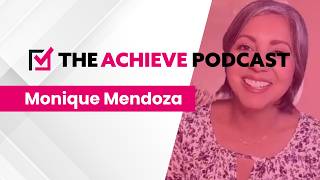
In this episode of the Achieve Podcast, host Taylor Baker interviews Dr. Monique Mendoza, founder and CEO of MM Psychology and Solutions. Monique shares her journey from clinical psychologist working with high‑risk individuals to building a consultancy that provides threat assessment, workplace violence prevention, and employee‑focused safety programs for large enterprises. She describes her team’s multidisciplinary expertise (psychology, trauma, law enforcement), the long‑term partnership model she uses with clients in higher education, healthcare, and retail, and how this differentiates her from one‑off training providers. The conversation covers growth drivers, ideal client profiles, and the challenges of convincing organizations to invest proactively in safety rather than reactively. Monique explains her marketing tactics—LinkedIn, YouTube, referral‑driven word‑of‑mouth—and how a small firm can experiment quickly. She also discusses leveraging AI to curate peer‑reviewed research and automate backend operations. Personal turning points, myths about entrepreneurship, and the importance of holding advice lightly are explored. When asked about immediate constraints, Monique identifies self‑doubt and consistency as the key focus for the next 90 days. The episode ends with practical advice for listeners about finding personal energy zones and where to connect with Monique online.
Chapters
Welcome to another episode of the Achieve Podcast, the show where we highlight leaders, creators, and entrepreneurs who are building meaningful businesses, shaping their industries, and having an impact. I'm Taylor Baker Baker, your host, and excited today to be joined by Monique Mendoza, the founder and CEO of MM Psychology and Solutions, and you can find them at mmpsychsolutions.com. Now, Monique, first, thank you for joining us today. Appreciate you coming on.
Yes, thank you.
Give us the backstory with this niche that you're in. Who are you serving and how? Why are you in this space? Like, what happened to get you here?
Yes, what happened indeed. So my background is a psychologist, and when I started working, I was providing direct clinical work to the highest risk individuals, those that had a threat of harm to themselves or harm to others. And, uh, I really enjoyed that work. I think I felt like it was very meaningful work to me and to the clients that I was serving. And what I also saw was, as I had individuals that were integrating back, whether that was back into school or back into their work environment, I had people on the other side of that— colleagues, co-workers, family, even some of their supervisors or those that were supporting them in that environment— that just didn't feel equipped to know how they were supporting them. And it, it felt risky, it felt uncertain about how to be able to address their needs. And I think even some people would feel scared because they may not know how to address that. And so I transitioned and pivoted to working more from like that organizational perspective. How do I come to the other side, take the understandings that I knew about human behavior and about my psychological background and apply them to the work environment? Uh, so that started my work within like threat management, threat assessment, and also workplace violence prevention. And you notice none of those things are things that I necessarily started off to go to school for when I was working within, um, as a psychologist. But it really gave me this opportunity to shift and provide those resources and build that confidence for employees, for leaders around how to be able to support individuals that may be experiencing concerns or disruptions in the workplace. And then those that are supporting the workplaces and the employees and, um, building up those structures to have them feel confident in approaching that.
Wow, that is such a special industry and, and value because the need is so high in today's world. And to empower people, that's what I love. It's not like it's all funneling to you, it's like, how do I empower people to have these tough conversations? So with the organization, how big is the team organization now?
Yeah, so I have a number of experts that I work with and also those that support on the back end, a couple of individuals in our group that work on the operations pieces in managing some of the client communications, and then also in some of our training and expertise. So we have depth of expertise on our team from psychologists, from other mental health professionals around trauma work, those that had, have backgrounds in law enforcement and training. So we also can apply some of that security and law enforcement perspective to the strategies and the works that we do with our clients. And then we also have a number of subcontractor experts just depending on the types of needs of our client bases. I often work with large enterprises, and so like to also be able to service somebody that is not going to gatekeep other resources. And if I can be a conduit to connecting, whether that's an expert that we are aware of and have in our team or to others that may benefit their spaces as well, I'd like to be able to do that.
That makes sense. And for you, what is actually driving growth for the organization currently?
You know, one of the ways that we differentiate ourselves is I like to think about this from a perspective of like a strategy. It's not a one-and-done training. It's not a one-and-done type of piece when we're thinking about implementing workplace safety with an employee focus to make sure that we can retain all the employees that we like, we can maintain the productivity or expand our capacity for productivity. And so, Some of the ways that we're working with that is to provide long-term partnerships with our clients and make sure that we can continue to grow with them as they want to see their work expand in being the safest places to work across the country.
So are there ideal industries or clients that tend to work better for what you're doing?
I have worked across multiple sectors. So I started my work in higher education. I moved into healthcare. Areas. I currently work in places where the, the enterprise has, you know, operating and functions around employee support already, but also operates on a large scale. So a minimum of like 10,000 employees that often have like a wider footprint. And then I like to be able to work with organizations that both work internally and maybe have internal employees and then also have a public-facing view. So if you think about that, higher education is something that is also open to the public, and also retail spaces where we're supporting our employees internally, but there's a lot of interaction and traffic with a public-facing customer approach. And those are the places where I see the importance and emphasis on supporting the employees and how they're working with the public and also wanting to make sure that they're feeling comfortable as they continue to approach any number of different types of people every single day.
I love that. Now, what turning points for you personally, positive or negative, have molded the way you think about running the organization?
You know, I think as a starting place, thinking about where I initially wanted to be and how I initially saw moving forward in my work was, um, to not be afraid. I think when you're starting in as an entrepreneur, you get a lot of messages for what entrepreneurship is going to be like. And, um, there are also not only messages that you want to take in and you want to receive as helpful advice, but also myths and lies that you actually have to walk through in order to figure out that those don't work for you. And, um, so being able to be agile with that, I think one piece that I often come back to is I received messages early on, um, even something that actually kept me from starting the business earlier than I, or starting the business sooner, was this idea of you're going to be constantly having to like mine for clients and look for clients, and it's just going to be selling yourself all the time. And well, I think there, that's, there is some piece to that. One of the things that was the benefit that I wasn't getting the message about was how many new relationships and partnerships that I was going to make along the way of people that I didn't previously know, and how much I enjoyed that, hearing from people in different sectors, finding different opportunities of places that I could help that I didn't know that I was going to help when I started. So that's just one place where I was challenging that. And then other things that allowed me to come back to it was my background as a psychologist. My recognition and understanding of human behavior for decades really was something that I could step into and say, I don't have to only work in this clinical space. I can apply it to so many other areas, and it's, it's a value add to the work that I do every single day. Wow.
Now, as you guys try to grow and expand, what have been the biggest bottlenecks or obstacles that keep showing up?
Well, I think when we think about the changing, uh, pieces around the economy and trying to see where, uh, information and emphasis is for people around, um, how they need to manage their own budgets, you know, that is looking at somebody from an external perspective and wanting to bring them in can often be a challenge for them. But I think another place is it can really only be the limit to how people see how they want their own businesses to grow and really see how they want to continue to invest in their employees. One place that I see that is the places where we have, uh, companies that look at us and say, well, we're good now. It's, you know, if this ever happens to us, if we ever have a concern about a threat of violence or concerns about threatening behavior, then we'll call you. It's those places where we want to be able to change that because it's not necessarily— you don't want to be in the situation of an if-then, I'll call. You want to be in the place of being prepared to respond and prepared to respond effectively and with care and dignity for all of the people that you're supporting. So So that's the place of really reminding people of where you want to be when that happens and not waiting for something unfortunate or significant event to happen to then make that call.
I love that. That's so beautiful. It's like, I don't wait until I have a fire in my house before I put smoke alarms up.
Exactly. Exactly.
So, wow. Now, when it comes to your messaging, your outreach, your marketing systems, what's been working well and where are you filling those gaps? Frustrations.
Yeah, the, the great thing about being small is we can try new things. So I think there's a couple of places that, um, you know, we're active on LinkedIn and provide that regular messaging so that people also get a sense about how I work and the type of ways that I'm interacting. Um, and that's what I like to be able to do on there and create that story, but also walking through YouTube and offering some small tidbits of what this could look like in just a couple of minutes' time, and, and testing out and trying new things. So those are the things that I think we can see as consistently driving traffic. I know for my business also, my— the pieces that really weigh heavily on how I can get new business is how people have worked with me, talk about me moving forward. And so there are often unique benefits that I give just to my clients to be able to tell them about the specifics and how we are offering them some unique thing that only clients can experience. And they can share that with others around like, hey, this is what we're getting on this side of working with Monique and working with her team, and we'd love to be able to see how that can benefit you. So I like to be able to offer those gifts, offer those unique insights that only the clients are receiving. Those direct referrals are exactly where, uh, we're gonna see that largest benefit.
That makes so much sense. And a lot of that, until you've experienced it, it's hard to describe the taste of salt.
Yes, exactly.
Now with all the talk around AI and automation, where have you guys found ways to utilize it internally? And do you still see more opportunity?
Definitely see more opportunity. There's a couple of things that we've been doing with AI around providing some support and resource back to us where we can continue to get better at our work by receiving information that we can make. So we've made a number of agentic skills within AI to be able to help us cull information and cull data, especially as new information is coming out all the time. And I want to be able to also— there's the internet and AI is so vast. So I also want to be able to prioritize the peer-reviewed information, the, the resources that we know are giving us the accurate insights that we can translate out for our clients. So those are some places where we've been using it to give us the information that, that we know that we're wanting to send back out to our clients and know that it's helpful and usable. And then I think also just as we're looking at optimizing our backend operations, and having more of those pieces around automations as it relates to insights back. How did that, how did that work? Was that something that resonated for our teams? And looking at from a perspective or more macro research than micro research, that's where the AI pieces can help. And as we create, um, agentic skills to be able to help inform what we're looking at and not taking just a day-by-day view, but What is this going to look like for us in 3 months, 6 months, in a year?
I love that. Now, when you think about the next stages of the business, Monique, what are you most excited about?
Yes, I am most excited about how we can communicate these longer-term pieces with our clients. My bread and butter is really sitting with a client for a long-term partnership, and what I get most excited about— we have a number of long-term partnerships that are just getting started And I love that we can already be talking about what this is going to look like in year 3, in year 4 of our partnership and how we can continue to grow together. So those are the things that get me excited, that it's a little bit of like this entrepreneur, but then becomes an intrapreneur because I'm working with them to help grow some of these projects and initiatives that they have. And, and that's how I like to be able to partner with our teams is continue to find those long-term relationships where, um, it's almost like embedded that we're, that we're working together.
I love that. That's so true. You're part of the team, you're part of the, the culture, you're helping mold that. Now, when you look back at your own journey, the wins, the mistakes, what lessons stand out to you and what do you wish you understood sooner?
Going back to what I was saying earlier, the one I under— I wish I understood sooner was to take in and hear all the advice and hold it lightly, hold it with, you know, delicate hands and say, if that is not fitting with me, it's okay to let it go. There are a number of places of advice that I think, wow, I wish I had taken that in and continued to run with that. And other pieces of I wish I had let that go a lot sooner than I did. And I think one example of that was all of the places that, um, I think somebody early on had told me, you need to show up in every single one of these places. And yes, it's going to really be a hard burn in the beginning, but this is where you need to be in order for your business to have a good jumping off point. And what I— so I tried that, and one of the things that I saw was I was burning myself out so quickly, and I was getting to this idea of how much a particular revenue goal was going to be at a particular deadline. And I really wasn't sure what that revenue goal was going to get me if it meant that I was burnt out when I got there. So some of those pieces of how does that fit with the quality of life I want to have as I continue to build, that's what's going to be important to me. And then the other piece that I, I wish I had also let go was, you know, you're not gonna— you don't have to work into the evening or, or later on a Friday because you own your own business now. And I think there was also some pieces of saying, I enjoy the work that I do with the clients that I have, that sometimes I do want to get back to it because I'm sparked with an idea, because I have this great piece that I want to prepare now to offer to them tomorrow. And so if that, um, you know, lights a fire under me to get me going, it doesn't mean that I am overworked. It doesn't mean that opening up the laptop at 8 or 9 o'clock at night to get to drill into this idea means that I'm not doing it right. And I think that those are things that are important because that's what I stepped into being an entrepreneur for, was to be able to follow those sparks and those ideas as I saw them coming. So those are the pieces that— and I think it's different for everyone. I think everyone has to find those places that still feels like it gives you back that energy as you're moving and you're building and creating.
I love that. Some great nuggets there, great advice to take away. And I love that statement of taking all the advice but hold it lightly. It's like, do I need to hang on to this? Do I need to shelf it or just let it go? Wow. So, Monique, last question: if you had to pick one constraint to focus on and solve over the next 90 days, what would it be?
I would say that the constraint is my own doubts and my own ability. So that as long as I continue to show up and I'm doing that consistently, I won't doubt that the things that I've already put in place as successful approaches will work. So if I'm coming into a place of saying, well, I'm tired and I don't think it's going to be effective anyways, or, you know, I don't know if I need to communicate that to my team right now, they're really busy— those are my own individual constraints to where I want to get to in 90 days. And if I could continue to pursue with consistency, then those 90 days are going to be successful to me no matter what, because I approached it consistently rather than approach it with doubt or with my own self-limitations. Uh, so it, it really becomes this piece, especially as you are building something that you care so much about and you value so much about. It's about continuing to step into why you value it and why you know it's important for others to adopt to it, adhere to it. Uh, those are the pieces that keep me going. And so I have to remember that for myself. That's the piece that, um, the only constraint is where I want to limit myself.
I can see that. And, and I mean, the, the belief is contagious, just like the doubt. And so feed it and get clarity. I love that. So thank you. Any final words for other listeners, those who are on a similar journey?
I think that everyone is on their own journey, and just But the pieces of finding what makes sense to you and checking in with where your energy continues to get replenished, those are the pieces that are your zone of genius. Continue to tap into them because it means that it's going to keep moving you forward.
I love that. And for those who want to learn more and reach out, LinkedIn's a good spot. Mmpsychsolutions.com. Anywhere else? You said— mentioned a YouTube channel.
Yes, you can also find me on YouTube, Workplace Safety with Dr. Monique. I like to be able to drop some quick videos, educational videos, and just some opportunities to learn a little bit more about how I do what I do.
I love that. Thank you so much. And thank you to our sponsors of today's episode, Achieve Fractional, which provides fractional executive leadership for growing businesses. And if you enjoyed the episode, share it with a friend, with a colleague. If you're wondering about work safety, reach out to Dr. Monique and the team and see how they can help you and, and help the organization you're a part of. So reach out, be a friend, reach out to those around you. So thank you for listening, and we'll see you all in the next episode of the Achieve Podcast.









