The Achieve Podcast - Scott Sampson (Powder Communications)
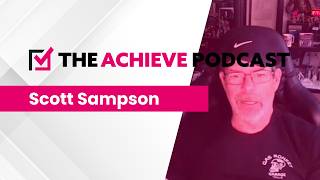
Scott Sampson, CEO of Powder Communications, spent 30 years selling internet before building a fiber-construction firm. Installing fiber can increase a home's price by 3-13%, but the real bottleneck is convincing builders and developers to switch from traditional carriers. He still closes deals through personal relationships and sees AI handling customer service and data work, not replacing salespeople.
Chapters
Welcome to another episode of the Achieve Podcast, the show where we highlight leaders, creators, and entrepreneurs who are building meaningful businesses, shaping their industries, and having an impact. I'm Taylor Baker Baker, your host, and excited today to be joined by Scott Sampson, the CEO at Powder Communications, and you can find them at powdercommunications.com. Scott, give us the backstory real quick, how you got into this space, who you're helping out.
Um, basically, first, uh, thanks for having me on, Taylor. I totally appreciate it. Uh, you know, I started out, I think, like a lot of people did. I started off selling internet door-to-door, um, you know, knocking doors, selling point-to-multipoint wireless for a company called Speed Choice, which became People's— which was part of People's Choice TV. Uh, got into that, stayed in sales, learned— actually got into engineering, started building point-to-multipoint wireless networks, then got into building fiber networks. Ran channel, then owned my first company called Internet Holdings, InterWorks, out of Mesa, Arizona, and then did that for about 13 years, moved on, got into different industries, uh, actually stayed really within the internet. I always joke around, you know who hires an ex-owner? Nobody. And so I became a consultant, uh, consulted for big corporations like Rio Tinto, uh, the Chamber of Commerce and the Convention Center for City of Denver, then did a little stint with a company called Blueprint, and now I'm running Powder Communications.
Now, as you guys try to grow and expand the business, what have been the biggest bottlenecks or obstacles that keep showing up?
Uh, biggest, biggest bottleneck— well, you know, it's just, I mean, it's still, it's that education to the builders and developers. You know, I mean, they're— it's very old school. You're looking at— you're looking at the home builders and developers. I mean, they're just used to the— just call up the local carrier, they come out when they want to. They— I always tell everybody, you always have a choice, but sometimes we get lazy and we don't try to make the choice. We just go with, well, this is easy. Well, we've— we've tried to make it easy on the developers and the home builders. We want to be their partners. We— it's not a vendor-client relationship. This is we want to be your partner, we want to help you sell houses, so let's partner up on this, let's build fiber in the house. I mean, some of the numbers when I first started this, you know, 5, 6 years ago, you put fiber into a home, it increased the home price by 3%. That's pretty good. I'll take 3%, you know, $100,000 home, I got $3,000 extra, I'm happy. I've now seen numbers in certain markets that's anywhere from 10 to 13%. Really having fiber in the house, not through the house. You don't have to have it running to all the APs and everything, just into the house. You have it pulled into your house, that's increasing your price. And we've done the research. I mean, that number's real. I mean, it's— no, but it's not in every market. You know, you get into some of the, you know, more rural, they don't care as much. But you get into the bigger cities, I mean, I look at the generations. I mean, You know, I'm, I'm, I'm older. I, but I look at the, you know, I'll say the 20s and 30s, they know more about this internet than I've ever known. I mean, I might know how to build it, I might be able to build things that nobody can do, but they know how to use it. This is a tool that they have figured out how to make it the best tool ever. And, you know, I, there was a kid, we were at a dinner with a developer in Las Vegas, this is about 10 years ago, and he was 20 years old, and his name— I'm going to actually say it on air, I'm not giving you his last name— his name is Kenny. And if he ever hears this, he'll know it was the greatest question I ever asked and the greatest answer I ever got. He's 20 years old, goes to UNLV, he's an intern for one of our divisions, and I asked him this. I asked— because developers like, well, why is the internet so important? Why is fiber so important? I don't get it, blah blah blah. Older gentleman, probably 10, 15 years older than me, been in the building industry for like 40 years. And I look at Kenny, I said, watch this, we'll ask Kenny. Kenny, what's more important, internet or water? And Kenny looks, and dead, dead serious, he looks at us and he goes, internet. And I was like, okay, give me an answer. Why? I can order water off the internet. He floored me, but he was— he wasn't wrong. I mean, that's how the new generation thinks. They can live— you can't live without power, but I can live without food or water in my house because I can just go online, go on my phone, go on my computer, go to Amazon, go to any of these websites and order something, and it can be at my door in 2 minutes.
That's— yeah, that's crazy.
Greatest answer ever.
That, that is so powerful. Like, coming from a construction background, my dad's general contractor, and so yeah, what you're talking about there is very eloquently placed and put.
It's a great— greatest answer ever. Like I said, I mean, he floored me and the gentleman that was, you know, 10 years older than me, 10, 15 years older than me. We were both like, okay, he got us. And he could have— he should have just got up and walked out of the restaurant. Mic drop. But we also bought him a really nice steak, so it was nice to have him there.
So yeah. Now, when it comes to your— Scott, when it comes to your, uh, messaging and outreach, your marketing systems, what's been working well for you, and where do you fill the gaps and frustrations?
So what works is literally just shaking hands, you know. It's actually meeting, you know, you know, the A home building industry is still very old school, you know. There, there are a lot of land deals are shaking hands, and you're going out and seeing it, and you're kicking the dirt. And, you know, that, that is still probably one. It's, it's how to get to the right person is probably the hardest thing. And I think that's with anything you do. How do you get to the right person every time, you know? I mean, is, is it the CEO? Is it the sales manager? Is it procurement manager or CFO? I don't know. You know, I'll think I got to the right person, then 10 people later I'm at the right person. It's, it's always hard. Um, but, and it's very limited because we only do projects that are 100 homes and above, so it makes it even harder to do. So you have to really focus on what you're trying to do.
That makes sense. Okay, now With all the talk and buzz around AI and automation, where have you guys found ways internally to utilize it, and where do you still see opportunity on the table?
Oh, we're, we're definitely into AI. I mean, that's one of the things. Um, one, I mean, after-hours customer service. You call us after-hours customer service, you would never know it's not a real person. Wow. I mean, it's— I mean, it was one of those ones, fairly simple. We have a really good AI guy that he's a contractor for us. We just, we bring them in as we need them. Where do we see it? Data lakes, pipelines, you know, sales processes, you know, data that, you know, it's, you know, investments and for investors, how do you show them what you do? How do you show them the quickest? You know, the problem is, is, you know, how much is stored up here in our brains versus how much is actually stored onto a system, you know, I, I've always, I, I've jinxed myself once and I will never do this again and say somebody gets hit by a bus because I did have actually not somebody get hit by a bus but had a heart attack and died on me. And it was the worst thing. I felt like I jinxed it. So I say win the lottery. If one of my salespeople or one of the people wins the lottery, just says I'm out and walks out the door, how do you retain that information? And so that's where I think AI, I don't think AI replace, replaces salespeople. Maybe it might with the customer service side and inside sales, maybe. But when you're still looking outside salespeople and dealing with especially the older generation, they still want to shake your hand. They want to know you're a live person. Can it replace us? Can it replace me in 10 years? I hope it's after 10 years when I'm done, but it can't. I, you know, but it's— let's use the tool. It's a tool. And it's how do you use the tool to be more efficient? And a lot of it is, you know, I've always— my biggest complaint I've ever had, and, and a lot of my peers in this industry or any industry, any CEO, CIO, CTO, anything, what do we all want? Time. We don't have enough of it. And, you know, with, you know, cutting staff and trying to make sure we're making money and making sure that people can have jobs, we sometimes have to increase how much to do. But if you can cut this out with automation— and I doubt just not just LLMs, you know, or the AI systems, it's the automations— and how can you simplify a job? If I can have a guy out in the field that we trained once and he, you know, then he can go out there and take his phone, you know, and he can sit there and say, okay, I'm on this, and it shows him a video exactly how to do it, but it actually takes that video from an AI system and it looks at it going, okay, here's what you got, and then rebuilds it every time. And because there's different scenarios when you get to different walls and different houses and how you do it, if we can figure out how to speed up and give that, that installer 5 minutes, or I can sit there and get done with a meeting and just literally blurt it out into my phone, call an AI system and call and say, hey, here's, here's how that meeting went, but, and my salesperson was also there, and she could do the same thing and blurt it in. And then it could take— it takes both of them and says— and then we get done, get back to our desks and go, oh, by the way, there's a contradiction. You said this development had 957 homes and she said 987 homes. Which number is correct? Now I would go with her because I believe she's smarter than me, but it would then— her and I would get on a call and go I heard 957. Oh, I thought I heard 987. It's, you know, we could reach out to the customers, or do we care? You know, it's one of those ones saying it's between 957 and 987, you could put it in the system. But we can automatically automate that and add it in. That's where I do believe, you know, once again, these people that you hear a lot of screaming right now, AI is going to take all of our jobs. No, it's going to create different jobs, just like when the assembly line came around. Yeah, it did eliminate some jobs, but it created a whole other industry. AI should do the same. There are a lot of repetitive tasks will get eliminated. Construction is not going away. The, you know, I had a kid in my gym, 20-year-old kid, didn't want to go to college, didn't know what he wants to do. And I mean, he was just working at the gym, he was just a front desk kid. He asked me, he goes, What should I do? And I said, you know, you want, you want the best career? Go get your CDL and learn how to fiber splice. Go get a commercial driver's license so you can drive the bucket truck but know how to fiber splice. My guess is you, you'd make around $100 grand at 20 years old. It's a, what, it's a needed career that is booming right now, and it's not going to go away anytime soon. I mean, you got all these bead programs and all this money coming in. These are jobs that are going to be around for a while. And, you know, be the kid at 20 years old, get it, buy, end up buying your own truck and then starting your own company. And, you know, 10 years from now, you'll be the biggest contractor doing fiber splicing, you know, on the planet. Good for you. I mean, other careers will come. Don't just think I have to sit behind the desk to be successful. I know a lot of successful people that have swung a hammer in their life.
Yes, I love that. And I love the shout out for the blue-collar jobs because there's such a need and will be for such a long foreseeable future.
Oh yeah.
Now Scott, when you think about the business, the next stages, what are you most excited about?
That I don't know. As my comment to you before we started this, you know, why have I been in the industry? 'cause just give it 5 minutes and it'll all change. It's what I don't know. What is coming next? What is the next automation or innovation in this industry? I used to associate the internet as being a child. It's a person growing up. When I started in the industry 30+ years ago, it was an infant. I mean, you literally went on it to watch a cat play a piano. It was like watching your baby crawl for the first time. Oh, look what I found. I mean, you're all excited when you found that. And then, you know, you fast forward, then it became that stupid teenager. You know, it thought it knew everything. I know what I'm doing. I'm smarter than you. And you're like, you're an idiot. But it was one of those ones that you go, but it's got potential. You saw it. You saw greatness within it. And just like you do with— I, you know, I've hired teenagers, I've hired kids. And I'm like, you will be me someday. I just gotta help you get there. That's what the internet is today. I think it's in their 20s now. It's got its first job. It's got— it's really out there. It's like, look at me, I'm gonna make changes to the world. But it's still making mistakes. I mean, we all see that with AI. I mean, they, they call hallucinating, I call it lying, but potato, potato on that one. But it is in that sense It is, it is really now starting to come along and really being that creative tool. I mean, what, what happens when it has its 30s and now it's making its, its children? And how do we advance? What is next? I, I mean, you know, I've seen this. I, I'm gonna be actually at Fiber Connect here in, in May, and I'm speaking. And it's funny, the topic that they got me speaking on is actually Gaming. Now, I, I'm mid-50s and I don't look like a gamer. I look like I've played multiple sports, and I have. But they asked me to be a part of it, and because I've been in the industry for so long. But I used to game 30 years ago. I was gaming Age of Empires and, you know, I mean, you name it, I played it. I mean, I, you know, any first-person shooters. I remember when I went to 7 meg download speeds. I mean, I'd watch— I'd have the guns pointed at the guy's head like for 5 seconds going, he will look at me at some point. And I'd be called a cheater because I had faster internet. Um, but it's like, where is the gaming industry going? And I mean, you know, the gaming industry is massive in this world of what it's done and how it's for streaming and everything. And you know, there's another industry nobody likes to talk about, but they've also done a lot video streaming. It's, you know, now you look at streaming like with Netflix and, you know, and HBO and Prime and all these things. I mean, do we go 3D? I mean, I know we've tried a lot of these things and it's— we're too early, or is there— I mean, I'm, I'm a huge Star Trek fan. Well, I'm also a huge Star Wars fan, but Star Trek, I want my holodeck. I want that before I die. I want to walk in and have a virtual world. That I don't have to wear goggles to be here. I mean, is it coming? Who knows? I mean, what, what if there are a lot smarter people on the planet coming up with smarter ideas than I can ever come up with? I'm just waiting for the next step in this world. It's going to— it's fun to watch, you know, like where I go back to my, my kid analogy, same thing. I mean, how much fun is it to watch a baby grow up? And, you know, I have two 20-year-old daughters, you know, and I've watched them become young women from babies and crawling. It's the same way I watch the internet. I mean, it's just like, watch this. It's not a cat playing the piano. It's now, watch this, I will tell an AI system, make me a cat playing a piano. Look, it did it, you know. And I can go even old school, go back to that old Commodore 64 or the old Apple II. Where you just, you typed in the code, you wrote, you spent 2, 3 hours where you just got your name to blink on the screen. I mean, the world, it's— I mean, and you really think about that, that was 40 years ago. I mean, what is next? Something fun, I hope.
Yeah, I love that analogy. I, I don't know if I've ever heard it put so well, of watching the internet grow like a child.
It is. I mean, because come on, we all remember about 10, 15 years ago, the internet was pretty stupid. It was like, wow, I was that kid when I was like 17 going, I'm, I am smart. No, I wasn't. I was stupid. But yeah, you know, but I'm learning. And I, you know, and as I tell everybody today, you know, this one thing that the internet's probably taught me more than anything is you can always learn. We're not done. You know, if you think, you know, like me, mid-50s, you know, kids that I know that work at my gym in their 20s, or my mother who's 80, we're always learning. You know, my mom, my mom sent me a question and I literally went on ChatGPT, typed it in, sent the answer to her. She goes, wow, you're smart. And I said, no, Mom, you could have done this too if you just use AI. It's taking over the world. Skynet's coming. Okay, we're gonna just go back. I'll just call me, I'll answer for you. I'll just firstborn son you have.
I love that. And I love the pointed question that, that you posed there, where it's like, okay, when the internet has its children, just like you're going in your 30s, like, what is it going to produce? What are they going to look like? I think there's a lot of questions there. You're like, wow, it's—
it's what are the offshoots? What are the offshoots to an AI system? You know, how does it— you know, because that's one thing with LLMs, when you start actually looking at that industry, you know, right now just making it a search engine is pretty much what it is. How, you know, and it can help you make photos and, you know, it's getting more and it's evolving and it's evolving very quickly. But when you tie it into mapping systems, you know, when you're driving your car or, you know, you, you know, you now see them— geez Louise, I travel quite a bit and I've seen them in every city, these cars that drive themselves. And, you know, I mean, but you now get into this and you really put LLMs and AI systems that are getting smarter and they can pull data. What can it— what can it do? I think it's limitless. And all I want is one thing: time. Give me more. I just— I can't be more innovative because I don't have time. You give me 30 minutes back of my day, I can be a better person. I can be a better mentor. I can be a better husband. I can be a better parent, you know, I could be a better friend. And I said this in the end, you know, and I— this is just my life and the way I live it, and I hope a lot of people do the same. It's just trying to make yourself and the people around you better, you know. And that's about time. How do I do time better?
How do I do time better? That's a good question. Now, Scott, if you had to pick one constraint to focus on and solve over the next 90 days, what would it be?
Oh, wow, that's a loaded question. Um, what one constraint? Time. It still comes back to the same thing. It's trying to figure out how I can— how do I utilize my time better, you know? How to, you know, that is always my problem, you know. It's my wife and all my friends or anybody that knows me, I, I'm always I'm not happy unless my hair's on fire. And, you know, I'm running 5,000 miles down the street going, hair on fire, going, I gotta do this. Um, but as I get older, I get more, more looking at time. And time is a key thing, and especially with what I do, it's how do I do this better, and how do I make sure that the staff we have or we are hiring can take over and be successful people long after I'm gone, you know. And I'm not talking, I'm not talking like retirement, I'm talking 100 years from now. How— and I don't believe my legacy is ever my business, but I want the business to be a legacy, you know. Nobody knows who's— nobody can remember who started IDM, but we all know the name IDM. Yeah, the business is the legacy, not the person that started the company, you know. They're the Elon Musk, the Bill Gates, you know, the Steve Jobs. We still remember them. But, you know, I got a feeling my kids' kids will not know those names. You know, how do you make a company be the legacy of what we did and make it, you know, that it made a positive impact on this planet? You know what I'm doing? I always say it's a, you know, it's a fad. The internet's going to go away. Just wait till tomorrow. Be done. It will never go away. This is— the internet is, is here to stay, you know. As long as we don't blow ourselves up, we will be here forever. And the internet will probably— it's like a cockroach, it might be here tomorrow anyway. It might be talking to its own systems and having fun, but it's really— it is a system that we really utilize, and we just, you know, we've just got to go to the next level.
I love that. And I love that concept. I don't want the business to be my legacy, but I want the business to have a legacy.
Yeah, it is. That's one thing I think people get tied up in legacies. I have a lot of kids. I mentor 14 kids right now. And I say kids, they're between the ages of 19— no, he just turned 20— and 35. And in mentoring these guys, you know, I always get the question, what's your legacy? What's— and I said, my legacy, easy, is my kids. That's easy, but that's an easy answer. My legacy is that I just— I told one of the kids, if I died tomorrow, that you would save one cop. And he was like, what's that? I miss him because he helped me. That's what I want my legacy to be. It's not what I built. I mean, my kids are easy. I want them to be good people. Hopefully my wife and I did it, or my wife, give her all the credit. Raised good kids, and hopefully I was there to support and do what I needed to do. And I mean, I think they're great people today, but you know, you still got 10, 20 years. I, I believe in them. But it's also everybody I touched in my life. And you know, this is where it's big, especially what we do. And this is, this is— I, I mean, I know we're talking about the industry and startups and businesses and how to be a CEO and things like that, but I think a lot of people forget. They think this is all about how much money they can make and what— hey, this is me, that's my name on the, on the door. Who cares? You won't be here forever. It's what you pass on to our children and our children's children and how we teach is what we're all about. It's, you know, it's not about money. Money comes and goes. I've made and lost more money than most people. And I, you know, I was— people always sit there and go, Well, you're saying money doesn't make you happy? Oh no, money, money makes me happy. But money gives me one thing. And as I said this already 100 times, gives me time. I gain time by having money because I can afford to hire somebody else to help me to take this off my plate, to book my travel, things that, you know, yeah, I can go do my expenses, book my own travel, you know, hire— I could do my own books for finance. But I hire people, always surround myself with smarter people than I am to gain time. You know, I have a benefit. I have things that I do really well. I give things that I know people are smarter than me at. So mine is about how to grow the company and take it to the next level while I give off the things that— it's not less important. I mean, I need to build customers, I need to sell, but I pass those things on and And, you know, like I said, for any entrepreneur, anybody that thinks they want to become an entrepreneur, I don't care what industry, from digging ditches to building the next trillion-dollar company, you know, if you don't surround yourself with the best people, you will fail. You know, if you think you can do it all on your own every day, you will fail. It just takes time. I've always wanted— I don't want to be the smartest guy in the room. I just want to know everybody in it. I want to know, hey, Taylor over there, he's the guy who talked about podcasts. Sarah over there, she's the one who talked about sales. Neil, he's the finance guy. You know, I mean, I might know everything they do. I don't want it. I want to point to the guys that are smarter than me and let them do their job. You know, a lot of owners really get into that mindset where they've got to be Gotta have my hands on. It's wrong, you know. And I'm probably going to get a lot of nasty emails from a few friends that I have going, were you talking to me? Yes, if that's how you work, I am definitely talking to you.
Well, Scott, thank you so much. You've dropped so many good wisdom and applicable things. And I love that surround yourself with a good team and the importance and emphasis you put on that. Yeah, like That's so true.
I'll give you one more, and this actually I got about parenting, and it goes with that whole kid thing. Um, you know, the biggest one is fear. I don't want my team to ever fear me. I want them to fear disappointing me, just like I raised my kids. I don't want my kids to wait till your father gets home and think I'm coming home and spanking them. I want them to just see it in my eyes going You screwed up. I hope you learned something, you know, because if you, you live in that world, people don't react well to fear. They actually get a little gun-shy. They don't do their job as well. They— but they understand disappointment. I will never fail him again because I screwed up. So I have a whole— I have all— I could write a book on those. I love all those sayings.
Maybe we'll have to do that. That is a good one. I don't want my team or my kids to fear me. I want them to fear letting me down.
Yeah.
Disappointing me. Well, thank you again for coming on and sharing your time, your wisdom, your insight with everything you've done. Really appreciate that. For those who want to reach out, LinkedIn, obviously, powderedcommunications.com. Is there anywhere else you want to send them?
Nope, those are actually the only two I really use.
Awesome. Well, again, thank you for coming on and thank you to today's sponsors, Achieve Fractional, which provides fractional executive leadership for growing businesses. And if you enjoyed today's episode, share it with a friend, a colleague. If you want to know more about the communication industry, reach out to Scott and the team and they'll help you out. And we'll see you on the next episode of the Achieve Podcast.









