The Achieve Podcast - Thomas Hood (Shade Doctor)
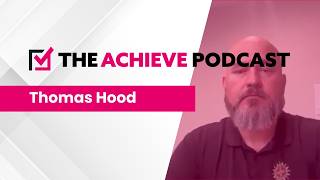
In this episode of the Achieve Podcast, host Taylor Baker interviews Thomas Hood, President and CEO of Shade Doctor, a company that designs and installs motorized shading systems for outdoor living spaces. Hood shares his personal journey from teenage lawn‑mowing jobs to a career in home improvement, emphasizing a work ethic rooted in hard work, faith, and a desire to serve a purpose larger than profit. He describes Shade Doctor’s current scale—over 200 employees across installers, dealer partners, and sales staff—and its market positioning as a cost‑effective alternative to traditional glass enclosures, offering products that are typically a quarter of the price of comparable sunroom systems. The conversation dives deep into product engineering, highlighting five to six product lines with wind‑rating capabilities ranging from 65 mph up to 155 mph. Hood explains the technical advantage of a “dynamic spine” and spring‑adjusted track system that can withstand high wind pressures, differentiating Shade Doctor from legacy motorized screens that use outdated zipper mechanisms. He discusses how the company combats customer misconceptions about motorized screens, leverages unique custom solutions (e.g., overhanging beams, under‑deck installations), and focuses on delivering value that justifies a modest price premium over competitors. Growth drivers are identified as the product’s affordability, the ability to create usable patio space without the high cost of full glass enclosures, and a strong internal culture that prioritizes installers and salespeople, turning them into brand advocates. Hood outlines the biggest sales‑and‑marketing opportunity as improving messaging to overcome preconceived notions and better communicating the product’s capabilities during in‑home visits. The interview also covers Shade Doctor’s experimentation with AI and automation. The company uses AI for SEO refinement, consumer trend analysis, sales‑performance insights (via a partnership with Ciro), and forecasting. Hood notes a cultural skepticism toward AI but frames it as a tool for insight rather than punishment. A critical operational constraint identified is customer communication during the 14‑21 day window between order placement and installation. Hood explains the need for a “middle‑point” contact to keep customers informed and excited, and how AI‑driven automated updates could address this gap. Looking ahead, Hood aims to solve the communication bottleneck within 90 days, expand product lines and partnerships, and solidify Shade Doctor’s market leadership so competitors are demotivated to catch up. He reflects on personal lessons learned from mistakes, emphasizing humility, continuous self‑improvement, and the importance of perspective over time. The episode concludes with contact information for Shade Doctor, a plug for the related "Improve It" podcast, and sponsor acknowledgments.
Chapters
Welcome to another episode of the Achieve Podcast, the show where we highlight leaders, creators, and entrepreneurs, those who are building meaningful businesses, shaping their industries, and having an impact. I'm Taylor Baker Baker, your host, and excited today to be joined by Thomas Hood, the president and CEO of Shade Doctor, and you can find them at shadeds.com. Thomas, thank you for joining us today.
Hey Taylor, thank you very much.
My pleasure. I'm excited to go through this with you. So for those getting to know you a little bit, how did you get into this space and who are you currently serving?
Well, you know, it's like most people. I mean, it's— there's not really a true Cliff Notes story, right? But if I were to give you one, I mean, I've been involved in home improvements, you know, most of my adult life. Adult working life and even really before then to some degree. Now I have to preface that I'm, you know, I'm not diversely skilled personally. I mean, I've never been the guy that you need to be the primary guy on the ladder or, you know, those sorts of things. You know, I'm more of a bigger picture and know enough about obviously the inner workings of remodeling, carpentry, foundations, and certain aspects of that. I can be the guy, but that's just not mostly where I've been in my career. So, you know, really started out as a teenager, you know, like a lot of guys that get into certain aspects of a working industry. I started out as a kid that mowed grass and learned a lot about you know, hard work, learned a lot about, you know, customers and kind of the drive. I'll never forget, you know, I mowed 4 lawns one day and got like $140, and I thought I was rich. And I was like, man, there's something to this, right? And of course, you're 17 years old and, you know, you'd gotten like birthday and Christmas money before, but not any real, you know, fruit of working labor. And that kind of lit a fire in me. And but it wasn't, you know, wasn't completely about just the money. It was about the process and the drive and the things that were necessary to get that end result. So that was just kind of cool. It was a lot of fun.
I love that work ethic you learn. I come from construction as well. My dad's a general contractor, and at a young age you learn to work hard and take pride in your work.
Yeah.
Yeah.
Well, it's, I mean, again, there's a lot of people that, that don't get that, that just see the dollars involved. And again, businesses are built with all types of end goals in mind, but you know, we wanna, we want to do things such that you're, you're not serving the dollar and really you're not even, you're not even completely serving the customer. Now you have to serve the customer, right? Yeah. But, but ultimately the way you do that is you serve something greater than the customer and then everything trickles down from that, right? You know, I'm, I'm a person of faith, so I want to serve that first. And in doing that, I think we serve our people in our organization as a— and as a byproduct of doing that, guess what you get to do? You get to serve your customer, right? And I think that's the pecking order.
I like that. So how big is the team in the organization right now?
Ah, look, we're— we, we have, uh, ultimately over 200 in our, in our total organization, uh, you know. So when you look at, uh, core team members, you look at, uh, installers, you look at our dealer partners, you look at, uh, you know, just the salespeople involved with our dealer network. I mean, we have well over 200 individuals that are out all across the country representing J-Doctor every day. Wow.
Wow. And what would you say is driving growth for you guys?
You know, I'd love to say, hey, we're smarter than everyone else. I'd love to say that we're better than everyone else. And in a lot of ways, I think, you know, there's certain lanes of that that could be true. I think this is a compelling market. You know, there, you know, some volatility, but I think in general people like the idea of improving their home, getting a greater access outdoors. And we have a unique way to do it that maybe traditionally people haven't really focused on in that, you know, in the outdoor living space, when you're talking about an enclosure, a lot of times people lend themselves to glass, you know, window wall systems from your large sunroom companies, which I value a lot because I have a history there. And much of what I learned there has prepared me for today. But I think in large, one of the things that has driven the growth is people see that, hey, this is a unique product and a unique way to enclose that patio. And oh, by the way, it's oftentimes a quarter of the cost, a third of the cost of going in and doing some sort of glass window wall system that costs $50,000 or $60,000. And when our average job size, you know, is a quarter of that. So I mean, this is an economical way for a customer to get plugged into their patio space. I mean, when I say patio space, that could also mean gazebo space, it could be covered pavilion space, it could be an underdeck system space, whatever, whatever that outdoor space is that you would prefer still feels outdoors without the bugs, the dust, the pollen, the wind, the rain, and those— then the bright sunlight and UV that often would drive you back inside.
Yeah. And how well do they hold to the wind?
Oh, well, uh, our product, fantastic. I mean, we, we have ultimately 5, 6 different variations of product with different features and benefits, uh, all the way up to 155 mph wind speed. We have a 120 mph wind speed product. We have a 105 mph wind speed product, which is really where, where about 85% of our customers live, in that 105 range. But then we have a step down, two steps down from that really, that is a wind-rated product at a, a 65 mph, which quite frankly, would serve almost every customer in the continental United States for the most part. But then we have a product that's, you know, you can call it an industry standard, but it's an industry standard product that has a couple of upgrades that's also installed by us. So we take that industry standard wind speed that is typically 20 to 25 miles per hour and we upgrade it to 35, because we believe that system, if it's installed properly, it can be better with a better install and a few little manufacturing upgrades as well.
Gotcha. That's impressive. That's impressive to have that kind of wind protection still.
Oh, look, people, you know, people often, they, they don't get it right. They think this is, oh, it's motorized bug screen, right? And if you, you know, you lean up against, uh, you know, uh, a standard screen room, it's got bug screen in it and it fails. Well, I mean, we have, we have customer video, for example, and you can find a lot of this on, on any of our media pages on Facebook. Uh, you can search Shade Doctor on Facebook. We have 60 different market pages scattered around Facebook, but our primary page, Shade Doctor, uh, we install cool. You can find that on Facebook. We've got countless videos of folks standing on their patio, an 85 mile per hour wind like this. I can't believe this is true, right? Because, you know, we go into homes and we tell this story, but all the while the customer's still in the back end of their mind thinking, yeah, this is just salesy, right? They're just, you know, I— but I still want to do my patio, and yeah, I'll do it, but no way it can handle that wind. And yes, it can.
Coming from the construction background myself, like, that is impressive. Like, Really impressive. And I'm looking at your website.
Well, look, there's a lot of layers to why, right? I mean, because historical motorized screens that the industry calls it, that, you know, they rely on, you know, 20, 30-year-old technology. It's got a zipper that's like on, you know, on a hoodie. It's, you know, it's just not designed to handle the wind pressure and the gust, whether it's constant wind pressure or a gust, it's not designed for it. Because it doesn't have the weight in the anchor and the track system doesn't have an ability to adjust and absorb energy. So when you combine heavyweight, when you combine a spring-adjusted system, not some sort of goofy magnet that really doesn't work. Okay. When you design a spring-adjusting track system and you have a reliable connection method, what we refer to as a dynamic spine, You put those 3 ingredients together, you have a system that will do far, far more than anything on the market. And that's, that's the X-ray product that's exclusively available with Shade Doctor.
That's awesome. So looking back for you, what turning points have molded the way you think about and run the organization?
Look, I mean, it's It is a wild combination, Taylor, of having prepared the whole first half of my career for an opportunity like this and learning on the fly that you can imagine, right? You know, while I've been in high-level roles with multiple, you know, large-scale home improvement companies, I mean, this is, you know, really other than owning my own businesses, which, you know, I have a mixed result of for a number of reasons. This is the first time that I've really been at the top of the food chain. So you have all of these things in theory from this collection of experience over the years. So in a way, I dumb it down and make it simple, right? So I learned a lot of things in the industry that I kept a list of things that were stupid, didn't make sense, I hated, I said I'll never do. And then I took some things from the industry that I thought, hey, there's that, there's something here that makes sense. And so what I've really tried to do is never let those things that are idiotic and moronic that some of the largest companies in the industry do— I've never let that come in over here. And then I focused on ways to refine and make these existing things that do make some sense— I've found ways to make them better and, and to be more friendly. Because, you know, what I found is if you, if you take care of your salespeople and your installers, you have the two happiest camps that will take care of your customers and ultimately be super fans of the organization that, that provides their living every week. And so, you know, it's again, it's a unique combination of you know, past experience and theory that is getting proven out over time. And there's revisions every single day, you know, not that we're just, you know, making wild, crazy shifts, but there are things that we look at every day. It's like, yeah, you know, that sounds great in theory, but the application is not as great. So let's, let's table that and let's make a shift. And so we've done, we've done some of that.
Okay. Okay, that makes sense. Now, what do you feel like has been working to attract and retain good customers and clients?
Meeting the basic need. I mean, look, meeting the basic need and explaining to them that they can do it and get everything they want. And they don't have to spend $60,000 for underexisting— what the industry and the patio living space or the sunroom space calls an Under Existing Roof, under build, or UER. You don't have to spend $60,000 to be able to watch the Houston Astros play a night game. You don't have to spend $60,000 to be able to sit on your patio and do that. You don't have to pay $60,000 or $70,000 or $80,000 to be able to cook, you know, the food on the patio that maybe you don't want to cook in your home. You don't have to spend $60,000 to— because your wife won't let you smoke your cigar inside. Okay, you know, so you don't have to spend that. You can spend $12,000 to $16,000 and get everything that, that you want for the way you're going to use that space. Because what, what some of these companies won't tell you is, no, it's not going to provide— a glass system is not going to provide square footage from a real estate perspective. Okay, it's very rare that a glass enclosure will do that. In fact, it has to have thermally broken walls, it has to have a particular glass, it has to have, uh, follow a rule of 12 in from an electrical code requirement, and that's the only way. Well, most people in the sunroom space, they're not going to spend $120,000 to make that happen. Well, I'm just You don't have to spend that $120. You don't have to spend that $60. You can call Shade Doctor and we'll do it for $12 to $15 and you still get everything you want.
I love that. So when it comes to your sales and marketing, where do you feel like there's still opportunity or money on the table?
You know, quite frankly, the biggest opportunity is kind of twofold, is, is the customers that see us and they dismiss it because of preconceived ideas about the industry. It's like, oh, that's that motorized screen stuff, that'll never accomplish what I want. Where in reality, most of the time it does. Unless you need that to be somebody's bedroom, uh, it's, it's going to work for you. Okay, so getting a better message out to that customer, number one. And number two, getting a better message out while we're in the home with the customer that, again, I know it's salesy, I know sometimes people, folks don't believe it, but there's nothing else out there like the way we execute this business. There's no greater value. We should cost twice what we do considering what we give with an install from an architectural standpoint, from the ability to do unique openings, fixed openings, the ability to, you know, overcome obstacles. I designed a project yesterday for a field rep. You know, a lot of times they still, you know, come to me with the hard stuff., right, uh, where the, the customer had this, uh, unique build where actually the beam was overhanging the swimming pool. And he's like, well, I, I can't put a post here. How do I do that? Uh, this isn't possible. I said, oh, oh yes, it is possible, and this is how we do it. And, and to be able to think outside the box and deliver a solution where most companies can come in and say, yeah, that's not possible, we can't do it. Well, guess what? J-Doctor can, and, uh, you know, we've proven it time and time again. Now that comes with value, you know, and, and again, sometimes there's a connection between cost and value, uh, but in, in my mind, most of the time when things do have a higher cost, there's more associated value. Not all the time, uh, so when my competitors out there, maybe they're selling a, a project, a 3-opening project and they're, you know, $11,000 or $12,000, we're probably going to be $13,000 to $14,000. But I can tell you, when you look at that gap, when you look at a $2,000 difference extrapolated over time for a survivable system that doesn't leave you with a jingle pile the first 30-mile-an-hour wind that comes through, and a system that you can virtually use every single day without worrying what happens When? Well, it's $2,000. I mean, we're talking about someone's most significant investment, their home. Why do you— you know, you've got a wonderful car that's going to last forever. You have granite countertops, you have all this beautiful molding, but you want to put cheap garbage on your patio? What kind of sense does that make?
So question then, as we shift real quick to AI and automation, because there's so much talk around that, where have you guys found ways to utilize it?
Uh, in, in, uh, in a number of ways. I mean, first of all, we're, we're studying it to understand how the consumer's using it. Okay. Uh, we're, we're getting, um, refining SEO tactics. We're refining a number of things and in terms of even domain, purchasing additional domains that we can mate up and pair with some AI integrations and things like that. But also we're, number one, I think it's understanding how the consumer is using it today versus what it's gonna look like next year, 5 years, 'cause that's a fast-changing deal. It's not like trends in the AI. Are, you know, working quarterly actions. It's daily. There are shifts and changes. So we're studying it from that perspective, but also we're using it from a sales accountability standpoint where we partner with a fantastic organization called Ciro that you're probably familiar with. Sure, some of your listeners are. And again, we don't use it as a punitive tool like, oh, you're not doing this. What we use it is we use it just for the insight of how do we get better, you know? And sometimes with AI, people are skeptic or, you know, they're very skeptical of it in general because, you know, I'm an '80s kid, you know, in the heart of my adolescence, right? You know, I remember the Terminator movies, right? Everybody somewhere in the back of their mind is a little afraid about this. It was like, you know, eventually this sucker is going going to come and kill me in my sleep, right? So we've all got a little bit of that in our mind. Uh, luckily I'm at the stage of my career that that'll probably happen after I'm long and gone, you know, long gone. Uh, but we're using it to improve our sales teams, we're using it to understand consumer buying trends, and, and then that trickles down to how we forecast. I mean, virtually every layer that's possible, we're trying to be involved with it. But mostly it's with consumer trends and sales performance.
Gotcha. Okay. So when you look at the trajectory of the business, if you had to focus on one constraint to solve over the next 90 days, what would it be?
Just customer communication. Okay. And I can tell you everywhere I've ever been in the home improvement industry, industry, that's a challenge, okay? Particularly when you're dealing with a, uh, a custom manufactured product. I mean, this isn't just some widget that you can walk in and buy off the Home Depot shelf, and if it was, you wouldn't want it as a consumer. Um, you know, this is a custom manufactured project, a product. Uh, so the, the challenge is, is we set an expectation in the home, right? You know, Mr. Customer, you have a 4-week lead time. Most likely one of the next times you hear from us is when we're calling to say, hey, Mr. and Mrs. Jackson, super excited your product has hit the warehouse. What does next week look like to you to install? Would Tuesday or Thursday be best? Right? A conversation like that. Well, the problem is, even though you set that expectation in the home, a week later your customer doesn't remember it. You know, they think all they remember is, man, I just spent $15,000 for some of this motorized bug screen, right? And again, that's not what it is. That's not what they believed at the point of sale. But then, you know, the, the, the, the path of knowledge starts to grow up a little bit with the weeds at that point, right? And so what we don't really have that, unfortunately, we have to find a better way to do, and AI and and automated communication helps with that. We, we have put an additional person on our team, given we have the shortest lead times in this space, to have a middle point of connection, okay? Just to let them know, hey, we haven't forgotten about you. I know we— when we wrote your order 2 weeks ago, we told you likely the first time you'd hear from us was when we call and schedule your install. But to have a middle point of connection to where we're, we're just reaching back out to the customer, hey, everything's great, everything's still on track, uh, we expect your order to land in this week and then we'll be installing it directly after. That's really the biggest thing we can do. Historically, I've been hesitant to do that because obviously there's a cost associated with it, and, and while that's a— that's a— can be an important role, I, I wanted to invest that money in better installers, in, uh, in, in, you know, uh, more sophisticated ad campaigns and those sort of things. So I've been hesitant to put a person in place that was giving updates that really there wasn't an update, right? What I've found is that even when those customers, our great customers, are communicated on the front end with kind of a roadmap and an expectation that grows a little dim after 2 weeks. So you really need a middle point of contact. And that's probably our biggest challenge is to, to keep our customer as excited, you know, 15 to 21 days in as they were the day they wrote their order and the day after they wrote their order, because they're all delighted when we install, and then they get to say, get out there, and it's like, man, everything they told us was true. And no, we're not perfect, right? Like anybody in the installed service business, you know, there are hiccups with installations. There are things that aren't exactly how you anticipated. We're very fortunate we resolve those with the greatest level of success and efficiency. But when you install more projects than anybody in America, you also have more opportunities to, to miss the mark than anybody in America as well. But really, that middle ground, you know, that, that 14 to 21 day communication period is critical for us.
That makes a lot of sense. Out of curiosity, where, where do you see the company being? Where would you like it to be in 12 to 18 months from where you are today?
Uh, you know, 12 to 18 months. I, I want to be so far of whoever's second in the company that they just lose motivation to try and beat us. Because, uh, and quite frankly, we, we've gotten to where we are in, in lightship trajectory. I mean, from a company that started, uh, Black Friday of 2021 to be where we are today, wow, is quite impressive. In the industry. But effectively, in, in a couple of markets that are our largest territories, by us not really communicating our message when we go into the home with the customer the first time, we've allowed a couple of companies to become quite sizable, effectively just knocking down the business that we didn't knock down the first time we went into the home. Uh, I want to get so much better that they're looking at us around 3 curves of the road ahead and they're like, hey, let's just play for a second because we're not catching up. The reality is they're not anyway. But I want to steal every bit of their motivation to even try.
I love that. So when you look back at your own journey, the wins, the mistakes, what lessons stand out to you?
Oh, goodness, man. You know, I will soon be 49. I'm pretty sure I always have to, like, get my calculator out and count because I just— I don't really focus. But, you know, the— just really, really looking at every foolish mistake, every person I trusted that I shouldn't, and all the times in my career and even in my personal life where I wasn't the guy I needed to be, uh, whether it be from a, uh, a spiritual standpoint, whether it be just from being the, the, you know, the right husband, the right father, the, the right friend, whatever. And, and, you know, just, just really owning that and understanding that, man, that's, that's not where I want to be, you know. And again, I don't want to tell a story like I've been this this monster or anything like that. But we all have things we look back on and we're like, yeah, that wasn't the best version of me, right? I think you have to keep that guy in your rearview mirror enough so that he continually motivates you to be the best version of yourself. And it's a challenge. I mean, some days, you know, some days that guy wins. And but you've got to get to the point that, that he loses far more than he wins. Okay. So, you know, you learn as much from the defeats and the mistakes because they really write the SOP for your next victory.
Yes. Yes. I love that. That's, that's a good way to put it. You learn so much more from mistakes, and I love that. No, I love it.
Please. 100%. And, you know, while— but the thing that's hard, Taylor, is when you're right in the middle of it, it's hard to see that. But, you know, there's a couple rough, rough patches in, in my story that if I were to go back— and you think maybe when you're in the middle of it, or maybe when you're just through it, you're like, man, I wish that hadn't happened. If I could snap my fingers, I would make not happen. But I can tell you, once you get, let's say, 3 to 5, 7, 8 years past something like that, your perspective changes and you're like, nope, I, you know, I can look at that scar and it's not pleasant that it's there, but I wouldn't undo it because I'm better today because of it. Okay. And that's the thing. You've got to have a little, little perspective and only time can give you that.
That is some great wisdom right there. Great wisdom. So, Thomas, last question for you. When you think about the next stages of the business, what are you most excited about?
Look, I'm excited about, you know, some new products. I'm excited about some new partnerships. I'm excited about continuing to win. And, you know, winning— I mean, let's just be honest, while you learn some things from losing, winning is a lot more fun. And so I'm excited about what the future holds in terms of continuing to influence, you know, not, not just the shading solutions space, but this story in the industry at large, I think is going to continue to grow and expand, you know, in some other layers. So I'll keep some of those things, you know, below the cuff. But we're very excited about where the future is going.
That's wonderful. So those who want to learn more, who want to reach out, LinkedIn, obviously, but they can go to shade docs.com. Anywhere else you want to send them?
Yeah, shade dots.com. Um, you know, I, again, I, I'm— I don't want to say a control freak, but if you can think of a nicer way to say that, uh, you know, but I, you know, info@shadedots.com. You can email me directly, tomh@shadedots.com. You know, I, I pretty much watch— I watch pretty much everything. I see everything. I try and keep, you know, my thumb lurking behind the scenes on everything, not in a You know, not in a, like, a bad, necessarily controlling way, more of an empowering way. And there's not things I really want to go on that I'm, I'm not aware of and plugged in. But, uh, you can communicate with us on any of our media pages, uh, you know, Shade Doctor on Facebook or any of the other 59 or 60 media pages will come to a digital call center team. But ultimately, I look at very, very high volume of those messages. But, you know, Shadocks.com is a great place to understand more about what we do in the shading solution space specifically.
I love that. Thank you. Thank you for sharing your insight and everything.
Well, Taylor, thank you for inviting me. It's been a lot of fun. And, uh, you know, would love to have you over on, on Improve It, uh, someday as well. Shameless plug for another podcast. We're just starting. I think we have, uh, 7 or 8 episodes up, and we're just kind of playing around trying to figure out this space a little bit. But it is Improve It on YouTube. And yes, there's a competitive organization out there with the same name. We probably should have researched that much better. We thought we did, and then nothing popped until we started, and then, oh great, we're gonna probably tweak that a little bit. But on that, we have similar conversations to you and I have had, but not, not maybe so much about like personal journeys and stories in the industry, but more about practical things like, hey, how, how can we dive in and really, really influence or transform culture? How can we utilize technology and AI? And one that's coming very soon is, you know, hey, a one-call sales method versus more of a long-cycle consultative method, which is best. Okay. And, you know, I think there's a clear winner, but, you know, we're going to have that conversation. So there's some cool stuff coming as well.
I love that. Yes, we'll definitely put a link to that in the description as well.
So thank you, man. And don't be a stranger.
Okay. Absolutely. And thank you to our sponsors of today's episode. Achieve Fractional, which provides fractional executive leadership for growing businesses. And if you enjoyed the episode, share it with a friend, with a colleague. If you're not sure what to do with your outdoor space, reach out to Tom and the team. They'll help you design it the way you want it, the way you need it, and get you taken care of. So reach out and we'll see you on the next episode of the Achieve Podcast.









