The Achieve Podcast - Trevor Maddux (Cransten)
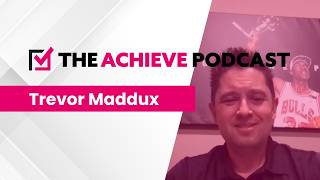
In this episode of the Achieve Podcast, host Jesse Warner interviews Trevor Maddux, CEO of Cranston Handyman Remodeling. Trevor shares his personal backstory, describing how his father's construction background and his own experience at Vivint sparked the idea to launch a handyman remodeling service after frustrating experiences hiring contractors during home flips. He recounts the rough early years, including costly mistakes, mentorship from industry veteran Kent Whipple, and the strategic pivot from a smart‑home/solar side business to focusing solely on handyman services. Trevor outlines the company’s growth to roughly 30 employees with consistent 20‑30% annual increases, and details the sales and marketing mix: leveraging lead platforms like Google, Angie's List, Thumbtack, and Home Depot, as well as a novel client re‑engagement campaign inspired by HVAC seasonality that has already generated new jobs. The conversation turns to AI experimentation: Trevor has trialed AI answering services (which failed), uses AI for virtual onsite walkthrough QA, and highlights MotionOps—a proprietary CRM with an AI receipt‑reading feature that syncs with QuickBooks for home‑service providers. He discusses operational bottlenecks, describing a weekly “bottleneck‑hunt” practice inspired by Elon Musk, focusing recent effort on sales processes, recruiting, and marketing. Looking ahead, Trevor is excited about achieving “explosive” growth once systems are fully systematized. He concludes with advice for aspiring entrepreneurs, emphasizing self‑assessment of true entrepreneurial drive, comfort with high‑stakes problem solving, patience, and perseverance through uncertainty. The episode ends with calls to action for cranston.com and motionops.com.
Chapters
Welcome to the Achieve Podcast, the show where we highlight the leaders, creators, and entrepreneurs who are building meaningful businesses and shaping their industries. My name is Jesse Warner and I'll be your host today. Today we're excited to have Trevor Maddox, CEO of Cranston, with us today. Trevor, it's a pleasure to have you on the show.
Thanks, Jesse. Glad to join.
So our audience can get to know you a little bit, give us a quick backstory of your business. What do you do and how did it all get started?
Yeah, so as you know, Jesse, so we've got a couple of businesses, but the main one is, is Cranston Handyman Remodeling. So we got started about, I'd have to look up exact dates, 8, 9 years ago. And the way this thing started is my dad was a contractor in California, grew up in construction, around construction. And as I got older, he's like, oh man, Trevor, go do something else. You don't want to do this as you get older. I was like, yeah, you're probably right. And so got an education, got a degree, and somehow ended up in home services, ended up helping grow and scale a company called Vivint. Does smart home, solar, all that stuff. And I was there for a little over 10 years and I looked to get out and I was looking for my next opportunity. At the same time, I've been flipping some homes here in Utah at a place called Ogden, you know, Weber-Davis County, just flipping some homes up there. And it's my first time actually hiring contractors in my life. And I was like, wow, this is a really painful process. Cuz all we ever did is, you know, we did our own work, people hired us and I knew how we operated. We were pretty good, but I had a lot of concerns. You know, I was like, man, I don't know if this guy I'm hiring can even do what I'm hiring him for. I think this guy's on drugs. These guys wouldn't show up half the time. Just very frustrating. In the back of my mind, I always said, man, if this is what most people experience when they go to hire contractors for residential remodeling, for handyman work, I was like, wow, someone needs to do something to fix this. So fast forward, I left, um, Vivint a few years later and I was looking for my next opportunity. I was like, you know what, I think there's something there. So I started demand testing and seeing if there's demand for the services, and sure enough there was. And, you know, I started mapping out just a business model for it, want to do something innovative, different than what everyone else was doing. And, um, yeah, I launched Cranston Handyman Remodeling and now here we are.
So talk to me a little bit about how your business has grown since then. What it, what it looked like when you started and What does your business look like today?
It's kind of rough when I started, honestly. I mean, I think any business owner that is honest about their business, usually it's a pretty rough start. Um, man, when it first started, like, it was crazy. So I knew there was a business there, but I didn't know how to do it. And, you know, there, there have actually been a lot of companies and people have tried doing a model similar to what we're doing. But, you know, like, I know Angie's List, they spent like $20 million trying to do something similar, and they shut it down after a year or two and just lost a whole bunch of money. A lot of people have tried Um, what's interesting, Jesse, is there's related spaces that have been able to scale in plumbing, electric, and HVAC. I've yet— maybe there is someone else out there that's scaling, but I've yet to find someone else that's really scaled the handyman remodeling side. We're kind of the innovators with it. Um, and so yeah, I mean, at first it was rough. Like, you know, we had guys going to go do jobs. I had one guy almost burn someone's house down. Like, I mean, like, it was a mess. Like, it honestly, it was. And we lost money our first few years. I'm like running this business, I'm looking at my books, I'm like, dude, I'm like losing like $150 grand on this business. And luckily, you know, because my background was smart homes and solar, like we were cash flow positive because I was making money off of, you know, we had our own business doing that. And I was kind of doing that to fund this because I knew that this is where I wanted to be. But I'm like, dude, I don't know what I'm doing. I just need to buy myself some time while I figure this out. And so we're scaling the smart home and solar. And eventually we kind of got the systems and processes dialed in. I mean, I had to have mentors, people in related industries that could walk me through everything I didn't know because I knew what I didn't know and I'm like, I don't know a lot about this industry. So I had to have people come coach me and help me out and figure this out. One of them is Kent Whipple. Jesse, that's how you and I met was through Kent. Kent's great. And so he's been in home services most of his life, his entire life, and he's a great mentor to point me in the right direction with a lot of things I didn't know. And, um, yeah, I mean, eventually got to a point where like this little side thing, which is a handyman remodeling, I was like, this is an actual figured out business. And so at that point we shut down solar. It's hard to sell the solar business. And then we sold off all of our smart security customers, had a transaction there, and then went full in on handyman remodeling, and here we are. It's awesome.
And how big is your company today? How many employees do you have?
Um, oh man, I don't know. I literally have to count it out. If I had to guess, 30, 30 people. So, and we've grown pretty much every year at least 20, 30%. You know, we, we like to grow faster than that, but you know, we've had consistent growth and that's always cool.
So, well, first of all, congratulations on the growth, surviving the startup period. Yeah, uh, you're right, it's— it can be rough, right? You got some ups and downs, peaks and valleys, and if you can persist through it and figure out a model, then you can have success. When you look at sales, marketing, outreach, where are you seeing the most traction? What's working for you?
Um, it's a good question. So one thing that we're— I mean One thing that we've always done is, and this is kind of one of the benefits of what we do, there's existing lead sources you just have to tap into, right? So, you know, there's Google, there's the platforms, so it's like Angie, Thumbtack, you know, all those, those are all out there. Some other services like Home Depot and stuff like that. There's a lot of platforms you can tie into and you can get lead sources, and so it's just plugging into you know, these places where our clients already are. And, you know, a lot of times it's pay to play, and that's cool. Where we've been focused a lot more recently though is what we can do to re-engage our previous clients. And so, um, you know, we've always had email campaigns, and one thing that we've done here recently, we actually— I study related industries, right? Because again, no one's really, that I know of— there could be someone that I'm unaware of— but that I know, no one's really scaled in our business. I look at, okay, what's a related industry that I borrow ideas from. And one of them that I study a lot because they've scaled pretty well is HVAC. So HVAC has this whole like seasonality plague that they have. I don't know how familiar at the HVAC industry, but it's like winter, summer, they're just like crazy busy. And then it's like you have the shoulder seasons where they're like, it's like a ghost town, and they're like, man, I need to go get my guys work, right? So what do they do? They just sit there and they just hammer the phones calling their customers. Hey, you need a tune-up? Hey, like, we can do a free service call. Just Well, come out, blah, blah, blah. Hey, like, we got this promo going on. We got this, we got this, we got this. And they're like, they're literally pounding the phones and they have a captive database of their clients, right? You know, they'll have 2,000, 3,000, whatever. And they're sitting there pounding the phones, calling their clients, just trying to see if they can schedule more appointments. And so we were looking at that. We're like, hey, we should do that. And so we've launched that the past few months. It's been pretty successful. I think our re-engagement campaign, we only have one guy on it right now, but And I think the last 2 weeks we've gotten like 5 jobs out of it, so it's not bad. It's really nice. And so we might scale that. We're still testing to see how it goes, but so far it's looking promising. So yeah, we could end up scaling that, that even more.
So as you know, there's a lot of buzz around AI and automation. It's changing fast all the time.
Yeah.
How is your company using AI? How have you found ways to Do you use it internally?
I do and I don't use AI. Like, I mean, so, so we spend a lot of time messing with AI, or I do at least, you know. I try not— the experimental stuff I don't put my team on. Like, I, that's— I feel like as an owner, that's my responsibility. I have to go test stuff, see if it works, see if it doesn't. But it's like, I mean, we've tested a bunch of AI answering services. All of them have sucked. In fact, we actually just launched an AI answering service through RingCentral, and I literally just turned it off last night. You know, we had some early signs of, uh, of positive results. And then I always QA everything. Like, you know, it was really funny, I was talking with a large $50 million company, um, in a related service. I'm going to mention names, but like, they— I was going through a tour of their facility and they do a lot of things right, don't get me wrong. But I was talking to them and I was like, you know, they're talking about how they have this AI answering service. I'm like, have you guys tested it? Because the one you're using, I've tested it, wasn't really good. Like, I was just really curious, like, I don't know, like, I would test it. And so I'm always testing it to see if AI is actually good, because on the surface a lot of this looks good, but is it really good? And so last night I was QAing it, and I was going through, because, you know, I have recordings of all the calls of this AI answering agent, and it was like 3 or 4 calls in a row, people just heard this, boom, hung up, boom, hung up, boom, hung up. And I'm like, this isn't working. So I just shut it off last night. So, um, again, we do and we don't use AI. Um, we use AI, um, so we'll do like, uh, virtual onsites where we record videos and people can, you know, um, record the on-site and then, you know, do a walkthrough with them. And then we actually use AI to go back through and QA like the walkthrough and put the estimate together and everything else. Um, we do not use AI for estimating numbers, but we do use AI for best practices of how to do things and code compliance and stuff like that. So again, we do use AI and we don't use AI, but you have to be aware of what it's actually good for, not good for. We are experimenting with maybe using AI for our texting services. Um, that might be good enough, but then again, I don't know. So like, these are all things that like we're messing with and just trying to figure out where we can and can't use AI. So, oh, um, our other company— this is actually a cool way we use AI— um, MotionOps. So a little plug for MotionOps. If you guys run a home service business, check out MotionOps. It's a game changer. Um, it actually has an AI receipt reader. So, and it— we're like one of the only ones that has this. I don't— I've yet to see this out of anyone else. But when a guy does a job, they literally hate— because they hate uploading receipts, so usually they don't even upload receipts, and you have no record of what was actually purchased when they go out and go buy something. With us though, with MotionOps, um, it's our other company, you can basically take a photo of the receipt and it'll automatically upload all the information into the system and sync, uh, in real time with QuickBooks.
So nice. Yeah, so MotionOps, from my understanding, Trevor, is really built for the service provider, right?
Yeah, yeah, for the service provider. Yeah, it's built for anyone that does something similar that Cranston does. So if you do home improvement, if you do home service— not new home builds, but more like home improvement, home service— so that's like your electricians, your plumbers, your HVAC guys, your remodelers, stuff like that, um, fencing guys.
That's—
yeah, it's basically an all-in-one CRM where you can manage your business in one place.
So as you try to grow, what are some of the constraints that keep showing up? Where do you keep hitting that wall?
Um, that's a good question. So I think that as a business owner, there's always bottlenecks and you have to identify and fix those bottlenecks as quickly as possible. So I actually, I heard this fact about Elon Musk And it's like, that's actually really smart. Sorry. So he goes around, and, and it's crazy because it's like, dude, this guy has 7 businesses or 10 businesses, whatever it is. Like, how does he do it? All he does is every week he finds the biggest bottleneck in each one of his businesses, and he goes around and solves the biggest bottleneck. And that's all he's doing around the clock. And everyone else will maintain, fix, or whatever. So as business owners, we all have bottlenecks, right? My situation is crazy. I don't know why. Like, I'm not trying to be like Elon. Elon's just an anomaly. But I'm kind of crazy having two businesses. I don't know why I did it. It's kind of suicide, but that's what I'm doing. Well, I know I did. I had to solve my own problem with a lack of software for this space that was actually good. So, um, this is actually really important subject to talk about. So I, I do spend a lot of time trying to solve bottlenecks. What is a bottleneck? It changes every week. So those of you that are familiar with Traction, L10 meetings, everything else, every week we're identifying our biggest bottlenecks, and I take it upon me as a business owner to be the one to solve those bottlenecks. So like one of the big ones I've been solving is, is I realized with Cranson there's a lot of sales-related issues. So I've literally spent the last 6 to 8 months focusing 80% of my time at Cranson just on fixing a lot of our sales issues. And I feel like we're starting to solve them. You know, there's some issues around average job size, the way that we're selling customers, our leads. Or, I mean, dude, I dove into it. Like, when I first launched our company, I spent the first 6 months building out our sales processes and everything else, and it was great. And then I didn't spend any time on it because I had so many other departments I had to go fix. And I was like, wait, no, this department really needs to be be fixed right now. And so I spent the last 16 months doing just that. I feel like it's getting fixed, and now it's like, wait, I have a bottleneck with recruiting, I have a bottleneck with marketing, I have a bottleneck with all these other things now. And so it's— the bottlenecks are always shifting. So the way I see it is, is I need to be the one to go find the bottleneck, identify the bottleneck along with the leadership team, because leadership team can see a lot more than just me. And then I just have to go roll up my sleeves and just go fix it.
So as you look at the next stage of growth, what are you most excited about?
I'm excited about explosive growth. We've had decent growth, but I want explosive growth. Like, I like to go fast and hard and just like growing so crazy where it's like, what in the crap just happened? You know what I mean? Um, that's what I get excited about. I think we're reaching a point where we could hit that quick. A lot of our departments are pretty well systematized, and then at that point it's just getting all the systems going and just throwing fuel on the fire. That's what energizes me.
So last question for you, looking back on your journey, some of the lessons you've learned, what advice would you give to other entrepreneurs?
Um, oh man, well, there's a lot of advice I could give, um, that I think would be pertinent. I think one thing that's really important, and I'm pretty vocal about this, is before you even become an entrepreneur, make sure that you are an entrepreneur. And that it's really you. I think one issue that we have in society right now is we kind of have like this, how do you say it, overzealousness to become an entrepreneur. Like it's glorified, like it's this amazing thing. There are a lot of people that are really great at what they do that are better being a number 2 or 3 or 4 in a company, and you can make just as much, if not more, than being the number one in the company. It takes a very certain per— person to be like the guy, and it's okay to be the 3, 4, 5, 6, 7. Does that make sense? And just realize where you excel and thrive and everything else, and know, okay, this is where I need to be. Um, now if you've realized that you are that person, how do you know? Well, you need to know by knowing that you can basically take on really hard tasks that most people can't and be okay with it. And you're okay with like looking down the barrel of a gun of like, man, I need to go make payroll, how do I figure out payroll? Like there's really scary things that happen as an entrepreneur that scare most people. Like you have to deal with litigation sometimes and lawsuits and just stupid stuff that like scare most people, right? But like as a business owner, like that stuff just happens. Right? Compliance. And like, there's all these things that normally stress most people out. Okay, so if you know you can do that— oh, well, there's a lot of other things too. You have to be willing to figure out things that are really complicated and complex and really complex problems all the time, and just a lot of other things. And in fact, Elon Musk's term is, is being an entrepreneur, uh, what do you say, it's, it's looking down the black hole of an abyss and eating shards of glass. If you can do that, then you probably are okay to be like the guy or the girl at a company, right? Now, if that's you, um, the advice I could give you is just have patience with yourself, with the process, with everything. Um, look at the long term, right? I think so many entrepreneurs shut things down early when they're so close to figuring things out. Um, you have to be willing to be comfortable with the unknown and knowing you're going to figure it out no matter what. And just know that it may seem crazy or hard or impossible to solve the problems that are in front of you, but usually if you're doing something that is worthwhile that you felt like is a problem that needs to be solved, there's generally a way to figure it out. Just, you gotta just take enough hacks at it to figure it out, right? That's it.
So, well, thank you so much for sharing your story with us. Today, Trevor, and for the insights. For those listening, if you want to learn more about what Trevor's building at Cranston, you can visit cranston.com. You also want to learn about MotionOps, motionops.com, also for the software side of this business. And that'll wrap up today's episode of the Achieve Podcast. A big thank you to our sponsor Achieve Fractional, which provides fractional executives for growing businesses. And if you enjoyed today's conversation, Follow the show, share with another entrepreneur who'd also find value in it. And again, thanks for listening. We'll see you on the next episode of the Achieve Podcast.









