The Achieve Podcast - Ty McBride (Preservan® Wood Care & Repair)
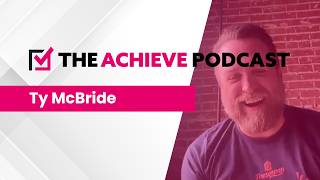
Ty McBride built Preservin, a franchise network that repairs wood rot with epoxy resin for 90% less than replacement and in 24 hours. He scaled to 20 franchises and 70 staff by focusing exclusively on one problem, using before-and-after social ads and yard signs to drive local sales, and leveraging AI for content without faking imagery.
Chapters
Welcome to another episode of the Achieve Podcast, the show where we highlight leaders, creators, and entrepreneurs, those who are building meaningful businesses, shaping their industries, and kind of shaking things up. I'm Taylor Baker Baker, your host, and excited today to be joined by Ty McBride, the owner of Preservin, and you can find them at gopreservin.com. Now, Ty, first, thanks for joining us today.
Hey, well, thanks for having me on. I'm super excited to be here today.
No, I'm excited. Today's conversation is going to be a good one. I'm, I'm sure of that. And so give us the backstory a little bit on how you got into the space, because you're in a bit of a niche with what you do.
Yeah, well, first, the niche I'm in— so Preservin is a wood rot repair business. So, you know, people have wood on their buildings or homes and windows, doors, all kinds of stuff, And eventually it rots, you know, it takes about 15 to 20 years, it starts rotting. The older the house is, the more there is and everybody gets stuck having to replace it. And, you know, I grew up in construction. My grandfather's a home builder, dad was a roofing contractor. I kind of grew up in this. I hate replacement. I hated having to sell it back in the day. And I just figured I'd figure out a different way to do things. And so we use an epoxy resin. To do the repairs. So that's the, that's kind of the business. Uh, what was your other question? Because I got so busy telling you what the business is, I forgot the question.
Oh no, you're just fine. Your backstory, like kind of how you got into this space.
Yeah, let's—
that's the—
so I started doing it specifically where I got started was working on historic preservation. Uh, I working with the family company would get these projects every once in a while that were on historic preservation. I just found like Man, I felt good. I felt good when I was working on this like really cool old house or really cool old building. And you know, life's too short. Sometimes you just want to like make a decision and do a thing you enjoy. And that's what I did. I just like, hey dad, I'm going to start a business where I'll fix up old rotting decayed wood windows and doors. And he thought that was crazy, but he was supportive. And I went and did that. And you know, that was 10 years ago. I, I, I, I like put my shingle out in 2016 and that just slowly, you know, I'm, I'm a consumer of leadership information, marketing information, scaling information, and that just like as I went through my education kind of through hard knocks, started to see— I tell people this all the time— I wanted a business that was an inch wide a mile deep and not the other way around. And most construction businesses, handyman, like, what do you say? You say no job is too big and no job is too small. And I wanted, I wanted to just do one thing. I wanted to create a way to do it just right. We worked on that. That's that epoxy repair system. And then when— and then we looked at that, like, man, we can grow this, uh, and so we decided to, uh, to, to franchise our business, to go through the process of franchising our business and grow it. Through the franchise model.
I love that. An inch wide but a mile deep. Like, that is not— you don't see enough of that these days.
Yeah, right? Yeah.
So, so how big is the team in the organization right now?
So if you, if you include like everyone, right, like, so we have, uh, 20 total franchise owners, uh, and then we have our corporate support team. And so in total, you You know, if I was a ballpark, and I haven't done a, a regular headcount here recently, but in total we probably have 70 total, uh, people, uh, that are working in Preserva, uh, every single day.
Wow, that's quite the organization.
Yeah.
Now what would you say is driving growth for you guys right now?
What's driving growth for us is we're just in a really cool thing where like people are, people are tired of wasting money on things. There's a lot of that going on and you just feel like, I mean, I don't know about you guys, but I just feel nickel and dimed about everything, right? I feel nickel and dimed about, you know, fees and nickel and dimed. I mean, I hate to be this way about tips and I just feel nickel and dimed and I want to, I want to put money to things that matter to me. And I feel like everybody's always trying to make my money go somewhere else. And so what really drives it is people look at things and they go, man, I've got a small problem and I want to get it fixed. And they call somebody out and that person goes, oh, your small problem is a big problem. You spend $10,000, $20,000, $100,000 in renovation repairs. They hate that. They go online, they look for an alternative, and boom, there we are as an alternative. You know, our average job is like $1,500, $2,000. And so huge cost savings when people are looking at projects that are $20,000, $40,000, $50,000. Yeah. Yeah.
So looking back for you, what turning points have had the greatest impact and molded the way you think about running the organization?
Man, uh, which one? I've got two that come to mind. Uh, the first one that comes to mind is I, I grew up in construction, and, you know, uh, we were talking before the call, you've got some, some experience in that space, and it's kind of a hard-nosed space, right? Like, uh, you you learn to get done things by just talking louder than everybody else and maybe throwing a hammer or two. And I kind of grew up in that. And I got this like opportunity to work and be on an HGTV pilot and really cool experience. It's a long conversation for a different day. But when I worked with the team as an unexperienced, what they would call, what do they call us? They call us talent, as an unexperienced talent person. Right? When I worked with them, the way they treated me to get the most out of me was just changed the way I thought about how, how to get people to do stuff. So when you're working with these, with the producers and the directors, you know, and you don't know anything from anything, uh, and you don't have a script in front of you, but man, they would just get me so energized. And what I remember, uh, is one day we had been, we've been standing in front of this house for, for 12 hours.
Wow.
Recording, like, you know, if you watch HGTV, you know, there's that time where they're sitting in front of the house and they're talking all chipper about what they just did. That's recorded over a whole day of like, it happened last week, but we're going to pretend like it happened right now. And so you just sit there and they're like, tell us about this, tell us about that. And I was exhausted, tired. So was the other person I was working with. Yeah. And the guy behind the camera, the, the producer, was like, Ty, that's amazing. I really love what you did. Really great energy. And he highlighted the great things I had said and I wasn't feeling it, but I lifted myself up a little bit and he said, but here's what I want you to do. And then he just reframed and basically said I'd done everything wrong and I need to do it completely differently. But the energy that he brought to that was like, man, that was great. And then immediately after that, he goes, And let's get coffee for everybody, you know. So the kind of the two lessons I learned was to keep my energy up, to, you know, make sure I'm telling people what they're doing great, to reframe it in a positive way. And when all else fails, caffeinate. I love that one.
All else fails, caffeinate.
That's right. All else fails, get everybody some caffeine. And I love that.
Just making people lighter and brighter and just lifting their spirits.
I—
that is such a good ethos to live by.
Yeah, it's also way more fun than, than back in the old days when I just get angry about stuff, right?
Reminds me of a quote where it's like, some people lighten the room by walking in, some lighten it by walking out.
That's right, that's right.
So, Ty, the next question is kind of a two-part question for you. When it comes to your outreach, your marketing systems, messaging, what's been working well to to attract and keep clients and customers?
Yeah, so I think about this from, from, well, the main one is how do we get people to like come in to Preserve and do our, you know, and ask us to do repairs? Because we're, uh, nobody's ever heard of what we do, right? Like it's a brand new market. Now a lot of people need it, but they haven't heard of it. They don't know it's an option. And so we, we realized that early on that nobody was going to go to Google and search wood rot repair company near me because they didn't even know that that was a possibility. It's like, you know, what, searching for a Kleenex before there was a Kleenex. You didn't even know what to look. You just went and grabbed your shirt and you wiped your nose. But, uh, so we knew that. So we kind of knew we needed two things. One, we needed to in your face, in your place, in your space, right? And where are people at? Where are most homeowners at? I mean, they're, they're, they're on this thing and they're scrolling.
It's okay.
We got to go directly to them where their eyeballs are at, you know, instead of the billboard, the modern billboard. And Meta and Facebook, you know, Meta, Facebook, Instagram, those are the ones for our ideal, our avatar being a, a homeowner over 40. Like, that's where we're going to go. And what are we going to show them? We're going to show them transformation. Just simple images of transformation, befores and afters. It's You've got something ugly, we can make it pretty. Our value proposition: 90% less than replacement, done in 24 hours or less. So simple messaging and, and just the, the transformation. That was, that was it. Like, that was what we, what we went with. And then the other part of that was, we want to get you connected with the human element of each of our locations. So each of our locations is independently owned by a franchisee. So what do I want? I want you to get to know the person that's gonna come do the quote, knock on your door. So, you know, your house is your castle. I want you to feel warm and welcome by that. So when we're running ads and we do a lot of ads, we spend, you know, each one of our franchisees is spending, you know, $5,000 or so a month. And so we're spending a lot of money on ads and we run that at the corporate level. But I want them to get connected with you. I don't want them to see my face. I want to see who's going to knock the door so we can build. So when you finally get connected with that person and they give you a quote, They've seen you, they know you, they know you're real, they've seen the transformation, and they feel comfortable and ready to make a, make a, make a buying decision or pairing decision.
Wow. So with that, where do you see more opportunity and money on the table?
Where do I see more opportunity and money on the table? You know, the, the big, the biggest opportunity I see always is the small things, uh, and I'm gonna speak specifically kind of more in the home service space, but I think you can kind of find this anywhere. It's the small things that you miss. When you think about like the digital thing, you get that digital thing, but you got to, you got to multiply the digital thing, right? So you show up, but when you think about showing up to a house to do a job, what other little things can you do to multiply that effort? And so this is where the money is always on the table. I tell my franchisees and our partners this all the time. Yard sign, something simple, but it's there. Validation. If you're driving through the neighborhood and you see Mrs. Smith has a Preserve and sign, You've got the same problem. Now you get my ad again. Now you're gonna go, oh, if they hired them, I should hire them. I'm gonna give them a call. Wrapped vehicles, right? Like you got a wrapped vehicle in the neighborhood, building that validation that this is a quality company. Uh, direct mail, dropping direct mail to those people in the surrounding areas, man. Direct mail's really cool. You can do targeted stuff these days. They're just hitting that area around where you've already got work. And so taking that small thing, and doing some, taking that first, that first lead, that first job, and then multiplying it through a lot of little small tasks that most of these cost you nothing or you were going to do anyway. But if you do them, then you start to really multiply. And I think that that's always any marketing effort I do. I always figure out how can I, how can I do it one, do this one thing and then get a bunch more from the one thing.
Yeah. Compound that.
Yeah, that's right. That's right.
So there's a lot of talk around AI and automation right now all over the place.
Yeah.
How have you guys found ways to apply it to this industry?
Man, that's, that's so good. I actually, uh, I, I made a reel the other day and I had some friends call me out on it because I was like, stop making AI slot videos and images because I, I really dislike that. And they're like, but Ty, you use AI all the time. I was like, I use AI to multiply my efforts as a tool, not as a replacement for authenticity, right? Like, so say that again. I use AI as a tool to multiply my authenticity, right? So we're not gonna— you know, I talked about before and after, transfer transformation images. I don't need to have AI make me an image of wood rot. I have got across our network, I've got like 10,000 photos of it. And I think the consumer doesn't really want to see fake. They really want to see the real thing. Even if it was taken through a potato camera, they'd rather see the real thing than the fake thing. And I tell our franchisees all the time, like, don't worry about making a video. Just hold it up and say, hey, Orlando, I'm Ty. And if you have rot on your house that looks like this, I'm here to help you. Don't worry about all the editing or whatever. Don't have AI. Just do that for real. But where AI can help is with, you know, for me, I create content, right, for our brand as a franchise. Where does AI— using a program like Riverside that has allowed me to like make a podcast, cut that up into, you know, so I make like a 30 or 40-minute podcast and the AI will find things that sound cool, at least the AI thinks it's cool, and it cuts it into, you know, reel-ready stuff that's That's 30 seconds, 90 seconds, and, and 60 seconds. So multiplying my effort, I sat here and I talked to you for, for 40 minutes, but now let's make, let's make 10 reels out of that. Let's use the AI that automatically grabs my transcript and I can edit via transcript without listening. So all of a sudden I am, I'm like going way faster and then, and then taking that transcript and, and, and uploading it and helping me find what, what should I title this video? What should the thumbnail look like? What should, and then using the AI as a tool. And now I have done in a matter of, matter of minutes, like 30 minutes, I've got 10 pieces of content. I've got everything ready to post on YouTube. I'm ready to go. That's where I see, and there's so many different aspects of business where implementing AI, whether it's through the way that I interact with my team, you know, having, My team helped me respond to emails, like so many different places where you can supercharge authenticity rather than replace it with AI.
I love that. Supercharge authenticity, don't replace it with AI.
Yeah, that's right. That's right.
There's your tagline right there.
That's amazing.
So, Ty, if you had to pick one constraint to focus on and solve over the next 90 days that could change the trajectory of the business, what would it be? If I, if I say that again, if you pick one constraint to focus on and solve in the next 90 days.
Yeah, you know, for, for us it's about helping our franchisees grow. And right now the thing that we want to see them grow into is we kind of got this locked down. They are doing their, uh, they're serving their B2C customers, we call them neighbors, but we know there's so many other properties and projects that they can get access to And so it's about how do we, how do we grow into those other spaces— property managers, hotels, uh, large-scale historic projects like churches and downtown buildings and things like that, where they know we need our service but we got to get access to a different end user. So that's our, that's our big constraint that we're trying to solve right now that we know has a huge multiplication effort for our, for our system and our franchisees once, uh, once we have it figured out and rolled out.
That's awesome. So looking back over the journey, the wins, the mistakes, what lessons stand out to you, and which ones do you feel like maybe took longer to learn than they probably should have?
Yeah, man, the, the lesson that has taken a long time to learn, and I, and I still, you know, I have to come up with things to say so I don't, don't go backwards, uh, is that it's always really easy in business to do more, I think. And what I mean by do more, like regardless of what your service is, somebody's always going to come along and say, hey, you know, you're really great at making a logo. Will you make a brochure? You're really good at doing wood repair with an epoxy. Can you do it with this wood? You're really great at doing this one thing. Can you do more? And one of my favorite books, really simple book, Built to Sell is really this process of going through and finding the one thing you can do better than anybody else and sticking with it. And man, I'm an entrepreneur. I'm guessing a lot of folks that might be listening to this are entrepreneurs, and that's a hell of a thing to do. It takes a lot of focus. I'm not even sure I'm still that focused, but I always come back to like lock in and be really great at one thing. And find people around you to support you. But yeah, that's, that's it. And I'm still learning it. I haven't learned it. You could ask anybody on my team the number of distractions that I can come up with, but at least they go, "Ty, inch wide, mile deep. Inch wide, mile deep." Yeah, they come back and remind me like, "Oh yeah, you're right." That's so good.
That's such a good reminder, especially in today's distracting world we live in.
Yeah.
So you just have to seek out distractions. Now they're seeking you out.
That's right. That's right. They'll find you for sure.
So last question for you. When you think about the next stages of the business, what are you most excited about?
Man, I, I love what we do. I love how we serve our communities. I love the fact that our business helps people save their money, uh, it helps the planet, it's good for the environment, we're not throwing things in landfills. Love all that about it. So thing I get excited about is just knowing that the demand is out there and opening up new locations. Like, that is my absolute favorite thing to do. And because we do those with fellow aspiring entrepreneurs, it makes it even better, that like we're all in this building a business together. And so that's what I continue to be inspired about. I know we're sitting at 20 locations today. I could see that path where we have 100 locations and beyond, and I'm just thrilled for both that and those people, those aspiring entrepreneurs that we're going to get to do it with.
That's awesome. Where are you guys kind of geographically located and where you want to expand to?
Yeah, so most of us right now are what I classify as the Southeast, so Georgia, Tennessee, Florida, Florida, Oklahoma, that. But, but where we're headed is we're headed to anywhere where wood's rotting on your house. And so we're starting to grow up into the Midwest. We just opened up Indianapolis and Columbus. We've got some opportunities to go up New England, and I'd love to see us up in the, uh, in the Northwest where, uh, where rot literally grows on trees. And so that's, that's our big focus. Just, I mean, everybody wants to save money on home repairs and we give them a great path to do that. So I mean, I think, I think, I think it's ready to see a full nationwide growth.
Absolutely. Especially the cost of housing going up so much. Yeah, it's like fix what you have instead of buying new.
That's right. The average age of a house is now older than me. And so like the average age was like, or built before like 1980. And when you think about the housing inventory in the United States that is aging, and how the materials after like 1950 weren't as good. Man, it's a cool space to be in, in home service. That's why there's so much private equity in the space right now, because houses are just getting older, the labor market's getting shorter, the expenses are going up. So if you can systematize things, you can really build a really cool life in this space.
That's awesome. So, Ty, for those who want to learn more, LinkedIn, obviously.
Yeah.
Gopreservin.com. Where else can they find you?
I mean, I think YouTube is a great place to find me. Uh, you can go, uh, Entrepreneurship Through Franchising is my podcast. I love to talk about stuff there. Just search Preservin. It's registered trademark for us, so you'll find us. It's pretty easy. And then honestly, I love to connect with people on LinkedIn. I'm really easy to find, Ty McBride. Uh, you should find, uh, this bearded face, and, uh, I'm really active there.
That's awesome. Beautiful beard again.
Love it. Thanks, man.
And thank you to today's sponsors of today's episode, Achieve Fractional, which provides fractional executive leadership for growing businesses. And if you enjoy the episode, share it with a friend, with a colleague, with an enthusiast. If you're debating on if you should start your own, reach out to Ty and the team.
They'll help you.
They'll get you the training wheels and then get you up and going. So Reach out to Ty, and we'll see you on the next episode of the Achieve Podcast.









