The Achieve Podcast - Vic Pepe (D&M Enterprise Group)
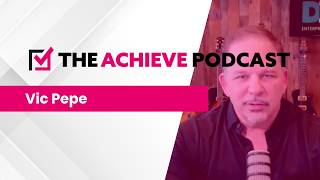
In this episode of the Achieve Podcast, host Jesse Warner interviews Vic Pepe, managing partner of D&M Enterprise Group (formerly DNM Enterprise Group). Vic shares his unconventional career trajectory—from early work in the music industry to senior technology roles at major financial firms, and ultimately joining Steve Gerhardt’s telecom startup in 2016 as a partner. He describes how the company transformed from a traditional connectivity and telecom provider into a full‑service enterprise technology firm offering unified communications, cloud contact centers, cybersecurity, and AI‑enabled solutions. Vic details internal AI applications, including a meeting‑assistant named “Clark Westfield” that records, transcribes, and summarizes calls, as well as the use of large language models (Claude, ChatGPT, Grok) for research, content creation, and email drafting. He highlights a pilot of AI‑driven outbound call agents that raised contact rates by 70% for a debt‑consolidation client. Marketing efforts focus heavily on LinkedIn, with regular posting and event promotion, while other social platforms are less effective for their B2B model. When discussing scaling, Vic emphasizes mindset and delegation as the primary constraint, followed by capital discipline and hiring the right talent. Looking ahead, he is excited about the enduring demand for connectivity and the expanding role of AI across business tools. He shares leadership lessons about embracing failure, playing aggressively, and maintaining integrity, and advises aspiring entrepreneurs to start a business without needing a novel invention, focusing instead on superior service. The episode concludes with a plug for Vic’s own “10,000 Miles” podcast and links to D&M Enterprise Group’s website.
Chapters
Welcome to the Achieve Podcast, the show where we highlight the leaders, creators, and entrepreneurs who are building meaningful businesses and shaping their industries. My name is Jesse Warner, I'll be your host today, and we're excited to learn from Vic Pepe. Vic joins us from Dallas, uh, he is the managing partner of D&M Enterprise Group. Vic, Pleasure to have you on the show.
Hey, thanks for having me, Jesse. Super nice to be here today.
Uh, so our audience can get to know you a little bit better, give us your backstory. How did you start your business? What do you do?
Well, I'm a, I'm a fortunate guy. My backstory is, uh, really come out of the corporate technology world. There's a whole story before that, Jesse, around the music business, hence the guitars behind me. But the music business didn't buy those guitars, so we'll transition to my technology career. Um, I was the lucky guy in the right place at the right time in the '90s, and I caught a wave, and I worked my way through, uh, technology organizations. I worked for Lehman Brothers, Bear Stearns, JPMorgan Chase. And in '01— well, actually prior to that, I met a guy named Stephen Gerhardt who worked at a telecom company, um, and I did a lot of business with him. In '01, he decided to go off and start the DNM Enterprise Group as the founder. and I continued to use that organization as a secret weapon. He was building a level of service that I couldn't get from traditional carriers, and I watched Steve grow the business through 2015. Then in 2016, when I exited corporate America after a nice event, I had a decision to make, and Steve approached me and said, I, I want you to be a partner in my business. He said, I think I've taken it this far. I've done great, but I think with your network and the difference of things, you know, the different types of technologies that you really know about and have run, we could make a go at it. So I've been the CIO of 5 companies. I've operated in publicly traded, privately held, private equity-backed organizations, and I joined unofficially in 2016 the DNM Enterprise Group as a partner. Officially, if you look at my LinkedIn, my 9 years was March 1st of this year. So been a great run. And, and me and my other business partner Tim Reese have joined forces with Steve, and we've reshaped the company to more than just a, a pipes and plumbing communications company, to a full-service technology company that handles enterprise customers at the greatest scale.
Well, congratulations on the growth and thank you, anniversary on 9 years.
Thanks so much.
Um, How has the business changed as it's grown? What did it look like when you started and what does it look like today?
Boy, the business has changed so much and it continues to change. And so do the challenges. You know, Steve built a very formidable back office to be able to handle connectivity and telecom and really cut his teeth in those areas and did a fantastic job of hiring people out of telecom companies. But the industry started really shifting, I'd say in '14, '15. Where other products and services were coming to what we call the channel. Technology companies bring their goods and services to market a few different ways. First and foremost, direct sales. They'll hire Jesse, they'll hire Vic, and we work for the company. The channel, much like, uh, I liken it to the insurance industry of being a broker. Uh, we like those brokers. We have 400 logos in our ecosystem, and we get to meet with customers and understand what problems they're having, what solutions they're looking for, and bring the power of these ecosystems to them. We're paid by the providers, not the customer, as an offset to their direct sales expense. So everybody wins. We've got great line of sight into, um, the best pricing, the best terms, the best deals. How that's changed for us, back to your original question, is that the product sets have expanded as technology's grown. You know, they used to call it hosted phones and then it's unified, unified communications as a service. And then premise-based technology started migrating to the cloud pretty heavily, not just storage and compute, but things like contact centers, cybersecurity tools, etc. So we've had to tool ourselves to be really versed in all of these tools to the extent that when a customer came to us, said, I have a particular problem, I don't want to buy $1 million worth of software. Isn't there something as a service I can buy and bolt onto my environment? We had to become really proficient at those things. And today our portfolio looks very wide. It goes from connectivity to unified communications, contact centers in the cloud, and all now in the last 2 years, Jesse, all of the AI tools that wrap around it. It's, it's been a fascinating ride. The AI revolution is here. Anybody who thinks it's not is kidding themselves. It's coming. It's, it's fast. It's moving furious and learn how to use it. It's all I could tell you.
One of my questions a little bit later on, I'll just ask you now, I guess, but yeah, there obviously is a lot of buzz around AI, automation, everything going on there. The whole world's changing around this. How have you guys found ways to use AI internally? I know you, it sounds like you offer it as a solution. Yep. How are you using it internally as well?
Well, first and foremost, I have a meeting assistant that jumps on every single one of my calls. I gave him a cute little name. His name is Clark Westfield. He's named after Exit 135 on the New Jersey Garden State Parkway, which is the two towns, Clark and Westfield. Um, the backstory is I used to live off of that exit and it was just thought it was a, a neat little name. So this, uh, AI, Virtual Agent joins all my calls, all my conference, all my Teams and Zoom and calls up the live video, takes amazing notes, knows when Jesse's speaking, knows when Vic's speaking, or up to almost an infinite amount of people. It summarizes that call when it's all done. It's also doing a video record of that call that I have in the archive. So if I forgot something or I want to go back to a spot in the video and send a clip to somebody, I can do that. I was an early adopter of a platform called Sybil. I don't sell them, I don't get paid by them. It's just a pure love for the platform. People use many things, but my agent Clark joins all these calls. We also use AI, oh gosh, a million different ways. Obviously, the Claude's, the ChatGPT's, the Grok's are used in part for research and to cite sources and to sort of take Google search to its next level. We use it to help define some of the language that we need in presentations and whatnot, or maybe to train our people on the best way to handle an escalated email, leverage Copilot or something like that in the Microsoft suite to go back and say, you know, I'm really mad and I want to send Jesse— he sent me a nasty gram and I want to really respond to him, but I'm going to take a pause. And does this email really sound measured and professional? You don't always have that colleague to run it by. And AI has been a really great tool for that. So that's where we're using it right now. We're about to turn on an after-hours agent in the next coming months, just to be able to deal with our after-hours calls and traffic and to be able to support and escalate people. So they're not just hitting an email and hoping somebody gets it, you know, that they'll be sure that they've— they're being tracked and they know what's happening.
Well, it's good to hear, Vic, about some of the ways you're using it. I know in the call center space, AI agents, especially on the inbound side, have been really effective.
Yes.
The outbound side, I think, probably still needs some work in creating some of that outbound motion.
But I've seen them do some things. Jesse, it's getting there. We have a client, I won't mention their name, but they do debt consolidation. So they're reaching out to people who might be struggling to make a payment. And you've heard a million of these companies. and these people get credit, you know, they get scored and they know who they're calling and all of that. But having somebody on the phone all day, every day, just to make that initial contact is very expensive. And so this company piloted along with us. We brought them 3 different providers. We did a side-by-side pilot and the contacts rate, the contact rates went up like 70%. And so when you sort of push that through their standard metrics on the back door, and it was a simple use case. Hey, Jesse, we think we have an opportunity. We can help lower your monthly payments. You seem to be prequalified X, Y, and Z. Would you like to speak to an agent about the possibilities right now? Real easy. Very, very easy on the outbound. And as long as the voice is natural and it could handle arguments and disambiguation and things alike, it goes well. Sure. To your point, you try to do something, create, you know, fully baked, like I'm going to call somebody, I'm going to sell them a credit card, I'm going to close the whole thing without speaking to anybody. That's a little bit more difficult, but it's coming. Everybody I talk to is working towards the, the completely independent interaction of, of AI being able to handle very complex things.
When you look at sales marketing outreach effort for your own company, where are you seeing the most traction? What's working? What's not working?
LinkedIn's been a great tool for us. Obviously, the social platforms like Facebook and, and TikTok and things of the like are a little less effective for us, Jesse, because we're B2B. And so we primarily focus on trade magazines and blasts. But LinkedIn has been really great for us. Business folks still go on LinkedIn. They want to know we have a presence. They want to know we have an opinion. They want to know that we're active and engaged and we're forward thinking. So we have spent some good amount of time and money really focusing in on our LinkedIn platform. And we go through waves, 3 posts a week, 2 posts a week, 1 post a week, and then we double down around certain events. And so we use it to broadcast our events, sometimes celebrate our internal people, talk about our wins, the awards we may win in the industry, and then lots of insights. So we're really finding that from a B2B perspective, LinkedIn is just, it's necessary. It's like, you know, putting that deodorant on before you leave the house. You know, you just got to do it.
When, as you try to scale, and you've grown a lot over the last several years, you know, what are some of the constraints that are, that keep showing up? Like what, time, people, systems, capital, leadership? Like what, what are those constraints that you see as you try to grow?
You know, I, um, I may surprise you with this answer. The number one constraint is between the ears. It's the mindset. You know, when you're a small business and an owner— and I, I have hundreds of colleagues that are in various stages that are in my business, that are in various stages of, of their maturation in this business, everything from somebody starting out who's got a lifestyle business to somebody who's got 50 employees, 60 employees— the biggest, um, stick in the spokes for growth is the letting go. Is the owner's belief that I don't have to do this myself. I can delegate, I can hire for this, and then I can free myself up for the high-value tasks. And that— and listen, we've, we've been guilty of it. Certainly I know I've been guilty of it over the last 9 years, but I constantly turn the dial and we constantly turn the dial to reevaluate ourselves. Sure, capital is, uh, is always a challenge, but that, you know, I think that the discipline drives the capital too, because you start out making a dollar and you say, once I make $2, the next X amount of dollars I make is going to be to hire somebody. And then you make $2 and you flexed a little bit, your life got expansive, and you go, you know, I know I was going to hire somebody at $2, but, and I really want to get to $4 before I hire somebody. And so you get to $4 and you still haven't hired anybody. And you're answering calls at 3 AM and you're chief cook, bottle washer, maintenance, you're everything and everybody. But then again, that's back to the ear. So you have to— the money will be there if you're growing and you apply the right waves of money back into your business. Jesse, you're going to yield the dividends. And then lastly, hiring the right people. That's an art and a science, and not everybody gets that right. Because people tend to want to hire people who look like themselves, have the same mindset, they work the same way. It just feels really simpatico. But that's not actually what you need, because every hand on the clock has a different number on it, every spot on the clock. So if I'm a 12 and I hire 10 more 12s, who knows what time it is? I can't tell you what time it is. And so knowing the players to put on the field that will complement you versus, you know, um, versus be exactly like you. Then again, there's succession planning, that's a different story. But as you're scaling, really knowing the right players, identifying those roles, and finding the right people.
You know, the mindset thing is definitely something we see a lot as well, right?
Yeah.
Business owners is, you know, I think we put our own limited self-limiting beliefs, right? A little bit of imposter syndrome sometimes as well.
Sure.
As we're trying to grow. Uh, Vic, as you look at the next stage of growth, what are you most excited about?
What gets you excited in our business, um, especially now with AI? I mean, all things— we started in connectivity. So no matter what you do in technology, it's got to get from point A to point B. And I think connectivity will always be the you know, somewhat of the bread and butter of our business. People are getting more for less, and then just when you think they're getting less, they want more for the same. And so the revenues and the growth and the ability to consume and build more expansive networks are always going to be there. But all of the other tools that enable businesses now that they're powered by AI in some way, shape, or form, whether that be your CRM or a straight-up model or something that is helping you on analytics, Those things are super exciting. You know, I have friends and colleagues that fear AI and say, "Ah, everybody's going to be out of a job." I don't have a crystal ball to tell you how many jobs it will displace, but I know the robot welder displaced the welder on the manufacturing line. There's no longer a person who picks up a tire and puts it on a wheel. And then takes a manual tool and hits in the lugs. That's all happening. So people felt that way. The ATMs displaced tellers. The online banking displaced ATMs. And we can go on and on and on. It's evolution. It's life. Short of that, you know, buy a horse and buggy and go get yourself 20 acres in the middle of nowhere. The genie is out of the bottle. So, um, it's exciting. It's a little scary for most, but I would say for those who are scared, do it, do it from a place of information. Like, get based in what's really going on. Learn how to use the tools. Learn how to make them benefit your life, your business, right? And then you'll have other people to grow the business in other ways instead of doing manual tasks. You can go create some market share.
When you look at your journey, looking backwards, some of your wins, your mistakes, what are some lessons that stand out to you?
The, the mistakes are all there. I, I dream about them at night still. I, um, uh, what I can tell you is this, is try not to make the same mistake twice. Allow yourself to make it once, because part of success is getting up, you know, falling down and getting up again. I remember an interview with Jeff Bezos where somebody said, man, you, you're like King Midas. Everything you touch turns to gold. Every investment you make is amazing. You've done so, so well. He laughed so hard out loud. He said, we have lost billions of dollars on things we thought were going to be the next big thing, and they just went nowhere. He said, fortunately, with things like Prime and AWS, we got some really great wins on the board that have afforded us that, but It's the ability to try and fail and get back up. So don't fear the uncertainty, that feeling you get when you get a little nervous, that's a key that you're growing. Try new things, be bold and brave. Don't be too cautious because we see folks all the time, they get passed by because of their cautious, hey, I'm going to play it safe. If you're in business, you have to be aggressive. You have to always do the right thing. You have to have a high level of integrity, but you've got— you got to play to win. You've got to play to win.
As we wrap up here, any final thoughts or advice that you give to other leaders or entrepreneurs who are on a similar journey to you?
Um, if you have thick skin, uh, if you have a set of long-term goggles on and you can get out there and do it. Start a business, work for yourself. Uh, you'll never work for somebody as hard as you'll work for yourself ever. Um, it's rewarding. It's scary. It's great. But if you want real freedom, real freedom in a world of uncertainty, create something great, create a legacy, put your head down and you don't have to invent anything. Jesse, you know, I thought for the longest time I had to come up with some novel idea that nobody did before. A CEO of a company sat me down and said, "Why don't you have your own thing?" And I said, "Oh, I haven't invented anything." He said, "Are you dumb?" He said, "You don't need to invent anything. Do something, but do it, just do it better and a little bit different than the next guy and provide a level of service that people are going to like." And that light bulb came on for me. I don't necessarily have to invent something, but I can put my spin on it and I can deliver a high level of service to people who want it. And so go start a business. It's a lot of fun.
Go start, go build.
Yes.
Vic, I really appreciate you sharing your story, your insights with us today. For those listening, if you want to learn more about Vic Peppe and his business, DNM Enterprise Group, you can go to dmenterprise.net. We didn't talk about this, Vic, but you're also the host of 10,000 Miles Podcast.
Correct.
So if you want to listen to him on that, he interviews some fantastic people. You can also visit 10kmilespodcast.com. Vic, you want to say anything about the podcast before we—
Yeah, just real quick. I'm on YouTube at 10K Miles. I am about 100 episodes in, having a blast. I'm also on every audio platform out there, from Spotify to Apple Podcasts, iHeartRadio, and anywhere you listen to podcasts. I subscribe to the 2.0 Index. So if you're a Fountain user or something else, I'm out there, you'll find me.
Well, that wraps up today's episode of the Achieve Podcast. A big thank you to our sponsor Achieve Fractional, which provides fractional executives for growing businesses. And if you enjoyed today's conversation, follow the show and share it with another entrepreneur who'd also find value in it. Thanks for listening, and we'll see you on the next episode of the Achieve Podcast.









