
ADHD & Anxiety to Public Speaking w/Will Klein
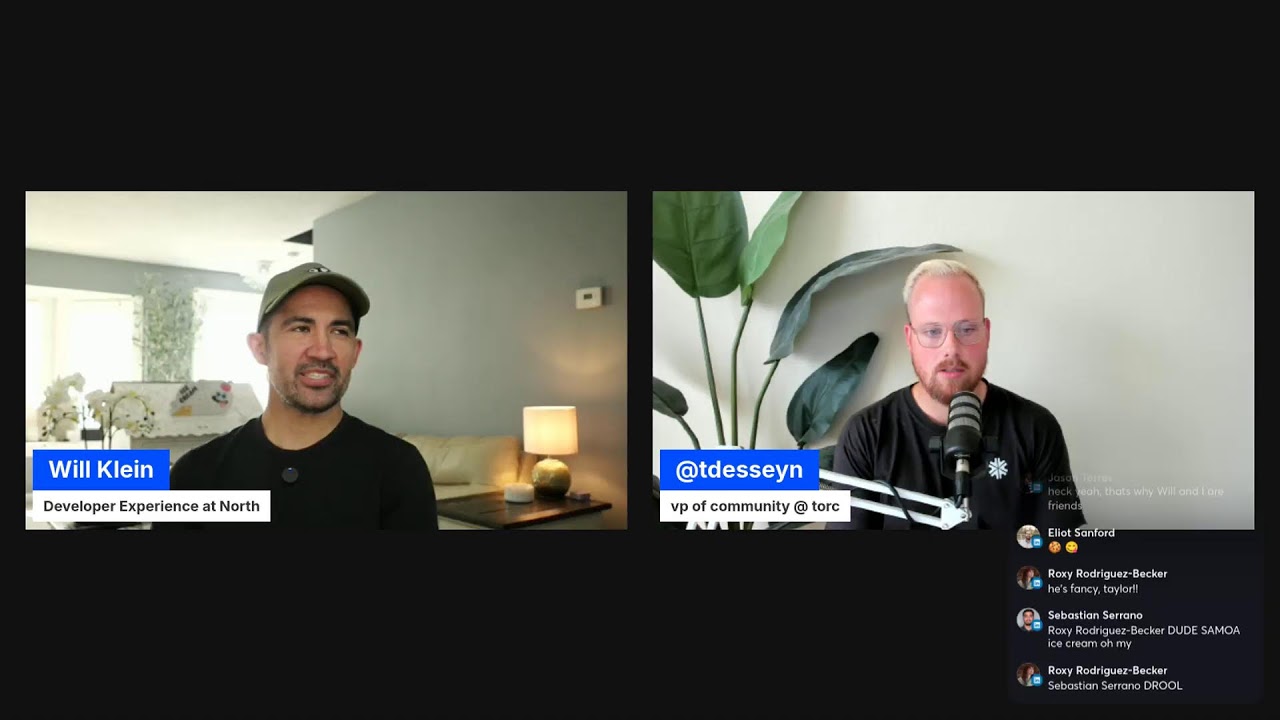
Will Klein talks about overcoming social anxiety and ADHD to become a public speaker. He shares how volunteering at meetups, starting small, and talking to organizers helped him build confidence, plus tactics for managing nerves at conferences.
Chapters
All righty. Good morning. Good morning. Happy Hump Day. Hump Day. I never, I never know why they went away from the camel. I thought the camel was a great, great thing. Should have done, should have kept. Um, sweet. All right, man. Well, uh, so where are you, where are you tuning in from again? Remind me. Connecticut?
I'm in Connecticut now. I was in Colorado for the longest time.
Okay. How did— why Connecticut? Family?
Yeah, family and friends, right? Like people that I hung out with when I was in high school, in college age and all that. I've been coming back to visit and when I sit down with them, I just feel so comfortable. I feel so at home with them. And we have some great friends in Colorado, but it's just, it just feels like home back here to hang out with those folks. And we'd been at altitude in Colorado for a while, and we're really curious to get back to sea level and be around other people back here. So we're giving it a shot. So we're in the process of moving right now. I'm actually in a short-term rental.
So here's— here is, uh, and for those of you, welcome, say hey, we'd love to hear from you. We're just yapping here. Uh, Sean, I appreciate you. Uh, Sean was dialed in. We weren't even live yet, and Sean's out here saying he's excited for this. So that means a lot. That's the first, like, comment I've ever gotten. So Sean, congratulations, you, you get a gold star. Here's the heavy— here's a heavy-hitting question, Will. Have we found a sheet of ice yet? Have we found— have we, have we talked about beer league? Have we gotten plugged into a team? Talk to me about that.
I play ice hockey. I've— I have from since I was a kid, and I have a couple different friends asking me to come play. One wants me to play in some A-league in Simsbury. Where I'm probably gonna be out of my depth a little bit and try to catch up.
Oh no, but you can move, dude. You can move. You sent me some videos. You can move, man. We need you down here.
I appreciate that. Real quick aside, I just brought my kids last Saturday to South Winds Arena. And if you've heard of South Winds Arena or been there, you'll know what I'm talking about. This is a rink built in the '70s, really old school, including the pro shop. And the pro shop is like 2 levels. Whoa, it's spoiled. I'll get you in trouble. They have everything. Like, usually I go to a pro shop and I can't find stuff my size, or I have to like make trade-offs what brand I'm getting. They have everything there. And I brought my kids to get fitted for the first time.
My daughter— I saw that post. I saw that post. Will is now broke.
I'm now broke. Yeah, so pretty, pretty excited that my kids will get to grow up playing in the same rink I did.
And, you know, Still similar memories. Uh, what, um, how was the— I, I feel like ice hockey was pretty big out in Denver, right? I feel like you guys have a pretty, pretty great, good community out there.
Yeah, yeah.
That's awesome.
As soon as I moved, somebody on my, my software development team was playing hockey and I joined his team.
Are you serious?
Yeah, that was a really good way to connect with people.
Dude, there's so much— there's so many tech people play ice hockey. Like, guys on my team, like, I found out my defensive partner, which It's sad. You win back-to-back championships, and I think the guys just feel like there's nothing to play for. So we don't have a team this upcoming year, which is incredibly unfortunate. But like one of my guys was like, "Hey, what do you do?" He goes, "I'm a Workday Salesforce consultant," and I was like, "What?" He was my line partner for like years. So it's so funny the the tech hockey crossover. For those of you tuned in, good morning. It looks like we're finally live, which is great. Sean, Ricardo, Michael. Jeff, JC, Chris, Mark, uh, another Christopher, David, Amelia. It's great to see y'all this morning again. We got the live comments up here. It's a fun little new feature that StreamYard is doing so people can see themselves comment real time. Please say hey, would love to hear from you. My little spiel before we get yapping here, um, you know, I've been doing the show for 5 years now. Um, uh, I was pretty aggressive, which is my personality. Uh, uh, no, I'm not an aggressive personality, but I'm like very like do things to like the limit. So I did this thing every day for about 4 years, and, um, and, uh, it's been amazing. And what I realized over the course of the last year is this is really, this is really a meetup. Will's the speaker, I'm the moderator, and then the people who tune in on the comments are the viewers that, that like the, the people who show up at meetups, right? So that's why I tell people to say hey, because my strategy is, and this is what we're doing at Torque, With Jason, with his streams, and Angelo and his streams is like we kind of want to develop a place where we have a meetup. There you go. There you go. Peace. Uh uh uh. We we we have a meetup. You comment if you engage. If you DM'd every single speaker I've had over five years, your network would be vast. So please connect with Will. Tell him tell him you saw him here. But then connect with everybody in the comments, right? I did a one-on-one yesterday with a kid at Vanderbilt. And it's so funny, his dad is a developer in Nashville and he has sent both his kids to me and actually helped his oldest daughter get an internship at Capital One. And now I'm mentoring his son who's graduating from mechanical engineering degree at Vanderbilt. And we were talking, I was like, he goes, what should I do to network? And I said, I would message everybody on LinkedIn that graduated from Vanderbilt and say, how did you get to where you're at? And have a conversation with them. And that's kind of what we do here, right? If you mess with everybody in the comments, you mess with the speaker, your network's going to be vast. So please continue to say hey so people can see that you're tuning in. We're not in the metaverse yet with goggles, even though that would be pretty sick. A few other housekeeping things. First and foremost, I'm an Appwrite Hero. I always joke I'm the only non-technical person on a Heroes program. Me and Jason Torres, both Appwrite Heroes. Go check them out. Great crew. Tell them the Torque Boy sends you. Uh, listen, we just got— drum roll— brand new Torque community site. Brand new. It just dropped yesterday. It's really pretty. Um, go check it out, torque.community. It's very fancy. It's schmancy. Check it out. Shout out Jason Torres for helping with that, um, with our, um, Framer consultant. He did a great job with making sure everything's over. So if you go to torque.community, you see all of our shows, our sign up for ambassador program, which Will is a part of. Will's a fellow ambassador. Um, and then also, uh, our mentor-mentee program— mentee-mentor— I'm talking too fast, coffee's kicking in. Um, also, if you want to be, uh, when I go live with great guests like Will— Will joined up last night, appreciate you, Will— um, uh, shoot live, shoot me a text, is actually my number. Um, would love to have you. Um, and hey, ambassadors get this first, but if you want new— if you want to buy new Torque swag, we just dropped 2 new designs. on the swag store today. It's new, a lot of new updates. Uh, ambassadors are going to get this here soon, but if you do want to purchase, we don't take anything, we don't make any money, everything's at cost. Um, and so, uh, go check that out. Wow, there you go. See, it looks good, doesn't it? It looks good. All right, Will, let's give the people what they want, man. Who are you? What do you do? We'll go from there.
Yeah, sure. Um, I'm Will Klein. I'm in Near Hartford, Connecticut. I work at North. We help developers implement payment experiences. I'm on the developer experience team there now. And I've been in tech full-time since 2007. Awesome.
I love it.
I love it.
All right. So, a fellow ice hockey guy, fellow dads in tech guy. So let's talk about the topic. Right, anxiety speaking, right? It's, it's, it's, it's a lot. I, a lot of folks deal with this, right? We, we have a lot of folks— like, one of the things that we're trying to roll out in the Discord with Angelo is like a show-and-tell thing. There's a lot of people who like want to present who are too scared to present it, by the way, but we want to give them the opportunity to present virtually. So shout out Angelo, he just chimed in, uh, for, for doing that. We have our first— I think it's today, it's today. Today, um, Show and Tell at 1 PM Eastern. Man, talk about high level about, you know, how did you overcome it? And obviously that's a very loaded question, but I'll continue to ask you questions as, as you talk.
Yeah, I have to go back a bit. Um, this is— I'm thinking back to 2010. I'd been in the field for 3 years at this point. I'd only worked at small companies and didn't have like a big network or know many people. And I remember being on the small team and it was like maybe 8 of us around a table having a meeting about a big project that was coming up. And I had a lot of things to say. I had questions to ask, concerns to raise, things to figure out in that meeting that I needed to contribute. You know, those, those questions, those, those issues or those, whatever it was. And I realized that I was pretty much quiet the whole time, and I was struggling. I was choked up. I was struggling to say anything. And this is just where it really hit me that something I'd struggled with for years at this point, for over a decade at this point, um, I'd call it social anxiety, talking to people, let alone public speaking. Like, even just going to a grocery store and going to the checkout, and I would get tensed up that they would make small talk with me at the cashier and I'd have to figure out what to say, or ordering at a restaurant was really difficult.
Yeah.
I like to share that my wife, I didn't— when I met her, I, I didn't get her number or anything. She had to track me down afterwards.
Are you serious?
I was so shy and it was so hard for me to like to, to, to, to say certain things and ask certain things. And then it hit me in the professional setting. And at that point, I'd actually been working on it for years. I had taken a speech class. I had— I was president of the computer club. I kept putting myself in situations to overcome this. But here I was, and life was hitting me in the professional setting where I was still like— I felt, I felt broken. Like, I felt like I wasn't capable of doing my job the way I believed I should be able to do it. And I knew that if I didn't do something at that point, this was going to be the rest of my life. I had to go take a step further than I ever had before. So in this case, I did a 2-for-1 because I was also not accustomed to speaking technically. I decided the most challenging thing I could do that was attainable within my reach would be to just start speaking at tech meetups. So then I would practice speaking technically and presenting technical ideas and communicating those things, and I'd be getting up in front of people. which was always really, really frightening to me.
Yeah.
And I, at this point, I just really felt like I had nothing to lose. I needed to go for it. And I just started slow and I spoke at like a local Google Users Meetup and then a local Linux Users Meetup. And I only did like 3 talks in a couple years. But by year 3, I was realizing I wanted to do more in the JavaScript space. And I, so I started my own meetup and being an MC of a meetup and getting people to speak and introducing other people is like even another level of challenge. Yeah. Kind of setting that social tone of what type of vibe do we have here when people get here. And all this stuff was totally outside my comfort zone. And I'm so glad I did it because initially I was like counting them and at some point I got to something like 30 or 40 meetups.
Wow.
And this is now like 4 or 5 years in and I just stopped counting at that point. I just kept doing them. And then I started doing conferences in 2015. Nashville was actually— Nodevember Nashville was I was actually at my second conference.
Wait, you came to Nodevember back in the day?
Yeah, yeah, it was really cool. That's awesome. That's awesome. Yeah. So yeah, it was public speaking and being able to talk to people and communicating technically was my weakness. And I just knew how that would impact my career and how that would impact me personally in my life. And I decided to go all in. And I found that I think meetups are phenomenal to go and present at. I know some people who have also struggled with this, but for me it was one of the best things I could have ever done in my life.
I love that, man. So there's so much to unpack here. I think the first question, um, let me ask you this. Do you think you'd be where you're at in your career if you hadn't doubled down on public speaking?
That's a great question. I absolutely would not be. Um, I actually was thinking about this, um, the past month knowing this was coming up. I was like, all 6 of my opportunities that I got since I started doing this in 2010 all have a foundation or a direct result of public speaking or organizing a meetup or even just attending, even just attending conferences and meetups. I'll say that's how it started. My early opportunities transpired because of showing up and just talking to people.
Yeah.
And that in itself helped me stand out back in the day. And I think even now, with attendance being lower than it ever has been in the last whatever.
Yeah.
I think it's easy to stand out and to go and just be there and to talk to a few people raises— I like to say it, it doesn't— I think it can create more opportunities, but I don't think of it that way. To me, it's raised the quality of my opportunities.
Ooh, love that.
The quality of the places that I end up talking to, that I end up interviewing at, or I even get invited to just go work at has gone way up. I remember Sunil said something yesterday about like he's at he he's able to get a job with one tweet. My last job I got because of one tweet.
Are you serious?
And I didn't and by the way, I I think um I think of myself as a fun example for this or interesting example because I'm not well known like Sunil. Sunil, I've heard of Sunil for years and known of his work and all that. I'm not well I'm not that well known. I have maybe two thousand followers on on X is my biggest platform and I'm on Blue Sky and all that. I don't have many people, but the people I do know and the quality of the relationships I have are really high. And what was I gonna say here? Yeah, I posted though. I posted on X that I was looking. I posted on LinkedIn too. Somebody saw my tweet though that I knew from the community, other people that had spoken in the community, and they knew somebody else and they put us in touch and that got me my current role.
That's so cool. I love stuff like that.
And I have like 5 other stories that go along with that, where just showing up, or even being involved in some way, created the opportunity that would be like, where I would be really excited and it'd be a great role.
Absolutely. So I want to get to— so Amelia brings out a good— and I can talk about this too, I'm sure you can— but the burnout after being out and speaking with people is worse sometimes. What are your thoughts on this?
Yeah. So I'm an introvert. And the funny thing is I lose energy around other people.
Same.
If I'm being really honest, I lose and I gain energy in the long run. I lose energy naturally, but when I talk tech with people, that gives me energy. It's interesting to me, right? So, but over the course of, say, a conference, say a 3-day conference, I'll be completely spent. And getting up in front of people is like another, another way I lose energy and I love it and I enjoy it, but it's also very like expensive energy-wise.
Ooh, I like that. Expensive. I like that. Yeah, yeah, yeah.
So I always need to recharge afterwards. I try to— my— I actually have a rhythm now for conferences where especially if I travel to one, I'll go there 2 or 3 days early and I'll just be by myself. Yeah, I'll be like, just walk around the city or just spend time by myself, really kind of charge up. And then during the conference it'll be like full-on social mode. I do take breaks. I've learned to really lean into the breaks. sometimes I'll go back to my hotel room and I'll even miss a talk I really want to see, but I'll prioritize when I need to recharge.
Yeah.
So I can be present for when I am there. And then, and then afterwards, I definitely need to take time off, be with my family, do things for myself, be by myself. And the other way I— besides the burnout of the social part, the flip side is I get a lot of energy. I get a lot of inspiration from other people's talks, from a lot of the hallway conversations.
So for me, It's, it's weird.
I, I, I lose a lot of like physical energy, but my mental energy goes up over the course of that experience.
Yeah, I love that. Yeah, I mean, same with me, right? I think it's— I think, I think there is— I think folks need to know what works for them, right? And, and I'm very aware of that, right? I'm out here preaching post, post, post, post, post, right? Like, obviously, like I kind of say I basically have taken what Gary Vee has said, Gary Vaynerchuk has said for businesses, and I've applied it to your career and your brand and your job search, right? I understand that's not for everybody. I get it, right? But for me, you have to know who you are and how you operate. And I think that has taken me some time. I'm sure it's probably taken you some time because For me, I've realized, so I used to go to every talk. And again, I'm not technical. So I'm sitting in a talk with like micro front ends. I'm like, oh no, sounds great. Right. But like, even what I've noticed is even going to talks wears me out, not even talking, just sitting there and trying to absorb this information is exhausting. And so, yeah, like, like it has taken me a few years to balance the balance the conference and speaking circuit, right? I mean, even for me, I am an introvert. I say it all the time. I think the career path I've set for myself is a very interesting thing because I'm so people-first and so people-oriented and so online, but yet it does exhaust me, right? And so you have to find what works for you.
Yeah.
But Amelia, absolutely. Yeah, I mean, even AJ, right? Like, I saw AJ, uh, Josh Siri posted about AJ being his editor, and I just slid in AJ's DMs and he and I are chatting about editing this week. It's crazy.
Yeah.
Like, like, like, like yesterday, um, when I was talking with that Vanderbilt grad, he was like, should I do career fairs or should I just stay on LinkedIn? I said, you need to do both. But I was like, and then I saw a tweet thread the other day, I wish I saved it, about this guy sending 300 cold emails. Just to people he wanted to talk to and how the art of a cold email worked. And like his, he said his response rates were through the roof. Like you don't understand, like you, like you don't have to sit here and wait for things to come to you. You can go and get those things. What are your thoughts on that? I just, yeah, for a second. Sorry about that.
No. Yeah. I mean, you mentioned, you know, from a reply on a tweet or on LinkedIn, right? I mean, that's how I know you. That's how I know of your work. And that's how I know Jason Torres. Right. And the fun thing I've experienced is there's a lot of people I've known online. I've just interacted with them online. And then one day I get to meet them in person and we pick up at like, like we've already fast forwarded past the who are you point.
Yeah.
And we always sort of know each other to a degree where we know what we're into. We know what we want to talk about. We know we have questions for each other. And I mean, when I hung out with Jason, great example in Denver, he came out and did a meetup for Torque and Warp and I helped out a little bit. And we hung out like then for a day. Yeah. And we went and just recorded some stuff together and talked and it was, it was awesome. Right. And I have a lot of those experiences now at meetups and conferences where I've known somebody online and then I get to add to that the, the in-person, you know, rapport. And it goes the other way too, right? I meet people at conferences and then we keep up online. And I always have this assumption now that Anybody I meet or I haven't met, I'm gonna see them soon. I'm gonna see them next year at a conference or at a meetup or something, and we'll cross paths again, which is pretty cool. For me, the— and for me, it's like, it really is the meetups and the conferences where I make that effort, and I've invested in that. I think of it this way. I think every single person in the world has something unique to offer the rest of the world, and I'm curious what that is. So I have this natural curiosity about people. When I talk to people, I'm sort of wondering what that is and looking for that. And it's partly a little bit selfish, right? 'Cause I wanna know what I can learn from them, but I'm also thinking like, hey, what do they have to offer everybody else? And then from there, with that goal in mind of going to meetups, going to conferences, or interacting with people online and not just liking something, but actually replying with something positive or something that adds to the conversation, it always takes effort. It feels like a hustle every single time I do it, whether it's in person or online. But I look back and all the little bits of effort I've invested are like seeds planted. And so many of them have grown into like actual relationships. Those conversations not only gave me something in the moment, but now there's lots of people that I care about, that I'm interested in, that I'm learning about. And I think about it that way. And it's—
It's like a spider web. I call it the spider web effect.
I like that.
Like, yeah, like, like, my spider web is this show. Yeah, Will's in my— I mean, Will's been in my spider web.
I get it. Yeah.
But like, like, I got Sunil yesterday. I got him.
Oh man, he's amazing.
He's great, dude. That was a great conversation. That was such a great episode. But like, I got him in my— I got him in my web. And then what I do is— what one of the things we're doing at Torque is like creating really meaningful short-form content Then for folks to share with their networks, that's another spider web, right? And so the stickier you can get with people, the more it's gonna benefit you down the road.
Yeah, it's funny. I really don't think about— I know the benefit's there, but it's not even— if you think about the benefit, that's okay if you do, by the way. I don't even think about it anymore. And I had this moment when I got this last role. And people saw what I was doing, and they introduced me. And like, I didn't make it easy, by the way. They sent me a link. I went to it. It didn't work. And I was like, I just brushed it off. And then they sent me the whole thing.
Sounds like sounds like folks gotta wrangle you.
Yeah, no.
Life had to wrangle you. This opportunity had to wrangle you.
A little bit. They they I mean they were just people went out of their way for me, and it really surprised me at first. But then I thought about it. It's like. I've been trying to do that for other people for years now, and there's definitely a karmic element to this. And again, it's like I don't do things for karma or what goes around come around, but it really does.
Yeah.
And I've, I've learned it's just a great way to go through life where I'm not just curious about people want to go to me. It's like I'm wondering if I can help people, if I can help somebody in just the smallest way, whether it's answering a question or telling them about a company or sharing something I know with them, whether it's at a meetup or conference, every single one of those exchanges is a chance to help somebody.
Yep.
And you keep doing that over the years, it, it doesn't take long. It happens very quickly that it comes back to you in a really good way.
Yeah.
Um, and I think it's— if everybody's doing that, I, I think a lot of people, I think most people in tech that especially part of the Tor community are like that.
Yeah.
And that just makes everything so much better.
Agreed. Agreed. Let me ask you, so, so, so let's get practical tactical here for a second, right?
Yeah.
Will, I am terrified to speak in public. I am terrified to put myself out there. I have no social media presence. I've never spoken at a meetup. I am new in my career, but I have aspirations to be like you. What are some key things that you would tell them to get started?
Yeah. So I would volunteer. I would go talk to a meetup organizer. That would be the easiest thing, I think.
In your city.
Yep. Go find the meetups in your city that you're interested in. Go and talk to them. Um, cause usually people don't know exactly what to talk about initially, but there's stuff. Everybody has something, something you're learning right now. I think is a great topic, by the way, something that you're interested in or something you're learning right now is a great topic. But if you're not sure and you want to feel it out, go talk to the organizer. Because they'll have a sense of what topics they wish they had. And they'll be like, I almost think, I'm almost certain they'll quickly validate something that you're learning right now or something you're interested in and say, yeah, let's have you talk on that. Because organizers right now, it's always been hard. Like always, even when meetups were in their heyday before the pandemic, it was so hard to find speakers. And, or especially new speakers, right? I didn't want the same speakers more than maybe twice in a year if I could help it. Because by the way, like the more different people show up and speak, that reflects into the community. The more different people show up and attend. Yeah, that was something I saw through experience where somebody who didn't look like the last few speakers would present and people that I'd never seen before would show up at the meetup. So if you're underrepresented, by the way, I hope you have that not added pressure but added incentive that you have that potential to, to really build the community in that direction. Um, but yeah, start with talking to organizers. Um, look at— and I wouldn't be shy about looking at conference CFPs. So here's the thing, both meetups and conferences are always looking for new speakers.
Yes.
And we're usually looking for a balance of people who are brand new to speaking, which by the way is a unique period where you, you have something to offer that experienced speakers don't. You have this rawness, this, this natural, like, I'm learning something right now level of thing that is like I'm distant from now in a lot of ways. Yeah. So you have an inborn advantage being new to things. Talk to organizers. I love that a lot of conferences will have a Discord with a CFP channel. You go in, you can ask questions, you can go in and say, hey, I'm a new speaker, I've never given a conference talk, here's some things I'm interested in, and you can talk it through with people. Some conferences will have office hours, some conferences will say they really want new speakers. Cascadia Yes, it's a really good example. I'm doing that in a couple weeks.
Let's go.
Yeah. So it really does take going for it. And the other thing I would add, the last thing I'll add is because this can this can make a difference for some people is find a mentor. There's there's a lot of speakers out there that are always trying to help other people if only you ask. You can always reach out to me about that. I used to be very involved with that. I used to put on workshops for it. And I've, I've seen some awesome people turn into like speakers that are way beyond what I do. And they get invited now to speak at things all the time. And I'm really like, I'm so proud of that, that somebody that didn't think they could speak could turn into an amazing speaker. And it's not even— it's a skill that you develop and you don't even need to be skilled at it, right? You being you and your own style and presence There's— that's gonna resonate with so many people. So I hope that's encouraging to folks.
All right, so, so, so we got the meetup. All right, I think that's a great tactical thing. What would you say if somebody— because I've had this a lot— there's no meetups in my area?
What would you tell them? I had that. I mean, I was in— so I was in Hartford until 2013 when we moved, and I was into JavaScript. And for meetups, I had There was a Ruby group in New Haven, which was good because they'd have lightning talks and I could give a talk on JavaScript. That was fine, but there wasn't enough. So I started a meetup and that was a lot. That was definitely a lot. I actually have a blog post I need to get back online about how to start a meetup because it really is its own thing. So hit me up if you have questions about this, But for me, starting a meetup, it just started with my team at work knowing that they were interested in the same thing.
Yeah.
And that gave us this core group of 5 people that would show up. And then that's all you need. Like, you don't need 100 people, you don't need 30 people, you don't— you just need to have something regular that you can get together with. And my early meetups were 5 to 10 people, these little user groups for Google and Linux, and Those super small settings can be really awesome and really like very comfortable to get started. And you can see everybody in the room just in a few seconds looking around. And maybe that's scary, but it's better when it's only a few people.
Yeah.
So yeah, it's definitely daunting, but if you don't have a meetup in your area, besides just applying to conferences and going for it that way, Start one. It's, um, it doesn't take sponsorship. It just— you can find a library or even a coffee shop. Yeah, you do Code and Coffee, right? Yeah. Um, it just starts somewhere, and that in and of itself, by the way, will, will do a lot to help you get to know people, build connections, and, uh, improve your social skills.
Absolutely. Yeah, I mean, I mean, even for me when I was heavily recruiting Nashville back in the day, I started a lunch meetup. Now granted, I had the funds to be able to pay for everybody. Most people would've shown up if I didn't pay for them, but I capped it at 10 people.
Hmm.
Because I wanted— oh, a bowling alley meetup. Honestly, that would crush, if we're being honest, no pun intended. Um, so for me, I, I think But even to Jason's comment, like, I think, I do think I've had a lot of conversations with conference organizers and meetup organizers lately, kind of picking, people picking my brain. I do think you need to do something for meetups. I think sitting in a fluorescent light closed room in an office is becoming very tired. Honestly, I think a bowling alley would crush. I think a coffee shop would crush. That's why I did a lunch. And also I only wanted 9 other people there is because I wanna have intentional conversations. Right. I feel like a lot of people see like, you know, the renders or the, you know, uh, the, uh, you know, I'm thinking, I'm trying to think of like All Things Open or, you know, these, these massive conferences. Like, listen, like they all started with like 4 people showing up. Like it does not have to be a large thing and this overproduced thing. Pick a date, pick a location, show up and be consistent. I mean, Jason and I talk all the time about building community. The hardest part about building community is doing the same thing, same time, over and over and over again. Because I will tell you this, most people cannot keep, cannot keep consistent. So start a meetup. So first off, if you're trying to get into this, going back to my thing— also, by the way, are you wearing your mic, by the way?
Yeah, that's the mic.
It sounds so good. You, your voice sounds so good, not to be creepy.
Nice.
Um, so So go, if you wanna get involved in public speaking, find meetups, hit up the organizers. I like Elliot here. Elliot said it best. He goes, uh, pretty good source of knowledge. The meetup organizer is pretty much wearing a sign that says, I have an open door for anyone to come talk to me about anything tech. 100% facts.
Well said.
I, I, I help advise the National JavaScript Meetup. We're always looking for people, like definitely a thing. If there's no meetups, start something, right? Start small. Two three people at a coffee shop. Two three people at a bowling alley. Whatever. All right. Let's go to the next thing. When it comes to actually putting yourself in front of people, thoughts? Ha! Like I mean, at some point you just gotta.
Yeah.
You just gotta freaking do it.
You just gotta freaking do it. Um. It's worth saying that I realized it was— so last year I went to Malaga, Spain for a conference called Way Way Web. And I actually hadn't spoken in 5 years at that point, in person at a conference, that is. And I'd given 6 or 7 conference talks before, and every single one of them I was nervous at and anxious at and felt like I couldn't breathe at some of them when I started. Once I got going, things would get better because I would always be talking about something I was interested in. But the first— it's those first couple of moments that are always the hard— were always the hardest for me and still can be. But I remember it was, it was at this point, 14 years into my speaking journey that I finally gave a talk where I wasn't tense and nervous and anxious and actually Relaxed and felt calm for the first time. Yeah, took me 14 years, and that's a long time, and that's okay. And for some people, it'll be never. And I'm sure there's going to be something I do in the future where I'm really nervous again, or I'm really tense, and I need to let that fall away. To prepare for those first few moments, I've—it's funny—I've had people that see me in that state and tell me what's going on and what I can do to do about what I can do to overcome it, which is really nice. One person. And even before that one in Spain, I was actually— my chest felt tight. I was like, I've been really excited. I don't feel nervous, but my chest feels tight. And there was a speaking coach there and she pointed out, oh, that's adrenaline. You're feeling the physical effect of adrenaline right there. And that was just knowing that, by the way, it was a bit of a relief because I didn't want to feel nervous. I didn't want to feel tense.
Right.
And now I understood, oh, that's adrenaline. Okay. That's a positive. Yes, it feels a little bit uncomfortable. And then I did something that I actually learned at a previous conference. Another time I had trouble breathing. I was like really short of breath. And the emcee there said, oh, get down and do some pushups. And so I found that doing— I'd get down and do 10 pushups. And actually in that moment when I had that adrenaline, I went and I did some pushups and I felt better. Then I came back and I did some more pushups. But doing something to get your body, your body, your blood flow pumping can be really good. I mean, that's actually gonna help you cognitively as well.
Yeah.
Not even a lot, just, just some pushups or, or a walk or some stairs or whatever. So for me, a little bit of physical activity can do a lot, get my heart rate up in a good way, my blood flowing. Knowing the other thing is, is preparation, right? Um, when I give a talk, the funny thing is I've probably given it 100 or so times in my head, like rehearsing it in the car or on the commute or in the shower, or when I'm lying awake in bed at night. I've practiced it so many times. And I, looking back now, I realize like I'm always overprepared for any given presentation I give. And that gives me a bit of confidence knowing that once I get going, I'll be okay. So what I do really rehearse in particular As like a very regimented— in a very regimented way is really the first slide, the first couple slides, to make sure I get off on a, on a good step. And that sets me up for a much better, uh, experience. I'm always fine after like 5 minutes in, but it's the first 5 minutes, dude.
Same.
Oh yeah, it's, it's the first 2 minutes really is, is the one for me to, to get going.
Roxy comes, he goes, how do you keep your voice from shaking?
Inside, it feels like I'm shaking even now a little bit. It happens.
You sound great.
Thanks. No, it— and it's okay if you do, by the way. Um, I think about— think about when you watch somebody giving their first talk and you can tell they're nervous, right? You're cheering for them. You're hoping for them to do well.
Yes.
So everybody, whether it's your first talk or your 10th or whatever talk, like everybody's hoping for you to do well. And I think it's actually really okay. And one of my own icebreakers, if I still feel tense, is I'll joke about feeling nervous or I'll tell the emcee, like, I'm, you know, about my history of fear of public speaking. They'll say something about that in my intro and I'll get up and I'll take a deep breath like, oh, I'm still a little nervous, right?
Yeah.
And, and to a degree, I need to take that deep breath. When you show that, that that rawness, that humility, or that, um, who, how you feel, and it's a little bit uncomfortable, people lean into that. It's not something to try to hide. So if your voice shakes, you know, it's okay.
Yeah, absolutely.
You know, it's only going to make you a little bit more endearing, a little bit more, you know, people are going to only be cheering for you. Uh, I don't think it, I don't think it's something to try to hide. And I, I think when your voice shakes or, or you, you, You have any misstep, it can be anxiety-inducing and it can make you tense up. But really, it should be the opposite because that's where you're showing your humanness, and it's going to make— it's actually going to add to the talk in a way.
Yeah, I mean, listen, I, I think, I think the general notion— I think people need to flip their minds from the general notion of like, the, the, the audience is out to get me, no, to the audience is here to cheer me on. Like, like, like, here's the deal. We've— there, there have been talks that have not been the best. That's okay. Literally, I've heard them and I'm like, that's fine. I still like the content. It's good. No one's gonna hate you.
No one's gonna remember.
Talk about micro front ends, so people will be like, I hate them. That just doesn't happen. It just doesn't happen. So like, try to give yourself that grace where it's like, dude, we're just up here to jam. We're just up here to jam. I mean, in full train— I mean, I haven't talked about this a ton. I had— I was in speech therapy until like 6th or 7th grade. Um, I stuttered like crazy. It sometimes comes out. My wife makes fun of me now. I love her to death. Uh, but like, like, uh, like when I get really excited, sometimes I get caught on a word. But like, I, I had major stuttering issues. I couldn't pronounce— I couldn't pronounce anything. L's, T-H's, R's, S's, all of it. I was in speech therapy till 6th, 7th grade. I don't know if you're aware of this, if you're in speech therapy till 6th, 7th grade, you get made fun of, just FYI. Okay, kids are ruthless, right? So then, but then what my parents did, and I'm so glad they did, is they made me at the time in middle school enter into speech competitions.
Wow.
And, and, and in 6th grade, I made the finals 7th grade I didn't make the finals, and then 8th grade I won it.
Wow.
And so it's one of these things where, like, like, I— this— you just, you have to, you have to just do it. You have to do it. And I will say this, in my opinion— I'm curious to hear yours— there's a lot of people who can write code, but it's if you can write code and be able to communicate and articulate in meetings That is, that is where you really start to elevate your career. Thoughts on that?
Oh yeah, 100%. I mean, that's how it really kicked me. It was in that setting where I wasn't able to do that. And then looking back now, it's the— I think of not even just these team meetings, but these like guild meetings across entire companies where we'd have developers from all the teams showing up and presenting at those were some of the most challenging presentations, actually, probably more stressful actually than any type of talk, because talk you prepare. And then you're in these, like, say, a guild meeting or this cross-company, like, technical discussion. And it's— that's totally dynamic, right? You're going to get hit with really hard questions. People are going to push back on you and challenge you and disagree with you. And those experiences speaking in those situations, they— not only was I able to start to do it and find out, like, it's okay, you know, right? Like, people can disagree with me. People can have different ideas.
Sure.
We're all trying to figure it out. I remember, I think it was just a few years in, I remember going to some of those, doing some of those, proposing things and working through that and finding, wait, I'm, I'm not just presenting now or able to talk about things. I'm steering what we're doing technically.
That's crazy. That's crazy.
You can't do that if you're, if you're not getting up and presenting in any way. Yeah. It can happen to a degree, right? There's, there's a way to influence through like writing code and documentation examples. But if you really want to have an impact in a positive way on the other engineers that you work with, being able to communicate, being able to teach, right? Being able to explain concepts. It starts small with just like one other person, but at some point you realize, wait, a lot of people need to learn this. And then—
Yeah.
You're presenting in front of people, right? So all those different things are such a critical part of what we do. I think software engineering has this weird rap for being a very individualistic effort. You can sort of be by yourself in the dark, and you can, and there's nothing wrong with that. But to me, software development is a very collaborative field.
Highly collaborative.
You're working with design, you're working with product, you're working with other engineers. There's so many facets of collaboration in this. That it's it's absolutely essential to to know that, and I I keep when I think about how I talk about this, I don't want to leave anyone out at all because some people don't feel comfortable in those situations, and I identify so much with that. Everybody has the potential to increase their comfort with that, increase their capability, and the more you do, the more not you will benefit. But I really do think first and foremost, the more your company, the more your team, the more people around you are going to benefit, the more you're going to help them in their career and what they're trying to do.
Yeah, absolutely. So 20 minutes. I do want to get to the next kind of thing, which is putting yourself out online.
Ooh.
Right? So we get, so we kind of COVID the speaking, find a meetup, ask organizer what you should talk on, talk to them what you want to talk on. Then if there's no meetups, go create a meetup at a coffee shop, bowling alley, whatever. I'm gonna use the bowling alley from here on out. Thanks, Jason. Then there's getting up. Public speaking, the first 2, 3 minutes stressful. Be comfortable with it. Repetition, repetition, repetition. I talk about if you asked me to run right now, I have not worked out in a bit. That's my fault, right? Being a dad's hard. If you asked me to run a mile right now, I would tear something, right? I would have to work up to that, right? Speaking is something like, like, mind you, Will said, I mean, Will, you said 40 times, 40, 40 times speaking at least at this point.
I mean, it's 40 meetups before I stopped counting. Yeah, exactly. Probably like 80 or 90 or 100 or something.
It's, it's, it's not something like— I don't want to get across where it's like, all right, I'm going to do the steps that Taylor and Will talked about today, and then it's like they present the first time and they bomb. They're like, ah, it didn't work. If you go run— if I try to run a mile right now, it's not going to work. I got it 200 meters, 400 meters, 8, right? We're going to build up to it. Talk about putting yourself out online. You got a job because of a tweet. I taught— this is one of my conference talks— the power of putting yourself out there, the brand. People talk about a lot, but what can people start doing today to start putting themselves out online?
Um, I gotta say this before I, um, it's stuck in my head right now. In the Torque Discord, which is a great Discord, I've said it online, um, there's a channel on personal branding. And you mentioned earlier, it's important to figure out like, who are you? Like, what do you bring to the table? How do you want to represent yourself? That's a great, like one, join the Torque Discord. Um, you, you just join the Discord. It's so easy. There's a personal branding channel where people are talking about this and, and kicking around ideas like what's my 2 or 3 liner of like who I am. Um, so go and do that. It's, it's a really good exercise and it's a really good community to do it with. And I'm glad Jason kicked that off a while ago and As for the online thing, don't create a profile wherever you want. It's very fragmented. It used to be really easy. Like, it used to be LinkedIn and then it used to be Twitter and now it's like everywhere.
I know.
So don't worry. Don't worry about being everywhere. Choose where you want to be. Choose one or two to focus on. I want to say LinkedIn is kind of the common denominator now.
Yeah. I mean, yeah.
It's a really good, safe one to go with and where you're going to You're gonna reach everybody. I'm on everything, by the way, and if you do want to find me and send me a message, which I would love, and tell me you know something you gained out of this conversation or questions you have, willkline.co. It's so you can't just give one at right? You have to like have Twitter.
I'm this on Blue Sky. I'm this. Yeah, it's a little frustrating. Yeah.
And then I will say some of the social media feeds can be pretty toxic. So I've spent a lot of time curating my feed, muting people that I like, but they're bringing up things I don't want to see in that context, that professional context. So I'm very careful and gotten all my feeds, and this is on every platform, to be really clean, very technical, very encouraging. And so that took a little bit of effort. With that, with that, what to post and how to post is definitely a challenge. Like, what do I say? What do I put out there? How do I get followers? How do I, how do I make real connections? One thing I've definitely realized is worrying about followers or watching followers is like a fool's errand. It's, it's really hard to even do that right now, the way, the way the platforms are. And the better thing to do is just, just, just interact. Um, going in and replying to things that you find interesting is a great way to—
Great.
Such a great way to get started. Reply on things and, you know, be authentically yourself. Be kind. I think Sunil had some great words on this yesterday. And, you know, just be kind to other people and, and you figure it out over time. It's a learned skill of how to do that. I'm at the point now where I kind of enjoy it. I kind of enjoy going in and seeing what people are up to. I also sometimes if I'm kind of feeling tired and I need some inspiration, I'll go, I'll go on Twitter or I'll go on Bluesky and I'll look at things and I'll see what people are announcing or sharing or publishing. For me, that's exciting and that gets me going. And don't be afraid to DM people, right?
DMs are such an underrated feature.
One of the magical things about any of these social networks is that you can usually— you can often direct message people, especially once you're mutually connected. But even me, my DMs, I try to have as open as possible. So the barrier to reaching out to me is really, really low. I definitely get some spam, but I'd rather people be able to ask a question without having me follow them back first. And don't be shy about that, right? If a little bit more encouragement, encouragement on that, if somebody goes on a podcast or gives a talk or whatever, and you want to talk to them, the greatest validation you can give them is to Follow up with a question and send them a question. Because that's how I know that something I talked about resonated. That's how I know something I did was worthwhile. Yeah. Is if people have questions and want to talk about it afterwards. It's yeah. It's not even ego thing. Like it's really I want to spend my time doing things that matter. And if you've got a question, well that mattered. Yeah. And that's that's going to matter to me that you have that question, and I'm always going to entertain that. A hundred percent.
Yeah. I mean even Sunil yesterday, right? Like he post. I don't know what the tweet was, but it was a while ago. And it really resonated with me. And I just slid into his DMs and go, hey Sunil, you know, I know of you. I really resonate with this tweet. Do you wanna come on and talk about this tweet? I don't think we even talked about the tweet, but like, I was just like, hey, would love for you to come on immediately. Immediately. Yeah. Because if, if you pay attention to people and you respond to them based off what they put out, huge unlock. Huge unlock. Also, for the record, I, my new Uh, networking tactic is re— uh, signing up for email newsletters of people that I'm a big fan of that like is like way higher than I can shoot. So far, 10 outta 10 response rate, 100% response rate.
Like replying to their newsletter?
Like, like replying to the email. Like there's this, there, there's this marketing branding guy. I'm a big fan. His name's Ashwin. He's in New York and the dude consults for global brands and is Massive following on Instagram. He sends out an email yesterday. I go, "Hey bro, I love I love this this this." He goes, "Thanks man, I appreciate it." I mean, it's worth it. I mean, people just don't understand that you can pretty much get to whoever you want to as long as you do it tactfully. Yeah, yeah.
It's always it's never it's never tired to go and just say a nice thing either. Like yeah, everybody everybody no matter what their level is putting things out. and has a little bit of imposter syndrome and has that self-doubt ringing. And they're wondering, is this even worthwhile? Is somebody gonna even care about this? And it's really, it's like, and anyone can go and say, hey, this was helpful. I learned this, or thank you for this. Or I have a question. What do I do next beyond what you said? Right?
Yep.
It's not selfish to go and ask that. It's mutually beneficial to exchange, whether it's a compliment or a question. Those things are always positive.
Yep, absolutely. All right, I have some rapid fire I want to get to, which is always fun. Any last encouraging words of wisdom as we wrap up here? Again, I'm so glad I moved to these, uh, to these hour sessions because they do really fly by. Um, any, any just last words of wisdom?
Hmm, get, get rejected. Um, I was thinking about this one thing I, I didn't— it took me a long time to learn and overcome was I played it safe for a lot of things I applied for. And I think we usually sell ourselves short and underestimate what we're capable of achieving or getting hired for. So if there's a dream role that you have, like, go for it, right? And if you get told no, great. I promise you, you'll learn a lot from that interview. You'll realize, oh wait, I don't understand I interviewed at GitHub one time to work on Atom before VS Code really took over.
Yeah.
I'd always wanted to work on an editor and I held off on applying to GitHub for years. And when I interviewed for it, I didn't get it. And I didn't know certain things, like I didn't understand buffers very well, but I found that out in the interview. And afterwards, I mean, it also erased a bit of like potential regret that I never tried.
Yeah.
So I want to encourage people, and myself, I'm always trying to tell myself, right, don't, don't be shy about applying to something that seems intimidating or scary. If you want to do that, right? If it's something you're interested in, like, go for it. Who cares how big it is or how well-known they are or how cool they appear to be or how technically advanced they seem to be? Like, you never know until you get told no, or maybe yes, right?
Right.
And if you're, if you're only getting yeses and you're only applying to safe things, which I did for a while, um, you're probably leaving something on the table. You're probably not going as, uh, getting as great a role as you possibly can. Um, and this was a really hard lesson to learn and overcome because you're always thinking, I need to learn one more thing, I need to be that much more proficient in this. And it's this never-ending, like, someday, someday I'll try for that. Um, and I, I, I do see some people go right for it and I'm like, good. I don't want to take any— like, I, I think they're the people who are sort of naive are, are doing the right thing and just going for it. I, it's better— I'd err on the side of going for it and trying to get something that you're not sure about.
Absolutely. Absolutely. I love that. I love that. All right. Um, rapid fire. You ready?
Yeah.
What's one tech tool or app you can't live without right now?
Ooh, tech tool or app. Geez. Um, right now, if I'm being honest, it's probably ChatGPT, um, or Gemini or any of those. Being able to ask questions of things, uh, which isn't even just technical stuff, can be so— it can be so helpful to just get quick answers and have a starting point that's, that's really fast.
Yeah, agreed. I've been using it to ask stupid questions I don't ask my wife anymore, so she's really appreciative. Um, What's the first job you ever had paid?
Oh, I was an ice hockey referee at the age of 12.
Let's go, let's go! I love it. That's awesome, that's awesome. Um, let me ask you this. If you had it your way, what would the rem— what would remote hybrid on-site look like for you? Like, like, if you could set the tone on the, the, the, the state of North and meeting people on-site, what would it be?
It's everybody's choice, which is the case at North.
Sure.
They have a great culture around that. I think we're mostly remote now and we have a headquarters in Troy, Michigan. So the people who want to go in can. Our team is actually like— my team gets together around a conference or we fly in and do offsites to get together. So that, that having a choice, I think, is the key thing. Let people choose the way they work best. And then meet those needs as, as needed, right? Yeah. Create an office where you have people that need an office. Um, let them be remote and make sure they have the best tools to do so.
That was a very political answer. Would you want to go on-site or not is what I was looking for.
Oh, I do. Um, that's a funny thing I traded away with this role. Yeah. And, and I, I got the flexibility of I could move from Colorado to Connecticut and it didn't matter. I was a remote worker in both places. But I actually prefer being in office. I do really well being around other people working on the same thing. And I, I had to— I don't have that right now.
Yep. Yep. What— when you were young, what did you want to be when you grew up? Grown up? Grew up?
A few things. I think the thing that I really remember is I wanted to be an architect. And design buildings.
Oh, okay.
Then I realized how much math was involved.
A lot of math.
And physics and engineering. And I actually like math, but I don't know, it sort of took the creativity out of it for me.
What else? Is that it?
Probably wanted to play in the NHL.
Who doesn't? I was never built for it.
I'm only 5'7. I played some college hockey, but I was the lightest guy in the league, or maybe the second lightest guy in the league.
You probably felt it too.
Oh, I felt it. Um, I definitely felt it. I had to be the one initiating the hit because if I didn't initiate the hit, I was in trouble. Yeah, I love it.
But it was fun. That's awesome. Um, what is a career mistake you're oddly grateful for?
Hmm, career mistake. I've definitely made many, and every single one, like, I've learned— hopefully learned from. Sure. Um, but one I'm grateful for There's an email I got from Facebook in the summer of 2013. And I actually met their engineers right before they announced React. And we were talking about frameworks and I got recruited. I don't know if it was for that team, but there was a time when I wanted to work on React at Facebook and I was too shy to reply. Like I was not shy, but like I was—
Mm-hmm.
too intimidated to apply at the time. And I, and I, and I, I'm really glad I didn't, but I sort of wish I— it was definitely a mistake that I didn't at least consider it and explore it and then make the decision later if it was for me.
That makes sense. That makes sense. Um, 2 more questions, actually 3. If you weren't in tech, if I told you tomorrow you could not do anything in tech and, and I'll pay you the same that you're making now, if not more, what hobby would you pursue?
I would make ice cream. I would open up an ice cream shop.
That is a first. Really?
Oh yeah, it'd be called Cookies and Cream. We'd specialize in cookie-based flavors.
Okay, I'm here for this.
Probably have cookies too. Um, so yeah, I would, I would do an ice cream shop.
Let me ask you this, what's your favorite cookie, either you make or like a store?
Um, I really do like cookies and cream as a flavor in Oreos. Okay. That's definitely like— I like a lot of different ones, but I'll go with Oreos.
I love it. That's awesome. I always have to ask this. Are we a coffee or tea guy? Coffee.
I wish I was more into tea. Hot or iced? Hot. I know. I know you think it's too much. So gross. It has to get down to like 140. Um, I'll do my own pour-overs. Okay, here we go. And I'll add oat milk. Oat milk actually works for me and complements the coffee flavors for my palate. It does well. And I'll bring it down to that temperature where it's not so hot and I can taste the coffee. And it has to be a certain oat milk too, otherwise it doesn't taste right. But yeah, I really like— I really love coffee.
I love that. Last, last question as we wrap up. And again, thank you all so much for tuning in. The comments, I mean, I, I, I kind of like this, this feature where I can see the comments real time. The, the comments have been fantastic, so thank y'all so much. Please again shoot Will a DM, tell him, tell him you said you were grateful that he was here this morning, because I'm grateful that Will is here this morning. Um, so show's called Guidance Counselor 2.0 because we had guidance counselors in middle school, high school, and college, but now as adults we don't necessarily have them to go to get career advice from. If you could go back in time and tell young Will something, what would it be?
Oh, I already said something about like going for it, right? And getting told no. This— the other thought I have had is like everything you do compounds over time.
Yep.
Every single person you meet, every single conversation you have, it compounds. It's like making an investment in your career. And the sooner you do it, the more you do it, the more investment you make. It compounds over time and it builds into relationships that are surprisingly strong and surprisingly amazing. So the sooner you do that and the more people that you overcome that, that nervousness and just go and talk to, the, the more that not only are you going to get from it, but you're going to be able to give back.
Yep. I love that. I love that. All right, y'all. Well, thank you again for hanging out with us this morning. Will, I appreciate you, my friend. Stay on so I can say bye to you backstage. Uh, but y'all have a good one. If this episode resonated with you, please share it, um, for others. If you know people who are struggling to speak and put themselves out there, would love obviously to share for this. Um, otherwise we'll see y'all back next week. Oh, actually a few housekeeping things. One, show and tell this afternoon, the Torque Discord, join. Uh, 2, I'm going live tomorrow actually, just— and I'm bringing some guests. I'm gonna talk about this trend of all these brands hiring social media people because I think there's something happening in the new wave of marketing. So I'm gonna go live with some guests tomorrow, um, surprise guests. I'll see you tomorrow morning. It's early, 8 AM Central. It's the only time I can do it. So I'll see y'all tomorrow morning, 8 AM Central. Will, appreciate you, my friend. Y'all have a good one. Peace.
Thanks.
More from taylor



tech doesn’t have to be the only thing that brings us together #techcommunity #techcareer

I want to give back to y’all that make the tech community so great #jobsearchtips #techjobs




spend a little time investing in yourself #linkedin #linkedintips #careeradvice


