
AI And The Job Search w/Vp of Eng, Andrew Moore
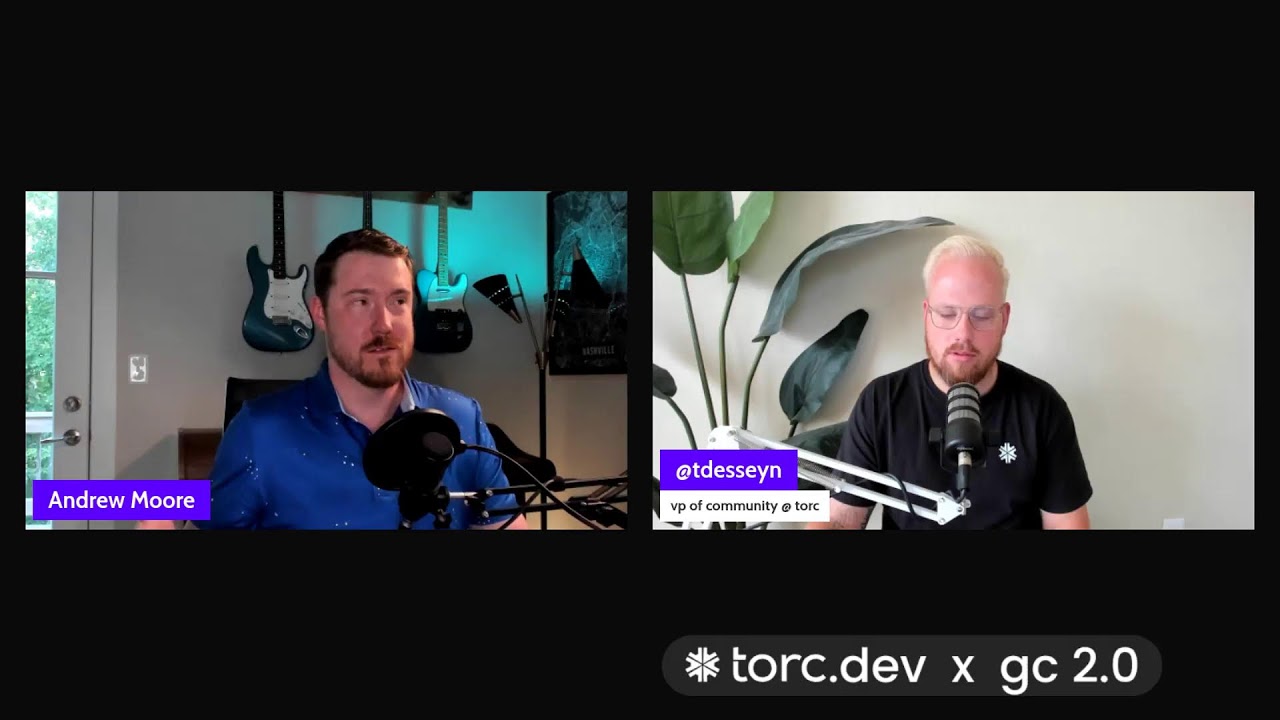
In this live virtual meetup, host Taylor Desseyn interviews Andrew Moore, VP of Software Engineering at a nationwide mortgage lender, to explore how AI is reshaping the job market for junior developers. They discuss the conflation of AI hype with recent economic downturns, noting that layoffs are more a timing issue than a direct result of AI. The conversation contrasts "vibe coding"—rapid AI‑generated app prototypes—with traditional legacy stacks (Java, .NET, COBOL), debating which skills help junior engineers stand out. Both guests recommend staying current with large language models (LLMs), tools like V0.dev, Microsoft Fabric, and Copilot, while warning against over‑reliance that erodes critical thinking. Andrew shares hiring insights, describing the massive applicant volume, the importance of clear, human‑centric resumes, and the pitfalls of AI‑generated content that feels generic. They also touch on career guidance, suggesting a solid foundation in core enterprise languages for stability, but encouraging flexibility for startup environments. The session wraps with rapid‑fire personal questions, emphasizing the need for humanity in tech work and offering practical advice for junior developers navigating interviews, resumes, and AI tools.
Chapters
All righty, good morning everybody. I'm alerting them, alerting the masses. We gotta tag on Discord, we gotta text my texting community, we gotta go live on TikToks all over the place. But good morning. I am— I was telling Andrew backstage, I'm a little bit on the struggle bus. I've had a virus That has about 16 syllables. Um, my wife got— my wife got tested for it. Um, it is brutal. Um, so if you sense— if you hear some congestion, um, I'll try to mute my mic as much as possible. For the people tuning in on TikTok, I can't mute my mic on TikTok, so you're just gonna have to hear me clear my throat. But we're feeling better. Uh, last night I got here with the cockpit. Not that y'all really care. Uh, I just think this thing's fascinating. This thing's like the 7 deadly sins. This thing's awful. So I highly recommend. And also, I think, bless her heart, I think Brianna, my coworker, we have not been together. I think she got it too. So bless her heart. But anyways, but so today we are getting started a little early today. I actually have something I have to go to by 10. So we get started just a little bit earlier today. So please say hey, would love to hear from you. Again, what I tell folks is this is a meetup, this is a virtual meetup. And the guest is Andrew. We just do it virtually. So please say hey, we'd love to hear from you. Please connect with everybody in the chat, connect with Andrew. He's a great dude. He's in Nashville, kinda. We talked about that backstage.
Yes.
He's a little outside Nashville. And so again, super pumped for this conversation. Before we dive in, kind of some housekeeping things. First off, I'm a hero for Appwrite. I always joke that I'm the only non-technical hero on a technical team. uh, Hero Program. Um, they just released some pretty cool stuff. Um, I don't know what it is, I have no idea, but it seems cool, so you should go check it out. Um, uh, and then Torque, like I said, we do a ton of stuff at Torque, our community, all the streams. Um, so go, go check us out. We actually have a calendar. Like, you know, back in the day, um, Andrew, when you used to like scroll through cable and you used to go to the guides and you can see everything, that's basically what we have. We have like a TV guide, but it's like a community guide. You can see All of our streams going off, so check that out. Then again, if you want to be—I made a comment about this—if you want to be texted when I go live with cool guests like Andrew, shoot me a text. That's actually my number. We got some people tuning in this morning: Roxy, Roxy, Taya, Amelia, Jordan, Sebastian, Ricardo, Chris, Mark. What's going on, y'all? It's good to see y'all. Got people tuning in again. We are a little early this morning because I have somewhere to go. But enough of me yapping, partially because my voice is like feel going out. Andrew, let's give the people what they want, man. Who are you? What do you do? And we'll go from there.
All right. So I am currently VP of software engineering at a nationwide mortgage lender out of Cleveland, Ohio. So working remote, shout out to that. But we are really trying to navigate the challenges of the modern world that seems to have come out of nowhere with AI and with machine learning and frankly an entirely different data strategy.
Yep, yep, absolutely, absolutely. So Andrew hit me up from that LinkedIn post I'm sure some of y'all saw just around like what does AI look like when it comes to junior developers? Is it actually taking people's jobs? You know, I started to tell this to Andrew backstage and Andrew was like, let's just pause because you're about to make me go in on it. I said, okay. So what I told Andrew backstage is like, I think you have 2 different camps, and, and I don't think either camp is wrong. And everybody I'm about to say, I love everybody. So you have Angie Jones, Kent C. Dodds, Gant, uh, from Infinite Red, um, who are like MCP this, RAG this, AI that. You have, uh, Tejas, Data Stax, all yada yada. Then you have your Kent, your Ken Wheelers of the world, uh, that basically go, F this, this is dumb, this doesn't exist. You have people saying, you know, uh, you basically have people saying, like Aaron Francis posting a tweet about, you know, is AI actually taking your job? Um, I've heard podcasts that are like, AI is not really even AI, it just kind of gets you 50, 60% of the way there. So is that even considered AI? There's just a lot here, right? And so, Andrew, I kind of want to start there and kind of hear your thoughts on all that.
So the thing that's stuck with me the most is if you're scrolling through social, through LinkedIn or wherever, it's an echo chamber, man. It's— no one has a— no one that I've seen consistently has a balanced opinion. So, and realistically, that's what tech always is. There's always some silver bullet that's going to come out and, and save the world. You know, we see it every time. We see it with Kubernetes, we saw it with cloud, we saw it with AI. Now you get the early adopters that think this stuff is the, the bee's knees, we're gonna go all in, and they're not wrong. Yeah. But then you also have the, the detractors that say this is This is BS. This isn't gonna work. This is terrible. And the real answer, the right answer is somewhere in the middle, I think.
Yeah, yeah, absolutely. So let's, let's, let's highlight, let's talk about junior devs specifically.
Yep.
You are only one person. I'm only one person. I have not seen people come out and say we're not hiring junior developers because of AI. Have you seen anything like that?
No.
Okay. No. Are you— do you think with what you know that, that is— that, that AI is forcing junior engineers out of jobs? There's a little hot take central. It's okay. It's okay.
What's the caveat? This does not constitute financial advice.
Yeah, this is not financial advice. It's just 2 dudes yapping.
What I gotta say is I think What we have within AI is just bad timing because AI has really come to the forefront of the zeitgeist at the same time that the economy has not been performing.
Dude, I just talked about this recently. I keep going. Yeah, yeah, keep going.
Well, but so you have all of these layoffs and you see it front and center on every major news media. You, FAANG is laying off, Microsoft's laying off, Meta's laying off to replace their— I saw the headline yesterday, they're replacing their ad business with AI. I think a lot of it is poor timing. Companies are scaling back for sure. I'm, you know, me included. Sure. But the, the fact that they're trying to attach that scale back to AI, I think, is, is too much.
Yes. I've literally talked about this. I said, I said, I think the problem is, is people want something to blame.
Yeah, yeah, yeah.
And I think the job— it's what I talked about this— I, I feel like 2021, 2022, from the job search perspective, is like that ex-girlfriend who just got crazy, right? Who was awesome but then just got crazy. You remember her, or ex-boyfriend, you remember them as what they were. They were great, they were wonderful, they treated you right, and then they just like jumped off a cliff and just were like brutal.
Yeah.
That's what the job search is. And we all try to think about what it was in '21, '22. It's not, it's not coming back. And so I feel like instead of saying, hey, this is the, this is the reality of what we're in right now, they're gonna be— now it's like, oh well, no, it's AI's fault that people aren't hiring. No, no, no, no, people weren't hiring before AI. And go ahead.
Go ahead. Well, the thing that, the thing that I want to critique on too is job hiring managers still need to be engaged. And I think that what's, what I'm seeing a lot of, and a lot of the, the complaints on LinkedIn and the, the fear comes from, you know, I saw a TikTok where somebody joined and they were filming their interview and they're interviewing with a, an AI agent.
Yeah, I saw that.
I don't know how real that is, but That's so good. But if you as a hiring manager are using AI to provide the first touch to your candidate, no good idea. And you as a candidate are using AI for the first touch for your hiring manager, you're both wasting your time. You're making it look bad. You're, you're not giving people the respect that they deserve on either side of that.
Correct. Yeah. Do you, what, what would be your advice based off what you've seen in your opinion? How do you think junior devs— because again, this whole, this whole thing came out of the post about juniors specifically. Yeah. What changes between what juniors had to do pre-quote-unquote AI or now? Like, I feel like it's always been hard.
Yeah. And with anything, and it— this— it's, it's no different than it was when I was trying to get into the business too. You have tools that come, that become available. You're a technologist, you clearly care about this stuff, you need to stay up to date. There are new tools that are available, and holy smokes, these tools are really powerful if used correctly. So you need to be up to date, you need to, to be a practitioner. That doesn't mean that you have to eschew all of your traditional learning. Like, you should, you still should know how to use your tools on the backend to vet the AI. But also, if you can get to a prototype with, with some help, why wouldn't you do that?
Yeah. Is there— now I know there's a lot within AI. There's—
So it's a wide umbrella.
Yeah, yeah, it's— yeah. So like, what should junior devs or people getting started in their career know what to use? Or like, What are some things folks should need to use?
So I think there's a, there's a widening gap between what part of the industry you're going into. If you're a junior dev that just wants to get a job and work in enterprise and do, you know, your standard full-stack development, then I think realistically, just get up to speed with the the, the LLMs, the ChatGPTs, the whatever. You can dig into the, the code gen a little bit if you want to use like, uh, Vercel is one that— v0 is one I've been playing with a lot lately for front end because it is not my strong suit.
Yeah.
But realistically, in regulated industries and in big business, it's going to be a while before that stuff becomes really mainstream. Like, I had a conversation with, with somebody in Fortune 5 healthcare yesterday, and they've been told, do not, not allowed, full stop. So I think for a long time, it's gonna take a bit. I don't know what long time means anymore.
Sure.
Maybe that means 2 days, but who knows? But if you're gonna go into the startup space, more fast moving, then I think you need to be in with both feet because You, at that point, your CTOs, your CIOs, your CEOs have a lot more influence on your direct job placement and function. And in that world, it's all about revenue. So move fast, get the, get the feature out. Don't care so much about the tech debt these days. So shove it out. Let's get revenue. Let's get the, uh, the ARR. Let's But we got to get this thing up, up and running and lengthen the runway. So all of that to say, I think your mileage may vary, but it's the, the, the most forefront tools for junior devs. I, I don't think you're going to need to care about the image generation, the video generation.
Sure.
You should know about it because I think that's gonna propagate a lot of misinformation on the internet, but I think that's for, for everybody, not just junior devs. Yeah, absolutely.
Um, interesting. Nicole says, uh, I got rejected from a job because I didn't— I don't use Cursor. Interesting. There you go. This is why we do this. So do we— again, we are just one piece of the pie, one piece of the puzzle. Um, so I'm glad, I'm glad you let us know that. I think here, here's a hot take. Let's say, let's say we draw a line in the internet, in, in sections of the internet, right? You had your mainframe, then you had kind of like the web as we know it, and then you have— I'm sure you can break it down more, but this is the way my brain thinks— old legacy, what we know now. And then let's say there's been a line in the sand with AI vibe coding, blah, blah, blah, blah, blah. I had a guest on, I forgot who it was, last week. We talked about this topic about how there's gonna be so much legacy code to maintain. What if, what if, what if we stopped doing boot camps on the latest and greatest JavaScript and we start teaching like core Java and like VB.NET. All right, hear me out, right? Because like, the thing— fact of the matter is that there's good— you can do a lot of the stuff within these vibe coding tools. Now, is it scalable? I don't know. That's probably another conversation in and of itself. But it's like, I feel like you really want to separate yourself as a junior developer, learn old code. Thoughts on that?
I mean, it hurts my feelings because it doesn't feel like that should be old code, but I guess it is now.
I know, I know, I know.
I asked that same question a few weeks back, and the core of it is the question of how do we train junior devs? How do we train people entering the industry? And what do you train them on, right? I still maintain that knowing call it core Java or just enterprise development forms the strongest foundation you can have to an engineering career. Yeah. Let me ask you this.
Let me, let me ask you this hypothetically here. Let's say I'm a developer, junior developer. I am a junior developer. I don't know anything. Let's say I come to you and I vibed out some something. I just think vibe coding is ridiculous because I've been saying like vibe stuff for years. Now it's like a thing. So let's say like I vibe code some sort of solution and then somebody else comes to interview, a junior developer, and has like put together like an application that's very simple, but it's in older legacy tech. I would imagine you're probably gonna look at the developer with the older legacy tech than somebody like me who used v0 and all these other tools to spin up an app, right?
I would hope so. Yeah, I mean, right, the, the challenge here for the hiring manager is the volume at which they have to scale through resumes and applications.
Yeah.
So, you know, for, for instance, I posted a role— it's been back in September, so things have changed since then— but I posted a role on Friday night. It was like 8 o'clock on Friday night. And then woke up Monday morning, checked in on my Workday app, and I had like 900 applicants. So you have to ask yourself, how do you stand out against that 900 applicants? And we're not, we're not even getting to the, the code set yet. But I would agree 100%, the candidate that's going to edge out in my mind is going to be the one that has a, a solid solution.
Yeah.
You can just looking at some of these v0 solutions, and I'm not knocking it because I've used it, but just looking at it, you can get, you get the impression that the, the dialect isn't human, you know what I mean?
Right. Yeah, yeah, absolutely. So, and so here's kind of, here's this theory that I'm kind of playing on, is that I feel like over the course of the next 30 years, I think more blue-collar jobs are going to be a thing, right?
Mm-hmm.
I always look at attention. Where is the attention and how can people break in? How can, how, how can, like, for example, like when I network with people, I talk about networking all the time, you know this. When I try to network with somebody online, I go to, I go to a profile of theirs where they don't have a lot of attention. Right? So in the same way for the job search, there's so much attention right now for vibe coding and stuff. I'm like, you want to really separate yourself? You know, and I know Nicole said, why core Java? There's a lot of legacy code written in core Java. I bet you there is not 2,000 applications. There's not 2,000 applications for a core Java job. I'm just gonna say it, probably not. Now, again, I'm not saying everybody should, like, you know, learn mainframe tomorrow, but I think it is going to be an interesting trend.
The— I think going back to the core of what you mean, core Java, it's an arbitrary choice. Like, here in Nashville, it's .NET all the time, right? Because healthcare, healthcare and Microsoft stack go hand in hand. But It's any, call it arbitrary core enterprise platform. The thing you just said about understanding, really understanding what it is that you're building, it's the difference between you've got, call it an interior designer that's able to spruce up a house or spruce up a building versus the architect that designs the building. Versus the engineer that designed the materials that goes into the building. Yeah. Can you make it— can that engineer make things pretty? Maybe by his eyes, but probably not for most people. But I can, I can darn well tell you that I want that engineer building the materials, not the interior designer. Right?
Right. Well, I feel like— and again, you've hired, so I feel like at the end of the day it comes down to why did you do it? Why, why did you do what you do? And I feel like a lot of these tools, uh, um, can be a crutch. Prime example, I talked with one of my buddies, he's a lawyer, the other, the other day. He says he's getting calls all the time, all the time, uh, about, um, these AI tools. He— because he asked me, he's like, what, what's all these AI stuff? And I tried to tell him, and he was like, he's he was like, you know, it was interesting. He goes, I, I, I gave this AI tool a case, like a problem, and it pulled 2 cases. But he goes, there was actually a 3rd fringe case that you really have to know law. And he goes, it didn't pull it up, so I'm not going to use it because like, I know that, but it didn't know that. And so I feel like it applies the same thing with code. You can do all this stuff in the Vibe tool, but at the end of the day, as a hiring manager, and if I'm interviewing for you, especially a junior, I need to know, you need to know why I did something.
Yeah, that's a perfect way to put it. One of the things that I always ask in interviews, no matter what the level is, I'm just expecting different answers, is I'm asking about opinions. Like, what opinions do you have about an architectural design pattern? Or what opinions do you have about this implementation? I think with the, the introduction of AI, it gives this opportunity for us to, hey, I need an app real quick, send me some, some code.
Yeah.
It's like, it's like back in the early days when we went to Stack Overflow and we copy-pasted stuff out and made it work. And that's what we did as juniors. I think everyone universally did that at some point.
Sure.
And then you get to, you get to check in and code review, like, hey, why, why'd you do this? Uh, I don't know, I'll be honest, I copied it and it works now, so I'm good. And then we got our hands slapped and you, you moved on. And that's how you grow and that's how you build. But AI can generate some stuff that's really niche and really custom Purpose-built. Yeah. And I think it, it runs into this scenario where what happens when ChatGPT is down? What happens when, when your, your platform isn't available? I mean, you're on an airplane working on a feature or whatever. I, I know it's— I'm a little get off my lawn right now, but—
No, hey, listen, that's okay, that's okay, that's okay. You're the guy off the mic right now. If you want to get off your lawn I'm all about it. I'm all about it. So I wanna get some comments here. Steven comes in here, agreed, Taylor. Think about how many enterprise applications out there on legacy code that still need to be maintained. I know companies looking for junior COBOL devs. Yeah, I mean, I know a girl in Raleigh when I was there, we used to work out together at CrossFit. She got her career start by doing COBOL in Raleigh. There's so much insurance and banking in Raleigh. Her first job was a junior COBOL developer. Um, let's see here. I got— I saw some more comments. Also, Andrew, are you a guitarist outside of the desk?
Why would you think that? Yeah, yes. Yeah, it's Nashville native. It, uh, comes with the territory.
Yeah. So Amelia asked, what is vibe coding? How would you describe vibe coding?
We didn't even talk about this.
Should have probably broken it down.
I saw somebody respond. I think it was the best The, the answer was, uh, the worst, the worst trend to ever come about. Um, but vibe coding, the way I would describe it, is basically product management or product ownership on steroids. You have—
Oh, I like that. I've not— I haven't heard it that way.
Oh, so I've got a, a short coming up with— I've got my own podcast, right? Not gonna advertise too much, but The, the bit was give it to— give a vibe coding platform to a product owner and see how long it takes to come to make an app and see what that process looks like. The, the concept of vibe coding is I'm sitting in front of a prompt and I'm telling the platform— v0.dev is the one I use, so whatever—
Yeah.
But you're, you're describing what you want to see in the application. Generally, you're describing it in functionality prompts, but you can, you can start to get into some of the architectural build-out and some of the implementation choices. But generally, it's kind of just throw the, throw the requirements at the machine and let it spit it back out to you.
Yep, yep, absolutely. Jesse, yeah, the worst tourist ever created. Uh, got it. Learning mainframe tomorrow. I'm telling you, I want to do a whole entire like marketing thing about like, like around Mainframe. Like, I was in a conversation with some, uh, Torque and Ronset people about doing like a Mainframe practice, creating community for Mainframe, doing like really sick '80s style merch. Uh, I think it would crush right now. Um, let's see here, what else? Uh, Greg, former guest of the show. Um, uh, Greg, looking good in that profile pic, buddy. Um, the biggest issue As I see, is a loss of critical thinking skills. Yeah, my critical thinking skills are garbage. Um, so I use AI externally for my tooling to help more as a good replacement. That's all I'm willing to do right now. Thoughts on this, Andrew?
No, I think that's fair. The— I heard it described that AI, and I know we're overgeneralizing the term, but yeah, AI is like so much involved. Yeah. Is that AI is like a really well-read intern that doesn't need to sleep. So—
I like that.
It requires some oversight. I think that is a perfect approach. And one of the ways that I found it to be most effective is like a sounding board. You know, olden days you used to rubber duck was the term. So you describe a problem to the rubber ducky on your desk and the act of talking it out.
Yeah.
Even though there's no one responding, it's sometimes helpful to you figuring out the problem. But if you— if that didn't work, you went to the forums or you had to phone a friend.
Yeah.
But the way that I've found value these days is let me just talk to the machine for a bit, help and let it ask me questions, and we kind of figure out a little more about the problem or a little more about strategy. Works really well for For marketing strategy, business strategy, high-level architecture. Your mileage may vary, but that's where it comes into skills and opinions.
Yeah, I love that. I love that.
Let's see here.
Get my kind over here. I'm just catching up on all this tech, all these messages. A lot of messages. A lot of people have thoughts.
Podcast da da da. Jordan just posted about actually the the AI helping to develop their critical thinking skills. That's kind of what I was saying too. You, you have a, a sounding board that gives you alternative ways to think about a problem. And I found myself saying a few times like, oh, that's a pretty good idea. I hadn't thought of it that way.
Yeah, I think, I think, yeah, I think, um, uh, who— so this isn't quite in line with what Jordan said, but kind of sort of. I worked with a guy on his resume And he actually used ChatGPT to prompt him on how to write the resume. And then he sent me the resume to review and it was pretty solid. And so, um, you know, I, I do think like I haven't used it a ton. I mainly use it as like Google really at this point. Um, but like the few times where I've used it to like sort out a problem from me It is, it is, it is interesting. It does give you a different way of thinking for sure.
I've always wondered, and I, I started to do a, a bit of A/B testing, but I didn't make it very far. But I've always wondered how resumes generated by the LLMs perform against ATS, because effectively they're kind of different sides of the same coin, right? Yeah. You would think that the machine would be able to provide something that the machine can read well.
You would think, you would think, but a lot of the AI resumes are very fluffy. There's just no substance.
Sure.
What else, man? As we kind of wrap up here, what are some other things that junior devs should be thinking about when they interview? Or have you interviewed some folks recently and just want to share some dos and don'ts of what people are doing? I don't know, just kind of some general Interviewing tips?
Yeah, I mean, I think it all goes back to humanity. That's what we do well. The machine doesn't do humanity well, obviously. Maybe yet. I don't know if that's tongue-in-cheek yet or not. But, um, I think the, the key is present yourself well. That's your, your, your entire brand, your online presence, your application, your resume. Make it cohesive, Feel human. If you want to use ChatGPT to help you with some of the content, that's fine, but in moderation, because it it can come off kind of saccharine sweet. You you in a lot of cases you read you read the the resume content or the COVID letter. Lord help me! The COVID letter—it's just if it's just copy pasted out of ChatGPT, it's obvious, and that that's more. frustrating than anything because I took the time to download it, read it, and realize that you didn't take the time to write it. So I think at the end of the day, if you want to use it as a starting point to generate content and to generate the, the concept, great. Make sure it's in your words. Make sure it feels like you.
Yes.
Make sure you have a holistic view of who you are so that as I go out and look, I don't see a name on a resume and then there's nothing else. So I wonder if you're a, you know, a Chinese spy or whatever.
Yeah, yeah, absolutely. Uh, Jesse comes in here. I mean, us and I, you know, obviously got to plug Torque here. We don't send resumes. Like, if Andrew were to hire from Torque, we don't send resumes. We send actual profiles that dig into what people have done. Um, you know, we'd have our matching team kind of create their profile and it's, it's just really specific thing. I, I do think resumes, unfortunately, there just is not like— unfortunately, the industry is just, I don't think, going to move on from resumes. It is just, it is ingrained in the past, it is ingrained in what we use. But I do think hiring companies like Torque, and, and I think companies, uh, I think staffing companies need to be starting to be more creative on how to show content to hiring managers as it relates to, uh, the candidate. Um, and yeah, I think job descriptions suck. Most of them suck. Most of them suck.
Most people suck at writing them.
Yeah, yeah, absolutely, absolutely. Um, cool. All right, so as we wrap up here, Andrew, thanks, man. This is great. A lot of people thought— a lot of people had thoughts. Uh, this is good. So kind of run through kind of some rapid-fire questions for you. First thing I always ask, are you a coffee or tea drinker?
Coffee, high octane all the time.
Hot or cold?
Hot.
Ooh, no. So, all right, so I— this is why I worked this question in, because I want to hear people's thoughts. For me, if you're drinking hot coffee, you're just drinking hot liquid. You can't taste the actual coffee.
You just don't have good coffee.
Okay. Okay. All right, next question. Um, as we kind of talked about AI, I know you kind of mentioned some tools, v0. Are you tinkering with anything else on the side that is pretty interesting right now to you?
Yeah, I mean, professionally we're Microsoft shop, so we're dug into Microsoft Fabric and Copilot these days. The, the thing that we're doing the most is machine learning. It's still traditional move and clean the data. There's no magic button yet. So it's, right now we're doing lead qualification, which is really, really stinking cool. But you still have to have good data and it still requires a data professional and it still requires skills.
Okay, I love it, I love it. Final question. Show's called Guidance Counselor 2.0 because we had guidance counselors in middle school, high school, and college. We're now as adults, we don't really have them. What would be your biggest piece of career advice to young Andrew if you can go back in time?
Oh man, think about what it is you want to do and don't just do the next thing that becomes available because it's lucrative.
There you go.
You got choices.
I love it, I love it. Uh, also Jesse, exactly what you said. Uh, 100%. All right, so y'all have a good one. Appreciate y'all. Tomorrow morning, um, we have Bradley Stokes on the show. So Brad, Brad and I have been in each other's networks. I've talked to him in his past job search. He's been in my network now for 5 or 6 years. He was, uh, he's like a CIO VP level candidate, um, and he recently went through a pretty long job search and he recently got a job as a VP of engineering. So we're going to talk about it. Um, and on the show tomorrow. So it's gonna be good. Anyways, y'all have a good one. Andrew, stay on so I can say bye to you backstage. We'll see y'all tomorrow morning, 9:30 AM Central.
Peace. Thanks all.
More from taylor



tech doesn’t have to be the only thing that brings us together #techcommunity #techcareer

I want to give back to y’all that make the tech community so great #jobsearchtips #techjobs




spend a little time investing in yourself #linkedin #linkedintips #careeradvice


