
Beyond the Match: How Torc is Redefining The Talent Industry
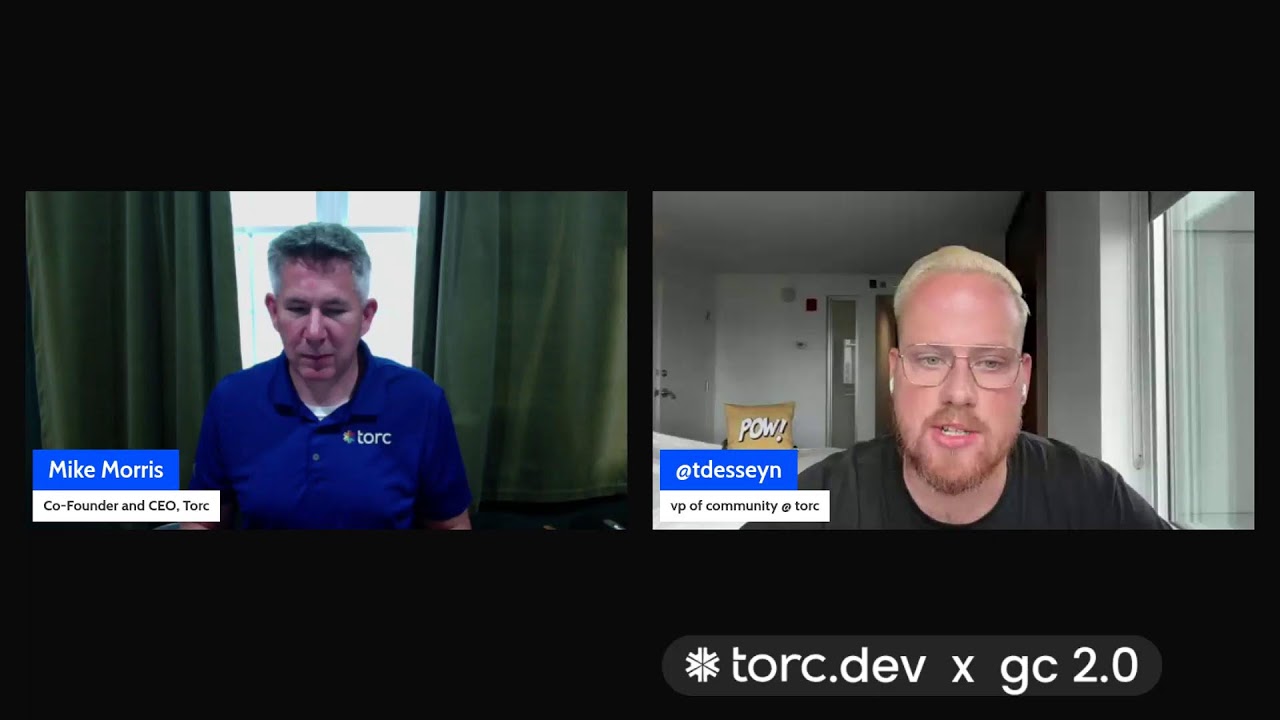
Mike Morris, CEO of Torque, describes a talent marketplace that replaces static résumés with living profiles and AI matching while keeping human recruiters focused on relationships. Torque ambassadors got matching tattoos. The company was acquired by Randstad to scale globally, but Morris says the real challenge is retraining 235 recruiters: technology is easy, people are hard.
Chapters
All righty, let me, let me alert the troops. Good morning, everybody. When I say everybody, I mean nobody because no one's here yet. Um, pumped for this episode, uh, with, uh, with Mike. Um, it's gonna be a good one. Uh, hold on, let me do a few more things. All right, we got that, got the text. All right, sweet, awesome, cool. All right, good morning everybody. I am not in Nashville, I am in Atlanta for Render ATL. Um, I am at my hotel room. Actually, I'm actually not even in my hotel room if I'm being honest. I'm in my colleague's hotel room because I had to check out of mine because I'm in transit. But excited for this episode. This is a little different episode, a little different live, and I'm really pumped to have the legend himself, Mike Morris, on the call. We are gonna talk about what we're doing at Torque and how we're redefining the industry. And in my mind, Mike's been at it longer than I have, admittedly. But in the 14 years— Yeah, yeah, yeah. Yeah, mine's fake. Mike's real. And we're gonna talk about how we are literally redefining the industry. I truly think that. I'm incredibly bullish on what we're doing. I'm grateful to be here. But you guys hear enough from me yapping on the internet, and I want you to hear straight from the source. And so Mike Morris, heads up, is the CEO of Torque and co-founder. And today's gonna be a great episode. Please say hey in the chat.
I'm excited.
I always tell folks, this is a networking session, right? Networking has changed. Mike and I, before we went live, we talked about what does community look like, both digital and in person, and we're trying to do that at scale. And one of the things I'm so bullish about is having the community team always live, always connecting with people. Please send Mike a DM, connect with Mike. Like, yo, saw you on Guidance Counselor 2.0, saw you on the live today. And, but again, we don't know if you're watching unless you tune in and comment. So please say hey, would love to hear from you. And Mike, you shot me that. Is that your Twitter? Is that your Twitter?
Yeah.
Nice. All right, I'm gonna throw that up.
A few more stories.
If you wanna connect with Mike on Twitter, so here is this. We got some people tuning in. Again, please continue to say hey, would love to hear from you. Mike actually hung out at the mothership yesterday. At Ronstadt, the the big office in Atlanta. Shout out Andy Hutzel in the chat. We had lunch fantastic, and I went to go visit the Ronstadt office. It was fantastic. Also, shout out Andy for the swag. I appreciate you, my friend. I appreciate you. Before we dive in again, want to get to everybody who's tuning in. Jason, it's good to see you. Jeff, another we have we have two Torreses tuning in, so I love it. Tay, it's good to see you again, and it's good to see you as well. Um, let's see here. David, it's good to see you. I love it. Um, awesome. Definitely want to connect with the man. Yeah, absolutely. All right, a few housekeeping things before we get started this morning. First off, um, check out everything we have going on in our community. Mike and I were having a chat backstage. We got a lot going on. We got a lot going on. And, uh, if you go to torque.community, you can check out everything we have going on. Mike, I don't know, I mean, this is a little bit more on your time, more, more of your speed. You remember like before streaming happened, you had like guides on the TV, you know, you had this like select what you wanted to watch. We have that. If you go to torque.community, we literally have a TV guide of all of the live streams that we have every week. We have about 10 live streams a week for you to get connected with. So please go check that out. Also, this episode is highlighting just a wonderful report that we were a part of with SIA. And you can read more about the report if you're more of a reader. I'm not a reader. I'm more of a picture book type of guy. But if you're a reader, please check this out. It's very in-depth. There is a lot of data and kind of dives into more of what we're doing. So please check that out. It's gonna be great. And we got a few more people. Ashley, it's good to see you. Dan, it's good to see you. We got the crew today. All right, enough of me yapping. Mike, let's give the people what they want, man. Who are you? A little bit about you, and then we'll dive into kind of what we're doing in the industry.
All right, yeah, no, great psych to be here. Um, and, uh, before we get too far, tell me about this story I heard about a tattoo session yesterday. What is this all about?
Yeah, so, so it's, it's really— I mean, it's pretty special, right? I mean, we've been at this community building thing now for about 10 months. Um, I think, uh, you know, I was telling Mike, I watch all these direct-to-consumer vlogs, like these founder-led vlogs, and they're like Get a tattoo, we'll give you a product. Listen, we don't necessarily have a product. We try to get you a job. We try to give back to you. But the ambassador team organized— shout out Jordan Wallace of Ronstadt in Dallas. She's the one that organized this. And there was 8 of us that got Torque tattoos. So the gear is on my body. The gear is on my body.
Inspiring. Inspiring.
All right. 8 others. I'm gonna post a picture. Um, Jason in chat got his too. It's right on his arm. So listen, you know what, some people— we— so we, we've already gotten the vibe of like, hey, you guys got— you guys got some cult vibes. It's like, listen, there's a very fine line between cult and community, and we're gonna toe that line.
They're very close, for sure. If there— if that is— that is community. That's the definition of community juice right there. Like, uh, that is unbelievable. Yeah, 8 people with Torque Gear tattoos.
Awesome.
All right, so a little bit about me. So, um, I've been at this community building thing for 23 years, so it's been a long freaking time. And, uh, stumbled upon it sort of. So, um, background, software developer myself, so I relate more with the, the community and the talent than I do with anything else. Um, came out of, uh, grew up in Boston, came out of Boston College High School, went to Boston College, computer science and physics, and got into programming. Um, loved it, did, did consulting, and then I got, I got lucky and I got on this, uh, early on in this train, um, for this company TopCoder, which I think in, in many ways kind of defined this idea of a social network of like-minded talent and formed into a community. And I will tell you, like, I never turned back. Not a single point in my career did I ever think, will I ever be in a business that is not founded on the basis of a talent community? Um, and so that's what I've done, you know. I've done— I've done Topcoder with obviously my, uh, my co-founder Dave Messenger, the CTO. Um, he's also, you know, we've been in this together for that long, like kind of going down this path. And, uh, and it really has always been about how do we build a, um, a federated, you know, marketplace to send opportunity to the best talent around the globe. We never thought of it in terms of any sort of geographic boundaries. We never thought of it in terms of any sort of biases. We tried to break the, the idea of like a pedigree exists, like, hey, if you go to an Ivy League, you're better, right? And I really make it merit-based. And that was the rewarding part of this business model is when you see that work and you see that you're able to give opportunities to talent that just wouldn't have had that chance if they— if, if a platform like, you know, back in the day TopCoder and today Torque didn't exist. Um, so that's really been my, you know, I mean, it's kind of corny saying it, but it's kind of been my life's work in many ways.
Yeah.
It's like building these community models. And I do, I think that the unique part of what, what we've done here with Taylor, I think you're the prime example of this, and your tattoo is, uh, is the exclamation point on top of it, is we have a talent-first, community-first mindset, right? If we don't build everything, every experience and every interaction and every, every part of our business model, um, founded in like creating a great talent and community experience, we will eventually be non-existent. Like, that's how we look at it. Like, we have to have that as our core of our, uh, of everything we think about. I always say like, you know, for me, that's what I need to be thinking about when I wake up in the morning, when I go to bed at night, right?
Yeah.
Like, making sure that that part of the business is flowing. Um, and it's hard, you know, as you, you know, do 'Cause you're running a company and you gotta worry about spreadsheets and all that other crap that comes with running a business. But it's when you see the effect that it can have on people. And I mean, I'll tell you, in all of my years, there was a tattoo here or there, but not 8. Yeah, yeah.
I know, I know. And it's pretty special, right? And that's why, again, I mean, it's a little bit of a love fest for sure, if you wanna call it. But I mean, that's why I'm grateful to be here because that's been my mantra, right? Is like, listen, I think staffing is broken. I think the staffing talent industry is broken. And I think like traditional staffing talent space is, hey, we're gonna look at just the person right in front of us and we're gonna place them for that job and then that's it, right? There's nothing else for that person who may not have been a fit. And I think, which is, it's so, I'm so grateful to be here, is that we have somebody like you who founded the company, you and Mess, Dave, both understand that, which is very unheard of. And I think it's, I think too, I wanna ask you this because I think it's a very different mindset. I think a lot of people, listen, the clients pay the bills, we get that, right? But like, but Having this community-first mindset, like, how would you— how do you tell it to your other leadership peers in the talent space where it's like, listen, it's gonna come back to you if you invest in your community, not just the people who are paying the bills?
I mean, ask any one of your clients, hey, do you want us to spend more time cultivating a great talent community, or do you want us spending time you know, building better decks for you to look at. And, and, you know, I mean, that, that, that's a very brash example, but—
Sure.
Every one of our clients would be aligned with the mission of focus on the talent first because that's what they— that's, that is what they're looking— that's what they're looking for. So it is, um, it's not a misalignment. A, a misalignment, a misalignment is a lot of what we started the basis of, of, of the, you know, this journey started on. Like, we, we didn't like the fact that there wasn't any sort of, um, you know, you leave college and you have no, no concept of a class rank. There's no way to tell, like, hey, who's the best talent out there? Well, in a community model, the best talent floats to the top.
Yeah.
And the best talent goes to the top, and the best talent gets the majority of the opportunities. And it's our job to build that into our community. Um, and our clients love that. That is very much aligned to them. And I'm just going to give you a very, a very, uh, you know, the, the old, old, old way was you, you grabbed a person and you put them in a seat and a keyboard and they billed hourly. And honestly, the longer they took them to do something, the more money they generated. It was— that's a misalignment.
Yeah.
You know, and ours is like, hey, our mission is to find the best, the most productive, the most energized, the— like that. We're trying to build a community of like-minded people that all want to rise to the top together. And that's just— that's a, um, that's a viral, uh, network effect, right? If you do that.
Yeah.
And that's, that's what you guys are doing every day. And it's very, very different from the old model. So, uh, and I have to say, you're right, like the old staffing industry and, and how different we, we are from it. But I have to say kudos to Randstad, like, and their—
Yes, yes.
Their head CEO, Sander, um, he, he's seen this, he sees this digital transformation, he's doing it across the organization, a $25 billion, um, uh, company globally. And, uh, and, and hats off to Greg Pagliari, the chief executive of Uh, Ronstadt Digital, because they see this, and that's why they acquired Torc a year ago. And like, yeah, so it gave us the chance of now applying everything we're doing on the biggest stage there is on the planet, right? Ronstadt's the number one employer globally, over 700,000 people put to work a year. Like, they're the largest employer of talent on the planet. And, um, and we're part of Ronstadt Digital, obviously, and it's, it's the right stage for us to be on. For us as a team, for us as a technology platform, and most importantly, for our community.
Absolutely. Uh, Ramiro from our matching team, real, real tattoos, Ramiro. Yeah, yeah, they're not, they're not like fadeaway tattoos. I have to take care of my body for the rest of my life, so there you go. Um, also want to give a shout out to my buddy Dan. He's tuning in. It's the best Florida Gators podcast in the land. I'm not a Gators fan, but Dan, it's good to see you. I'm glad you're here. You know, I want to highlight Emre, Michael. He's a part of our group. Again, I appreciate the kind words, my friend. That means a lot for sure. So I do want to ask you this, Mike, because I want to differentiate. I want to kind of dive into who Torque is and what Torque is. So you've mentioned Ronstadt, we've mentioned the community, but we do have a really cool platform as well. So can you just kind of like tell the folks who may be still a little confused How does it all work between Ronstadt, Torc as a community, and Torc as a platform? Can you break that down?
Yeah, let's start with, um, let's start with the old world, what it used to be, right? Um, and so what it used to be is in the staffing industry was made up of recruiters, and recruiters would reactively, they would get job orders and they would go out and find the resources to fill those job orders. Um, and the industry, you know, it was a vibrant growing industry for decades, and it's still, you know, it's still, it's still a very viable industry. It's big, a lot of money. Um, but it's very reactionary, and it's very, um, you know, uh, it's, it's dependent on whatever, whatever happens that day. It's not a lot of, you know, you don't, you don't have a lot of, uh, there's not a— it's, it's reacting to the job orders that you're getting is the strategy to run the business and how efficiently you can do that. Now, when we flip this over, we say, okay, we want to have a community of talent that is ready to go, pre-vetted, we have a relationship with, and we're confident that we can immediately put them to work when the right opportunity comes into place. So that's what we needed a technology platform for, right? We needed that platform to make it a seamless connection for talent to clients.
Yeah.
And what it really is, it's a social network. So we all have our social networks that we participate in, right? You know, I'm older, so I spend my time on Facebook most, Instagram second, and I attempt to do Snapchat just to stay in touch with my teenage kids. But we're all in our social networks, and everybody probably also has a LinkedIn profile. But what's missing is a social network for your job, right?
Yeah.
A social network for your income, for where you're gonna find your next career opportunity. And I liken it to, I think companies used to fill this gap. And frankly, it became too expensive. And I think the pressures of Wall Street and stock prices and that stuff, in my opinion, probably led to a lot of companies not investing as much in their people. So if you think like back in the day, GE is a great example, is a fantastic company today, but they, they were the example of you, you, you go into GE and you go on a career path, right? You go on a 6-month rotation, you learn all these different skills, and you kind of set on a career path, and they heavily invest in that. career path because they want you there for the rest of your life. They want you there to spend your career with them and learn as much as you can and be valuable to you and be valuable to them. And they did a great job of it. Many companies did the same thing. There's not a lot of that that happens anymore because people don't join a company for a 20-year career anymore. But what they do join is they join a tribe, right? And a tribe, like in our case—
I'm just kidding. I'm just kidding. I'm just kidding.
You might be like, you might be Salesforce, Salesforce might be your tribe, or, you know, AWS might be your tribe, you know, or it might be, you know, but it's a, this is the path that you set yourself on. And yeah, you're tied to that ecosystem of, let's say, like, you know, AWS, right? And you're an AWS certified developer and, you know, You know, or you're Salesforce MVP, you're tied to that ecosystem. But what's missing is where I think we come into play, and, and it's the platform to finding these job opportunities and building your career path, right? So like, that's what I want Torque to be, is like, hey, join us, help— let us help you find your first job, but let us help you find where is your second, third, fourth, fifth, tenth opportunity gonna come from? And how do we get you from where you are today to where you wanna be, right? And, and, and show you that path. Now, yeah, like a year ago before the acquisition, we had limited amount of data to really do that powerfully, right?
Sure.
Like, but now, you know, we have— we've got so much data that we can show career paths for people. And, and the AI that we built in our platform to be able to kind of unlock like, hey, you know, and this is going to be— we're releasing some of this. If you're members of our community, you'll see this. Your profile will now start showing, hey, here is your opportunity to—
It's coming.
Take your job to the next level. Here's the new, new job offers that you're not quite ready for, but if you had these things, you'd be ready for it. So I think that we are going to fill that gap, platforms like Torque, in, in that career partner, that career coach. And we want you with us whether you're working for one of Ronstadt or Torque's clients or you're working for somebody else. We still want you part of our community. You're valuable to us and we think we're going to be valuable to you. If it's not today, it'll be tomorrow.
So Torque is the community, right? It's an overarching community and Torque is the platform, right? So talk about, you know, one of the things I find fascinating with kind of our platform is that And this gets a little bit behind the scenes here, a little peel behind the onion, if you will. But, you know, what is our platform doing from an internal recruiting perspective? I mean, I feel like it's speeding up, you know, allowing us to find more viable candidates faster. But I feel like it's also letting us, letting the recruiters actually be more advisors. I mean, can you talk to that?
Yeah, um, that— it's a great, it's a great, great, uh, comment. And that actually is the, the SIA report that was worked on by John Schroeder of SAI, great researcher, and John Windsor of Open Assembly. That SIA report really culminates this as, you know, it's the transformation of Randstad Digital from traditional staffing model to a platform and community-based marketplace. And, and that, that, that transition, you know, let's think about how— what we're, what we're trying to accomplish. Um, we're trying to make the friction between talent and companies to find each other go away.
Yeah.
Right?
Yeah.
And you think of like the origins of Torque, we always said like, hey, we're the physics of work. Because physics of work— physics is all about how do you make things— apply leverage to things, make things easier, reduce friction. Right? That's what, that's what we wanted to do. And, um, and so, uh, it, it allows our recruiters who used to spend most of their time— I'm not kidding you— pushing a process, right? Now they can spend less of their time. So we're building in our platform this, this concept of a digital twin, right, where we have an AI-based recruiter Now, that AI-based recruiter is not meant to replace the recruiter. It's meant to do all of the things, the manual processes, the things that we can do via data versus, um, versus having to, you know, manually a single person doing it. We can do it for them and allow them to now spend their time advising their talent on the best job for them or the best fit for them. and advising their clients on the best talent for them, right? And that's a powerful business model.
Huge.
And that's where we're betting where the industry is heading because you have a, you know, you have large companies, they still are looking for that advisory role. When you go to the doctor's office, do you wanna just, you know, interact with a, you know, a screen? No, you want the guy to sit there and say to you, hey, you know, this is what's going on. If I were you, I would do this, this, and this. Great, thanks for explaining it that way. I appreciate that. This is the way, this is the way, you know, I'm looking to go. You know, on the back end, he's armed with all this data and all this, all these insights that he's given, but he's a relatable person that you can build a relationship with and build trust with. And so that's what our platform is looking to free up the time for our recruiters They spend more of their time on this high-touch, high-IQ, high-EQ relationship with our talent and our clients. Yeah.
Everything you're saying sounds like it should be like normal knowledge, but it's not, which I think is fascinating. Any thoughts on that? Like, like, I feel like, like, I feel like this isn't hard to do. But we're doing it and no one else is doing it.
Change, change is hard. And again, like, kudos to Ronstadt's leadership team for not being afraid to change. Like, you know, it's— it is— they're, they're doing it across all their business lines. And, um, and it's, uh, it, it only comes with 2 things. You have to have that top-down leadership and vision, and you have to have the bottom-up buy-in, which means that it has to actually work, right?
Yeah.
The only way you get those 2 things is it has to actually work. And, um, and, and so when you look at like change, um, it's, it's nothing new, you know. Put my consulting hat on for a second. Every transformation is 3 things. It's you got to solve for people, process, and technology. Right? Technology is the easiest part. Like, to be honest, technology is the easiest. Um, the processes are also pretty easy, right? Like, you know, like you can figure that stuff. It's the people part that's hard, and you, you've got to be able to drive that. So for us, you know, we've, we've trained 235, uh, recruiters to change the way they work, what they knew every day when they woke up and what they did, to change it. And it's a journey. It doesn't happen overnight, right? In fact, our first attempt was to switch the big switch and have everybody change, and that, that didn't work. So then we did it in smaller cohorts, and that worked amazing.
Yep.
And we got, you know, more smaller cohorts and listened to people and made sure that we were taking into account their experiences and feeding that back. And now it's like, okay, you've, you've taken step 1 in the change. Now there's step 2, now there's step 3. So as we do that, that transformation, um, is gonna be really powerful. Now I'm looking at other companies out there. Some of them are trying to do it. Maybe they will, maybe they won't. It's really hard. Some of them are trying to— they're saying, no, you know, we're not gonna— we're gonna leave our company running the way it is. We're gonna go build this other thing and we're gonna disrupt ourselves. That, that's a fun, like, dinner topic to to talk about, and it's fun. Like, you're with your buddies and you're like, hey, we're gonna blow up our own company, it's gonna be great, you know?
And we're gonna—
it's not gonna work, just telling you. Like, it's not, it's just not. It is not feasible. You're gonna piss off a lot of customers and talent in doing that.
Yeah.
Um, so I think the strategy that we're taking is very difficult and very hard, but at the end of the day, when you look back After you've done something very difficult and very hard, you almost never regret doing it.
Yep, yep, absolutely, absolutely. So I have a few engineering leaders in the chat. Seth is one of them. He's a dear friend of mine, fellow Dads in Tech guy in Nashville. We have my buddy Colin Lord, who's a senior engineering manager. Let me ask you this. Let's switch the conversation a little bit to, let's say Colin hits me up or Seth hits me up. Once Seth finds a job, if anybody wants an incredible engineer, Seth is looking. Seth's a part of our community as well. What's the sell? And not even the sell, let's just call it matter of fact. What's the benefit of using Torque to help service your engineering team, both from a geographical perspective, but a speed perspective and an accuracy perspective? Because I think the way we do things internally and submit profiles instead of resumes and all that jazz is awesome. Can you speak to how we can help service our clients faster and more efficiently?
Yeah, so I'll steal one from Pat Griffin, our CRO. He has this thing where he likes to say, you know, one of the values of our model is we're kind of like TSA Pre. Like, hey, we're pre-checking you, right? And so, uh, when a client comes with a need, we can give that— we have immediate talent availability. Like, it is where we very quickly can sign you up with the right part. But there, there's— there— here, here's, here's how it acts. So you think when we don't— like I said at the beginning, we don't, we don't look at geography. I mean, remember when I—
when we—
when you were being hired? Like, Great, I don't care where you live. Like, if you ask me—
You ask me—
And you have access to an Ethernet cable, like, that's all that I care about. Like, um, and, and I truly feel that that's, that's where the world is heading. Um, I love the concept of digital nomads. If I didn't have a bunch of kids, I would be a digital nomad myself. And, and, um, and so, um, You know, maybe I will be at some point, but I think that, you know, when, when you look at the this community model, we are it's very advanced. It's very advanced, right? So like you know we have to bring our customers along, and and so let me just give you example. Okay, I'm a technology executive. I'm based out of Boston. And I'd really like to have an engineer that's within 30 minutes of my office just in case I need to whiteboard with them. And so, like, you know, that's, that's what I'm thinking. I think it's important. Okay, great. You know, and a good recruiting firm will go find you that engineer. They will uncover rocks and they'll go look at different places and they'll go find that person or they'll have their network and they'll go find it. But I can say to you, I'm like, well, hey, you know, just for a second, right? How about I just get you the, the best engineer in the, like, the top 100 in the world in your time zone with great communication skills? What do you think about that? You know, do you just want somebody that has the skill, or do you want the best you can find, you know, within your time zone?
Yeah.
Which is more important to you? And so, um, so you start to bring people on these journeys and they start to think a little bit differently. I've never cared where my teammates are located. In fact, the more spread out they are, the better. Um, and, and, you know, it's— we live in a world where we don't work, you know, 9 to 5. Um, we're constantly connected. Uh, we don't need to be speaking every 5 seconds. Uh, you know, I, I believe thoroughly that with our profiles, right, so in our integrations with with platforms like GitHub, with our Coda-like product, with, you know, all the innovation we're doing in our profiles, we're gonna know more about each other, talent in our platform, than, than you, you traditionally knew about the, you know, 50 people that worked in cubes outside your desk. Um, so, and it's just one other thing I want to, I want to state is like the model that we're trying to build is, is one where The talent— we want to reward talent for things like productivity, right?
Yes.
Like, we want to reward talent. And that, that's another thing that, like, it's part of the, the mindset of the company since the beginning. But hey, if, if you're able to do your job and get it done efficiently and, and get everything created, you know, you earn your ability to have more time. Right? You know, you can— like, that's the mindset. That's a growth mindset in this industry. Like, you know, building an environment. I remember working for a company and, uh, and they spent like 2 weeks trying to solve this problem and, and they couldn't solve it, right? And they had probably had, let's say, 10 consultants. So they, you know, I'd say they spent over $100,000 trying to solve this problem. And we went out to our community in the way that we do, and we're like, hey, anybody know how to solve this problem? And within 2 hours we solved it, and we paid the person, I don't know, $250, something like that. And the comment back from the, the, the person at the company was, hold on a second, you paid him $125 an hour? I think that's way above what we would normally pay. And I'm like, you just burned $100,000 trying to solve something. Wow, right?
Yeah.
And it's like, that's the kind of mindset that we need to change.
Yeah.
You know, and it'll take time, but you'll start to see it happen. And enterprises, you know, they know it, they're slow to change. You know, they're slow to look at things like this freelancer and, you know, the freelancer economy. And, you know, we believe heavily, like, Yeah, whether you're a W-2, contingent, temp worker, a freelancer, whatever is the right work format for you as a talent and whatever is the right work format for the client is what we want to make happen.
Yeah, yeah. Well, and I think one of the things too, because I want to bring this— I want to drive this home— we talk about our profiles that we send, right? Like, we're not out here just slinging resumes.
Oh yeah, no, I mean, a profile is a— is a— a profile is a living and breathing thing. If, if we could, you know, I— we should get a big logo here, like, you know, an X through resumes. Um, Salesforce did no software, right? No resumes.
Yeah, yeah, yeah.
And the reason why our profiles are powerful, like, we don't want you to have to spend a ton of time maintaining them on our system. We want to integrate with the systems that you already use today to maintain your information. Okay, if you use LinkedIn to track your work history, great. We'll pull, we'll pull your work history from LinkedIn. If you, if you code and you're on GitHub, like, you don't have to tell us everything you're doing and how you're doing it. We'll just give us access to your metadata. We'll pull in your GitHub stats and be able to make you look as good as you are, right?
Yeah.
We'll be able to take all those stats and say, hey, here's what you've actually done. Um, PhotoLike is another product, and we'll continue to do these integrations where the profile is a living and breathing thing. Like what? Like your other social networks, right? You don't show up to your Facebook feed and look at the same thing every day, you know. It's constantly evolving and changing, and, and that's how, that's how the Torque system should work also. So you, you guys will be seeing a lot of, uh, I'll give a quick shout out to our R&D team, Dave and Lane and Ken and their, their entire organization. The releases that you're gonna see over the next, you know, weeks and months, um, updated UX on the profile. I mean, it's awesome.
Yes. I mean, I mean, we're like, we're like, we're trying to go— I mean, we are trying to redefine, and that's, that's why how Torque is redefining talent. Like, we're trying to get away from resumes. Like, we're trying to We're trying to turn this whole thing upside down, which is crazy. Yeah.
I mean, yeah. I mean, it's a— it is a— I mean, I think a big— you know, so the 5 pillars of Ronstadt, 2 of them amazingly fit with Torc. So one is this concept of specialization, right? It's actually 3 of them. So specialization is one. where we believe heavily in that. Like, we should be able to, you know, there was a time and a day where a generalist was the best way to get a job. Know a bunch of things, be able to go in and do a lot of things pretty good.
Yeah.
If you wanna specialize in something, platforms are the way to go. Like, we can find you, you wanna do data science in Python in financial services, we should be able to find you that job. Right? Because we're a big global platform and we have, you know, tens of thousands of job orders per month coming through us. We should be able to find you those opportunities. The second one is, uh, curated communities, right? So like curated communities, that does not mean a list of resumes. That does not mean a database of names. That does not mean, uh, access to LinkedIn Navigator and I can go ping people. A curated community is what you're building. A curated community is people that, you know, that are going out and you don't have to all get tattoos, but it's pretty frequent.
Yeah, yeah, yeah, tattoo's not required. Yeah, I want to make that abundantly clear. You do not have to go get tattoos.
And then, and then the third one is, um, is immediate talent availability. And that's what our clients get because of all the stuff that we're doing.
Right.
That's the leverage that they get. That's the efficiency that they get, immediate talent availability. And so if you can't, if you don't see it now, you know, then, you know, take your sunglasses off, right? It's the old world where I go ask for something and you go out and you find it, right? And the new world where I go ask for something and it's on the shelf because we've already curated it. Yeah, very well. We already have the relationship, right? We already know how great you are. We have all the tests, not just how great you tell us you are. We have all these other data sources to show how great you are. And, um, and that is a complete change in the industry, and it's way more efficient for the talent because you're only going to get access to the jobs that we, we think are a perfect fit for you, right? Versus having to interview for a bunch of jobs. Like, no, you're just going to get matched to the ones that you're a perfect fit for, so don't waste your time on the ones that you're not. And, uh, it's better for our, for our clients because we're going to be able to give them the best talent faster. And it's better for us because now it's this, it's this, um, automated, you know, digital world that we live in. It's much more efficient and we can look at it. You know, I'm amazed by the stuff that our, our team is building. Like, we, we have governance, like things, you know, we feel really strongly about to have you know, equity in our AI and our matching. And we've built that into it. We've built the governance tools into it. And you can only do that if you have a platform technology approach.
Yeah, absolutely. And I do want to highlight too, as we kind of wrap up here, I think, I think there is this— I know, you know, we're actively talking boots on the ground, talking to developers, talking about our product, what's going on. And I think there has been a little concern of like, hey, I don't want your AI to do all the matching, right? Like, I still want a person, you know, still making sure that I'm a fit. Can you speak to that and just give the assurance to the community and the folks watching now and in the future that, like, we're not just, like, throwing your resume at some AI thing? Like, we're always gonna have people involved in the process.
Yeah, like I said, that digital twin recruiter model that I speak about It— like, I will say it again and again and again— it is not to replace the recruiter. It's to give them a sidekick.
Yes.
Okay. It's to have that assistant with them because we feel so strongly that our, our experience and expertise in the human-in-the-loop element that we bring is what is going to make, you know, the, the, the You know, the global corporations that we work for trust us, and that's what's going to make them want to work with us, and that's going to want to make their talent want to work with us. Um, you know, we're, we're not, we're not a matching— it's— this is not a, uh, dating site where we're just providing matches. Okay.
Where I did meet my wife, by the way. I met her on Tinder, for the record. But yeah, yeah, um, yeah, we're not— yeah, yeah, we're, we're not swiping left or right and that's it.
Yeah, no, so there, there is much— the human element in our business is, is very important and is here to stay, and it was always designed that way. So as for as far as we thought about what we would build inside of Torc, it always was centered around the, um, the human-in-the-loop element, that expertise, that relationship, that trust, um, that we will have. Now we'll, we'll make it as efficient as we can to help, you know, both our internal associates and our clients and our talent. But, uh, but it will always have that element.
Yeah, absolutely. Anything you— anything else that popped in your brain, Mike, as we wrap up here that you want to highlight? Or did I do a good job moderating and we're good to go?
You're unbelievable. Yeah, you're, uh, we could, we could go another, you know.
Oh dude.
Yeah, dude, the juice is flowing. Like, the interaction, um, we need to hear from you guys, uh, more. Like, our entire direction of, you know, what we're doing, um, you guys should be driving it. Like, the community, uh, the community needs to be, needs to be speaking and, and telling us, you know, what they like, what they don't like. Um, we're not going to do everything right. We're gonna, we're gonna make mistakes. We're gonna make them pretty fast though. Right? So we'll roll out new things and new features. We need to hear from you guys, um, and, and be brutally honest. That's the, that's the way to go. I always say like, hey, you know, I don't want to hear all the stuff we're doing great. Like, we, we know that. But I want to hear all the stuff we're not doing great. Like, that's the stuff that's valuable for us to hear, and we appreciate it.
Um, so yeah, I love this, where high tech meets high touch. That's on Mars this morning. Whoever LinkedIn user that is, love that. Love that. Also, Mike, Mike, so the tattoo guy yesterday, he told Jason Torres on the community team this. He goes, the torque gear, while it is physics, he goes, there's an intersection of the gear. He goes, that's where people come to meet and that's where people connect. He goes, like the, the, the, the middle. He goes, there's like 1, 2, 3, 4, 5, 6 panels. And they all come and converge at one place, and that is what Torque is. I was like, we need to pay him for that and work that into marketing because that's fantastic.
I want to show you something. Well, well, here we go.
I love it.
Um, the, the origin of the Torque, Torque logo.
Oh really?
You got the sketches? And the gear, um, sketched out on, uh, There's your concept of meeting in the middle.
Amazing.
Yeah, pretty cool. Um, yeah, pretty neat.
That's awesome. All right, so Mike, enough, uh, enough, uh, professional talk. I have some heavy-hitting fun questions I always ask every guest at the end of every show. First question, coffee or tea?
Coffee.
Hot or cold?
Hot.
Ah, dang it. It's disgusting. I think hot coffee is disgusting. It's just hot liquid, Mike. It's hot liquid. You can't taste the coffee. It's just hot.
Yeah, it's gross.
Anyways, that is, that is, uh, that is my hot take there. No pun intended. Next question I always ask folks, uh, I want to give— I always, always want to give shouts to the community, right? Um, who in your network Either at Ronstadt or just even in, in your connections in other industries, whatever, is doing really cool stuff that you want to give their flowers?
Wow.
I know everybody's like, Taylor, well, you need to prep me on this. But I was like, no. I was like, I, I want the names that come immediately to your, to your mind.
Ken Collins.
Talk about it.
He's, uh, he's driving our AI strategy. Um, he's, he's iterating fast. He's, he's the epitome of responsible technology. And it— you don't realize, um, that somebody's doing it right until you, until, until you see what they've produced. Like, it's like, you know, And, and looking at the stuff that Ken's been working on on behalf of our community, it's, uh, you know, he— it's really, really impressive. So shout out to Ken. Yeah.
I love that. I love that. Uh, Mike, Mike, we may need those, uh, designs. I think some other people want the OG concept for a tattoo, so you— we, we may need to work on those and get those That's a potential tattoo. Everybody's just gonna get tatted up. This is escalating really fast, I'm not gonna lie. I did not plan on this whatsoever.
So I definitely want to send the pictures in if there are some.
Yeah, yeah, I love it. All right, next, next question, and really final question here. And again, thank you all for, um, tuning in. Uh, if, if this episode resonated with you, please share it, right? Like I said, I mean, this is— I think what we're doing and really having the ability to hang out with Mike for a little bit is special. And if you like what we're doing, please share this on LinkedIn. But, you know, Mike, I always ask folks, so my podcast is called Guidance Counselor 2.0 because we had guidance counselors in middle school and high school, but we don't really have them as adults, right? And, you know, my guidance counselor thesis is really the thesis of what Torque is. We want to help people in their career. So if you were to go back in time, young Mike, Young Mike, like hockey-playing Mike. I mean, you still play hockey, but like young Mike without the back problems and stuff and the knee problems. Um, what piece of career advice would you tell young Mike?
Um, pretty simple. It's, uh, mentors. It's, it's on your theme of guidance counselors. Like, you— mentors are something that are, um, you pick up along the way. And the, the hard part of mentors is, is identifying them.
Yeah, fair.
And then 2, never letting them go. And that, that, that's, uh, what you got to do. In my— like, there's people in my career I look back on that I lost touch with that I never should have, because I still attribute so much of who I am to the things that they taught me, and I should have kept them. And I learned, I learned, you know, I, I learned probably halfway through my career that, hey, And I actually learned because I got somebody that was my mentor, and he never let go of me. And it just taught me the value of that relationship. And that's Chris Barbin, right? So we started talking, you know, every, every 6 weeks, 12 years ago. And we still do it.
Wow.
And it's like, and it's so Having seen what that's done for me in my career, and, you know, I mean, your career, your personal life, like, you know, it's so valuable. Um, I, I would say that, you know, you need to identify— everybody has mentors. You've got them in your family, in your personal life, you've got them in your work life, you've got them in the— in your network of people. Um, find your mentors and set up a regular touch base with them. And, and, you know, it— and sometimes you take more and sometimes you give more. Um, and that's that, but that's the definition of a relationship. So that's what I would say is, uh, is, is build your stable of mentors through your career.
Which is a great plug because in July we are launching a mentor-mentee program within the Torque community. Um, we have 56 mentees signed up, we have 16 mentors signed up. So we had that. This was totally on stage, by the way. And—
I didn't know that, by the way. This wasn't staged.
Yeah, yeah. So we are launching that. We were gonna launch it this month, but just too much going on with Render and just all the events. So yeah, go sign up if you wanna be a part of the mentorment. If you wanna mentor, sign up for the mentorment. It's on the tork.community site. So please go sign up for that. And we're gonna start that and we're gonna facilitate that. Throughout the course of my career, I've had a bunch of senior devs that want to give back but just don't have the mechanism to give back and the vehicle to give back. And we want to provide that vehicle. So, um, please go sign up, torque.community. Uh, otherwise, yes, Seth, full-color tats are in play. Like I said, this is getting out of hand quickly, but I love it. Um, but again, thanks all for tuning in. We appreciate it. Mike, stay on so I can say bye to you backstage. But again, share this. Um, again, we're thankful for everybody who showed up, thankful for the community. Um, and like Mike said, please give us feedback, drop in our Discord. We'd love to have you. You guys have a great rest of your Wednesday, and, uh, we'll see y'all when I get back from Render. Oh, we are gonna go live in the Discord. Me and Jason Torres are going live in the Discord right after this, uh, to talk about day 1 of Render. So we'll see y'all in the Discord, but y'all have a good one. Mike, thank you, my friend.
Thank you.
More from taylor



tech doesn’t have to be the only thing that brings us together #techcommunity #techcareer

I want to give back to y’all that make the tech community so great #jobsearchtips #techjobs




spend a little time investing in yourself #linkedin #linkedintips #careeradvice


