
ep. 09 - behind the scenes for the torc.dev rebrand
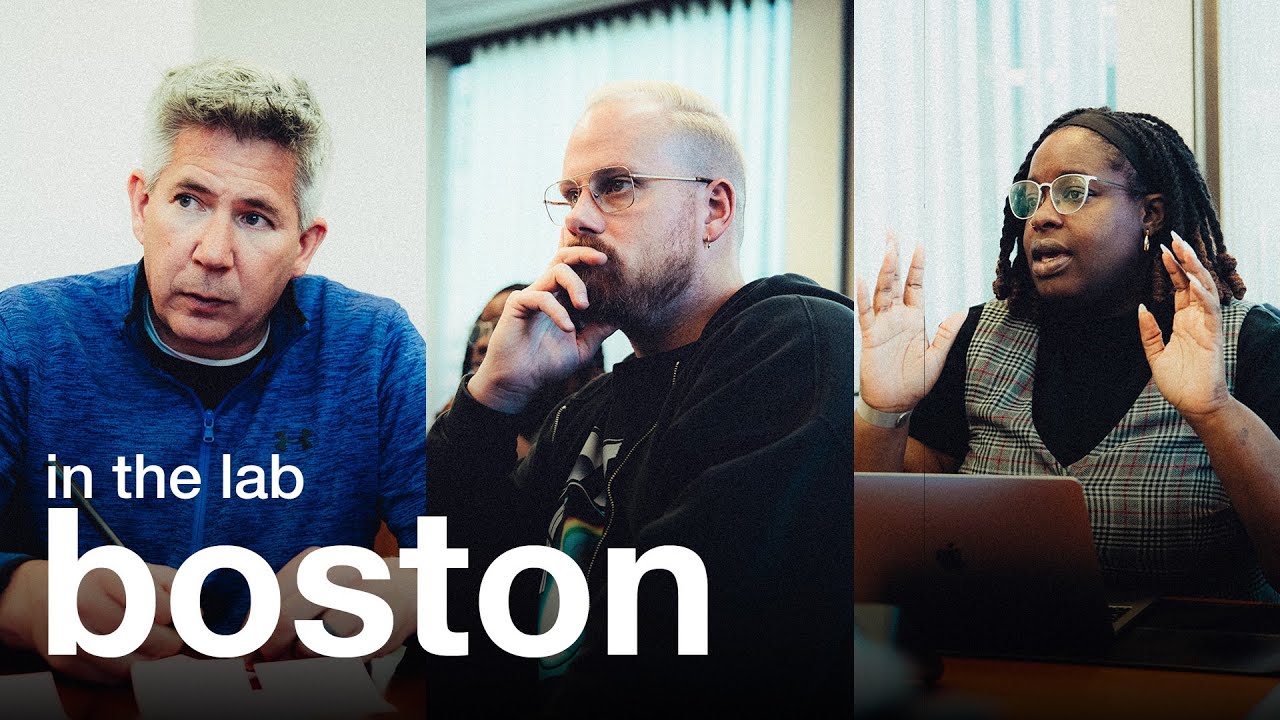
Taylor Desseyn leads a team workshop on the Torque.dev rebrand, covering visual identity, the marketing website, and how to position the product against LinkedIn. The group discusses job-seeker experience, community features, and ways to reduce low-quality applications.
Chapters
Taylor.
I've been sitting here recording for like 50 seconds.
Have you really?
No, I have not.
That's amazing. 2025, we're back on the road. Let's do it. You so far in the back of the plane, forever.
Well, yeah, I wanted a window seat for the vibes, for the content.
No, for the content.
What do you mean the content? 7:43, finally made it. We were supposed to get here, right? 4. I'm off to a dinner tonight, at least if they're still there, with MetaLabs, who's doing the redesign of our website. Patrick, you're not invited, sorry. Re-update, Patrick got the invite now because they're done with dinner, so now— No, it's because they like me so much.
Well, yeah, sure.
Hey guys, how are you?
Good, how are you?
There you go. There you go, post it on the video.
Good morning, Patrick.
Morning.
How are you?
Good.
You ready to get our steps in?
It's 18 degrees outside.
Yep.
Okay, standoff here.
I didn't prepare.
I didn't expect my legs to get cold, but wearing Lulu pants, not ideal whatsoever.
Got a little Sando, a little breakfast.
Breakfast sando. I'm still so— I have not thawed yet. That is so good. It seems like today we're gonna talk about a lot of branding, marketing, what like the experience is gonna look like for the user. I'm really excited about this. The big thing I'm trying to show is I'm trying to show us like in the lab, right? Actually doing the thing. Like yeah, travel vlogs are great. It shows us in the community, shows us active, which I think is incredibly important, which most companies— almost every company doesn't do. But I think there is something about like Being in a conference room and you seeing like what conversations we're actually having behind the scenes. So excited for the next 48 hours.
And you'll see they're just scribbling here. We're writing out what we think the journey is, but this might change just like yesterday. We'll have a conversation, align on what you think the appropriate journey is, and then we'll solve for that.
Focus will be on job seekers' experience. So end to end, try and understand like from an experience point of view, like what are we seeing and feeling and touching as we move through the software?
We wanna work on the flow foundations, the core of the product, and get it ideally to a place where you're building it and shipping it. So maybe in the profile we can think about something— I mean, we talked a little bit about soft skills too, but it's that soft skills plus accreditations plus maybe aspirations or something.
So think about it as a journey of an individual finding out about the job all the way through till the hiring onboarding. But I will ask Ian, how do those feel as journey stages? I mean, do you think about it like that? Is there another way that you think about it?
I've literally not seen a staffing company's website that I was like, ah, I know exactly what they do, this is really cool. I do think, you know, one of the best marketing tools a staffing company has at their disposal is the jobs that they have. Because what is the one thing that people want? It's a job.
One of the first things that Christine said when we met like 18 months ago was this idea of like, The skills and the job history are kind of, they're not connected necessarily. And like what the employer really wants is like, don't, like, don't just say bullet point Python or, you know, 2 years. They wanna, they wanna actually see it in line with their job history of like, where did you use it?
It's like if I wanna go connect with the top 1% of test takers in AI/ML on Torque's platform, it would be really cool to be able to go search those. Or find those people.
There's something with like a role-playing game type of thing. Like, there's a lot of— I think there's like some gaming callbacks that we can do to be like, hey, you want to be like 1135 wizard, this is what— you know, and that's like aspirational to get there. And some of the stuff you can't get on your profile until, you know, hey, you have to do these. If you want this cool swag on your profile, you need to do these assessments.
In order to get to the next part, you gotta do These 100 things or these 50 things, or, you know, we can come up with mutually beneficial things to both Torque and us. We just haven't had the opportunity to kind of fulfill that vision yet. If we want people, if we want to build a true community on the platform with what we have, every single thing that we should think about from a feature perspective needs to be, does this add value to the job seeker? Does this add value to the hiring manager, CTO?
What we want to get rid of is the casual application. Of like, oh yeah, sure, and then they get further down, they're like, oh sorry, never, because that's actually— now we've given a bad experience for the hiring manager. Sometimes it's the hiring manager and all the other job seekers. So somebody who's actually like amazing is like, yeah, I'd like this job, but in reality they're overqualified, they're at a higher bill rate, and so they come through the process and they're like, well, I loved Mark, and now Mark made all the other people in the pool who are actually within your budget Look bad. It really screws things up if somebody applies to a job in bad faith or applies to a job when they're like a mismatch on the economic side.
Aside from the economic side of it, we're doing our best to make sure that that's the right job for that person. So, you know, we're— if we get those little details right, we'll be— we're going in the right direction.
The bar is incredibly low. for us to separate ourselves with this. In that, literally sending a relatively meaningful email saying, hey, we appreciate the time you took to apply to this job, but unfortunately you were not selected. I mean, that's like already 50% more than what the industry is even doing.
If you've got a job that you think is awesome, like, if you did have connections or friends that that's visible to them, they'd be like, oh, Dave got a job, you know. Like, maybe not a short-term thing, but like long-term it would be great if like Because this is incredible social proof to the other people in the community of like, hey, there's people really getting jobs here.
Yeah, I mean, it's a signal to other recruiters and it's a big message.
We are going to have something every single day for you to get involved with. It would be awesome. So somebody emails Pat and Pat goes to their profile and it's like, well, let me see how involved you've been in the community, right? And we can tell people, hey, listen, the more you're involved, like we see this stuff. It's important for you to be involved.
Give them the feeling of like, yeah, I have a profile on Torque, I can take it with me, you know. And like, so digital.
Yeah, the talent journey that we described would be sick if we could figure it out, you know. So it's like the fact that we've all are seeing these very clear pain points, but they don't seem like— they don't seem insurmountable.
Yeah, there's no staffing company that I know of that is providing value like what we're talking about right now.
No one's doing it.
And so if we can execute on this stuff, like, it's gonna be special.
That was pretty powerful. I mean, for us to consume that amount of information has been pretty immense. It's given us like a really good reference point, a starting point in understanding where we should be focusing.
Just being in this room with people who just embrace community and understand it, it's just refreshing. This is not normal at all. This morning we talked about, we journey mapped basically the job seeker, like when they log into Torque.dev or go to Torque.dev, what is, what is the journey we want to bring the job seeker on as they walk through the Torque.dev website. It went by so fast and it was so awesome because you would typically think like being in a conference room all day would be like super slow, but the conversations were so invigorating. Um, and, and, and I've said this, I've tweeted this already, and I've posted about this. I truly like the ideas that came up today. If we can iterate on those and actually execute them from an— from a product perspective, We are going to be going up against LinkedIn. Like, that is our competitor. Our competitor is LinkedIn. We are trying to develop a, basically a job search experience that is better than LinkedIn, that makes you feel cared for, that instructs you throughout the job search. So I could not be more excited.
Ready to go?
Yeah.
To the office. Ready to go. Day—
it's technically day 3. I'm more prepared for today. We got the sweats. It's all about branding today. Branding and kind of tone, which I'm very passionate about. So I'll try to be— I'll try not to control the entire conversation.
Day 3 of a very exciting week. Our last day and maybe the most exciting. And it's going to be marketing, the marketing website, all things like tone. visual direction and what we are going to be working on for that stream of work.
Big thing here is how do we define the approach to visual design, tone, and content for the website. I think it's important to call out, like, there is a distinction between the visual direction and brand here. So, and there's like a bit of an overlap as well.
Software can actually make the world better. We need, we need to throughout the thing have like a positive view of technology, of like ultimately technology can like raise us out of the drudgery, you know, or like make our— make industries better, make people's work lives or home lives better. That, that, that I definitely think is a pretty core— yes, core value of ours is like we believe in— we believe in technology as like a net positive.
I think run clubs are fascinating because like, you know, and, and both— I mean, Pat's wearing, uh, Patrick's wearing the brand right now, but Minted New York and like Marcus Malone, like built a brand off of a hoodie. Then there's a run club associated with it. Anybody's welcome. But then there's like even like a special run club where it's like you got to be running like 6-minute miles, right? Which is kind of like our professional community, right? So it's kind of— it's anybody can join, but then you kind of get into different levels, you know, limited drops of swag, you know. So it's like creating this kind of sense of like Coolness, community, but still anybody's welcome. Where I came from with my, you know, with staffing agencies as a recruiter, the, the stat is you can only place 10% of the people you meet. So how— so if we meet 100 people, how are we taking care of the other 90 people? Then it's like, well, you didn't get a job, but we just wrote an article on how to write your resume, or we wrote an article on how to write your LinkedIn. And so then you can add value even though you're letting somebody down. Which develops loyalty over time.
I'm not trying to use the brand word, but obviously there's kind of brand implications to what we're talking about here. But really, this is trying to define the approach we're going to take to the visual design for the website, and then ultimately starting to think about how that potentially could translate back into brand somewhere further down the line. All that being said, what I'm going to do is I'm going to just place a sticky note, and I want to talk about which side we live on. We're going right in the middle and We can figure out which side we live on, and it's okay if there's a split in the room. I'm curious.
With what we do, especially if one of our focuses is a community-first, whatever we want to call ourselves, I definitely think it needs to be more playful.
Even at Bain, we always said, like, look, we do serious work, we don't take ourselves seriously.
Yeah.
That's kind of where— so I don't know where that falls in the sophistication.
Like, a lot of, like, the traditional people They can only highlight like the talent. We can highlight the profile because it's part of our product and platform, right? It kind of, kind of, you know, it does highlight the talent, but what we're actually highlighting is the profile here, you know what I mean? Those traditional players that don't have a platform below them, all they can do is talk about, you know, that they have talent. I want people to be like, you know, You go to Torque to get the most productive technology talent.
They're going to give you access to the most productive technology talent.
Alright, we are done. We are done. It was an amazing 2 days, 2 or 3 days up here. I feel like a broken record here, but the things that were discussed over the last 48 hours in the 13 years of my career has never been talked about. We talked about taking care of our clients, the decision makers of IT organizations on another level. We talked about taking care of engineers and guiding them through their career through our platform. I mean, we're talking about going up against LinkedIn. I've never been a part of that conversation because at the end of the day, what this rebuild, rebrand is going to do is essentially put us up against LinkedIn. Like, that's our competitor. Like, that's kind of the North Star we're trying to go to, is build a product that allows people to go through their careers with us. We can help them, get them connected, And ultimately be a community-first organization that also brings best of talent to the companies hiring from us at an insane speed. This is going to take a lot of work. It's not something that's going to like turn on a light switch, so we're going to be fully ready to go.
But it's—
I'm excited to obviously build this in public and really highlight everything we're doing.
More from taylor



tech doesn’t have to be the only thing that brings us together #techcommunity #techcareer

I want to give back to y’all that make the tech community so great #jobsearchtips #techjobs




spend a little time investing in yourself #linkedin #linkedintips #careeradvice


