
exposing the job search in amsterdam
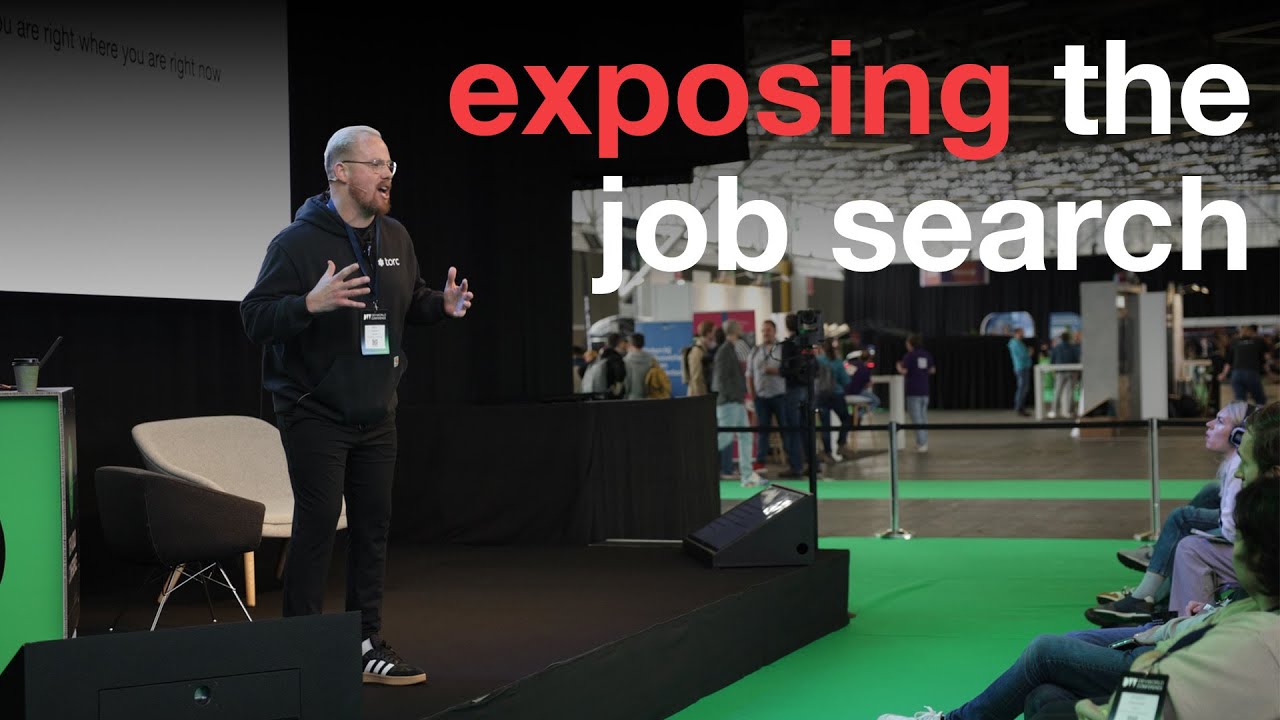
In this hour-long talk, Taylor Desseyn, a veteran engineering recruiter now at Torc (part of Randstad), shares a comprehensive, practical guide to the entire job‑search lifecycle for engineers. She begins with an introduction to her background and the Torc platform, then dives into resume fundamentals—emphasizing a concise top‑third layout, specific skill listings, quantifiable achievements, single‑column formatting, and the role of LinkedIn‑generated resumes. She stresses the necessity of active networking, both in‑person and via LinkedIn, outlining three LinkedIn tactics: documenting learning, engaging with posts, and leveraging similar‑connections and notes. The talk proceeds to interview preparation, covering company research, finding personal commonalities, preparing a one‑page cheat sheet, taking notes, and handling AI‑driven interviews. Taylor highlights the critical importance of diligent follow‑up—setting reminders, sending thank‑you notes, and tracking applications in a personal log. Throughout, she advocates building a public professional presence by posting about talks, tagging speakers, and consistently sharing work on LinkedIn. The overarching message is that proactive, detail‑oriented actions and human connections outweigh mass applications in today’s challenging market.
Chapters
Good morning, my name is Taylor Desseyn. I'm very thankful to be here. This is my very first ever international speaking opportunity, so I'm grateful to be here, grateful for Yost and DevWorld for having me. This is a dream come true, especially because I used to be a recruiter. I still kind of am. I've kind of, you know, transitioned to a new role, and I'll talk to you about that, but this is just a huge blessing. And I just thank you for showing up. Again, at a technical conference, you choose to come and watch a non-technical talk. I'm not talking about TypeScript, I'm not talking about the cloud, and I'm definitely not talking about AI. So, I'm really, really excited that you're here. So, thank you so much. So, the talk today is exposing the interview process, but I'm changing it up a little bit. Because I'm gonna talk about the job search process as a whole. We are gonna talk about the interview process. That's incredibly important. It's a part of the job search. But right now, in my line of work, dealing with engineers across the globe, there is just a level, I would say, of hopelessness. There is a lot of uncertainty. There's a lot of, hey, I don't know where to get started. And so, what my goal today is encourage you all as we progress through this next hour together to encourage y'all to say, hey, it's okay. I want to give you some of the building blocks, some of the fundamentals to kick off your job search. And hey, if you're here and you're like, hey, I have a sweet job, I'm not looking, that's fine too. But I still want to give you the tools to be successful in your job search. A little bit about me again, my name is Taylor Desseyn. I've been in the engineering world now for 13 years. I used to recruit when .NET Web Forms was hot, and then I, you know, I recruited when React came out. You could use to spell React, and you could get a job. I've been there. So it's been really cool to see the progression of the internet, and I've been—I've recruited engineers. I've probably placed over a thousand engineers in my career in new jobs. I've also helped scale engineering teams, probably four or five hundred engineering teams at this point. in my career. I do not code, but I do know how to work with engineering leaders to hire, and I do know how to guide developers through the job search process. So, that's what this goal is, that's what my goal is here today, again, to give you the fundamentals. Another thing I want to highlight, too, is Torque. You're probably like, hey, what's Torque, right? Anybody in here know who Ronstadt is? Raise their hand. A few of y'all. Yeah, yeah, we got to do better marketing. There's like 6 of y'all that know us. So, Randstad, they're one of the world's largest staffing companies. They recently bought Torc last year. So, Torc is kind of a 3-sided situation. We specialize ideally right now in LATAM talent. So, we have a ton of engineers. We have over 30,000 engineers in South America and Mexico, but that is quickly changing with the purchase that Randstad bought us. Also, another thing too, we are a community-first jobs platform. So, we help people get jobs. If you scan this code, This takes you to our website. Please sign up. We basically, the way it works is whether you have a job, whether you need a job right now, we still would love to have you part of the community. My job is to make sure you all get involved. That's my job. So right now, we now with the purchase of Ronstadt have over 300,000, 400,000 engineers on our platform, and my job is to make everybody feel at home. And then finally, we do have a search and match tool. This is important to y'all, but we actually do help match talent faster than most staffing companies, and I can say that confidently because I've been in the industry for 13 years. So, we're going to kick off now to the first thing. Let's talk about the resume. I'm going to be honest with you, most of y'all's resumes suck really bad. Y'all don't know how to write a resume. It's awful. This is the number one thing to kick off your job search, right? So, let's kind of highlight a few things, right? Professional summary. Most of y'all just have a bunch of jibber-jabber, at the top of your resume, and it's awful. It doesn't tell a story. You have to understand something. Your resume is the first thing that employers see, and it crafts a narrative. So, at the very top of your resume, the very top third of your resume, I need specific skills, what you've done, how many years of experience. I've done TypeScript for 3 years. I've done cloud AWS for 2 years. I've done .NET web development now for 10 years, right? I need specifics. Most— and this goes to the next thing— most recruiters like myself, not anymore, But most recruiters just Ctrl+F search. If you do not have the technical skills on your resume, we will not call you. We're not gonna call you. Now, you could be like, well, Taylor, I'm the best .NET developer. I'm the best Java developer. It doesn't matter because if a recruiter who doesn't know what Java is doesn't see it on your resume, they're not gonna call you. Does that make sense? Everybody make sense? Yeah. So, most of y'all, again, And most people, most recruiters, most hiring managers only read the top third of your resume. They scan the second page for the top third. So most, your most important information needs to be at the top third of your resume on both pages. Does that make sense? Also, another thing too, I'm gonna say this now, it's okay to go over one page. How many people in here have a one-page resume? Raise your hand. Me. It's— go 2 pages, it's fine. No one's gonna hurt you, okay? It's gonna be okay. Go 2 pages, go 3 pages, because at the end of the day, most of y'all do not know how to communicate properly to get the information to get hired, right? It's okay to go 2 pages. It's okay to go 3 pages. Another thing that no one does— tell me what you've actually done. Tell me what you've actually accomplished. Most of y'all are just giving me laundry lists. It's almost like your wife telling you to do things. I did the laundry. I did the dishes. I did this. Most of your resume just is task-oriented. I need key specific things you have done and get as quantitative as possible. I transformed an app using this technology and this technology that allowed the company to make this amount of revenue. Or this amount of users worked on this platform. because of my contributions. Get as quantitative as possible. I can't stress to you enough, the resume is what gets you in the door, and I think a lot of us just quite honestly half-ass our way through the resume. I do curse, I do apologize. I get very excited talking about this stuff. Stop half-assing your resume. This is the thing that gets you in the door. Now, you're probably thinking here, you're like, Taylor, I don't need a resume because I'm good at my job and I have a network. Shout out to you. Shout out to you. But at the end of the day, you're gonna have to have a resume, right? I literally spoke recently. I did a one-on-one with an engineering leader in the US, very networked in, and he and I had a conversation. He was like, you know what, this is the very first time I've had to write a resume in the 10 years of my career. I've been able to get every job by a referral, but this market is not helping. This market is tough. So I worked with him through his resume. and we walk through it. Again, there's gonna come a point in your career where you're gonna have to have a resume and it's gonna have to be good. Final thing I wanna talk about. Yes, yeah. What do you think about LinkedIn resumes which are generated from LinkedIn? That's great, awesome. I'm big on Q&A as well, so if you have questions, feel free to ask. So this question up here was, hey, the LinkedIn-generated resume. If your LinkedIn's written well, yes, but most of y'all's LinkedIn sucks. So, if you have all of the things I listed, I'm fine with that, but at the end of the day, it doesn't usually happen, right? So, your LinkedIn, if you want to go with your LinkedIn, use that, but it's got to be written very well. Most, most LinkedIns are not written well, okay? Also, another thing too, how many of y'all have multiple columns on your resumes? Yeah, yeah, yeah, stop that shit. Stop it. It's awful. Knock it off. It's terrible. I have 2. No multiple columns. You have to understand something. Recruiters right now and hiring managers right now do not have the time to look through your resume, like spend more than 90 seconds on a resume. Every time I open up a resume with multiple columns, I'm like, what is going on? I don't understand what I'm reading. You got words here, you got words here. Some of y'all do 3 columns. Now I'm about to have a conniption when that happens. Right? Don't do that. Knock it off. One column. Single. Just— does everybody understand what I'm saying? Columns, right? I see some people trying to explain a column to the next person, right? Just keep it straight, in line. I don't need columns. No columns. Stop that. Knock that shit off. All right. Is everybody following me so far? Everybody good? Everybody having a good time? Great. If you're not having a good time, don't tell me. All right. Exposing the networking. Listen, when we're talking about exposing the interview process, resume is key, but here's the deal. You will not land a job if you sit at home and do nothing, right? It's kind of like dating life, right? You're looking for your significant other. If you're just sitting at home on a Friday night hoping somebody breaks into your house to find you, that's not going to happen, right? Yeah. Yeah, yes, everybody nod. Yes, that's right, yes. Right? So network, right? That's why I started this entire presentation networking to the person to the left or right of you. Literally, I've done that exercise multiple times, multiple times at conferences. I've had multiple people find people that live in their hometown. I've had people start meetups because of that exercise in the beginning. Everybody here, everybody here wants to be talked to. That's why they're here. Does anybody here not want to be talked to? Raise their hand. One guy in the back. Other than that, look, look around. Nobody does not not want to be talked to, so network with them. You have to understand something. You are one conversation away from changing your career. One. One. Right? Let me put it in perspective. The job I have now, the job I have now, 7 years ago I volunteered to speak at a boot camp. 7 years ago. It was a very junior boot camp. That's what a boot camp is. A boot camp out of Toronto. OK? I was so excited, right? I was like, ah, this is my first speaking gig at a boot— speaking at a boot camp. I was so jacked up. Spoke to him. So, 7 years later, I get this job at Torque. And I asked my manager, I'm like, hey man, how did you— 'cause he told me he was following me on Twitter, right? We'll get to social media in a second, the power of social media in your job search. And my manager was like, Yeah, so-and-so introduced me, or like so-and-so told me about you, and that person was the person that invited me to speak at the boot camp 7 years ago. You have to understand something. Network compounds. I was at a meetup. I landed in Amsterdam on a Tuesday. I went directly to a meetup Tuesday night, and somebody said something that was very profound, is that networking compounds. Right? Like, for example, I went to that networking session. Somebody there introduced me to another person that I had lunch with yesterday in Amsterdam, right? Mind you, I don't know anybody here. This is my first time in Amsterdam. By the way, Amsterdam's awesome. I love Amsterdam, for the record. But this is my first time here, and I had a lunch, I had a meetup, all because people introduced me, right? One of the things I want to get to right here This right here. This. This. This. People genuinely want to help. They genuinely want to help right now. Listen, the market, the hiring, it's not good, right? I'm not a specialist in Europe, right? I don't really quite know what the market's looking like right now in Europe. Is it good? No. And a lot of people are going no. They're going like this, right? So, network. Right now, the biggest question is, Taylor, I don't know what to network. I don't know what to say, right? I feel weird sliding into people's DMs, right? I met my wife sliding into her DMs, right? It's weird. It's uncomfortable, right? But here's the deal. Message that person and try to get to know them. People love to hear themselves talk. Why do you think I speak? To hear yourself talk. I love to hear myself talk. Right? So ask them, hey, what do you do? Where do you work? Right? In the DMs. Hey, would love to learn about your company. I would love to learn about your career. Right? Hop on a phone call. Hop on a Zoom call. If they're too busy, just go back and forth in the DMs. Right? It's incredibly important, which goes back to my second thing. By the way, I like low-key have ADD, so I'm all over the place. So bear with me here. But the second bullet point. LinkedIn is the most powerful networking tool. LinkedIn is the most powerful networking tool right now. Anybody in here like using LinkedIn, like truly using LinkedIn to network? Raise your hand. That's actually a lot better than it usually is. I'm proud of you all. Very, very proud. Y'all all get gold stars. See me afterwards, right? You have to use LinkedIn. Now, you're probably like, Taylor, I don't know how to use it. There's 3 ways to use LinkedIn. Ready? If you're the type that likes to write things down, Here are 3 ways to use LinkedIn to optimize your career. First off, document what you're learning. Document. What I would do, every single talk you go to at this conference, write a post on LinkedIn every day about one talk you went to and what you learned, and tag that person. The way LinkedIn works is if you tag me on a post, my followers see it. Let me say that again. If you write a blog post about my talk and what you learned about my talk, my 26,000 followers will see it. Right? Incredibly important. The second way to optimize LinkedIn when it comes to your job search and the interview process to network is liking and commenting on people's statuses. Right? I will tell you this. I would not be able to be at where I'm at right now in my career if I did not like and comment day after day after day, right? Because listen, there's some of you that are not here. I don't know any of y'all really. Well, I know a few of y'all. He works with me, but that doesn't count. But I know so many people. I've become such good friends with people online I've never met in person. How many people in here have a friend that they've made online, right? Instagram, Facebook, right? Yeah, yeah. Why don't we do that for our career? Right? We're so comfortable sharing what we ate last night on Instagram or Facebook, but yet we don't want to post about our professional accomplishments. We're backwards, folks. If you can literally delete Instagram off your phone, delete Facebook, delete whatever you use the most, and double down on LinkedIn, I promise you, your career will change. I firmly believe that if you are looking for something great to happen in your career, if you post 90 days in a row, 90 days in a row, something will happen. Something will happen great. You'll get invited to a conference. You'll get invited to speak at a virtual thing. You will be able to maybe find a job off of it. I'm telling you, I've done it. It works. And I have other people in my network that are actively doing it right now. And they are finding jobs because of it. And I'm only up here able to say this confidently because I've seen it happen time and time again. Next thing, everybody know the similar connections feature on LinkedIn? Incredibly important. I went to dinner last night. I threw a speaker dinner last night for some speakers, and there was one individual at the dinner. I did not know her, did not know her, but we had a ton of similar connections. And we hit it off immediately. Hey, do you know so-and-so? Hey, do you know so-and-so? Right? It's such an underrated feature, so make sure you look at that before you message somebody. Y'all could have somebody in common, right? Networking is about finding commonality, and we'll get to the interview process here in a second because the interview— most of y'all suck at interviewing, and that's okay, but we'll get to that, right? Another thing, go for the ask. Go for the ask. How many people in here have gone for the ask in their career? Asked for a job, asked for a consulting opportunity, asked for a raise? Anybody? What happened? Did it work out or not? Did it work out? A few thumbs up. It's crazy, right? And guess what? If they say no, guess what? You're back to where you're at, right? Like one thing I've started to do is I started to go for the ask. I have a podcast. I started to DM a bunch of people that are way above My pay grade? All of them say yes. All of them say yes, right? And usually if they can't help you, a lot of times they redirect you to somebody who can help, right? So again, go for the ask. Also, I've never spoken in a sweatshirt. This is a bad idea. I'm sweating like crazy right now. One conversation a day. I think, you know, I've had this conversation a lot with individuals. They're like, Taylor, all this sounds great, but it's exhausting. Everything you're saying is exhausting. It sounds so much. Please, if there's one thing that you want me to do, what is it? One conversation today. That's it. One conversation with a stranger in your network or maybe a connection that you've made recently. One conversation. That's it. That's all I want you to do. It could be a text message. Hey Susan, it's been a minute. Hope you and the kids are doing well. What you up to? Nothing, just working at Google. That's awesome. You got any exciting, fun projects coming up at Google? Yeah, we got this cloud project coming up. We're actually looking for some people that we need. Oh, that's great. I've been working with GCP for the last 6 months, 12 months. Oh, great. OK, well, maybe we should talk. Boom, interview. It's that simple. Hey, how you doing? How's the kids? Right, what you been up to? How's work? What you working on? Everybody loves to talk about what they're working on. If I went up to any one of y'all and go, hey, what you working on? You would like start talking, right? Because people are typically passionate about what they're working on. And if you're not, find another job. All right, next thing. Exposing the interview. All right. This is— This is where we need to talk because most people struggle with the interview process. Also, it makes me happy people are taking pictures of my slides. I never do slides. This is like the first time I've ever done slides, so thank you. You're affirming me. Appreciate it. Find commonalities. Who in here researches the person they're interviewing with before they interview? Cool, about 75% of y'all. The other 25%, get better. Find commonalities. Maybe y'all went to the same university, right? Maybe y'all both love cooking, right? Maybe y'all like anime. I don't know. I don't like anime, but maybe you do, right? Find commonalities. I had one quick story. I had a guy interview with me years ago. I was staffing— I was hiring an internal team, and we got on a call and he was like, He was like, hey Taylor, you know I saw you went to University of South Carolina, or hey you know how was that? Or hey you've been at this company for nine years now. How was that? Or hey I saw on your post that you love corgis. I love corgis. I got a corgi. Best dog ever, right? How do you think that made me feel? It made me feel good. Right? Like ah man, like I feel. I feel heard. I feel seen. Made me feel good. You know what it did? It changed the complete trajectory of the interview. I had all these questions lined up, and guess what? We started talking about corgis for like 15 minutes, right? Completely changed. Now, I understand the technical interview. You kind of can't— you got to do the tech interview. I get it, right? I'm not saying every conversation Needs to be a date. I'm not saying every conversation you're going to talk about your— you know, you're going to turn into a BFF, but do some research, folks. I think right now the big thing— I thought— oh yeah, do the small stuff, right? Here's the deal. People who are getting jobs right now aren't necessarily better than you. They're just doing the small stuff better than you. Put your name on your resume. Not kidding you. What? Put your name on your resume. Make sure it's the correct phone number. Make sure there's an email. Y'all are joking, y'all are giggling. I see some of y'all giggling, some of y'all aren't. Some of y'all need to wake up. Let's go. Just the details. If I try to call you and I've done it multiple times and you have the wrong number, ah, moving on. I'm sure you've been there. Yeah. Yeah, you've been there. Yeah, Ronstadt over there, he gets it, right? Do the small stuff. When it comes— another thing too that I love to do, uh, did I put that on here? I didn't put this on here yet. I think it's on the next one, but we'll still touch on it. Like, send them— send a follow-up message. Who in here sends a follow-up thank you note on LinkedIn after the interview? All right, not, not many of y'all. You do a lot. Good on you. You You do a lot of good things. You raise your hand all the time. I love it. Right? So, like, do it, like, the small things, right? Try to get in front of them as much as possible. Next thing, figure out the problem they're trying to solve. I've done a ton of interviews. I have, and I've tried to figure out why they're hiring. How many people have gone through an interview process and have no idea what the company's trying to do? A few of y'all? Yeah. Yeah, yeah, yeah. That's good. It must be really good over here in Europe because every interview except the last one I've been through, I had no idea what they were trying to hire for. Right? I try to figure it out. Prime example, last company I was at, I was like, hey, what are you guys looking for? They're like, well, we're kind of looking for a salesperson. I said, great, I do that. And I was like, do you guys do social media? They're like, no, we don't do that. I said, do you guys do community building? Do you guys go to conferences? They're like, no, we don't do that. I was like, do you guys do, what else? Do you guys do a pod— do you have a podcast? Do you guys do anything like that? They're like, no, we don't do that. Right? So then what was my next interview? My next interview was like bang, bang, bang, bang. Like I had a one-pager. Where is that? The one-pager, this thing right here. One-pager. Right, so what I did is I learned what they were hiring for on the first call and then the second call I had a document in front of me of specific things I wanted to talk about. Listen, one of the things right now with AI in interviewing, it's definitely interesting. Right, it's changing the game of the interview. I would absolutely make sure you have your resume in front of you and a pen and paper in front of you taking notes and not typing on the computer. I've talked to multiple engineering leaders that they say it's distracting, and now with the use of AI, they think you're cheating if you're taking notes while you're typing during the interview. Right? Give or take. Give or take, but that's what I've heard. So, make sure you have stuff prepared. If you are interviewing for a team lead role, make sure you have it written out, specific team lead things that you have done and you have been successful at. 'Cause the problem is, is all of us, how many people have gone into an interview and they've completely froze? Completely froze. Yeah, yeah, yeah. I was like, I don't know. Right? Just freeze. Hey, listen, I'm up here running my mouth for a living. It's literally what I do. That's why my voice is going out. I've literally not stopped talking since I've been here. I still forget things. If you do not come prepared, again, the small things, I'm talking about the small things in this talk. Write down your accomplishments. Have it in front of you. Be ready to go. It's incredibly, incredibly important. Research the company. Research the company. Dadgummit, research the company. So I've been in interviews, I'm like, hey, do you know what this company does? Like, nah, I got no idea. And I'm like, why are we here? Right? I mean, it's just not good. It's just not a good look. Small things, folks, small things. Research the company. Know what they do, right? If you're asked that in an interview, you better be able to tell it. Turn the interview into a conversation, like I said, already discussed that. One-pager, got that. Cool. We good? We still following? We still tracking? Everybody vibing? Great. All right, I do want to go from a follow-up perspective. I think this is incredibly important. Who in here feels like they have a good follow-up game? Raise their hand. There you go. Like 3 of y'all raised your hand. 3 of y'all. And there's one thing I could stress in this talk. Follow up. Follow up. Set reminders. Set to-do lists. Do something. Because I will tell you this, companies have a lot going on. Who's a hiring manager in here? Raise your hand. Yeah. How many of y'all are like just slammed right now? Raise your hand. I'm slammed. Right. Right. All right. Some of y'all aren't slammed. That's concerning. But, so, y'all don't have time to keep up with stuff. Right? Y'all just don't. Y'all trying to manage a team, trying to manage a budget, and then you're trying to interview, and then Scotty's trying to keep up with you and trying to stay on your radar. The only way that's possible is your follow-up. Prime example, the last company I interviewed for. I interviewed with them, got to the final round. The founder was like, hey, we like you. We like you, but— I said, but? He was like, we're just not in a place yet to hire you. I said, okay. I said, that's fine. I said, how long? Again, follow-up game. Follow-up game strong. I was like, how long do you need, like, for me to follow up? And he was like, well— He's like, follow up with me in a month. I said, ha, okay, that's not gonna happen. I gave him a week. I followed up with him. I said, hey man, I said, just wanna check in with you. I know you said a month, but here I am, a week later. Where are we at with the status of this role? He said, you know what, thank you for following up. The candidate we had in the mix was not a fit. Let's go ahead and hire you. Right? It's all about timing. The job search is about timing. Staying top of mind, right? Which is why I talk about LinkedIn a lot. If you are consistently posting and documenting what you're doing, you will stand out. For example, a guy last night at dinner, Aaron, he's leading a workshop today on localization. Highly recommend. I don't know what localization means, but it sounds cool, right? And basically, he literally said the word— if we turned last night into a drinking game, Every time he said localization, I would have passed out. He said localization like 60 times last night. So guess what? If I get a localization project, guess who I'm gonna call? Aaron. Aaron. Why? Because he said it over and over and over again. You have to understand from a follow-up perspective, like, you gotta stay on top of people, right? And people ask me a lot of times, like, Taylor, like, what's the cadence? Like, I don't, I don't want to come across as annoying, right? Your message is what's annoying. You not following up is not annoying. I'm gonna say that one more time. Your message is the thing that's annoying. You following up is not annoying, right? The message I get where it's like, hey, I followed up with you 7 days ago and I haven't heard anything. What's up? I'm like, shut up, go away, you're mean, I don't like that, right? Stop that, right? Knock it off, right? But if you message me and go, hey Taylor, I know you're busy, I know you're busy, where's my application status? I know you have a lot going on right now. How does that sound? That's received a lot better, right? So I would follow up every few days, especially if it's early in the process. Follow up. It's incredibly important. Next thing, are you documenting where you are interviewing? I talked— we had the first dinner we threw 2 nights ago. Had a founder at dinner. He interviewed for 52 companies at one time. 52. 52. I can't even count to 52. And he interviewed for 52 companies. And it was fascinating talking to him because he started to break down, he, like, after he got off an interview, he would write how he felt, what was interesting, right? He kind of broke everything down on this document sheet because he was like, there's no way for me to keep up. How many of y'all in here are, do you, have you documented your job search when it comes to where you're interviewing? A few of y'all? Me. It's incredibly important. It's incredibly, incredibly important. Next thing, the notes section of LinkedIn. When you connect with somebody, you can send a note. I think I've already discussed— talked about that, but does everybody know what I'm talking about? Send a note when you connect with somebody. Is everybody aware of that? Yeah? All right, either I'm getting really boring or you have no idea what I'm talking about. So leverage the notes section, right? I would love to connect with you. Send me a note. Hey Taylor, saw you speak. You were great. Or you weren't funny. My wife tells me I'm not funny. That's okay. I can take it. Right? But like I need to know where you're connecting from because you have to understand something. If you connect with somebody on LinkedIn and do not send a note, the invite just like goes away. It just like disappears. And I have no idea. Like I got no idea where you went. Like it's like there's Brian Smith. Connect. Connect. Poof, it's gone. If you send a note to a person, it pops up top of their inbox. Top of their inbox. So if you're trying to network, if you're trying to connect, if you're trying to send thank you notes to people, use the notes section. Hey Sally, thank you again for the conversation today. It was great. I had an absolute blast. I love it. Let's, let's follow up soon. Send. When Sally logs on to LinkedIn the next day, she accepts your invite, that message goes to the top of her inbox. Does all that make sense? Yes. Incredibly, incredibly important. I will tell you this, if you are not having success in your interview process and not getting a job, I would argue that your follow-up game sucks. 90% of Of— I just made that up. I'm gonna be honest with you. I don't know. 90% sounds like a good number. 90% of your job search is based on your follow-up. If you interview— I had one girl that I was talking to. It was a few years ago. I said, hey, like, what's your follow-up game like? Like, what are you doing to follow up? She was like, oh, I don't want to annoy people, so I haven't been following up. I was like, what? You said what? She goes, yeah, like I just, I sent an application and I just let it go. Or I talked to one person, if they don't follow up with me, I don't want to annoy them. I'm just gonna, I'm just gonna let them go. Folks, you are missing so many consulting projects. You are missing so many job opportunities. I would argue you're missing out on raises. Internally. Everybody is so busy. One thing that I have realized because of COVID is that everybody is slammed. Everybody took on another amount of work. Like, who in here is busier now than they were before COVID I am. I am. Yeah, most of us. No one has time to do anything, so you have to stay on top of people, and it's okay. I tell people, hit me up 7, 8 times, doesn't bother me. It does not bother me. Most people— listen, if people annoy you, they'll finally say something, right? So again, incredibly important. I want to go back as we kind of wrap up here in the last 10 minutes or so. I do want to go back to— I do want to go back to the networking side because I feel like I went over this too fast. You have to understand something. And I'm gonna reiterate again, you're just one conversation away, folks. One conversation away. Right? Be intentional. Ask questions. Be curious. Right? If I were you, one of the strategies that I would do on LinkedIn is I would try to connect with every single speaker at every conference you go to and send them a note. Another tip I would do too for the rest of today Create content for the speaker. If you're on Twitter or Bluesky or LinkedIn, create content for the person. Take notes on my talk. If you take notes on my talk and post about it, I'm gonna retweet you, and I'm going— you're gonna become my BFF, right? You have to understand something. When you create for others, when you document for others, when you take notes for others, especially at a conference like this, right? If you go to Aaron's global localization talk today, And you document it and you post about it on LinkedIn and tag him, you can go for the ask. Does that make sense? So let's say right now if you post on LinkedIn about my talk today and I see it and I like it, and then you message me and go, hey, I would love to talk to you about my job search. One, I'll say sneaky, sneaky, you listened to me. But then also two, I'm gonna respond to you. Why? Because you gave back something. Right, so that's another great networking tip. Let me ask you this, how many people are involved in a local meetup? Local meetup, raise your hand. Not a lot of y'all. I had lunch with an individual yesterday. He's in the AI space. I feel like everybody's in the AI space these days, and he has a really, really solid meetup, and I was like, man, like, how have you gotten projects? How have you gotten jobs? He goes, my meetup. Mass applying does not work. We as human beings confuse activity with productivity. I'm gonna apply to 500 jobs today, I did my job, I'm good, right? I applied to 600 jobs, I'm good. The problem is, is none of that works. It just doesn't. I literally, I have, I'm on a texting basis with a lot of engineering leaders at this point in my career. They all send me screenshots. 600 applicants, 1,000 applicants, 300 applicants for one job. For one job. Do you think your application is gonna get seen? It's not a trick question here. Say no. No. Okay. So again, where's the power right now in today's that where is the power to find a job right now? It's the person to the left or right of you. It's the person to the front or back of you. You can't— we are not— we as human beings are not meant to go through this life alone, and I know I'm kind of rambling here, but again, I want to encourage y'all that the job market is changing. I'm not even gonna get into where it's going with AI, right? I think the human connection is more Powerful and carries more weight now than it ever has in the 13 years I've been recruiting. I talk with engineering managers all the time because I want to staff their teams, right? I messaged them, I was like, hey, I saw you have a staff engineer, would love to help you find a job, or would love to help fill that job. And my buddy gets back to me, he goes, hey, I got 15 referrals. 15 referrals before even looking at the 300 job postings they get, right? So again, the power of the human connection is huge, and I do not want— I don't want to— I can't stress that enough. I can't stress that enough. And finally, when it comes to interviewing, because this is the thing, do the small stuff. Be aware, be intentional. Change some things on your resume. Right? When you apply to a job and they need tech lead experience with this certain skill set and your resume does not have tech lead on it and that certain skill set, you will not get called. You will not. So that's what I'm saying. You have to be intentional right now. If you are sleepwalking through your job search or you are sleepwalking through your career and you think like, something great's gonna happen because of it. It's not. It's not. Going to conferences like this, putting yourself out there, are the ways to stand out. I'll tell you this, I help a lot of junior developers, kind of at scale. And I encourage these junior developers to have coffee chats, to build in public, right? I mean, it's another thing I'm really big on is building in public. I can give another talk on the power of building in public. And every junior developer that I know that is putting themself out there time and time again online, posting on LinkedIn, having coffee chats on LinkedIn, documenting on LinkedIn, they're finding jobs. You know, people ask me all the time, they're like, Taylor, how's the market? I'm like, the market sucks for the people who are just half-assing it. There's just no other way to say it. The market sucks for people who are half-assing it. The people who care, the people who want to do the extra mile, the people who want to put the correct name on their resume, the people who want to put the correct email, the people who want to have a coffee chat, the people who want to show up at a meetup, the people who want to actually have meaningful conversations at this conference instead of just sleepwalking through this whole thing that most of y'all are gonna do are the ones not standing out. So again, as we wrap up here, probably because my voice is about to go out, but also too, 40 minutes is enough to hear anybody talk. I encourage y'all, just go for the ask. Be different. I encourage y'all to just do something out of your comfort zone today, because I promise you it will absolutely transform your career. Thank y'all for coming out. Appreciate it. Thank you.
More from taylor



tech doesn’t have to be the only thing that brings us together #techcommunity #techcareer

I want to give back to y’all that make the tech community so great #jobsearchtips #techjobs




spend a little time investing in yourself #linkedin #linkedintips #careeradvice


