
Finding a Job in This Terrible Market w/Principal Engineer, Jeff Blankenburg
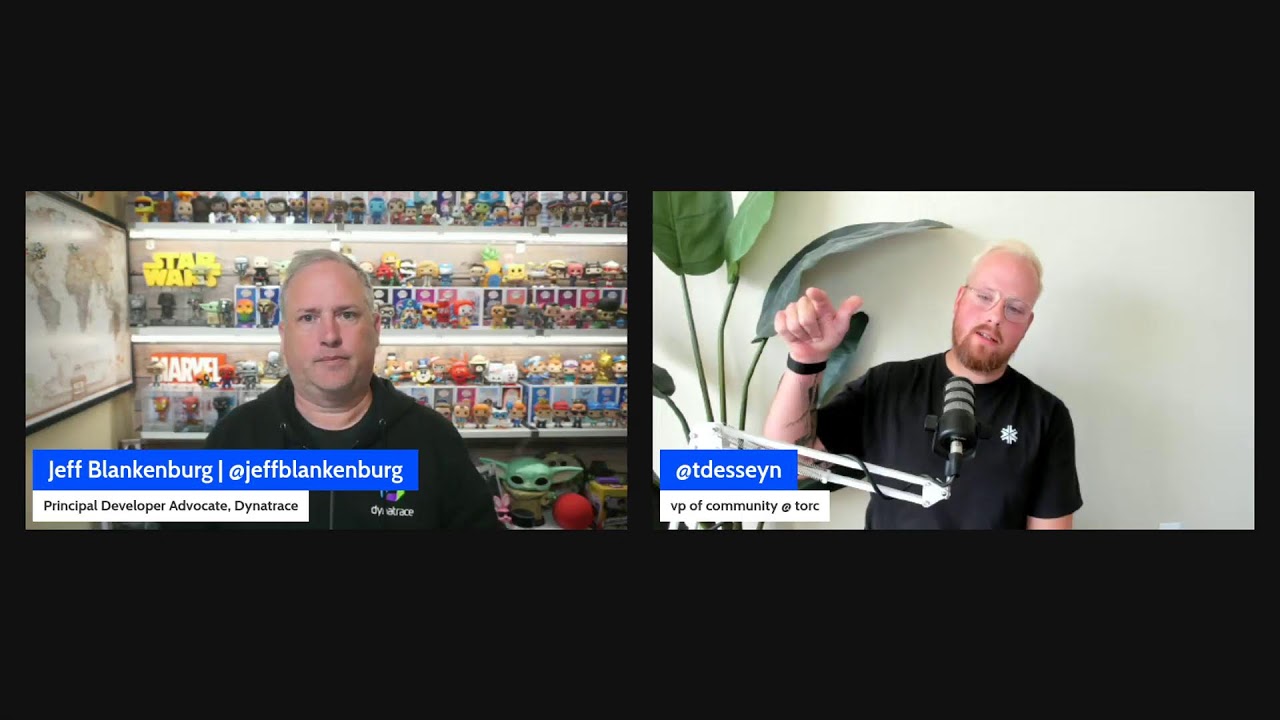
Jeff Blankenburg, a Principal Developer Advocate at Dynatrace, spent six months job hunting after a layoff. He skipped blind resumes and messaged former colleagues and executives on LinkedIn instead, eventually accepting a role that paid less but felt like the right fit. He built a baseball-card tool as a portfolio piece and used Claude to prototype fast.
Chapters
Alrighty, got that, got that, got this. It's just like alerting everyone. Oh, that was fancy. Um, all right, y'all, good morning. Uh, we're a little early, 5 minutes early. Happy Friday. Uh, we made it. You know, it's funny, Jeff, I, I, I don't know if you feel this way. I've talked to so many people in the corporate world. I feel like time's relative. When, uh, I— like, it is crazy. I feel like I blinked an eye and it's already Friday.
Well, not only is it Friday, it's also almost the end of August. Like, come on.
I don't want to talk about it. What happened to August? It just flew by. Like, what in the world? Some months drag, man, but holy cow. Um, I mean, like, we're talking about like Q4 planning now and we're like starting to talk about 2026 with budgets.
It's mad crazy.
It's nuts. Uh, good morning everybody, welcome. Um, you're probably like, Taylor, what are you doing going live on a Friday? Well, um, I typically don't, but, uh, I had an all-hands meeting on Wednesday, and Jeff and I were supposed to go live on Wednesday, and I had to move it. So Jeff was very gracious, uh, to do this on his day off. So thank you, Jeff. I appreciate you.
There's nothing like starting a job and finding out that they give you 4 days off a year that are just— they're not holidays. You still get all your holidays and all the other stuff. But they just give you four wellness.
Oh, for real?
This is today's just a wellness day. It's like please no touch your laptops. I love it. I can do that.
Wellness day with Taylor.
Yeah, right.
That's what this is. Wellness day with guidance counselor 2.0. That's awesome. I love it. Well, say hey y'all. I was starting to see people in the chat, which is good. Again, like I told, I've been doing this for five years. This is kind of my spiel. Doing it for five years. I was doing it for for really four. 4 years every day. That was very aggressive. Um, should have not— that was just a lot to— but I met a lot of people because of it.
Yeah.
So, um, this is Jeff's first time, first-time guest.
Won't be the last, but it is—
Yeah, it won't be the last. Yeah, yeah, yeah. Uh, I love it. And then you're— uh, Jeff and I have kind of kindred spirits here. Your, your son is in marching band, right?
He is. He's a senior. Uh, he runs the, the percussion group in his high school band, but he also does— Go!
Yeah, let's go! I love it, I love it. Yeah, so we bonded, uh, over marching band. Any, any marching band nerds in the chat, please, please drop it. Um, uh, but yeah, it's so funny. My wife's like— my wife the other night was like, why are you still up? And I'm like, I got on DCI TikTok. And, uh, and I was like, I was like, I, I don't talk about it a lot, but like marching band and DCI and WGI— for those of the folks who don't understand what I'm talking about, you're probably like, what the heck are you talking about? Is just, is, is is really, really, uh, has a part of my heart. Um, so anyways, um, but please say hey. We'd love to hear from you. This is a networking opportunity. Um, you know, I have received so many DMs, um, from speakers that we bring into the Discord and on Guidance Counselor 2.0 that say, uh, the amount of DMs, the intentional DMs I get from folks is incredible. Um, I had one speaker go, you have your community trained. which probably is like the biggest, um, uh, the biggest, uh, uh, compliment I could get. So please, uh, message Jeff, tell him you said hey, um, uh, tell him you tuned in this morning. Um, uh, Jeff is wonderful. Uh, but also connect with people in the chat, right? I mean, again, this is— I literally got off a call just now with some DevOps guys in Raleigh, and they were talking about how the DevOps meetup went away. And, and, and, you know, again, like, I really— what we're trying to do at Torque is develop these kind of virtual streams and programs to allow you to have the opportunity to network. And I tell folks, if you've networked over the last 5 years of my live show, you would have an expansive, expansive network. So please do that. Also, too, some housekeeping things. Appwrite. So I am, I'm part of the Heroes program. I always say this, I'm probably the only non-technical hero ever. I don't even use Appwrite. I barely know what it does. But I love the people and I want to rep their brand. So go check out Appwrite. If you talk to anybody at Upright, tell them, um, me and Jason are both Upright heroes. Tell them the Torque Boys sent you. Um, also too, listen, we got a lot going on in the Torque community. It is crazy. Check us— excuse me— check out our community page, torque.community. But then also, if you want to go live, if you want to know when I go live with great guests like Jeff, I just sent the text out. Text LIVE to 615-235-5650. Sadly, I think it only works for the US folks. Um, I don't have a WhatsApp channel yet. Um, and then also to our Discord, would love to have you as well. We got a lot of people tuning in. It's good to see you. It's good to see you. Yes sir. Drum Corps, absolutely. Great to see you. Richie, Chris, Michael, first time, let's go. Uh, it's Friday, it absolutely is, man. We've gotten away from that Friday saying, Jeff. I appreciate you bringing that back. Friday, everybody. Um, Kelly, it's good to see y'all this morning. Pat, From Raleigh, it's good to see you, brother. Had a chance to hang out with him at All Things Open. I was out there last week. Um, I did, um, I did the quads, the quints, the tenors, whatever you call them. That's what I did. I, I also was percussion lead as well. Um, Hanan, it's good to see you this morning. Um, Roxy, Oscar, again, we got— I need to go live more on Fridays. Jalen, it's good to see you. Uh, Emre, it's good to see you as well. Um, Chris, again, we, we got the folks here today. All right, enough for me yapping. We're at 9:30, so Jeff can finally talk. Jeff, let's give the people what they want, man. Who are you? What do you do? And then what's behind you?
Well, that's— those are all great questions. So who am I? Uh, I, uh, right now it says on the screen I'm a principal developer advocate for Dynatrace, uh, but that's just me professionally, right? Uh, I've done all sorts of things in my career. I've spent a good chunk of my time at Microsoft, and I was the chief technical evangelist for Alexa for 7 years.
Oh, nice.
If so, if you've talked to one of those, if you ever used a skill, I probably had some hand in helping the folks that were building that put it together. So it was a good time. Love, love voice development. But, you know, as the industry shifts and changes, so do our careers.
Yep, absolutely.
So yeah, it's, it's been good. And the stuff behind me, for those of you that don't know, and I saw a couple people mention it in the chat, these are toys called Funko Pops. They make them for just about everything. And a lot of people, when they get on a call with me for the first time, ask me, that wall's fake, right? Like, that can't be a—
Oh dude, dude, you popped up backstage and I was like, what in the world?
These are all 100% real. I can pull everyone off the wall. I love it.
That's awesome.
It started as a collection with me and my kids probably 10 years ago. And, uh, you know, it was 5 or 6 of them and then it was 10 because, you know, you go to a store and you're like, oh, I love that one.
Yeah.
And then my wife very wisely was like, where are we keeping these, Jeff? And I was like, that's a fantastic question.
That's a great question. Yeah, yeah, yeah.
And so I put a couple shelves up in here and then my kids were like, oh, we have more space. And so this is actually the 3rd iteration of the wall, but it's become kind of a fun thing. We actually haven't bought one of these in a few years, but it makes a great backdrop for sure.
I love it. I love it. Yeah, quite the collection. Absolutely. Um, uh, man, there's so much to talk about and dive into, but the main reason why I kind of did— first off, Jeff, if you have not checked out Sir Trek, I want to give a shout out to Sir Trek. Jeff's a part of that, uh, conference. It's in Columbus. Highly recommend. It was great. Jeff had me as a speaker this year. Yeah, it was, it was fantastic. You're in Columbus though, right?
I am in Columbus. Yeah.
Okay, cool. Sweet.
Yeah.
Yeah. So great event. Um, I'm glad you brought Kevin Griffin into the fold. Obviously love that dude. Actually had lunch with him a few weeks ago in Nashville. Um, but again, if you have not checked out StirTrack, highly recommend it. Uh, incredible conference. Um, uh, I showed up and was floored. Also really cool venue, movie theater. And then you get to watch the movie at, at the end, or that, which is fantastic.
Like, yeah, it was an idea that we came up with a long time ago. Uh, I can give a quick story on that.
Yeah, please go ahead. Yeah, we got time.
Me and a buddy of mine, Matt Casto, were at an event that Microsoft put on in Vegas called MIX. This was in '09 and it was, it was in like March and we were so fired up about like the kinds of content they had. I was working at Microsoft at the time and we said we should do something like this in Columbus. Let me reach out to the people that ran MIX and see if we could do like a remix event in Columbus. Like, do like, let's do a regional kind of thing. And so I reached out to them and I was like, hey, you guys have an awesome thing here. I'd love to be able to do a remix, like same branding, same everything, bring some of the speakers in, same content. What do you think? And they were like, we love this idea, Jeff. You should totally run with it. Here's a couple of caveats though. You can't use any branding. You can't use the word mix and we're not gonna help you at all. And I was like, oh, cool, fantastic.
Tight.
And so that was in early March. And on the first Friday in May, we held the first Stir Trek in Columbus.
That's great.
And the idea for the movie theater was just a cool venue, right? Like these huge screens, you can see code and all sorts of stuff in comfortable chairs.
Yeah, it's real cool. It's real cool. I've never been on a movie screen until then. So now I'm an actor to my resume.
Yeah, yeah. Jump on IMDb and add your stuff.
Absolutely. So, all right, let's— so I brought— so I pinged you because you just went through a job search. How long did that job search last?
From the day I was laid off till the day I started a new job was exactly 6 months.
Okay. Okay. So I would say that's about average with what I'm seeing right now in the market. So a lot of stuff to unpack here. I always want to kind of get into the head, the psyche of folks who get laid off, especially seniors, right? I feel like there's this kind of this general sense that we have that, oh, seniors have it easy. they don't have feelings, it's, it's the junior mid-levels that struggle, which is not the case. Talk, talk about, I guess, towards the end of your last position, did you see it coming? Did you not see it coming? Let's, let's talk about that because, because I want us to educate folks on kind of how to think ahead.
Sure. Um, so I had only started at my previous role 5 months earlier. Um, it completely caught me off guard. And I still today don't, don't really know why. Like, I was in a pretty significant leadership position and knew that we were about to have a layoff, and I had to lay a few folks off myself. And I, the night before the layoff, I got a meeting on my calendar at 7:00 a.m. with a manager that was on the West Coast. And I was like, he's getting up at 4:00 a.m. to meet with me? I'm getting laid off. And so I guess I knew 24 hours ahead of time.
Sure.
That was really it. And was very, very surprised by the news, but, uh, you know, it is what it is, and I think it always leads to bigger and better things, so that's fine. Um, but no, I didn't have any idea it was coming at all. And so—
How'd you feel? I mean, because again, I mean, you say you still don't know really why. Yeah. Like, how'd you feel in the moment?
Uh, disappointed. Um, you know, it definitely— like, there's a, there's a part in my head that still sits there and goes Were you not good enough? Is that what it was?
Yeah, dude.
Uh, but, but I'm, I'm generally pretty easy breezy on this stuff. And so, you know, it's, it's business. It's how it goes. Things, things happen. Um, he gave me a very nice severance. So I mentioned I was laid off for 6 months, but that severance carried me 5 and a half of those months.
Oh wow.
Okay. So, okay, well, that helps. Yeah. So I have, I have no ill will. They took care of me and gave me a good runway to really find the next thing. So it didn't really cost me any money to be unemployed for 6 months. And I will tell you, uh, I played more golf in these last 6 months than I've ever played.
We gotta go golfing too, man. We're like kindred spirits, dude.
Let's, let's do it.
I'm going golfing tomorrow. I'm pumped. I'm getting my wife into it, by the way.
Nice. That, that can be good or bad.
Sure, but at least she just— she's more willing for me to go if she tags along.
Uh, I used to golf with my wife quite a bit, and I love it. She kind of lost the bug for it, which is, which is okay. Yeah, but, uh, we had a good time when we were doing it, for sure.
I love it. That's awesome. So talk about, so got laid off. What, what did you do? Like, cuz I think so, like I literally just got off a call. I texted Jeff, I was like, hey, I'm running a minute or two late. I'm finishing up a call. Talk with 2 gentlemen in the job search, very overwhelmed. Didn't know what, don't know really what to do. What, like, where did you start? Like, talk to me kind of through the, the, the, the process.
So I didn't even tell anybody, like, you know, people make that public announcement, hey, I'm looking for the next thing. Yeah, I didn't even do that for a week.
Really?
I got laid off first thing on a Monday morning. And I spent that whole week just kind of like getting myself in a position to really think it through. What am I going to do? How is this all going to work? What's my strategy? Didn't really come up with a lot of good answers right away. It was kind of an evolved strategy as I went, but I reached out to people that I had enjoyed working with. Some people were at companies I'd been previously, or they'd moved on. Like, I have a person that I worked with at Amazon that is at NVIDIA now, and he's told me on a number of occasions, if I have a role, I'm always trying to hire you. Just keep that in mind.
Yeah.
So, you know, I reach out to him, I reach out to some other colleagues and companies that I would like to work at.
Sure.
And got some good conversations, but it was always like, oh yeah, we just don't have anything right now, or whatever. So that, that was kind of the first week, was just like the, the instant local network. This isn't reaching out to people that I've just networked with on LinkedIn or met once or twice. These are people I have long-standing relationships with.
Yep.
And they introduced me to people, and, you know, things went in a positive direction but never materialized into anything, uh, specific. But then that next Monday, once I posted something, right, those posts tend to blow up with your network on LinkedIn.
100%.
Comments, oh, you should talk to this person, or here's a job. So that following Monday is when the job search really kind of started to take off. And I don't know if everybody has this experience. Again, it took me 6 months to find a job. But that initial 2 or 3 weeks, I was like, oh my God, I'm gonna find something immediately.
Isn't that crazy? Yeah. It's like, this is great.
I couldn't believe all of the opportunities that were just popping up. And it wasn't even like people were reaching out to me. And part of that is networking. Part of that is building a solid reputation over a 25-year career, right?
Yeah, for sure.
And most of my roles have been very public. So even just in doing my job, I'm building a network.
Correct. Yeah.
those things then fizzled, too. And I was like, all right, let's start round 2. And so that's when I really started to dig into, like, LinkedIn job listings and a couple of other boards. There's a great website called DevRel Careers where a lot of interesting developer relations roles exist. Oh, nice.
All right.
And so I started chasing down a lot of those. And it became, you know, at least a part-time job, if not a full-time job, where I was just looking at anything and everything that I could find online and firing in a resume.
Yeah.
And instantly, I realized pretty quickly that that isn't a strategy. That doesn't work. I got a lot of— I mean, there was one job listing I saw. I don't remember who the company was, but they were looking for someone with 5 to 7 years of experience building apps for voice that could do developer relations work for their company. And it was a very capable developer, speaker, writer, content, all the stuff that I have checkboxes for my whole career.
Sure.
I thought, oh, fire a resume at that. I've got to be one of the most qualified people on the planet.
Yeah, seriously, you'd like get it for Microsoft.
Yeah. And I got, I got an email about 3 weeks later. Hey, you know, we've, we've decided to look at other candidates. And it's like, yeah, what, like, you didn't even get a phone call? And so there was a moment on my LinkedIn where I posted like, Do I, do I have a perception problem? Do I— when you look at my resume, right, we've talked about it. I was 9 years at Microsoft. I was 7 years at Amazon.
Yeah.
Do I have a perception that I'm too expensive? Do you just look at my resume, you're like, we can't afford this guy. And people are like, no, no, that can't be. Like, no one would just assume that. But I think, I think that's what was happening to me. Because I talked with a hiring manager at Microsoft and we loved each other. The vibe was there. Everything was perfect.
Yeah, yeah, yeah.
It was wildly qualified for the role. And she had to go on vacation. And so one of the recruiters reached out to me and said, hey, we've decided to go another direction. I just wanted to tell you in person. I know you've been talking for a while. And I was like, oh, that sucks. Why? And they go, well, we've kind of determined that we can't afford you. And I was like, We've never talked about money ever. Not even, not even like once. How are you making that determination? And they said, well, here's the salary range. And I was like, oh, but the one that you posted, like, I'm—
Was it, was it, was it lower? I'm assuming—
It was significantly lower. Yeah.
Yeah.
I mean, I think their range was something like $120,000 to $220,000 or something.
Yeah.
Which is a pretty substantial range.
Sure.
But they were leaning into, like, the $130,000 to $140,000.
Yeah, yeah.
Which is a very good salary. It's just less than I wanted to take.
Sure.
Yeah. And so I thought I fell comfortably within their range. And as it turned out, they were right. They couldn't afford me. Or at least didn't want to afford me. But that was a big eye-opening moment for me. Like, Am I, am I too expensive? And so that kind of rattled around in my head for a little while as I was getting all of these other declines from all these resumes that I just kind of fired into the ether.
Sure. Yeah, yeah.
And I'm still getting some. There's some that I applied to 5 months ago that I'm just now getting the, hey, we've decided to go a different direction.
Crazy, crazy.
5 months, guys. What are you doing?
Yeah, yeah.
So, so I put my thinking brain on and said, hey, this, there's got to be a better way to do this. And then I thought back to a time about 2 years ago. I was at the— I was in the process of getting ready to leave Amazon. I saw that they were ramping down all their investment in Alexa and things were kind of pivoting and changing, and I wanted to leave before I was asked to leave. And so I decided to leave Amazon. And one of the things that I really wanted to do, as you've guessed, I'm a collector. And so I, as a kid, I had a baseball card collection.
Nice.
During COVID my brilliant wife again was like, what are you doing with all these childhood baseball cards? And I was like, I got nowhere to go, no one to see, nothing to do. Let me go through all those and see, you know, kind of what I got here. And so as I did that, I started finding new modern cards and buying some of those too. And I was like, oh, this is actually really fun still. I like this. And so kind of got back into card collecting. And one of the things that I realized pretty quickly is that there is no software today Meant for people that collect cards. There's lots of people that, um, have opportunities for people that invest in cards. Hey, I'm gonna buy this card because I expect it to go up.
Yeah, yeah.
But if you're just a collector and you want to see what you have and what you don't have and what's available and whatever, there just really isn't a tool. And, um, none, none that were very good anyway. And so I decided to start building something for myself.
Interesting.
a tool that I could use. And so as I built something cool, I showed it to a few other people that I'd met through the hobby, and they all wanted to use it too. And I was like, oh, maybe I'm onto something. So I reached out to Topps. Topps is the company that makes most of the baseball cards. There's competitors, but as far as baseball goes, they kind of own the market. And I went to the— I went to LinkedIn and I found all their C-level executives. And I promise this story wraps back to what I was talking about.
No, no, you're good. We got time. This is why I went a little longer on Guidance Counselor 2.0 in general, so we can Have these conversations.
So I reached out to all their C-level executives. There were 6 of them. And I just on LinkedIn, I just sent them an invite. There was no extra message. There was no anything.
Oh, you didn't do what I was— what I tell people, Jeff. You got to include a note.
Before I've listened to your show and learned your strategy. But again, this was 2 years before this layoff. So this is when I was looking for a job. And I thought, I'll just fire in and see, see what I get. And out of the 6 of them, 4 of them accepted my invitation within a minute. Like it was super fast and I was like, oh my gosh, this is incredible. So then I sent them each this very nice personalized message saying, hey, I have this idea for a thing. Here's kind of the project plan. Here's how I think this would work under the Topps umbrella. I'd love to come in and be responsible for building this for your customers because as the company that sells all the baseball cards, it would make sense for them to have the service that helps you track and manage and keep track of your collection as well. They have all the data, they have all the images, like they have all the things that I would really need to make this So I sent them all these really nice custom messages with all these details, and I got no replies. And I was like, oh, yeah.
Far from the course. Yeah.
So I kind of put it on the shelf, continued working at Alexa, and finally got to the point where I was like, I gotta go. And so I reached— I thought, let me find the people that would actually own a project like this. So I started looking on LinkedIn again at top 4 Any of the, like, director of technology, any kind of project-level folks. And I did the same thing where I sent them a message and I said, hey, at least this time I sent them a message with the connection request. And I said, hey, this is what I'd really like to do. And all of them, every single one of them accepted my invitation and said, hey, tell me more about this thing. But all of them started with, how do you know our CEO? How do you know our CTO? How do you know our CFO? And I was like—
Interesting. Okay.
This paid off. And so just having connected with those people a few months earlier, they now use that as a credibility measure to like, oh, this guy knows people, we should, we should talk to him, right? That was the, that was the trigger for almost all of them to be like—
Unreal. And you didn't even talk to the CEO, you just connected with him.
Never once, right? He just accepted my connection.
Crazy.
Uh, and that was, that was remarkable to me. And so that led to a bunch of conversations. I've probably had 4 or 5 interesting conversations with Topps over the last 5 years. About this project and the status, like the position I'm in and what I'm building and how I'd love to bring it in-house. But one of the things from their director of technology that I heard was, Jeff, we don't even know where our inventory is half the time. We're not a technical organization. This would be a really hard thing for us to pull off. And I said, well, that's why you need me, right? Like, do the pitch. But they—
Shoot your shot, dude.
I love it. They're not ready yet. So I think what I have to do now is actually just launch the thing. And then build an audience and be like, look, see, I told you.
Yeah.
Why don't you buy it now? So we'll see. Anyway, that was a long way of telling you what I learned about networking on LinkedIn and how a lot of this stuff works. And so what I started doing with every role that I found, again, on LinkedIn job boards and whatever else, is that if I was gonna apply for a job, there were additional steps I had to take. It couldn't just be apply, fill out their little resume form, and wait for a reply. So what I started doing was hunting people down on LinkedIn. I would go find the person that seems like the most likely candidate to be the hiring manager or a peer, and I would reach out and connect and say, hey, I'm applying to this job. I'd love to know more about your team or whatever. The friendly responses I got from people were amazing. Like, yeah, I'd be happy to. You want 30 minutes on Friday? Oh my gosh, yeah, I would love to talk to you on Friday. That'd be great.
So what does your messages look like, right? Because I think that's where people would get really messed up, where it's like— and, and this is great, I, I get goosebumps when people talk about good things, and I'm getting goosebumps right now. But like, like, so you're messaging these people before you submit. What does the message look like?
Uh, I'm trying— I'm digging through my LinkedIn messaging right now trying to find—
I love it, I love it. Yeah, real time.
I love it. Let's see, my initial message was— let's see. I'm not finding one quickly, unfortunately.
No, you're fine.
Here's one. Hey, I just applied for your head of developer relations role. As a regular user of your software, I have 20 years of experience leading and executing DevRel programs and strategy. I'd love to know more about this role if you'd be interested to chat.
So good. Just hit them in between the teeth, man. Like, hey, I got 20 years, use your product, would love to talk.
Love it. Yep, yep. So that, that's kind of the gist of what most of my messages were like, but they were always very customized to whoever it happened to be. Um, those did phenomenally well and led to kind of what was phase 3 of my job search, which was now I have all of these companies that I'm interviewing with, uh, which was good and bad, right? Like, you people hear, oh, poor you, you're interviewing with 10 companies at once. But like, that's a pain.
Yes.
Having to schedule and— because everybody just sends you, right, the Calendly or whatever, like, hey, what times are you available? And so I fill out a form and say, hey, I'm available Thursday and Friday from 10 to 3. Except that by the time they get back to me, I've told 3 other companies that too. And so now it's like, ah, are they gonna schedule on top of each other? Or how is, how is this all gonna balance? And so it really became over the last 2 or 3 months of the search, It really became full, full-time job. The time that I wasn't interviewing, I was applying to more things, sending more of these kinds of LinkedIn messages. And again, I was— there was a point at which I had 7 companies that I was at least a second interview into. It was, again, I don't want to complain about the riches of having opportunity.
Sure.
It was great. But it was also a ton, a ton of work. Trying to manage. And like, they'd ask me a question about something we talked about earlier. I'm like, which company is this? I know, seriously. I started having note sheets in front of me just to remember like, oh yeah, this is the company I'm talking to. This is the amount of money I told them I wanted because it varies. You kind of get a vibe for what you should or shouldn't say financially. And so all of that, I kind of had to really manage and balance. It was— this is an awful way to think about it, but it was like trying to date 9 people at once.
Yeah.
It was, it was, it was a lot, a lot. And so, you know, as we got to the end, I finally got to a place where I received an offer from a company. And I reached out to all the other people and said, hey, I've received an offer. I would really like an opportunity to continue this conversation with you. But like, I'm in a position where I really need to take a role. And they all kind of came back and said, hey, we need another week or 2, or we still need you to talk to this one person who's out. So it's, it's going to be 10 days. And I was like, it's been 6 months. I've been talking to you guys 2 months.
I know.
Um, eventually we need to make a decision. And so, um, I'm very happy with what I ended up with and where I decided to land.
Sure, sure.
Uh, the ending is always very weird too, because then now you're breaking up with people.
Yeah, no, I know, I know. Yeah, they're all right. There's a few things I want to unpack here. So do you think in hindsight Go back to start your job search, you probably should have been hitting up folks on LinkedIn to begin with.
100%. Yeah, 100%. Uh, there's, there's no doubt. I mean, I, I probably wasted a ton of opportunities by firing a resume in that got kicked out by whatever system that a human never looked at it. Um, and if I had just made one connection, I would have gotten that at least like vibe check interview.
Yeah, yeah, exactly.
Yeah. I tend to thrive in a vibe check interview, so that's—
Yeah, all vibes. Yeah, yeah. So, so, all right, so I, I want to be crystal clear on this for folks who are watching and obviously listening to this in the future when this, when this drops on, on my podcast. But so we got go find a job on LinkedIn that's posted, don't apply, go to the company page, connect and send a customized note for all the people in leadership that applies to your field? Because I'm also thinking about too, like, if a designer listens to this in the future, like, you know, hit up head of design or—
Yeah.
Chief design officer or whatever. Hey, love your product. Hey, you know, like, for example, like, if you're a designer and you want to go work at Meta Lab, who you, who developed, you know, our marketing site and, and, and kind of the wireframe mockups for our platform, you're like, hey, I, I know, you know, I, I saw Guidance Counselor 2.0, Taylor with Torque. I know you guys did the redesign. Would love to chat, right? Bring in something. Did, did you specifically ask for time to speak or not?
I always ask for time to speak. Okay.
Uh, I mean, specify the amount of time.
Uh, I did. I generally said 15 or 30 minutes depending on what I thought I could get away with.
Because most execs don't have 30 minutes to yap.
No, no. Well, and again, for when I was going to Topps and reaching out to those high-level executives, I wasn't asking for a meeting at all. I wanted them to look at the stuff that I had on their time. Yeah. And if they wanted to chat, like, if now they have incentive, like, oh, this is interesting, this might be a good bit. Like, I was pitching a new business unit, basically. And so, yeah, that was, that was gonna need more than 15-minute phone call.
Sure, sure.
And, you know, it did end up turning into some great phone calls. It just, I had to wait until I got into the director-level folks before that really took.
So find the job. How many messages? Like, did you try to cover the whole org? Did you send 2? Did you send 5? Like, what did that look like?
For most companies, when I was just trying to connect with a person, uh, about a role, um, it, it's surprisingly easy, honestly. If you, if you're applying—
It really is. You just see it, note, quick note, send.
If you, if you are applying for a job you're qualified for, you know who the hiring manager is going to be. Like, if I, if I'm applying to be the director of DevRel or even just a, you know, a developer advocate at some company. I'm reporting up through the marketing organization or the product organization. It's not clear always. But you could also just go find the other advocates that are on the team and be like, hey, I'm interested in this role. I'd love to know more. Can you connect me with the hiring manager or can we chat about what you do? I will tell you that The positive responses I got to those and the number of times people were like, yeah, I'd be happy to chat, was surprising because they have this entire HR recruiting wall built specifically to keep people out until they're ready. And the number of individuals that were like, yeah, come on in, I'll talk to you for 20 minutes, that's, that sounds great, was, was, I mean, looking back on it, was very surprising. They should not have said that.
Yep. So what, so then, okay, so you get somebody on the call. What does that conversation look like? Because I think, because I'm trying to put, I'm trying to put myself in like, you know, all the conversations I have week, week over week with people kind of struggling in their, in their job search. You get on a call with, with, with a leader of an organization. Are you coming with questions? Do you control the meeting? I guess, give me the structure of kind of what those calls look like.
Yeah, there's a, there's a couple of angles that I take. They all kind of merge together. But the big ones for me are, I know you're hiring for this role. What is, what does success look like a year from now? Like, what is the thing a year from now that you're gonna be like, I'm so glad I hired this person? Am I that guy? Like, that gives me a good feel right then. A lot of them, again, developer advocacy is a weird role because sometimes it's sales, sometimes it's marketing, sometimes it's product. And one of the things that I find is that if they, if they talk at all about leads or revenue, I'm not your guy. I am, I like to think that I'm a very good developer advocate, but I am, I am not here to be— to just accentuate your sales arm and drive more leads into a sales funnel. That will naturally happen. But that's not—
100%.
That is not something that I'm here to do specifically. And if you're measuring me on revenue, I mean, you know this, you speak everywhere. Like the times that I go speak at an event, I'm gonna get people hyped and I'm gonna get them thinking about the product or the technology or whatever it happens to be. They might use it for themselves, but developers use those things like a tool belt. Like, oh cool, now I know Dynatrace. Cool, I'm gonna throw that on my belt and when the problem presents itself, I've got that on my tool belt. Now I have a way to solve that thing. And it might be 6 months, a year, who knows. And so being able to tie it to revenue, especially because I don't have a way to like attribute all the people that were in my audience to some action they take 6 months later, it just becomes a very complicated way to measure success of developer relations. Yeah.
But how would you measure the success of developer relations?
There's a— there's a— it varies depending on the activity.
Sure.
If you're thinking about content, it's about engagement. It's not about followers or any of— like, followers are great, but they don't really translate.
Well, the state of social media now, follower count arguably doesn't matter anymore. Yeah.
I mean, almost any social media, if you want me to have 100,000 followers, I can buy them for about $8. So it doesn't really mean anything. But engagement does. If you can get real engagement from real people, That goes a long way. And so engagement is kind of the blanket term that I use for successful metrics around developer relations work. But that takes a different form depending on what the media is.
Yep. Yep. Got a few questions here. Elliot. So Elliot brings up, I was gonna circle back to this, but I'm glad Elliot asked it. What did salary negotiations look like? I mean, in full transparency, the conversation I had with these 2 gentlemen in Raleigh, They've even made a comment that they're seeing salaries be less, especially from a very senior level.
Yeah.
I think my hot take is, I think companies know there's a lot of candidates out there and they can drive down salaries, which I knew what would happen. I called this 5 years ago, knew this would happen. Um, how did this, how did this look throughout your job search?
Uh, well, I, I had, I had in my head what I thought my bottom number was.
Which is what I told them on the call right before you, by the way, which, that's good.
Nice. And, but I would always start with, my last 2 roles, I was making X. And that was a way to place an anchor that was like, this is, I'm not expecting this, but I want you to know what I've been used to. But my, my lowest number was 50 less than that. And so being able to go in and say, hey, this is, this is what I've been making. to set kind of the expectations, knowing that I can whittle that down if I have to.
Yeah.
Made it easier to have those conversations. I think that if I had taken my lowest number though, I'd still be like, now this feels like a grind. Like I'm, you know, that's me getting by. That's not me contributing a ton to retirement. That's not me contributing a ton to investments or anything else. That's just me surviving. Yeah, and nobody wants to do that if they don't have to.
Sure, sure. Um, uh, let's see here. I'm just kind of looking through here, uh, getting all the comments. Jeff is— Jeff looks like someone I want to have a killer coffee with. Jeff, your DMs may be overrun. Uh, sorry, not sorry.
Come on in, I'm happy to chat.
Um, so, all right, so we talked about Let me— okay, then let me ask you this. Everything you're saying is the outreach on LinkedIn. Did your— how did your resume do? Like, it sounds like there, there, if you do it right, there may not be a ton of emphasis on the resume, which is—
No, uh, I mean, I, I think the resume still has to get through the screeners.
Yes.
Uh, whatever that mechanism happens to be, and every place has their own special sauce, right? Yep. Uh, but I found that if I could go around it, right, Right? I find that connection. I talk to that person. And they're like, you should totally be someone that interviews for this job. They walk over to the recruiting side and say, hey, this one goes on this stack. Right? They're eliminating any of the screening possibilities and taking them away and moving me to the list. Now, I still have to get through the hiring manager interview. I still have to get through the tech screens. Like, I still have to be qualified to do this job, right?
Sure.
There's no secret there. You're not gonna get a job that you're not qualified for. But I do think that the shortcut for me to getting a lot of interviews, and that's how I was in 7 loops all at once, was because I was willing to reach out and say, hey, I want this job. How can I, you know, how can we start the interview process today?
What do you think, what do you think is your special sauce during the interviews? Like, what do you think you do well Based off your kind of tight circles and kind of your conversations, what do you think you do well in interviews that allows you to kind of stay in the mix for so long?
I'm very fortunate to be a good storyteller. I hope that's been evident on this. I, dude, for real, I tell a good story. I spin it in a good way. Uh, I, I bring humor and lightheartedness to all of it. Like, it shouldn't be serious. Yeah, taking this all so seriously, it's probably not the role for me anyway. But the biggest thing for me is I— oh, let's rewind. I'm a software developer. I have been for 25 years. My degree's in psychology. I spent zero time in college. Well, I guess I got a computer science minor, but I was— I'm not really using anything that I learned in college. But that psychology stuff, the stuff that I really spent a lot of time thinking about and studying and researching, Has paid dividends my entire career. And one of the things that I've found, and you probably know this, you've probably even said it before, is that if you want the person you're talking to to feel like it was a great interview, get them to talk about themselves as much as possible.
Yeah.
Now, I'm not saying, like, derail the interview and ruin it, but, like, I always go out of my way to ask them questions to tell me about what their experience is, what their job is like. What's it like inside the company? One of my favorite questions to ask is, um, what's your least favorite part of working here?
Really?
That always catches them off guard, and some of them go quickly into PR mode, like, oh, I can't think of a single thing that I would— everybody hates something about their job.
Yeah, yeah.
And if you can get them to drop that veil and, like, unload on you and be like, honestly, it's really political here, and, like, there's a little bit of cutthroatiness, like, I'm okay knowing that. You're not gonna scare me away, but it's good to let— like, now you've just, like, we've connected, right? You've just shared a secret with me that you've probably never told anyone. Uh, that kind of stuff goes a long way. And so I find that the more I can get them talking— where did you come from? Where'd you go to school? Where are you? Like, we're all on video calls now, right? Where are you based? And the moment they go into, uh, where they're— oh, I'm in Denver. Oh, this time of year, I bet you're on the slopes tonight, right? Like, you can just dig into their personality a little bit. And, uh, no, it's not manipulative. I'm not being false. I'm being genuine and honest. Uh, but I feel like they will walk away from that going, wow, what a great conversation. I got to talk about myself the whole time. Uh, it goes a long way.
Absolutely. Um, so, uh, talk about— let's talk about, uh, offer negotiation phase, right? So we've talked about LinkedIn outreach. We've talked about interview, what separates you. Let's kind of get into like the offer negotiation phase. What did that look like? Did, uh, did you have to counter? What are your thoughts on countering? Just gimme kind of thoughts.
Yeah. So in some of the previous roles that I interviewed for, I did counter. I mean, I, I had received a couple of offers throughout the 6 months. But they were so lowball that they weren't things that I could even get to. And so I did push back on those. I was like, look, I love this role. I like the company, but like, I've gotta be here to even consider it. And they were like, oh yeah, there's just no way we could do that. But like, and I mean, some of these were amazing roles. There was one at Microsoft that I was just blown away by. They reached out to me. I went through the interview process. I was talking with the hiring manager who's actually an old friend of mine. And he goes, look, the way they structured this role, like the highest I can bring you in is here, but I know you're gonna kill it. So a year from now, there's a good possibility that we promote you, more money, whatever. And I was like, I, I've seen those promises not come true.
If I had a dollar.
Right. And so as a result, like I, you know, I passed on a few things like that. For the role that I took, I did not negotiate at all. They made me a very fair offer. And I feel like they— I think this is one of the reasons that I'm very happy with where I've chosen is I feel like they recognize the value that I bring.
Yeah.
And now I don't have to sit around thinking like, man, should I have waited? Should I have found another job? Like, is this enough money? I mean, it's certainly not on my high end. I'm making, you know, 30% less than I was in previous roles. But it's still, it's, I still feel very good about where I'm at.
Yeah. And I think that's interesting, right? Because, you know, if you're making, you know, you're making 30% less, I think, I think, and listen, money's incredibly important. Please do not get me wrong. I mean, I've been very open that there was about a 3-year stint where I was like 40% less salary. I mean, it was substantial.
Yeah.
Um, but I do think like you have to look at— you have to look at the big picture, right? So it's like, hey, like I'm sure you probably took this position because of reasons may have set you up in your career, the type of company. Like, like I think there's a lot— like, I mean, prime example, like I went from from heavy commission as a recruiter, and I took a job with a much higher base salary, but it was still substantially lower as of my overall comp from commission, right? But I knew I had to take something to then slingshot me to where I'm at now.
Yep.
And fortunately it worked. Fortunately. But, but you kind of have to like think like 5 years ahead. Is that— I mean, do you agree? Do you disagree?
Uh, very much. I mean, not only that, but like, I'm I just turned 49 this summer, right? So like I said, I'm working—
You look great.
Thank you, man. I'm 20— if we really look at it, I'm 25, 27 years into my career. And you look around and you say, 50 should be it. Like, we should be able to be done working at 50.
You would think.
Now, that's certainly not the case for me or most people, you would imagine. But there's 2 kind of futures you're looking at. One is When can I work on what I want to work on? I'm not somebody that's like chasing retirement. Like, I can't wait to sit on a beach and—
Yeah, I don't think I'm ever going to do that. If my wife's watching, sorry.
But, but I, I will be at a point where financially I can be like, I don't want to do that. I'm going to go work on this thing.
Yeah.
And I'm going to find a place where I'm working on something that I really care about. And it's not about the money. It might be about the health insurance, but it's certainly not about the the income. That's, that's a nice perk.
Right. Yeah.
But yeah, there very much is a view of like, how long do I think I can be here? What do I have? What is, what is the opportunity? I never know what the next thing is going to be. But I do know that like, I'm not taking a job thinking I'll only be there for a year or a year and a half.
Like, right, right.
I mean, a lot of the incentive programs that they offer you Right, incentivize like a 4-year run minimum.
Yeah.
So I tend to, I tend to lean into the let's stay a little longer. And for the roles that I loved, that did happen, right? Amazon 9 years. I'm sorry, Amazon 7, Microsoft 9. There were a few others in there that were 3 or 4. Sure. But it, it always came down to like having an evaluation period in my life. I think that there's a lot of people that go day to day and they hate their job and then they like their job and they hate their job. And so month to month, quarter to quarter, they're like, should I quit? Should I look? Should I do something else?
Yeah.
And I learned this from an old friend of mine. His name's Brian Prince. Some people might know Brian. He's involved with the CodeMash conference.
Okay.
But he said something to me a long time ago where he sits down over winter break every year and has a conversation with himself. Do I want to keep working here for another year? Yes or no? And if it's yes, then great. Shut up, put your head down, and keep going.
Yep.
If it's no, then start looking.
Yep.
Don't hem and haw. Don't— I hear all about this quiet quitting and whatever. Like, if you don't want to do the job, don't do the job.
Yeah.
But don't put yourself in a position where every month you're like, God, this sucks. I wish I had something else.
Yeah.
Take a moment for yourself to really think about what you're doing and Whether you wanna keep doing that.
So as we kind of start to wrap up here, and again, thanks for everybody who tuned in. I mean, the comment section has just been, has been nuts, which is, I really like kind of these longer sessions, allows us kind of deep dive a little bit more. What, what do you think? Like, so in hindsight, go back again, wanna drive home some few points here. Hindsight, if you do the job search again, probably go more directly to connecting with people on LinkedIn, firing off a message. Is there any other lessons learned of the job search that maybe we haven't covered that if you were to have to like go back and do it again immediately, you would do differently?
Uh, yeah. Um, I think, and this all relates to like your ego, and I don't mean the arrogant side of things. I don't, I don't think of myself as an arrogant person, but I, I do know that I have some strengths and, um, When I see a job that I know I'm almost uniquely qualified for and I don't get the phone call or I get a decline email or whatever, there were times where it was dark. Like, yeah, is— am I done? Is this over? Like, is it my— is my career ending? 6 months is a long time to just have self-introspection.
It is.
And I would say the thing that I've learned through all this is don't take it personally.
Yes.
All of this is business. The same reason that you got laid off is business. Um, don't take it personally. It wasn't the right match for whatever reason, and that's fine. Uh, there are 1,000 more jobs that— like, there was a never-ending stream of opportunities, even for what is kind of a niche field that I live in. Um, there was still dozens of roles a week that I could apply to. I didn't want all of them. Um, I, I tend not to lean into things like crypto and blockchain. Lots of opportunity there for people like me.
Yeah.
But that's just not my— that's not my vibe. That's not where I want to be. So I like dev tools. That's kind of the thing that I focus on. So yeah, I think that's the thing that I learned the most out of this is that it's not personal. They don't hate you. You might even be qualified, but they found someone they wanted more. And that shouldn't be taken personally.
Um, anything else? Was that pretty much— I mean, we've covered a lot, don't get me wrong. I just want to make sure that—
Yeah, you, uh, you can definitely overdo it in the job search. I mentioned I played a lot of golf. Um, you've got to—
I think pulling yourself back, I think, actually can slingshot you forward.
Yeah, you've got to be able to step away. Um, if you sit at your desk or your couch or wherever you happen to work on your laptop and just grind every day looking for jobs, you're gonna burn yourself out.
Yeah, I agree.
I agree. You've got to find something, find a hobby, find a way to get outside, do something.
Yep.
I think that a reasonable amount of time for a, I am the breadwinner, I need to make some money kind of job search, I wouldn't, I wouldn't put more than like 4 hours a day in.
Yep. Yep.
That's probably still on the extreme side.
Yeah, absolutely.
Yeah.
I mean, so I had a great conversation, 2-part conversation. You could check it out on my YouTube or the podcast. Like, so I interviewed Lawrence Lockhart. He got a job from a layoff to job offer in 89 days. And his, his, he kind of, it was kind of crazy, his story, but he talked about that. He time-blocked lunch. He time-blocked hanging out with the family. He time-blocked Morning quiet time. Like, he didn't just sit at his computer for 8 hours grinding, right? And, and I think like the biggest thing is you have to show up as your best self in every single interview. And if you are grinding and miserable at the job search and applying and cold DMing and all this stuff, you're gonna naturally get irritable. Then you're gonna have to switch to an interview. Like, it's just not gonna— it's not gonna work well.
No, no, I mean, you really— you got to put that shiny face on and tell that same story over and over and over. And so it's good to be fresh. I think you really need to be able to manage that. And the other thing I'll mention, I think a lot of your audience are probably technical folks as well.
Yes. Yep. Yep.
One of the things that I found that really helped me was this TOPS project thing that I was working on.
Hey, give yourself something fun.
I had code to write. I had a project to build. And today, with things like Claude and a bunch of other AI services, like, you could build your own app Over the next month while you're laid off and build yourself something that's making a little bit of income. Like, you— it solves a bunch of problems. It keeps you fresh. It keeps you on top of what you're doing. You're staying relevant in the industry, but you're also building something that if you can solve a problem that you face or that you see in the industry and make a few dollars every month, that lowers the amount of money you need to make at your new job.
Yeah.
It lowers one of the barriers, one of the biggest barriers often to finding the role that you want.
There's so much stuff. There's so much stuff out there. I mean, literally, if anybody needs experience, I got like 4 app ideas I need help with. Like, literally, like, like everybody has ideas. Um, I'm sure my business partner Jason Torres is still watching and roll his eyes because I'm always thinking of stuff. But like, I got a bunch of stuff I need help with, right? Like Jordan, Jordan Ryerson, who pops in here every now and then. Jordan reached out to me years ago when I had Unicorn Finders, the podcast where we highlighted, uh, founders. And he developed our website, and because of that experience, he got the job where he's at now. Yeah, so, you know, this Topps project or working on a project, I think right now, like, you kind of got to show that you can do the job before you get the job.
Absolutely, absolutely. But I think, uh, I think we're gonna see over the next 5 or 10 years, probably more like 5, that there are— there— I mean, I've heard The big guys in tech say this. There is gonna be a billion-dollar company that is one guy. One, one, one.
And that's my hot take. I think the general— we obviously gotta talk about AI briefly because it's, you know, whatever. People are like, AI's gonna take jobs. I think it's gonna fuel more jobs, which is what my talk was in Raleigh last week for All Things Open, that you're gonna have this boom of companies that are gonna be vibe-coded by one person that get $10 million of funding and they got to scale up a team around an idea.
Yep. Yeah, I think that's the thing that I'm seeing. Short term, we are definitely seeing CEOs that see an opportunity to cut costs. But as they look back, they're going to be like, I should never have done that. What I should have done is taken my 1,000 developers instead of cutting it to 300. I should have kept my 1,000, taught them all how to use AI effectively and produced more faster.
Correct.
Correct. I don't know why you would ever say, hey, let's cut half our staff and keep going at the same pace.
Yeah.
Like, what's the point of that?
Yep, absolutely.
You have the tools and the technologies in front of you right now to accelerate your business. Every company that's building software of any kind, they want to deliver more features faster. Why would you get rid of people to do that? It doesn't make any sense to me.
Yep, absolutely. All right, rapid fire here. Again, thanks for everybody tuning in. This is great. I love these longer conversations, even though I've had to go to the bathroom for the last 30 minutes. All right. What's one tech tool or app you can't live without right now?
Uh, I mean, if I'm being honest, the one today would be Claude AI. Uh, that is, I'm, I'm, I'm on their $100 a month level thing.
It's—
Oh, really?
Yeah.
It is solving 95% of my problems. Yeah.
And I'm sure you're able to probably spin up that TOPS project so much faster with it too.
So much. It's, at some point I'll show it to you and what's not gonna happen on this call, but at some point I will, uh, please. I've written almost none of the code.
Are you serious?
Yeah. I mean, the entire database is what I've been building over the last 2 years. That is hand-curated, hand-everything. But the website that wraps around it, no, haven't written almost any of it.
I love that. Let me ask you this. First job you ever had that you got paid for?
I was a lifeguard at the local pool.
I love it. Jeff is a lifeguard.
In my first 6 months, Had to give somebody CPR, save their life.
Are you serious?
Yeah, 14 years old, killed it.
Unbelievable. Unbelievable. Um, all right, let me ask you this. Uh, if you could have your best setup for onsite remote, what would it be like? Like, for me, I liked my last company the way we did it. They brought in a division every quarter for a week, so I like that. Um, I kind of miss being in the office. I mean, if— I mean, I can't imagine working with Brianna Holmes and Jason Torres in the office. That just be unhinged. But what, what would you say your best setup is?
I've been remote since 2007. So remote is a big part of how I work. I am way more efficient here than driving and sitting in an office and getting distracted. I, I'm a talker. And so if I have a bunch of people around, I'm going to talk to them. That's just the nature of who I am.
So fully remote, you would like to You wouldn't have any in-office stuff at all?
No, no, I did. So that's what I was gonna say. Like, the remote side, though, is really good at maintaining relationships. Very hard to build relationships remotely.
I like that. Yeah.
And so I'm very fortunate. A good chunk of my new team is based in Austria. And so we actually have a team offsite in Austria at the end of September.
Austria is wonderful.
It's wonderful. 2 months into this new role, I'm gonna go to Austria and I'm gonna meet 90% of my team.
Yeah, that's huge.
Amazing. Because now that gives me a foundational, like, that's where the real relationships get built. That's where you get to know who people really are. And a couple people are mentioning that I said I killed it when I was giving someone CPR. They're right. That's probably not the right phrasing. But—
I'm dead.
But I think, I think being able to have those kinds of offsites, again, I work in an industry in developer relations where a lot of my team will converge on a conference. So, like, we're going to KubeCon in Atlanta later this year.
Oh, nice. Cool.
I'll get to spend more time with them there. So I think, I think those kinds of things go a long way in building the relationship, where remote is really just good at maintaining that relationship.
Yeah. Yeah. I like that. I like that. What is, what is, what is one career mistake you're weirdly grateful for?
Ah, I've got a good one. So it's come back to bite me even, and I'm still grateful. So when I was at Microsoft, I was in developer relations, right? So I was focused on pretty much all of the technology Microsoft offered to developers. And Windows Phone was launched. Now I went deep into Windows Phone. I wrote a book on it. I did, I did blog series. I was—
Amazing.
Hardcore Windows Phone advocate. And one of the things that changed about how Microsoft thought about developer relations was, oh my gosh, Android and iPhone have a million apps in their stores. We need a million apps. I have a developer relations team spread around the globe. I want you guys to be the ones to fill that store, get developers to build an app as fast as they can. We're not even really concerned about quality. I just need a store so I can say I have a million apps too.
Right.
And we did that a little bit. And then all of us looked around and said, this is— this feels gross. This feels dirty. Yeah, yeah, yeah. I'm doing things that are not in the best interest of the developer or the users of the phones or the marketplace. Like, this doesn't help anyone. And so I pushed back and I said, look, I, I'm not doing this. Like, I'm gonna go out and talk about Windows Phone and show people how to use it, how to build for it, how to— all the stuff. But I am not gonna, like, you know, pin somebody down and be like, when are you delivering your app?
Yeah.
I gave you a t-shirt, you owe me an app. Like, I'm not doing that.
Sure.
And so that— I didn't think it was a big deal at the time, but it felt like I was taking a pretty hard stance in a position where I was telling my management, like, I disagree with you so wholeheartedly, I'm not, I'm not going to do that.
Yeah.
So I ended up leaving to a different role a year and a half later or so at Microsoft, and then I left Microsoft eventually to go to a startup. And when I was leaving the startup, I interviewed for another role at Microsoft and the hiring manager happened to be the hiring manager that I had previously that I told no to. And he was so like, it was weird because he reached out to me. He's like, hey Jeff, I heard we're interviewing. That's so cool. I can't wait to see you come to Chicago. We'll have a good time. Flew to Chicago, got there, got into the interview room and he goes, all right, let's, let's talk a little bit about the role. So if you were to get this role, Do you feel like you would turn down direct orders? And I was like, what? You had me fly all the way here to just make me feel shitty? Like, it was surprising, but he really held a grudge about that one thing.
Wow.
But I knew personally I was doing the right thing. Like, that was not something I wanted to be associated with.
Sure.
This job is very public and very networky. And if my reputation is, oh, he made us build a bunch of apps that were worthless and didn't you know, that wasn't who I wanted to be. And so I'm very pleased with the fact that I made that decision. Sure. But I was very surprised, uh, by the response.
Yeah, absolutely. Um, last 2 questions, wrap it up here. Coffee or tea?
If I, if I have to, tea. I'm not a hot beverage guy at all though.
Okay, well, that's good. At least we have that in mind. Um, uh, I love it. I love it. Last question. The show is called Guidance Counselor 2.0 because we had guidance counselors in middle school, high school, and college, but now as adults, we don't necessarily have them. If you can go back in time to young Jeff and his career, what's the biggest piece of advice you tell him?
Biggest piece of advice. Um, I think the, the, the best piece of advice I would give myself, and I realized this pretty early into my career, but I don't know that I knew it initially, Every person is worth a conversation.
Yeah.
Every single one, whether they're in your industry or not, and whether it will ever pay off or not. Building a network of people that know you— and this is a term I used early in my career as well— it's not about who you know, it's about who knows you. And a lot of people think, oh, I just, I have to be networked and connected to all these people. Do they actually know who you are? Do they know what you represent? Like, if you can get there, if people know you, you'll win for sure. And that can take all sorts of forms, right? You don't have to be a speaker that speaks at 60 conferences a year or that kind of stuff. Start a blog.
Yeah.
Contribute to some open source and talk about it. Do something like this. Just start a show and talk about the software you're building at work today. But give people an opportunity to know you.
Yep.
It will pay strong dividends.
I love it. I love it. Well, y'all, thank you again for hanging out with us today on this wonderful Friday morning. Go connect with Jeff. Jeff, thank you, my friend. Stay on so I can say bye to you backstage, but y'all have a great one and we'll see y'all Monday. Have my dear friend Nate Taylor, uh, on the show, engineering leader out in Omaha. Um, it's gonna be great. Y'all have a good one. Take it easy. Peace.
More from taylor



tech doesn’t have to be the only thing that brings us together #techcommunity #techcareer

I want to give back to y’all that make the tech community so great #jobsearchtips #techjobs




spend a little time investing in yourself #linkedin #linkedintips #careeradvice


