
Finding a Job in This Tough Job Market w/Barrett Blake MS MVP & Architect
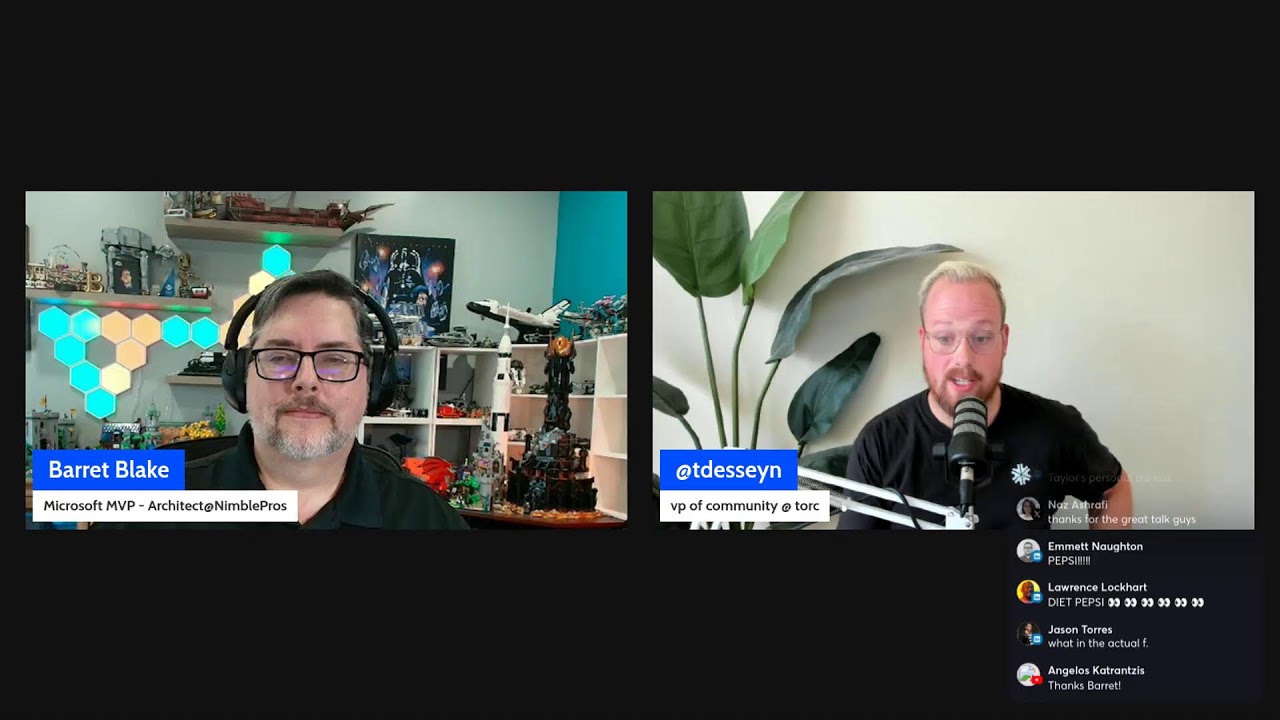
Microsoft MVP Barrett Blake shares how he landed a senior tech role through community connections, not traditional interviews. He emphasizes in-person networking at meetups and conferences, strategic LinkedIn use, and consistent content creation like blogging and speaking. For breaking into cloud engineering, he recommends Azure certifications and building relationships both online and offline.
Chapters
All righty. Good morning, everybody. Happy Tuesday. We are back. We are so back, um, and pumped to hang out with my guy Barrett today. Um, you know, again, we're gonna talk about it today, but just like the power of like in-person networking. I met— I saw Barrett again at, um, Uh, StirTrack up in Columbus. I was like, man, we got to get you back on the show again. Um, and then of course, obviously you switched to a new job. I was like, yeah, man, now's the perfect time. We should, we should definitely hang out. So, um, uh, you know, funny, funny enough, Barrett was like one of the OG guests, like OG OG guests. Um, I was like, man, where were we? As you said, like 4 years ago.
Yeah, it was like 4 or 5 years ago.
That's crazy. I mean, I've been doing this for 5 years, so you literally were like one of the first OG guests, which is awesome. And I think You know, I think that's the power of me doing this. And we'll talk about today, like, the power of putting yourself out there and networking. I mean, again, like, I mean, Barrett and I've known each other for like 4 or 5 years now. Um, and so, uh, it's just, it's good to have you back on, man. It's good to have you back on. It's been a long time coming. Um, for those of you who are tuning in, welcome. I see Jeff trying to make YouTube happen, I guess. Uh, yeah, I mean, listen, I, you know, I have, I wish, I, I think LinkedIn, if they actually like put some emphasis around streaming, I think it could be an amazing platform, to be honest with you, but it's kind of, it's kind of gross. It, it's kind of laggy. Um, so Jeff, I appreciate you. Yep, there you go. YouTube gang strong. It's good to see y'all this morning. Roxy, it's good to see you. Mark, it's good to see you again. It's like I tell everybody, say hey, we'd love to hear from you. Um, uh, you know, this is what I've realized, that this is just, this is, this is a networking event. And again, Barrett and I will talk about the power of networking. Um, you know, I've, I've had a bunch of people tell me that like It's amazing the amount of DMs I get after any Torque event that we throw. So again, it's like I tell folks, like, listen, if you tune in every day, and you message every guest I have on and just say, hey, it was good to meet you; let's stay in touch— saw you on Guidance Counselor 2.0— if you network with everybody in the comments, your network would do— would be, would be pretty tremendous. And so that's what I want for everybody. So please say, hey, let us know where you're tuning in from. Before we start today, obviously, kind of some, some housekeeping things. First off, Appwrite. Listen, I'm an Appwrite hero. Love the folks over at Appwrite. Go check them out. Great product. Even though I don't know how to use it, I still think it's great. Also, listen, we got a brand-new refresh. We, we, we moved kind of the, the, kind of the temporary Torque community page over to the torque.dev website. So if you type in torque.community, it's really pretty. It's got like a bunch— it looks nice. It looks very, very nice. Shout out to Jason Torres.
Woo!
Uh, for helping spearhead that. Um, it's got all of our events. It just, it looks a lot cleaner. Um, so if you haven't checked it out, uh, definitely, uh, go check out torque.community. And also too, listen, like, um, uh, I think one of the things that we consistently hear in our community is like, hey, you guys are doing a lot of things, like it's hard to keep up. If you want to be updated on when I go live with guests like Barrett, um, every morning— or really it's not every morning, it's like twice a week now— um, please text LIVE. This is actually my number. Um, and I send out a text every time, uh, when I go live with amazing guests like Barrett. So we'd love to have you shoot me a text, um, at 615-235-5650. Um, and, uh, again, if you're not part of the Discord, Torque Discord, we got a lot of cool things going on, got a lot of conversations, a lot of chatter. Um, so we'd love to have you as well. Um, and then again, it's great to see everybody this morning. We definitely got the crew here this morning. Um, so Barrett, enough with me yapping, man. Let's give the people what they want. Who are you? What do you do? And obviously it seems like you're a little bit of a Star Wars fan.
Oh yeah, yeah. Star Wars and Lego. Yep. I love it. I love it. Yeah. So I mean, as far as me, I've been a professional developer, architect, manager for like 20 years in tech and about 10 years before that. I'm one of those people who was a midlife career changer. I went back to school in my 30s. I was working retail and factory before that, got tired of that, went back and finished my degree. And I've been working in tech ever since, mostly in the .NET space as a developer, but also doing a lot of JavaScript, SQL, Um, you know, and spent about half my, my professional career as a manager as well as a developer. So I've done, I've done the whole gamut. I've done big companies, startups, uh, everything from, you know, uh, government to insurance to consulting, which is what I'm doing now. Yeah, working for NimblePros. Um, and I'm also a Microsoft MVP for .NET and Power Automate.
That's awesome, man. That's awesome. Um, so a lot to cover today, a lot of different areas, you know, but, but I think I want to really start with, really, your last job search, which wasn't a job search.
Yeah, it really wasn't. Yeah. I was, I'd been working for a company, it is a huge consulting company, for a couple years and wasn't real happy with the work that I was doing there and who the client was. And I mean, I like the people, I like the project, or, you know, project in general, just not the client and what I was doing. So I was starting to feel around for things to see if maybe there might be a better spot for me and keeping my eyes open. Somebody that I had been connected with in the community for quite a few years now, Sudouki, she had posted that they were looking for somebody for NibblePros. I've known, not personally, but I've known Ardalis in the community for probably going on 10, 15 years.
Yeah.
He's been huge in the .NET community and speaking space. He's been a blogger and a speaker forever. He's one of the very first conference talks that I saw when I went to a developer conference was Steve. And so I was familiar with his work and his company. And I'm like, hey, that's, that's the kind of people I want to work for. So I sent a message over. She's like, sure, shoot over your resume. And, and, and really, because I've also been involved in the community, speaking a lot, blogging, posting videos and things like that, they were somewhat familiar with me. So it really wasn't a whole interview process. It was mainly just getting to know them on a more personal level, getting to meet the team and just Making sure that I was a fit, and because they were familiar with my work, I really didn't have to go through the whole rigmarole, you know, tech interview or anything like that. So yeah, so they said, "Hey, we like you. We want to bring you on," and there's just a matter of you know finding the right client for me to work for for them.
I love it. That's so cool. That's so cool. Obviously, Emre coming with the heavy hitting questions. Favorite Lego set you built?
Oh wow! I've got a lot of favorites, to be honest. The one you probably can't really see it here. It's a Right there is the Galaxy Explorer. Yeah, that's the new one. That's the very first Lego— the very first big Lego set that I got as a kid was the original Galaxy Explorer back in the late '70s, early '80s. I don't remember exactly when it was.
Okay.
My parents got it for me for Christmas one year, and I loved that. And I was so sad when it got lost. And when Lego released that set again last year, I'm like, oh, I've got to have that. I was like one of the first in line to get it. So That's by far my favorite.
I love that. I love that. Talk about, uh, and I guess the next heavy-hitting question we need to address in the room: favorite Star Wars movie?
Oh, Empire Strikes Back, definitely. Yeah, you can see I got a poster up here. Okay. All right, awesome.
I love it. I love it. Um, uh, so, all right, let's just talk about— I'm trying to figure out how to frame this question, but because there's different ways to ask this, like Let's talk about LinkedIn, right? I've seen you on LinkedIn, you're posting on LinkedIn. I feel like you've gotten— I see you all the time. Talk about the power of it in your eyes, because I think the general consent is like, LinkedIn's terrible. There's— and listen, like, it's social media, like, you're gonna have a lot of garbage, but like, talk about it, just how it's really helped you.
As long as you remember what it's for. Which is professional connections.
Yes.
Then, then it's great. You, you, you can, yeah, you get a lot of, of spam from recruiters. Yeah. Yeah. But if, if you learn how to filter that out and, and just kind of ignore it, if you're not interested in that kind of stuff, that's fine. But as far as building connections within the, the professional community and remembering that that is exclusively what it's for, it's not there to post your family photos. It's not there to post your hot takes or, or, you know, what you had for dinner last night.
Sure.
That's not the purpose of LinkedIn. That's not what you should be using it for. And the people who do that are the people that I quickly ignore and mute and get rid of. But no, yeah, I mean, it's great for building community. It's great for keeping up on what's going on, especially in the developer community, the technical spaces. It's fantastic for that and keeping up with what companies are doing, keep up with what your fellow developers are doing, what, you know, speaking conferences, that kind of stuff. If you learn how to use it that way and keep it with that, then it works great. And it's a great way for building up your relationships in a professional space.
How, how do you, how do you build? So I think, I think a lot of people, I think a lot of people are like, they don't know how, like you say, build up personal relationships or in the professional space. How do you do that? Right? Because, because I think people are like, All right, I'm on LinkedIn. Now what?
There's a few things that I do. So one of them is, like you mentioned earlier, for people who, you know, come here to GC 2.0, I will, every time that I'm on, I will connect with at least 2 or 3 people that I wasn't connected with before. I'll send a message, say, hey, I saw your comments here, you know, on Taylor's, you know, broadcast, and just wanted to connect. And that's it, you know, and most of the time they'll accept and And boom, you've added another couple of other people to your, to your connections. A couple of other things that I do is whenever I'm like posting new blog posts, new video posts, I've set up Power Automate to automate posting to LinkedIn. Okay. So, so every time that, you know, I post that, it goes out, looks at my YouTube feed, looks at my blog feed, says, hey, Barrett posted something new, runs through this thing and posts it to LinkedIn. So, so like 90% of what I post to LinkedIn is automated. It's not even me going out and typing something.
Oh, for real?
Yeah, it's like, you know, I'm watching stuff, I'm watching my own feeds, I'm watching other feeds and saying, okay, post to that. And then the third thing that I do is interacting with people. So, you know, every day, not even every day, maybe every couple days, I'll go in, I'll look at the feed, I'll look for posts of things that people that, you know, show up in my feed, things that interest me, things that I like, and I'll respond to. I'll just put, you know, a quick sentence. It doesn't even have to be anything like that. You know, I'll click like, maybe I'll put a reply and say, Yeah. Hey, that's a really cool point.
I like that.
Maybe have you thought of this or something like that? Just a quick sentence. And people engage with that, and that gets you interacting with other people, and people get to know you that way as well.
Yeah.
So those are kind of the 3 biggest things that I do. Absolutely.
Taran comes in here and says, how do you weed out spammy recruiters, real versus fake?
It's, it can be tough sometimes. Eventually, you kind of get a feel for which ones are like mass postings that, that you can just ignore. A lot of the times I will, I will specifically look for people that I've worked with before. I've worked with a lot of different recruiters over the years. So if one of them sends me a message, I'll pay attention to it. For any of the ones that are just kind of out of the blue, it's really obvious to pick out things. For me, for instance, 90% of the messages that I get are about contracts, like 6-month contract. I don't do contracts.
Okay.
I only work full-time work. I will not do a contract. I tried that. once or twice in my career and got screwed both times. Yeah, I will never do that again. So I could ignore those immediately. If I'm feeling nice, I'll send a message back that says, hey, I don't do contracts, or I'll just click the not interested button.
Yeah.
But you kind of get a feel after, after a while for which ones are more authentic, you know, just kind of give it a quick scan, skin, and skim. And if it matches your skill set, you know, if it looks like something might be interested, then send a message back, say, hey, You know, tell me more kind of thing.
Yeah, I, I think, I think the common misconception, uh, is like you have to respond back to everybody. Like, I, I feel like a lot of people have that. Like, they're like, oh, I need to respond. Like, I think part of the reason why folks don't like LinkedIn is the spam that they feel like they have to respond back to. Like, what are your thoughts on that?
No, I, I maybe respond to 10% of what I get, if that. Yeah.
Uh, yeah.
But I mean, they do make it easy too. You, you know, there's always that non-interested button. You just click that and you're, you know, 5 seconds, you're gone. So. Yeah.
And I think too, for Tarami, obviously being a recruiter for so long, like, you know, a lot of my DMs, like, like a lot of them cut, copy, and paste the message over and over again. Right. And so you can kind of tell that while I did, because you have to scale that. But like my messages were not necessarily like long messages. Right. I think a lot of the canned messages, uh, I would stay away from. But like, you know, for me, I would do one of these things where it's like, hey, like, I have this job, let me know if you're interested. I mean, literally it was like 3 sentences. So, you know, you, you can kind of, uh, you can kind of, you can kind of start ferreting that stuff out as well.
Yeah, I tend to ignore those kinds of messages though, because if you're not, if you don't, yeah, if, if I get a message, if it does not include the details of the job, And if it does not include a salary range in, in the message, I will ignore it. There you go. It's not worth my time and effort to go back and say, hey, what does this pay?
That is true.
You know, what, what is the, what are the statistics for this position? You know, what are you looking for? What are the requirements? If you're not going to include that in your initial, initial message, I don't, I don't want to hear it.
Yeah, I love it. I love it. Roxy comes here, I feel the pressure to respond. Yeah, I mean, listen, like, it's OK. You don't have to respond. You, me and Barrett are giving you permission, Roxy. You do not, you do not need to respond. all of them. So, so what, so would you say that, I mean, I mean, you essentially got this last job because of LinkedIn?
Pretty much, yeah. That's part of it. But also because I've been involved in speaking and being involved in the community. So going out, speaking at user groups, speaking at conferences, posting, posting content and making sure that that content is reflected on my LinkedIn. As well as, you know, my other social feeds.
Sure.
That, that I think goes a long way.
When— let me ask you this. So you're mid, mid-career changer, midlife career changer, essentially. When, if you can kind of think back a little bit, when did it start to click for you? Like, when, when were you like, oh, I need to start speaking at meetups, or I need to start— like, like, like, what was that lightbulb moment for you?
Yeah, I think it was about, probably about 6 or 7 years into my career before I went to one of my first conferences. I'd attended a couple of user groups here in Columbus, but I hadn't really gone to a developer conference until probably 5 or 6 years in. And being around a bunch of people who weren't my coworkers, but who were interested in topics, uh, you know, that were out there and, and who were there to learn something. That, you know, you go to a conference because you want to learn something or because you want to interact with people. Um, you don't— you know, the people who are content with, with their career, which is, you know, most of the people I was working with, you know, those are the kind of people that work, you know, corporate jobs for 30, 40 years. I, I don't understand people like that, but Sure. You know, they're all content. So you don't feel that excitement of the industry. You don't feel the enthusiasm for the job until you go to these conferences and user groups and get to know these people that are out there looking to learn the next thing, looking to learn something different.
Yeah.
And that was, you know, hey, these— this is a great group of people. I like being around them. And, you know, my career, you know, I hadn't felt really the enthusiasm, but I was very grateful for what it had provided to me to that point. Yeah. And I'm like, you know, maybe I need to start giving back. So, you know, it's probably another 5 or 6 years after that before I spoke at my first user group. Okay. Um, just because I, I, I'm terrified of speaking to people. I'm an introvert at heart. I hate going out amongst the world. I want to stay home all the time.
I know.
So, but plus, you know, I've got the huge imposter syndrome. I, I don't feel like I have Even when I post stuff, even when I go to speak and when I post content, I don't feel like anybody's going to care.
Even now as a Microsoft MVP?
Oh yeah. The Microsoft MVP, that wasn't even something that I pursued. That was something a couple of people said, hey, you know what? You're involved, you're doing great stuff, you need to do this. I'm like, yeah, nobody cares about me. Nobody cares what I have to offer. Even after that, it took me another year before I even started pursuing the Microsoft MVP, even after people started pushing me at it. I'm like, all right, you know, okay, fine, I'll try it. They're not going to accept me. And they do.
Yeah, that's crazy. How, how have you overcome your imposter syndrome? Like, is there just, just do it? I mean, is there any—
Yes, just do it. I, I force, I force myself to submit stuff. I force myself to write content. I force myself to record videos. I'm like, uh, you know, nobody's gonna care. Even, even now, I posted something yesterday And I thought nobody's going to care about what I posted, and, and I've gotten several messages already about it. So really, yeah. That's— talk—
why, why do you think? Because I mean, the people in the chat, I definitely know most of the people. Some people are more active than others. Like, if you— like, why, why do you, why do you think everybody should be— do you think everybody should be posting? Do you, do you like, like, what are your thoughts on that?
I, I don't know that everybody should. If it's something— the, one of the biggest reasons that I started doing it is like, you know, here's something that I've learned. Maybe somebody will find some use out of it. But it's more by regurgitating that out into content of some sort. It helps me to remember the things that I've learned. That's— oh, I like that. And it's also something that's like, hey, this is something I'm sure I'm going to forget again 6 months down the road, a year down the road. I'm going to need— I'm going to need that information again. So if I put it into a blog post, if I put it into a video, I have something I can go back and easily reference. And I do. I find that probably at least once a week, even now, I'll be like, how did I do that again? I'm like, oh yeah, I wrote a blog post about that. And I just go back out to my own blog post and look it up and like, oh, that's how I do it.
Yeah.
Um, so, so yeah, it's, it's also, you know, self-education, self-referencing.
I think, I think a lot of people have problems, uh, getting started, you know. I think, I think when, when I, you know, because speaking about putting yourself out there and creating content, I think the word creating content freaks a lot of people out. Can you talk about just like, you're not really creating, you're just kind of documenting what you're doing? Can you— yeah, can you talk about that?
Yeah, I mean, that is really what it is, especially for me, is like, like I say, having something to go back and reference later. So I'm— you just, you just— it doesn't have to make sense. You just do like a stream of consciousness stuff.
Yeah.
You know what I do, especially now? What I'll do a lot of times is I will sit down at the computer, pull up the mic, and just have it record what I'm saying, you know, like text-to-speech or speech-to-text. Sorry.
Yeah.
And just, you know, put that into a Word document or a Markdown document and just go back through and say, okay, I did this and I did this and I did this and this is how I do this. And just, just speak it out over, yeah, over about an hour usually is what it takes. And then I'll go back and I'll say, okay, how do I turn this into something coherent?
Yeah.
So it's really, yeah, it's just documenting it and then go back and clean it up so it looks nice.
What, what, let me, let's go back to the meetup side. And I like what Roxy said here. Like, I gotta, I gotta say my little treat LinkedIn like a blog experiment definitely helped me. Yeah. I mean, I, I think here's, here's what I would say is like the bar, I'm gonna try to say this without being mean. Like no one cares. Like no one cares. But then also at the same time, it helps you tremendously.
Right? Yeah.
Like prime example, right? This, the, the, the job you just got. People have known you and have followed you and you put stuff out. Like I talk about how content is interviewing first round at scale, right? Because like you're putting out things that you're probably gonna be asked in the first or second round. And if you can specifically put that out, then people are gonna see it. Like, like to me, like there's no negative to it. Thoughts? Like I, I think it's just a net positive.
Yeah, exactly. And that's how I treat it. I— every single thing that I put out, I always treat it like nobody's gonna care.
Yeah.
And yeah, yeah, but you know, I'm doing it for me. I'm doing it for my own benefit. And you know, if other people get benefit, great. And if it helps me find a position, that's even better.
Yeah, absolutely. So, so, so you create content for yourself? Yeah, yeah, yeah, absolutely. I mean, like, you know, Barrett's out here posting about things. I mean, what, what was that post the other day you posted that you didn't think anybody cared about? You got some DMs.
What was that about?
Do you remember?
Oh yeah, the method that I basically— I spent this last weekend working with Copilot, just seeing, you know, vibe coding, since that's a big thing now. So basically I coded a little piece of software entirely by using prompts in Visual Studio and writing almost none of that code myself. And I just wanted to document that just to see where the state of AI assistants are right now. And yeah, and then they're a lot better than they were a year ago, which was the whole point of the content. Uh, they're still not perfect, they're still not great, but sure, I'm like, yeah, here, I'll do this. It's mostly for my own benefit just to see where it's at, but I'll write about it at the same time. And so I wrote that up and put it out there, and, you know, like I said, I've gotten like 6 or 7 messages about it, like people saying, oh, that's fantastic, that's great.
That's awesome. Yeah, so again, yeah, yeah, you're creating it for yourself. You're creating for yourself for sure. Um, I love it. My definition of creating content is yapping about my Python journey. Yeah, and I love that. And like So I, I want to, I want to get to this point too, is that just because no one's interacting with your content doesn't mean people aren't seeing it.
Yeah, like, so, so like, perfect example is my YouTube, uh, channel. Yes, I have been posting on there for probably 3, 4 years now. The first 3 years I got maybe a total of 100 views total of all my videos. Yeah, in the last year it is now up near 10,000. And that's all just in the last year. So it just suddenly started picking up about a year ago.
No way.
And now I'm almost to 10,000 total views on my YouTube feed or my YouTube channel. So that's huge. And the same thing with my personal blog, you know, I've got, you know, the Google Analytics statistics I keep on that. It's the same thing, you know, it's, it was, you know, first I've been doing that for probably 10 years at least, maybe even longer. And, you know, first 6, 7 years, nothing. And it's over the last 2, 3 years that it's actually picked up. So Yeah, don't, don't post it because you're gonna think you're gonna go big really quick. It's not. It's just you got to keep at it, you got to keep going, and eventually, you know, people start to notice and start picking up on it.
Yep, I love that. I love that so much. Yeah, and again, like, you know, I don't engage with everything Barrett puts out, uh, but I see it constantly, right? And like, now same thing with you. Like, I, I don't engage with everything, but I see it. Like, I think, I think people are so focused, and again, I think it's just human nature, like, to get caught up on likes and retweets and reposts and like, like, I, I understand that's human nature, but man, like the amount that people actually see your stuff is tremendous who do not engage with it. Um, and so, you know, my big encouragement, it's like Barrett said, man, he, he'd been, you've been chopping wood for 3, 4 years on YouTube and it just starts to kind of happen. So I love that. Let me ask you this, when, when it comes to like meetups and whatnot, Um, any advice for people who are scared to show up? Uh, how to navigate a meetup if they are a big introvert like ourselves?
Yeah, I mean, really, the, the thing is just go. I— most of these meetups, I feel really inspired live so far.
It's just like, you just gotta do it.
You just gotta There is, but, you know, most of the meetups that are out there, most of the user groups— I've been to groups where there was 3 or 4 people that showed up, and I've been to groups where 60, 70 people showed up.
Yeah.
Every group is different, and even the same group from month to month, it will be, you know, very widely. And you don't have to go with any expectations. Nobody's gonna try to, you know, force you to participate. Nobody's gonna try to to involve you if you don't want to be involved. You just go and sit and listen and, you know, enjoy the food because most of the time they'll have free food. And just, you know, if you want to participate, participate. If you don't want to participate, just sit there and listen. And when it's done, get up and leave. It's fine. Nobody's gonna think better or less of you for participating or not participating.
Yeah, I think that's interesting. is that, so I obviously the advice I was told was coming from a recruiter going to tech meetups to like not be salesy. Like one of the biggest pieces of advice I got from my old mentor is like, keep your mouth shut.
Yeah.
And like just show up. And so like, I, I, I, I did that. I kept my mouth shut, I kept showing up. And then about this was in Raleigh, right? So like the Raleigh .NET meetup was like super active. They would do like these small meetups every week where there was like 10 to 15 people. Then they would have like one big one at the Microsoft campus in Raleigh. But like, I showed up for the first like 4 to 6 meetups. I didn't say a word. Like, I actually, I literally actually just showed up, took some notes. I asked questions. Like, I mean, I didn't know anything, but I was asking questions. And then about like the 6th meetup in, I had somebody come up to me and be like, are you a developer? Boy, do I have a surprise for you. But like, and, and, and, uh, this conversation is actually on our Torque YouTube. I went live with Leon, um, with 100Devs about like the process of the way people kind of interact with people. Like the first meetup, you don't have to say anything, but just like a head nod or like a hi. Mm-hmm. And then the second meetup, you're like, oh, I saw you last time. And that helps the conversation. And then by the third time, you guys are like vibing out over whatever. Like, like, I think there's so much pressure put on people to like do something the first time with meetups. And that's just— it's actually like, I want to encourage people to be like, if you, if you go to meetups consistently, there's not a huge pressure to do stuff every time. Thoughts on that?
Yeah, exactly. Yeah, I mean, yeah, no, most of them there's no pressure to do anything at all. You know, you could, you could show up every time for, for 6 years and never say a word and nobody's going to care.
Yeah.
You just go enjoy the content. You know, if you wanna get to know the people, that's great. Most of the time, they'll, they'll say, okay, is there anybody who's looking for a job? Raise your hand. Is there anybody who's hiring right now? Raise your hand.
Yeah.
And then say, okay, go talk to each other afterwards if you want.
Yeah.
You know, so if you're looking for a position, but other than that, you know, that, that's about as much interaction as you'll get without, you know, making yourself— Yeah.
And, and for me, I'm kind of curious your thoughts on this. And, and again, as, as, as somebody who, Again, I mean, I know I have a persona of being chronically online and like yapping and stuff. Like, it still is hard for me to show up to meetups when I don't know people. I think like some of the, the biggest piece of advice is like, it's kind of like what you said about my show and kind of connecting with 1 to 2 people. I would just connect with a person to the left or right of you. Like, whenever I speak, like, that's my thing now is like, hey, open up your phones, go to LinkedIn, and just connect with the person to the left or right of you. Because that's just a great start. Because if you go to meetups, if you go to, if you go to a monthly meetup and you connect with a few people every single time, like, you're gonna start building those connections. Even, even just connecting with the person to the left or right of you. Like, like, like, I, I think people, uh, Jason, I love it. Jason finally, uh, chimes in. Shut up, Jason. Um, uh, but like, uh, again, I think, I think leveraging LinkedIn I think leveraging LinkedIn, it's like you said, you connect with the person in person, then go to LinkedIn and then just keep up with them, comment, engage, like that helps tremendously. It helps able to scale yourself.
Yeah. And I try to do that. I'm probably connected with close to 2,000 people, I think, now on LinkedIn overall. And obviously, that's far too many people to keep in touch with all the time. But, you know, if you just, you know, like I said, got Look at your feed every couple of days and, you know, respond to 1 or 2 posts. And that's, you know, that goes a long, long way.
It does.
It does.
Let's kind of transition to mid-career transition, right? I mean, listen, like, I mean, that's big. Talk about your process. Talk about how you got in, how you got into an industry. I mean, you know, some people would call you old and washed up when you were trying to transition. So how did you overcome that?
Yeah, I, I am old, and I was then too. Um, no, uh, so, so I mean, what happened, I'd gone to school, um, right out of, you know, out of high school. I'd gone to college and spent a couple years there, and it just— I just didn't fit. I didn't, I didn't go to class half the time. It didn't work for me. Uh, it just— the whole college thing just didn't work out for me. So I ended up working a couple factory jobs for a couple years, and then I worked at retail for like 8 years. Uh, and, and eventually I just got tired of dealing with people. You know, when you work retail, you get bad attitudes about 2 things. You get a bad attitude about people and you get a bad attitude about holidays.
Yeah.
Um, so I got to the point, I got to the point I wouldn't even celebrate Christmas. I'm like, you know, I'll show up Christmas morning to open presents, but don't ask me to decorate or anything like that. So yeah, I just got sick of it. So I, uh, um, decided, you know what, fine. You know, by that point, I was married, I had 2 kids. And I'm like, I've got to do something with my life. And so, you know, we sold our condo, I moved back in with my parents, went back to school full-time, working full-time, you know, a wife and 2 kids. And it was rough for a couple years. But I'm like, you know, I've got to do this. I've got to make a better life for myself and my family.
Sure.
And so, you know, at 32 or so, I went back to school and Took me a couple of years, but luckily I had some credits from before that I could apply. So I only had to go like 3 years to school to get my degree.
Did you guys go for like a tech degree?
Uh, yeah, I went the first time I went for computer science before I dropped out. And then when I went back, I went for computer information systems.
Okay, cool.
Which sounded more interesting to me than the, uh, the science side, because that was more focused on the actual development as opposed to the technology. Sure. So, so that, that was what I wanted to do. And, and I went back and finished my degree. And, you know, and my senior year, I, one of the kids that I was in a class with said, hey, they're looking for interns for this particular state agency. And so my senior year, I got a part-time job working as a, as a developer, you know, level 1, you know, intern, essentially.
Yeah.
And, and that was when, you know, the first, that was actually my first experience in saying, hey, being involved with the people around you can help you find positions. Yeah. Because if I hadn't spoken up to this kid who was, you know, he was like 19, 20.
Yeah.
And I was, you know, like 34 at the time. And, you know, but, but that helped me get into that position and get that job as an intern and get my first tech experience professionally.
Yeah.
So that by the time that I was ready to graduate, you know, almost a year later, I was, I was I had a huge advantage over a bunch of my other classmates because none of them had gotten internships, none of them had any practical experience. So already having that 10 months of experience, I was able to find my first full-time job even before I graduated. Yeah. So like, you know, day one out of school, I had a job ready to go for me. And so, you know, that was kind of my first experience with getting involved in the community, if you want to put it that way.
Talk— so we got Seth saying 32. Jason was 40.
What's— Never too late. Never too late.
Yeah. What's your advice for folks? Like, I mean, obviously I have my thought process here, but I want to hear it from you. Like, if people don't go to college and they're just trying to make a career transition now, especially with the age of tech and what's going on now, like, do you have any advice for them at all?
It's— there's no doubt it's really tough right now. The job market sucks. Yeah, at the moment, I've— over the last 4 or 5 years, I've spent a lot of time mentoring people who are looking to career change into tech. And, and honestly, right now, you're gonna have an advantage if you have a college degree. Really?
You think that?
I believe that just because I let, you know, setting aside the, you know, doing the content and getting involved in community stuff, but Just from a resume standpoint, I think right now you have that advantage if you have that college degree, just because they're doing all these filtering. They're, you know, for every position they're getting thousands of resumes.
Yeah.
For a position, and they do a bunch of automatic filtering right out of the bat. And one of the things that a lot of companies are doing right now is they're filtering on degrees. It doesn't necessarily have to be a tech degree, but I've heard a lot of companies say that, you know, if you have some kind of bachelor's degree on your resume, That, that's going to get you past the first cut a lot of times.
Yeah.
If you don't have any job experience. And it's unfortunate because it's, it's, you know, college degrees. My opinion of that, yeah, it was great at the time, but it's kind of useless these days. It doesn't really help your career from a, from a technical standpoint. But a lot of companies, and not everybody, but a lot of companies I think are using that as a filter. And that's just one of the filters just to get down to a reasonable amount of resumes to look at.
If somebody doesn't have a college degree and that's not in the cards for them, then what?
I think other than that is creating content, whether, you know, whether you're creating, getting involved in things like, you know, public projects, you know, things that are out on like GitHub and getting involved in these, these projects that are out there just so you can get people seeing your name. being involved in some kind of development and being able to demonstrate that development experience.
Yeah.
And so that people can go back and look and say, hey, you know, I've noticed your contributions to this project, or, you know, things that you're involved in. I've seen, you know, you're, you're, you know, you've put out a site where you've got a bunch of samples of your own work and things like that, or things that you've blogged about or talked about. Those are the kinds of things that get you noticed these days.
Yeah.
You know, beyond that entry-level college degree stuff, like I mentioned. So if you can do that kind of stuff, get involved, put out content for yourself. Those, those will actually, you know, those are even better because that will get you past the HR people and directly involved in or directly communicating with the people who are in the positions who are, you know, in that team that you're going to be hiring into. Yeah. Those are the people you wanna try to reach, you know? Yeah. That, that way you do an end run around the HR people. Cuz the HR people, their job is to keep you out.
Sure.
But their, their job is not to help you find a job. Their job is to keep you out. So, yeah.
Yeah. Would, would you say you almost have to do the job before you can get the job in today's, in today's market?
Right now? Yeah. Yeah. You have to be able to prove that experience one way or the other, even if you don't have a degree, even if you don't have If you don't have a previous position, if you're just coming in, you know, blind, you have to be able to demonstrate that knowledge somehow. Yeah. And whether that's getting involved in blogging or speaking or, you know, community projects or whatever it is, that's going to go a lot further than anything else.
Yeah. Let me— okay, then. Okay. So I'm going to challenge you on this question here. Bachelor's degree in computer science. No real-world experience, somebody, and then somebody who has no degree but has been able to develop something that's working and maybe even has a few users. Who are you looking at in an interview?
Oh, I'm taking the person that has experience every time.
Yep.
And who has demonstrated that experience. Yeah, I mean, you can talk about experience, but, um, being able to prove and show that you had that experience, that you've done something Even if it's just for yourself. Yeah, that goes much further than college.
Yep, absolutely, absolutely. Uh, Trey brings up a good question. I, I honestly, I think this is great. Um, what about entry IT role? IT support, sysadmin, up, up, up. I mean, I'm a big fan. Like, like, I, I think too many people want to get that first dev job, but what they don't realize is that there's more out there than just being a developer in tech.
Oh yeah.
So thoughts on this?
No, yeah, if you can find a position starting as like a QA person or a support person, that gets you in the door, that gets you meeting the people. And, and that can go a long way towards, you know, later being able to say, hey, yeah, yeah, I've been doing the support stuff for a year or two. But I also know how to do some coding and find opportunity, you know, if you can find that support position, find opportunities to write something. Whether it's a little script or, or a little software application or something like that. Yep. Do things like that to show that you're more than just that support person, and that'll go a huge way as well.
Yeah, I love that. Yeah, I mean, I think, like, you know, I want to encourage everybody, like, everybody just has to get a break, right? Like, someone just needs to get— you just need to get your foot in the door.
Yeah.
And I think I think sometimes people are so focused on, I want a dev job, I want a dev job. And I know I just said this, but like, I wanna reiterate it, but it's like, dude, if, if you've been trying to get a dev job for like a few years now and it's not happening, like there, it's like you don't let your ego get in the way.
Yeah, exactly.
Like go take, I mean, even prime example, prime example.
Recruiter.
There are 2 guys that I used to work with that were recruiters at Bayco. They are now in tech. One guy is in data at Deloitte, and the other guy is like in data as well at another company here in Nashville. Both of them started as recruiters. And then what happened was, is that because as a recruiter, your job is to meet people all the time, They built up enough network to then they jumped into tech because they had the relationships, right? So even as a recruiter, I've had multiple people get into tech, into engineering, into development by starting as a recruiter.
Right.
So again, like, like, don't, don't be so headstrong on, I gotta get my first dev job. I think you're, you're, it needs to change the narrative of I just need to get my first job in tech.
Yeah, especially these days, because it's, you know, even 5 years ago you could say you're a developer and somebody would probably hire you. But right now, no. I mean, you've got to, you've got to wedge your way in there somehow right now. And however you can get your foot in the door, like you say, that goes a lot longer than a degree or a boot camp or something like that will right now. Absolutely.
So Kind of the last topic before I give you kind of some rapid-fire questions here. Azure, right? You're a big Azure guy. You know, everybody is, everybody's talking about AI this, AI that. I feel like there's a huge opportunity still for cloud engineering. Can you talk about just the state of cloud engineering, even more so Azure, and just kind of the lay of the land and maybe some tips for folks?
I mean, yeah, there's still a huge demand for that kind of knowledge. And even as developer. Yeah. You need to know that. And, you know, when I was kind of looking for a position last time, and I started, you know, putting out a few resumes before I found this position, the vast majority of what people were looking for was like a cloud engineer or a cloud administrator kind of position. So there's still a huge demand for that kind of thing. Getting, you know, getting somebody with that knowledge of how to set up stuff in AWS or Azure or GCP or whatever it might be. There's a lot of demand for that. And that's, that's not something that I specifically wanted to do because I wanted to focus on development. But, but yeah, that was probably 90% of the responses I got was people looking for those kinds of administrators and engineers.
How does somebody— how does somebody— so say somebody feels really convicted after this livestream, they're like, I want to do Cloud, I want to do Azure. How does, how does one get involved with Azure? Like, like what would be kind of some simple steps, or if there is any simple steps?
I don't, I don't know. Well, one of the great things about Azure is that they, they let you do a lot of stuff for free. They have, you know, free, free levels of almost everything, not everything. So you can actually go out there and just create an account and just start going through the documentation, creating stuff. You know, create, create a VM, create a net, you know, virtual network, create an application of some kind. And there's a lot of stuff that you can set up and do for free so that you can get that learning.
That's awesome.
And there's a lot of free stuff. I mean, Microsoft, 10 years ago, their documentation was horrible, but they have invested so much in the last 10 years in the Microsoft Learn site. There's so many free courses, free documentation out there that you can literally, you know, get certifications just from their stuff instead of having to go out like you used to have to do, go out and find courses or find books or things like that. You don't have to do that anymore. They've provided all now. Yeah. And there's a ton of knowledge out there to learn from. So yeah, just, just pick something however you learn best, whether it's video or text or whatever it might be. Just pick something and start going.
I do think, and you and I chatted this backstage, so I want to say this Here, I think there's a huge opportunity. Some of my eye, uh, there's a huge opportunity. I still think there's not enough demand. No, there's not enough supply for the amount of demand in the Azure space.
Yeah, that's true.
I feel like so when I was, I, I, I lofted this to Barrett backstage to make sure I was right. When I was recruiting at Vaco, when anybody needed an AWS engineer, dude, I, I could go out and knock on a door next to me and find somebody. But whenever an Azure need came in, my recruiting teams would scramble because it was just really hard to find Azure people. And I still feel like it's that way today. And so if you are watching this or listening to this now in the future and you're interested in cloud engineering based off what Barrett said, I would get on, start learning, start getting certs. I do think certifications to a certain extent still carry some weight in the cloud space and start learning Azure stuff. That, that, that is my 2 cents because there is still so much demand for it. Thoughts?
I would agree with that. Yeah, it's— I think it's one of the benefits of being the second place cloud provider is that, you know, everybody goes for AWS because they're— it's the biggest in the world. Not nearly as many people will go for like Azure or Google just because they're a lot smaller. And so it's like any technology that's, you know, second or third place, you know what I mean? Like C#. C# is still not the biggest, but it's huge and there's a lot of demand for it. So yeah, absolutely.
I do want to, I do want to point out what Lawrence said. Lawrence, it's good to see you, my friend. I actually agree with this. So I was doing a one-on-one session from a dad who's a senior staff engineer in Nashville. He sent his son to me to do some career counseling, and he's a mechanical engineer at Vanderbilt. And then me and him were doing some workshopping together, and I ran a mechanical engineering search, or mechanical. So he's going to Vanderbilt. So I ran a, to try to show him like to network with mechanical engineers who graduated from Vanderbilt. A ton of them were in AI. Now, and I do have to say this, I agree with this. Um, and so something to look at as well, you know, if you listen to this and you're kind of tech adjacent mechanical engineering, like there's, there's— I, I saw a ton of overlap. I obviously have not dug into this, but this is interesting that Lawrence brought this up when I was just helping, um, a guy who is a senior at Vanderbilt for mechanical engineering. So, um, yeah, uh, yeah, Azure, GCP, AI, I'm sure, all areas. Yeah, 100%, 100%. Um, all right, you ready for some rapid fire? All right.
All right, sweet.
First off, what is one app or tool that you can't live without right now?
Uh, probably ReSharper. It's a— what's that? It's a tool that JetBrains puts out that helps you write better code.
Okay. Is it like a— is it a coding agent tool?
Uh, no, I mean, they have their own separate AI stuff, but it's basically a quality thing. It kind of checks what you're doing, suggests things that's like, hey, you should write this a little bit differently kind of thing. So I love it.
Um, so you kind of, you kind of talked about this, but maybe it's a different answer. The very first job you ever got paid to do, what was it?
Uh, my very, very first job was as a dishwasher at a Woolworth's. That's awesome.
I love it.
I love it.
I left the hotel and, and the restaurant.
I lasted 2 weeks there. So—
I love it. I love it. Let me ask you this. Obviously, you are remote right now.
Yeah.
Been trying to figure out how to frame this question better. If you could have your ideal remote, on-site, once a quarter, once a month, or at all, would you like to go into the office? Or do you just want to, or No.
Okay. Never. Okay. I, I hate working in the office. That, yeah, the, the, yeah, the, the whole back to office thing. That's ridiculous BS. Yeah. Yeah. Yeah. Yeah.
Yeah. We're all gonna go back in the office and get sit on Zooms and have calls.
Yeah. Exactly. And then that's exactly how it is. Yeah.
Yeah. Yeah. ReSharper, right?
Yes. Got that right. Yeah. Yeah.
Yeah. We got Woolworths. Yeah. Yeah. There is a major chain in South Africa. Actually, there was a Woolworths in Nashville for a bit, but it closed down. Yeah.
They've been gone from Columbus for a long time.
I love it.
I love it.
Uh, when you were young, young, young, young Barrett, what did you want to be when you grew up?
Uh, the very first thing that I can remember wanting to be was a helicopter pilot for the Army.
That's awesome.
Uh, but I got too tall and too blind, and, uh, you know, I'm like, you know, they're not going to take me. So, so that's when I started getting interested in things like engineering maybe, or an architect or something like that.
I love it. I love it. Let me ask you this. Have you had a career mistake you're oddly grateful for?
Yeah, actually, I— there was an experience when I was working for a really big bank whose name rhymes with itty. But one of the things that I was working on there was, was an application that would, every night, it would go through and it would process a bunch of stock trades and bond trades for the day. And then It would move all the actual trades around and then reconcile with the bank accounts to move the money. And I did something that I had posted, and that was one of the things where we kind of played fast and loose. So a lot of times we'd do fixes in production and things like that instead of— That's always a great idea. Don't ever bank there. Your money's not safe. But anyway, so I made a mistake and something happened and Nothing happened overnight. The whole system went down. None of the money got moved, none of the stocks. And, and so, you know, we got in there in the morning and we're scrambling to try to fix stuff. And the— we were able to fix everything, get everything working. And one of the things that— the biggest thing that I learned from that is that my boss at the time, she was fantastic. She had our backs. She supported us. She defended us against, you know, the business people who were screaming and yelling, you know, and rightly so, because we'd screwed up. But but it taught me a huge amount about leadership and how to be a leader, and and how to defend your people, protect your people, take care of your people. Yeah. Because you know most managers they'll throw you under the bus in a second because because they can't manage. Yeah. And that's not what a leader does. And and so that she taught me a huge amount. I think that's probably one of the biggest screw-ups that I'm grateful. That's awesome.
I love that. Real quick, uh, uh, I have 2 more questions. We want to go to this. What Azure certs do you think are worth pursuing?
Uh, I mean, I think the, the first one, uh, to get involved in is the AZ-900, which is kind of like the base, base level Azure general knowledge kind of cert. Start with that one, get that one first, and then figure out what kind of specialties you want to go into, because there are, they're probably like 20 or 30 different specialty certifications in Azure. whether it's, you know, data or AI or whatever it might be. But the AZ-900 is that general knowledge learning about Azure. And so I always recommend everybody start with that one.
I love it. That's awesome. A few more questions. If you weren't in tech, I would tell you tomorrow that you can't be in tech anymore, you can't develop, what hobby would you pursue? And I would pay the same amount of money. Wow.
I, I would build Legos professionally. There you go.
I love, I love it, I love it. Um, uh, let me ask you this. I always ask, are we a coffee or tea drinker?
Neither. Diet Pepsi.
You're kidding me, we have another Pepsi. That is wild. That is why you and Pat— you and Pat— I don't like it. It's, it's become a lore in the Torque Discord. Uh, yeah. So that's amazing that we have another Pepsi person.
I love it.
All right, last question, man. Again, thanks for hanging out with me today. For everybody who showed up, thank you so much. I gotta bounce a little early, but show's called Guidance Counselor 2.0 because we had guidance counselors in middle school, high school, and college, but now as adults, we don't have them. What would be your biggest piece of career advice to young Barrett?
Get involved earlier.
Really?
Be part of the community. Yeah, it's, it's, it's been good to me and, and I've tried to be good back to it. And, and those are the people that I have the greatest respect for, is the people who, who will raise up and support the other people around them. Yeah. Um, the comments, the comments about that. Yeah, Jason. Yeah, whatever.
Uh, I love it. I love it. Well, y'all go connect with Barrett. Barrett, stay on so I can say bye to you backstage, but y'all have a great one. It's a great conversation. Um, I saw some comments that they really love to say. If you did like it, obviously, like I always say, share it on LinkedIn for folks who may need it. Um, and, uh, Barrett, I appreciate you. I appreciate your friendship. Um, and, uh, thank you, everyone. We'll be live tomorrow, different time. Um, 8 AM is gonna be early. Um, I'm going live with my guy Aaron Harmon. He is a heck of a recruiter. Um, used to work, uh, you know, used to work at Tesla, um, hiring like mechanical engineers type of thing, like car engineers. And then now is at a drone company out of Huntsville. He's hired like hundreds and hundreds and hundreds of people at this point. So give me a great conversation on how to navigate kind of what Barrett was saying, like the HR internal side of things. So see y'all tomorrow morning, 8 AM Central. Barrett, thank you, my friend.
Thank you.
Um, and, uh, we'll see y'all tomorrow. Peace.
More from taylor



tech doesn’t have to be the only thing that brings us together #techcommunity #techcareer

I want to give back to y’all that make the tech community so great #jobsearchtips #techjobs




spend a little time investing in yourself #linkedin #linkedintips #careeradvice


