
Generalists vs. Specialists Where Do We Go From Here w/Pat Clarke, Dir of Eng
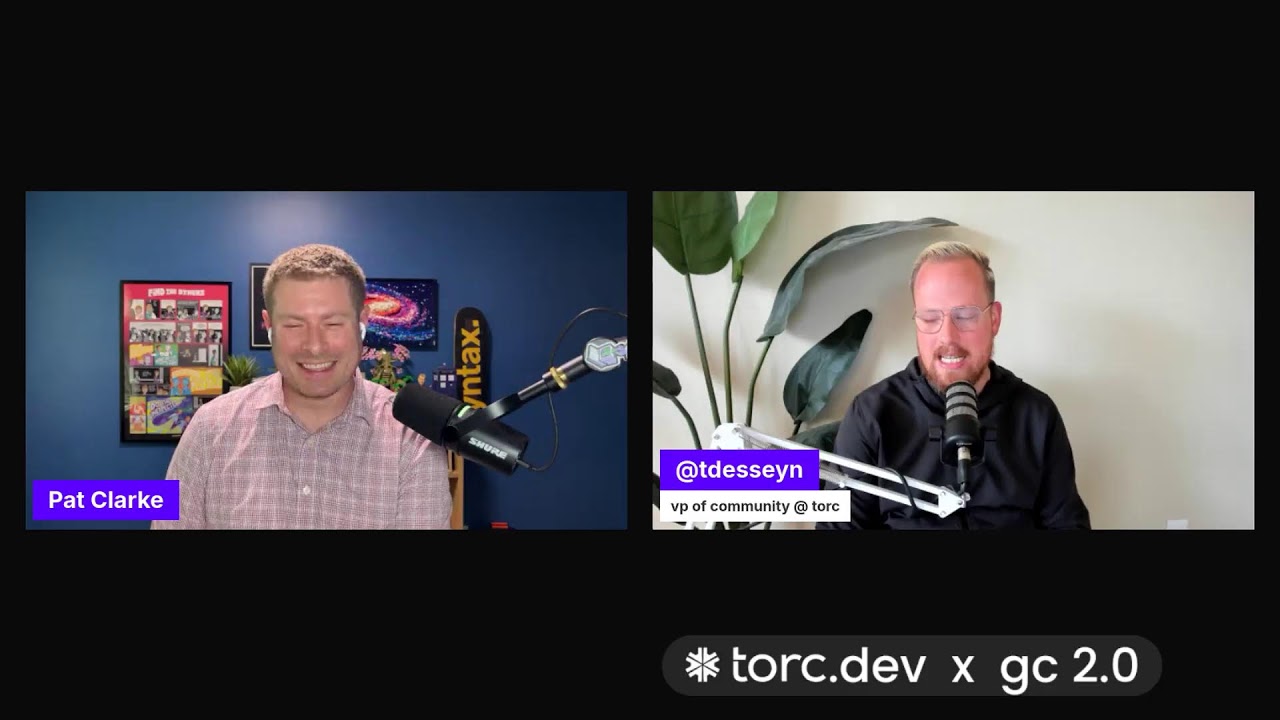
Pat Clark, Director of Engineering at Lumen Learning, says the job market has swung back from hiring generalists to demanding specialists with deep expertise in specific languages or legacy systems. He advises engineers to master fundamentals over frameworks, contribute to open source, and build a personal brand through networking and authentic community engagement.
Chapters
All right, we're live, we're live, we're live. What's going on everybody? Good morning, good morning, happy hump day! We made it halfway through the week and I'm here with my guy Pat Clark, hails from wonderful— now Pat, do you live in— where do you live in Raleigh?
I live in Durham.
You live in Durham? Okay. Oh yeah, now we're not—
it is literally city limits I can get to Raleigh in like 2 minutes, 5 minutes. But no, I live in Durham proper.
That's awesome. I love it. I love it. Well, for those of you tuning in, welcome. Say hey. We'd love to hear from you. I know we are actively going live, so it's going to be a minute. Excited for this conversation with Pat. Pat's a fellow Torch— Torquer. We haven't quite figured out our saying.
One day it'll just come.
Pat's a part of the family at Torque, so grateful for him and kind of his involvement also. Um, you know, this little Dads in Tech group I have, Pat kind of leads up the Raleigh chapter, uh, if that's what you want to call it. So grateful for Pat to be here. And, and, um, you know, we were chit-chatting backstage. We're like, where, where did this— like, where'd this topic come from? And we both agreed I probably posted something and he responded, and I was like, we should talk about it. So, um, today's gonna be an interesting conversation around generalists versus specialists. I mean, this is, this is a topic that I've been kind of seeing a trend with, and, and I'm excited to have Pat on because You know, I, I did confirm it with Pat before we went live. I said, just make sure we're seeing the same thing, and, and Pat obviously agreed. Um, so we're gonna talk about today, but first off, uh, again, please say hey. We'd love to hear from you. This is, this is, this is just a networking hang, right? I mean, what, you know, what we do at Torque and, and, um, you know, what, uh, you know, what we try to do is cultivate these online kind of lives where you can connect with others. And so, um, you know, please, please drop in, say hey, let us know where you're tuning in from. Um, also, again, like I tell folks, connect with Pat. Shoot Pat a DM after this. Say, hey, it was great seeing Guidance Counselor 2.0. Pat will respond. He's wonderful. Um, so again, just— it's like I tell people, if you've been networking off the back of me for about 5 years now, you'd have a pretty expansive network. And that's what I want to continue to do. And that's really what our goal is at Torque, is just to open up our network to everybody, uh, for you to connect with. Um, but before we dive in, we got some people tuned in. Michael, it's good to see you. Buenos días. I know what that means. That means good morning.
Um, there you go.
I really need to learn some Spanish between going to Guadalajara and then obviously in Spain last week. Um, uh, Jeff, it's good to see you. Jordan. Um, John, it's good to see you as well. Kelly Vaughn tuning in.
What up, Kelly?
Kelly, what are you doing? Will you have time to do this? Uh, Dads in Tech, there we go. Virginia, I love it. Uh, it's a good little group. We got, um, some meetups happening next month. Um, so if you're, if you're a dad or soon-to-be dad in tech, we'd love to have you. Um, let's see here, what else? Brett, it's good to see you from East Nashville. Um, Brett runs the Nash.js meetup here in Nashville. I will be speaking Actually next month. Um, so super pumped about that. Um, turkeys equal tort— yeah, you know what, that sticks.
I like that.
We'll call ourselves the turkeys. That's great. I like that. A bunch of turkeys. Bunch of turkeys. Brett, I don't know what that means. Um, so stop that. Um, uh, Jason, it's good to see you as well. Uh, as always, first and foremost, um, you know, I'm a member of the Appwrite, uh, Heroes team. Again, uh, probably the only non-technical hero on a technical program. Uh, check out Jason. Jason's going live today. I think it's, I think it's 1 PM Eastern, I believe. Jason, you can confirm it. He's going live with, uh, uh, Aditya, who's on the, um, DevRel team at, uh, Appwrite, doing some stuff with Appwrite. Um, I don't know what it is, but you should check it out. Um, also we're doing, we do a lot of cool stuff in Torque. Would love to have you check out our community, torque.community. So check that out. Also, if you want to go, if you want to be updated when I go live with guests, shoot me a text. It's actually my number. It's not AI. Let's see here. What else we got? Yeah. LinkedIn user, please reveal yourself. I love it. All right, so Pat, let's give the people what they want, man. Who are you? What do you do? And we'll go from there.
So like we introed before, my name's Pat Clark. I live in Durham, North Carolina. I have been working in web dev tech since 2007.
Yeah.
So I've been around the block a little bit, but only worked at 3 different companies in that time. I'm kind of a unicorn in that space.
Yeah. Yeah. For real.
For real. Right now I work as a director of engineering for Lumen Learning. I'm gonna pause for the comments.
It's my favorite. Yeah. Any Severance fans? It's great. I feel like I told this with Pat. We are at Dads in Tech Breakfast at All Things Open AI in Raleigh or Durham. And I told Pat, I said, if I was in charge of Lumen's marketing, I would've leaned in heavy to Severance. 'Cause the fact that Pat works at Lumen, Uh, is fantastic. So, um, that's awesome. I love it.
The worst part is I haven't started the show. I'm waiting till hockey plays.
You haven't started the show?
No.
Oh dude, you got to.
It's so good.
I know. My parents— so my parents messaged me the other day and they were like, you know, I can't get into Severance. And I was like, I was like, you gotta give it like a few episodes. I was like, the first like 3 episodes, I was like, what am I watching? Um, and they're like, well, we're about on episode 3. And I said, I said, okay, keep watching. But my parents aren't on Twitter, and I said, I said the, the fun part of Severance is all the conspiracy theories, like on TikTok and Severance— I mean, um, on Twitter and TikTok. So I was like, I was like, you know, you, you will lose out a little bit, um, since if you're not caught up in all the theories. So, um, but yeah, Pat, you gotta watch it, dude. It's, it's—
I know, but I can answer Jordan's question in the chat. I am definitely in right now.
I love it.
I love it.
I love it. That's great. That's great. If you didn't watch it, you don't know what he's talking about, and that sounds weird. Um, all right, so Pat, first let's talk about it, man. Generalists versus specialists. I mean, there's a lot to break down here. You know, I feel like what I've seen when I was recruiting in like 2021, 2022, companies were just on a mass rush for hiring. If you could spell a few languages, you can get hired. Um, now I feel like it's, it's, it's gone back to we need a specific person for a specific problem. Just wanna confirm with you that that's what you're seeing and just kind of some initial thoughts, you know, on your end.
Yeah, that's what I'm seeing. And I think specializing in something, not a, not a tool, not a framework, but like a language or a set of skills to do something like ops is, I'm sure, in high demand still, no matter how many abstraction services are out there. Having a good ops person saves you money.
Yeah.
So people love to carry those, but having a specific specialty will get you in the door.
Yeah.
Full stop.
What, what, what do you think, like, for folks who are watching this, you know, I know a lot of people ask me, they're like, well, what roles are hot? Like, what tech is hot? You know, I'm kind of curious what— I mean, again, you are only one. That's what I always tell people. I'm one slice of the pie, right? One piece of the puzzle. And that's the same for you. But like, what are you seeing right now that's hot? What are you seeing what people are wanting? Maybe it's internal with you guys or just in general.
So I'll speak to ourselves. Like, we're not in a position to hire. We're probably like many companies, but if we do, we're going to be flooded. And honestly, older tech, how many companies are going to be able to upgrade things? So can you jump into old— so we're a Ruby shop.
Yeah.
Uh, can you jump into Ruby? Can you jump into old Python apps? Can you deal with .NET?
Yeah.
Basically being able to jump into old infrastructure, it'll probably benefit you a lot in the coming— Probably. Do you think people should like be going out here and learn?
Because, because that's— I think it's, I think it's a conundrum, right? Because you have all these bootcamps, they're like pushing all these front-end developers. That's like, we've reached max capacity for front-end folks. Um, yeah, I feel like, unfortunately. But it's like, would you recommend somebody opening up like a old, like a book for old Java or Python? I mean, like, what does that look like to prepare yourself for the job search?
All right. So let, let me give you a personal backstory. So I started out as a frontend developer.
Okay.
Like I was doing everything by hand. There was no frameworks. There was, you're just going onto a server and you're editing files directly.
Sure, sure.
Now I can jump into backend code. I can jump into databases. I help architect code. Yeah. How the heck did I even get there? I was just curious and tinkered with things. So jumping into a book, if that's the way you learn best, do it. If you just need to find an open source project that dabbles with certain tech, do it. Just find your learning style and dive into anything that lots of people are pointing towards. Use systems like Appwrite maybe to help you learn how to actually put stuff out there on the web. I think there are these little things that you don't always get to do when you're at a larger company.
Yeah.
But there are plenty of smaller companies that need you to be able to figure out in a moment's notice.
What do you, what do you think, like from, uh, just let's, let's talk a little bit from the junior side, um, especially somebody who's in hiring like you. Mm-hmm. Um, and, and really kind of junior mid, right? Let's, let, let's say I know all the latest, greatest front end. Listen, I'm not saying to like drop everything you're doing from a front end perspective, but I just feel like there is a, demand for more backend code right now, um, especially with the wave of AI, um, and, and just the amount, heavy amounts of data that are out there. Um, I mean, can you talk about how somebody can best set themself up for success if they just went all in on frontend code, uh, for like bootcamps? That's all they've been doing.
Yeah, if you're in a position, talk to your managers, get them to give you some small backend tasks, get you comfortable doing some of the easier stuff. So you ramp yourself into that. So everyone on my team has done a little bit of backend, whether it's, you know, just pulling a piece of data from a database or updating a piece of data, but they're slowly getting the ball rolling just in case, hey, we have a huge need, we need to jump into a complex problem.
Yep.
Can you help us out? Or here's the real key. Can you help work moving while the other backenders are busy? Like, if there is something stopping you from doing your job, can you get past that roadblock yourself?
How does somebody work on that? I feel like that's like not really— It's—
there is no direct answer. I, I probably tried 2 or 3 different things with different individuals and we're still figuring it out ourselves.
Gotcha. From, from a, um, one thing you said when we kind of jumped into this, um, was like, don't learn a framework. Learn a language.
Yeah.
Can you expound on that a little bit?
All right, so let, let's stay within the front-end realm.
Sure.
React was the hot thing that everyone wanted, and everyone— boot camps taught React. React is a tool. It is a library. It's, it's basically something that's supposed to save you from writing extra code, like rolling everything yourself, doing everything from scratch.
Sure.
And it's great. But this is where my conundrum with the idea of specialists versus generalists comes into play. If all I know is React and I don't know JavaScript or TypeScript, when I'm shown something that's not in my wheelhouse, can I do anything?
Interesting. 'Cause I feel like frameworks have been hot, right? Like everybody wants, you know, I always, I, I call it resume-driven architecture, RDA. Oh. Where it's like you have these, where you have these, all these engineering leaders that just want to like, They, they basically wanna put all the latest greatest frameworks on their resume that they help manage or whatever and, and implement. But like, but I feel like I, I, I, I, I've seen what you say, right? Is like, hey, I only know React, but then it, but then if I just, if, if you get into an interview and they just ask you some basic JavaScript stuff, I, I have seen in the past people flounder a little bit.
Yeah. Or you start over-engineering something the way you know how to do it. And it could become harder for other people on the team. So then question marks and red flags get raised and it's hard. Like there's no direct solution. So like me as a manager, I've gotta figure out how I can help each of my individual, you know, team members.
Yeah.
'Cause here's the true story, Taylor. 4 or 5 years ago, I was, I was barely using any of this stuff and I felt like I didn't know what I was doing, but I just had to get in there and kind of figure things out. I had a background of understanding how a lot of this stuff worked and I had a long runway to learn some basic fundamentals that helped me. And a lot of people that go through bootcamps just aren't afforded that courtesy, which really sucks if we're being honest.
Yeah, absolutely. I mean, I, I, I think, I think I, I, I do think what has been hot is the framework side.
Yeah.
And I feel like now there's more of an emphasis on like, hey, we just need a Java developer. or we just need a Python developer, or we just need a, you know, a JavaScript developer. Can you talk about, um, kind of in your experience where people should go to, to be able to learn these things? I mean, because like for me, it's like, like, you know, we talk about reading a book. A lot of people I see are getting certifications. I don't know if that makes a lot of sense. I know open source projects, something we've talked about on the show, you know, I feel like that's probably a good thing. I mean, when you're hiring people, I mean, do you look at open source projects that they've contributed to and stuff?
When it comes to hiring, so I'm not— it's been about 2 and a half years since I've actually had an interview with anyone. We're looking to fill a position. So what I'm doing is the other thing, I'm starting to scout. If something were to pop open tomorrow, yeah, who would I look to? And sort of like, you know, this is a global networking, this is kind of piggybacking off of you.
Yeah.
If you know of a good developer that resonates and a content creator, like some of your past guests, like I'm just gonna throw Aaron Francis' name because I know I'm personally taking some of his courses.
Okay.
Why? Because, all right, I may be a manager, but there's still a plethora of things I need to learn. You just have to find the right people and start to learn from them. And then—
I love that.
Make friends with their audiences. So just like Torque is for job seekers, Yep. Smaller audiences for people that learn things. Like you've been on with the Syntax folks. I've learned tons from them when I'm too busy in meetings to actually know how to code anymore. Sure. But they keep me up to date in knowing what I need to know. So it's, you gotta find a secondary community that kind of matches your learning style.
Yep, absolutely. Yeah. You seem to be really big on learning styles. Can, can you talk about why that's so important? For folks to be aware of that.
Because one day your company's gonna ask you to do X, the next day they're gonna ask you to do Y. And to do the best thing for yourself, for your family, is just be prepared to roll with the punches. Yeah. So, you know, we had a larger front-end team and I had to let some people go, not because they weren't good, it was just a financial decision the company decided to make.
Sure.
So then you run into questions of, okay, I'm gonna have all this work coming down the pipeline. Who can do it all? Or who is best suited to work with the people? And they're really crappy conversations I have to have with people, but it all kind of plays and matters.
Yeah.
So if you're a curious individual, if you'd like to know how things work and you can just poke around at things and break things, I mean this legitimately, like, Being a good programmer, even being a good PM, is just knowing what you know and then trying to break everything around you, see what sticks, see what works, but then get a feel for, oh, I didn't realize if I did this, it's gonna cause, you know, what's gonna happen. So being curious, like people who can naturally jump or context switch between languages are gonna be the most desirable people right now because we can throw something at you and you'll deliver.
I agree. I agree.
How do you get to that point?
Yeah, I was about to say, like, how do you— like, how does, how does one work on context switching on their own time? I was in multiple projects. Multiple projects, you think?
Sometimes multiple projects. Sometimes, like, I was in 10 meetings yesterday with 10 different contexts. And this is why people don't want to go into management. And sure, to that I say, yeah, I get you.
Yeah.
But as long as you're curious about things, you want to move things forward. And here's the other thing. Don't feel like you have to know everything. You don't have to know exactly how every line of code works. If you've got the general idea of what a language is, how to read it, and a good concept of what an application does, what you can do is you can leverage AI to tell you, hey, what is this thing doing?
Yeah.
So you're not spending hours and hours and hours, and maybe you can get an answer in maybe 15 minutes instead.
Sure.
So it's like saving yourself some time and not feel like you need to know everything. That's probably the biggest thing I see is people just want to know every context. They want to be able to do everything a senior is doing without going through all the times a senior has made a mistake, introduced a bug, got burned by something. They have a little bit of an advantage now where they can get to an answer a little quicker with a lot more help.
That makes sense. That makes sense. I wanna get to Jordan's question here. I often jump between ops tasks like setting up and maintaining VMs and full-stack development for my job. Is it easier to market myself as a DevOps or full-stack or even backend right now? Yes.
If Jordan, if you can do all those things, you're all those things. That's, that's kind of why I hate marketing yourself as one type of individual. Am I frontend? Am I a backend? Jordan, honestly, if you can do those things, you are like a gold star. You, you are a person I would love to hire because ops tasks get very difficult. Being able to maintain a VM, that means you're gonna help other people do their jobs. That just makes you more and more valuable. So—
Yeah.
Maybe when you're applying for something, you You market yourself as a specific role, but you say, but I can also do X, Y, and Z in a pinch.
Yep, absolutely, absolutely. Uh, let me see here. Uh, kind of going through, just look at the comments here. Um, uh, I could listen to Pat all day long, great voice.
Roxy, thank you.
Uh, let's see here. But all jokes aside, learning another language outside your native, uh, is— yes, yeah, yeah, 100%, 100%. So let me tell One thing I want to kind of, uh, focus on, you know, you talked about breaking stuff, right? And tinkering with stuff. Um, like, like, would you recommend folks to get comfortable on their spare time, like, breaking things and figuring out why things are broken? Because I feel like there's just this— there's this discourse of like, everything's gotta be great, I gotta know everything, kind of like what you said. But in reality, I feel like you're gonna learn from your mistakes more than just trying to be this like overly polished engineer.
Yeah, I mean, getting in the door, everyone expects you to be polished and have your stuff together. But the reality is, once you get past that barrier, we're all just making things up as we go along. We're just trying to get things to work today. Yeah. And make sure they're good to put in front of a customer or an internal client or whatever it is. So yeah, be comfortable breaking things and not exactly knowing how to put them back together.
Yeah.
Like in the world of source control, you can undo all your mistakes with one button, start from scratch and start the process over. It's like, I know how to cook. Am I a chef? No. Am I a baker?
No.
But I know some fundamentals. But if I wanted to, I'm gonna have to burn a lot of bread or make some terrible meals before I get good at it.
Yeah.
Right? Which is why dinners in my house are Kind of lackluster.
Or just chaos. Yeah, yeah, yeah.
I love it.
Yeah.
It's just what can we get done in 30 minutes or less?
Sure.
Without doing a lot of prep work on the weekends.
Sure. Yeah, I love that.
How is that any different than being an engineer or really any trade?
Yeah.
Yeah. You gotta try some stuff before you can, you know, from a marketing perspective or even a product perspective, you can only gather so much information before you can make a decision and just try something.
Yep. Yep, absolutely. Let me, um, I, I'm, I kind of asked this question at the end about like, what would you go back and tell yourself? But I'm, I'm gonna frame it a little bit differently. Like if, if, If, let's say you woke up tomorrow and you were like, you know, had to start all over again in tech, right? Like, based off what you know now, and we could kind of get off the general specialist conversation a little bit and just talk about more networking and just general career stuff. What, what, what would you do, right? Because I mean, I think, I think a lot of people, uh, view engineering leaders as they have it all together. They don't deal with Issues, yada yada yada. They have it all figured out. I am kind of curious if you were to do over your career again, how would you get involved into tech at this point, knowing what you know now?
Don't stop going to networking events.
So I'm not paying him to say that, for the record. No, no, I'm not paying Pat to say that.
So true story, my first proper job in tech I got off of Twitter. I was—
your first proper job in tech you got on Twitter?
My first proper job. I was playing around with, for any of the old PHP developers, I was using this content management system called Expression Engine. It still exists today, but it's in tech. You just don't hear people talking about that sort of stuff anymore. It's all, you use a service or you're stuck on WordPress and your company never wants to move off that. I was just talking about it and someone locally, you know, just DM'd me and said, hey, we're looking for someone that's doing this stuff and you're learning it. Would you like a job? And we had a, we had a conversation. Oh yeah, Colin, I, I was in there deep and then I wasn't because, well, we could talk about that some other time.
Sure, sure.
Um, but then my next job, you know, I lost that. This is around 2009 when every It was kind of like a situation now where people were struggling to find jobs. It took me 10 months to find a new gig.
Oh, really?
It was because I knew someone from a meetup and they had an open position in hiring. And I was hired over probably more skilled developer at the time.
Really?
'Cause I knew kind of who the finalists were, but it was because there was a comfortability with me.
Yeah.
They knew me and I ended up working at that company for 12 years. And I love those guys to this day. That's crazy.
Yeah. That's crazy. Yeah. I mean, again, I mean, I think, I mean, you know, wanna give, wanna give you your flowers for sure. I mean, you are definitely very active and, you know, I appreciate everything that, you know, you've, you've helped kind of create with Dads in Tech and Raleigh. But, but I do feel like a lot of engineering leaders kind of get to their point in their career and they stop networking.
Yeah, I did.
Yeah.
And I was still in a position, and this is when, you know, I was starting my family, had 2 kids. Could barely form sentences, like full stop. I could barely speak. And now I'm on 10 calls a day and now I'm chatting with you, Taylor. So it's wild. But no, just don't do it always to learn something. Just meet people and connect. Like you have a, you're going to a meetup cuz you have some sort of mutual connection. Find the other connections cuz then you form tighter bonds. You and I, before this, we were chatting about hockey.
Yeah, yeah, absolutely.
And we both worked in tech and we both lived in the same area and And, and, and so now we've got a real good relationship and, you know, God forbid I needed anything, I could probably reach out to you 100%. Or, or if you needed something from me and I'd be right there for you. And it formed pretty quickly too. That's the other thing. It doesn't take much.
Do you have any strategy? I mean, I know Render's coming up here at React Miami. Do you, do you have any of your kind of own networking tips? You know, 'cause I know you're big on meetups and, and like I said, I mean, you know, you're, you're, you're, hosting Dazn Tech Breakfast and, you know, you're active in the Torque Discord. And I mean, do you have any networking tips to share with others, um, that you have found that kind of works for you in your career?
Just, just be yourself, honestly. I mean, I once upon a time, I used to go by Patrick all the time because I thought it sounded more professional. I was just like, you know what, Pat's easier to type for people. Let me make it easy.
I'm gonna start calling you Patrick.
You and my wife, you You, my wife, and my mother. Just be yourself and just be curious about things.
Like, you keep saying being curious.
Here's why. Everyone in the world, including yourself, you could probably teach me something about tech, being the non-tech person, that I don't know. You know something that I don't.
Right.
And that really interests me. And being curious about things just keeps your mind engaged. I heard something yesterday. I, I think it was from like Gary Vaynerchuk. People, people who get burned out are because you're always doing something that you don't wanna do.
Yeah.
And that is very relatable. But when you're curious about something and interesting, you get excited.
Yeah.
And it gives you a little burst of energy.
Yeah, absolutely. I mean, for me, like, I think, so we were hanging out with some friends 2 days ago. Um, on Memorial Day. And, uh, the, uh, the, the, the wife is a teacher. And, and I think one of the things that really has helped me in my entire career is being curious, right? And literally she was like kind of like working on something on her computer. I was like, what are you working on? She like started to talk to me about all school stuff. And I was like, that's awesome. I was like, I was like, so like, and, and I know she speaks at conferences, like educational conferences. I was like, you know, are you speaking anytime soon? She goes, no, but like, I'm, I'm actually gonna get a, a, a paper published in some education thing. I was like, oh, that's awesome, like, tell me about it, right? And she started to kind of, you know, you know, yap on, you know, what the paper was, what was it for. And I was like, is this your first time having this done? Do you have my— so 30 minutes later, like, we're still talking about education. I don't know jack diddly about education stuff. Right? But because I was curious, we had a meaningful conversation about what she does, right? And, and, and I think when it comes to networking, and I think, I mean, obviously you do this very well too, but if you can— you don't have to know anything about anything. And that's why, like, people are like, oh, like, I'm terrible at networking. I'm like, well, if you're terrible at networking, I mean, you're just bad at asking questions and want to be curious with other people. Yeah, because everybody wants to ask a question. Everyone wants to hear themselves talk. Speak for yourself. Especially, especially tech nerds.
Oh no. I— so true story, I had to start a podcast with some friends because I never talked. I've never felt comfortable talking, so I had to force myself to kind of learn it, and it was a skill for me. Yeah, but I eventually got better. But I love asking questions because I don't care We could be talking about hockey. You could be, you just saw your first hockey game for the first time. I've been playing, coaching, reffing, watching since I was a little kid. But man, you know something that I don't, and I'm just, tell me what you're loving.
Yeah.
Because I, you can feed off of other people's excitement and energy. And that's why I love, you know, some of the community aspects. It's not about necessarily learning, finding my next job, but Eventually you're gonna fall into that just because you can make some genuine connections with people.
Well, man, you said it, you said it so great when it comes to like hiring and, and why you were hired is that there's a comfortability. Like, I think people— I know you haven't hired in a minute at Lumen, but, um, uh, but I think like what I have heard, and I'm sure you've heard online too, Is that companies, like, companies don't have the affordability with these big budgets to take chances anymore.
No.
And so like, if they know you, they know of you. I mean, like I said, Kelly, actually Kelly and I had a conversation. Well, she came on with me live and she was saying how like she would actually rather read LinkedIn posts about technology that she's hiring for more than your portfolio because it would get her familiar with you more. And it's like, I feel like just people wanna work with people that they feel comfortable with. I don't know if that's right or wrong, but that's just, it is what it is. This is what it is. It is.
If you're a good company and have good hiring practices, you know, you can filter out the, am I just hiring a friend or am I finding someone who's a good fit? It doesn't have to be a perfect fit. I think we need to get that concept out of our, out of our minds.
Say that one more time. That was good. Say that one more time.
There is no perfect fit for any job. Yes. Just like any relationship. Is it good? Can we work together? Can we be engaged? Can we, you know, at the end of the day, can we, you know, keep the lights on, keep the paychecks coming, and take care of whatever we need to take care of in our life?
I mean, Roxy says it here. Listen, I mean, they're, they're— listen, I mean, you can't be bad at your job and still get hired right now, but there is a, um, there is definitely a little bit of a person— I mean, Kelly, Kelly's still here. Kelly, it's good to see you, girl. Um, we need to get you back on the live. Um, but yeah, like, I, like, I want to know you. I want to know that person, right? And again, like, like when we went live together, like, she— that's what she said. She goes, I'd rather look at your body of work. We were talking about kind of posting out, you know, building in public, blah blah blah. She was like, I'd rather look at that because that's from you instead of just your resume, right? Um, and I just feel like there's, there's— again, there's, there needs to be a little bit of a paper trail of kind of who you are and, and what you've done right now. And it's, it's, it's like I talked about in my talk last week Um, the, the, the moment, the moment you can turn the interview into a conversation is huge. Prime example, when I was interviewing at Torc, the final round was with the CEO, Mike Morris, and I knew that Mike played hockey. So I got on, I got— dude, most, most of the guys, most of the leadership at, uh, at Torc, they're all from Boston. So like—
I was about to say, I know they're all hockey from Mass.
They like— literally one of our sales guys, he plays A in Boston, and he was like, he's like, you should come and like sub for us when you're up here. I was like, I'm not playing A level in Boston, that's a whole nother level. But, um, but like, uh, but like me and the CEO Mike Morris, we just hit it off. We, we really talked about his kids, ice hockey. His kids played at Centennial, which is where I play in Nashville. And then like by the end of the conversation, he was like, all right, do you have any questions from— do you have any questions for me? And I was like, no, we're good. And like, we— he didn't really talk about anything like from the job. So now, not every interview can be like that, but I think the more that you can make the interview a conversation, the better. Yeah, for sure.
Fully agree. It's a two-way— it's a two-way street. And if you don't feel comfortable talking with people, it's probably not a good fit for you.
Yes. Oh, I like that. I like that 100%. I, I think having the awareness to basically be like Hey, this isn't a fit for me. Here's the deal. Here's, here, here's what I say. If you can be in a spot— now I understand finances are hard, not everybody can be in this, in this mindset— but if you can play the game of like, hey, I don't need this job, and approach it from that perspective— obviously be engaged, I'm not saying about being a dick— but like, but like approaching the interview and being like, and really like approaching it with like a realistic framework, I think you'll have a better interview because you won't be too high and you won't be too low. I feel like a lot of times in interviews it's like, oh my gosh, the greatest thing ever. And then sometimes it's like, well, that, that really wasn't a good conversation, but I just need a job. And so then you're trying to like battle upstream most of the time.
Yeah. And you're, you're trying to figure out, well, what am I motivated by? And look, sometimes you just have to take a job because you need to. We've all done it. Facts.
Yeah.
And, you know, I'm never gonna discourage anyone from doing that, but when you're in a position of strength, you're comfortable, but you're dipping your toes back into the market.
Yep.
Just see, hey, I'm just out here checking stuff out. I'm just browsing.
Yep.
But if I get a connection, if I, if I'm finding not necessarily a rapport, but this feels like someone I could talk again and maybe talk with on a regular basis, well, you might have something Exactly.
I agree. And it comes out in the interview for sure.
It does.
For sure. For sure.
And what does that have to do with generalist or specialist? You're kind of both. It's just, can you do what we're asking you in this moment?
Yep.
But more importantly, then can you make your impact either with an individual or with the quality of your work?
Yep. Absolutely. Absolutely. All right. So we're, uh, about at time. So Dave— David comes in and goes, I've had interviews like a friendly, engaging conversation and had good vibes afterwards.
Yeah.
Yeah, that— listen, I'm not saying that if you vibe with everybody you're gonna get a job. I'm not saying that. But what I'm saying is, is I bet it was a more engage— it was a more fun interview than it was the opposite way. Yeah, right.
And hopefully you stay on a shortlist for a company. Like, good people that we've interviewed— yeah, one of the last people we hired, still on my team today, she went through a round with my boss and then we had an open position. I was like, Hey, we're not posting this quite yet, but would you like to re-interview with me? And they were like, yes. And it's been a fantastic relationship.
Yep, there you go. Yeah, again, I always tell people, always be kind and grateful. I'm not saying Dave wasn't that, but like, always be kind, always be grateful. Thank you, all good, you know, and, and move on. Because if you were their second or third and the first their first choice got another job, they're gonna go with their second or third. Like, like, so you will be on the shortlist. But yes, I totally, um, I totally get that. Kelly comes in here, ending on a good note does mean something in a high competition interview process. I remember those interviews when I vibed with someone who didn't make them. Again, Kelly's done a bunch of hiring, um, at a previous spot, uh, previous spot called Spot. Um, uh, so yeah, absolutely. And again, there you go. Pat's great if you want to talk hiring. Kelly's great too. Um, so, um, I love it. Kelly, thanks for, thanks for tuning in today. Um, all right, Pat, uh, last round robin here as we always do. Um, first off, I always ask, are we a coffee or tea drinker?
Neither. I'm still a soda drinker.
Oh my gosh. Okay, well, this completely went off the rails. I saw, I saw a whole argument on TikTok yesterday about hot coffee versus cold coffee, and that was great. So that's always what I ask, but you completely— what? Okay, well then let me ask you this then. What's your favorite soda?
Like, what, what's, uh, I'm, I'm a Pepsi kid. I always have been. Family worked for the company and now I live in North Carolina. Oh, for real? Yeah.
Oh, for real? Yeah.
So, so we'd go on vacation like once a year and there would always be Pepsi there and that'd be the one time I get to have it. And that's great. It's just sweeter and has more caffeine.
There you go. I love it.
It's a dangerous combo.
But no, the answer is tea. How many, how many, how many Pepsis do you have a day? Be honest.
One at most. I'm trying to be responsible.
I'm trying. You go, what? Uh, uh, blasphemy. Uninvited. How did you—
Oh, someone must be from Georgia.
Yeah, absolutely, absolutely.
Um, understood.
No, no, no, awfully deeply uninvited. Pepsi. Now Pepsi, Pepsi is like licking a sugar cube to me. Oh yeah, like just, it's brutal. All right, next question. Um, since that completely went off the rails, I've never, I've never asked somebody coffee or tea and they go Pepsi.
That was completely unhinged. But everyone's gonna remember that about me now and hold it against me.
So I love it, man. Build, build the brand. Build a brand. Build a brand. Gotta be Pepsi. Everybody goes, we can't be— people are losing their minds in the chat. That was crazy. All right, next question. I know you mentioned Aaron Francis. Do you wanna give a shout out to anybody else in the tech community who you're following, who's doing cool stuff, whose content you're consuming? I mean, obviously Aaron's putting out just banger after banger right now.
Yeah, I, I'm gonna go in the other direction.
Richard Choi.
I love the way he is making connections with everyone. Torquer Richard.
Oh yeah, yeah, yeah.
Just, he is meeting someone different every day while he's hunting.
He's doing the thing. He's doing the thing. He's doing exactly what I say. Meet, meet somebody, have a chat with them for 10 minutes, take a picture with them, post it, tag them. It's crazy. Uh-huh. So yeah, I love it. Yeah, Richard, shout out to you. You're crushing it. Uh, people are still going on in the chat, by the way, about Pepsi.
I love this.
RC Cola.
Tab. Tab over RC.
Tab? I don't even know what Tab is.
Oh, I saw Tab in a grocery store once upon a time, like 15 years ago. That—
the branding on that looks awful.
Oh yeah, it's why you can never find it anymore.
Oh really? I love it. Um, all right, next question. Um, any really anything you're, um, any tech— I know you're in management, but is there anything you're tinkering with on the side that you're pretty pumped about right now?
Um, internally trying to figure out if an MCP server is a fit.
Okay.
Like dabbling into AI, trying to figure out does it work for a specific use case? Yeah. So I'm one of those, I wait. AI has been all, it's just been a buzzword for the last 2 years, right?
Yeah.
But things have settled to the point where there's actually some concrete stuff that you can work with a little better unless it's your full-time gig. I'm working at a company that's trying to figure out, can we integrate this into a product without raising our prices for customers? I'm starting to look into things like, you know, MCP servers and seeing, oh, is this a fit? Is this something that we could use for some internal use and then our customers get some benefit?
Yeah.
So that's what I'm tinkering with right now.
I love it. I love it. Um, uh, and then final question. Um, obviously the show's called Guidance Counselor 2.0 because guidance counselors in middle school, high school, and college, yada, yada, yada. Now as adults, we don't really have them. What would be your biggest piece of career advice, um, for young Pat? I, I know you said networking, but is there anything else or you just wanna double down networking?
No, let's, let's say, uh, draw on past job experience. If you've worked in food service, you're gonna use those skills in tech.
You talking about context switching? That's context switching. Go work in the restaurant.
Go work in retail. Being able to work retail.
I did restaurant and retail.
I have salespeople that want to bring me on sales calls and I think in the back of my head, what are these people talking about? But it's just because I can just have a conversation and just kind of lay things out for you.
You know, I saw on TikTok that like millennials don't have world wars, they have retail, restaurant, and tourism.
Oh yeah.
So some people go, I served in 2 of the 3 wars. That's really funny. Um, I served 2. Yeah, no, I mean, yeah, if we're talking about context switching, I think, I think that's great. I will all— I always ask, um, uh, I did not ask the people I hired But I have asked people when I was at Vayco, when I hired my teams, if they've worked any service industry job. They always have a different motor about them when it comes to sales than people who have not.
Yeah.
Like, I look for people who've played sports competitively and people who've worked in HR, TM. It just works. It works. So, um, alrighty. Well, the chat just went berserk. So, uh, again, uh, Pat, thanks for coming on, buddy. I appreciate it. Everybody go connect with Pat. Um, he's on Twitter, he's on LinkedIn. He obviously drops into the Discord sometimes, so definitely connect with him. Um, and, uh, again, appreciate y'all hanging out. Tomorrow, um, I have Jacob Evans on the show. Jacob got his most recent job because of Twitter. Um, he actually made a post. I just slid into his DMs. I kind of know of him. And he was like, I was cold applying, I wasn't getting anywhere. Then I just started going for the ask on Twitter and he just landed at a company named Wop, who, uh, W-H-O-P, who's actually like blowing up right now because of their YouTube videos. They just did YouTube channel just hit 100,000 subs, but their, but their business model is around helping entrepreneurs kind of scale their businesses. So, um, so I'm hanging out with Jacob tomorrow. So if you want to know how to use Twitter better for your job search, we're gonna, we're gonna dive into that tomorrow. So, um, Pat, appreciate you, my guy. Stay on so I can say bye to you backstage. But y'all have a great one.
Thank you.
We'll see y'all tomorrow morning.
Peace.
More from taylor



tech doesn’t have to be the only thing that brings us together #techcommunity #techcareer

I want to give back to y’all that make the tech community so great #jobsearchtips #techjobs




spend a little time investing in yourself #linkedin #linkedintips #careeradvice


