
Guidance Counselor 2.0 + Everythings Broken w/Mike Peditto
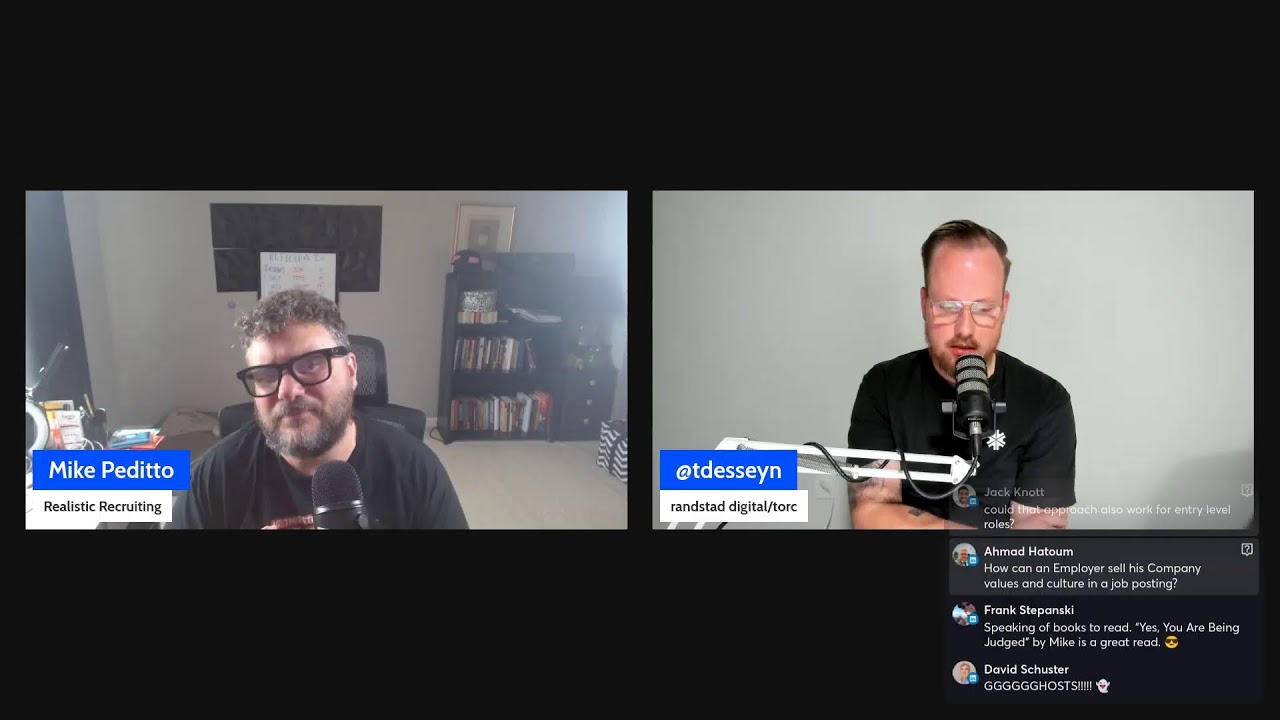
Taylor Desseyn talks with Mike Petito about hiring and the job market. They cover resume tips, ATS systems, and why networking still beats algorithms. Roxy from the Torque community just got hired.
Chapters
All righty, I'll alert the troops. We got that, we got this. Awesome, sweet. All right, good morning everybody. When I say good morning everybody, I mean nobody because nobody's here yet. Uh, excited for this episode, excited for this. Um, you know, it's, it's, it's funny, Mike, I'm gonna, I'm gonna be totally honest with you here live. I'm gonna be honest. So, okay, you know, I'm wheeling and dealing and, and, you know, I, I, I had the livestream with Richie, I was like, hey Richie, here's what I'm trying to do. I'm trying to get, I'm trying to get names. I'm trying to get people on the pod. And he's like, he's like, bet, I got you. So he started, I mean, Richie fired off like 5 DMs immediately.
Mm-hmm.
And, and obviously you were one of them. And, and obviously I've been following you for a long time. And, but like for some reason, like I was moving so fast, I didn't realize who you were until like a few days ago. And I was like, Oh wow, I have Mike on my show. That's pretty cool. Like, as somebody who I've, who I've looked up to and I've seen on TikTok, uh, to only realize a few days before, I was like, oh, this is the dude I'm chatting with. This is crazy. So, uh, so again, thank you for coming on, my guy. I appreciate it.
I appreciate it. Yeah, no, that's, that's so funny because I had the same exact experience.
Yeah.
Um, because honestly, Richie sent me the message and, uh, like, your LinkedIn profile doesn't have your picture on it. Yeah, it's just a— all right, so like Um, it came and like, I was just like, I don't want to just like meet another dude. Like, I just like, yeah, like, because I get this message all the time, right? Like, people I hardly know are just like, yeah, do a meeting with this person. Um, and then like, I like looked your name up. I was like, oh, I know his videos. Like, I think I actually stitched one of his videos, like one of my like 3rd or 4th videos.
I think you did.
Um, I got on, so I was just like, I was like, oh, so that's so funny. We had like the same exact experience. Um, but always honored to be called a name, uh, and be somebody that people knew.
I love it, man. Well, for those of you tuning in, we got some people in the chat now. Good morning, uh, happy Tuesday. Hope you're all having a good morning, afternoon, evening, wherever you're tuning in from. Um, so again, uh, for those of you who are tuned in or just listen to this in the future, um, you know, I've been doing this episode in this show for, uh, 6 years now. Um, 6 years in March. Um, you know, I started this in COVID in March of 2020. Um, and, uh, you know, really the whole ethos of this show is to help people. to help people in their career, to help people in the job search. Mike and I were having a very spirited conversation backstage. I'm sure it's going to come out today. You know, spoiler, everything's broken and nothing's good. But we're going to try to piecemeal it together today, together. But for those of you who are tuning in, you know, would definitely obviously love, if you have any questions, please ask them. One of the reasons why I moved this show to an hour is because it took about 15, 20 minutes just to get into it. So again, Mike has a wealth of experience, and it's going to be a— it's gonna be a great conversation. I want to get to kind of some housekeeping things first and foremost. Listen, we got a lot going on in the Torque community. Would love to have your part. Check out our website. We are still taking ambassadors. We are still taking mentor-mentees. So if you want to be a part of those programs, check out the website. We also have a list of all of our events we got going on. We did hire Roxy. Roxy was one of the ambassadors. She started yesterday. I was in meetings with all of her— with her yesterday. Very excited about the future of everything we're going to do. Um, if you want to know when I go live, text me. Um, this is actually my number. Um, uh, and if you have any job questions, please shoot me a text. Um, but if you want specifically when I go live, text live to this number. Um, and I always fire it out every day. Again, a lot of conversations going on the Torque Dev Discord. Would love to have you. Um, I'm drinking it right now. I don't have the bag with me, but I want to give a shout out to Caleb. He's a founder here in Nashville. He started a coffee company called Seek Coffee. Um, and so if you use the code TDESSYN, 15% off. It's the unofficial coffee sponsor of Guidance Counselor 2.0. Um, you know, supposedly coffee's got mold in it. Surprise. Um, and so he— yeah, supposedly there's trace mold in a lot of coffee out there.
There's mold in everything.
The way it's roasted, I don't know. Anyways, he started a company. All of his coffee's super clean. It tastes great. Highly recommend doing it. Uh, trying it out. And then obviously join the newsletter, um, if you want to know everything that's going on, uh, in the ecosystem of Torque. So yeah, got a lot of people, uh, a lot of people joining this morning. Um, so Mike, enough of me yapping, man. Let's get to it. Who are you? What do you do? And we'll go from there.
I hate answering what do I do because I wind up talking for like 45 minutes.
Go ahead, dude. Hey, this is your show, so go ahead.
I'm gonna work on this elevator pitch. Yeah. Um, my name is Mike Petito. I'm known online, if not by Mike Petito, as Realistic Recruiting. And I am a longtime recruiter, director of talent level professional who one day started making content about my own job search after some layoffs. And it took off and people started resonating with it. And, you know, I started talking about things as somebody on the inside and actively working on it. And that continued to grow. Uh, now I, I still do recruiting because I think it's important to. I think the day I stop actually doing the work, people stop wanting to listen to me at all.
Yeah.
Um, you know, I think that's important. So I, I take on a lot of contract and fractional roles with startups and help them kind of get off the ground and build some systems and then move on. Um, I also spend a lot of my time now working in HR tech and consulting and working with hiring teams and a lot of this new technology, right? HR tech is moving at a speed that we can't keep up with. I mean, just the last— Yeah, I can't imagine. Yeah, the last 2 years it's nonstop. So I go to these conferences, I take these demos, I speak on the stages, I talk to the people building these tools, I consult with them and help make sure that there's actually a voice of like hiring into them. Yeah. And sort of like test them and try and break them and try and find the ones that actually kind of work. I wrote a book last year about all of this.
Yeah, I was gonna say you wrote a book.
That's crazy.
Yeah, really?
All of it. Uh, I touch all of it.
What's, what's, what's, what's the book? What's the link? Like, like, what's the book? I'm gonna throw it up on the banner here.
Uh, the book is called Yes, You're Being Judged. Um, it's a realist guide to job searching. And essentially what it is, is it's— if you follow my content, if you've never seen my content, you know, then that's fine. But if you've seen it, uh, it essentially is that into book form. Um, I, you know, spoke— speak very honestly in the book about myself as a job seeker, myself as a recruiter, and myself as somebody, as like a content creator. And I sort of combine all of those in the span of this book. And it's very, you know, it's not for everybody. There's a lot of people who don't like me.
Yeah.
But it very much is aimed to be different than most of the career books out there. It's not full of things that just say like, just network, just do this. Like, it's real talk about sort of like, what works and what doesn't. There are times where I step aside in the book and like speak to you as just a person again to say like, yeah, I know this sucks, or I know this is stupid, but like, this is why we're doing it. Um, and, uh, you know, it, it landed well with people. I think it resonated. And, um, if you're a book person, it's a great book. It's a great kind of guide. I've heard very good things. It got strong reviews. But, um, you know, if you just like watching me do it in minute spurts, it's, it's sort of the same thing as my TikTok and Instagram. It's just— I love it. In a written form.
Yeah, I love it. I love it. Um, we already have some questions coming, um, and we'll get to them. Obviously the first question that is a Torque community question, Pepsi or Coke?
It's, it's Diet Coke. It's not even close. There you go.
Um, there you go.
It's, I was just away for the weekend with my wife. We went into like a state park down in Southern Illinois, uh, and it was a Pepsi town. Uh, and it was just like, it was every restaurant, like, is Diet Pepsi okay? And you always say yes, but like, it's not. The answer is Diet Coke.
It's not. Yeah. Yeah. I totally agree. I had Pepsi the other day. It was not good. All right, so Mike, let's, let's, let's, let's get into kind of some general thoughts right now. And be honest, that's why I— that's why I like you. You speak, you speak truth. And I feel like a lot of recruiters are, yeah, fluff, fluff, fluff. Hit me straight, man. What's going on with the market? What are your thoughts? And we'll go from there.
Um, the market is a mess. That's, that's sort of the, the easiest way to say it. I, um, You know, if you've been following me, you may know this. If you don't follow me, like, this will kind of help here. You know, I started giving job search advice a couple of years ago, and I've really moved away from it because I don't think it is helpful to most people anymore. Right? Like, the market is no longer about— But it's not about the best practices or the tips or the tricks. It was never about the hacks. It was never about any of that. Um, but it's, it's just now there's a number of people, uh, it's too much to handle for most teams. Uh, and the way I kind of explain it, and I'm in this situation with this contract I'm finishing up right now, you know, I mentioned doing some fractional work, um, where you have, you know, a hiring team that used to be 20 is now 5, and a team that used to be 10 is now 1. And at the same time, a role that used to get 30 applications gets 100. A role that used to get 100 gets 1,000. So it's just sort of become this untenable situation. So, and I always start there with people because I think a lot of people say like, oh, well, companies aren't doing it right. And there are a lot of bad actors. I'll say this all the time. I'm not ever here to defend bad hiring and bad practice and any of that.
Sure.
But I also think that, like, the things people think that are bad hiring and that are people like doing this terribly is sort of just like a mess of the market. You know, I, I use this example of just last week. I opened up a role on a Friday afternoon. I came in Monday to 500 applicants. And of those 500 applicants, a lot were qualified. I mean, a lot weren't. That's always going to be the case. We're getting mass supply through AI. It's just everyone is just pounding so many applications in. But there's me responsible for 500 applications that came in over 2 days.
Yeah.
And ultimately we're going to hire one person. We did. We actually moved really quickly in a week and got somebody hired for this role, which is great, efficient hiring. There's 499 people who didn't get hired out of that, and they all probably think that like the process was done wrong. And I just think that's what the market looks like right now. And I don't think a lot of people— a lot of people think about like themselves in that situation, uh, and like it's happening to them, and not this whole idea of just like everyone is struggling. And it's not to say like, oh, recruiters have it worse because we get a paycheck when we do it. Like, I get all that, but it's just like, that's what it's like. And like, it's just sort of this like giant traffic crash happening at one time.
Yeah, yeah. So what, what would be— so people who just heard that All right, Mike, it's not about me, it's about the market. But what— is there anything that people can do right now, in your opinion, to— I wouldn't even say the word stand out, but if we want to just use the word stand out, we can. But, but what, what are some things that you're seeing that's working, both from your actual experience in the job search and then what you're seeing with others right now?
Yeah, um, You know, standing out now is hard because, yeah, there are so many. But, you know, I think that like a lot of the old ideas when people came to job searching of like, oh, if you hit 50% apply or 60% of the job apply, like honestly now, like people who are getting hired are 95% or higher matches.
Yeah.
And they're very specific to like, yeah, um, you know, I can tell you like, for example, this role that I'm talking about with like 500 people that came in and people asked me like, well, how'd you decide, you know, what couple to interview? It's like, well, people who had done a similar situation. This was someone who was going to be the first hire into this role and needs to have like understand what that means, what it means to report like right to an executive board who doesn't know anything about this role. And you know what goes into being the first hire and setting up all these processes. And not a lot of people have done that. People could, but not a lot had. But we have a ton of applicants who have done it. So of course they're going to get, you know, preference for a role like that. And that's how specific it becomes. I use another metaphor that I've used a few times where I talk about like buckets.
Mm-hmm.
And if you put a candidate in a bucket, right? So like bucket 4 is just like not even close. AI mass applying, you know, like, you know, you're not a fit for that job and you're just sending it out. And bucket 3 is like a shooting your shot. I'm 50% of this job. I'm going to go for it. Those 2 don't have like a chance in this market to get hired. So one of the things candidates can do is just sort of like, it's not a numbers game in the way people say, you know, like I see people post, I applied to 500, 700, 1,000, 1,500, like all these jobs. And the people doing that aren't getting hired because they're spending so much time and energy doing that. Right. It's almost like it's become a game to— I want to call it a game because I know how hard the job search is. But it's almost like it's just become this thing of like, how high is this number going to go? But how many of those really fall into the buckets 4 and 3 to begin with? You know, and then there's the bucket where like you're an 80% match and 5 years ago you'd have probably been a top candidate, but unfortunately today you're not. And I think that's where the most frustration comes, where people say, oh, I'm a great fit, I can do the job, I've done it, and I'm still getting rejected. She's like, yeah, I get it. Because then there's that like 5% in the top bucket who are just that ideal 95%, 100% match. And job seekers will say like, oh, well, give people a chance and do all this. It's like, I get it. But also for a company, the goal is to make the hire that feels like the best one. That's, you know, the least amount of risk, most likely to work out.
Yeah.
And if you think about if you were that person in the top bucket, you're a 95% match. You wouldn't want to be told like, oh, we're taking a chance on someone who's a 60% match because like the internet loves when we take a chance on people. Right. Like, you'd be like, no, I'm the most qualified and I want it. Yeah.
Yeah.
So really the thing candidates can do best now is focus on those roles where you are that top bucket. You know, you're the top 5%, 10%, and that can be really limiting. But you have such a better chance focusing your energy on applying and finding those couple jobs and then doing all those things.
Yeah.
You hear all those tips, right? Like reach out to hiring managers, reach out to recruiters, do this, do that. Um, when that works best is when you're in that top bucket that's doing all of that.
Yeah.
Um, you know, if you're doing all that from bucket 3, it doesn't matter. Like, they're not going to move forward with you just because you send them a message. Um, so to me, it's that— it's less applications, more time and energy on the areas where, you know, like, they'd be stupid to not talk to me. And not just you thinking it, but like where you know, uh, that that's the case.
That's so good. I mean, prime example, right? Prime example. Let's just talk about this example to replace you. I think if I submitted my resume to you 5 years ago, I probably could have done it. Now?
Nope.
Nope. But I bring the expertise to do it, but I haven't, I haven't been hands-on in that capacity in 5 or so years.
Right.
And so like, I wouldn't apply to that role, right? And, and I guess like, and I'm speaking at it from this perspective because Mike and I are in the same, you know, overarching industry. This is a prime example. Could I have done Mike's job? Probably. Would Mike have hired me? No, because I haven't done the job in a while.
Mm-hmm.
And so I, I think, I think my thing is, and, and I, I never want to, I never want to come across as crass or, um, you know, not aware. But I think going back to— I mean, like, like, like the title of this is Everything's Broken, right? And, and, and I think what you said is I think job seekers are so narrow-minded and that it's all about them, and it's not.
It's—
yeah, it's, it's, it's about the whole piece of the pie. And I think we are still unraveling the mindset of I could spell React and get a job 3 years ago.
Yeah, I mean, recruiters are the perfect example. Like, people are always like, oh, recruiters— like, let me tell you, there's, there's not many industries struggling more the last few years than recruiters. Um, you know, and I lost multiple jobs the last few years. And if you're a recruiter who hasn't lost a job over like the last 4 years, like, you have a secret. going on that like nobody else has because these teams have been cut down to bare bones.
Yeah.
You know, so there are a million unemployed recruiters who can all recruit.
Yeah.
And 5 years ago, I mean, my inbox was full every day. I was working somewhere. I was happy. My inbox was full every day. A company's just like throwing money at me. Like, they just like, we need recruiters, we need recruiters, we're growing crazy. And then it changes on a dime, right? And just like nothing changed about me not being able to do any of those jobs. It's just all of a sudden, I mean, my very first layoff happened in 2022 near the end of the year. And I can remember it was the same week I got laid off on a Tuesday. On Wednesday, Twitter did when they laid off half their staff after Elon Musk bought them. And then on Thursday, Meta laid off their entire recruiting team. I remember that week and just feeling like that meme where like the one kid is like drowning and the mom's catching the other kid and there's like the skeleton sitting at like the bottom of the water.
Yeah.
And like, that was me, um, just like watching all the Meta and Twitter people, just like everyone like, oh, I want to hire those Meta and Twitter recruiters. I was like, oh, nobody wants me anymore. Uh, like, that's how fast it can change.
Yep. Yeah, I think so. Brian, Brian's a fellow recruiter. Wow, that text box is massive. Uh, it looks at your, uh, uh, mic's turned into Wilson off of Tim the Toolman Taylor. Uh, requirements are shifting rapidly. I've seen companies post a developer role, but day-to-day changes lead them to interview backend candidates one day and look for something completely different the next. By the end of the process, they sometimes hire someone whose skills align more with the solutions architect than original developer role. Yeah, I mean, it's changing. Thoughts on that at all, Mike?
Yeah, I mean, things change all the time. Uh, the, the world and technology is changing so quickly. Now again, like I said, I'm not here to defend bad hiring. So there's a company that opens a role and then just, they really don't know what they want. Right. Any tips people give, anything you said, like it almost just doesn't apply to that. Like those companies are just like operating on who knows what's happening and we all know those places.
Mm-hmm.
But in general, yeah, like things can change so rapidly because the technology's so quick and budgets change so quick. You know, one of the biggest examples of changes and you hear it all the time is just like you go through a bunch of interviews and then they cancel the role on you and like a lot of people are just like, oh, that company, they're stupid, they don't know what they're doing. But just like sometimes You know, sometimes you're interviewing for a company and they're hiring someone because they just signed a huge contract with some company who just signed a huge contract with Google. And then Google pulled that contract, which means that company lost their contract because that company no longer needs your company. It's just like sometimes like these dominoes fall so quickly.
Yeah.
That it's just kind of like impossible to keep up. So as a job seeker, yeah, it's incredibly frustrating. But I promise you, no one on the company end also wants to be spending a bunch of time Posting jobs, interviewing, and then like being like, no, we actually aren't going to hire this person.
No, I mean, I mean, even, even for me hiring Roxy— she's in the chat right now— like, I don't— I didn't have time to post the role. Where did I go? I went immediately to our community, right? I mean, that's a whole other conversation around hiring from your community, but— and we could get into that. I mean, what are your thoughts on online communities? What are your thoughts on getting involved in you know, meetups, or— and I know people— I know we've talked— I know it's a little bit of a layup question, but I'm also curious just to hear it from you as somebody who's very straightforward with this stuff.
Yeah, I think that's just like another one of these things now that like it's finding other ways, you know. Like one of, one of the, the, the areas we're stuck right now is we are figuring out a new way to do all this. So right now we're in this weird treading water stage where like what used to always work no longer does. But we also haven't fixed and found the new best way forward. Like, I think we can all agree that, like, going to a company, applying for a job, sending a resume is no longer working for both the company or the job seekers.
Correct.
But we don't know what the best perfect fix is either.
Yeah.
You know, like people are talking about, is it video? Is it this? Nobody knows. So, you know, I think that like finding new ways, community and groups and they, they make so much sense. I joined a community, a Slack group years ago. It was just called Slack Dads and it was just like dads on like who had like found a Slack channel. I didn't know anybody in it, honestly. I actually joined it because I read it was a great way to be recruiting people. It was back when like in like 2020 recruiting was tough still to find people and they're like join Slack communities and get to know people. So I joined it, um, and I lost my job shortly after, but like.
Yeah.
People in there like get to know each other well, but they also ask resume questions of each other. I sort of became the job search expert in there and like, I've seen people there like help people refer them to other places and get interviews. And I just think that like those are becoming the things. I think we're seeing a return of in-person events.
Yep.
Gen Z especially is craving in-person connection, but so is everybody. I mean, I've traveled the last 2 years to so many events. Saying that's my entire job. Yeah. You can feel it now. I used to hate going to those things and now people like crave it again because of that authenticity and we've spent so much time isolated. And in certain cities there's a lot of them. You know, like if you're in New York, you know, if you guys don't know Colin Rocker, he's another career creator and he was just on like a Forbes 30 Under 30 list. He's this young guy in New York City and he started this group called The Firsts and it's for people like sort of like the first of their generation to be doing something. Like, he was the first to like go to college and get a good job. And like, um, and, um, it's this meetup he does every month with people in New York and like so many connections get made there.
Yeah.
Um, and like with all networking and things like that, it's a long-term play. Uh, you know, like none of those things—
That's the problem is that people want the immediate fix but haven't invested in the long-term muscles to do that. And I think that's the rub right now.
Yeah, and that's hard. And I always say when it comes to like recruiting in general, recruiting, if you're starting to build a network, if you're starting to network— I said recruiting, I mean networking— if you're starting to like build a network and do all this stuff, you've never really invested the time into that. It's far more likely to help you on your next job search than your current one.
Yes. Isn't that crazy at all? Yeah.
Yeah. Yes. But the issue is people need a job now and they hear now, right? People get on the internet and they say, just network, just network. Just network. That's like my favorite phrase, like, just network. And like, that's not how it works because what that becomes is like a cold DM to a stranger asking for a favor. And like, that's not actually like building a network, like messaging a recruiter like, hey, are you hiring? Like, that's not networking. I get why you're doing it. I'm not saying don't try to do it, but like, you can't say like, I'm networking and it's not working, right? That's like calling like a telemarketer like networking when they call you.
Yeah.
You know, So yeah, it's a long-term play. It's, it's all the, all the metaphors that are out there for networking— planting a garden, you know, like, and waiting for it to grow. Yeah, like whatever else it is.
Yeah.
Um, but that all makes sense. I mean, when I— when this first happened to me, I didn't really have a network. I spent most of my life not doing it. Um, and then I started talking to people and getting more involved, and my network became people who come in this chat, right? Like, for me, it was TikTok originally. I did TikTok Lives every night. And I got to know—
You did?
Yeah, I did a ton of TikTok Lives and the comment section is networking. I see people get to know each other in the Lives and in comments. And there's people who used to come to those Lives who I have in my phone now and we text sometimes. And like, if I ever think of them for an opportunity, like I'll drop their name. I did get somebody a job. Well, I didn't get them a job. I referred them to a job they got who I met through them commenting on my TikTok videos.
Isn't that crazy?
And we just like chatted more and more over time and we connected on LinkedIn eventually. And then someone I knew was hiring and like I tagged them and I introduced them, but like that was months and it started like TikTok commenting. So I do think people are better at networking than they think. I think they think of it as having them go to like phony events and like do all these things, not understanding that just like anyone you know can be someone who helps you find a job eventually. You just have to like understand that like takes time.
So true. Let me, let me go back to the job posting thing. Gotta talk about resumes. Again, kind of a dumb question, but I want to hear your thoughts on it. I just feel like— and, and we really harp on this with the resume reviews within the Torque Discord— I feel like that first page of your resume just needs to be absolutely dialed right now.
Yeah.
Uh, I mean, it just needs like, like you, you have to give everybody Every— all the information in like the first third of your page, I feel like. Thoughts?
Yeah, it's hard. So like everyone has heard enough times because it's all over the internet, the rule that like, oh, recruiters spend 6 seconds reading your resume. And right, that like, that's a good kind of like if it bleeds, it leads type of like thing that people say on the internet. But there is some truth to it, but it doesn't mean they like make all their decisions in those 6 seconds. But in 6 seconds, especially somebody who sees a ton of resumes, I can gather if a resume, you know, going back to those bucket ideas I mentioned, I can see very quickly if someone's in that like 3 and 4 resume bucket who like isn't even close to the job, like within 6 seconds easily for most roles.
Yeah.
And, you know, then from there you fall into the first 2, right? And yeah, it becomes that quickly like What do I see on my first glance through a resume? And think how people read in general. Like, all studies have shown, like, people read in, like, F patterns. We read down a line and over, 2 across. Um, and in that area, like, if I'm hiring for, uh, a, you know, senior software engineer who's, who's worked in React, um, you know, like, I should very quickly be able to see, like, evidence of what you've built in React.
Correct.
And then I'm gonna keep reading. But if I look on there and I see like customer service rep with project management experience, whatever, like I'm, I'm like under 6 seconds, I know you're not a React developer.
Yeah.
Um, so that's where it sort of comes from. So yeah, like do you have more than 6 seconds if you're a qualified candidate? Absolutely. But in that amount of time, if you can't get across like my resume needs to be read in more detail, um, you know, that's where I think that comes in.
Yep, absolutely. What do those 6 seconds look like to you? I think you kind of touched on it, but let's, let's get a little tactical here.
Sure.
So for me, I like, I like, and again, so Mike and I've talked about this, every recruiter's different, right? And I've always said that, like, I'm only one recruiter. You can literally shop my advice around and Mike could probably say Taylor's wrong, right? And that's, you know, that's the whole thing of this. For me, I like a professional summary that's bullet pointed at the top and outlining years of experience you have as it relates to the must-haves and nice-to-haves of the job. Because all recruiters are gonna do is they're gonna call you and go, hey Mike, how many years of .NET experience do you have? How many years of Angular? How many years of Azure? How many years of this? That's what I like to see at the top. And I'm gonna let Mike talk here on what he likes to see because it may be different. Then I want to— I want to immediately go into— and then in that, in that bullet point professional summary, maybe do like one thing you're super proud of as it relates to the job you're applying to, right? That should be the customizable part of your resume. I feel like it's not feasible to like edit your resume for every single job you submit to. And then your first job, I need to see like what you've done, not like a task list. I'm talking about Drove this much revenue, saved this much time on downtime. And then, and then if those look good and feel good and aligned with what I'm looking for, I'm calling you. Thoughts? Yeah.
Um, and yeah, I think that's a good start. And, uh, yeah, I mean, the first video I ever made on the internet was saying like, there's no perfect resume advice. Like, if I tell you one thing and someone else tells you another, neither of us are necessarily wrong. And that's what makes this hard. Like, you have to see what works for you. But there is like bad things to do, of course.
Sure.
But so to me, 6 seconds, right? So the question is, is it enough to get through a list of skills? Potentially. Here's the challenge I give other people when it's sort of the 6 seconds thing. If you can't do it for yourself because, like, you know, your resume, ask, like, someone else. What is the first thing somebody sees when they look at your resume? And what is the first thing you want them to see when they look at your resume? And how do you make them see that first? Is sort of the thing that I keep in mind. So like, one thing I love at the top of resumes that, you know, I think sort of streamlines info is for me, I don't love a summary. Now, I don't eliminate people for summaries, right? I'm not like, oh, they put a summary, like this person's an idiot, right? It's not about that. But for me, if the question is like, how quickly can you get that information to me? Most summaries, my issue with them is they're this generic language.
Totally agree.
That I say you could take, you could take your summary and put on the next applicant's resume and it wouldn't make a difference.
Totally.
Right. Like data-driven to the goal, hardworking communications professional. It's just sort of like, like, no, that's not you. So one thing I love is almost just like a headline, similar to how LinkedIn headlines work, right? So if like I open up your resume and just bold at the top, let's say again, I'm hiring for a React developer who also knows Angular and has worked in, you know, and I'm like a healthcare startup. If I open up your resume and there's this headline at the top of it that literally just says, like, you know, React/healthcare startups/Angular, I'm just like, oh, boom. Like you just hit me over the face with exactly what I need. And of course I'm gonna like dig in to see where I can find those things.
Yeah.
Now, again, that's not like the rule of how it has to be seen. But like For me, yeah. So it's that question of like, what is the most important thing you want to get across and how easy is it to see? And I think a lot of people bury that info just in these like walls of text and walls of things. Um, so if it's a bullet point list like you mentioned, that can work. Uh, but yeah, the real idea on like what those 6 seconds look like to me is it's different per resume because resumes all look different.
Sure.
So it's a matter of where do my eyes go first. Uh, now if it's just this general resume, straight down text, whatever, It's going to be that F shape, right? I'm going to see what you have written up at the top of it in terms of like a summary or bullet points or whatever it is. I'm gonna see your job titles and the first probably bullet point or 2 of each job title and go from there. And, you know, if you talk about tailoring resumes and a lot of people debate if you're supposed to or need to, to me, it should never take more than a few minutes. But one of the best ways to tailor a resume is that headline, like I mentioned at the top. You can change what that headline says in seconds. Based on each job you apply to.
Right.
And just make sure your top bullet point or 2 for each job is the most important one for the job you're applying to. You know, maybe you have on your resume that you, you know, led the daily standups at a company, but it's not that important to you and it's in there. But you read a job description that's just like, we need a developer who can lead daily standups at this company. You're gonna move that bullet point to the top of the job description. Uh, so that's where the sort of quick making sure what I see in the 6 seconds comes in.
Yep, I love that. Um, I want to get to kind of a, kind of an area that I'm not that skilled in, and I want your, want your expertise in the ATS.
Sure.
Is it a monster on the other end that's rejecting people on its own? What does an ATS look like? Can we talk about it? Like, what it— let, let's break it down. What is an ATS? And is it the boogeyman that everyone's making it out to be?
Yeah. Um, I mean, the answer easily is no, it's not the boogeyman everyone's making it out to be. Uh, now I could go for a long time, and we'll see how deep we want to get here. Um, the easiest way I can explain to people an ATS is, is it is a digital filing cabinet. It is the software recruiters use to keep everything organized. It is the equivalent to recruiters of what like Salesforce is to salespeople.
Torque is an ATS.
Yeah. Um, Ronstadt Digital. There are, and there's a, there's hundreds of them and they all act a little differently. Now, a lot of recruiters will get very dogmatic on like, they don't do this, they can't do this. And I, as someone who spends most of my time in like the HR tech space, will say they're adapting and moving so quickly that I have moved away from the idea that like nothing can do this or they don't do this or they can, because like they are starting to do all the things. But the easiest way to sort of like every single ATS is utter garbage. Here's the thing, Barrett, it's not. But what you've sort of grown to learn about them is to like think that they are. Again, they're not doing what you think they're doing. So now again, they're all very different. They all can do some things. A typical process in an ATS is I open up a job description in the ATS, I type it in, I assign the interviewing team, all these things. I post it to our website right from there. You apply and it goes in there and I can see all the applications together and I can get people interviewed and move them through stages. It's just this piece of software where I control everything. What the ATS is not doing in most cases— now again, I give myself caveats because of how many there are and how quickly things change— is having a robot go through and just sort of make a bunch of decisions. When people receive those instantaneous rejections, They do tend to be because of knockout questions, which I'm sure you've heard before, but I will reiterate, right? So I can set up a question. I can set up a yes/no. The most common one is like, do you require sponsorship to work, you know, at this company in the United States? And if we can't offer and you say yes, you might automatically get rejected. But again, that's not AI, right? That is me making that decision when I open the job to just like speed that process up of sending you the email that you rejected.
Yeah.
You know, you might get some questions on there that you answer them. And if a person does this, then like send that rejection. Um, as far as like scanning, reading, analyzing resumes, none of that happens without like human interaction. Um, so what I mean is like it's almost no different than you opening up a giant file or opening up a ton of files and hitting Ctrl+F and starting to search for things. So our recruiter is going through and saying like, you know, I just— to keep going with the example, searching for React and Angular. And then pulling up all the resumes and the candidates who mentioned using React and Angular and starting to read those. Yes.
Okay. Okay. That's good to know.
You know, but again, I kind of tell people, if you are applying for a React and Angular developer role and you haven't mentioned in your resume that like you are building things in React and Angular—
Happens a lot, by the way.
Yeah, it does happen a lot. That's not a robot's fault. That's not a recruiter's fault. Like, that's your fault as the job seeker. There are things on a job seeker, and one is to get across what you do. to the people who are, who are hiring.
Right.
If those things are on your resume, you're going to come up in the search. You know, one of the most common things I hear from people that they don't run the logic through their head. So I was going to talk about this is like, no, I, I customize my resume perfectly for the ATS. I put in all the keywords, I do all the things, I write it exactly how it's supposed to be, and I still get auto-rejected by the AI. It's like, well, that doesn't make sense. If, if it was an AI reading and only looking for those words and your words were in there and you did it, it wouldn't automatically be doing it, right? Um, you know, like, they can't both be true. Um, you know, so it's, uh, it's, it's not doing what most people think in that way now. Uh, are they getting more advanced? Yes. But at the end of the day, a human still always has to make a decision.
Correct.
Um, to do something in there. Uh, it's not just a bunch of robots running it.
So, so if, if, if, if somebody— so I think one of the things I've gotten like some, some pushback on is like, well, I submitted my resume and I immediately got rejected. How is that— how is that a human? But going back to what you're saying is Whatever triggers they set up, you didn't have in your resume.
Yeah. Um, and could it have been a mistake? Sure. Could they have set up a trigger that said like, if this person didn't have this in their resume, reject them? Uh, and you are someone who does that, like, sure. But in most cases, that's not the case.
Yeah.
Um, right. And, and it's generally kind of like how these processes work, you know, like also it could have been an auto reject because they have already filled the role or they're sort of all these other things. And that can get into like another thing, right? It sort of stopped taking in. Sometimes they put things on delay, right?
Yeah.
Like I often with auto rejecting, just because I know how people are going to respond to it, is I don't have it send right away. I set it for 8 hours after the application, 24 hours after the application, whatever else. Well, how come it came through at 3 a.m.? Because you applied at 3 p.m. and I set it at 12 hours to send the email.
Yeah.
And that's what sort of happened. So like, there are more logical explanations to these things than people think. But at the same time, are there issues? Is Workday being sued currently because their AI seemed to have been automatically rejecting everybody over 40? Yep. And they're in discovery for it. And everyone who's ever used Workday AI has to turn over all their hiring data. And I'm marked safe from ever having worked with a Workday company. So my data's not in there and it's in discovery and we're gonna see what happens. But if it does, if that was the case, you think other companies are continuing to do that while this lawsuit's going on? You know, like, I think a lot of this stuff is less nefarious than people really think.
All right, we're getting some questions. And again, I knew this, the chat is blowing up. Everyone's got a lot of opinions today, which I knew that was gonna happen bring a mic on. Um, Seth goes, there are many job descriptions that say React, Angular, Vue. I doubt they're actually all using those. Do we lean into that to get the word match?
Yeah, um, that's true, right? There's a lot of job descriptions that list everything. Um, you know, what I say is, uh, generally yes. Um, now again, it's what's most important. So let's say a job description lists all this, but you know they're not actually using all of it. And you can read the job description. You can tell like this is a React developer role.
Sure.
Yeah, yeah, yeah.
Right.
That is the most important thing. That's where I'm going to start with that. And you can tell when you read a job description, usually things are listed in the most important order. There's always like a must-have versus nice-to-have stuff. So like, yeah, starting with that is good, but it doesn't have to include every word in the job description. It's not about gaming a system because the other thing I'll tell people too is like Just putting a word on your resume doesn't get you an interview. Doesn't get you hired, right? And that's also a problem with a lot of these tools that are out there and all these ideas of copying and pasting job descriptions or putting a skills section that's, you know, this long and list every possible skill out there. Because if I open your resume and I just see React at the top of it in the skills section or in that headline we talked about, and then I can't read anywhere on your resume where you use React, how you built with it, what you did with it. Um, I'm gonna assume you don't really use it or that you're not that good with it. So it's not just about like putting the word in, uh, it really is about demonstrating, uh, and when we talk about AI matching in these systems, because I see people seeing like there's a lot of AI matching— AI matching is better than you think.
Um, yeah.
And what I mean by that, because it doesn't just go by the keyword, um, right? If I was going to, you know, a lot of these ATS systems do have AI matching tools in them, but again It's not some automatic decision it makes. So I can open up Ashby, which is a popular ATS right now.
It is.
And I can say, um, okay, I got all these applicants for this role. Um, fine. And I can literally like type sentences to it, right? Like, find me a candidate who has built systems using React at Series B or earlier companies. Uh, and it can pull up a pretty comprehensive list. Could it miss some? Sure. But again, it's not rejecting people. But it's going to sort of show me those because it knows who these companies are and it kind of knows what it's saying and it'll explain why. It'll say like, oh, demonstrate it. Or let's say something even a little bit more broad. Demonstrate leadership skills, right? Like it's not about having the word leadership on your resume, but I can say find candidates who have demonstrated leadership skills and it'll sort of tell me an explanation. Here's Seth. When Seth worked at XYZ, he has 2 bullet points that mention how he mentored 6 different developers, uh, right? You know, demonstrated leadership. So it's, it's more than just like a keyword. It really is getting across and showing the ideas you did. So like, even when we are using AI in that way, it's not to just like automatically kick people in or rule them out. It's really just to like, uh, help us find some of these things quicker and then we look at them ourselves. Like, nothing is automatic. We're all humans with free will when we use these tools.
Sure. Yeah, I love it. I love it. Uh, I'm going through the comments here. Sebastian, thanks for the repost on the stream. Uh, let's see here. There was another one too. I can't find it.
Uh, okay. All right.
I can't find it. All right. So, um, all right. What else, man? What else have we— haven't touched? We're, we're, we're kind of barreling towards the end of time already, and this is so good. What are, what are some other things you're seeing in the market right now? I don't know, just anything else.
Um, yeah, I mean, obviously there's a, there's a lot happening, right, with all this stuff.
I know it's very open. That's why I kind of want to let— just let you yap.
I'm like reading all these comments too, because I do think that like the ATS is sort of the most misunderstood. Agreed. And I think it's the thing people spend the most time worrying about. Um, you know, like even this comment right here, Seth, even like adding in that you said like if you need to get the words get past, that's people jaded about the ATS. But again, if those words aren't in your resume, you don't— you're either not qualified or you don't have a good resume. Because again, the words we're talking about are React and Angular for React and Angular job. I'm not searching, uh, for like random sort of Easter eggs that you don't know about. I'm searching for sort of like the key competencies and most important things for this role. So like if I'm hiring a Java developer and your resume doesn't say Java on it, again, that is not AI's fault. It's not the recruiter's fault. It's not anyone else. You know, like it's one of those things. So like people are convinced they have to like have like every single word that's like matching these things. Like, no, it's just sort of the key skills that like if you've done this job are going to be on your resume anyway. Um, that's where people are getting really confused by that. So I think that that's really important. Um, you know, and I think that like, uh, people need to focus more on, am I quickly getting across to the person reading my resume?
Yes.
The things they need to see on that first quick scan. You know, we talked about it and I talked about like, what am I— where do my eyes go first? What do I see in those 6 seconds? Are you getting across the things you really want to get across? You need to focus more on that than thinking you're battling some machine, because what happens when you do that is you send me a giant wall of text full of, of a bunch of buzzwords that don't matter because I can't see the stuff I need to see when I'm looking through your resume.
Yep, yep, absolutely. Um, thoughts on Other areas to find jobs? I'm actually really big— I'm, I'm becoming a bigger fan of liking and engaging posts on X. There's a lot of jobs being posted on X right now from people.
Um, yeah, I mean, so I don't use X. Okay, so I, I don't know. Um, and that could be working, but yeah, I mean, people can find jobs Anywhere. And again, that goes back almost to sort of like the marketing talk or the networking talk, right? Just sort of like everyone is your network. Internet comments are your network and friends you know are your network. And like your network doesn't have to be only recruiters and hiring managers at companies. So it's the same idea with looking for jobs, right? Just like people know people.
Right.
And you never know where that's gonna come. Um, so yeah, if you see people posting in other spots, you know, I know people talk about needing people on Reddit or on other social media. Um, you know, if you guys follow Bonnie Dilber, uh, you know, Bonnie Dilber, when she was hiring recruiters for her team at Zapier, she posted a TikTok and Instagram video about it to go with like her LinkedIn post. Um, there is a big move now for companies to really be focusing on their like TikTok and Instagram. Yeah. Um, footprint from a recruiting standpoint, because that's where people spend so much time now. Um, and really building up like employer brands and recruiting skills there.
Yeah.
Um, so like it doesn't just mean refreshing LinkedIn over and over again.
Agreed.
Um, right. And like when people are lost in that, um, job search world, I think they wind up sort of just like in this tunnel vision of like, I have to sit at my computer and just sort of refresh these job boards. That can be really hard. That's be a part of your strategy, 100%. Like, don't avoid them.
Sure.
But like, yeah, you also can— like, you're doing things for yourself by stepping away, by getting somewhere else that you're not actively necessarily applying for jobs, by talking to people, by building something yourself, by getting into hobbies, by doing all these things. Like, you're not wasting your time. So like, I do think, you know, it's a long-winded answer to that question, but the idea of just sort of like a Yeah, you know, I mentioned like the Slack community I'm in or just sort of like jobs and opportunities can come from so many places. It's just a matter of like being open and like out in these spots. Like people always— the easiest answer to this is people are often like, should I do this? Should I do this? Like, should I do this? Answer is yes to all of it, right? Like this could work, this could work, this could help. None of it is the thing that's going to necessarily—
And I think that's the hard part. I think we as humans want the easy, quick fix and the job search is the antithesis of that, right? Is there— and I've been out of it for a bit— are there any— I mean, when I was recruiting, it was like Monster, which isn't even around anymore. Indeed, Dice, CareerBuilder. Is there any job boards that you like lately, uh, or maybe people should check out?
Um, yeah, I mean, so the thing is now there's so many niche job boards, and I think that's sort of worth it for people. Um, and you know, some of its UI differences— now I will say, right, like Most jobs wind up in all the same places. You know, I hear people say all the time like, oh, I've never found a job on LinkedIn, only Indeed works. And you'll see someone else say the opposite or, you know, like whatever.
Again, it's just going back to the problem of this.
Yeah, it's like their own personal thing. But I do think like if you can niche down to stuff you really care about, right, there's great startup job boards. You know, there's the— there's, there's a place like Wellfound that used to be AngelList that just focuses on like Series D and earlier startups. A lot of companies who post there don't have budget to post on LinkedIn and other places like that. There are a lot of like remote-focused job boards, places like WeWork Remote or WeWork Remotely is one, and there's one called Digital Nomads and their roles that can kind of be done wherever all over the world. You know, if you're in specific areas, there's often areas for just focused on marketing jobs or finance jobs and things. So like, I do think trying to like niche into those things. Um, I think I know a lot of people— I've never actually used it myself, but I keep hearing people talk about a job board called Hiring Cafe. I've heard of that. Um, it's growing in popularity. Um, I hear a lot of people talk about it, but I haven't used it enough to know. Uh, the other thing too is I think like this is a great use case of when to start implementing AI. Um, you know, if you use Claude, for example, um, If you're online, you see everybody talk about switching to Claude. It's so weird. Like, and I'm like, I'm guilty of it too because I posted about it. It feels like this giant secret influencer complaint, uh, campaign. It's not. Um, but if they want to start paying me, they could. Uh, but I made like a switch to Claude recently.
It really is pretty incredible.
The, the Claude desktop app is incredible.
Yeah.
Uh, and it connects to your LinkedIn or to, to Indeed, and it connects to a bunch of job boards, and now it has its, um, You know, coworker and it's, um, dispatch mode where it can just sort of control your computer yourself. Like, um, let it take some of that off. Like, ask it, like, go, uh, connect to my Indeed, connect to these pages. I'm looking for marketing managers with this many years experience in this city. Like, pull in what you can find and, like, let it save that time for you. Um, someone mentioned BuiltIn. Yeah, I've always liked BuiltIn. Like, BuiltIn's been around for a long time and I think it has just, like, a nice UI to it. Um, but again, I don't think there's many jobs on Buildin that aren't on LinkedIn and like those bigger job boards. But if you prefer going to another board to find it, like Buildin is always a great one, and there's good articles on there and stuff like that too.
Um, let's see here. Uh, oh my gosh, Seth popping in. It's good to see you, Seth. Uh, fellow Nashvillian. Last job hunt, I would go to the company site of every sponsored ad I saw on LinkedIn. Companies that have enough money to advertise on LinkedIn seem to be hiring. Yeah, I mean, LinkedIn is is not, um, it's not cheap when it comes to ads. Yeah, I like that. I think also another tip trick I've talked about before, a lot of job postings on LinkedIn, you can see who posted the job. Um, so, you know, I would slide into their DMs immediately and be like, hey, I saw where you posted this job, here's why I'm a fit. I want to go back, I just want to go back to the risk thing, um, risk factor. And I have one more topic I want to, I want to hit on before I do overrated or underrated, Mike. I got a little quick thing, but, um, I think it's the risk factor. Companies— going back to what Mike said— companies want a 95% match, and whether you like it or not, it is what it is. And so I think whatever you can do, you know, if like if there's a staffing company that has a community role open, right, and I'm interested in it, I'm gonna lead by saying, hey, I currently lead community for the world's largest staffing company. Let's talk. That, that's going to, that's going to have a conversation. If they're looking for somebody to migrate their codebase from Angular to React, be like, hey, I recently just did this project for this Series A company. Let's talk. Those are the type of things. So if we talk about mitigate risk, that's what you have to focus on. Thoughts on that, Mike?
Yeah, 100%. So that's one of the things that, like, we talk about. Like, people always hear the advice to, like, message recruiters and hiring managers and whatever else. Understand their inboxes are packed because that's not a secret to do that. I mean, like, recruiters are reached out to a million times a day. You know, a little bit of hyperbole there, but like, they're reached out to a ton and most of it is not helpful information. Hey, are you hiring? Here's my resume. Do you have any jobs for me? Like, one, if you're asking them to, like, do that work and like, they're not going to. Um, they don't work for you specifically. Um, but yeah, you know, like the idea of how much you can target it. And in my, in my book, uh, I actually have like an example of this where I got an interview when I was job searching, um, because I reached out to the, the hiring manager for a role and it was just like, hey, I know you're getting slammed. Uh, and I very quickly led with like, uh, this was a Series B, um, info security, like SaaS company. And I was like, I just got laid off as lead recruiter for Series B info security SaaS company. Like, I know your market.
I'm like, I'm talking to you.
She messaged me back in like an hour, right? And it was like, yeah, let's chat. I didn't get the job, right? Different story. But like, that message was much better than like, hey, saw the role and I applied. I'm interested. Right? That was just like, she would have been dumb to not talk to me there. And I have— I'm pulling it up on like my LinkedIn right now. I'm not even actively looking for jobs, but because I stay involved and I do a lot of contracting consulting work. I have a message where I saw somebody post something that was really interesting to me where they're like, where did— we won't get into why this didn't work out, but the message I sent very specifically was like to this person, I'm reading, I'm not actively looking for work because I've been really deep into building a lot of things for myself, including my recent book release. But I saw you're looking for builders who played with these tools. I've just built my own AI recruiting tool. I've been deep diving into HR tech space. Just spoke at the HR Tech Conference and really think this space is interesting. And he was like, let's be great. It would be great to chat. And we chatted. We wound up not being like the right opportunity for us, whatever. Those specific things are so much more important than everything else. So like, if you're going to send that message, this goes back to what I said at the very beginning with like applying to less jobs that, you know, you're that top bucket, that top 5% or 4% in this market.
Yeah.
If you can't put that message together that shows why you're the top 5% and not just like, Yeah, I could do this job. It's probably not going to work out.
Yeah.
Um, but having that, like, here's why it's exactly worth sending this message, um, is, is much more likely to work out.
Yep, absolutely. Final, final topic in this. I feel like between ATS and this next topic, we could do an entire live just this. So give me your thoughts. Ghost postings.
Um, I have a— so I have, I have a lot of thoughts.
Um, I know there's a lot of thoughts.
So here's, here's what I'll say. Um, I, I think the, um, the hubbub over ghost jobs comes from a lot of frustration and bad data analysis and data understanding. And here's like the best example I can give of that. If I say 50% of hiring managers admit they've posted a ghost job, the headline will say 50% of jobs are ghost jobs.
Yeah.
And that's not how data works, right? Like, so that means if 50% of managers have done it once, if they post 10 jobs, 10% of the jobs they posted, that means were ghost jobs in that situation. So like, and again, that's not even real data either.
Sure.
So I think that's a big part of it. You know, are there companies doing it? Probably. But I also think that in most cases it comes back to— we talked about like people being overwhelmed. You know, how come it keeps reposting? They keep hiring because I'm a person who posted a job and got 800 applicants and I'm overwhelmed by it. And it's hard to sort of find the right fit for this job. So it's still open. Um, for, for all this time and it's taking forever to fill and longer than it should. It's getting kind of hard there. Um, are there ghost jobs out there?
Sure.
But again, I think that data is misleading. And again, you don't know what happened. Um, so many people assume— this is like a big mistake people make— so many people assume that they didn't hire anyone or they didn't hire someone qualified.
Yeah.
All right, like, oh, I looked at the person and they weren't qualified. Oh, so you agree the best way to hire is just based off a LinkedIn profile and nothing else? You know that they're not good for the job by that? I'm like, of course not. Right? Like, in this, when we talk about all this, people are always like, oh, well, it's your fault if you're going to hire the wrong person. You don't know that happened because when 500 people apply, even if you were a great fit, even if you're in that top 5%, right, that still puts you in there with 10 other people. Yeah, um, right. So it's just kind of like, um, I might have hired one of those 500 other people and you will never know because I'm not going to message you and tell you that I hired that person.
Then people think it's a ghost posting because typically the re—
the—
and this is a whole other thing I've been really big on, is the way companies should communicate to job posters is a whole other thing, which we're trying to implement at Torque right now with Ronstadt. But like, that's where that ghost thing comes in because you typically just don't hear anything, so you think it's a ghost job. And it's really not. Yeah, I actually hired the guy, but Mike's not out here posting live updates on every single job he's hiring.
Yeah. Um, and that's what's hard. And yeah, like sometimes it gets reposted because they purchased 3 postings from LinkedIn and it's gonna automatically refresh. Sometimes it's because it's taking a long time for them to close down their system, or sometimes they forgot to close down their system because they're busy and they hired the person, but they didn't mark it closed in their ATS system. Um, so LinkedIn thinks it's open and LinkedIn keeps refreshing the the post because they have some unlimited budget that they're just spending on LinkedIn. It's sort of just like all these things can be happening, um, and that doesn't like excuse any of it or make it easier for job seekers. I just think that like it's just easy to latch on to thinking this like nefarious thing is happening sometimes.
Yep, yep. All right, so we're at time. I have a call in 5 minutes, so, um, uh, thank you, Mike.
Yeah, um, this is fun. I can rant a lot. Um, I saw a comment somewhere up there that someone said the book is a great read. I appreciate it.
Yeah, I saw that too, Frank.
Um, there you go. Yeah, feel free to check out the book or find me on LinkedIn or anywhere else that's out there. If you like the way I talk about this stuff, it's how I talk about it everywhere. I love it. I love it. You will not find a watered-down version of me on LinkedIn, um, or anywhere else that's out there. Um, right, like, I am who I am for the people who want to find me. Um, you'll see me arguing in comments, you'll see me calling people stupid, you'll see me calling out bad recruiting practices as much as I call out bad, uh, job-seeking practices. Like, I'm not in it for anybody. I'm not some corporate shill out here, um, doing all that stuff. I'm just going to say what's sort of realistic about what's happening.
Yep, absolutely. And that's why I like Mike, and that's why I was so pumped when I figured out who I was talking to a few days ago. Um, well, please go connect with Mike. Uh, Mike, stay on so I can say bye to you backstage. Y'all have a good one. Um, and, uh, we are doing resume reviews, uh, tomorrow, um, with Lawrence Lockhart. We're actually gonna be streaming from The Torque. We're gonna try something different. We're gonna be doing live resume reviews from The Torque profile tomorrow. So we'll see y'all tomorrow afternoon. Um, otherwise, y'all have a good one and, uh, have a great Tuesday.
Peace. Bye.
More from taylor



tech doesn’t have to be the only thing that brings us together #techcommunity #techcareer

I want to give back to y’all that make the tech community so great #jobsearchtips #techjobs




spend a little time investing in yourself #linkedin #linkedintips #careeradvice


