
How to Land a Cool Job w/Jordan Rogers, Former Director of Marketing at Nike
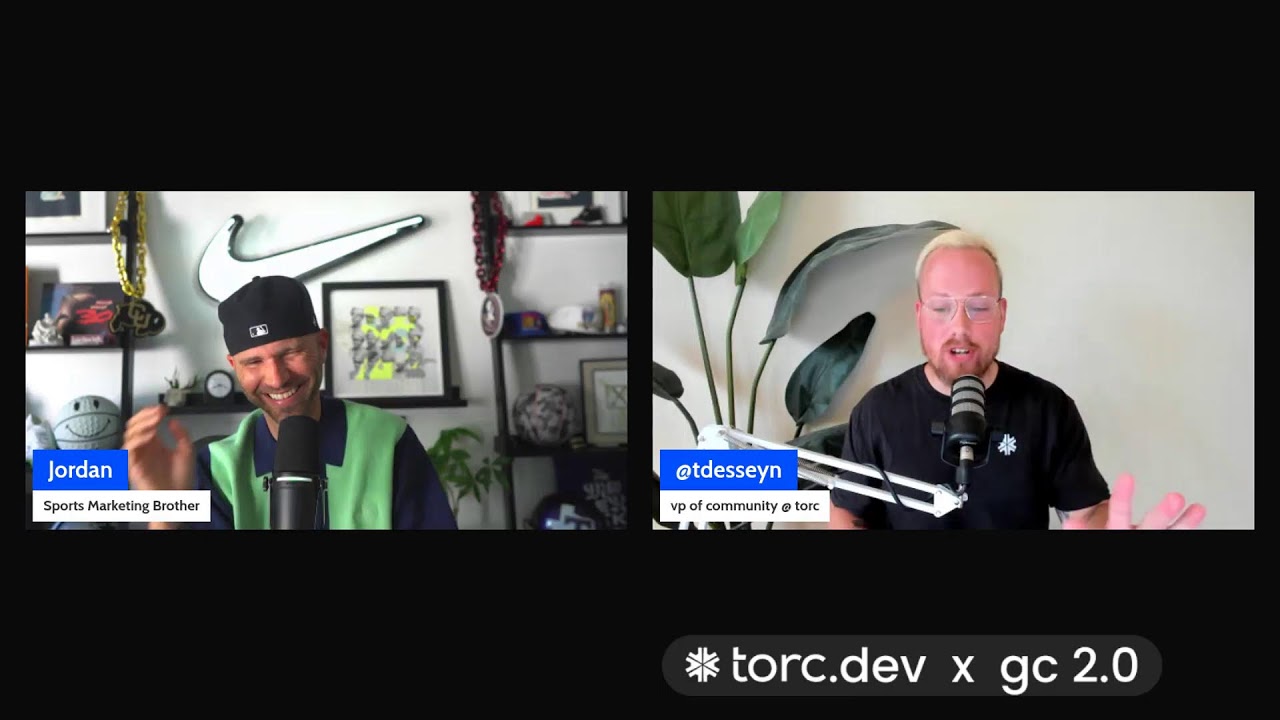
Jordan Rogers went from addiction and prison to becoming Nike's Director of Marketing. He talks about showing up consistently, building skills like photography and Instagram content, networking through volunteer work, and why he eventually left Nike.
Chapters
All righty, morning everybody. When I say everybody, I mean nobody.
That's right.
Because it's got to hit. Um, all right, so I have to ask Jordan, I suppose, sir, you know, I want to have a little banter going so it's not super awkward. Um, golf, big golf guy, follow your, your, your, uh, endeavors. For real, you should look at Hermitage Golf Course here in Nashville. They have black sheep. That's their whole thing. They have black sheep grazing in—
no way—
Nashville.
Yeah, yeah, really?
Yep, for real, for real.
I'm actually fascinated by this.
Yeah, so, uh, you know, if whatever it takes to get you to Nashville, uh, for a little golf endeavor, let me know and I will, I will help with that.
Oh my gosh, Hermitage Golf Course. Okay, I'm looking at it right now. We have black sheep.
Yeah, I have golfed it. Um, it is great. Um, I golfed— it was like 50 degrees outside with like a wind chill of like 30. Um, that was in and of itself an interesting situation.
But how far away is that from, uh, where is the Jack Daniel's brewed?
Jack Daniel's is like an hour away.
Okay.
Yeah, yeah.
Is that, is that what you're drinking this morning?
Uh, no, this is, this is Onyx Coffee, actually.
Oh, Onyx Coffee. All right, we're also in good company. Yes. Yeah, yeah.
Um, for those of you tuned in, welcome. I'm really excited for this episode. I, you know, I, I talk a lot about eating my own dog food when it comes to networking and connecting. Um, I've been a big, big fan of Jordan and, uh, From Afar, um, and his podcast The Brandfathers. And, um, you know, one of the things is, is I ask a lot of folks on, not in the tech industry, because I feel like there's a little bit of an echo chamber when it comes to the tech industry. And I wanna highlight people's stories that are doing really something meaningful. And so honestly, I was a creep a little bit, just kind of liking and engaging with Jordan's stuff. He sends out a great email. And again, as we wrap up, everybody should sign up. If you have any affinity for marketing, just culture in general, you need to sign up for Jordan's stuff. Um, I'll also drop it in the Torque Discord when we're done. But, you know, I, I just— I was actually golfing. I was actually golfing, and I was like, you know what, I'm just gonna shoot my shot, uh, because I'm not shooting my shot on the golf course. And I was like, Jordan, come on the pod. And you emailed me back pretty much immediately. And so I appreciate it. I think it's gonna be a great conversation. Jordan's got an unreal conversation or unreal story. So excited about this. So Jordan, thank you, my friend.
Well, brother, I want you to know, I, I hear people say that sometimes, and I think it's a You know, that you're creeping. I understand that I am putting out content on a daily basis to the world. You're not creeping. You know, it's not as if I'm having these discussions in my bedroom and you're lurking in a bedroom window.
Through the window.
Brother, I am blasting content on every platform across, you know, 250,000 people or something somewhere. So you're doing nothing but, uh, just engaging, and it's appreciated. And in fact, You know, a sneaky tip for people, if you want to reach me, uh, responding to my newsletter is probably the best way because, yeah, I send that thing out every week and it's probably one of the things I've like work on the hardest on some weeks. It just takes me—
It's a pretty in-depth newsletter.
Yeah, thank you. Um, it's probably too in-depth to be honest, but, uh, I threw a ChatGPT one out there last week and a lot of people just Totally responded. I mean, I put my words into ChatGPT and I'm like, simplify this, and it did. So, um, anyway, uh, but I— look, I'm very passionate about trying to help people, uh, reach, uh, get a cool job. I spent a long time doing it, especially with my background, which we can get into. Yeah, go ahead. Um, and I— so I enjoy doing it. A lot of people ask me to kind of chat one-on-one, and I'm not able to do that. I have so many people who ask me about like how to get a job at Nike that I bought the domain name howtogetajobatnike.com. Did you really? I did buy that. Yeah. So if you're more curious about sports or sports marketing or how to get a job in places like Nike, then you can go to howtogetajobatnike.com and it'll redirect you to my site. And I have a bunch of resources there, a PDF with my story, a lot of podcast appearances that I've done, and some advice and profile templates and stuff like that.
Yeah, absolutely. Yeah. And so as we dive in here again, we got some people tuning in again. Please say hey. So this is a networking platform, like I say. Our behaviors have shifted from in-person to virtual, and really one of the missions here at Torque and what we're building from a community perspective is really just allowing people to network with each other. So if you can't, if you don't comment, I don't know if you're watching. We're not in the metaverse yet with our goggles, you know, watching the show would be pretty cool if that was a thing, but it's not. So please comment. But Angela, it's good to see you. Mark, Roxy, it's great to see you. Chris, Ricardo, Nikhil, Jordan, Jeff, Michael. Alex, it's great to see y'all this morning. Go sports! I love basketball a ton. Well, they— the shades.
We are in the metaverse. These are the new Meta glasses that I've seen.
Are those the Meta glasses?
Dude, the video con—
the video quality off that thing is crispy.
It's really wild. Uh, it's really wild. So, um, we can be in the metaverse, but yeah.
All right, give the folks a little about you, man. I mean, your story is incredible. I think we could probably talk about just a few years of your story on this podcast and it would be enough. But if you want to give high-level overview of, of kind of your story, and then I'll start pelting you with questions.
Yeah, sure. Uh, so I grew up, uh, obsessed with sports as a kid in Dallas, Texas, and loved all sports. Um, you know, Bo Jackson was one of my favorite campaigns. Of course, Michael Jordan. I grew up in the Michael Jordan era and my name was Jordan, so it was like that kind of serendipitous moment in a generation where, you know, as a kid there was one year, I think second grade, where all the stars aligned and my first name was on the back of my basketball jersey and I got to pick my number early enough where I got the number 23 and my team happened to be the Bulls and I got the Bulls 23 with the Jordan on the back.
Unreal.
Pretty much the peak of my sports existence, and then it went downhill from there. Um, but you know, I, I was obsessed with sports. Jack of all trades, master of none. Uh, you know, in Dallas, Texas, if you want to continue to play sports throughout junior high or even high school, you need to be at least a master of one. And I picked wrong. I wanted to play basketball. I should have stuck with something like golf. Uh, Tiger Woods hadn't hit the scene yet. Um, so basketball was cool. And, um, So I unfortunately didn't have what it takes to make the team. And unlike Shai Gilgeous-Alexander, the current MVP, or Michael Jordan, you know, when I got cut from the team or didn't make it, I didn't double back that summer and spend all of my efforts, you know, trying to dribble with my left hand. I continued to lower the goal and dunk with my friends with mini balls and like was shocked when I showed up the next year and still didn't make the team. I didn't discover my deep work ethic until like years later. Uh, it— I had not reached it in my adolescence, I'll tell you that much.
Yeah, yeah.
And so, um, anyway, all of that led to basically suddenly the, the musical chairs stopped and I had no sports in my life. I had no kind of positive outlet. I had several positive outlets, I did not choose to go to them. Uh, so in the absence of this large one, I turned to drugs and alcohol and I got, uh, kind of caught up really early in the opioid crisis, uh, and, you know, very quickly turned to heroin and, you know, got introduced to that at 15. And, and basically spent the next several years in and out of addiction, uh, and getting arrested and getting a lot of trouble with law enforcement. And so by 21 years old, I got locked up. I spent over 13 months incarcerated and was facing a lot longer, all for small possession charges. I just couldn't stay clean. And, uh, started to then put my life back together. Um, we're skipping over a lot there, but I was essentially dying of addiction. Um, 116 pounds. Today I'm 160 pounds.
Let's go!
Uh, so, you know, if you took 45 pounds off of me and had track marks up and down my arms, I was just dying, uh, quite frankly. And I was, uh, quite fortunate to get a second chance on life and One of the things that I did was I wanted to reconnect with this mind, body, and spirit. I knew I had to do something because if I didn't do something drastically different with my mind and my body and my spirit, quite honestly, I would go back to doing whatever I was doing no matter how long they locked me up.
Yeah.
And so a lot of that, uh, began with just sort of like, all right, God, whatever you want me to do here, I'm gonna try to do my best. And, uh, I started doing push-ups, pull-ups, and all kinds of workouts and these, you know, uh, jail workouts that you see, deck of cards and all this stuff, and kind of reconnected that love I had of sport that became about fitness and wellness. So I got out, became a personal trainer, uh, eventually went to community college, and then, uh, went on to get my 4-year degree and emerged looking—
Interesting.
thinking that I wanted to teach history and coach basketball. And, uh, I tried to go teach, and because of my record, which is understandable, they wouldn't allow me to teach at that time and get a teaching certificate.
Sure.
And, you know, I understood that. And so I— that was the first kind of pivot point at which I was like, oh, I've done this work to try to get this thing, and I'm now stuck out and I have to kind of figure it out. So if there's people out there who are, you know, going through that in the career, I do think that, you know, there's that old adage that, you know, when one door closes, others open, or it at least allows us to— Yeah, to look around. And so I looked around and realized that I still love sports and I love the power of health and wellness. And one company that gave me the weird motivation and inspiration, uh, was Nike. The, like, just do it mentality.
Yeah.
Kind of rebel spirit, uh, and it feels very weird to say, but like, when I was going through like the really hardest times of my life, coming out of incarceration, really trying to, uh— I was on probation. I was facing a long time in prison if I screwed up again. I was on my last, last, last, last, last, last, last leg, uh, before they locked me up for a really long time. And, um, I like weirdly when I would put on some like Nike Dri-FIT and go to the 24 Hour Fitness down the street.
Yeah.
I mean, it felt like a superhero costume. Um, yeah. And so I started this journey to try to get this dream job called the ECON role at Nike. It's, uh, it's Nike spelled backwards. They are brand evangelists. I started, I was talking to my next door neighbor and he was the manager of a running store. Yeah. And He— I said, you know, I just came home. I was like, oh, you know, you're the— you work at a Running Shoes store. I was like, I just came home and I just bought another pair of Nikes against my will. And, uh, you know, I don't know what it is, but I have this extreme brand loyalty to this brand. And he said, you know, Nike people are cut from a different cloth, and you might be cut from that cloth. You should go look up this job. It's called the Eken role, and it's Nike spelled backwards. He said they're brand evangelists. They're like tech reps who travel around and teach people about the history and heritage of the brand, and then they teach people about the latest innovations in the brand. So like, what's the latest running shoe and why would it be good for you, or basketball shoe. And so that— I went inside and I Googled and I found some like very obscure information. I found a 1994 Sports Illustrated article that referenced this job, and I found like an old cached website with the job listing. And I pretty much was sold from that day forth and spent the next 4 years doing a whole lot of grunt work to try to get this job. So I started working in retail and then volunteering for any Nike event that I could with the current Eakin in Dallas. And spent the next 4 years trying to get that job, doing a variety of different things, a lot of heartbreaks, a lot of not even getting an interview, applying for jobs, getting an interview, thinking I have a chance, having no chance whatsoever, seeing the people who got the job and then being like, oh my God, I have to raise my bar so much higher. How am I going to be able to compete in this?
And so, which, which, which, by the way, I feel like is where people are at. Again, for, for, for people who are watching, I let Jordan know this is not marketing. These are tech people.
Yeah.
But I think like that same kind of thesis is what's going on right now.
Totally. I think we all have that feeling. And so I'll, I'll pause there and I'll stop and see if we want to dive into any of that. But I, I will, I will tell you this, at 2 years in, I had been volunteering, doing all this stuff. I had seen the archetype that Nike was hiring. I was trying to kind of make myself that. And I think there are good things about that. It forced me to level up my game. But at a certain point, I was really trying to evolve myself into something that I wasn't. And so I saw this job interview. I applied for the LA econ role. I didn't even get an interview. I thought I had lived in Southern California for a couple of years. I thought maybe I'd been able to compete. And I got this job announcement for this woman who is now actually a friend. But it said, you know, she's been hired. She was a former 2-time intern at the Nike LA office. She double majored in business and entrepreneurship. She like helped start an orphanage in her summer. She was the leading pitcher of the Florida State softball team, and she hit a grand slam in the bottom of the 7th to win the women's softball championship and featured on ESPN SportsCenter's Top Plays. And I was like, George, I'm out. I was like, I'm out, dude. Yeah, this was like, this was like 2 years in, and I got this job announced. Somebody forwarded it to me, hey, here's the job that you applied for, just want you to see like who I think I don't know, I'm joking about this, but kind of. They're like, I think they were like, hey buddy, look, you have no chance at this when you're not getting this, a role like this. And honestly, it did something for me like that was really cathartic. At first I was like, I have no chance, so I just need to look at something else. And then I kind of— it— what it did was force me to realize that I cannot be what they want me to be. I can only be me. I can only lean in.
So then how do you— then how do you get the job if that's— because like some people are like, well, I'm me and I can't get it.
Yeah, so what I did was then I buckled down and I spent the next 2 years. I said, okay, what can I do that would set me apart? So I can't go back and be a college athlete. I can't go back and get on ESPN SportsCenter's Top Plays. Uh, what I can do is start to develop new skills that I see that are emerging in the market that I think are valuable, and I'll give you one.
Yeah, please.
Yeah, okay, so every time I went to an event and volunteered, I would carry boxes, I would set up tables or whatever, and I realized that they wanted to, they needed pictures for these events. If you're in, if anyone's ever been in field marketing, sorry for tech people, but like, if pictures don't happen, the event didn't happen.
And so— Which, by the way, I'm gonna interrupt you real quick. Shout out to you, Ashwin and Oren, talking about it's not even about the event anymore, it's about the pictures. You guys talked about that a few episodes ago. I just wanna give you props. That's what I talk to my team about too. So it's—
I know you got to capture it. And it's, it's, you can either push against that and you can say, oh, it's stupid. That's not real. And it's just, it's just the reality of business. I'm sorry. Um, but then, so I started to lean into that. So I was like, okay, I'm going to teach myself photography and I'm going to learn. I had people who leaned into me. I got on YouTube. At that time was an emerging platform called Instagram. And I was basically, I joined Twitter, just to be on like the early wave of social because I knew marketers cared about that. And then I joined Instagram basically to try to just be an early adopter of these. My father had taught me that because he was in, uh, the internet and then, um, and he was in the early tech wave. And I appreciated that wisdom from him here on the Tales of This Father's Day. And I saw that that was something that they valued, like early adopters of things. What up, Bima? Yeah, I saw him drop in. And then so I very realized that as I was developing this love of photography, I was then an early adopter of Instagram, and I got on something called the Instagram suggested users list.
That, that at the time was like, bro, dude, it was the wave.
So people do not appreciate this.
It's basically, for just put in perspective, it's like when Bluesky— I hopped onto Bluesky pretty early. You start to be on these suggested, those lists on Bluesky that people did, and I like, you know, my following count skyrocketed for Bluesky.
Totally.
It's the same thing but like on steroids.
Well, now the algorithms are so smart that they'll find you like little niche people who are similar to what you like. But back then they had 200 people at a time who they would put on this rotating list who used the app in the way that they appreciate it. And like there were a million people a day or a month signing up for Instagram. I can't remember what it was. So my following grew. You would get on it for 2 weeks at a time and I grew by 20,000 each time I got on it. I got on it twice. And so like eventually they started showing you like, oh, you would like Beyoncé or Justin Timberlake. But in the early days, those people weren't even there. So they would just show it like you, generic photographer who likes sneakers and coffee, right?
Yeah.
Um, and I think this is important for people to remember because people know me now as like a vertical video creator. I didn't want to be a vertical video creator. And I think the takeaway here for anyone is like, okay, see what are the emerging trends, and you're gonna have to be willing to be flexible and learn some things. And some of them may just be skills that you will get, but some of them might change your life forever. And we're streaming this to LinkedIn. I love LinkedIn. LinkedIn has become a very useful tool for me, but Instagram has been— has done more for me from a networking standpoint in my business than LinkedIn ever could. And I think LinkedIn is still very valuable and they're getting there, and I think they saw what was happening on Instagram, but like in a creative realm, Instagram did wonders for me in a career. So, uh, it was learning, uh, photography and video. It was volunteering for a lot of things. And then I started to realize, uh, I would focus on what I am, not what I'm not. And so when I could, when I could release what I am not, so, so many of us sit there and this, Taylor, is how I started to get into personal branding. I don't realize it, but personal branding, I developed a love for this in what, what are we trying to do in a career and in the job market? We are trying to quickly articulate our skills and strengths and what we can bring to a team in a very short amount of time. And I hate to say it, but that's called— you can call it what you want. You can call that personal branding, you can call that building a reputation, you can call that networking, you can call that whatever. But that's what it is. And that's my, my, what I teach now. And so I have to figure out how I can be distinct, which is the first element of a successful personal brand that I teach. And then we have to be defined. And so, so what is that? I'm figuring out what my skills, strengths, passions are. So I just started to lean in. Cool. I know my city better than anyone. I've lived here for a long time. I can learn these skills that are focusing on— you're right, Sally. That's right. Focus what I am, not what I am not. So much— so many of us— I love it.
I'm trying.
So many of us are really stuck on what we are not and what other people are, and that's cool. Then we need to start to realize what it is, and then we need to water the grass that we have here so that we can grow and that we can thrive. And so what I realized is that I am a creative, collaborative, and a communicator. So that is the broadest way to say I'm a communicator. So that, that can come to life in a few ways. So I can speak in front of people, which was actually needed for this job. I can translate between different audiences. So if you take like, I do work, I can do this in corporations, I can do this in criminal justice. And so I've, you know, what had been in the dingiest, nastiest jail cells you can ever imagine. I've been in detoxes, I've been to methadone clinics. I've then been in college classrooms and—
Nike boardrooms.
Nike boardrooms now, you know, eventually. And so I can translate, right? So I can hear what a community or someone is saying and then translate it to someone else. So that became about like, I'm a communicator, so I can translate. I do that now with what I translate in marketing, right? And that was one of my biggest takeaways in this industry is we speak— I saw a quote one time that said, beware of people who speak in jargon. They don't know what they're talking about.
Correct.
And so I like to, I like to translate jargon and just say like, can we please speak in English? And that's kind of what my content does is like, okay, here's a bunch of jargon and let me explain it to you like a 3rd grader because I needed it explained to me like a 3rd grader. Yep. Uh, anyway, let me— yeah, go ahead.
Let me ask, let me ask you this, right? So talk about, talk about the power of— so you were on to something. I want to bring it back. Showing up, taking the pictures, but just showing up. Right. I think there's a lot of people that wanna sit in their houses and it's kind of the adage of like dating, right? I talk about job searching and dating so much. Like, you're not gonna find your plus one. They're not gonna crawl through your window at your house.
Yep.
Right. Just, just like your next job isn't gonna happen with you sitting on your butt at your house. Can you talk about just over the course of getting to Nike, showing up at these venues and just getting yourself out of comfortability? Because I'm sure it was uncomfortable. Bro, showing up to these events, not being an Egan Nike, whatever it is, and, and not being at Nike and being— not having a job and, and having imposter syndrome. I mean, you were in prison. I mean, I mean, I'm sure it, it was almost probably crippling.
Well, it can be, yes. Um, but here's what I found. I, I will— this will— this is applicable for anybody in either your professional or personal life. The 4 most valuable words that I have found are, how can I help? Okay. So in my recovery life, right? So when I'm sitting with people who are going through deep, hard, really hard things through recovery, through any, any kind of process that people are going through, how can I help is one of the things that can really get there. Someone who's grieving. And, and, and that's, uh, sorry, a deeper level. But just in— if we take that to the corporate world or professional world, if you're trying to— so many people are going to go to people and go— and I get it now, I get like 20 DMs a day that are like, hey, I just need 15 minutes, can I get 10 minutes to pick your brain, right? And I honestly love doing it. I said yes to every single one of those for like a decade after I, after I became an econ, because people had done it for me. I found that over time though, if it was like, hey, How can I help? Here are the few skills that I have. Can any of them be helpful to you? How can I help? You are a basketball brand director in Beaverton, Oregon. I am a kid down here in Dallas, Texas, in the streets. What do you need to know about basketball players down here? What are the problems you're trying to solve? And this is what I figured out also too when I became an entrepreneur 3 years ago. A lot of people Uh, Chris Do is a great resource, a lot of, a lot of for creatives, but I think for anyone generally. And he said like the sales process, a lot of people think that you need to be talking the whole time trying to sell to someone. And really you need to be asking questions about like, what are you going through? What are you trying to solve? What are the biggest problems you're dealing with? And I think for people who are trying to get jobs, like asking teams sometimes what they're trying to solve and what are their biggest problems can then allow you to be— You know, take shorter time to then explain how you could help add to that. So I'll pause there and what else do we want to dive into?
Yeah. So, and again, I want to pick your brain for like 9 hours because your story and just everything you've done is unreal. I don't have the money for that. So I want to ask you this. What, so you landed Nike, that's a whole story of itself. Then you left Nike.
Yep.
I've heard you on the pod talk about it. Tell the people, I mean, you had— you got to the thing you wanted to be at. You got it.
You have it. Yeah, I did it.
And this kind of goes into a whole other conversation, you know, about, you know, titles and getting to where you want to go. And then there's—
right.
And then you get there and you're, you know what I'm saying? And then we can get into some spiritual stuff we want to. But yeah, you know, my, my thing is this, it's like Like, you left Nike. Talk about that. Just obviously in a few minutes we have left together.
Do we have 6 minutes? Is that, is that what we're doing?
I'm gonna ask you. I can go however long.
I'm good. I'm good. We might as well keep going. So you got me. Um, okay. Uh, I left. Yeah. I mean, look, I believe— I think one of the things that— here's, here's what I would say to people too. If you have been hustling for a while and you're not landing that one, that role, but you are actively building skills You're learning things. None of that is a waste. Okay, hear me, hear me out. Like, all of that will add up. There are things and skills that I was building back then that I never perhaps learned in my day job at Nike that are now helping me as an entrepreneur. I made, uh, we have the NBA Finals right now, and, uh, I was hustling before I got my Nike job and made some t-shirts. I made the newspaper Uh, because I— a devoted Mavericks fan— scores with Dirk shirts. So 2011, unreal. I made these Dirk shirts because I was so pissed that Nike was only making Kobe and LeBron shirts, right? And I was like, hey, uh, by the way, Dirk swept the freaking Lakers. Uh, Kobe—
And that was actually— I've seen documentaries— that was, I think, the most legendary— I'm not a basketball guy, but I'm a sports guy. Yeah, probably one of the most legendary runs, I think, Ever.
He went through Kobe, he went through KD, he went through LeBron and Wade and D-Wade, um, and the refs, which was, you know, he couldn't beat them in 2006. Anyway, we don't have time for Mavs history here, but I made— okay, okay, this is, this is an important skill, I think, and not enough ones that we develop in the, in the corporate world. But it's like, I saw, okay, no one's making a Dirk t-shirt. I want a damn Dirk t-shirt, so I'm gonna make one. And, uh, I had a laptop that I had been borrow— that I've been using for, uh, I was working at an agency, uh, working in a Nike brand space. Um, in fact, actually, if you go back, there's a guy, uh, Mike Sherman, who, uh, I— is a friend now, but he run the brand called Market, formerly known as Chinatown Market. And he had, um, his original brand was these, uh, God, it was, um, Ice something. It was the reflective socks. But anyway, he was also working at like a Nike brand space and had the— yeah, Chris Jarvis knows we beat the refs. And then, um, we— he— you just utilize the tools that you have at your disposal at that time and build something that doesn't exist in the world. And I think this is a skill that people don't understand enough that bosses are really looking for, is like Um, shout out J Kids. I love the comments.
Um, the StreamYard's a little lagging.
So yeah, yeah, it's all good. Um, so the— what bosses want often so much is like, dude, your hand, once you get there, you're like, I can't get someone that I need to babysit. I need someone who's gonna like go, go solve problems. And so I think so many times like people are like, oh, proficient in Word, proficient in my tech Stack engineer, ba ba ba da da dee. But also those maybe those few things that are like your passion projects on the bottom that you're building outside of your day job that people are asking you to do. Those are sometimes the most valuable things that help you stand out. So if we talk about branding, to be distinct in a world, if you are the black sheep amongst a bunch of other white sheep, then you are the one that's going to stand out in their mind. A brand is the space that an individual or company occupies in someone's mind. Okay, so you want to— once you've interviewed with someone and they see 100 applicants or whatever, you want to stand out in their mind in some way. Sometimes your passion thing that you built with a similar tech stack or skills that you're developing for a day job but you did on the side is actually going to show that you have initiative, that you have passion, that you are an interesting person, that you are cool, uh, that you are just someone good to work with. And those are very underrepresented and underrated skills that I do think leaders start to value over time. I have digressed here, and I'm going to tell you about leaving Nike. But is there anything you want to dive in there?
No, I mean, I think plus one to Jordan. I mean, I think, you know, kind of managing teams through my career, you know, recruiting teams, and now this community team we're building at Torque. I think, I think, yes, I think skills can be learned. I think one of the things that cannot be learned is upward communicating and driving tasks.
Yeah, right.
I, I think, I think you really want to stand out. This is why I tell the junior devs who are like, start an app, build it. Yes, get users on it. That will win in every interview.
Totally. Just show them you built an app. Like, what is this app? Oh, I don't— well, actually, I'm really— it could be literally anything. Anything so nerdy.
I mean, build a Dallas Mavers app, slide into Jordan's DMs, you know, and be like, you know what, I love I have a kid.
I have a kid. I have DMs. My DMs are full every day. My emails are full every day. All, all kinds of stuff. This kid just graduated from Purdue, developed this really cool thing, this AI-generated— it's called Ball Hawk. And he was like, hey, and just caught me on a Sunday night where I'd glance across my email. He is developing this AI tool that will help football coaches quickly analyze film and chart it. That Like a football coach spends, and I know this because I've been in a lot of football rooms, I worked in football marketing, they're spending 12 to 13 hours a week, a week charting film. He'll be able to do it for them in 30 minutes through AI and video. And I was like, that is incredible. And that is really cool.
Hired. I mean, like, hired tomorrow.
Like, done. Uh, it's just like, you, he, it just shows, I, it's just hard to explain to people what it shows to people on the outside. But, um, Yes. You know, Alex here has a basketball-related project. All of this stuff just adds up to show that you're an interesting person, that you can do something other than, you know, build a, a Word doc resume. Um, so talk.
All right. So yeah, let's go back. 'Cause again, I mean, I kind of have gone through this, right? Finally got the VP title, whatever. Got, got there and it's like, Which, that's why I'm so passionate about community, right? I'm more about legacy than more about, you know, right now. And it's like, but you got to Nike, you got to a director spot at Nike.
Yep.
And then you left.
Yes, I did. I know, super wild. Um, here's what I think the benefit of me going through all of life stuff that I did. I tried very hard over the course of my career to not make my Uh, career ultimate. And I, I had made a lot of things in my life, uh, ultimate and thought that they would give me satisfaction. And I knew the temptation to make— because I would hear myself, right, in 4 years when I'm chasing, like, it was always— I had to fight against this when I was chasing the job. It was always like, well, if as soon as I can get this Nike job, then I'm gonna get good health insurance and I'm gonna get good benefits and I'm gonna get good stock and I'm gonna have a predictive salary. And then it's all gonna— like, all of life is gonna settle in and just gonna be cozy. Well, guess what? That doesn't stop miscarriages and loss and overdosing friends and all this, all kinds of like really hard things in life.
Yeah.
And so those things happened to me and I got punched in the mouth several times. And so I started to learn to not try to make this thing ultimate. So I had, uh, my wife and I had had a really hard time, uh, having children. We finally had 2 beautiful children once. once I got the job offer to go to Portland. So we moved up to Portland, Oregon with my wife, 6 months pregnant with our first child, had another baby 2 years later, and then the pandemic hit 2 years after that. So we were sitting in a small house in Portland, Oregon trying to parent during the pandemic. And all of our family— Very difficult.
We had our first kid during the pandemic.
Yeah. If you've done that, you've been through it. So, um, and I, I kind of crossed this decade mark. There were some like weird things. People may not know who Virgil Abloh is. He's like a very influential figure in art and kind of Nike adjacent. Really incredible creative, passed away at like 42 years old, I think.
Crazy.
Yep. I, I turned 40 and was like, okay, I've done a decade. I looked up at the senior director roles that I was about to be interviewing for. And honestly, I think not enough people do that. You know, think about who you want to work for, and that is more important than sometimes what you work on. And that's a privilege. Wow, that was good. Eventually that you get there. My grandfather told me years ago in college, he said, take professors, not courses. Ooh, okay. And that—
Bars at the time, right?
He was. And he did— I didn't realize that that translated to the workplace as well, because you could have the coolest job title in the world, but you really need to be— now granted, if you're trying to get your foot in the door, just get your foot in the door. And yeah, we're talking—
this is—
I'm talking like maybe once you get in, then it's more important about who you work for than what you work on, um, because you can have the coolest title in the world and work for a Piece of— Yeah, we'll just bleep some of that. But, um, and unfortunately a lot of my experience— half, I would say maybe, I don't know, 40 to 50% of my time was kind of ruined at Nike because they were just really self-important dickheads who I had to work for. But, um, yeah, uh, it stinks. Um, but I also, you know what, brother, I've done a lot of therapy and I've done all this stuff and I just realized it doesn't matter. Like, how great— whatever the cool job title you have is not changed. Like, you can't outrun the crap that you're trying to run from. And you know what, But in the real world, like, a bunch of people still need a whole lot of therapy, and that's okay. Um, I was able to be a great resource for some people there, and I was able to continue to do work on my own self. So, um, I looked up. I did not want to sit in more meetings as a senior director. I wanted to be creative. That's what took me to Nike. The further I got, the higher I got up in the company, the less creative I got to be. I got to learn a great— I got to learn a lot of good stuff. I'm so grateful for it. I got to learn strategy.
Sure.
I got to work on a lot of sports. But at the end of the day, after a decade, I just kind of kept doing the same thing. Like, you can run a marketing playbook for football as you can for soccer, as you can for basketball, as you can for women's fitness, and it's kind of all the same thing. And so I kind of just— if I didn't leave to be an entrepreneur, I was never gonna let myself live that down. And I try to look back—
Thanks, Kelly.
I kind of— I like to look at Unfortunately, I've been to a lot of young people's funerals. I've been to some older people's funerals as well. And I have heard a lot of eulogies and I've heard a lot of people say, you know, you want to think about your life kind of backwards. What would I regret versus what I want to do? And I knew that I would regret if I did not give myself a shot at entrepreneurship.
Hmm.
And maybe this can be helpful to anybody for any type of venture you're looking at. Like, I realized I could always go back to the corporate world. Um, you know, that was always going to be there. And so I could go give this a try, and if it didn't work out, maybe I could go back.
Yeah.
Um, that sounds a lot more confident than I probably felt at the time, but I had to try it. And, and unfortunately, I realized that I need to serve my wife. I try to ground myself in like serving my wife and my children first, and then my job title can follow after that. And it's hard to live up to that, but I saved up enough and I felt like I had the runway enough and I needed to try it to prove it to myself.
I love it. I love it. Let me ask you this as we kind of wrap up here. If, what are some things you're thinking about right now just in regards to general career stuff? What's next for Jordan? Maybe some things you're mulling over just from a general career path, maybe some words of encouragement, just kind of last, last few words of wisdoms. Uh, as we kind of wrap up here.
Yeah, I want to give— I have references here, brother. Uh, but I'll just say, look, here's what I, I came to that real turning point at the 2-year mark when I was chasing the job. It sounds like that's the audience more here. And yeah, here's what I realized. Uh, I realized I need to lean into my own strengths, and then I also needed to level the F up.
Okay.
If you are trying to get a very cool job Just look like you are going to have to do very cool things or you're going to have to really build your skills and stand out. It is a very competitive job market. And if you have been trying and trying and trying and it's not working, then we need to have an honest assessment about like, what is the thing? And it's, I feel that a lot of people, it's going to be like, oh, well, you know, it's all of it. They, they hired their buddy or they knew somebody or it's always some excuse. And it's like, okay. This is where I like the athlete mentality and the kind of sports mentality. Like, okay, we can use the Mavs example, 2006. Okay, the refs beat you. Okay, cool. Well, we're going to take all of that out of the circumstance. And I loved, by the time I got to my 4-year mark and I interviewed for my last job, I had the Michael Jordan mentality, which was, if I took the last shot in the game, I was— he was never nervous. And he would say this because he knew there was beyond a shadow of a doubt, there was nothing he could have done to prepare more To be ready to take that shot. And I needed— again, if we're going to look back on our life and say, what would I regret? I needed to know that there was not a single stone that I had unturned or there was not a single effort that I had put in to be able to say that I had not tried my hardest. And so what, what was the standard? A white and black Word doc resume. Okay, cool. Well, I needed to do one on some really cool paper with a really cool font and stand out in a little bit way. Oh, a portfolio, PowerPoint portfolio to show your work. Great. I'm going to print one out on cool paper. I'm going to have it designed by my graphic design friend. I'm going to bribe him with P.F. Chang's, which was a lot of money for me at the time.
P.F. Chang's is great.
It can be, and it can be valuable. That can be Chipotle. That can be whatever. Okay, cool. The portfolio is good enough, and that's what other people are doing. I'm going to put it on a USB stick and have it available for each person that I interview with, that they're going to have a takeaway so that they're going to remember me. And lastly, and certainly most important, for me was the thing that stand out. I made a 3-minute short film trying to tell my story through a series of sneakers and shoes that I had worn through the years. Nobody had done that before. I loved film and video, and I'd gotten really passionate about it by doing the photography and learning video editing. And so I reached out to a couple film students, I spent $250 on it, and that was the thing that set me apart. And so all of this stuff— let's, let us wrap. Outback. We could do—
I love Outback. I grew up, my dad owned Outback Steakhouse for 25 years.
So whatever you need to bribe people with, fine. Tap into your network. Go to Fiverr now and do this for $20. Yeah, I have a portfolio template now on my website for like $39. Y'all, what the resources are there, the freaking ChatGPT is there. And now that ChatGPT exists, you're gonna have to level up even more. But like, so I, I did all of this and it just had to level up. And so we've got to level up our skills and we've got to set the bar high, uh, so that we can know that we put in all our best efforts, um, before that. Yeah, that— okay.
Love it. Denise, real quick, curious about negotiating value. Let's say you provide all these solutions, but the company may not necessarily understand that potential value add yet. How do you communicate that? At the end of the day, you can only do so much.
Totally. I would say, uh, negotiating my value Well, we need to have a reconciliation on what my value is versus what they see. And so if it's not clear to them, then maybe I don't have a clear value add. Uh, I like to view things as time, team, and talent. So I view timing, team, and talent. So like at Nike, for example, and I think a lot of orgs, the timing of a role that will come up that is suitable for you, maybe 2 to 4 years sometimes. Like these jobs are very coveted, right?
Yeah.
The team that is there that is made up, and a lot of people are trying to diversify their teams and build a team together, and that can mean a lot of things, but they're trying to look for different skills, talents, archetypes, people. And so if you have the ability to see what a team is made up of, then we look at what our talent is. And so when I started to look at what do the skills that I bring to a team and how do I clearly identify them, and we say, this is what I bring to your team. If I'm the creative type and the, maybe the ideas person or the creative type or the creative generalist or the communicator, and they already have someone who's kind of already fits that archetype, that's not what they need on that team right now at this time. And so, but if that's a team that's like operation heavy, that's like, uh, you know, what, operations heavy or process heavy, and they do need that creative spark, well, now all of a sudden my value increases because at this time They need someone who has my skillset at that moment.
Yeah.
And so that's a large kind of, you know, formula that we're constantly trying to do. And trust me, now I'm— I work for myself and I do contracts with freelancing and consulting often. And yeah, we have to reconcile our value all the time, but putting ourselves in the market and being able to understand that can be helpful. Um, and, and I do think that we just have to reconcile our value a lot of times. So I would say once I get into Nike, I would look around and we, all of us had this fantasy at Nike that we could leave tomorrow and make $1 million at some other company. The fact of the matter was that wasn't actually that true. You could make a little bit more, um, but you'd be like selling paper towels or something, you know, or marketing toilet paper. Uh, and you could make a little bit more, but a lot of times the total compensation package was not that much. So I think like having a real honest assessment and actually understanding what the value is in the market right now and your skills, it's just a constant reconciliation. Absolutely.
Last question I wanted to ask you.
Yeah.
Why community-first companies are gonna win over the next 5 to 10 years?
Oh my gosh. How long do we have? I mean, I think I'm like so bullish on, I think AI will force you to like raise your bar, but it will actually reward human beings and the human experience much more.
Yep.
So we're about to— we are living currently, we're like in the early stages of like AI slop where you just like, everybody can throw stuff into ChatGPT and it's gonna spit out the same thing because it's pulling from the same resource. It's just pulling from the internet. And yeah, I can like, uh, be, be a— you're a marketer, you're a, you're a— just shut up. Like, just be original. Like, my God, I mean, it's just so stupid. You're a 42-year-old.
That's the way I'm glad somebody else has that internal dialogue because that's what's going on in my head all the time.
So freaking stupid. Like, yes, use the tool. It's amazing.
Sure.
It can't do the work for you though. Like, shut up and do the work. Uh, you're a 42-year-old, uh, tech engineer. Build me a resume of your blah blah blah. Like, just stop. You do it. Use it to help you and you do it. Um, I, I'm sorry, but like, oh, make me a viral post on da da da da da. Great. Now everybody's gonna have the same slop and you see it on LinkedIn all the time. All the like double-spaced, like tech, you know, I was at this thing and here's what I realized about the future of AI. Click below for more. You know, it's like, it's like, okay, we're all like living in AI slop. So you leaning into understanding who you are, the community around you, being a human is actually gonna help you stand out more. So if you can be a community-driven organization, yeah, it's a super, super power. Uh, Nike, people bought into the brand of Nike. And what that meant and that ethos. And they have this real power of the community there of people. And I think unfortunately they've kind of lost some of that in the last several years, but that is a real superpower where people will be— sometimes they'll be willing to stay and work harder, maybe earn a little less than they could make at some competitor on the surface, but People want to be in community. People want to be connectors. Uh, we're not robots. We're not meant to work on a Ford, uh, factory plant. We're not building widgets. It's not 8 hours in equals 8 hours of productivity. Like, so people have to be rewarded as human beings. They need to connect with one another, and it's what makes us thrive in general. So the more we can bring that to the workplace, the better off we'll be.
Absolutely. Absolutely. Yeah. Jordan hit it right. I hit a squirrel on the way to work. Here's what it taught me in B2B SaaS sales. Yeah.
Yeah. 100%. Yes. You're exactly right.
All right. Rapid fire real quick and we'll wrap up again. Jordan, thank you, my friend. Um, and for everybody, please go connect with Jordan, uh, on LinkedIn. Follow him on Instagram. He's great on Instagram. If you are passionate about community marketing, the Brandfathers, I'm gonna be honest with you. A lot of what we're building at Torque is because of these guys. Um, so, uh, um, And it works and it works. Uh, the community we've built is pretty tremendous. So we actually got tattoos. There are literally 8 of us got tattoos of a corporate logo on our bodies because of brand loyalty and community.
So let's, let's hope that company lasts.
Yeah. Yeah.
I know you're invested.
That's what my wife said too. Um, all right. So, uh, first question. Um, I know the answer.
Mm-hmm.
At least I kind of do. Coffee or tea?
Oh my gosh. Coffee.
Hot or iced?
What's— what season are we in?
All right, that's fair. So I'm an ice guy. It was 15 degrees in Boston when I was there in January. I was drinking iced coffee.
Uh, okay. No, I like to start with hot. And like, particularly right now in Texas, we gotta start with hot and then we can move to cold for the second cup. But we gotta start with a nice warm cup of joe.
What, what type of, uh, uh, what type of beans you drinking? Like, what's, what's, what's the brand you like right now?
Oh brother, Onyx. I went by Onyx Coffees.
I know, I know.
Headquarters. Uh, 4 days ago on my way home from—
incredible—
from Missouri. It was amazing. If you appreciate brand at all, and if you actually just appreciate good coffee, then you should go buy Onyx.
Unreal. See, today Kelly gets it. Iced coffee year round. She and I are like freaks about iced coffee.
I'm drinking a Columbia Juan Jimenez Pink Bourbon with notes of grapefruit, confectioner's sugar, lemon, yellow pear.
I love it. Boy, that yellow pear probably really stands out. Hey, if you do come to Nashville, I'll treat you to golf. And there is a tasting coffee shop called Now and Then. 6 types of coffee. You can have it— I— they— you can have it 6 different ways.
Sold.
And it's basically this elevated— I went to Nomad Coffee in Barcelona when I spoke out there, and I paid $25 for a cup of coffee.
See, totally worth it.
Totally worth it. Um, next question. Jordan, can the Pacers still win the Finals? Or do you think the Thunder got it in the bag?
If Halliburton's calf or whatever this mystery injury is comes back, absolutely. This series, this is the best finals I think we've had in a really long time.
Oh, I think so. I'm not even a basketball guy and I'm paying attention.
It is so good. I think it's great to get all the— I don't know what the right word is— star effers out of here. And like, yeah, okay, well, let's just not— we don't need New York or LA in the stupid finals to make everything fine. Like, I think this is great, dude. 2 mid-market teams battling out team basketball. This is a win for team basketball. football. Matt Garrett, my guy. We've been talking about Onyx this whole time. What up, Matt Garrett? Biz dev, Swiss Army knife over at Onyx Coffee.
Oh, for real?
Yeah, right here.
Oh, Matt, dude, would love to— maybe affiliate code to throw in the Torque Discord, because like we have an entire coffee channel in the Torque Discord where we're sharing beans.
So yeah, Taylor started this off with his Onyx Coffee plug.
Yeah, I'm literally drinking it right now.
Indeed.
Totally drinking it right now. We have 2 Honest Coffee guys. This episode brought to you by Honest Coffee unofficially. Um, iced coffee. Yeah, always want— yeah, I want my taste buds to taste things 100%. Um, next thing, um, brands. Who's doing really cool shit right now, uh, in marketing that you're a big fan of outside of what Ashwin and Oren are doing at, um, uh, Cannes? Cannes?
Cannes?
Cannes?
Cannes. Yeah, what— Cannes, whatever. We're American, it's fine. Um, Can You Not is It's so good.
Or Orion's last like TikTok is like, I'm gonna butcher this tremendously for the entire week.
Yeah. Um, I— Manners Golf is a brand who just continues to like dominate. Um, they are absolutely— Manners. They just did a collaboration with Reebok. It's a great example of having a point of view on a thing. So many brands come out with just like really cool design and really cool images and all kinds of follow— they have a point of view. They have this thing that's called No Thanks.
I'll walk.
And it is a perfect example of a collaboration with a brand, with Reebok, like from their old Reebok aerobic days, and with their golf, which is very, uh, British-focused and Scottish-focused, which is focused on walking. It's like, it's this beautiful thing. It's disruptive because they're burning golf carts, and a lot of Americans love driving in golf carts, and they're like burning the golf carts and like destroying them, and they're like, no thanks, I'll walk. And so it gets people riled up. And so—
Yeah.
So many brands need to have a point of view on something because you connect deeper with your audience by actually having a point of view. I'm not saying be disruptive for the sake of being disruptive, but like have a point of view, figure out what your enemy is and have that. Who else is out there? Onyx, I'm always a big fan of.
Yeah.
What else is cool out there? I'm fascinated with the rise of these like just TikTok garage bands.
And yeah, that All-American Rejects, you guys talked about that doing this. Yes, they were in Nashville. They were in Nashville and they had to like close it because the text number got out, but then they still did it kind of off the record and it was still—
yeah, totally. There's these kids, there's a kid named Grant Beanz on TikTok who I think is like what Gen Z Christopher Nolan would be like if, if Christopher Nolan had an iPhone and did not have like fancy big budgets, like this is what he would be making. It's these like really wacky, just crazy narrative 90 to 2-minute short films with an iPhone. They're so wild. Anyway, I just think, uh, the future is bright and these— there's a lot of talent out there. It's, it's going to be a lot of fun.
Yeah, absolutely. All right, Jordan, thank you, my friend. Stay on so I can say bye to you backstage. For everybody who tuned in, please go connect with Jordan. I'll drop some notes in our Discord, in the Torque Discord. The Brandfathers, uh, link to Jordan's, uh, website so you can sign up for his email newsletter. Like I said, if you love sports, um, family, uh, marketing, branding, community, um, please, uh, go, uh, sign up for his information. Like I said, I'll, I'll drop that in the Torque Discord. Appreciate y'all. Jordan, thank you, my friend. Um, I appreciate you coming on, and, uh, we'll see y'all next week. Head to New York tomorrow. Y'all have a good one.
More from taylor



tech doesn’t have to be the only thing that brings us together #techcommunity #techcareer

I want to give back to y’all that make the tech community so great #jobsearchtips #techjobs




spend a little time investing in yourself #linkedin #linkedintips #careeradvice


