
How to Land Freelance Opportunities w/Hank Washington, Founder
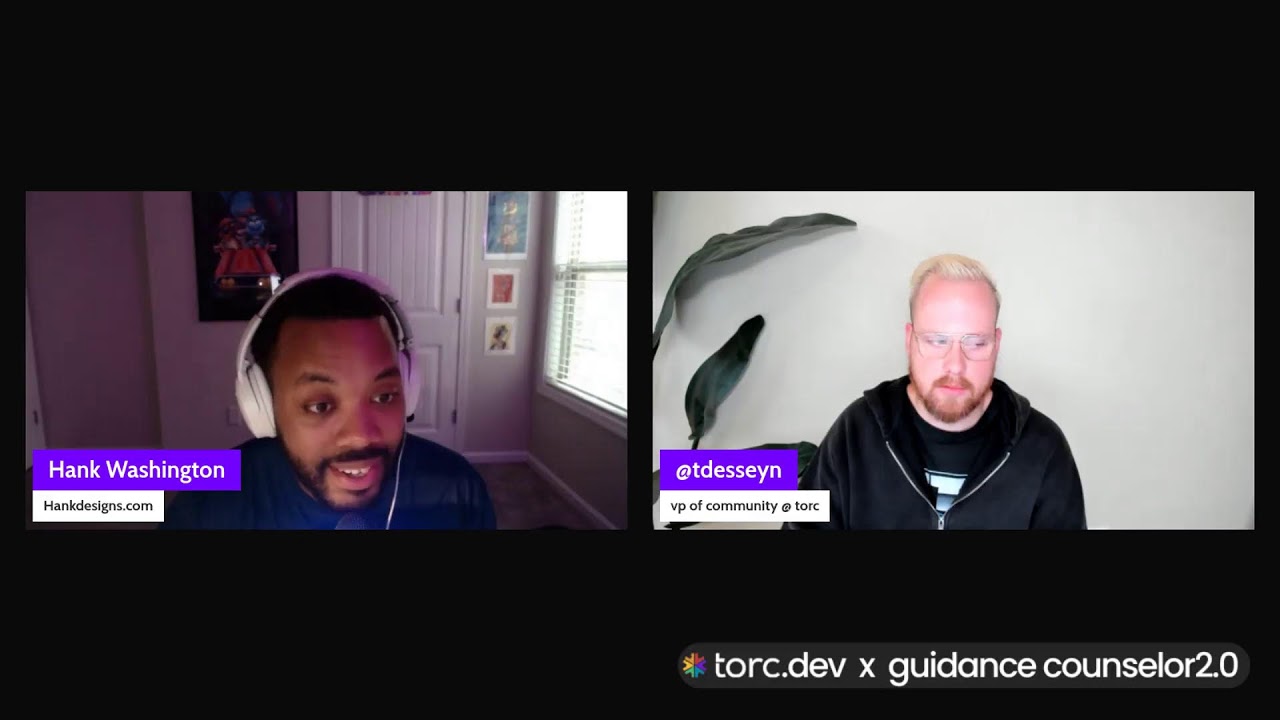
Hank Washington, founder of Hank Design Studios, landed clients like Snapchat and Netflix by posting consistently on LinkedIn, asking high-value discovery questions instead of pitching, and building genuine relationships. He emphasizes a clear portfolio, community participation, and selling communication alongside design, not just time or deliverables.
Chapters
Absolutely.
Let's do it. You're in Atlanta again? You're in Atlanta, right? Or not?
Yeah, well, Lawrenceville, but you know.
Yeah, yeah, close enough for sure. Yeah. All right, y'all, good morning. I'm actually gonna— I'm actually gonna drop this in the chat. We got a Torque Discord thing going on now where we're trying to get people engaged in the chat. So, uh, let me— let me drop this in there. Good morning, everybody. Happy, uh, Happy Tuesday, pumped for this one. Let me drop it in here real quick. Hold on, where is it? Gaming, do we have it in there? CD Connect. Hold on, y'all say hey, we'd love to hear from you.
What up, what up?
I am trying to drop this into the Discord.
Where did we put that?
Platform questions, jobs. We just— did we, did we add it? Where, where is it? Where is it? Am I crazy? Here, I'm gonna— I'm just gonna throw it to Jason. Jason, good morning everybody. I'm still doing work. It's good to see y'all. Oh, we got people tuned in. What's going on? It's good to see you. There you go, Kratos. It's good to see you, Ricardo. Great to see you this morning. Um, all right, pumped for this one. So I'm not— I got introduced to Hank Uh, by Render ATL, like where all magical connections happen. Absolutely. And, uh, I've been trying to get Hank on that. It's been a minute. I've been trying to book for a bit. It's been my cancellation, your cancellation.
Dude, schedules, they don't play, man. Schedules do not play. They do not care what you got, what you have a passion for at all.
Yeah, yeah. So pumped, pumped for this one. It's gonna be a blast. Um, I've admired Hank from afar for a very long time. I think he produces some really good stuff. And I think, and we'll dive into this here in a second, but I think the market has shifted pretty tremendously over the last year or 2 just in regards to kind of an appetite to going out on your own or appetite even not even going on your own, just picking up new clients.
Yeah.
Maybe kind of some side hustles. So we're gonna talk about that today. I think you can never hear it enough. People can never hear it enough. Um, so that's what we're gonna talk about today. But first off, before we dive in, Hank, I gotta ask you a question, um, uh, about, about some Christmas vibes coming up. Uh, what's, what's kind of like, man, like, like, what's kind of one of your favorite traditions or kind of your, uh, maybe your favorite Christmas song or something you got to be doing almost weekly for it to feel like Christmas? Give me kind of that vibe.
Oh man. To feel like Christmas, uh, man, so I, I grew up— or like a lot of my family members are like much older to me, so they like have very different like perceptions of like what feels like Christmas time. But for some reason, man, Charlie Brown always comes up every, every—
Yes.
It's like that, that time like when Thanksgiving happens and you're right in— right before like Christmas happens, it's always like some of the— I'm talking about the old school Grinch, the old school, uh, Charlie Browns. the claymation Rudolph, uh, Rudolph and the Abominable Snowman. Just having that on to some degree in the back.
It's a Rankin/Bass one, right? We're talking about—
Yeah, yeah, exactly. That's, uh, that's one of my favorites, man. And, and the, the hiker, I think his name was Cornelius, and you know, that was, you know, that's my real name. And then that always resonated with me. I'm like, all right, I'm gonna watch this. I want to hear my name.
That's fantastic. That's fantastic.
Yeah, man.
It's good to see you, neighbor. Um, Mark, it's good to see you. Roxanna, Jeff, Kelly, Katie, Eric, crew out this morning. Um, all right, so, uh, real quick for those of you tuning in, welcome to Guidance Counselor 2.0. This is a soft skills career podcast in tech that I've been doing now for about 4, 4 and a half years. Um, this started out as kind of just me talking into the ether about, you know, how you can find a job, but now it's kind of morphed into Really just helping give back to people in tech at scale based off different topics. So please say hey, would love to hear from you. The reason why I tell people say hey, and I don't mean this mean towards the speakers at all, but this is a, like the speakers are secondary, right? This is a way I want you to network, right? And what I've realized, networking behaviors change. The only way you could really, the only way to really consistently network now is show up in the chats, show up in the streams, show up in the Discords, show up in the Slacks. So again, I really, really, really want to have that ecosystem for you. I did post this in the Torque Discord right now too. So there is some chatter going on there if you want to be a part of it. But again, please feel free to comment here. Second thing, ask questions. Hank comes with a lot of knowledge, a lot of experience, a lot of background. And so if you are not asking questions, you are losing out on a wealth of knowledge from Hank. He is not charging me for it. And so take advantage of it right now. Hank's like, well, I'm not getting paid for this. Yeah, uh, so anyway, anyways, enough for me running my mouth. Hank, take it away, man. Um, who are you, what do you do, and then we'll go from there.
Oh yeah, absolutely, man. Um, one, yeah, thank you again, just thank you for the space to be able to chat. But what's up everyone, I'm Hank Washington. Uh, I'm an art director, designer, illustrator, uh, originating out of Mississippi but now working and creating in Atlanta, Georgia. Uh, I am the founder and owner of Hank Design Studios where we turn strangers into friends using the power of design. Uh, I've been lucky enough to work with just some amazing teams and brands. So we help, uh, across the board creatively, but majority into brand design, campaign identity development, um, and pretty much the whole 9 yards of just creative support, uh, specifically on more of the graphic side. But, you know, we've covered the bases from, you know, motion videos to just branding, which is mostly our bread and butter.
Yeah.
And, uh, just being just a creative partner, just helping, you know, teams and, and brands communicate and be able to have an identity that they can be proud of. And, and also, I mean, like, you know, give them big shoes that they can grow into.
I love that. I love that.
That's awesome.
Um, well, man, uh, I, I, I want to go ahead and start, uh, by a little bit of a splash. So again, for, for those of you tuning in now or in the future, I don't prep for this at all. Um, I really like the water cooler talk. And it was funny because I've just known Hank for Hank, like good dude, just always smile when I see him, just a great hang. And he wrote up in his bio, which I don't even look at until like the day of, I was on a call with him just now. I was like, oh shit, you've done stuff for Snapchat, Netflix, like the whole gamut. So I really want to start off there while people are still here, if before people get called into meetings and stuff.
Yeah, man.
Talk about how you even got visibility to those clients. I know this is probably a pretty loaded question, but let's just start kind of unpacking this.
Yeah, man. Um, no, those, those were just amazing opportunities, you know. Um, and honestly, it's just a— it's a big mixture, almost like a salad bowl of like being in the right place and a little bit of luck, um, with, you know, some of those opportunities. But, uh, but ultimately, yeah, man, I was— this was kind of in that time period right before the pandemic and all that was going down, and, and I was starting to exit out of working full-time to go full-time in the independent creatively. And, um, I was just on this, like, uh, I mean, I hate to kind of use the word hustle, but it was a hustle at the time. But just like going into the space where I was building up like a body of work or just a catalog of work that was easily accessible, and just looking across the space and seeing like how some of the creatives that I was looking up to at the time were getting these opportunities and positioning themselves for those opportunities. Um, and around the time, there wasn't really a lot of conversation or open conversation about like what that looks like. Like, what were the steps you actually need to take to, you know, have a solid body of work? How do you become accessible? How do you even talk about selling yourself as a creative? Because, you know, most people go in saying like, hey, I do design, I do design, I can do this design. But it's much deeper than that for a lot of the opportunities you may want. It's really just more you selling yourself as the person, which ultimately results as a brand. And, you know, um, I personally live by Marty Neumeier's definition of a brand, which is a person's gut feeling about like a product or a service. So, you know, the top people talk about like what it means to like to be a brand.
You said a person's gut feeling?
Another person's gut feeling about a product or a service. That's how Marty Neumeier defines like what a brand is. Um, but when I learned it, I was like, oh, okay. So now, you know, I hear myself back then even going around saying I'm a brand, or I hear other, you know, creators say like, I want to be be a brand, but it's not necessarily in our control. You know, we can only develop so much for that. But, but at that time, you know, I was, you know, putting in just a lot of work and just making sure things were accessible and, you know, really just connecting with people that, you know, really worked at these places and they were the decision makers, or who I assumed were decision makers.
Yeah.
Um, and just having a connection with them, say, hey, I just love to be a resource for you, not necessarily selling anything. It's like, you you know, just kind of praising what they do. And for me, definitely seeing more people of, you know, people of color, just even Black people in positions at these companies, and that's— it's still huge to me. But like, at that time, it was, it was definitely huge because I was like, oh snap, like, this is somebody that's cool, it works at like Snapchat. I was like, oh, let me connect just to know. I just want to know them, not necessarily trying to sell any work or anything like that.
Um, but being— You're saying, you're saying stop. Stop, you're saying too good stuff. You're saying— I want to unpack some of this stuff. First off, let's talk about how to sell yourself. I feel like it applies to if you own your own company or you're just a freelancer, or even if you're W-2 going to a new interview. Talk about the power of selling yourself, and because I feel like that's everything right now.
Oh, it's huge, man. It's huge. So it's— so I'll speak from like a creative standpoint because I know in tech it's a little— it's a little bit different, but For, for me, just selling stuff, I think it's not necessarily selling exactly what it is that you do. It's really more of like a high-value question list of questions that literally go into a discovery when you're talking to someone. And you're not necessarily there to, like, find your way to fit in. You're really just talking to them to, one, understand who they are, where they— where are they now, what problems are they actually facing, and are you just someone that can be of value to help them them address them problems, which sometimes it can be split, right? Like, sometimes they have problems that you have no clue how to solve. Like, sure, I don't know what to do, you know, I could do for you.
Yeah.
But there may be other cases where some problems may align with what exactly that you do, maybe as a creative, or you're probably that creative person that knows how to put puzzle pieces together or connect them to people that end up helping them to solve that actual problem. And for some reason, subconsciously, that just kind of creates you as like a valuable resource or somebody that people can rely on. So, you know, I've, you know, for me, I've even had opportunities where I've built connections by connecting somebody with someone else to be able to be like, oh, now, hey, because of you introducing me to this, we built something great. And now we found a creative opportunity that makes sense, like, to bring like you on to do certain things. And that's just like, you know, kind of really learning kind of the soft skill of high-value questions to know what someone is actually facing that doesn't always align to what you're trying to service them at, um, you know, service them by.
Yeah.
But if you can be that resource or that person that can connect the dots and say, hey, I might not know the answer, but I can at least put you in a position where the answer could potentially be found, or put you by someone that knows how to find the answer better than I can.
Have you struggled— did you struggle early in your career kind of selling yourself? And if so, where was kind of the area that you were falling short that you kind of had to improve on?
Yeah, that, man. Yeah, that was—
that—
yeah, yeah, you just put us— put up some past trauma.
Yeah, yeah.
Oh no, man, it was really tough. Um, so going into it before, it was just pushing the idea of like, all right, I gotta sell these creative services. Like, you know, like I'm out here designing identities and it's like, all right, let me sell you identity. You— or like I'm almost— what is it? Um, I'm prescribing before I'm actually diagnosing what's like interesting. Probably, you know, I like that.
Prescribing before diagnosing.
I like that. Exactly. And, um, that was it, you know, that was kind of like just putting the carriage before the horse type thing. And it was selling it so much. Um, but I got lucky, man. I got online and, you know, I was learning from just different resources. And at the time, there, there's this, uh, this channel and, um, uh, this group called The Future where it's ran by, uh, Chris Do, who's an amazing design instructor. I don't even know what to call him now just because I've learned so much from now. Um, but, you know, he made just a lot of great content around showing like how to express value without being so salesy and, and pitchy. Um, and one of the great resources that I still— I recommend anyone that can read is like the Winning Without Pitching Manifesto, uh, which is by— it's a great book that just shows like how to think, whatever industry that you're in, but how to think as a problem solver, um, to be like actually helpful to someone. Because everybody's getting sold to all the time. Like you see ads on social, like you're trying to get sold to you. go to a network event, you know, you're going to meet some genuine people, but you're also going to meet some people who's trying to get like some money out of you or some, some type of case.
Yeah.
But if you can show the value of like why you probably want to go with me versus someone else, it's not necessarily just because you're going to work with me, just because that I want to be someone that you can trust to get you from A to B or whatever that problem, you know, may be. And even I'm not the person actually driving the, you know, the the, the boat to get you there, I want to at least— let me be the bridge, or let me be the, the stop sign. Let me be the, you know, like, let me be something that can really be helpful to you. And it— and up front, it was a, it was a lot of, like, you know, I won't say sacrifice, but a lot of compromises of just, like, you know, you may not necessarily see the value up front. And that's usually going independent, that's like the scary part. It's like, yeah, I'm gonna go into this, I might not get nothing out of it immediately, but there's a payoff somewhere in the back end. Like, to some degree, it's always going to come— they come around. And, and honestly, just staying— and it sounds simple, but you'd be surprised, like, people don't do it— it's just, just be kind. Like, be kind and supportive, and it always turns back around to become an opportunity for you.
Yeah, Rox comes in here. It's hard not to sound too cringy for sure. I mean, I think a lot of people in the job search trying to sell themselves come across as cringy. And one thing I've added to my kind of talks that I give at conferences recently is kind of what you said. Don't talk about necessarily like you, talk about how you can solve the problem that the business has. I think a lot of times in the interview process, people don't know what they're interviewing for. And I think if you can figure out their pain points and say, hey, I've done this, this, this, and this, which could solve your pain points, I feel like you don't sound cringy. I feel like that kind of changes the conversation. What are your thoughts on that as obviously a business owner?
No, I, I can't agree more. I think it's—
I appreciate it.
It's, it's, it's— but it translates so much because like working independently, like again, your, your sales is huge as part of it. Like you got to be able to have this conversation, but those type of conversation or that skill of that type of conversation does translate into interviews. And I think if, you know, going back to what we talked about, like learning like high-value questions, it's really being straightforward. Like what maybe that company actually values. Like, what is the most valuable thing right now that you are in search of? And then see where you can actually align. Or maybe even asking, like, where can I align to actually provide you this value or get you to this, this milestone? Um, and maybe it may be a skill that you, you know, it make it land to where you already know, like, all right, here's, here's my map now. I know exactly. And I can— and it kind of creates a level of expectation of, like, now I know where you want to go. So now if I get you here, you know, they didn't— the playing field comes a little bit even. Now I can have a little bit of leverage of like saying, all right, we know where you were, now we can work together to actually build something that's, you know, very special. But, um, but again, like, it just translates so much being independently just working in sales. Like, you're just learning like what it is that they're— they actually value. And, and honestly, the question why just actually holds a lot of weight as well. Like, even if I know what's valued to you, if I follow up with you and say, like, why is that important, then it becomes like a personal relationship. Because now you may have a personal connection to something that's very important, and I can relate to you as a human, which creates a different level of a connection that says, like, all right, I'm not just an interviewee talking to, you know, uh, an employer or potential employer.
Yeah.
Now I'm talking to you as a human, which ultimately, you know, results into culture, and it comes into, like, is it someone that I can actually work or feel like I can trust to get a job done, you know?
So, uh, and that's so good. One thing you also said too a few minutes ago, I'm trying to like recall specifically, but basically you were like you've almost had more success just being kind and helping connect people to other people and, and really just kind of being the zeitgeist of everything, right? I mean, can you talk about just being a part of the culture, just being where the people are. I mean, and, and talk about how important that is, especially I feel like in business right now with us being still a remote-first workforce.
Yeah, it's, it's, it's really important because I think it, it helps, you know, kind of put your ears to the ground and understand like where people— where's people's interests or, uh, some of the challenges that they're facing. Because even if, you know, you're standing in a crowd and you're meeting people who may already know each other, you are, you know, the kind of awkward like walking up to a group of people trying to introduce yourself type thing. But, you know, doing that and, and kind of just staying back and listening, like really listening hard, you can really kind of, uh, almost like just discover things that they— that you wouldn't even realize is an actual problem. I actually even learned that with, you know, Render ATL. Like, you know, being around everyone that's kind of in this space that's adjacent to where I am.
Yeah.
They face very unique problems. And, you know, some of those things I understand, some of them are a little bit over my head, but being able to be around and listen, um, and just hear like kind of what people are going through, whether good or bad, it just puts your ear to the ground to be able to have like genuine input if needed. Um, but just being a great listener, like, it can, it can change a lot. And just asking people and to, um, you know, asking people to kind of just loosen themselves up and, and just express kind of what it is that they are challenging. What is it, like a colleague? Or maybe there's like an employer that's maybe looking for a certain, you know, staff member or trying to find a candidate that fits, you know, the actual, um, you know, position that they're trying to fill. Like, you never know what people are going to spill to you. Like, they'll probably put you in a position where like, oh snap, like you're facing that, like, we solved that all day. Like, I know how to, you know, approach that all day. Or I can say, all right, let me introduce you to this person here. They know this, this, this, and this. I don't know if it's going to be a good fit, don't want to promise you anything, but I think it's worth the conversation. And next thing you know, like, you come back the next year or see them again down the road or see a post on LinkedIn, you realize they, you know, either landed a position or landed a job or anything like that. But you also that person that's top of mind where I can recall back and say, I remember, you know, I remember, you know, Hank introducing me to this person to do that. Like, is there a creative opportunity that we potentially could, could do, um, do to get them involved?
Yeah.
Sometimes it lands, sometimes it doesn't, but it's— it just builds up for you. It can build up a lot of confidence.
Yeah.
And then, but continue to repeat that type of skill, it just puts you in a better position to be someone that people can trust. Now you're the person to go to to say like, hey, you know, can you consult?
Yeah.
Like, now you're— now you're in a consulting position to, you know, be of value to someone. So, um, but yeah, but being ears to the ground, man, and just being in those spaces, it's—
it's—
it's super important. I mean, like, even being, you know, in Discord chats and hearing what people are talking about around certain topics, it does help. But that face-to-face, just being in a room, it just— I don't know, it's just such a human aspect that I don't think tech has the ability to really pull together just yet, um, to make those genuine, genuine connections and conversations for sure. I love that.
Um, I got a comment on TikTok, uh, uh, TT the Career Coach. Uh, if you want to work with me, shoot me an email, um, taylor@torque.dev. Um, I'd love to work with you as well. Um, uh, Hank, where are you getting your leads from right now, right? I mean, I kind of Is it in person? Is it online? Um, you know, I'm, I'm kind of curious, just, uh, just from my perspective, like, where, where, where are you? Is it all word of mouth? Like, if you kind of give me kind of a percentage split of like your top 2 or 3 areas.
Yeah, so early on, um, I would say early on, but probably just like midway of just from when I started to now, it was a lot of LinkedIn, man. It was— I'm telling you, LinkedIn is, is huge.
It's still slept on. I literally got an email yesterday, I'm not, I'm not shitting you, uh, from this guy, uh, social media person, and literally the title of the email is, please stop ignoring LinkedIn, please.
Yeah, I couldn't agree more, dude. Like, dude, LinkedIn is— that was the bread and butter. It still is, honestly. It's still the bread and butter, man, of just being able to come on here and just hear people You know, uh, or just, or watch people kind of talk about like things that they need and just being able to easily share work, kind of just share experiences, highlighting people, just highlighting knowledge. It's just such a rare space that, you know, I don't think in the creative space is really tapped in fully.
Oh, because my wife's, my wife's a creative photographer. She's like, I'm not gonna post LinkedIn. Like, I'm telling you, if your clientele is businesses, you need to be on LinkedIn.
Exactly. Exactly. You got to meet them where they are.
Like, Instagram is D2C for sure. Like, if it's— yeah, one-to-many for sure. But if you're— if, if you're—
if somebody who hires you and cuts you a check is in a business world, yeah, go meet them at that where they are, because they're not gonna come on like Instagram or anywhere like that to search a thousand— like thousands or even millions of just creatives and like pages to land on yours. It can happen, but, you know, don't, you know, don't, don't push your luck like that. Like, LinkedIn is literally the hub, you know, with a lot of just business conversations. There's a lot of conversations just around, like, you know, hiring, leadership, and all these things. But you can meet that contrast with creative, just being able to show just pieces of your work, which, um, kind of in that space when I was going— when I first went independent, I went heavy on LinkedIn, just like showing bits and pieces of things that are applicable to what a business may need. Like, you know, there are big companies who throw conferences. Like, you know, all right, let's show some conference work that we've done in the past. Like, you know, we're not out there kind of like just to fish, but we just really want to make sure that if someone was to look up or even see anything about a conference, we can at least come up into the conversation on the creative side of that. Um, And with that too, like, you know, being able to, uh, also have easy access just so that when an opportunity comes, there's not so many layers of like ways to communicate. Like being on there, being active, make sure like your DMs are like, you know, I have to have a whole window open consistently on my, on my Chrome just to make sure like if a message come through, I can be able to see it and respond properly. Because man, there's opportunities that come quick. but just as quick as they come, they can also go, you know. But I think as a creative, if you can meet that contrast of like showing your creative work, being able to talk to your work, and like being able to give context about the things that you're able to do, it just puts you as a creative in a different position to be like in the forefront of these opportunities. Because, you know, it's one thing to be a great like designer or artist or photographer, but if you can actually talk through your work and give context and provide like a real story behind like the brand that you're building or the brand that you're supporting, um, it just puts you in a whole different window of just being a creative thought leader, uh, which I put in air quotes, thought leader, but just a creative that you can actually, uh, that can actually be trusted for big opportunities.
Yeah, I mean, and I think too, and I'm sure you can attest this, people don't know what they want, you know. Even, you know, again, Hank's on the creative side, but even if you're an engineer watching this, a lot of times in my experience, hiring managers, they don't even know what they want. So if you're out here documenting what you've done, let's say you've done a specific project around this technology, taking it from here to here, and you post about it, a hiring manager may be like, oh shit, This is literally the problem we're having. I need to talk to someone. I need to talk to this person about it. And I feel like the same thing, especially with creatives. Most people are not creative, right? And most people don't know what they're looking for until they see it in front of them.
Exactly, exactly.
That's like a post. Exactly, exactly.
No, it's— that's, that's right on point, man, because, you know, um, and you can't blame some— you know, that's just, this is the way the space is, like And I think from what I've seen, like, I think creatives don't really grasp that, that aspect of it. It's like you're in a very, very, very unique position to see things very differently than a lot of people can, you know, because it's just creatively that they just have the eye for things that— or you're looking for things in spaces that most people don't even look for. Like, when we're out like in the city or somewhere, like, I'm looking at signs, I'm looking at like billboards, and like just looking at like treatments and seeing how people actually are, you you know, putting these elements together to tell this type of story, like, that's a very, very specific skill. But in the creative space, and again, like, talking back to, you know, the importance of sharing things in LinkedIn, there's not a lot of creative people on LinkedIn, but there, there are people that do have a certain level of taste that they know that when they see it, they can appreciate it. And then they also want to know more about, like, why am I seeing— not necessarily why I'm seeing this, but why does this exist? And if you can speak to those things, like, man, you're just— you're becoming that person that, like, I know for creative, this is at least somebody that I can call on and just inquire about.
Yeah.
Um, which goes all the way back to what we talked about before. Like, once you inquire, now you can, you know, sell yourself as, like, a genuine human being that can actually provide a service that is impactful to this business. Um, because they want to invest, you know, they want to invest into the creative. It's just now Make it worth it for them. Don't just be just the creative. Like, how can they trust you with, uh, maybe a small project up front and then come back to you and say, hey, we got this big campaign that we think you'd be a great fit for?
Yeah, I love that. Um, as— and again, time flies when you're having fun with friends. As we're wrapping up here, if anybody has any questions, please ask them. But Hank, is there anything that we, that we didn't cover that's really pressing right now that you're seeing in the market or the community, or specifically in the design community?
Yes. Um, one specific thing I think is just having a clear body of work, you know.
Yeah.
I think, um, I've, I've been fortunate enough to run into some very, very great, create— like, cool people that are like aspiring to be creative or just creatives in general. Um, and one question I always ask, like, do you have a body of work, or is it easily accessible to, you know, see like what you've done or what you can do? And most times it's, you know, people are either working on it or they don't necessarily have it, um, which is okay. But I think that's like a big priority, you know, especially in the creative space in whatever aspect it is, you know.
Yeah.
Um, being able to have a catalog of work that you are proud of, that you feel good to share, that you can collaborate or get feedback from, you know, fellow creatives and things like that, it's huge when it comes to like the opportunity. So that way when people are looking not only you up as a person, it should be easy for them to see a post on LinkedIn because we're going to encourage our creators to post on LinkedIn after they watch this.
Yeah.
Make it easy for them to be able to click one link, go to your work, and be able to go to contact you. Yep. I love that.
I love that. So true, man. So true. Oh, so good. Um, I want to see if there's any— let me ask you this. When did you decide— I know this could be a whole nother conversation, but I still want to get to this— when did you decide to go from freelance to like 1099 to running, to basically becoming, I'm assuming, like an LLC business type thing? When, when did that shift happen?
Um, so it happened, it happened kind of after we, we started to get like a, uh, a real funnel going where a lot of like just opportunities were starting to come in.
Sure.
Um, so one thing we just— I've just prioritized, like when I first went independent, I was like, we got to build a system. Like, let's build a system that where we can— I have, you know, every week I know that a few posts are going on LinkedIn. Every month I can expect an X amount of leads type things. And then our goal is to close, you know, that, you know, X amount to be able to have consistent work. workflow.
Sure.
Which of course is, is, is scary, but it's, it's fulfilling work. Like, it's always fulfilling. Um, but doing that for a while and just kind of getting that system together, that's when it kind of clicked to say, okay, now let's, let's start to make this a little bit more, you know, legit in a sense. Not— and I'm not saying the 1099 is not legit, but I think more to be able to have a, uh, foundation and then start to build like steps to grow that foundation. Um, and again, I wanted to really make the studio a space where more creators can actually find opportunities and just be able to either, you know, collab with me, or maybe we work with a client that I don't necessarily— or I'm not necessarily able to serve, like whether it's like skill set. Um, so we wanted to make sure that was an opportunity in a space that, you know, if we run into an opportunity that we could say, all right, here's a creative that has this specific skill, let's art direct them to be able to come in and say, okay, work with us to help build this actual piece of this project, and, you know, they can feel confident that they're working under an umbrella that they can brag on, you know.
Yeah.
Again, just something that they can, you know, talk about and show off and feel secure being a part of. Um, and, you know, one of my best buddies back, you know, when I was, uh, first starting, he did that with his studio, and that was where I came in to work on the human. Just watching that whole structure and being able to see that go from the ground up, um, just inspired me to do the same. And that's kind of what influenced the, all right, now let's start really, you know, taking this seriously. And it is definitely huge when it— we start charging a lot more to be able to, um, you know, stay within the market and being able to work with very specific clientele that we're, um, you know, we get lucky to serve.
Yeah, I love that.
I love that.
Um, all right, so for those who tune in, thank you so much. I want to get to kind of a rapid fire here. Um, that, that, that I always do. Um, uh, let me ask you this, Hank. If I were to tell you tomorrow that you— if you wake up, you can't do design anymore, uh, but I'd pay you the same amount of money, if not more, to pursue your, your favorite hobby, what would it be?
Oh man, I'm cooking all day. We're gonna eat good. Oh yeah, we're gonna eat good, man. We're gonna cook.
I love it.
Like, like, like what?
Like what type?
Like, just, it's whatever, man. Like, you tell me I can't design, we got to get creative. We gotta, we gotta find a cookbook somewhere, man.
Awesome.
That's so awesome.
Um, uh, and then, um, outside of cooking, what else do you like to do, uh, in your free time?
Oh man, uh, I love to be outside, man. Me and my wife and I, we've been on this like big hiking, um, hiatus just lately, just being able to go to, you know, different states and different, you know, um parts of the state to find just different hiking and parks and stuff like that, man. It's, it's kind of a— it's been a slept-on kind of thing for me. I've been like, you know, I see people do it all the time, like you see it online and stuff like that, and I'm like, let me just— let's go hiking, like let's go do something like completely different. Um, and we went to, I believe it was North Carolina, a couple years back and, uh, you know, did some hiking there, and I was like, oh man, I'm, I'm actually kind of addicted to this a little bit. So, um, Yeah, man, that's kind of been the, the interest of lately, just, just something to kind of get outside. And it's just because it always ties back to creative to some degree because it's like, all right, now I'm not thinking about it, but yeah, subconsciously I'm thinking about it. And I'm like, it should, you know, she'll get on to me, we'll be out there and be like, so much more juice. Like, oh dude, and it's— I finally get in trouble because I'll be like, oh snap, I just got an idea. Like, and we have to stop and I had to get like a notebook or take a, take a quick note or something. Yeah, it's like, you ruining the trip. Like, all right, I said okay.
I do the same thing.
Give me a second, I just thought about something.
Yeah.
But, um, but I mean, we're both in the same boat. Like, we, we've— we're both in creative space. We've always, you know, looked for ways to find ideas. But nah, man, I think being outside and, and really just getting back into nature— and I'm country at heart, man. I grew up in Mississippi, so it— you didn't stay in the house at all. Like, it was like you have to— you had to get outside or go to school or something like that. But, um, but yeah, that's kind of lately, man, that's been the hobby. So Yeah, man, if design wasn't a thing, man, we'll be, we'll be eating good and walking, man. We'd be hiking.
I love it. I love it. Um, is there anything in anything you've read, watched, uh, technology in the creative space that you're pretty pumped about right now, or you want to give somebody the flowers?
Oh man, I'm actually, I'm really excited with what, um, man, honestly, a lot of the creative tools are just evolving in a way I think that is becoming huge. Uh, I mean, Figma is doing, it's doing a great thing with like, I think they they rolled out kind of some presentation, um, some stuff, presentation things that were really, uh, helpful. Um, Adobe is running out with some, a lot of AI, um, uh, tools that are just like crazy right now. Like, we've— I've used a lot of Firefly just to kind of help with, uh, conceptualizing, which has made my process a lot smoother. Um, and it's such a great, like, way to, to get through ideas in your head so quick. Um, you know, as a creative, we, you know, especially when we're pitching concepts or pitching directions, uh, for design work, you know, it usually— it used to take a lot of time to be able to like, all right, how do we paint this picture clear enough for people to understand and be able to grasp, um, you know, early on? But now with like these evolutions of, you know, Firefly, and then you also, of course, you have like, you know, the ChatGPTs out there and all that as well. But being able to use them creatively has been, you know, very seamless and being able to hone in those vocabulary skills to be able to talk like, like a genuine, like, art director. Like, you have to be able to describe things in a way that is layered. Like, how can I paint this picture for you with only words? Which, you know, you could take on a lot of, um, we take on a lot of inspiration just from reading. You know, a lot of the great, like, authors and just books, they describe stories so well.
Yeah.
Um, but just taking those techniques and translating them into these AI platforms and really describe what it is that you're picturing in your head, or at least you wanted to picture in your head, um, just gives us a lot of ammo, man, to be able to really build a universe or build the world that we can, you know, bring people into, whether it's for ourselves or for our clients.
Yeah, I love that, man.
I love that.
All right, last question and we'll wrap it up here. Um, again, thanks for y'all hanging out. Um, we're off tomorrow, and then Thursday morning I got another Hank.
Let's go.
He's the CMO of Laravel. Hank Taylor's gonna come on. So last question, Hank, for you, present Hank, this Hank. So this show's called Guidance Counselor 2.0 'cause we had guidance counselors in middle school, high school, and college, but now as adults, we don't really have anybody to turn to and ask for just general career advice. What would be your biggest piece of career advice to young Hank if you can go back and tell him something?
Okay, I got it. To tell myself, I would tell myself, don't sell time. I mean, don't sell design, but sell time and communication.
Love that.
Yeah, yeah, yeah, yeah. I love that. That would change everything for me.
Yep.
I love it.
I love it. Well, y'all, thank you again for hanging out with us today. We appreciate it. Go connect with Hank. Go send him a DM. Tell him you, uh, tell him you enjoyed the episode. Uh, today on Guidance Counselor 2.0. Again, off tomorrow and see you Thursday. Hank, stay on so I can say bye to you backstage, but y'all have a good one. We'll see y'all Thursday. Thank y'all.
Peace.
More from taylor



tech doesn’t have to be the only thing that brings us together #techcommunity #techcareer

I want to give back to y’all that make the tech community so great #jobsearchtips #techjobs




spend a little time investing in yourself #linkedin #linkedintips #careeradvice


