
How to Level Up Your Career w/AI + Nader Dabit, Growth at Cognition
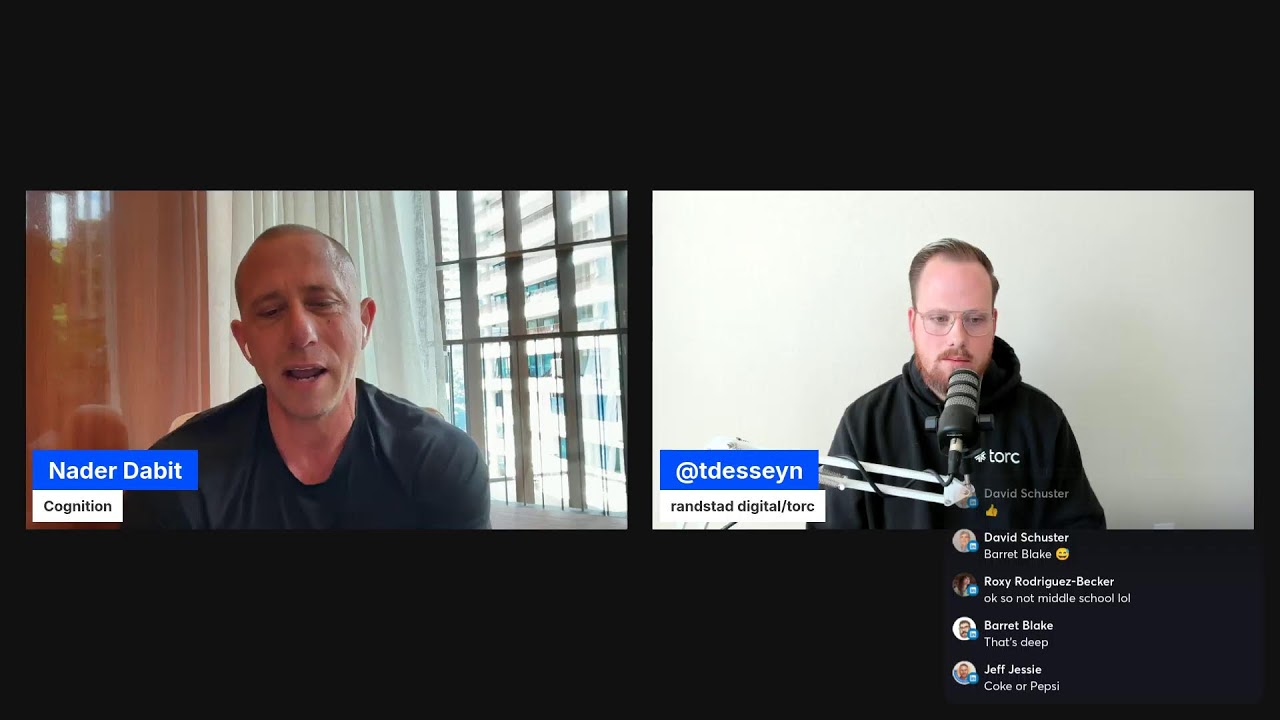
Nader Dabit from Cognition discusses how AI is reshaping developer careers. He breaks down agent orchestration, the shift from front-end/back-end roles to broader AI-native skills, and concrete moves: spend $100/month on tools like Claude and Cursor, follow Hacker News and GitHub Trending daily, and focus on skills AI can't automate like DevOps and security.
Chapters
All righty. So where, where, where are you right now? Because I also feel like you're everywhere.
Well, physically São Paulo. Um, oh really? My base is Jackson, Mississippi, and I would say the main office is in San Francisco, but I've kind of like actually been to the New York office, San Francisco office. We also have an office in Austin and a few other places.
Nice.
So you're— what about you? Are you still in Nashville?
Yeah, dude, still in Nashville, man. We got, um, uh, I think since we last spoke, uh, we got some acreage, uh, so we're, we're on 15 acres up, uh, 25 minutes north of town. So we got a— we got— I got a miniature donkey, we got 3 horses, um, and 3 kids and a cat and a corgi. So, you know, we're— I, I feel like we're the Brady Bunch. Right now.
Very cool. Very cool.
So, uh, how, how long you been down São Paulo for?
Uh, just, uh, just a day.
Oh, nice.
Sweet. Well, thank you.
Thank you for doing this. I appreciate it. I appreciate it.
For sure. The time is, is a good time.
So I love it. I love it. Um, so for those of you tuning in, welcome.
Good morning.
Um, I know we're getting started a little bit early. I— there, there's gonna be a lot of information on the show, um, and I'm very, very excited about it. I'm excited to hang with, uh, Nader. You know, uh, Nader and I have known each other for years, um, obviously kept up with what he's doing, um, and, uh, he's been on the show a few years back, um, and we were chatting backstage and, and, uh, it's just good. It's good to have you back on the show, man. It's great to have you back on the show. Uh, thank you.
Good to be back.
So I, I'll run through some housekeeping, um, kind of announcements, and I'll kind of yap for a second. Nader can just look, uh, look pretty. like he always does. Um, but, but first and foremost, I want to give a shout out to Appwrite. I am an Appwrite hero. Um, love the crew over at Appwrite. Definitely go check them out. Um, uh, great team, great product. Um, also listen, we got a lot going on in the, in, in the Torque community. Um, you know, we have obviously our jobs platform you can go sign up on. Um, but if you go to torque.dev/community, it kind of gives you a quick snapshot of who we are, what we do. Love to have you check that out. We also too, we have a pretty awesome newsletter. It's one thing I'm super proud of. A lot of people are like, man, you guys have so many events going on, I can't keep up. Join the newsletter. We have all of our events in there when we're going to be at cities. We're going to be at all things AI. I'm speaking next week on basically this topic. In full transparency, I'm using these interviews with Nader and also Aaron Francis help craft my talk. So, Nader, everything— some things you say today, I'll give you props in my talk. Um, but, you know, basically my talk is how to ready yourself in this job market around AI. I'm speaking on that next Tuesday at All Things AI. Um, but we're gonna do a meetup. All that's in the newsletter, so definitely sign up if you haven't already. Um, if you want to be updated when I go live, uh, with amazing guests like Nader, definitely text me. This is my actual number. Also too, if you have any job search questions, shoot me a text. 615-235-5650. Would love to have you. But I also send out updates whenever we go live and/or any updates of newsletters, etc. And then of course our Discord, super active. You know, I— the vibe of the Torque Discord honestly is like a massive friend chat. There's a lot of people helping people review resumes, give career advice, job search advice. So I'd love to have you in that as well. And finally, Um, the official coffee sponsor of Guidance Counselor 2.0, Seek Coffee. So I didn't know about this, but most coffee has trace mold in it. Um, there's a founder here in Nashville, his name is Caleb. Um, Caleb and his brother started a company called Seek Coffee. It is completely clean, no mold. Um, he's really big on, uh, just producing very high quality coffee. It's fantastic. If you use code TDESS, you get 15% off. Highly recommend it. I'm drinking it right now. It is Fantastic. I've also been talking to Caleb about getting, uh, just a tap installed in my house because of, uh, how much I love cold brew. So anyways, that's that. I see people tuning in. We're here. It's great to see y'all this morning. Nader, let's kick it off, man. Who are you? What do you do? And we will go from there.
Sure. So my name is Nader Dabit. I'm currently at Cognition working on the growth team. And for the last, I would say, 11 years, I've been doing developer education all the way from just local meetups and coding schools in Mississippi where I kind of am from and live, all the way to like leading developer relations teams at companies like AWS, Aave. And now I'm working kind of across multiple roles at Cognition. And at Cognition, we essentially are an AI company and we have a platform for developers and teams that are deploying coding agents at scale within their companies.
That's awesome. That's awesome. So again, I was talking to Nader, but behind the scenes and backstage, and again, the purpose of these streams kind of that I wanna do is to really help people better position themselves with the market right now. AI is kind of changing everything. I'm even using it. I'm literally using Claude right now to create a custom dashboard with my team. It's pretty tremendous. I feel like a magician and I'm not even a developer, so I can't imagine how developers feel right now. So Nader, I wanna go ahead and just kick it off to you. What's your general thoughts, state of the union right now? Are people behind? what people should be learning? Let's just kind of kick it off super broad right now.
Yeah, there's— it's probably the most— it's for sure like the most interesting, crazy, confusing time in the history of my career to be a developer. Yeah, first of all. Um, but there's always kind of like a spectrum of, I would say, how people look at what's happening Um, at any given moment, right? And it's like on one end you have the pessimists, on the other end I would say you have the optimists, and you have everyone kind of in between. And I would say the people that are kind of like more on the like optimistic spectrum, um, are often like more proactive, and they're out there kind of like being real with the current situation as opposed to being in denial and trying to find ways to kind of like stay ahead or stay ahead of the curve. Um, that's kind of like my general overview of kind of like where things are now. How do you actually, I would say, take that and put it into practice? Because there are people like, if you look at the job market, there's a lot of doom and gloom around layoffs at these larger companies. But on the other end, you have people like the creator of OpenClaw who are getting essentially acquihired at hundreds of millions of dollars.
That happened when I was on paternity break, by the way. I literally saw OpenClog, it created and then bought in like 6 weeks.
Yeah, so like you have— there, there's obviously massive opportunities and there's massive potential. And if you kind of look at some of the like discussions on, on social media, you'll see certain people saying things like, or hinting towards like AI code generation, it's just not good, it's not good enough, it's, it's not going to be something that like we're going to really use in production or whatever. And those are less and less, I would say, nowadays. And then you have people on the completely other end of the spectrum that are literally out there kind of like building abstractions to enable like agent orchestration. And I think the people on that spectrum are the ones that are, I would say, doing much better in the job market and they're staying ahead. And I think like my general take is that you can't like deny that this technology is here and it's getting better and it's not going away.
Yeah.
And that our jobs as developers are completely different than they were even 3 months ago. I think when Opus 4.5 and Codex 5.2 came out, it really, really changed everything. And that's kind of when I decided completely to pivot my career. I think everyone knew we would get there at some point in time, but I think it was, I think it was maybe a little earlier than a lot of people thought. And we can't think of ourselves as just a front-end developer or a back-end developer. You have to kind of have a large, like, skill set. And part of that skill set, I would say, yeah, would be like agent orchestration. But you also need to kind of like learn how to leverage a lot of other things. You have to kind of lean into design. And I would say there's people that have a lot of like DevOps and SRE experience. I think maybe trying to lean more into that as a general-purpose developer makes a lot of sense because you need to kind of be able to do a lot more.
Yeah, I have, I have so many questions to ask you, uh, based off everything you just said. Uh, the, the, the first thing I want to ask is like, do you think— and we'll give some hot takes, we'll give some hot takes on this morning's show—
do you—
are we heading towards developers not focused necessarily calling themselves a front-end or back-end developer? Are we, are we heading towards a place where you're just going to be a developer? Like, like, like, like, like, are we heading towards that now or no?
Well, I think that, um, everyone now is basically a developer. Like, I would say a lot of the stuff that a developer quote unquote would do can be done in natural language now. I think there, there's still, um, the category of like engineering that is a lot more complex. There's a lot, there's like cloud engineering, there's SRE and DevOps. I think that sort of thing is still not yet automated. Then you also have a lot of the ML, like I would say roles that are also not quite, or for sure not automated at all, right?
Sure.
Auto research is interesting to kind of look at that, that might disrupt like, you know, certain other areas as well. But then you have also, I would say, these people like, I don't even remember his name, but the creator of OpenClaw, who are like gigachad agent orchestrators.
Yeah.
They kind of really, really understand this at a deep level and they're able to create an insane amount of value and be able to again, like be acquihired at hundreds of millions of dollars. And I think like that's the spectrum, that's the end of the spectrum that you wanna be on. If you previously considered yourself as a developer, a frontend developer, a backend developer, you need to kind of really understand how to just maybe be someone who's like hyper-optimized at just managing agents, right? Um, so someone like— I wrote a post that said something like, I don't know, I've written a few like tweets that went viral, but one of them was like, I can't believe we used to actually write code. And that's kind of what was just the thing that, that went through my head when I was, when I was doing something and I, I was thinking to myself, wow, I can't believe I used to write all this code, right? Then I had a lot of people that were arguing with me and they were like, well, if you're not writing code, what are you doing? This was back in December and I was thinking and essentially, yeah, it's the same thing that a lot of people are also, I would say, come to the conclusion of. You're essentially orchestrating agents at this point if you were previously just a developer.
What does orchestrating agents mean? As somebody who's non-technical like me, you've brought that up now a few times already. in the few minutes we've been live. What does that mean for somebody who may not know what that means?
Um, it just means that you have agents that are integrated into your code base that are doing different things, and you're able to control them in, uh, in a way that is very, very efficient, I would say. And you have like— I would say there's 2 main ways that you see people like working with agents at the moment. One of them is locally. You have essentially a codebase that you've checked out locally with Git or whatever, and you've spun up Cloud Code or you're working with Windsurf or Cursor or something like that, and you're just iterating, I would say synchronously. You ask a question or you prompt and you get a response and you test it out. That is one workflow. Then you have the other workflow which is async where you're sending multiple requests in parallel. You might say, do this, and then you might then jump into another session and say, do that, and then you have another session, do that. All these things are happening at the same time. That is more of like, often I would say, are remote workflows, whereas the local experience, the synchronous experience is often local. But with Codex, I believe they and a few other tools are enabling this parallel orchestration locally as well, and I believe they're doing it with a few different techniques. But yeah, I would say working synchronously locally is often what most people get started with. Then for large codebases, large teams, and for collaboration, you have this remote or background agent experience where you're kicking off a bunch of tasks, I would say asynchronously. I want to talk a lot more about that because that's where things are headed and that's where we're seeing a lot more of the—
Yeah.
At Cognition, our main product is Devon. We also have Windsurf, but Devon is the original product. It's essentially an asynchronous background agent or cloud agent, I would say framework or platform. The way that most people use Devin is that you have large teams and you're collaborating on a codebase. You can interact with your codebase via these remote agents through a couple of different ways. You can go to the application and you open up the screen and you can say, hey, go fix this bug or go make this update.
Yeah.
It'll automatically either you can tag a codebase or automatically understand which codebase you're talking about. But the most interesting way that we're seeing most teams actually interact with the agents is through Linear and Slack. What's cool about Slack is that this doesn't seem like that apparent or obvious or even interesting to me at first. But what's been happening, what I've noticed, it's that it's actually maybe one of the best platforms for interacting with your code bases, because what ends up happening is that it opens up the code base to everyone in the company. Because in the past, if, if some non-technical person saw a bug, or if they saw something in the documentation that wasn't like correct, they would probably maybe go in Slack and say, hey, this, this is broken, and they would get forgotten. Or maybe they would go open a ticket and put it in Linear. And it would get put in the very backlog because it's just a little typo and no one really cares. And there's a lot more important stuff to do. But now in Slack, they can just say, hey, Devin, this typo exists in the docs, fix it.
That's crazy.
Anyone in the, in the company can just do that, right? And then what ends up happening is Devin takes that, creates a PR, and, and it's ready to be merged. And you can even kind of have rules around auto-merging. for certain low-level things that aren't going to break anything, which would be something like that. That's one thing that's happened there. But another thing is that you actually have the context of the entire Slack discussion that you can use as a prompt. Someone might open up— That's so cool. Yeah, it's really cool because someone— what happened recently within our company even, I can give an example. Someone was like, we've been talking about adding light mode for a long time.
Yeah.
And we had someone that made a comment like that it's, it's really bad that we don't have light mode. So we started a thread saying, oh, we really need to add light mode. And we had like a bunch of people chiming in, chiming in. And then finally, um, someone just said, hey Devin, and they wrote like this really, really in-depth prompt to kind of like kick off, uh, you know, an actual like production-ready like light mode. And, um, the whole context of that conversation got put in because there are a few variables that people were just pointing out. Those types of discussions can be sent to the agent as context and everyone in the company can chime in. This is like a completely different paradigm from what coding has been because in the past coding is like one engineer reading a ticket and making an update. Then what ends up happening is the pull request gets sent and then someone reviews it and then it gets merged. and then 10 people chime in and they're like, oh, like, you know, actually I would have done it this way. But yeah, when you have all these things being able to be discussed before it actually gets sent, then you now have a lot more broad participation in the code updates. Now, like, this might not make sense for like really complex things that need someone really technical to understand, but for a lot of this stuff, it actually makes a lot of sense.
Sure. Man. All right. So let me ask you this. I kind of want to rewind a little bit. You talked about how DevOps, kind of the ML type stuff is still, cannot be automated. Do you think individuals, because I think Jason chimed in here figuring out what what AI can't do and focus on it because there are a lot of things it can't do. What are your thoughts on this?
That's very spot on. Getting very good at what AI can do and being able to leverage that and getting good at what AI can't do will really, really set you apart. And I think like those are the types of folks that are going to be not only doing okay, but they're probably gonna be doing better than ever. Yep, yep.
Lawrence had an interesting comment. Lawrence, it's always good to see you, man. I've been calling this phenomenon the great positional smush. For a year now, devs doing ops, PMs are making PRs. We're mostly technical staff. Uh, yeah, I agree. I agree. Um, any thoughts on that?
Spot on. Spot on. Yep.
Um, let me, let me ask you this. Let's, let's, let's kind of break it down to, you know, for, for folks who may be watching this who, uh, are early in their career and/or have been kind of the you know, very kind of more in the enterprise, because I do want to talk enterprise here in a minute. What would be your biggest suggestion for folks who are in an environment and/or starting out where they just don't have access to these tools? What can people do today, this afternoon, to start learning all this? Because I just want to point people to where to start. You had Aaron last week say, Go buy Claude's $20 a month because that's what I use, um, you know, and start messing around with it. Do you have any other suggestions on, on, on how people should get started? Oh, Nader, you froze. We lost Nader. Nader, where you at? Nader was gonna drop some bombs and then he froze. Come back. All right, so while not— well, Nader is, uh, getting back on here, it's one of the things that I've talked a lot about In terms of bettering yourself, I think you've got to start tinkering with it. Uh, I'm gonna kick him out of the studio and see if he can come back in. So we'll, we'll resume the conversation in a second. We'll resume the conversation in a second. But I want to go back to what Aaron said. I think you can't stick your head in the sand anymore, right? I, I talked about this. I'm going to talk about this next week. I saw this when React came out. Right? When, when, when you— there are a lot of people who are resistant to change, and I think what you really need to do is you need to be able to adapt, right? Prime example for me, I've downloaded Claude. I'm on the $20 a month, uh, paid seat, uh, right now, and I'm currently building a dashboard for the community team, right? I am non-technical, but I do need to know how to use AI. And so I am building a dashboard that tracks budget, that tracks social media interactions, that tracks email sends to this dashboard to report to upper management. And so that's something that, again, you need to be, uh, aware of. Nat, are we back? We're back.
Hey, I just, uh, I switched to my hotspot. I think I'm having internet issues here. Okay, sorry about that.
All right, you're good. All right, so what can people do to get started today?
Right. So I think like that there's 2 things that I would do. Number one, I would set aside about $100 a month and I would kind of try to experiment with the most bleeding-edge tech that's out there. And this would be a combination for me at the moment of, um, I would probably have Codex, Claude Code, Windsurf, and like 2 others maybe.
Okay.
And, um, I would kind of like stay up to date with what's— what else is coming out there and maybe drop one of the others as, as other things come out. And I would have like my daily driver, and then I would have like a couple of other things that I'm kind of just kicking the tires on. So, um, you have OpenCode, which is really nice. Uh, you have, I would say, Conductor, which is really cool. Um, I would— I'm gonna plug Devin. Devin's free to get started. I would definitely check that out because it's It's kind of like the only true like background agent platform that exists today. And I would just kind of really, really, uh, like say $100 a month, it's totally worth it. Like don't eat out or something for a couple of days if you don't feel like you have the money. It's just, it's gonna like make, make you a lot more money, right, in the long term just, just by being on the bleeding edge of this stuff. That's number one. Number 2, I would really try to stay on the bleeding— like how do you actually know what's there? Well, It's staying on that bleeding edge. And for me, there's a handful of ways I do that. Number one, I look at Hacker News every day. I actually have a Claude bot that summarizes the top stories from Hacker News in a certain category and like sends them to me in Telegram every day. I would also stay on top of GitHub trending, and then I would have like a curated list of people on X that I follow and kind of try to see what they're talking about.
Yes.
So like if you have the money to set aside to do that stuff, you have these, this notification set up or this like a daily curated content that you can kind of go and look at, then you're gonna really be on the very— you're gonna be like in the top 0.1% of the world, right? There's just so many people that just show up to work and they don't really keep up with any of this stuff. You're gonna be way ahead of them, but you also might be way ahead of most people that are trying to keep up. Yeah.
So, all right, so, so people can, you, you know, use the tools that, that you mentioned Let's say I'm speaking to the 15-year .NET developer who is in a legacy code base, but who's interested in branching into these tools. Does that— what would you say to that developer to get started? Are we talking about building side projects, helping businesses? What are your thoughts there?
Yeah, if your company doesn't allow you to use these things in your day-to-day work, or allow— yeah, then definitely go and just build stuff on your own. Build side projects, you know, experiment every day. So set aside like 30 minutes or an hour. I think with large— I think if you're working within a large company, you can also really, really set yourself apart by demonstrating the, the power of a lot of this stuff to the people within your company, because they're going to realize it at some point. And if you're the person that kind of like shows them like what you can do, then you're going to be kind of like that AI person within your company, right?
Yeah.
Don't wait for them to figure this stuff out on their own, right? You should be the one, um, kind of pointing it out. And that doesn't mean you have to integrate it in your actual day-to-day workflow for them to kind of see it, but you can kind of show them and maybe like a different— like they have these sessions that you can put on maybe for your team, kind of like lunch and learn type of things, whatever. Just find ways to kind of, um, to demonstrate your expertise.
So I— so I'm curious, this kind of goes into interviewing and, and not even necessarily at Cognition, I'm just more the, the state of interviewing. Are, based off your experiences, What do interviews look like? What do people need to be able to do? Like, you know, I, I'm, I'm sitting here, I've been out of the recruiter seat for a bit, like hands-on recruiting. I'm still in it in a way. I would imagine the interview process is— it has changed tremendously. What in your experience are companies looking for from a proficiency perspective with this stuff?
Yeah, that's a really interesting question. Because I mean, I think like for sure. Oh yeah, it's gonna be all over the place. There's people that are still stuck in 2020 and they're still— and then there's people that are like on the very, very other end that— I mean, you're even seeing these massive companies. I forgot exactly, you know, which CEO, but there was a CEO that basically said if you're not staying on the cutting edge of everything going— that's going on, like, we just don't even want you in the company at all.
Crazy.
Um, so like, that's kind of the mindset I would go in into an interview. You want to be, you know, it's always been a fast-moving industry. It's just moving 10 times faster now, which is you could either look at it and say, oh, that sucks, or you could look at it and say, oh, that's an opportunity. And you want to be obviously on that, that end. And yes, um, you only have like X number of hours in the day to do your work, but I would still say it's super important to set aside 1 to 2 hours every day to kind of tinker, kick the tires, research, experiment, whatever you want to call it, and bring that knowledge into the interview. And you're going to really stand out. I mean, I've totally seen people like share recently, like on Twitter and stuff, that they found it hard to find someone who's like AI-pilled to hire. Because like, I think the people that truly are like on the cutting edge of this are able to land roles a a lot, a lot easier. And something I want to point out too, it's that there are a ton of like really, really fast-growing, fast-moving early-stage startups that are hiring at an insane pace, including Cognition. We have like— that's one of our number one focuses right now is recruiting and hiring. And then you have companies like Meta who are reportedly going to be laying off 20% of the people. You don't want to join like this legacy company with like 100,000 employees For a lot of reasons, in my opinion at least.
Sure.
Because you're gonna be— they're gonna be downsizing, I think, for the most part, like, uh, more or less. Um, and then you have the opportunity to get in early on a smaller company that's gonna grow like 100x. So if you're looking for like equity, a lot of these AI companies are also getting acquired and going public a lot faster, I would say, than in the past with some of these software as a service companies. So like, you know, if you want to position for your career, in my opinion, I would look for the $1 billion or less valuation startup, and that is like growing like wildfire and join that because you're gonna have more job security also, right?
Yeah.
It just makes a lot more sense in my opinion overall. Now there are AI teams within these companies that are growing as well, so you could look at it like that. Like you don't wanna just be a frontend developer at some large company right now, and you don't wanna like apply for that position in my opinion. Instead, you might want to join like the AI team of a large company or just join a fast-growing smaller company.
Yeah. So you bring up another great point and I was gonna head this way. There's a graph circulating around, I forgot the source, but I tweeted it, a bunch of people tweeted it about how the job postings for software engineers are actually going up. And I think the general thesis is that AI is taking people's jobs, but I actually think AI is creating more growth because of the smaller companies. I think one of the parts of my talk that I give is that I think for the longest time, startups have been viewed as this kind of last ditch resort, very shaky, not the best place to be at. But I feel like that the momentum has completely shifted and that these startups that are starting, especially around AI, are the ones hiring engineers and there's actually more opportunity right now than there has been. Thoughts on just the general state of that comment?
Yeah, I think that there is, it's not a bad time right now to be a developer, but you can't, again, just be like we were saying, just a frontend or a backend or a Python or whatever. You have to kind of be someone that's well-versed in a lot of different things. And I would say being, being like really good at front end is amazing paired with being someone who's on the bleeding edge of AI. You're going to probably have a lot more luck than someone else because like when you think about it though, they can't just hire someone who is a Vibe coder to replace an engineering team, right? Like that's, that's not happening actually. The people that are, that are being brought in still need to understand how GitHub works. They still need to understand like version control. They need to understand how to set environment variables. They need to understand database schemas and security and all these different things still actually really, really matter. So it's not like some random person off the street that's kind of learned how to VibeCode over the weekend is going to take your job.
I'm not taking anybody's job.
But like, yeah, someone that is like just fresh out of some other industry or fresh out of school, whatever, that spent the last year like really, really going hard at all this probably could take your job because they're going to be— um, you can learn all these things now faster too, and you can actually figure out these things if you are high agency. So, um, I don't know, it's— but yeah, so if you also look at like a lot of these legacy tech companies or just legacy companies in general I mean, even like a car manufacturer, like, uh, or a plumbing company that's large, like every big company has a tech, um, sector within their company.
Correct.
Um, there is a lot of opportunity there to come in and help them be a lot more efficient and improve things with AI. So yeah, it's, uh, I would just say being like AI native is, is, is kind of like indispensable at this point. And if you're not already That way you should kind of start moving in that direction.
So one of the things, one of the things that is, is kind of, um, on my brain right now is that I feel like developers, and, and I know this is gonna be like, yeah, no, yeah, like no shit, Taylor. But like, I, I, I, I feel like you can't sit in a hole anymore and be like, I only do this when it comes to solving business problems. I think one of the things that AI has done is it's allowed engineers or it's allowing people to solve bigger problems much faster. What are your thoughts on just telling people like, hey, you need to start thinking holistically on how to solve business problems? And I understand that developers were hired to solve business problems, but I think a lot of developers are like, I'm only gonna solve the problem that's here. And I think what AI's doing is it's allowing people to solve more problems a lot faster at scale. Thoughts on that? Am I going— because I'm trying to think of the person starting out in their career. I feel like you can now use AI to create a bunch of different things that provide business value to smaller businesses or whatever, and it makes you more business-oriented instead of just code-oriented.
Yeah, that's absolutely correct. You can't just be, I would say, code-oriented anymore because it— again, that's kind of like what's the code generation is what's being automated, but the domain expertise is what isn't automated. You still have to again understand how all these things fit together, um, you know, permissions and I would say access controls and security and environment variables and, you know, all these things are really, really not that easy to to kind of grok. And, you know, it took me a while to understand Git, right? Like, someone can't just come in and understand that overnight. So yeah, I think like, the combination of technical expertise and business acumen would definitely be something that would set you apart in general. But I would say like, they don't really hire, you know, if they have 2 teams, I'm sorry, if they have 2, uh, developers that they're interviewing and one of them is like really good at one thing that the other is not and they're both equal everywhere else, they're gonna totally hire the other person, right? So again, I think it's just about expanding what you're able to do and, um, your skill set in general and not kind of like boxing yourself into anything like really small.
Yeah, so I want to go back because again, it's so— you're, you're validating my talk, so I appreciate you. I want to talk about The X comment you made about following people and creating lists. Talk about the importance of that because not many people talk about that. And that is worked into my talk about literally creating lists to follow people, to learn from people. Talk about just the importance of that right now with how much noise is out in this market right now.
Oh gosh. Yeah, there's so much noise in the market right now.
So much noise.
I mean, you know, if you kind of If you are early into something and, um, you're able to kind of like make a name for yourself there, there's a lot of value there. So how do you become like early on something? Well, you have to kind of be aware of it at the earliest possible stage. And I've been, you know, keeping up with all this stuff for 12 or 13 or 14 years at this point. I've always kind of tried to understand like what's the newest thing, and it's come, it's come, and given me so much opportunity in my career. I would say React Native was kind of like the first thing when it came out. I was like, oh, this is going to be big, and I went all in on it, right? And then, um, it kind of like gave me a lot of good opportunities. And I've always tried to curate ways to find the latest and the greatest, and everyone has their own, you know, ways to do that. But for me, it's really cool now with, with, uh, automation. And, and for me, it's OpenClaw. I'm able to set up these cron jobs that essentially will listen to everything happening on Twitter and then send me a list of the most, I would say, like interesting things that have to do with what I'm interested in and send it to me every morning in Telegram along with GitHub trending, along with Hacker News, along with Product Hunt. So like spending about 30 or 45 minutes reviewing that, I mean, like what's trending on Product Hunt is a good signal. What's trending on GitHub uh, you know, trending is obviously a good signal because it's trending, right? Um, what's trending all these different places. So kind of like reading all that just kind of like gives you, I would say, your daily dose of what's, what's hot and what's trending. And, um, sometimes you can kind of like see something that's blowing up on GitHub before anyone on Twitter has even seen it, actually.
Yeah.
Um, it's almost like its own little thing. Like I've seen a a repo that's had like 3,000 or 4,000 stars that has zero mentions on Twitter sometimes. And that's kind of crazy. Yeah. Yeah.
And I think, you know, and again, as a non-technical guy myself, I mean, I even have a, I've started to put out a job data, weekly job data report on trending things on, so I pull from staffing companies. So staffing companies, LinkedIn, um, Indeed, because those are kind of some leading indicators of where hiring's going. And so I drop that every week on my Substack now. And I, I wasn't able to do that before AI, right? I mean, I, I think like, you know, again, the purpose of the show is to give people like really tactical advice. Like one of the things you can use AI for is literally just to, like Nader's saying, like search the web, get information, right? Because I think, I think what, what people need to realize is that you can't live in a bubble and you have to know how things are happening and when they're happening and how fast they're happening. And AI absolutely, uh, can, can, can do that for you. Let me, let me ask you this, Nader, just, just because I think this is kind of a random question and it just popped into my head. What are your thoughts on these companies I saw one post on X, I'm sure you saw it too, about somebody hiring an AI dev advocate. What are your just thoughts on that? Like, are we heading to where like we're just all gonna be chatting with bots or do you think that's just kind of a marketing endeavor?
I think that was definitely a good marketing stunt. It was great. While I think the sentiment is kind of the complete opposite. If you look at, again, I think the founder of OpenClaw is a good, engage on how people view a lot of this stuff. Like, he literally blocks, uh, and kind of like calls out anyone that does any automated, um, conversations on X. I think that people don't want to interact with, uh, with AI at the moment. It's just not good enough for—
Right.
I would say that sort of thing. Um, it's great as an assistant to a human.
Sure.
In that sense. And a lot of, uh, The large DevRel teams can probably, like, and realistically probably will be condensed because each person can get a lot more done with AI. But I don't think, like, anyone wants to just only talk— like, if I saw, like, a company that has, like, an AI DevRel person or an AI whatever, um, I might ask it for information, get some of the things I need from it, but I wouldn't, like—
Yeah.
I wouldn't be, like, that impressed. Yeah, yeah, yeah.
So, uh, that was just a random thought. I, I want to ask you this because, you know, you are, you know, you, you travel a ton, you go to conferences. Aaron, Aaron Francis and I talked a little bit about this, that I, that really the power of in-person I think is, is, is probably ramped up more than it ever has. What are your, just your general thoughts? I mean, I know you're very, you, you're very active in the community. You're, you're going to events. What are some words of encouragement to folks to, to, to encourage them to get to a conference, why they should get to a conference, why they should get to meetups, especially in the age of AI right now?
Well, for this, the purposes of this discussion and what you do for a living specifically might just be the fact that these recruiters and a lot of these job platforms are just overwhelmed with Yes. Submissions because it's so easy now to automate that. And you have people that have the ability to essentially tailor cover letters and resumes specifically for companies without even knowing the company exists, right? Like if I have a bot that can go and scrape 1,000 job listings and then create a custom cover letter and a custom resume and then submit that, um, and then everyone else has access to that technology as well. they're gonna be flooded with 100,000 like submissions. So you are not standing out digitally and it's really tough to do that. And I think in-person allows you to kind of meet that person and make a human connection. And I think that what I've seen is a lot of people being able to land jobs, cut through all the red tape and just land opportunities because of a real-world connection that they make. That's one thing. I think like building community in person is obviously also just another thing that, that is a lot easier to do than digitally. I think digital is still the best medium for conveying information and teaching. Like, I don't think I would go to a conference and fly across the world just to learn something because I could just watch the video at home later. But I would go to kind of like network and meet people and, oh, we're all interested in the same thing. This is amazing. And like, that will probably make the community of that thing like last longer and be stronger.
So yeah, it's funny, um, pivoting, pivoting to a job fair company. I listen, I, I, I think there could be some validity in this, um, for sure, you know. And Henri comes in here, needs better access to events. And, you know, I, I think this is interesting comment because, because Aaron Francis talked about this last week that I think with this sea of AI is that everybody can learn anything at their fingertips now. And I've even thought about it just from, from a content perspective with the Torque community and helping people in their career. I think it's important digitally to be able to, to teach people, but I think curating the in-person events, and as Aaron said, Aaron's like, I'm probably the most least interested in I've ever been in going to hearing talks. but I think I'm the most interested in meeting people and networking with people in person. So I do think, again, um, as the, um, uh, you know, I, I, I do think as we continue to go down this road, it's going to be interesting to see, uh, what conferences are going to look like. That's just kind of my general, uh, thought.
Totally. Yeah, I have no idea the answer to that, but, um, I've also kind of wondered that as well. I mean, I think in the past we used to see a decent amount of technical talks about how to do something, but I think now we're gonna be seeing broader, like higher level talks maybe.
Yeah.
That's one thing. Yeah.
Agreed. Agreed. Nader, as we kind of slowly wrap up here, obviously I got some rapid fire I gotta ask you. Anything else that maybe we haven't covered that's kind of popped into your brain as we start to wrap up? If anybody has any questions for Nader, Please, please, please ask them.
No, not really. I would just say never subscribe or prescribe, whatever, to the doom and gloom type of things that you kind of see. There's always a positive light. There's always kind of a good opportunity to be made out of like all situations. And if you kind of like try to maybe follow people that have a similar perspective and, um, always look for that opportunity, there's always going to be an opportunity out there. Because if you do kind of like take the, the opposite, it ends up, in my opinion, kind of leading you down the path of that and, uh, having less opportunities. So yeah. Yeah.
And David, you know, listen, man, I mean, you know, I, I absolutely— I think right now I did— this is part of my talk, but again, it shifted. So I gave this keynote, All Things Open, in October, and the state of the market has changed drastically since October, which is crazy. But I think at the end of the day, most people are on the same playing field right now. Now, I think that playing field is quickly, uh, not becoming a thing, but I think everybody is starting with AI right now. So no matter if you're 52 or 22 or 82, you can absolutely use it. And David, I think because you're here, you're interested, you're learning, from folks that I bring on the show. I don't think age— age isn't gonna keep you back. Honestly, you have a different view of the world with your age. You can solve solutions that maybe haven't been solved in either your industry or your network. So don't, don't let age be a factor there. So, um, Natter, what's your favorite pizza topping?
Pepperonis. There you go, there you go.
I love it, I love it. All right, as we wrap up here, rapid fire. And again, please go connect with Nader on all social media. He is, uh, Nader, what's, what's your handle on X?
Dabit3, D-A-B-I-T and the number 3. There you go, there you go.
So go follow him, go send him a message, tell him you enjoyed him on the show. Um, uh, all right, so the first question Obviously you can plug Devin if you want to, but what's one tech tool or app you can't live without right now?
I would say just in general the agentic CLIs. Um, yeah, I really love those because I use them outside of just coding. I use it for research and writing, and I use it for just all types of random things.
I love it, I love it. What's the very first job you ever got paid to do?
Working at my father's clothing store, taking out trash.
I love it. I love it. That's awesome.
And cleaning boxes and stuff like that. Yeah. I love it.
What did you want to be when you originally grew up? Like when you were young, were you— was it like lawyer or doctor, or were you always hard-coded for development?
I think when I was younger, because my family was in the clothing business, I wanted to just work in the clothing business with them. And that was kind of the first thing. But the first thing I actually tried to do seriously was law, and I dropped out very quickly because I couldn't deal with the school part of that.
I hear you. I hear you. Let me ask you this. Is there a career mistake you're oddly grateful for? Looking back on, maybe not a mistake, but something you did at the time, you're like, ah, probably wasn't the best thing, but in hindsight it kind of worked out.
I think there's been a lot of things that I really wanted to happen that didn't happen that I was sad about at the time that in the long run ended up being like a blessing, you know, like failures that, that actually weren't failures. And a lot of that was kind of like asking for a raise at a job that I wouldn't have wanted to be at, uh, or like, like not getting an offer at a job that I thought I wanted, things like that. So I think like, you know, just being able to move past those things and not let it affect you, you end up finding something better. Yeah, agreed.
Um, let me ask you this. If I told you tomorrow that you couldn't do anything in tech anymore, but I pay the same amount of money, what hobby would you pursue for a living?
Probably some, some form of teaching.
Really?
Yeah.
I love it. I love it. Um, any specific subject?
I like philosophy a lot, and I don't know how I would teach that, but I don't know.
I don't know how to figure it out. I love it, I love it, I love it. Um, all right, last question. Again, thank you for everybody showed up today. The chat was, uh, uh, was popping. Um, so I appreciate y'all. Uh, so the show's called Guidance Counselor 2.0 because we had guidance counselors in middle school, high school, and college, but now as adults we don't really have anybody to turn to and ask for general career advice. What would be your biggest piece of career advice to young Natter if you were to go back in time and tell him something?
I would say it's probably something around the feeling of imposter syndrome or the, the feeling of not like being ready to do something and waiting to do something as opposed to just doing it. I think that that's kind of a very well-discussed thing now these days in the general zeitgeist, but just being able to kind of ship things when you're not feeling like you're confident enough to ship them.
Yeah.
Putting things out in the world and just moving forward quickly without having to worry about, uh, anything that's like in the past would be kind of scary to do. But I think that that's kind of the main thing, just kind of like, just do it, just ship it. Just, uh, you know, no one's ready. You know, you have to kind of just like prepare yourself that things might not be perfect, but you're gonna learn something from it. It's better than not doing anything.
Yep, absolutely. And then the last question, Coke or Pepsi?
Coke. I love it, I love it.
Awesome. All right, y'all, thanks for tuning in. Appreciate y'all. Um, uh, we are back next week. Nader, stay on so I can say bye to you backstage, but y'all have a great one. Connect with Nader, and, uh, we'll see you, uh, online. Y'all have a good one.
Peace. Thank you.
More from taylor



tech doesn’t have to be the only thing that brings us together #techcommunity #techcareer

I want to give back to y’all that make the tech community so great #jobsearchtips #techjobs




spend a little time investing in yourself #linkedin #linkedintips #careeradvice


