
Management Talks w/Jem Young, Eng Leader @ Netflix
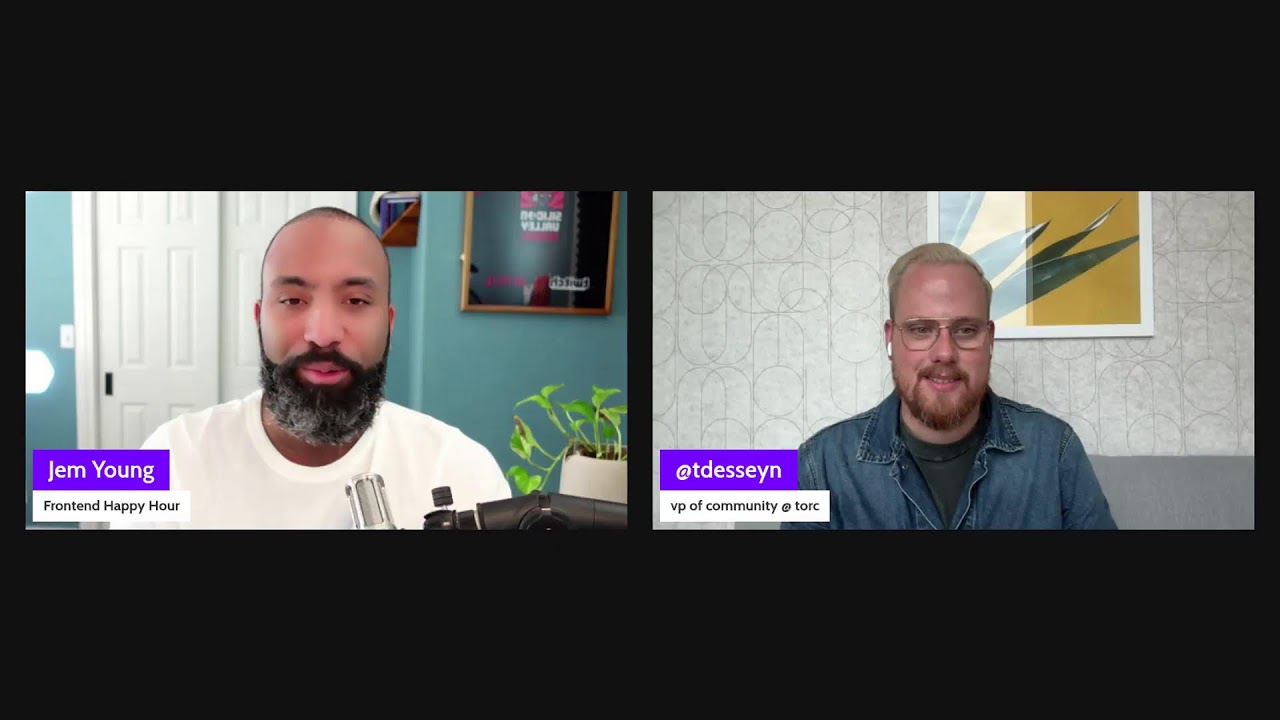
Jem Young, an engineering manager at Netflix, talks about leading with curiosity and autonomy, building a culture where people can fail safely, and why clear communication matters more than you think. He draws parallels between parenting and managing engineers, and argues that hiring for curiosity beats hiring for specific skills.
Chapters
Alrighty, what's up everybody? Happy hump day. Uh, we made it halfway through the week. You're probably like, Taylor, I saw you this morning. Yep, you saw me. This is my second stream of the day. Went live on Torque's, uh, site. Um, and, uh, and, and so now we are going live on my site to talk about all things, uh, leadership. with the great Jim Young. Jim, it's good to see you, brother.
Hello. Can you hear me?
Yeah.
Okay.
All right, good. The way you said that, I was like, did I cut out? So it was just a very methodical hello. Um, so I'm pumped for this, you know, Jim. So I, I don't plan anything, like literally everything is, uh, fly by the seat of their pants. So literally Jim got on this backstage with me, literally, um, 8 minutes ago, and we were like, what do we talk about? And so, uh, we're gonna talk about leadership today, which, which, which I— is near and dear to my heart. Um, and, you know, I've kind of gone through— I was managing a team, then didn't— then was an individual contributor for a year. Now I'm back to managing the team, and I was telling Jim backstage, now it's fully remote, uh, or not fully remote, mostly remote. I have a few people in the US, so that's kind of a new thing too. So We're gonna talk about leadership today, tactics, some things Jim's dealing with, some things I'm seeing. We're gonna talk about job search, so we'll kind of be all over the place as always, but just have a good conversation for y'all. So again, if you are tuned in this morning, welcome, or this afternoon or morning, wherever you're tuning in from, please say hey. We'd love to hear from you. You're probably wondering, like, what is Guidance Council 2.0, Taylor? Guidance Council 2.0 is something I was telling Jim backstage. 5 years this year, folks. 5 years, half of a decade of me yapping. online. And, and, and the whole goal of this is just to give back to the engineering community, um, and just some nuggets, some tips. And so today we're going to talk about engineering leadership or just management tips in general, um, that, that we're seeing, that we're using. Um, and so, but again, I, I, I want to have this live show as a way to build community. So again, if you're in the comments, please say hey, would love to hear from you. But before we dive in today, Jim, I want to give the people what they want, man. Who are you? What do you do? And then we'll go from there.
My name is Jim Young. I live in— I'm here working from home today, heading into the office shortly here in Oakland, California. Take my long drive down to closer to San Jose to the Netflix office. I'm an engineering manager at Netflix. I lead 2 teams in the product platform space, and I've been at Netflix 9 years. It was 9 years last Yeah, or last week. So yeah, started as a UI engineer working on the website netflix.com, kind of always leading full stack, which is, you know, some, some of my interests there. I do teach a course on Frontend Masters called Full Stack for Frontend. I think we're on the 3rd version now, and a couple other courses there, including a course on engineering management. So you can tell my passions are leadership, full stack engineering, definitely JavaScript and Node and all that fun stuff. Awesome. Yeah, yeah. Let's see. What else do you want to know?
Man, I think that's a good start. Also, we talk about you know private versus public school. You know that's kind of an interesting topic. We don't have to dive into that, but I think that's a fascinating thing. The kids that we're talking about as dads now. You you have kid. How many kids do you have?
Two kids. Two boys.
Two kids. That's awesome. That's awesome. Um uh so yeah, I think that's an interesting topic. Interesting. If you're a parent of young kids, what are you doing?
Like what?
What conversations are you having? I was telling Jim backstage that we moved to a different part of Nashville just for the school system. But I tell you what, schools and kids, that is a whole other topic. I told Jim, he needs to come on My Dad's in Tech and we just talk about that. All right, so Jim, I want to dive in, man. I mean, obviously, we talked backstage, we're kind of talking about some ideas, but let's talk about leadership, man. What have you been doing lately that's working? What have you been doing that's not working? I'm kind of curious.
Let's see. I'm very critical of myself. So most of what I do doesn't work. But the things I do—
I love that. Well, it's what makes you a good manager. Let's be honest.
I think you should be like, if you're ever like, things are, things are great, swimmingly, the team loves me and all that, then you're probably not trying hard enough. I don't know.
Yeah, yeah.
So I've been a manager coming up on 4 years now, which is You know, every year I think a little bit differently about people leadership. I think a little bit differently about myself, kind of like being a parent. There's a lot of overlap between being a parent and being a manager or leader of people. And I want to be like maybe delicate on this one because I'm not comparing adults to children. It's more like humans in general trying to lead them at any stage. Oh, I understand. The, I think when I first became a parent, and then became an engineering manager pretty close to each other. The thing I realized most, and the lesson I took, is you can't make people do anything. You can't make a person do anything, whether that's— you can't get them to sleep.
As much as I want my 4-year-old daughter to listen, just sleep.
Just go to sleep. It's better for you. You'll be happy. I'll be happy.
So good. Yeah, exactly.
And same, same for anybody. You can't make people do do anything. You can convince them, you can threaten, you can cajole, you can bribe, you can do whatever. But at the end of the day, like what you really wanna build up is like the good process and thinking and good decision-making. And yeah, I say that for children cuz like that's what I want my son. Like he won't be there all the time, so I want him to have good decision-making. But the same for my team.
Yeah.
I say this all the time is I'm not standing over your shoulder looking at you code. I'm not in those meetings. So what I really want you to do is make good decisions. And that's like, yeah, there's, there's so many good overlap with parenting and management that I've learned.
I know there is. What I'm kind of curious, like, if we could summarize, like, what are Jim's 3, like, Jim's 3 essential guides to leadership? Like what, like, like, like if you could condense down and like, give me like, these are the 3 things, practical things that like I believe in or that I do, or that, you know, I'm passionate about. that I think makes a really good engineering team from a leadership perspective, what would they be? I'm putting you on the spot. So like, if we need to work through this, like outwardly, we can.
I'm gonna say one is, and I know this to my core, is I have a fundamental belief in the power of the individual and the impact that one person can make on like a company or a team and an organization, or even just each other. is not to be underrated. And that's something I like to invest in. If you had to say like, which side do I lean on leadership spectrum? Definitely more on the people side and being, making those connections, empowering people, watching them grow. So yeah, believing the power of the individual and the impact they can have is definitely a core tenet of my leadership philosophy. I think on that one, it'll be interesting to see how that scales because, you know, as you move up, You become a little more disconnected from people, especially when you get to say like VP level, you know, you're not really working with ICs anymore at that point. So yeah, I'm interested though to watch myself evolve and grow that philosophy and see, you know, how do I maintain that over time and stay true to the things that I find important?
But how do you, how do you empower? I want to break this down a little bit because I think that, I think it's such an important topic, also give you another second or 2 to marinate on maybe topic 2 and 3 too. But basically, like, when it comes to empowering the individual, being individual-based, what do you look for when you hire for that? What are, what are just some indicators when you talk to somebody like, yeah, this person is going to be able to like do this on their own almost?
Yeah, the, the number one trait I look for in individuals when I'm, you know, looking to hire, expand the team is curiosity. And that, that to me is the most durable, one of the most durable skills you can have in engineering. Like, why is, why is this this way? Why is this team doing this? Why is the company focused on this goal and not the other? Why did this person choose to write the code in this style and not this style? Just many aspects of just being curious, wanting to know more and wanting to learn. Says a lot about the individual. So, you know, the opposite end of curiosity is someone who's just more task-focused. They're like, yeah, gimme a Jira, I'll close the Jira, I will go home, do that, do that, do that, and do that. Right, right, right. That, that's fine. Maybe there are some companies that are structured in that way. It's very top-down, but you know, that, that doesn't— there's no empowerment there. So someone who's curious is gonna say, is gonna be the one who identifies the problem proactively and says, Hey, Jem, I talked to Taylor. I talked to this person over there and we actually came up with a solution. I was like, I didn't know that was a problem. They're like, it is. And we've solved it already. And like, that's what you can do when you make that investment and you find the people who are curious.
You know, it's interesting that you brought up being curious because this morning when I, so I caught up with our head of product and we talked about what we're doing and, you know, he's really big on AI. That's why we hired him to implement AI within obviously our platform and He talked about being curious this morning. Like, that's a literally he talked about this morning, and this was not prompted by any means. But like that, like I was like, well, so you know because he's looking to hire some AI engineers, and it's like you know what does he look for? And he goes, you know I want you to be curious. I want you to be able to chase things down and tinker with things. I'm just trying to figure out how how do people become curious? Like because I will say I did not become curious. Until later in my life and trying to figure out that, right? I was, I was brought up whether right or wrong, very structured. Like you do this, this, this, and this, right? I came from kind of like my parents were both military brats, like very military, militaristic household. So like that curiosity wasn't really there until recently. So like what, what's some encouraging words if you were talking to younger Taylor where I wasn't curious? I was like, no, I got to do this, this, this, this. What would you tell me?
Make mistakes.
Try, try. See, I never felt like I could make mistakes.
Yeah. Yeah. That's, that's important though.
Yeah.
I mean, take, take any great success you've ever had. Is it due to, is it due to you got it right the first time? Or is it you failed a bunch of times and you learned all from all those failures and now you're successful? And it's always the failures. We learn so much more from failures. But As a generally, as a society, it's not something we reward. No one's gonna be like, good job, Taylor, you started a business 10 times and it failed 10 times. No one's gonna be like, you're doing well. But, you know, the truth is the failures have always taught me way, way more than my successes by a wide margin and made me appreciate success. So yeah, being, making it okay to fail. And I think for us as parents and us as people leaders as well.
Yeah.
Like making that space to be like, try new things. If you're not failing, you're not trying hard enough.
100%.
And it's something, you know, last night I was actually playing with my son and he was trying to jump and do a 360 in the air, which as adults, it's pretty tricky. Maybe I'm getting too old to try that.
Yeah, don't ask me. My knees may go out now if I do that.
But, you know, he kept trying and he couldn't get it. So, you know, I laid out some cushions on the floor and I was like, just try it. And if you fall, Like, what's the worst that's gonna happen? Nothing.
I love that.
And like, we don't keep that in mind. We always think like success is the goal versus let's iterate towards that and build more. So yeah, that's, that to me, that's how you get curious is like being willing to fail, to put yourself out there and be like, you know, I learned something from that. Let's try to see what else works.
I love that. Yeah. And managing my team, I mean, I tell my team that too, like just try things. I mean, especially with community, with community kind of being like, there's no, There's no like set way to do community, right? I mean, there's kind of a framework, but like there's really no set way. So like I tell my team, like, let's do, let's do something weird. Like I'm being told from my managers, my bosses, like just, just be weird. Like go experiment. And, and, and, and, and, and I think like having that sense of experimentation and allowing your team, you know, I always compare, you know, leading teams at Vaco and now leading team here at Torc. I always compare it to football. I'm a big college football fan. Go Gamecocks, South Carolina Gamecocks. And we had some bad offensive coordinators in the past. And I think— and one of the things I've heard is that our poor-performing offenses in the past at South Carolina, I've been— I've heard through podcasts that they were very tight and very nervous because they didn't want to mess up the play because the offensive coordinator was like very micromanaging. It needs to be this way. It needs to be run this way. So like, like we did. So, so our current coach took over halfway through the season calling plays and he like only called like 6 plays. He was like, you know what, just go out and ball out. And then of course, like we took off and like, you know, we beat a bunch of ranked opponents and I kind of compare that to business. Like you kind of just got to let your team just play loose. Thoughts?
Yeah, it's so— well, we're all We're all different. I think that's a fair, fair thing to say. We all have our—
Very accurate.
I mean, platitudes, that's the way to go for leadership. Yeah, yeah, yeah. We all have our individual strengths and things we're not so good at. So how do you, how do you like maximize that? How do you get someone's strength? Is it by putting everybody in a box and saying like, these are the boundaries of that box, even though like sometimes you're gonna dip outside the box because your strength is here. And sometimes your opportunities are, you know, outside the box as well. Or is it saying, here's, here's the, maybe the lanes of things we should think about, but anywhere in here, go nuts. Like, yeah, maximize your, whatever you're good at. You're good at drawing or poetry, or I don't know, getting really gnarly in kernel debugging, like whatever that is. What, what can we do as leaders to like maximize that? And that's kind of the, what I'm hearing from your story is just like, Yeah, be yourself.
Let them cook. Let them cook, as the kids say.
Let them cook. Let them cook.
There you go. I see some comments here. Emmett, I think the whys miss a lot of engineering. I mean, shoot, you could talk about parenting too, right? I mean, I grew up and I was like, why do I do this? Because I said so, right? And at Vayco, I remember putting out a lot of content that there's a lot of I told you so leadership or because I said so leadership. And I do feel like I think the key essential, one of the key essentials to being a good leader is understanding the why and communicating that to your team.
Yeah, it's like, why, why are we doing it otherwise?
Yeah, yeah, yeah.
Like, yeah, it's so, it's so basic.
Yeah, it's so basic. Christina comes in here, we have, we have to be willing to learn from screwing up instead of doubling down on our position. The lesson is totally worth 100%, 100%. Um, and then Emmett talks about cooking with his kids. Uh, he's given the comment, yeah, you talking about messing up? I'm an awful cook. You talk about messing up, definitely cooking, 100%. Nothing a little salt, pepper, and a little hot sauce won't fix at the end of the day. All right, so first, so first of, you know, gems, essential leadership, empowering the individual. Do you have number 2? Do you have a, do you have a number 2?
Hmm. I feel like number 2 changes, probably 2 and 3. I haven't even thought of 3 yet. I'd say right now, top of mind for 2 is, and I'm paraphrasing somebody in some way, but culture beats execution, but execution beats vision. Whoa. Okay.
Break that down. Love that.
So if it goes back to kind of what we were saying about curiosity empowering the individual, if we're all so focused on just one goal and we're all saying like, this is the only thing we can do, don't do anything else beyond this, Behind this boundary, you're gonna execute well. But if you build this culture of, hey Taylor, I have this problem to solve and you have these skill sets that I think could be valuable, how do you think we can solve it collectively? That gives you way more freedom and way to develop solution. And will you get to the solution at the end? Yeah, definitely. But will it be a better solution than just do it 'cause I said so? Absolutely. So that's what you need to build a strong culture and that beats execution any day. It's gonna get you much stronger execution. But it's so, I think it's hard, especially for senior leaders to see that because they're like, all I care about is this number, moving this number up in some way versus let me invest in my culture. Let me build an inclusive environment. Let me allow people to make mistakes and have freedom in what they say and do. And that's much harder 'cause it's a longer-term investment That takes, you know, a longer timeframe to pay off. So that's why culture always eats execution, but execution eats vision. It's fine to have a vision. It's fine to say, you know, here's what we wanna build, pie in the sky. And everybody's like, yeah, yeah, yeah, this is great. Woo, I'm pumped. And then you get back to your desk and you're like, all right, so what do we do?
Yeah.
Like with the vision, we got branding and all this, but You know, at the end of the day, get stuff done like that. I'm always a bias towards action, maybe sometimes too much, but it's just like, cool, great discussion. What are we gonna do? Like, let's not just talk about it. Let's do something.
Yeah. And, you know, again, kind of pulling from my background, I mean, I'm the same way, you know, when I interviewed, when I interviewed at Torque, I interviewed with our head of sales and our head of sales, he was kind of like digging in and I called him on it. I was like, I feel like you just think I'm just some influencer. That like just yaps on the internet all day and doesn't build and know how to build. And I told him, I went in like, you know, at Vayco, I led multiple recruiting teams. I've, I, I led the most successful recruiting team from the top down, um, that's ever been in Vayco Nashville. I built a sales division from $0 million to $2 million in a year and a half in revenue. So it's like, like I told him, I was like, I can do the damn thing. And then, and even right now, um, I, when I went to Boston last week with Torque, I had like 90 seconds, you know, when you're getting up from dinner with leadership, And you like, you know, you're catching up with people and like our CEO, I went up to the CEO and I was like, hey man, I just want to check in how I'm doing. And he was like, he was like, man, I'm loving it. He goes, he goes, you just don't ask for permission because I love it. And I was like, okay, good. Thank goodness. But like, but I think like it's what he said. He was like, he goes, for too long we've had people just, just vision and no execution. And, and I think that goes to here where it's like, listen, like I told my team that I would rather get our hands slapped consistently for doing more work and putting things out into the ether than never getting in trouble.
Thoughts on that? Yeah, it goes back to like, if you're not failing, you're not trying hard enough. And like, I do firmly believe that. If you're like, we were successful, we hit all of our objectives and key results for the quarter and nailed those KPIs, whatever it is, it's like you, you weren't trying very hard. You should be failing some of the time cuz that indicates you're going, you know, a little bit outside the box. Yeah.
Yeah.
I love that.
Also, I didn't realize this, Henri chimed in, 3 gems. I finally get it now. That, that was good. I like that. Gems. Gems, gems, gems, leadership gems.
Anyway, I really thought you were gonna say gems, gems, gems, gems.
Uh, all right, talk about, man, let's, let's talk. We're getting the last 10 minutes of the show. Time flies when you're having fun with friends. Um, what's kind of the third thing, at least right now, right? I mean, you've been in leadership for a few years now. I know it's obviously pivots. What's kind of top of your mind, kind of essential? So we got empowering the individual, go with the individual. Talk about obviously your badass saying that you just said, culture beats execution, but execution beats vision. Talk about maybe a third thing you're passionate about right now for your team and leadership.
Hmm. Thinking more.
Keep thinking. I'm gonna say something that I'm learning in my role. Also, Dan's in the next room right now. So he's just, he just hates me. Is upward communication, like as a manager, your number one of my number one priorities right now is upward communicating and communicating in general. I don't think people communicate at an organizational level as much as they think they do. And even if they think they do, they're not. Yeah. So that's kind of one of the things I've been learning lately.
It's, it's said our a job, a leader's job is to communicate over and over and over again the same thing until it's boring. And I do believe that to a certain extent. It sounds repetitious, but again, you think back to what we do, or for me, software engineering, but at the end of the day, it's people sitting at desks making independently making decisions. You're not there with them.
Yeah.
They can't ping you every time and they're like, hey, what should I do here? So Like you really want to encourage good decision-making towards some end goal. So your goal is to— your job as a manager is to repeat that goal over and over and over again. So all these millions of thoughts and decisions that add up in a week or a month or a year are oriented towards, here's the thing I need to solve at the end of the day. Here's what's most important right now. And that's boring. That's not some great, cool new advice, but It's kind of what we have to do. I don't follow it a lot of times. It's right. I don't know. It's a mental thing, but it's all— that is one of the most important things you do.
Yeah. Yeah. Anything else that pops into your head while I was yapping?
One thing. Well, your previous story on, you know, how you drove the most recruiting for that company in the history. Yeah. And someone was like, yeah, but you're, you're an influencer. Like, what do you, what do you care? It made me think about great versus good. Great people don't stay in the lines. They don't do what other people have done before, just a little bit better. It's always some brand new approach. And, you know, pick your sport, pick your hobby, pick whatever it is. The people who are the greats of all time and the people you recognize and know, are the people that did things differently and pushed the envelope a lot more. Not just, here's the rules of whatever, I'm gonna do this and stay in line. And man, I really hope I get lucky. And that, that's a path for being good. But if you wanna be great, you have to do things differently. You have to think differently.
Yeah, no, and I agree. I mean, and, and, you know, I made a, I made a newsletter post about this 2 weeks ago, you know, and I've talked about it a little bit. I mean, I, I was, the last 4 years, I've dealt with more imposter syndrome than I ever have in my entire career. Um, you know, arguably I've, I've career transitioned. I've gone from recruiter to whatever I do now, right? And it's one of these things where, um, even my wife the other day, we were in the car and she's like, it's kind of wild how you like pivoted your entire career without ever having to start over in a way. And, but like, I've had so many people Over the last four years, basically tell me like what I was doing was wrong. And I've had chief marketing officers try to shut me down. I've had I've notably had people talk behind my back. They've come out lately and apologized to me like face to face about it. I've had people tell me that like what I'm doing is selfish and all the and and like I I was about to hang it up. And like, I, I, I texted, you know, I texted friends like Kelly Vaughn and, and a few other engineering friends in the community. I was like, do I just need to go back to being a recruiter? It's like, do I just need to hang this up? And, and all the people who I texted, I would text you, I don't have your number, but like, I, I literally was like, everybody was like, no, don't do it. Don't do it. And so like, my encouragement to everybody is if, if you have haters, That's a good thing.
Yeah. It's one piece of advice I try to follow. It really is like, I won't say be yourself 'cause that's such a platitude, but I know. I'll say be consistently authentic. If you believe something is right and you're like, this is my vision and I believe this is the right thing to do and it's different, of course people are gonna hate on you and say like, That's not the way things are done before, but you know, the way things are done before will just end you up with the same problems. Yeah. I think it's some, some saying of like, we can't solve the problems of today with the same thinking that got us here. And like, that is so true. So I think your career is a testament to that, of people saying like, yeah, but that's just not the way things are done. That'll never work. Right. And look what you do now.
Yeah.
You just keep pressing on. But having that kind of inner belief in yourself is really hard. And as leaders, like, that's something we need to foster in people. Like this belief of like, this is the right idea and I know it. That's how you solve these problems that you didn't even know exist. I love that. I love that.
As we wrap up here, you know, I kind of do rapid fire, you know, but, you know, but I do want to talk roughly about the job search. You and I talked about this backstage. You, you know, you talked about recently you just hired a little bit. I mean, let's call it what it is, Jim. How's the market right now?
The market's not great. That's being generous with it. Yeah. You know, especially in tech, salaries haven't risen. In fact, they've fallen. Job satisfaction in general across America is at a 10-year low. We see these companies kind of, you know, we always knew corporations weren't authentic. They have one purpose, that's just make money for the shareholders. But to see them roll back these kind of all these beliefs they rolled out in 2020 isn't surprising. But it's also, I think it's pulled maybe some of the wool from people's eyes where it's like, no, this company's good and they believe in this and they, they do all these things, these causes I support, but I'm like, it's a corporation. They do it 'cause it's good business for now.
Yeah.
And they'll always do good business. That's always been my understanding of corporations. So like none of these things are shocking to me, but I think seeing that has made people question their careers, where they're working and all these things, but they're also stuck because the market just is not great right now. So you have all these factors that, you know, I, What I really want people to carry into 2025 is like, you know, be optimistic, challenge yourself in new ways. You're not who your job is. You're not who you work for.
Yeah.
You know, you're more than that because the job market, it sucks right now, if I'm being honest.
Yeah. I mean, I was gonna make this a social media post, but I do think right now, and Dan, I love this, kind of go back to our last conversation. Doubt kills more dreams than failure ever will. Someone smarter than me said it. I don't know who. Yeah. Uh, uh, for sure. Um, I, I think too, I think there's just general trend, and I know we can kind of dive into a whole other thing, and I know we're at time, but like, I do think right now in this market, you almost had to have done the job before you get the job.
Yeah.
I think we're not in this boom right now where it's like, sure, we'll take a, we'll take a risk.
Like, why not?
Like, you haven't, you haven't, you don't know how to code React? Like, That's fine, we'll figure it out. We're not there anymore. And, and so like my biggest advice for folks who are really having problems finding a job, like you gotta build something on your own. Like you gotta go volunteer, you gotta take on work, you gotta do something and show something because guys like Jim unfortunately are not even gonna look at you because Jim's already looking at hundreds of resumes. People have already done it.
Uh, thousands, thousands and thousands.
Thousands.
Yeah. I mean, it goes back to a little bit more of a, yeah. Yeah, go ahead. I, you know, people will ping me for job advice all the time and they're always like, how can I get a job, et cetera? You know, variations of that. As I know for a fact, I have seen you answer those questions all the time on Twitter.
Yeah.
And the fact is like what we were saying earlier on, you know, if you wanna stand out, you have to be different. And that's the same advice I'd give to everybody is you may have a great resume, a great cover letter, you know, all that stuff, but So do hundreds and thousands of other people. You wanna get that role, do something different. I couldn't say what that is, but you gotta approach it differently. Don't complain why I, I mean, I won't say don't complain cuz the job market does suck and you have every right to complain. Yeah. Yeah.
Like I can complain for sure. Yeah.
But it's also, if you're doing things the exact same way as everybody else, then how are you not, you know, you're just rolling the dice there versus saying like, let me try something way outside the band. And, you know, if it works, it works. If it doesn't, no harm. You know, I'm back to where everybody else is.
Yeah. So we always wrap up with kind of your biggest career advice or piece of advice. I think you gave some good advice. I want to take a book— take a page out of the Frontend Happy Hour book. You got a content recommendation? You got anything to recommend right now that you're watching, reading, tinkering with, maybe from a technical framework perspective? I don't know.
So I'm different. I don't read leadership books generally. I sometimes I do. I don't either. It's pretty rare. Yeah. Sometimes people read so many books, I was like, you don't read those. There's no way you're churning through.
There's no, yeah. Like how do you read that many books? Like pass.
I read a lot of books, but it's like I read to disconnect from it. I don't read to pull myself more into it. So I think about it enough. Recommendations, you know, I just finished Squid Game season 2. I know this seems self-serving because I work for Netflix, but—
I mean, everybody watches on Netflix, so it is what it is.
Oh, I'm in a safe space. Okay. Yeah, I thought Squid Game season 2 was way better than season 1. Season 1 I thought was really slow. Season 2 was more like, I gotta keep watching this. I'm way more invested in the characters. So that would be my recommendation. I just finished it. I'm a little slow because I have kids. But yeah, solid, solid show. I love it. What about you?
That's awesome. Uh, so I, I watched a show called Dark Matter on Apple TV and it kept me hooked. It basically, it's like a sci-fi Jumanji. It's like a modern-day sci— just watch it. I don't watch a lot of TV. Kids, right? You, I mean, you just you just don't have time. But I actually, like, any moment I had to myself, instead of like going to YouTube and watching like, you know, business creators' vlogs like I do, which is my hobby, um, I turned on Dark Matter and it was amazing. So highly recommend Dark Matter on Apple TV. So, um, well, Jim, thank you again for hanging, buddy. I appreciate it. Stay on real quick so I can say bye to you backstage. But again, thank y'all for hanging out. Yes, this was a lunchtime edition. I saw, I saw some comments like, what's going on? I always do a special West Coast time, uh, so this was Guidance Counselor 2.0 lunch hour, um, and then, uh, we are off tomorrow. I actually had somebody about to reschedule, um, and then we have, uh, Josh, uh, Josh Como, Comio, uh, I don't know, I didn't get his last name right, um, uh, uh, fantastic individual, obviously does a lot of React courses, CSS courses. Um, so he's gonna come on Friday. I'm so pumped to hang out with him. So y'all have a great one. Jim, thank you, my friend. Um, and we'll see y'all Friday.
Definitely watch Josh. Josh is like an excellent human being.
Yeah, Josh is, Josh is amazing. Josh is awesome. So I'm pumped to hang out with him. All right, see y'all.
See ya.
More from taylor



tech doesn’t have to be the only thing that brings us together #techcommunity #techcareer

I want to give back to y’all that make the tech community so great #jobsearchtips #techjobs




spend a little time investing in yourself #linkedin #linkedintips #careeradvice


