
Navigating Your Career w/AI as a Junior Dev w/Will King
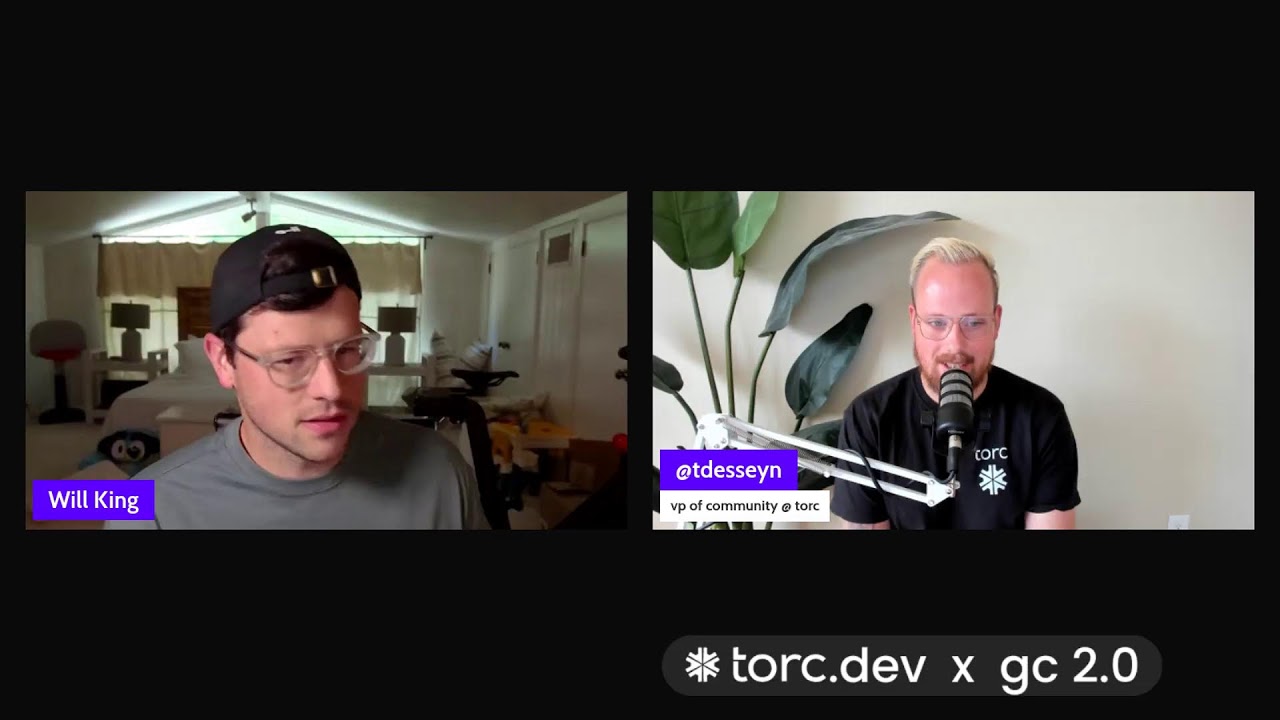
In this livestream, host (Speaker A) welcomes first‑time guest Will King, a design engineer at Crunchy Data, and dives into how AI is reshaping junior developer careers and job searches. The conversation begins with a brief intro to the Torque community, the host’s five‑year history of LinkedIn Live, and the value of networking through the show. Will shares his unconventional path from industrial design (CAD, cherry‑picker manufacturing) to self‑taught web development and a role that bridges design and engineering. The bulk of the discussion centers on AI as a mentor rather than a crutch: using AI to level up, practice problem‑solving, and accelerate learning while still requiring human judgment for business decisions. They debunk the myth that AI will eliminate junior jobs, arguing that AI expands the market, creates more small companies, and shifts hiring focus toward communication, product understanding, and trust. Will outlines a deliberate job‑search framework—identify target companies, understand their product and business, craft tailored resumes or portfolios that showcase product‑centric artifacts, and demonstrate alignment with the company’s needs. They stress the importance of building tangible projects (or “artifacts”) that prove rapid learning and product‑fit, rather than long textual resumes. Practical AI use cases are discussed: solving “paper‑cut” bugs, generating code suggestions, and overcoming the “cold‑start” problem when entering new domains like game development. Will recommends Laravel (with Inertia) and React as AI‑friendly stacks, noting that mature frameworks give AI clear best‑practice guidance. The episode wraps with community shout‑outs (measure_plan, Emmett Naughton), rapid‑fire personal questions, and career advice: be public, say hello early, and build relationships to increase visibility and opportunities.
Chapters
Alrighty, perfect. All right, y'all, good morning. Happy Thursday.
We're—
we've almost made it, almost made it to the weekend. Uh, Will's a first-time guest, first-time guest on the show. Yeah, I love having first-time guests.
Um, do you have a lot of repeat guests?
Yeah, yeah, I do, I do have repeat guests. I think, um, you know, I've been doing this thing for 5 years now.
Really?
5 years. Um, you know, I started this when COVID hit because I was kind of your traditional heads-down recruiter and, um, you know, and I was very focused on just Nashville. So I only recruited Nashville engineers. And then I saw when COVID hit that the whole entire landscape was about to shift to like fully global distributed, uh, remote teams. So I was like, well, I was like, I need to be out there and help devs at scale.
Mm-hmm.
Um, just navigate the job search and their careers. And so I started, I got, um, I got LinkedIn Live super early, like when it was like you had to apply to be on it.
Right.
Um, and I got it and I started to go live and, and, uh, 5 years later. So yes, after 5 years, you know, you kind of, you kind of have some repeat guests.
Yeah. So it's just like, yeah, our community's only, our community's giant, but it's also like the number of people who like are happy to jump on camera and stuff.
Yes, yeah, 100%. So excited for Will. Y'all go connect with Will. Um, uh, Will, what's your— what's your X handle?
@wking__ Okay, yeah, one of these days I'll kick off the underscores.
Yeah, go follow him. He's got a great, great profile picture. It's kind of wild looking, so you won't miss him. Um, but before we dive in, as always, please comment, say hey. We'd love to hear from you. Again, I, I tell people this every, every time I go live. This is a Meet— this is a virtual meetup. Show up in the comments, network with people. Um, you know, I tell people my whole goal, um, really for Torque and really what we're building is, is I want y'all to network off the back of me. And then obviously Jason, Jason in here, um, you know. And, and so, you know, I tell people, if you've been a— if you've like tuned into my show for 5 years and networked with everybody in the comments and you've shot every single guest an invite and said, hey, it was great to see you, uh, you'd have a pretty expansive network at this point. So, but we're not in the metaverse yet. I don't know if you're watching unless you comment. So please say hey, would love to hear from you. Um, as we get people kind of to, uh, streaming in, first off, wanna give a shout out to Appwrite. Um, I'm probably the only non-technical hero on a technical program. Great software or great product as far as I can tell is what I've been told. Um, so if you wanna create an app pretty quickly, um, use their product. It's great. I, I love the DevRel team over there. Also, we have a lot going on within the Torque community. So go check out torque.community to check out all of our live streams. I know Jason went live with Francesco yesterday for an hour and a half talking about vibe coding, and they developed something. I don't know what it was, but they did something in vibe coding. So go check that out. And then also too, if you want to get— if you want to know when I go live with guests like Will and certain topics, please text me. This is actually my number. Text live and it'll immediately kind of like loop you into that texting thread. not texting Thread, but just texting community. And so I will, yeah, you won't get lumped into like a bunch of people. But so yeah, just text me. We'd love to have you a part of that community. So today's conversation. So I've been kind of, I've really been interested and I've seen a lot of conversations around AI obviously, but how it affects kind of juniors, right? And so Will graciously slid into my DMs or commented on my tweet. I was like, we'd love to talk about it. Let's go ahead and dive in, Will. Let's give the people what they want. Who are you? What do you do? All right, and we'll go from there.
My name is Will King. I am a design engineer at Crunchy Data. Crunchy Data is just, uh, it's a managed— the best managed Postgres that you can, you can find on the internet. We've got the smartest database and Postgres developers that I know, and I am just there to make sure that all of the normies can use the database as well. So, um, that's, that's what I do for my day job. Otherwise, uh, I would just say like I am— uh, 2 years ago I made this goal of like making more dope friends and doing more dope things with friends on the internet. Uh, and so I'd say like that is what motivates a lot of like what you'll see if you're following me on social. So— I love that. Build cool things, hang out with cool people. Hence the shooting that message out to you because You are definitely in that category of dope people.
So appreciate it. We, we won't tell my wife that because she'll just roll her eyes. Speaking of wives, either one of our wives, if you do follow Will, his wife will, uh, chime in, and the dynamic between the two is fantastic. Um, so highly recommend. Um, and then yeah, Will, talk, talk about the Green Chairs podcasting. Talk about that. You got some interior design projects going on.
So we, we do a podcast. It started off with like just me It was called Strong Opinions Weekly Held, and it was just like, oh, I'm just gonna like riff. I've got some buddies who do like solo podcasts where they just talk about like what they're building, what's on their mind. Yeah, yeah, it was like a good way to like, you know, think through things publicly. And then one episode I had Allie on, and because it was like something to do with like our kids and all this kind of stuff, and we just had so much fun. She's hilarious. Like, her love language is busting my balls.
Yeah, I've never met her. But based off her Twitter interactions, she's a gem.
Her, like, love language is busting my balls. And I am like, not like— I'm just like the easiest person to make fun of.
Like, oh, I mean, there's a target on our back. It's a huge target for me. Yeah.
So it's just— it's a fun dynamic. We did that once and have just started doing it ever since. And then we just— we're like, why don't we just like really do this up? So I've like started setting up like a studio in our house with like cool chairs.
I love it.
Let's do it. If we're gonna do it and have fun, let's have some like real fun with it. I'm all about like, if you enjoy something, go all in.
Yes. So yes, I love that. I love that. Um, we got some people tuned in. Ricardo, it's good to see you. Emory, we're talking about— are we talking about— no, we're not talking about Target, just targets on our backs with our wives making fun of us. Um, same thing.
Um, Southern Wives, Target's probably gonna come up at some Yeah, exactly.
Seriously. All right, so let's dive in, man. Um, there's, there's a lot of, I guess, ways we can go about this, but can you just, just give a quick introduction about just who you are and kind of how you got into development, just to kind of set the stage?
So I, uh, had to teach myself development. I came from a design, like industrial design background, which if you aren't familiar, that's like physical products, like sketching 3D models. Like CAD.
Is CAD like a thing?
Yeah, my first, my first job out of college was with a company who made like cherry picker, but like the bucket trucks.
Oh, wow.
Okay. And I did like the manufacturing modeling for all that.
Nice.
Which sounds dope, but like the company had been around for so long, all the parts had been made at some point. So you're just like putting the right pieces together.
Gotcha.
And it was like building Legos, but like Legos gets boring after a few months.
Yeah.
So I decided that I wanted to like be able to work remote. And I started getting into, like, development. And the— I taught myself how to develop and design for web and then ended up getting a job with one of the companies that I had used to, like, learn development on.
Sure.
And worked there for about 7 years on their learning platform and also being part of, like, the teaching, like, community for, like, the designers and the developers there. So not like— I'd say that's probably like half my career. So like half my career was, was helping other people learn and like get into the junior position.
Yeah.
Um, and then the rest of my career has just been building since then at like startups and stuff.
I love that. I love that. So talk— I mean, let's just rip the Band-Aid off. Just some initial thoughts on how AI is affecting kind of the junior search. I mean, you had a lot of good thoughts when we were backstage, so let's, let's, let's bring those back up.
Um, let's see. I'd say like the— my— one of my like main thoughts, uh, for with like AI is that like AI helps normalize the, the market on the lower end, which is like the barrier— the like the barrier to entry. Like AI can help you grow. Um, I think one, one problem that people can get into is thinking that like companies are not like— I'll phrase it like this. Like, AI code writing is non-deterministic or is deterministic. Non-deterministic. I think it's non-deterministic. Like, it doesn't always, like, give you the same answer back even if you gave it the exact same question.
Sure, sure.
But software is, like, very deterministic. And I think companies lately have started to, like, realize that. So, like, I think what people will get into trouble with with AI is that it will become a crutch that they lean on. And that instead of it being like a crutch and relying on it to write your code, I think what developers need to be using it for is like fuel instead. Like rocket fuel.
I like that.
So, like, instead of putting— instead of like leaning on AI code, you should be using like AI code to like level you up. Like, it should be like focused internally. Yeah. Um, I talk about— I was telling somebody about this where it's like, yeah, it's like don't be using agent mode, like be using mentor mode. Like use AI to, to teach you more about code.
Um, yeah. So how, how, how can folks like— so coming out of boot camp or whatever, you know, I think the general sentiment is AI is taking junior jobs. I think that's the general sentiment. Do you have any thoughts on that?
I do, I do. I have some thoughts on it.
And listen, listen, spicier the better, right? So, uh, yeah, feel, feel, feel free to go a little unfiltered here. I'm all about it.
Well, listen, you'll— you can ask my wife. Um, there, there's no such thing as a filter. Uh, she reminds me before we hang out with all of like people from like— she teaches kindergarten and she's like always reminding like, Will, remember, like, I'm a teacher here.
Yeah, yeah, yeah.
I think that is, like, not true in some perspectives. Because, like, I think that AI will definitely, like, make us more— like, level up our productivity.
Yep.
In certain ways.
But—
and, like, make us be able to develop more, to try more. But I think it also, like, With other technologies, it opens the market wider. Because, like, there are now more people who can do more. And because, like, people can do more, there are gonna be more companies. There are gonna be more, like, people trying to achieve things. So, like, yes, there may not be, like, giant companies with tons of developers. But I think there will be a lot more companies with, like, a smaller subset of developers. Yeah. Right. Fewer companies, but more— more like fewer giant companies, but more companies in total. So like, there will still be tons of jobs.
Yeah.
And the difference is, is that like, AI doesn't help you. This is like, this is like one important thing where it's like AI can help you write code, but AI can't help you like solve your business problems.
Correct.
That's what people are for.
Cool.
You know, one thing that I thought about leading into this that, like, I think is important for people is that with, like, AI, like, you can't always have AI to help you, like, communicate. Like, you can communicate with AI and you can, like, help it write code. But at some point, at some point, like, you're gonna have to be able to, like, talk to other people about like why you're solving something the way that you're solving it.
Yep. Yep.
And like business owners like aren't going to understand that the technical— like unless they're developers, but like the developer jobs aren't going away. And a developer— part of a developer's job is like not writing code but communicating to the company like what code needs to be written and why it needs to be written. And go ahead. No, I'll go.
No. And, and I think that's great. And, and I think it's good that Will brought that up because if you listen to my livestream with Ray, was it yest— I think it was just yesterday. Ray's a founder of a platform and she talked about, I need to know why you do things. Mm-hmm. Right. I need you to bring specific business case studies. Right. Just showing me a bunch of code and say, we need to do this and not have any reason behind it. Like AI's not gonna replace that. And, and also too, I, I, I wanna make a point here. I feel like the AI scare is an excuse to where just the job market is in general. Like, the job market is not, you know, I said this on a live the other day. I said, we, we, we, we think of the job market like a, a crazy ex.
Mm-hmm.
Right? We've all dated, we all have exes, right? And I feel like a lot of times when things go south in a relationship, you hold, at least I have, at least I have in my past.
Right, right.
You always hold onto what it was. and not what it is and the actual situation. The actual situation is hiring was crazy during COVID and it will never hit that again. So like, get that outta your brain. We're now in the new normal and I feel like a lot of that previous notion is now being attached to AI taking people's jobs. And I just, I, I, I, I just disagree with that sentiment.
I, yeah, 100%. I, I think that it will, I think that, like, just generally speaking, it's hard to get a job when you think of it as like the job market.
Yes.
Like, that's like my opinion is like if you're thinking about like finding your next job is like, oh man, the job market is terrible. I'm not going to find a job. Like, yeah, you're not going to find a job because you got the wrong mindset about it. Yeah. Your, your mindset should be like, where do I want to work? And like, what do I have to do to get that job?
Yep.
And if you can't answer, like, where you want to work, then, like, that's where you need to start.
Yes.
And I think AI is great for, like, all of those things. You know, like, the— we were talking about, like, how you're— the person who's hiring wants to know, like, well, how did you make these decisions? Like, how do you think through, like, what— how to solve the problem? And, like, AI does help you with that. But, like, have— instead of telling AI to solve the problem, tell AI how they thought through solving the problem and study that. Like, short— shortcut, like, the, the process, like, the mind, the mental process. Like, have AI help you. Like, and the, the good thing about it is, is, like, if you don't know, like, what type of development you want to get into, guess what is really good from getting to— from, like, 0 to 1 on, like, pretty much every language and every, like, type of development out there?
Yep.
Like, AI. So, like, leverage AI to be like, Well, like, what does it look like day to day to do this type of job? Like, what type of software am I writing? What type of problems am I solving? Like, what are the common architectures for this? Like, get all of those, like, those kind of more like gray area questions out of the way.
Yeah.
Like you said, it's not just about whether you can write a for loop. It's like, when is the for loop the right time? Like the right solution, you know, like that kind of thing.
Yeah. So, yeah. And there's, um, so Colin, Colin's a former repeat guest of the show, engineering leader, um, engineering manager. It's, it's arguably more important to be able to communicate what code is being written than actually writing code.
Exactly.
Exactly. So again, coming from somebody who is actively hiring people, let me ask you this. If you were to go based off the current where everything is now with vibe coding and AI and blah, blah, blah, blah, How would you approach the job search if you were coming out from the industrial side now? Is there, is there anything that you would change, anything you would do a little differently?
Um, I think I, I, I don't think I would change much. Uh, really, just, just because I would, I would change, I would change the tools in which I used to do it.
Talk about that, talk about that.
But I would not change how I approached job searching. So yeah, I'll explain kind of at a high level, like the way I think about job, like finding a job. And then I'll explain like how it's different for me today.
Yeah.
So the way that I think about finding a job, like I mentioned earlier, is like I decide where I want to work because it's my career, it's my future. It's like what I'm doing every day. So like, I'm not just going to say, please give me a job and shoot like my shot. Everywhere at once. Like 1,000 resumes kind of thing. I'm going to find— and it doesn't have to be just a single company either. Like, your eggs shouldn't necessarily always be in a single basket.
Sure.
But like, you need to like do the work of like identifying places that you want to work and understand that company. Like, what type of work do they do? What like, what type of— like, what would the day-to-day probably be like? Maybe you have a way to talk to somebody there, but like, I didn't in my past. But, like, understand that company. Understand, like, what they care about. What they believe in. Like, the type of person that they want to hire. And then, like, build a resume or a website or something that tells them not I'm a good engineer, but tells them I'm the engineer for you.
Mm-hmm.
Like, I am who you're looking for. Because, like, they're not looking for, like, words. They're not just looking for, like, the best developer out in the market. They're looking for, like, someone, a trusted developer, like someone that they trust. Because, like, hiring is expensive, both, like, emotionally, and also, like, from, like, a time and money perspective for a business. And you don't want to, like, you're making a bet, like a risk that, like, if I hire this person, I'm not going to have to hire for the same role again in a few months because it didn't work out.
Right, right.
So it's like, how can you remove as much doubt as possible when they are looking at you as a candidate? And the way that I do that is by like understanding the company, building something that speaks to that company, that tells them like, I understand you, like I understand what you are looking for and like what you need out of the job. I like— and that's like, that's what I do. Like, that's how I approach the job search.
And so, so I wanna highlight something that you said, which is, I mean, again, you've said so many, so many nuggets. I know the, the one, one thing I wanna, one of the many things I wanna highlight is one is like, pick your shot and be intentional. That's what Lawrence Lockhart said last week on my show where he was like, he submitted 47 apps in 89 days. And he was like, I had a specific, I wanted to work for, I think he said like the best of class of whatever industry it is. Right?
Right.
And so he was very specific there. The next thing that you just said that I want to highlight too is build something with the product, which I think nobody talks about a lot, right? Can you talk about how that's— why that's so important?
Yeah, so the— I mean, I guess, and I guess it depends on like the, the size of the company a lot because like it's a lot different the type of work that you will be doing if you're going for like somebody like a company like Google that has like thousands and thousands of Engineers where like maybe your day job isn't actually like using a Google product per se, you know, like maybe it's a little more like nebulous. But for majority of companies that are hiring, they are, they are like, you are more valuable if you understand how their product works.
Yes.
So like, yes, the, the way I talk about this is like, I'm a design engineer. I do design and engineering. I am, like, cross-functional, which means, like, I can communicate the importance of design from an engineer's perspective. And I can communicate the importance of engineering from a designer's perspective. I also, like, invest a lot of time in, like, understanding, like, the business of the company.
Mm-hmm.
And, like, the reason you do all that is so that you can make the best possible decisions to bring success to the company. So, the reason why you might want to build something with the product is, like, you are showing to them that, like, I understand what— like, I'm not here because, like, engineering is what makes the company successful. Like, the product is what makes the company successful. And I understand how the product's used.
Mm.
And, like, if you can communicate that, like, oh, like, I'm an engineer, but I also, like, understand you and your business, that's just, like, one more, like, feather in the hat of, like, Trust, you know, like, trust me more because I cared enough to like understand you. Yeah, it's like about— it's about— they talk about like networking as like, you know, schmoozing people and all this kind of stuff, but like really like networking should just be like building relationships. And like, so it's like, how would you build a relationship with like a girl or like a significant other that you're like trying to like date?
Right.
Show them that you care about their interests, you know? You know, like, yeah, yeah, do things that they like, you know? It's not just like— you don't just go up to a girl and be like, yeah, I bitch like $250,000, and, you know, like, I've got a really good job. Like, you're not just sitting there like listing off like how good you are, right? It's like, show them that you care about them, that you understand them.
Yep. Let me, let me ask you this, and, and kind of continuing on this, this kind of train of thought here. Would you, if you were to go back and do your job search again, I mean, do you learn vibe coding? Do you learn lovable? Do you learn Bolt? Do you, do you do that? Like, like, what does that look like?
That's okay. So that's an interesting question. Um, I don't think you, I don't think you learn vibe coding from the same, like, okay, you learn vibe coding. I think you learn anything. Like anything that you're—
you can learn whatever you want. Yeah, yeah.
It's never a bad thing to learn. The— but you need to be able to answer if you're in the market for a new job and like that's the reason you want to learn something, then like do it from the instance of like how does this make me more valuable to a company? And if you don't have an answer for that, then like find something else. To learn first.
Yep.
Or like learn something in your free time. Like the way that something like Lovable for engineers now, like for me, I've got a lot of different opinions on that because I have like a big design background. So I've already got that skill set.
Sure.
But for an engineer who like only wants to ever be an engineer, like as far as they're like hard skills go, then I think that like Lovable and things like that can be valuable because it shortcuts design. You know, like, you can, like, prototype an experience a lot faster because you can explain the underlying system usually a little better than your average person.
Sure.
And you can get, like, a much higher fidelity output. That could— like, the way that fits into a business is like, hey, like, I am an engineer, but, like, here's, like, how I leverage AI to be able to, like, quickly iterate and prototype. Like potential ideas to get them in the hands of customers faster and get actual feedback. Like, that's like explaining the business value of that skill.
Like, it all comes back to business value, doesn't it?
Yeah, yeah. And some— 99% of the time, there is like the 1% of the time where it's like, oh, like this is like a purely academic role, but not like— that's not most jobs. And like, you'll know, you You'll know when that's the case. But like, for everybody else, like for all the rest of us, yeah, it's, it's all about like, what's the value you bring to the business?
Yeah, absolutely.
Like, this is, this is capitalism. If you're, if you are not bringing value and money to the business, like, jobs aren't charity, unfortunately, you know?
Yeah. So any other, any other tips? Anything that we haven't covered? Because we're already at, we're already at 10 minutes left, which is great. Just time flies. Anything else you, you, you, you want to highlight or that's popped in your brain since we've been chatting?
Yeah. Okay. So there's like, there's 2 things that I want to like, that I would point out and just in terms of like how, like I would be using AI.
Yeah, please.
Which is like, I would use AI in 2 ways as a junior. One, I would use it to build more.
Okay.
Like words.
Just build.
Right. Like nobody wants words. Like, I'm like, if somebody is hiring, I don't want to read a giant wall of text. I want to see—
That's exactly what that founder said 2 days ago.
I want to see like actual artifacts of like that you are doing. And like, you can either go like very deep and build like a bunch of stuff at like varying levels of complexity in a very specific field. You can go broad so that you can like be able to show like, oh, hey, like I can learn quickly and grasp things quickly and output things of like a very like Pick whichever way you want your career to go and do that. You know, that signals to hire— like people hiring the type of person that you are. And then 2 is I saw this tweet. Let me see if I can grab the link and put it in, in chat for people, which is by John. I can't put anything in chat, so we'll share it later. Follow me on X and I'll retweet it. By John Lindquist. And he— his, his tweet was, The best prompt will always be give me 3 variations of X, then make an argument for the best one. Now, the reason why this is valuable for anyone is that it means like you can understand how the AI is thinking so that like for experienced people like me, I can also identify like, oh, that actually makes sense. Like they made the right reasoning. Like that is the best choice. Or I can be like, sure, they weren't— they didn't have all the context this other Other choices why it might be better for us.
Yep.
But for, like, juniors, it's like, oh, like, I wouldn't even know how to tell you, like, how to think through that process in the first place. So, it's like helping train you into how to, when being presented with any problem, never jump to, like, the first solution that you know. Like, try to always think about different perspectives and different ways to solve a problem. Because like depending on like factors, there's not always a best choice. There's just like the right choice for your, your context. And like AI can help you practice thinking through that.
So it sounds like based off kind of the, the overarching theme of this is really use AI, it's kind of like what you said, like as a mentor, like basically—
Endlessly helpful, never gets tired of your questions mentor, you know? Like, I think the fastest way to learn is to sit with somebody who's senior doing the type of job that you want to do and just like watch them work and ask them questions. But like, we're remote now. Like, 99% of us are remote at this point. We don't— I never have had that experience.
Yeah.
So like, leverage any tooling that you can to get that experience.
Are you guys— let me ask you this again as we slowly wrap up here. And if you guys have any questions in the chat, please ask them. Like, are you guys where you're currently working, like, are you guys using AI? How are you guys— like, have you guys implemented anything?
Man, let me, uh, while we're waiting, I can tell you something that I did recently. So like, I really like games, um, okay? And so recently I've been making an effort to like learn how to, like, develop games and stuff.
Okay.
And, like, AI has been super helpful. Like, because I've never done that before. So, like, one of the valuable things is, like, learning a new domain. Like, I don't know the words to, like, look up the information. But, like, AI solves what I call the cold start problem, which is like—
Ah, love that.
Yeah, yeah, yeah. I don't know what the right words are to solve this. But, like, AI can help me with the language that I do have to, like, get the next layer down and like, oh, now I know more of the language of this domain. Now I can ask even better questions and get even deeper and deeper.
Yep, I love that. And then right now, currently, but in like in your role right now, are you guys using AI at all?
Oh, I thought you were asking chat.
Oh no, no, sorry, sorry.
You were asking me.
Oh yeah, yeah, I, I'm sorry. Yeah, no, you, sorry, you specifically within your day-to-day.
Okay, yeah, yeah. So yeah, um, we, I use it So, like, we're a database. And, like, the one thing you don't ever want is, like, a nondeterministic system touching your database. Because, like, who knows what will happen. So, like, we do not use it in our actual, like, software as, like, a tool as part of our software. Okay.
Yep.
But I know— I personally use it a lot. Especially for, like, what we call paper cuts at our company. So, there's, like, a whole host of problems when you build software of a certain age and scale where there become so many corners of your product that can, like, have a rough experience.
Sure.
Where it's like it doesn't break the experience for people, but, like, you slowly lose trust over a longer period of time because they're— like, the app feels buggy a little bit.
Yeah. That makes sense.
In, like, little areas. And we have an incredible customer service team who, like, identifies these and puts them in this, like, big list. Like, normally it's like, okay, when you can find time to bust through a couple of these in between, like, the big projects that actually push the business forward, do those. And, like, the number of those type of things that I can just bust a move on—
Interesting.
Okay. Because it's like the codebase is, like, purposefully structured. There is an architecture to it. And so, like, when you have these little paper cuts, it's very easy to not vibe code, but to say like, hey, in these files there is this issue, can you identify that issue? And so like—
I like that.
Suggest a solution for it. And you can like— I could have identified that really quickly myself if I'd like, but not as fast as like a computer can. So like, yeah, it, it can identify those, it can suggest like the solution for it. And if I like the solution after I've evaluated it, then I can just let them implement it in Cursor or whatever. Or if it's like, okay, you identified the right problem, but like you didn't quite understand the, like, the details of like how we do engineering here. So like, I will write the code myself to be like better.
Yeah.
But that, like, I— we move so much quicker on like paper cut type stuff. So it's like, okay, that's interesting. Our, our product's quality really high. On these like very low impact, we've already like coded this system, there's just like a rough edge, fix it. I like that, I like that.
That's awesome, that's awesome. Um, sweet, man. All right, so if it— yeah, sorry about that. You got quiet for a second. I was like, I was like, did I lose him?
Uh, no, no, you see, you said like, uh, y'all put your questions in the chat, and I was just like, oh, so he's talking to them now. Okay, yeah, yeah, that makes sense. I love it, I love it.
Um, all right, so as we wrap up here, kind of a few rapid fire kind of, uh, fun questions. First off, I always ask people Are you a coffee or tea guy?
Coffee. I've got— let me just show you.
Hot or iced? Hot or— oh my gosh. So are you hot or you iced?
Me and Allie got matching. We, uh, iced for me. Allie thinks it's an abomination, so she's always hot coffee.
Iced is the true taste of coffee, in my opinion.
So good. So good. I already drank mine. I'm gonna have to— this might be a 2-cup day though.
I love it. I love it. That's awesome. That's awesome. Uh, next question. Um, when it comes to kind of giving some people in the, uh, in the community a shout out, I always like to, like to give props to, to folks. Is there anybody who's doing really cool stuff that you follow, um, that you want to give a shout to? Anybody in the community who's doing cool stuff that you've just been following on X, maybe that, that you, you've enjoyed that they've been putting out?
100%. All right, so there's this account on Twitter, uh, it's called— his handle is @measure_plan.
Okay.
And he has been doing this stuff where it is like— it's using Three.js and a, like, I guess it's like machine learning thing where it does video for your hands and can track your hand movement. And he does all these experiments of how he can use his hand to manipulate 3D models on screen.
Whoa.
And the videos are in a VR perspective. that's overlaid on top of him so you can see him manipulating his hands and what's getting like manipulated on the screen.
Sure.
And they're just so cool. They're so—
That's awesome. And then what was the handle of that again?
Measure_plan. I like that. So that, as far as like doing really cool stuff, he's doing like super cool stuff. And then another shout out for somebody, if y'all don't know Emmett, Emmett Naughton, like Emmett is just like the biggest hype boy, like, of all time. Like, he is like so supportive. I had my first talk on Monday and like, I'm pretty sure it was like when I woke up that morning, I had a DM that was like, dude, like, you're going to crush it today. Like, I love that. I'm like, man, Emmett is like, if you need to just have quality people in your corner.
Yes.
And it's on like the top of that list for me.
Yep. I agree with that. Go follow, go connect with Emmett. He is absolutely wonderful. Um, uh, next question. Is there anything that you're tinkering with internally, even just on your— you talk about game development, but is there anything else you're tinkering with? Any frameworks, anything that's kind of fun right now?
Okay, so I'm gonna give a talk about this in July, but Laravel, um, Laravel and—
I keep hearing about it. I keep hearing about it.
Um, and there's a reason I, I think that it's really good, um, is because Laravel's been around for decades at this point.
Yeah. I used to recruit a lot of Laravel back in, like, 2012.
And it's also been, like, actively worked on and improved a ton. So, it's like, one, it's a really good framework. Two, it's been around for a very long time. Which means AI is extremely good at, like, knowing best practices. Like, they've had— like, the community as itself is, like, has very strong opinions on, like, the right way to do things.
Yep.
So, like, AI, it doesn't get confused about how to do things. Because it just, like, it's just a really good framework for, like, having AI help you understand how to build more and build better.
Yep.
So, I've really enjoyed using it. I'm a big React fan. They've got other solutions and stuff. But I like React. But they have this tool called Inertia which lets you, like, you don't have to write APIs for everything. It just works. Like, your controllers are connected to your frontend. And, like, it just passes the data straight through.
I don't know what that means. That sounds cool.
It just makes it great. It makes it super easy.
And that's in Laravel?
Right. It's in Laravel. It just makes it super easy to like use your backend data in your frontend without having to do all the in-between stuff to like make it work. So it's great. Love that combination with AI. And then like the number 3 reason is like the people in Laravel, the community. Yeah, they're great. Some of the best, most positive people that there are. So it's just like you can't lose.
Yeah, they've hired a good crew for sure. Um, all right, last question as we wrap up here. And again, thanks for everybody who tuned in. A lot of comments. Please go connect with Will. Um, so show's called Guidance Counselor 2.0 because we had guidance counselors in middle school, high school, and college, but not necessarily as adults. We don't really necessarily have a guidance counselor to turn to.
Yeah.
What would be your biggest piece of career advice if you can go back and tell young Will something? Like young Will, cherry picker industrial Will.
Biggest career advice, I would say just like say hey to people sooner.
Isn't that wild?
That's my biggest career advice for myself. Because like, I already, I already had like the gene to like want to build and put stuff out there. But like, which is like a really important one, like be public. Like, if you're doing work, make like share it with other people, somebody is gonna find it interesting, and you'll connect with them. But 2, like the biggest thing for me, even though I was doing all that was just to like, if you think somebody's cool, just tell them, hey, you're cool. You know, like, build relationships, like say hey to people. Like, comment on people's things, like let them know that you're interested, ask questions, all that kind of— like, the sooner you start interacting with people, like, you're just building like friendship and relationships. And like, at the end of the day, that's like, for me personally, that's like what makes— I think it's everything. So fun. It's like just that.
Yeah.
Yeah.
I mean, I, I, I, you know, the, the more I get into this and we're talking about AI and blah, blah, blah, blah, blah, like at the end of the day, man, it's who you know. Like, it's who you know.
Yeah.
So double down on that.
And, uh, just a final, final quote from a good buddy of ours, Aaron Francis. Um, he says that like, if you want people to take note of you, to notice you, then do something noteworthy. Which is, which is the thing. Like, yes, build relationships, get to know people. But like, the way that you get to know people is like, the people that you want to be friends with who are doing interesting things, Like, make sure that you're being that type of interesting person too. Yeah, because like they are also like wanting to make friends with other people who are, who are like interesting in, in that kind of thing. So it's like identify the things you like about other people and like make sure you're looking at yourself too to try and— Yep, like I love that. Have those qualities.
I love that. Sweet. All right, y'all, well thanks again for tuning in today. Last one of the week. Yes, Roxy, you can just do things.
Just do things.
Aaron Francis, Wayne Gretzky, Michael Scott is what I always say. Um, but y'all have a good one. Thanks again for tuning in. Will, stay on so I can say bye to you backstage. Um, but we will, uh, we'll see y'all next week. Peace.
More from taylor



tech doesn’t have to be the only thing that brings us together #techcommunity #techcareer

I want to give back to y’all that make the tech community so great #jobsearchtips #techjobs




spend a little time investing in yourself #linkedin #linkedintips #careeradvice


