
Recruiter Turned Software Developer w/Brooke Sweedar
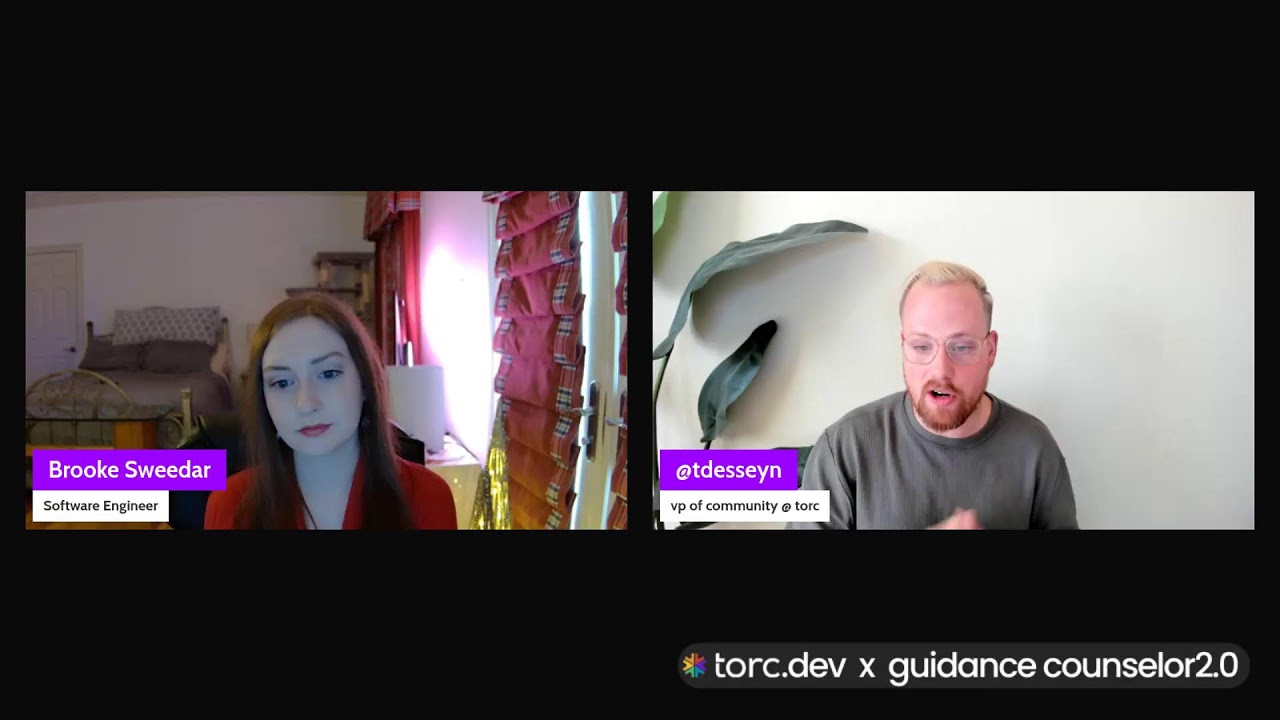
Brooke Sweedar left recruiting to become a full-stack developer through a bootcamp, then built a large LinkedIn following by documenting her job search and doing daily coffee chats. She shares how she networked her way into freelance work with Alpine.js and Go, and offers advice for career-switchers navigating today's tight tech hiring market.
Chapters
All righty, good morning nobody. Nobody's here yet. Good morning, good morning. All right, so Brooke, I gotta ask, I gotta ask, did you, did you enjoy the snow?
I did. Oh my God, I was so excited. We got like 6 inches and that's nuts. It is. I spent most of my life in Pittsburgh and it's new. I've only lived here for a couple years. I was like, oh, I was so That's crazy.
Uh, is it all gone now? I'm assuming it's all gone now.
All gone. I'm devastated. I, I literally played in the snow for a full day like a child. It was— oh, it was amazing.
That's— dude, I, I think my favorite part of Louisiana, uh, getting snow were the TikToks.
Oh, they were so good. They were so good.
Absolute favorite. Uh, TikTok never disappoints. Um, selfishly glad it's still here right now. Um, anyways, Excited for this episode today. I know I say I'm excited. I am excited every day because I get to do this for a job, which is great. And I'm excited for this one because I'm kind of talking to like my twin a little bit here. Because, I mean, we're both recruiters.
Yeah.
And we both were recruiters. And we I would say have both transitioned out of recruiting, which if you don't know our industry, it's really hard to do that. Like, you know, I, I had somebody at my first company I was at when I was on my way out, and they're like, Taylor, you've developed this skill where you can get out. Because traditionally, if you're a recruiter, you kind of— it's not a transferable skill for the most part. Um, and so, uh, so I'm excited to hang out with Brooke. I mean, again, Brooke's done doing the content, recruiter, turning into software developer. So we decided to get started a little bit early this morning because this is gonna be a great conversation. I'm excited to interview Brooke this morning. But first and foremost, before we start, please say, hey, would love to hear from you. This is a networking platform. I was telling Brooke backstage, been doing this for almost 5 years.
That's crazy.
Half a decade. And so started this when COVID hit in March 2020. as a way to give back to engineers. And what I've realized over the course of the last year is this has really turned into a networking platform. I tell this every single morning to people. If you network in the DMs with every person that is watching and you network with every single guest for the last 5 years, you would have my network.
Yeah.
Which I'm gonna brag, it's a really good network. So again, like, and now we're adding Brooke to the network, right? So please go connect with Brooke, send her a DM. Um, and again, we'll talk about this too. Please tell her that you came to her from the show. A lot of y'all out here sending DMs with no notes, and it kind of just goes away once, once we accept it, which I'm sure we'll talk some tactical stuff today. So again, please go connect with Brooke. Please comment, say hey. I always love to know where people tune in from. TikTok, good morning. Uh, what else? Oh, want to give a shout out to Torque. Torque.dev, as always. Listen, we're a jobs platform, right? I mean, we talk a lot about community, we do a lot of community, uh, but we can get you jobs too. So please jump onto our jobs platform. I always post the link after the show in the notes. But please get involved in our Discord. We're doing some pretty cool stuff. Discord's now up over 3,000 members, very actively engaged. So pretty pumped about that. And then also shout out, I am an Appwrite Hero. And my colleague Jason, I'm probably the only non-technical hero for a tech company. So blessed to be part of the Appwrite program. So go check them out if you need Uh, basically develop anything backend as a service that's pretty simple, use Appwrite. I don't know what those words mean, but I was told to say them, so go check it out. It's great. Um, I want to give a shout out to the people tuning in this morning. Uh, Taya, what's going on? Ryan Murphy. Hey, Ryan. Sally, Ricardo, Chris, Devon. It's great to see y'all this morning again. I know we get started a little bit early, so we still got people tuning in. TikTok again, we got people watching. It's great to see y'all. Katie, it's good to see you this morning. Also shout out Katie. Part of the Torque Discord. She just found a job, her first job in tech. So Katie, super pumped for you, very, very stoked for you. And again, extremely excited for your future diving into tech. All right, enough of me yapping. Let's give the people what they want, Brooke. Who are you? What do you do? And we'll go from there.
Hi guys, I'm Brooke Swedar. I am a software engineer, a bootcamp graduate. And yeah, as Taylor touched on, he and I are kind of kindred spirits in a way because I spent a decade as an executive recruiter, uh, not at all in tech, in the manufacturing space. And, um, I decided to make a switch. I was done with recruiting. I was kind of underemployed for a long time. And so I knew I had to go somewhere else. And I just realized I didn't want to do recruiting anymore. And, um, I'd been dabbling and learning how to code a little bit on the side just as a passive interest for a while. But I decided, you know what, if I'm going to be making this drastic change, I might as well make it drastic and try and break into the tech industry since I'm going to be starting from scratch no matter what direction I go in really. So yeah, I decided to do a 6-month full-stack web development program boot camp. And it was for me a very positive experience. I'm happy to say that. I know not everybody can unfortunately that's done a boot camp. Mine was awesome. It was great. I had great teachers. So yeah. graduated, made great grades with that. But along the way, I also decided to start networking, specifically on LinkedIn, which I really ironically, even as a recruiter, just didn't do, really didn't spend much time on there. So I started with 180 connections in February of 2024. And I just crossed 18,000 followers last night, which—
Let's go!
Thank you to everybody. Oh my gosh, it's huge. I never imagined any of this, or certainly never doing content creation, which now I do all the It's nuts, right?
And then, uh, my buddy Dan, who's at my, uh, last company— congrats on getting out of the business. Yeah, yeah, yeah, yeah. So there's, there's a lot to unpack in this conversation. For those of you watching, please ask any questions. Um, you know, I, man, I, I want to get started. I guess I want to get started of kind of the what made you get out of recruiting, right? I think there's a lot of people in today's world that wanna start something new, whether it's even in the same field. And then there's our guy Ben. Shout out Ben Pyle for getting Brooke and I connected. And then Jason, it's good to see you, Jason, my community evangelist at Torque. It's great to see you, Jason. So a lot of people like, and Jason's another prime example, right? Jason, former film guy, was in the film industry and jumped into tech. It's very hard to make that jump. It's very scary. Let's start high level. What words of encouragement would you give people that want to jump into a new industry?
Oh my gosh. Yeah. So it is scary. It's terrifying. And especially for me, I've been working for the same company since I was 17 years old. And so for me now, I'm 29 and it was absolutely the scariest thing I've ever done. It was also the best thing I've ever done. And It pushed me out of my comfort zone. It also taught me about strengths I didn't know that I had. And that was a really cool and tangible that's come from it. I just, like I said, never saw myself doing so many of the things that now I'm doing on a daily basis. But I love the me that I am now. I'm very proud of me now because to be honest, Taylor, there were a couple of years towards leading up to me making this switch where I felt like I was kind of living the same day over and over again.
Yeah.
I loved the company that I worked with. That's really why I stayed for so long was I loved the people that I worked with. But I really didn't feel fulfilled from a career aspect. I felt like I wasn't really doing anything I was particularly proud of. So I knew I just had to make a change. And betting on myself was, it was scary. It was hard. I really didn't have a lot of confidence. I didn't know what I was doing. I didn't know anyone in tech. Which is part of it.
At least I did, right? Because at least I was just— I was an engineering recruiter. You were in manufacturing, which is like not even in the same realm.
No, no, not at all. I knew I was starting from scratch, and I also knew from scrolling through Reddit, which don't do, by the way, never do that.
But like, Googling if you're sick, it's like the worst idea, literally, of course.
And then you're convinced you're gonna die. But it's like, um, I knew that breaking into tech, especially during this difficult market, was probably not necessarily the smartest thing to do. But I was determined. I just knew I had to try. I had to try.
So let's talk about— so one of the things that I try to pride myself on the show is not getting too theoretical and a little bit more practical, tactical stuff to give people some things to take away. What are some basic building blocks that you did to really start to gain momentum from a networking perspective? Because again, at least I was in the tech industry. You weren't even in the tech industry. And I want to continue to reiterate that because it's a very, very hard jump, right? Probably the most technical thing you dealt with was CAD software, right? So like, you know, like very different type of industry. So what were the fundamental building blocks that you implemented to start to really gain more traction in the tech industry?
Absolutely. And that's such a good question and so powerful. So I, decided to start local. Uh, that was just what I did, like on LinkedIn. And what I mean, I also was relatively new to Louisiana too, so that was a whole other thing. So I was like, I don't even really know anyone.
New, new industry and new city.
Yeah, start literally a new life building for myself. And so I decided to just use LinkedIn search feature and look up software engineer Baton Rouge, Louisiana and see.
Really?
Yeah. And, and because I'd already enrolled in the boot camp, I didn't start my active networking until like 3 weeks into the bootcamp. And I was like, okay, I need to start networking now because I felt I don't want to do this bootcamp and then suddenly I've graduated, but I still don't know anybody. No one knows me and I'm just another person.
And that's what, 90% of people?
That, yes, huge. I mean, absolutely. Like, that's a very common experience for bootcampers. So I always try and that's actually a lot of my audience is either bootcampers or career switchers such as myself. And I'm like, don't wait.
Don't wait.
Yeah. So I'm so thankful that I did that because, oh my gosh, it's just so paid off. But yeah, so then I would send personalized DMs and just introduce myself. Hi, I'm a bootcamp student. I'm just looking to connect and network with other professionals in the industry. I'd love to add you to my network.
I love this. I love these conversations. I love the tactical stuff. Well, I feel like people can't even— okay. All right. All right. Let's go even a little further back. Are you sending LinkedIn? Are you sending connection requests in the notes for these, or are you sending LinkedIn DMs? And did you get LinkedIn Premium?
Right. So at first I didn't, but then I looked into Premium because I kept getting ads for getting Premium. And so there was like a— yeah, there was a 50% off at the time discount if I paid for a year of Career Premium. So I decided to do that, and then I was able to send a lot, a lot more DMs because of that. Um, I'm glad I did. I probably won't renew my premium, just to be honest, but I— at the— for the time—
Well, you bring up a great point. Do you recommend Premium for job seekers? This is a little bit of a hot— this is a little bit controversial take, but we like hot takes on a Tuesday morning.
That's— no, that's fine. Um, I'm fine with that. So it's like, I'm glad that I did it mainly because I was able to send as many messages as— so for, for that, yes. But now I'm at the point where I, I don't send out that many messages anymore. I, I've sort of built up— I have a lot more inbound than I do outbound for, for the most part. And, um, Sure. From the job board standpoint, I haven't found much value in that. I, I've hustled through the applying and marking yourself as a top applicant or mark this job as a top job for you, um, and I've I haven't gotten anything from that. Any interviews that I've had have come from my organic networking. They've come from the relationships that I've built on LinkedIn.
What about— so what, you message people and then it was like, let's have a call? I think people are weird. Like, what do I talk about?
Yeah.
What did you talk about?
Yeah. So my initial posts like post to the public, to the ether, which by the way, at the start was nobody. I just want to clarify. Like I may be at 82,000 followers now, but like I started from zero. And so I just started posting about what I was learning in my bootcamp, showing off my crappy little calculator app that I was building.
Yeah.
But learning the fundamentals, right? And I felt so shy about doing that mainly because also too, I was kind of like lurking on very well-established tech professionals who had years of experience, by the way. Like, we see successful people and we see the finished product, right? We don't see how they started out. And so I felt like, man, is anyone even gonna like care? Like, is this stupid? Am I wasting my time? But I could not get over, um, the more I started posting, the comments that started coming in, and then also the private people messaging me, um, who were much more experienced and saying, hey, I see what you're doing. Great work. Keep at it. Don't give up. Like I know this market's really tough. If I can help in any way, let me know. Like I'm I have if there's someone I can introduce you to. Like people messaging me, not me asking for anything. And so that was very unexpected because I hadn't networked before. I didn't understand the power of it. And I always thought like you know your network is your net worth. Like okay, the most cliché thing in the world.
But I say that a lot.
It's so true though. It's So true.
Yeah. So having some conversations, did you have a specific structure? Did you be like, were you like, and we're gonna move on to content creation here in a second, but like, like, like, did you like, all right, I'm gonna try to have 3 calls a day? Like, do you go recruiter? Did you go recruiter style and like try to have those 3 calls a day or something like that?
So actually it took me a while to do, to start doing calls, or as I call them, coffee chats. You know, there are different phrases. At first I was just focused on Okay, actually my initial goal was reach 500 connections. That was my first LinkedIn goal because once you pass 500, it just says 500+. Yeah, so that was my threshold. So again, I started local just reaching out to software engineers mainly because I felt they would be more likely to say yes because I was still a stranger, but at least I had something in common with them, you know. And then, um, my next step was, uh, looking up— so I did Full Stack Academy. That was the boot camp that I did. Um, they're pretty big. So I started looking up other alumni from Fullstack, uh, so all over the US, right? So then I had a common ground with them and I was like, hey, I'm enrolled in Fullstack, let's, let's connect, or I'd love to hear about what your experience was whenever you graduated, whatever. So that was— I mean, I sent out probably like 50 invites a day. This is after I got premium, so I was really aggressive.
Yeah, absolutely. So Had the conversations, got to the connections. What— I'm trying to make sure I'm like following, like making sure we kind of break this down for people. Sure. So had the conversations. Uh, what is one thing that you learned? What is, what is, uh, what, what was maybe kind of a common theme you can share having these coffee chats? How can people better prepare themselves to have these chats?
Right. So, um, I actually remember my first ever coffee chat and it— I was so nervous because I was like about to be on camera with a stranger and Again, it was terrifying. Yeah, you know, and I had not done, uh, certainly not any sort of video content.
I mean, you're great. I mean, your, your delivery is fantastic. Your delivery is fantastic.
So I appreciate that, but I remember like prepping and I was just at my computer. I was so nervous. I was like, what if, what if I don't know what to say? So, um, I do think doing a little bit of homework beforehand is just a good idea. Um, if you're— you don't want to waste people's time. If someone is taking the time out of their day to have a coffee chat with you, especially if it's someone you're trying to learn from or, uh, could maybe help you down the line in your career. Have some questions. And I will say, like, a common psychology tactic— I don't care what industry you're in— people like to talk about themselves.
Always.
Always. It's human nature. We are our own favorite topic. Um, so stick to that, you know. Hey, I see that you've been with this company for this many years. What do you like about it? You know, how, how has your experience been? Or Uh, you know, I talked to other boot camp grads and I would ask them for tips to success, or, you know, or what they liked or didn't like about their boot camp experience. And I learned a lot from that. Um, one of my favorite things too regarding tech, I started doing homework on deciding if I wanted to work for big tech, uh, startups. That's another hot topic too, and there's a lot of controversial opinions. So I talked to employees Both. I talked to entrepreneurs who are co-founders at startups, and I also talked to some really brilliant big tech engineers who were very kind to give me the time of day. And I asked them about what they liked, what they didn't like, what the culture was like, how competitive, what's the burnout like for you to get a feel? Because, man, that one-on-one is so much more valuable than any article you're going to read or YouTube covering the topic.
Absolutely. Johnson, you can absolutely ask questions. So come on, ask away. I think you could, like, I think you could absolutely, I don't, I think you could crowdsource your way to a job by just doing coffee chats and learning all the things you've learned.
Yeah, I agree.
Yeah. So, all right. So we had the coffee chats, we're doing that. When in the world did you decide to do content podcasts? Because of course, like, listen, if you've watched me for any extent, you'd be like, oh great, here comes Taylor with the content and document the job search journey and blah, blah, blah. But Telling you it works. Talk about like, like what was the light switch moment there?
Yeah, so it was a very specific moment for me. I got really lucky and I ended up connecting organically with Nick Cosentino, and he is a Microsoft engineer, um, super smart guy. So I ended up just having a like a DM chat with him, and he has a YouTube channel, and he was like, hey, do you want to talk about your boot camp experience? On my YouTube channel, and I was like, oh my God! Like I literally remember reading that message and just panicking because the thought of first of all him even asking me because like I don't want to say I'm nobody. Every every person is a valuable human being, but I'm just saying I was like why why is this guy even giving me the time of day? He's a total sweetheart, but he also saw what I was doing with my my posts. No video content as of yet, but he liked how I was talking and and showing my work in public. So, and how I was growing a following even without the video content at the time, pretty, pretty rapidly. So he liked that, and I agreed, which was one of the scariest things I ever did and also one of the best because it encouraged me to say yes to pretty much everything since then. Um, and it was a wonderful experience. He was a very gracious host. He made me feel very comfortable. So yeah, I'm on his YouTube channel, and that was my first ever video anything. It was great.
I love that. So that was the moment where you're like, all right, I'm gonna do this myself.
Yeah. And so then, um, my first video actually had nothing to do with tech. I ended up, uh, showing people my favorite items. I have this decorative bookshelf. It has all kinds of cool things. I don't know. I did like a just get to know Brooke and here's—
I love it.
Like, I won a pageant when I was 16 and like, it— I don't know, but I felt like maybe people wanted to get to know me as, as a person. So I made like a 5-minute video. That was my first video.
I love that. And I think it's so important. I mean, uh, what are your thoughts on— so I think everybody— I mean, listen, not everybody probably has the, the, uh, probably the, the, the experience to go live. I mean, I didn't necessarily, but I'm saying like not everybody has to. But I honestly think Documenting your job search journey is probably one of the coolest things you can do.
Yes.
To, to interview. Any, any thoughts, any tips, tricks for people who are maybe just sitting on the sidelines and have wanted to document but don't know how to get started or anything like that?
You know, I would say baby steps because I think whenever you mention content creation, it can feel like this.
Just— Yeah, like MrBeast or something. Like, you know.
Yeah. You know, and to be honest, most, especially on LinkedIn, like most of us are just looking for work. Like, let's be real, you know what I'm saying?
Yeah, yeah, yeah. What the platform's there for.
Yeah. Yeah, absolutely. And so there are a lot of people who just don't— they don't want to edit videos, they don't want to deal with it. But I will say this, um, it's powerful if you choose to do it. It is so powerful. And I think it's worth taking the risk because I think it'll likely pay off in ways you wouldn't expect otherwise. But, um, I always recommend baby steps for people. So if you don't post often, Start posting more often. If you don't, if you lurk, there are a lot of lurkers on LinkedIn. Engage in the comments section or, you know, attend live streams from people that interest you and ask questions. Be present and connect with the other people who are also attending and asking questions. You could say, hey, I saw that you attended, you know, Taylor's live with Brooke Sweetheart. Love, loved how you talked about your experience with this. It's so natural. It doesn't have to be like a a pitch slap, you know. It doesn't have to be this cold experience. You can really build these relationships organically without necessarily having to go live on your own, you know, or put forth some massive production.
Yeah, absolutely. Uh, Johnson brings up a good question here. How do we get freelance— uh, freelancers to get consistent clients? Um, have some clients, but it wasn't consistent. Um, I have thoughts on this too, but definitely obviously want to Sure.
So yeah, I'm very new to freelancing. I actually literally like the last day of the year agreed to my first freelancing gig. And to be honest, I've had offers for freelancing for months and I've said no to every single one. That's just me because I was holding out for a full-time role. I said yes to this particular one because this guy that I've partnered with, he's a trusted friend and there's a lot of respect. And I knew like I knew he was going to be there for me. He knew I would deliver. Like, it was just a very mutually exclusive thing. So, um, beyond that, like, I know there are a lot of people who use the, the boards like Upwork and Fiverr and all the, all these other ones. I'm not familiar enough to give any expertise on that.
Yeah, yeah. I mean, I would say, Johnson, just based off my experience, I mean, I, and I, I hate to say, dude, if you're, if you're going to freelance, man, you got to learn how to market yourself. I think the biggest problem with freelancers, they don't know how to market themselves. So like, you got to be Networking every day, doing calls, and get really good, really good, um, uh, really good with, uh, your, your questions. So, and Brooke can attest this as a recruiter, we've gotten really good at answer— asking questions, right? Um, and I think as a freelancer, you have to get to the root of somebody's problems.
Yes.
And so getting on calls And knowing what questions to ask and forming those questions beforehand, I think, is incredibly important. I think Ryan brings up a great point. Interacting with chat in the live can be— I mean, listen, I've never met Ryan in person. Ryan, if we've met in person, I'm sorry, I forgot. But if— but for the most part, I don't think Ryan I've met in person yet. If Ryan came up to me in person, I'd give him a big old hug. I've never met him, but you know why? He's always on my chats, right?
Always.
So thoughts on this, Brooke?
Yeah. Oh, absolutely. I— there are several people that are legitimately always on my stuff too. And it's— everything is sales, guys. And I know we don't like to think of it that way, but it's, it's absolutely true. And so whenever you're looking for a job, you're the product that you're trying to sell. Like, and so that goes back to marketing. And the truth is, people want to work with people that they like and that they feel that they have some sort of trust. So if you're putting yourself out there and you're showing your expertise, you're showing your knowledge and everything else, um, online, it's going to create that reputation. I mean, your personal brand is is an extremely valuable thing.
Well, Johnson, someone pushed back a little bit. Definitely, we are looking for work, not really into content. Yeah, totally get it. But I'm telling you, if you wanna do freelance, you're going to have to get comfortable putting yourself out there. And unfortunately, unfortunately, whether you like it or not, you got con— content is just the word to put shit out on the internet. That's it, right? I want to give a shout out to my girl Jordan tuning in. Ronstadt, I met Jordan. She's now been posting consistently. I love seeing her face on LinkedIn, right? Dear— but the thing of the matter is, is that we live in a digital world today. If you are not posting, you do not exist. And I hate to say that. That sounds really mean. Thoughts on that, Jordan? I mean, not Jordan, sorry.
Our next guest. You're absolutely right. I mean, business deals and relationships, especially in this remote-forward world since COVID and especially in tech. I mean, tech has always been more remote-friendly compared to other industries, right? But that, that is only expanded and it's only going to continue to. That's, that's just the reality of things. We have the technology to get things done remotely. You don't have to be in office for, for most things. And so, yeah, you have to learn how to build relationships. with people that you're not sitting across a coffee— an actual coffee table from. You have to.
Yeah, absolutely. So, um, when it comes to, uh, kind of where you're at right now, where are you at in your journey still? Um, you know, what, what are some more things you're learning lately? Um, are you having any difficulties, right? I know we're talking about positive things, but like, you're having problems with anything? Kind of, kind of give state of the union right now with, with Brooke Sweetheart.
Yeah, so I am still interested in a full-time developer role. I have a preference for that over freelance. Although I will say this freelance opportunity that I'm currently working on is fantastic and has been great real-world production experience for me to add to my resume and help sharpen me for interviews. So not negating that at all. It's just a preference.
Sure.
So I'm very interested in working in a startup environment. And I've been very fortunate. So for a lot of my job search, I was fully employed. So I was not afraid to say no to a lot of things, like really, really holding out. And then I decided to start freelancing and cease working at my previous employer. Oh my gosh, that was so scary, but it's fine. And so also, I've taken it as an opportunity to kind of step away from the job boards, to be honest, and lean more heavily into my network.
Okay.
and those actual connections too. And I'm in talks with some, uh, potential other opportunities, which is great. But it's all come from my, my networking. And also it's allowed me to spend more time on my content creation, which I've fallen in love with. That's not going to be everybody's journey, but it's mine. And leading to me launching my own podcast this Friday, actually.
This week. There you go. So follow Brooke, subscribe to her podcast. I'm always pumped for people kind of get into this realm of work because it is interesting. I am curious if you've seen this, and as a fellow recruiter, maybe you could attest to this. I feel like right now in today's world that you have to now have the experience before you get the job.
That's crazy. I don't disagree with you, but it's, you know, reading through, especially like on the actual job boards, like any entry-level developer role, I mean, Yeah, very much quotation marks. It's like 3 to 5 years experience. And I'm like, okay. So, um, okay. And I did, I have had lots, lots of offers for, um, I'll call it work, but you know, for free.
Yeah.
Working on things, uh, or offered equity, you know, or just for experience. I'm not, I'm not gonna trash on that too hard. I've, like I said, I've been in a fortunate position where I've just said no. Because I didn't wanna do it.
Right.
You know, I wanted to get paid and hold out for that.
Yep, yep. I think right now, and again, you know, I think free work's interesting. I know I've talked about it and I always do a caveat of, A, if you can't do it, don't do it. But I also would say, if, if you can do something for even 1 to 5 hours a week for free on top of, you know, on top of if you do a serving job or you're whatever, right? Like, because, because I'll never forget this guy who I worked with years ago. He had a great resume, was a 2-year developer, you know, kind of that sweet spot, that 2 years of experience, right?
Right.
And it's like, I, I, I interviewed him. I was like, hey man, like, you know, love your background. I was like, you know, I kind of screened him and I was like, so how much were you making most recently? He goes, I wasn't. And I said, I'm sorry, what? He goes, I wasn't. I go, what are you talking about? He goes, the last 2 years, this has been kind of like 10 hours a week type thing. And the fact of the matter is, is when I looked at his resume, he looked— it looked amazing. So again, I know it's a controversial topic. You need to do what's best for you and your family.
Yes.
Or your spouse or your partner. But unfortunately, with how competitive the market is, is if you are just relying on your capstone project, And not doing anything else, you will not get very far.
I agree. I, I really do agree with you. You, you do need to have more to bring to the table. And again, that goes hand in hand with also talking about competitive edge, marketing yourself. You know, if like if a tree falls in the forest but no one's around, you know what I'm saying? Does it, does it make a sound? The same principle applies to if even if you are doing all this work, if you're not talking about it, showcasing it, if no one's going to see it, because again, recruiter brain, I looked at like 200+ resumes a day for years. And I did not spend very much time on each one. You know, I knew what to look for. And if it didn't match, you know, it's a piece of paper. It wasn't a human face. You know, however, if it was, as an example, like a candidate I've worked with in the past, they come across, I'm like, oh yeah, I remember this guy. Absolutely changes everything. So when your content, whatever that means, building in public, comes across someone's feed and you're consistent and you're establishing your reputation, it's no longer, oh my God. It becomes, oh, hey, look what they're doing. That's great. They're learning this new skill. Or I'm glad to see them covering this milestone or gaining this certification. Whatever that means for you, you're no longer going to be a stranger. And you might very likely become the person that someone thinks of, oh, there's a new job opening at my company. This person could be a fit. Oh, yeah.
That's all it is. It's all top of mind, baby. Top of mind. Uh, Jamie, love to hear Taylor's thoughts on Brooke. I mean, I, I'm, I'm for it. I think job boards are the worst. I think job boards are a, a, a time suck right now.
Yeah.
Um, I just think, I think you could apply to 100 jobs and I think you could DM 10 people and I think you're gonna have better success with DMing 10 people. But again, it's, it's, it's, it's hard because in today's society we We confuse activity with productivity.
Yes.
Right. So it's like we don't feel like we're doing anything if we're just messaging and talking to 3 people a day. We're like, how's that going to affect me? But, but we feel better submitting our resume, you know, blindly to 500 postings. Right. And job boards are— job postings specifically. The job boards, you can still put your resume on job boards. I'm all about putting your resume on job boards, but in terms of mass applying, I'm against it. Another question for Brooke. What's your take on AI versus software engineer in terms of job allocation? I'm kind of curious what you mean by job allocation.
Maybe it has to do with the talks of AI taking over, you know what I'm saying?
Like, or using it during your job search.
I don't know. Oh yeah, I don't know.
If you wanna clarify. Johnson, if you wanna clarify for us and we'll come back to it, we'll come back to that. Johnson, clarify for us. Katie, another pivoter as well. Pivoting is so hard. Position yourself to showcase the transferable skills and translate to the language of the job you want, plus learning what metrics are important to the job you want. Thoughts on this, Brooke?
Yeah, absolutely. Plus learning what metrics are important to the job you want. Yeah. So be intentional with what you're learning. That was actually a really tricky thing too. And again, I'm so glad I was networking and got guidance on this because it's like there are so many languages, so many frameworks, a lot of thoughts and opinions on what you should be spending time on, what you shouldn't, what you're wasting your time on. And again, just as you said earlier, you confuse activity with productivity. You can spend a lot of time doing some surface-level tutorials on 20 different things and you're not going to get anywhere. So I always say, people ask me like, what should I do? It's like, pick a language, pick one. And Stick to it until you understand the fundamentals and you can build things with it, and then do like a building block learning on top of that and expand outwards. You know, it is good to pay attention to trends, but at the same time, like, just don't spread yourself too thin to be all over the place. That's, that's not, that's not a good tactic.
100%. This is interesting. Steven, fellow recruiter friend, uh, wild thought here, way off topic: have internships taken place of entry-level jobs? I mean, Possibly, possibly. Um, I don't, you know, again, I'm kind of out of the day-to-day recruiting world now in terms of like active, active jobs, but, um, I would imagine that, uh, if a company has a good internship program, that would diminish an actual job posting for entry jobs. Yes, I would, I would say that's, that's correct. Um, uh, Luke, you can watch this in the future. It's, it's gonna be on Brooke's LinkedIn after this. You can go check out Brooke's LinkedIn and it's all across all of my platforms as well. Um, Luke, thank you so much. Everybody's asking, yes, playback, playback available. It's gonna be on my stuff, YouTube, LinkedIn. It's on Brooks' LinkedIn. Um, that's why I love streaming live, like kind of a content thing. When you stream live, the whole conversation stays on the platform, right? And this is— I've posted about this for a while, that if you're a company or an individual starting, I would always livestream first. Would always livestream first. Um, Brooke, what else? We're already kind of wrapping up time. It's crazy. Um, uh, any other words of wisdom, tips, anything else you want to share?
Yeah, I think especially for people who are starting out or trying to break into this industry, um, on top of just the content networking, I will say sincerely, like, do not be an island in your journey. It, it's tough. The market is tough and it's very competitive. And honestly, I've I think I would've had a much more difficult time or maybe even still wouldn't be here if I hadn't had this actual support, both from seasoned people who were just being like, it's okay. Like, you're not losing your mind. We know it's difficult. Like, how can we help you? To also other people who were trying to do what I'm doing as an encourager, you know, having those private one-on-one conversations and being like, hey, do you have any advice for, you know, interviewing my resume? Like these real conversations because Scrolling through, like I said, these articles or sometimes watching these videos on YouTube and whatnot, it can just, it just, it can feel like this impassive wall. But, but having these real one-on-one, uh, connections, friendships that you will develop as you network, that's just going to happen if you're doing it correctly. Um, man, that's, that's been priceless and honestly been a huge thing in my arsenal to, to keep me going, to be honest.
Absolutely. Absolutely. Um, uh, all right, uh, as we wrap up here, please ask any more questions. Um, but Brooke, I do kind of go a little rapid fire here, so a little, a little fun little questions. Um, again, thank you for coming on. It's been— you're, you're a gem. You're, you're awesome. Um, and, and seriously, best of luck. And again, my network is your network, so if you see anybody I'm connected to, please let me know. I'll make introductions. Um, so first off, Valentine's Day is coming up. Men that are married have plus ones that are dating. Valentine's Day is upon us. So hopefully you made your reservations. But Brooke, what's like your go-to candy, right? And even if you're not a candy person, just appease me here. What's kind of your go-to Valentine's Day candy?
That's actually easy for me. It's Toblerone, the original flavor of Toblerone.
Yeah, those are great. Those are— my wife turned me on. I've never had one and those are great.
Delicious.
Fantastic.
Love that.
Who is, who is doing something, I guess, really cool, uh, uh, in, in your world that you want to give a shout out to?
Oh my gosh, so many people. Oh, I'm so nervous. Um, okay, 2 people. One, Majo Pacheco. He works for Microsoft. He's building this really awesome product called VocalCat to help, uh, people like me who are content creators that are one-man bands. It basically helps you cross-post, um, seamlessly. So that's a really cool thing you should check out. And I will also say, uh, my good buddy Vinay Gajar, he lives over in the UK. He's actively looking for work. He's an experienced software engineer. He is one of the kindest people in the world, and he does like all kinds of community volunteering. He shows up to almost all of my lives too. I'm so sad he's not here today, but he normally is. Um, so I— anywho, he's fantastic, and you should connect with him or hire him because he's lovely. I love that.
Obviously, you're getting into your journey as a developer. What are you working on right now? Talk about maybe some tools you're working on, maybe some frameworks you're working with. Just kind of give us an overview of that.
Yeah. So actually, my freelance gig has gotten me out of the React world, which is pretty much what I've spent most of my learning and building time in, which has been interesting and I think good experience for me. And now I'm actually working with Alpine.js.
Okay.
And, um, yeah, it's a, it's a lightweight framework that of course is outside of React. Oh my God, I'm so glad you're here! Oh, I'm so happy. Anywho, um, yeah, and also dabbling and learning Go. Very new, very new, um, but I think it's gonna be really, really good because I'm, I'm more of a front-end gal, so kind of digging into the back-end side of things is just— it's not gonna hurt.
I love that, I love it. And what was that cross-posting app called?
Oh, Vocal Cat. Vocal Cat, like a kitty cat. So—
And is that a V or an F?
Vocal, like, like your vocal cords. Like—
Gotcha. Okay, cool, sweet, awesome. Love that, love that. Um, uh, you know, kind of a, kind of a super random question. Uh, what, what, what's one thing lately that you've done that you just like really enjoyed? Whether it's a meal out, whether it's, uh, whether it's, I don't know, playing in Louisiana snow. Like, get just Just kind of something you've done lately that you really enjoyed.
I actually am going to give the shout out to my snow day. When I tell you I spent the entire day outside in my backyard frolicking, I mean, just so much fun. And here in Louisiana, that was so rare. So that was just nice.
I love it. All right, last question. The show is called Guidance Counselor 2.0 because we had guidance counselors in middle school, high school, and college. But now as adults, we don't really have anybody or anything to turn to and really ask for general career advice. So if you could go back in time, I know you're kind of starting your journey again, which is, this is kind of an interesting question, but if even over the last little bit where you've been, you know, kind of getting the software development side of things, if you could go back and tell Brooke before she left recruiting a piece of career advice or a piece of tactical job advice, what would you tell Brooke before she dove into software development? Oh my gosh.
I would say, don't get in your own way. And I think especially for women, to be honest, I think sometimes having that confidence in yourself, betting on yourself and trusting that you are actually equipped to take this risk and to face the unknown, it's worth it. Do it. I know it's scary, but do it. Honestly, I wish I'd done this earlier, but I didn't. And at least I did it At all. So I'm very, very proud of everything that's come from it. And like I said, now here I am. Like a year ago, me would not recognize me today. And, you know, podcast host of the Tech Value Podcast and content creator, software engineer. It's great. I love that.
I love that. Well, y'all, thank you again for hanging out with us this morning. Brooke, thank you so much. Stay on so I can say bye to you backstage. But y'all have a great Tuesday. I was gonna have the great Aaron Francis on the show, but on Thursday, but we had to postpone. I'm actually flying down to Atlanta to do 36 hours with my right-hand woman, Brianna. We have a lot to tackle for Torque in Q1, Q2. So I'm flying down to Atlanta doing all hands with Brooke, with Brooke, with Brianna. So no lives for the rest of the week for me. So we'll see y'all next Monday. But again, go connect with Brooke, go subscribe to her podcast that's coming out Friday, right?
Friday.
Friday. And, uh, y'all have a great one. We appreciate you.
Thank you.
Peace.
More from taylor



tech doesn’t have to be the only thing that brings us together #techcommunity #techcareer

I want to give back to y’all that make the tech community so great #jobsearchtips #techjobs




spend a little time investing in yourself #linkedin #linkedintips #careeradvice


