
The Grueling Job Search w/Bradley Stokes, VP of IT
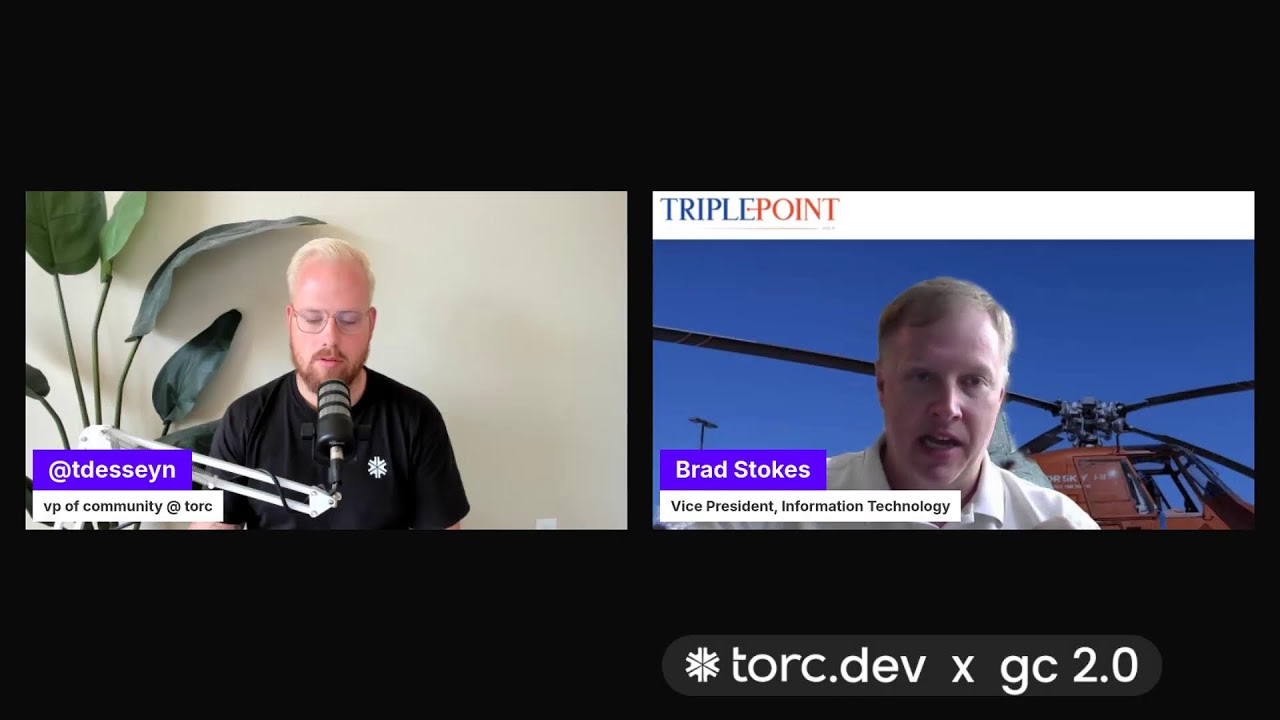
In this live YouTube interview, host Taylor Desseyn talks with Bradley Stokes, a veteran IT executive who recently completed a seven‑month job search after leaving a private‑equity‑backed mechanical‑engineering firm. The conversation covers the initial reliance on mass‑apply tactics and LinkedIn postings, the resulting ghosting and runner‑up experiences, and the realization that high‑level senior searches require a more strategic approach. Bradley explains how he pivoted to applying directly on company career sites, conducted hyper‑targeted outreach to CEOs, CFOs, and board members, and created a two‑column “requirement‑to‑experience” document that mapped each job posting line‑by‑line to his own achievements. He also discusses the emotional toll of the search, the importance of transparency on LinkedIn for community support, and how he handled periods of recruiter silence. The interview touches on a high‑pay offer he turned down for family reasons, the value of in‑person coffee meetings, and broader career advice such as maintaining confidence, taking calculated risks, and never burning bridges. The session ends with rapid‑fire questions about coffee preferences, shout‑outs to industry peers, and a final piece of guidance for younger professionals.
Chapters
TikTok, here we go.
We're live.
What's up, y'all? Good morning, good morning, good morning. I'm on day 7 of battling this cold virus. It's actually a virus, it is not a cold. Uh, my wife took the kids to the doctor and they got tested. Um, it is a virus and it stinks. Uh, it is awful. Um, it feels like strep throat now. It's just like a full— like, the amount of— I, I, I'll just say this, the amount of congestion that came out of me this morning was wild, and I'm still congested. I'm still congested. suggested, which is crazy. So anyways, pumped to have Brad on the show today. Um, uh, please say hey, we'd love to hear from you. Um, again, I tell people this is like a networking meetup, virtual thing, right? Um, you know, again, I think our behaviors have changed because of COVID We're at home a lot more now. What I realized early on, kind of this whole, um, kind of career, you know, arc that I'm doing right now is like, I think people would rather just hop on a 30-minute like meetup where I can get a guest like Brad talk about his job search and hop off for the rest of the day and message Brad, message a few people on the chat, and, um, you know, uh, off and away we go. So again, if you are tuning in, um, please say hey. Would love to hear from you. I've known Brad for a bit. Uh, Brad has been in my network now for a few years. Um, this is the first time we've gone live, so excited to have Brad on. Before we, uh, jump into everything, I want to give a shout out to Appwrite. Um, I'm a part of their Heroes program. Like I always joke, I'm probably the only non-technical person on a technical heroes program. So my pitch is they're cool people. They just released something pretty cool. You should go check it out. It looks fun. So that's my pitch. Next thing, we're doing a bunch of stuff in the Torque community. So go check us out, torque.community. My guy Jason actually just pushed out a few releases to the webpage. It actually looks good now. So shout out to Jason for making our webpage.
Look good.
Finally. Um, finally, uh, shoot me a text if you want to know when I go live with guys, uh, with guests like Brad. Um, uh, that's actually me, it's not some AI number. So would love to have you, let me know. All right, so we're starting to get people tuned in. I, I forgot to send some texts out, so, uh, we're slowly getting some trickling this morning. But enough of me yapping, Brad. Let's give the people what they want, man. Just who are you, what do you do, uh, and we'll go from there.
Yeah, awesome. Well, you know, thanks, Taylor, for having me. Um, you know, it's great to finally connect this way. It's feel like we've chatted over a long period of time, but then not chatted, right?
Yeah, I know.
I had these kind of conversations. So it's fun to do this. So appreciate you having me on. Yeah. So IT leader, have been an IT leader now for gosh, 15 years plus, primarily in, I'll say, the startup private equity scene. Sure. Which, you you know, by itself has its own sort of challenges and churn, right? Um, you know, we just went through an exhaustive job search, hence why we're kind of chatting today, right? You know, talking about the sort of good, the bad, the ugly of what that looks like. And I think, you know, my message has been, you know, and kind of the reason why we're chatting is, you know, through the uncertainty of the economy and, um, whatnot, like, it's happening to a lot of us at all different types of levels. And I think it's important for people to kind of understand that, right?
Yeah.
So again, happy to be here. You know, that's my background is in IT leadership.
And then tell me about TriplePoint.
Yeah, yeah. So currently with TriplePoint as their Vice President of IT, they're a— we're in the mechanical engineering business. And so what is that? That's electrical, plumbing, HVAC in the commercial space.
Okay.
Primarily our customer base is going to be— think of data centers, universities, hospitals. And we're basically a portfolio of companies. So we just had our 6th acquisition Earlier in April out of Richmond, Virginia. And so we're trying to build the biggest mechanical engineering company in the country and we're—
That's awesome.
Number 6 or so right now.
Cool. That's cool. That's awesome. All right. So a lot to dive into today. First off, how long were you on the job search for?
Yeah, almost 7 months. Okay.
7 months. All right. So I think a lot of people, I think a lot of people that I know do developers are like, oh, the more senior you get, the more jobs, like the easier it is for you to navigate. And I would almost argue it's like the opposite. I would argue that with greater risk or greater reward comes greater risk because, because it's, it's a lot harder to find on your level kind of, um, kind of that, um, that perfect fit. So man, talk about just, uh, talk about what worked For you, right? Or how about let's not even do that. Let's talk about what did not work. Let's start there. Yeah, we always start with what works. Let's talk about what did not work.
Yeah, so I think, you know, probably like a lot of us in that job search market, like, it's very easy to take the easy path, i.e., LinkedIn job postings, apply for a job, you know, kind of apply and forget it. Yeah. Um, and really, you know, as I probably already knew that going into it, but I think kind of to your point, like, Not that I thought so highly of myself, but like, I thought I would find something pretty quickly.
And so you're a senior dude, you got a great pedigree, you got a great background.
Yeah, you get into that rhythm and I'm like, okay, I'm applying for jobs. I've applied for 50 jobs, I should be good to go now, right? And really nothing, crickets, right? And so I think what you find there, which, you know, probably no surprise to you and maybe some in your community, is just that the ease of that has actually made everyone's job much— that much harder because Yeah, I mean, heck, even when I look at applications now that I'm employed again for other people, like, people apply for jobs that have no business applying for the job that they're applying for. And then there's people that really are so high level, I'm like, why are you applying for this job? Because this job is not a fit for your skill set because you're here, right? And so, yeah, I think I fell into that rhythm of like the easy path, right? You know, again, because historically I've had—
Fake activity is what I call it, right? And that's why I say in my talk, like, activity does not equal productivity when it comes to the job search.
No, that's a perfect example of that, right? I think there's this idea that you're busy, you're doing busy stuff, right? And that busy stuff doesn't necessarily translate into results, right?
Yeah.
So definitely quickly found that that was, again, probably not a big surprise, did not work, right? I think also you take for granted the networking, right? I think we all say, hey, networking, networking, networking. And I feel like I do a lot of networking, but at the same time, I think Doing networking for networking's sake is not the same thing as networking from a job search perspective, right? And so I think you take for granted, at least I did, hey, I have this good network in the community I'm in, you know, like between someone I know, I'll find something pretty quickly, right? And I kind of relied on that, at least very early on. And so those 2 things clearly were like not the right path, right? And I had to, you know, very quickly sort of pivot in terms of like, this is not working, right? So. Yeah.
Talk, talk about, all right, so I, I'm gonna kind of, so let's talk about applying to jobs. What did you do to pivot from that? Like, all right, so you're in, I mean, 7 months is a long time, right? So, you know, what, what was kind of like the, was it the, for, would you spend 3 months kind of cold applying and then you pivoted? What was kind of that like?
It was, it was a combination of things. So I did have some good traction early on. So I think again, kind of for lack of a better word, I got kind of lazy. Like, hey, I got a couple good opportunities, right? I don't need to, you know, continue sort of this hardcore, you know, search that I was doing, right? And so I think it was a combination of, you know, I've applied for a lot of jobs, I have a couple really solid leads, I'm, you know, went through a couple different interview rounds, like, I'm good, right?
Right, yeah.
And so, yeah, out of that I found what a lot of people now find, right? Which is, you know, kind of again the difference that people kind of anticipate at my level versus Either lower-level opportunities or entry-level opportunities is that I got ghosted, right? I got ghosted on some things, right? Didn't hear— ever hear back, you know?
Yeah.
Or I made it and I was runner-up and really had no reason, no idea why I was runner-up. Like what, what happened for me versus the other guy or the other person, right? Like, so I think those were all interesting, kind of like, oh wow, this is all right. So now I'm a couple months in, um, you know, applied for a bunch of jobs. I've been a runner-up twice. I've gotten ghosted. Oh crap. And guess what? Now it's the holidays. So my, you know, going back to 7 months, football started for me in September, right? And so my window was kind of September through November-ish.
Yep.
Right. And so, um, that was my sort of triggering moment of like, okay, I need to, I need to, to kind of totally pivot and really think that, rethink the job search because we're going into a slow time around the holidays. Like I need to really build something out so I have a runway. So when January hits, because at that point, I mean, I'll be honest, I kind of said, hey, Nothing's happening, right? I'm not going to get a job offer between now and January because the market—
Yeah.
I mean, you had the election, you had a bunch of news on the job front in terms of the jobs reports. You had a couple of interest rate cut announcements. Like all that stuff is happening, right? So yeah, so that was my sort of pivoting moment was in that sort of October, November timeframe where I was like, okay, I've been a runner-up, didn't get the job, haven't maybe been as forceful with the action, right? And taking that sort of more strong approach and then kind of had to pivot.
So what was, what was, um, uh, you, you said you had some good momentum early and kind of lost it. I want to talk about that because I feel like that happens to a lot of people where it's like, hey, the LinkedIn announcement, I'm looking for a job. You know, you seem to have a pretty active kind of network from your LinkedIn posts. And, um, you know, what, what kind of gave you that momentum early on? Was it your LinkedIn, kind of your immediate network throwing your stuff?
I think a combination of things. I think, you know, like Especially again in the world that I'm in with private equity, there is a lot of churn, right? You might have a— you might, you know, continue to kind of exit every 3 or 4 years, right? So in its nature, like, I won't say that I'm always on the lookout necessarily, but like, I think I always have, you know, sort of ear to the ground. And, you know, as I hear things or people will say, hey, there's, you know, so-and-so's leaving XYZ company, like, so I think some of that helped me kind of at least initially, like, I wasn't like cold turkey. Like, I think a lot of people that Maybe you go through a layoff or a job elimination or whatever, or cold turkey, meaning they, they weren't prepared for it, maybe didn't see it coming rightfully or wrongfully. But like, then they have to go through the preparation of like, oh, I need to get my resume and my LinkedIn. Whereas I kind of just to some degree stay in that mode.
Oh, really?
Yeah. So I think because of the market I'm in, I don't necessarily know that I'm really doing— not really sitting around like waiting, waiting, waiting, right? I'm kind of more like, I'm going to actively network anyway. I'm going to actively just get my resume updated. I'm always active on LinkedIn because I think it's important to be, but I also like it, right? I want to give back to the community. So I think those things kind of helped me when it first happened. It was like, boom, Brad's out of work. People kind of, you know, that, that, you know, raised an alert for some people like, hey, there's a good person we know, a good candidate, good experience. Let's see what we can do. And there was an initial really heavy push by some people to kind of propel me, right? And so then, then it was busy and it was good busy, but like, I kind of let it be enough and maybe it shouldn't have been enough, right?
No, it's so easy. I mean, listen, I mean, I mean, if you're interviewing, I mean, I, I've seen multiple people in my network on LinkedIn say, I have 3 final rounds, and then I see them 3 weeks later go, they all fell through. So I think it's really easy for human nature to be like, all right, I got 3 in the bag, one's gonna hit. But the likelihood of that right now is just not the case.
Yeah.
Um, I want to get to Nikhil's question. Once your profile started gaining traction, how did you deal with the ghosting or periods of radio silence from recruiters? Any strategies that helped you stay proactive or positive during that time?
Yeah. So I think a couple things, right? So I think I was pretty open about my search. Maybe I think initially maybe some people, my wife maybe included, thought maybe that was maybe a little bit too open in terms of like, hey, I just got ghosted, right? Or hey, I was a runner-up and didn't get the job. And so I think by doing that, that sort of openness and transparency on LinkedIn in a way kind of helped me because it did build in some community support. Like, so if I posted, hey, didn't get the gig, that kind of sucks, but I need to keep going on, and people would be like, hey, you got it, Brad. Like, so I think there's some of that kind of confidence boost I got from my own community of people, right? So I think I'm more of a positive person anyway, which also helps. But I think, you know, building some— a strong network of people kind of really helped support me through some of that stuff.
Yeah.
Um, you know, I think the ghosting, you know, is hard. I think you start to get into a rhythm of like almost like with some AI stuff, like you start seeing like the sort of typical trends of how things come through to you. So you start thinking what's real and what's not real. And so you kind of again be more stringent about your approach to what you're applying for and who you're talking to because there is a lot of fakeness out there, fake accounts, etc., right? So yeah, I think it was a combination of like one, I'm trying to like take a pragmatic approach to like who I'm talking to and when and being really kind of Is this person, this thing real, right? As well as, you know, kind of put myself out there, right? Which I know is hard to do, Nikhil, like, but that's, that's what I did. Like, try to put myself out there so that for the most part, what I got back in return from that was very positive community response as opposed to, you know, judgmental or questioning. And even the ones that did, you know, I think I took some, some opinions or questions from people like, hey, it's kind of weird, like, why'd that happen to you? Like, and it was a fair question, right? Like, I often had to rethink and kind of look deeply inside myself to think like, okay, what is this like? But what did really happen, right? And help me analyze it. So again, that's the way I approached it. But, you know, easier said than done for sure.
What? So let's see here. I got some people saying that they just got the notification that we were live. So we got some more people trickling in. So again, please say hey if you're just now tuning in. All right. So had some momentum, got lazy, went to maybe some easy apply stuff that stopped working. Holidays, election. I mean, you're probably freaking out at this point.
Yeah, I would definitely say when you look, so I think I posted one time, someone asked me because they were curious about like, okay, well, how many jobs did you apply for? And I think I, I forget what the number was. It was somewhere like the 700 jobs to 1,000 jobs I applied for. And I think to your point, I did get into a point in time where I was like, I've never been out of work this long. There's a lot of factors that are not helping me through this process. I need to think through, like, do I need to take something less or something different, right? And so, you know, I probably upped my application process in terms of jobs that maybe not were the best fit for me, right? So I did get into some of that sense of— and it wasn't even like— I'm lucky in that it wasn't necessarily all financial driven, right? So my wife has a great job, you know, we, you know, been smart about our money. So it wasn't even so much that. as much as it was also my personality is such that like the sitting around in the sort of mundane day-to-day, like, you know, checked off all the honey-do list stuff, like there's only so much of that you can do. And so, you know, you get around the holidays and here in the Midwest, like, you know, that can be a gray, dark time as well. So like, it definitely hit a moment where I'm like, wow. And in fact, that's at that moment what happened for me in a good and bad way was I had an opportunity that I ended up turning down out in California because I went out there, we went out there, we house hunted.
Oh, wow.
The pay was where it needed to be to kind of make it work, although we still were sticker shocked by pricing. But like, ultimately, between my wife's job and our step— my stepkids, like, that move was so monumental, we just couldn't make it work as much as we tried. Like, we tried to say, hey, look, I'll take the role, I'll live out there by myself for a year, and then they'll come out in a year from now and My stepdaughter graduates from high school, etc., etc. But like, we just could not make it work, right? Yeah, yeah, yeah. But, but again, I think the good and bad of that was like, wow, like I'm valued on the, on the coast and somehow maybe not valued in the Midwest, right? And so it was a weird kind of like—
Interesting.
Moment. And again, the pay was like astronomical, like, you know, versus what I was making. So it was like, how do I kind of understand that and make sense of that? And what I did kind of take away from that was like, hey, again, reminding myself like, hey Brad, you're good. You're, you're, you got a good skill set. Like, you got a good network. Like, this is not the time to like pause. This is not the time to feel sorry for yourself. Like, instead, what I kind of chose to do was like say, hey, look, I, I did purposely at that point in time say I'm taking a break. It's around Christmas time. Like, I'm just gonna basically just pause the job search completely for a few weeks, enjoy my family time. Kind of, you know, again, take that as a somewhat momentum builder going into January. And then hopefully with the new year and the election behind us and, you know, sort of boom, try to like really focus my search again in the new year. So.
I love that. All right. So you are pretty active on LinkedIn. You have a pretty good community. You, so like, What did you change to get, like, I guess, let me, I guess let me just jump, let me jump ahead real quick. How did you get this job? Like, I, I, like, let's start there and I wanna kind of work backwards a little bit.
Yeah. So I think again, it goes back to like how you're networking and how you're applying. So this, this job opportunity got posted, I think it got posted on LinkedIn. That, you know, again, I'd already made the conscious decision months, months back now to say like, when I see a job posting, I'm absolutely not applying on LinkedIn. I'm gonna go right to the job site, the career site itself.
On, on the company's page.
Yeah, yeah. Like, love that. Love it. Because again, I, I, at that point I'm thinking to myself, I'm reducing the candidates they're looking at from— yes, because they start thinking about like, how do the recruiters get and see these jobs and who is getting into the job, right? Oh, I get it. Like, so then I start thinking that, that, that number of people applying directly is far, far smaller than the, the vast number that are applying to LinkedIn. And so, you know, kind of just Hey, I'm playing the numbers game, right? So I did that. I started actively networking. And when I say actively networking, so like I'm searching out people at the company that would be relevant, who I would guess be relevant to the position. Like, so I'm trying to connect with the CEO.
Yeah.
The CFO.
Yes.
And so kind of back to your exact question, you know who I kept it with? I kept it with a board member of the private equity who then responded with, oh, that's interesting, because you have— because again, I might— and again, Not only did I connect with him, I also— my communication was very specific. Hey.
Yeah.
Yeah.
You like just hit him straight in the mouth of what you can do and what you've done and stuff.
Kind of, but I did it in a way that resonated with him. So I know he's a board member. I know he's associated with private equity. I said, hey, this is my 6th private equity opportunity here. I worked with Carlyle, Bain, Stellix, blah, blah, blah, blah, blah. Right? Things I knew would resonate with him. And then also kind of anything else I thought was relevant to the position. So I've obviously been an IT executive. I have some other semi-related construction experience, right? And that's what I, you know, again, very focused message to him. And he responded, right? And so once he responded, I said, okay, let's, let's build a communication line, start coming some conversation. Eventually that led to, hey, send me your resume, right? I love it. But that was in January, right? So this job, I didn't get this job until March, right? So that was in January. So like, Yeah. It still required me with follow-up to him and to others to kind of keep that momentum going. Like, it's almost like I sparked the fire, but like, I need to keep feeding the fire, right?
Yeah.
Like, enough to create the spark, right? And so that's what kind of eventually got me to like get through the process. And I think again, what the way, you know, things I would say I changed in the search, I think helped me ultimately for this job was Everything I did was very specific to the job, meaning like, I could say, hey, I've been a CIO before, but like, does that—
like, there's so much that comes.
Yeah, yeah, yeah. Versus like, I started thinking through what are their problems? Like, you have 6 portfolio companies. Okay, I've had 5 acquisitions at my last, you know, private equity. So I started connecting those dots in a very meaningful way to the point where it's almost like, you can't ignore me. Like, you know, I am the guy, right? Like, I am telling you, like, I'm the guy. You can't say I'm not the guy because Here's all the stuff that you need. Here's all the stuff I've done. And then I do things like when I started getting that much momentum, like the one thing I always do, I think is also a big game changer for people maybe to hear is like, maybe people do it, maybe they don't, maybe I'm naive about people doing it. But like, I do a sort of requirements to experience sort of mapping.
Okay.
And I proactively send that to them. Like, I don't wait for them to ask me questions. Like, I proactively say, here's the job requirements. Here's all the stuff I've done related to this thing specifically.
Ooh.
Almost like a presentation, like, to them to say—
Yeah. Is it a document or is it like—
It is a document. It's typically a 2-column document where I have job requirements on one side and sort of Brad's experiences on the other side. And it's very, very specific to the job. Um, you know, because everyone says tailor your resume, tailor your cover letter. Absolutely. But I think people there When they hear Taylor, they're thinking about certain tweaks. You know, I took it to the next level, which was what I did was specifically for the job, line by line by line by line. Again, to the point where I'm like, you can't ignore this.
Like, dude, I love this because I tell people like, slow down to speed up. Like, you have to be this intentional in the job search right now because otherwise, like, You know, just editing your— so I feel like there's levels, right? There's like, you know, let's, let's just mass apply. Then there's like, well, I'm gonna edit my resume for certain jobs. Then there's like, I'm gonna, I'm gonna edit my CV and my resume. Then there's like what you did where it's like, hey, I'm taking the job description and I am line item by line item of what I can do. I mean, props to you, man. Props to you. That's great.
I mean, I, I— Yeah, I think that's, again, I think that's a game changer, right? Like, you know, again, even in conversations I had, Right before I'd actually accepted this job, other jobs, because, you know, that was the game changer for me. Because I think you had a brief moment when the market got good for a second. It seemed like, you know, January to like February, right before things, you know, started kind of going a little bit haywire in terms of the turmoil and tariffs and all that fun stuff.
Sure.
But like, I had 4 opportunities. Now, those 4 opportunities, I was a runner-up in one, I had 2 offers, and the other one we kind of agreed to walk away. So, but I almost had 4 offers like right then. But like I approached them all that exact way. Like, I can't ignore this.
I love that. That's amazing. Um, uh, I love this, but Brad put himself out there, lead by example. Also, David goes, anyone else find Austin? They stoked the fire and his last name is Stokes. Absolutely no notes.
I love it.
Um, so, uh, oh man, I had some other thoughts. I think, um, talk about, talk about networking. Did you— what did networking look like with you on the job search? Was Did you set aside time to— because it sounds like— because what I'm trying to get is it sounds like you were actively doing the networking. And again, I, I talk about what you just said. Go to the company page, uh, go to LinkedIn, don't apply, hit up people in the, the, the chat or in the LinkedIn that applies to you. I preach that. I've never heard anybody actually do it.
Shout out to you for doing that. Not only did I do it, I mean, again, whether or not it worked in other examples, because maybe there's some certain companies that didn't follow back up, but like, I might get aggressive enough to even say like, hey, I'm gonna email my resume right to the CHRO. Like, I'm gonna go find that person on LinkedIn, I'm gonna try to connect with them. In my sort of LinkedIn note, I'm going to be very specific about what I'm— what, why, and what I'm doing. And then boom, here you go, my resume. Like, again, can't ignore, can't ignore, right? I mean, Maybe a little bit too much, maybe perhaps. But like, again, I feel like that was, you know, kind of where I was at from a mindset standpoint. But, you know, again, that was my approach. You know, and again, I think to your point, you mentioned, yes, you got to do the networking and the resume tweaks, but I think it is trying to figure out what that next level of differentiation is. And like, for me, it became partly that, that sort of, you know, job description requirement document. But then I think the question you were kind of asking, like, My networking changed. So what I meant by that is I was going to the events, hey, the local IT tech community events. I was doing all those things anyway, right?
Right.
So I kept doing that. Now I kept doing it with— now I'm unemployed, right? So that changed a little bit. But like, I went beyond that again. Like, I think you need to take that next step, which is make the connection. But then I'm making a connection with a person and I'm going to say, let's have coffee, right? You know, let me take you to lunch. Yes. Yes, very specific, you know, not just, hey, I'm going to the events and I'm shaking some hands and saying hi and hey, Brad Stokes out of work. Now I'm actually going to the people, right? Like, I'm going to— it may even be like, it may not even be someone at the company, it might be someone that knows someone that kind of like someone I'm, you know, I more closely know this person, so I'm gonna go have coffee with that person, talk to them about this other opportunity that they know about, right? Like, that's the next level stuff I felt like I had to really do to kind of really get to where I got to in the spring, which was, you know, 2 offers and, you know, a runner-up finish.
Man, I mean, you, you literally are doing— I mean, you literally did everything I talk about. I mean, and, and, and I've very rarely met anybody, uh, that has done that. So shout out to you. I, I think, I think I want to go back to just like— so let me ask you this. So let's say, let's say a developer, right? Let's say a developer. Let's say develop—
let's, let's put it up here.
Developer wants to work for you.
Right?
Let's say they message you on LinkedIn. Do you— would you like them to be like, hey Brad, I put together this quick document, breaks down job description, here's how I'm a fit? Or would you like a, a simpler DM going, hey Brad, my name's Taylor, I've been developing for about, you know, 15 years. I see you have a job spot open. It's really kind of along the lines of what I do. Would love to chat more. Let me know your thoughts. Would you like to be just hit with a wall of information from the get-go, or would you like a little lead up to it?
I think it's a mix of both because I think the problem with maybe the first example of like just a reach out is there's not enough to hook me, right? Like, hey, I'm a developer that I can do this. It's not enough. Like, I mean, I probably get like honestly 100 messages a day, right? So like, that's not gonna stand out for those 100 messages. Same time, like if I get bombarded with a bunch of documents, like I may ignore that too because again, I get 100 messages a day. So It has to be kind of poignant enough where you're like, hey, I'm a developer, I've built like— here's a perfect example. I had a conversation with a potential partner yesterday, described quickly a scenario I have, and they were like, oh, we've done that thing for this other customer. So I think, you know, if a developer came to me and said, hey Brad, I built this thing for the construction industry, or I have this experience and I see, you know, it's in the job description, or I glean something from your website or from a news article. Like, those are the things that I kind of like latch onto. I'm like, oh, this guy actually looked at our page, right? Or he looked at the news on our site and he's also kind of thought mindfully about, hey, this is what I could do to help you, right? Yeah. And that's stuff that's gonna catch my eye.
I love that. I love that. That's awesome. All right, so wrapping up here. This was great. We should do a part 2 here soon. This is so good. What else? Anything else that maybe worked or didn't work that we forgot to just mention on the call?
I think, you know, people take for granted, you know, sometimes the thank-yous and the closeouts. I think that's one area where, again, don't cheat there. Like, I think having a really good, you know, sort of close-off note, you know, even if the job did not go to you, because the market is always such and things happen in our world so quick and so fast. Like, I think especially in tech, Like they may think they have an offer out to the next guy or gal, but then that person turns it down. And if you like talk, who did I talk about this with yesterday?
Was it yesterday or this? I talked about this already. Yes.
Yeah. So if you come out hard, like, ah, that sucks, I didn't get the job, or you don't follow up at all, like, and continue to kind of maintain that relationship. The IT community, as we all say, and it's absolutely 100% true, as I continue to see, is like, it's big, but it's so small, right? So like, those cycles coming back around and like, you don't wanna ever, you know, burn that bridge. You just don't. Yep.
Yep. I love that. I love that. All right, let's, uh, let's, let's wrap it up kind of rapid fire like I always do. First question, tea or coffee?
Coffee.
Hot or iced?
Depends on the season. Winter, it's hot. Summer, it's cold.
Okay. All right. I, I can accept that I am the crazy man that, um, when I, I was in Boston for work in January, it was like 15 degrees outside and I was drinking iced coffee. That, that I, I, I— Again, because there used to be a lot more Dunkin' there.
So when my Dunkin' days, when I was in the South and I couldn't find Dunkin', if I was in the North, I'd get as much Dunkin' as I could. So, yeah, or not.
Yep, I love it, I love it. Uh, next question. Um, uh, when it comes to just anybody in your network who you want to give a shout out to that's doing really cool stuff, um, is anybody kind of pops into your brain? Any leaders? Any— anybody who's doing some cool things?
Yeah, I mean, the one guy that I always talk about is Mike Fulton. So if you haven't connected with him, connect with Mike Folden. Mike Folden is, he's been at Procter Gamble, he's been at Nationwide, he's doing his own thing now with this thing called Nexus Community. He also works with Koch as an architect now. So he's kind of been a leader to, and he's a very technical guy still. He's done, he actually brought my wife and I in to speak at a class he teaches at Ohio State on the side as well. Super, super good dude involved in all kinds of cool stuff. Better than me in a way because he's technical still too and has the leadership components. So like you can apply kind of both. And I, I miss some of that. But yeah, super good guy. Great guy for sure.
I love it. That's awesome. All right, last question. Uh, the show's called Guidance Counselor 2.0 because I had guidance counselors in middle school, high school, and college, but now as adults you don't really have them. If you can go back in time and tell young Brad something, Career advice-wise, what would it be?
Oh wow, that's a tough one. Um, I think it really is— I think there's a lot to be said about having confidence in yourself and taking that chance. Yeah, I think it's a scary thing for a lot of people, but I always feel like the risk is so low relative to the reward that like, I think I would probably teach— tell my younger self like, go for it, because you don't have much to lose. Like, go for it.
Yeah, yeah, I've been thinking a lot about that. I, I would say I don't have many regrets, but I think the one regret is, is like to not just go get a 9-to-5 right out of college and just like go travel the world, go slum it up, go learn from other cultures, go start a company, you know, uh, fail, do whatever it is you want.
Yeah, absolutely. I think that's— yeah, again, I have kids now, they're that age, and I'm even challenging them. Like my son's a remote— he was a remote employee since he graduated. I'm like, why are you still living where you live? Like Go live on the beach. Go to the mountains. Like, yeah.
Yep, I agree. I love it. All right, Brad, well, thank you so much. Y'all connect with Brad on LinkedIn. Um, he's very active on it. He's a gem, uh, to follow. So go follow him. Um, Brad, stay on so I can say bye to you backstage real quick. Um, but we'll see y'all, uh, tomorrow I'm off on Guidance Counselor, but Friday, um, we have the, uh, the head of direct hire for Ronstadt coming on. His name's Andy. Um, Andy and I look like brothers, which is hilarious. So he's in Atlanta, so we're gonna come on and talk about just community building, tech, uh, where the market's at right now. So Friday morning, we'll see y'all, 9:30 AM Central. Brad, thank you, my friend, and, uh, we'll see y'all Friday.
Peace. You guys, thanks.
More from taylor



tech doesn’t have to be the only thing that brings us together #techcommunity #techcareer

I want to give back to y’all that make the tech community so great #jobsearchtips #techjobs




spend a little time investing in yourself #linkedin #linkedintips #careeradvice


