
The Power of Community at Torc and Career Guidance w/David Messinger, CTO of Torc
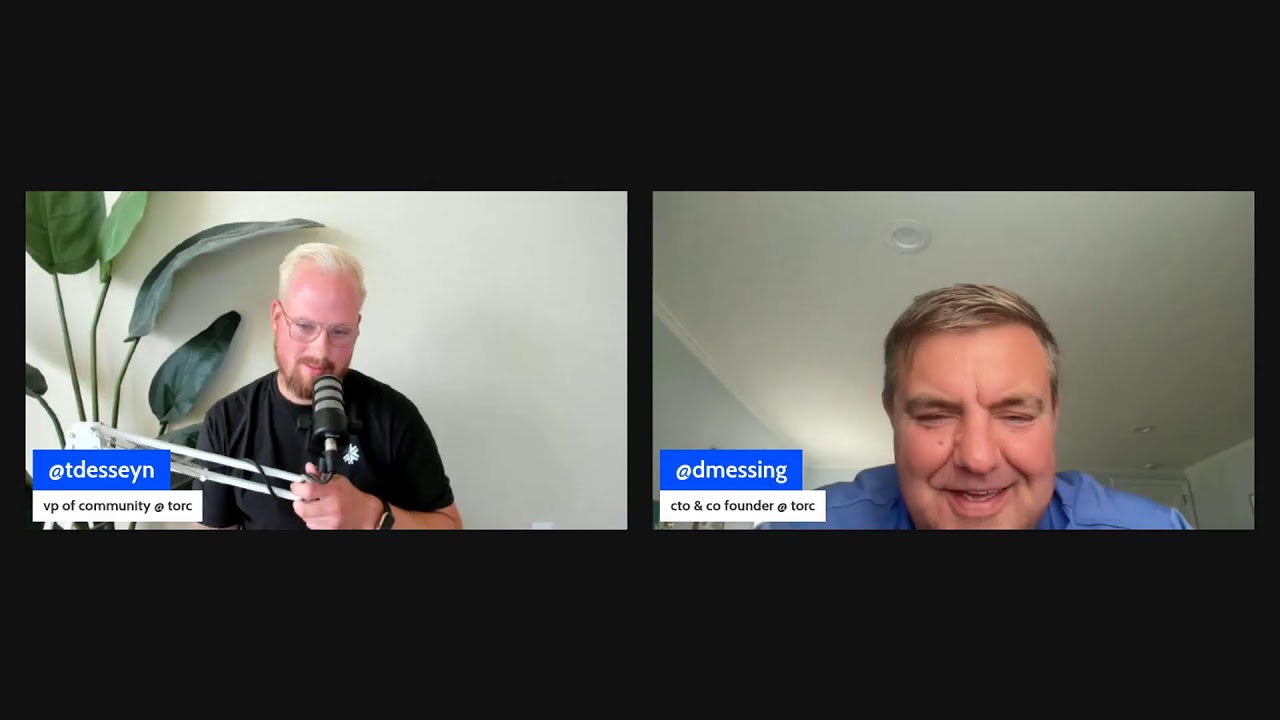
This content was created by taylor desseyn. This content was uploaded by taylor desseyn. This is a YouTube live interview titled "The Power of Community at Torc and Career Guidance w/David Messinger, CTO of Torc" (created/recorded 2025-08-20 UTC). It features a conversational, informal on-camera discussion between host Taylor Desseyn and guest David Messinger (co‑founder/CTO of Torc/Randstad Digital). They discuss Torque’s community-first talent model and product roadmap (new developer profiles, Career Hub, job matching, payments for community work, mentorship), background on David’s work (TopCoder, Appirio, community platforms), career and job-search advice, and a live sneak-peek/demo of the upcoming platform. The exchange includes audience/Discord interactions, community housekeeping, and practical next-step guidance for developers.
Chapters
I forgot to do one thing. So, uh, I, I— so, so we're live, um, but I, I have to— so I ask this question at the end of every chat, but I want to start at the beginning because the, the— there's obviously a delay to get started. I always ask people this, and I've never asked you this: are you a coffee or tea guy?
Coffee.
And are you, are you hot or iced?
Hot. I'm hot all year, all year round.
For real? All year?
All year round. And I'm, I'm a black coffee guy.
There you go. There you go. I, I don't know if you've seen the coffee, uh, chat we have on the Torque Discord. We literally have just a coffee chat, uh, talking about the ways to drink coffee.
So, um, I am not— I, I will say though, this is, it's a little too early for me yet, but it's starting to get into— I do like Dunkin' Donuts. Pumpkin coffee.
Dunkin' Donuts. I have to say this, you are the epitome of Boston because you and I do our like one-on-ones and you are drinking Dunkin' Donuts. Uh, you're literally like a walking commercial.
Uh, I'm not a big, uh, like Starbucks or fancy coffee guy, but just some good old-fashioned Dunkin' Donuts is good for me.
I love it. Uh, well, good morning, y'all. Welcome. It's been a minute, um, since we've been live. I've, uh, been on a little bit of tour. I have to say, I, I want to give a shout out to Dave, um, and I've worked it in my newsletter. I'm playing off of Taylor Swift Eras Tour, so it's the Taylor Error, E-R-R-O-R, Tour. Um, so this is the originator behind that, so shout out Dave for that. Um, but yes, I've been on the Taylor's Era Tour the last 3 weeks, so there's been no lives. Um, but excited to go live today with the boss. Um, actually, uh, not to be confused with Springsteen, but, but this is the boss, uh, of Torque. Um, so excited to go live here. Um, and then, um, I'm— I have to reschedule tomorrow. We have our all-hands, uh, tomorrow, so I need to reschedule my live to Friday. But I have Jeff Blankenberg coming on Fantastic guy. He's up in Columbus, just took a job as really a staff principal engineer. So super stoked to talk to him this week. But as always, say hey, would love to hear from you. Again, it's what I tell folks, I've done this live show now for 5 years. I was very aggressive. It's kind of my personality, as Dave is very well aware of now after working together for a year. I'm kind of balls to the wall. Um, and so I, I did this live show every day for about 4 and a half years. Um, and so one thing I've realized over the last 6 to 9 months is this is really just— this is the meetup, right? Um, I, I tell folks, if you don't comment, no one knows you're, you're watching or tuning in. Um, and there's a lot of people in the Torque community. I actually just got a DM, um, from Abby. Abby actually worked at Ronstadt years ago. Um, she actually worked with Angie, uh, Dave, and, uh, she actually messaged me. She's a developer now, and she messaged me. She goes, she goes, I can tell you have your Torque community trained right because I've never had more intentional DMs about how we met. Um, so again, for those of you watching, please say hey, slide into people's DMs, message Mess. He'll get back to you eventually. I don't know when, but he'll eventually get back to you. Um, so tell him you saw him on Guidance Counselor 2.0. But again, like I tell folks, like, if you have networked off the back of me for like 5 years, you would have an expansive network. And so please say hey, let us know where you're tuning in from. We have folks tuning in from all around the world, which is pretty cool. Um, we do have some folks tuning in now. Toronto, it's good to see you. And just great to see you, brother. Um, Ricardo, it's good to see you. Chris, great to see you. Kelly, Roxy, uh, it's great to see y'all this morning. Um, want to give, uh, kind of some housekeeping things. I haven't done this in a minute, so I'm trying to, trying to, uh, uh, refresh how I do things, but Shout out to Appwrite. Me and Jason Torres are Appwrite Heroes. I'm probably the only non-technical person on a technical heroes program. Listen, I don't code, but I know Appwrite is a pretty cool tool, so you should check them out, appwrite.io. If you do get in contact with anybody at Appwrite, tell them the Torque Boys sent you over. And listen, we have a lot going on with the Torque community, as we'll talk about today, and kind of Mess's vision when he hired me and kind of where we're going. But check out torque.community. We have a lot going on. Um, uh, you know, I'm— I, I grew up, uh, in the age of, of non, uh, cable television, and you would have the, the TV guides on what's going on. We have a TV guide on torque.community of all the events we're doing. Um, also too, uh, we're doing resume LinkedIn reviews this afternoon at 1:30 Central, so I'd love to have you. Also, if you do want to be updated on when I go live, shoot me a text. Um, I text, uh, uh, uh, the folks in my community when we go live, so you can check this out. Um, and I think that's it. We got a few more people tuned in. Erica, it's good to see you. Seth, it's good to see you. Jesse, my guy. Uh, uh, calls boss mess, boss smiles.
Yeah, exactly, exactly.
Richie, it's good to see you. Uh, thanks for the DM this morning, brother. Um, I will get back to you. Jeff, it's good to see you. We got a few Torque Ambassadors in here. Sebastian, Jeff, and Roxy.
All right.
So enough with me yapping, Mess. So, so, so for the record, I— everybody calls Dave Mess. So when you hear me on the recording in the future and now when I say Mess, that refers to Dave who I'm interviewing, not a third person that's not in the room with us. So Mess, let's give the people what they want, man. Who are you? What do you do?
And we'll go from there.
Yeah, yeah.
And first of all, I saw Richie said he's in Atlanta. I'm heading to Atlanta tonight, so yeah, yeah, want to send me any tips Before I, uh, get down there. But, um, hopefully I meet Brianna from the Torque community there for dinner, so I'll hold her responsible finding the right restaurant. Yeah, yeah. But, uh, yeah, Dave Messenger. So I was the co-founder and CTO at Torque. Um, my background, I was actually a comp sci major and then went straight into consulting back in the day, kind of right— I'm old enough, right before kind of the dot-com boom.
Yeah, you're, you're like the mainframe days, right?
I never did mainframe. I'm not that old. But I don't, I don't know my COBOL too well. But I started actually my first project, believe it or not, my first really big project was priceline.com. There's like 20 people there.
No way.
I could tell you a lot of crazy stories and issues and different things that we survived and went on to help with the Priceline founder do a couple different different startups and different, uh, name your own price, from everything from— started on hotels and airlines to mortgages to cars to gasolines to groceries. Um, did a little bit of everything there.
That's awesome.
And then was at a couple other— I was at kinkos.com, I just did bestbuy.com, um, PG&E Energy, a bunch of different clients.
Nice.
Left, left that. So that was at this company called Talon back in the day. It's originally called BDS. And actually, Mike Morris, the CEO and co-founder of Torque, and I both started—
we're both there.
That's awesome. I met Mike. And then I went to another startup, which was called Amentra, which ended up getting bought by Red Hat. But I left after a year, maybe, maybe the wrong decision. But they, they did kind of mentoring. So the idea there was open source software development for companies. Like, my big client was Merck Pharmaceuticals. But not only did we build an app for Merck, but we also trained Merck employees on like how to use— back in the day, like, uh, it was WebLogic.
Oh yeah, I remember recruiting WebLogic.
Yep. Yeah, so it was like Ant and JBoss and a lot of different sort of stuff.
Yeah.
And we had a whole curriculum. We would teach people that weren't on the project. So it helped us sell deals because we did kind of both mentoring and building the project with talent inside the company. And then Red Hat bought them for basically to become— because they did all the mentoring stuff as their consulting arms when they needed a consulting partner.
Okay.
And let's see, then I went to TopCoder, which was very early on, that actually sort of spun out of Talon. At Talon, we built this app we called the Code-Off, which was a platform to let everybody kind of compete against each other in a fun coding way. And Topcoder took that and said, we're gonna go worldwide with that. And they actually started that about 8 months or about a year before I got there. And when I joined, Mike and I were there when they started a separate business called Topcoder Software, which was how do you use a community model to develop software?
Believe it or not. Imagine that. I mean, I mean, I mean, I kind of, I kind of call you in my circles like the grandfather of community. Because I don't, like, was Community really a thing? Like, like, like what year was that?
It was 2001.
2001. I mean, I'm like, Community wasn't like, no one was talking about Community like they're talking now.
No. I mean, the funny thing was we started it mostly in the US and it just grew virally all around the, all around the world. And it's funny, like if you look at like famous people, like you can still pull up Zuckerberg's TopCoder. That was before Facebook. He was a TopCoder member competing.
No way.
Yeah, D'Angelo was the CTO there. Drew Houston founded, uh, founded Dropbox. Um, you had D'Angelo, CTO of Facebook.
Um, they were all on TopCoder.
Yep. Steve Newman was the guy that founded Writely, which became Google Docs. He was a finalist at TopCoder. Even now, if you look like Scott Wu, who is the founder of Cognition that just bought Windsor, just got $500 million in funding from This week from Peter Thiel. He was a TopCoder champion.
That's crazy.
Yeah, yeah, the guy that runs, um, the data science group now for, um, OpenAI. 2 of them were TopCoder members. Like, TopCoder, we used to place people at huge hedge funds, at Facebook, Google. We actually ran the Google Code Jam for 9 years. We ran the Facebook Hacker Cup for a few years. So, um, that was fun. I actually flew all around the world, like, helping Google open offices in, like, China, Brazil, Ireland, uh, all using a kind of platform to help, help assess people.
I love that. I love that. And for folks joining, also Kelly, uh, fellow, uh, Atlanta native, uh, tuned in. She's a dear friend of the, of the Torque community. It's good to see you, Kelly. But, um, uh, it's funny, I'm actually asking Dave these questions because I don't know, because our entire one-on-ones are just spent Uh, just with a bunch of follow-up and strategies. So I'm just asking a lot of these questions to Dave just because I don't even know. So, so you left, so you were at Topcoder for a bit, right?
Yep. Like 7 years? Yeah, I left and went to a company called Appirio, which was kind of the first, um, SI for Salesforce because I wanted to go fully focus on cloud and mobile. Um, and we started another community platform there called CloudSpokes that grew to about 85,000 people.
Okay.
And then we actually bought Top Coater.
Okay.
And we reverse merged Cloud Spokes into Top Coater.
Okay.
Stayed there for a few years, and then Wipro bought Top Coater and Aperio.
Okay.
I kind of split them, and then I did a stint of 4 years at Wipro. And then, um, Mike and I were always wanting to go back and kind of take a slightly different twist. Top Coater was a high-level, like, kind of Really, open innovation platform was one part of it. The other part was a different model for software development, which is component-based and competition-based.
Okay.
Which I think still is one of the best ways to develop software. But, um, as you know, in any kind of company, it's what you can sell is really probably matters the most. So if you have the best thing, like, I don't know, I'm gonna date myself here, but like Beta was better than VHS, but no one bought Beta, so VHS wins out. So, um, when we started Torque, we said, hey, we're going to do more staff augmentation, but we really wanted to be talent-focused. And I still think that's what's unique about Torque is we want to have the best profiles. We want to be able to give developers more and more opportunities. Yeah, the best developers shine versus— I think not to throw shade at our competitors, but I think a lot are like, you know, more like moving widgets of humans to, to different—
Yeah.
jobs, and that's never been kind of our intention.
So yeah, so, so, so what, you and Mike— and I'm kind of, I kind of want to get nitty-gritty, we have some time again, I've made these a little longer because of this— but like, what, you and Mike just like grabbed lunch one day and we're like, hey, we want to go back into this? I mean, because essentially it's, I mean, it's not staffing, but at the end of the day it's placing talent, right? So like, like, like, what, what made you guys get so enchanted with your career where you guys wanted to start this again? It's not easy. It's not easy.
Yeah, I think, you know, if you go back to the days, my first job, which was the BDS Talon, is we were really good. I think, I think we were like great, like we were a great company. But when you're 250 people, when you get to 500 people, it was kind of like back in those days, like, hey, can you spell Java? And unlike Taylor, you know, Java is not a cup of coffee, it's a programming language.
There you go.
There you go. Then like, then it's like, hey, here's a book. stick it on your desk and let anyone see it, and we're going to bill you out and put you over here.
Sure.
Like, sure, you look at like the big consultant companies, which is like back up the bus with the juniors or those sort of things. Um, I always thought that was kind of a, uh, again, a model that worked really well, but not the right model to get software development done. So like, how do you find great people, give great opportunities, and have it where like, um, you know, we always say kind of like managing your fantasy football team. where you could swap in the right resource at the right time to get the right job done.
Yep.
And, you know, and ideally, like, you don't want that person to be cut and sit on the waiver wire or whatever in fantasy football, but you're able to get that person another job where they're— they can work on what they want to work on and show their privileges. So that was sort of what our intention was, was like, um, and when we started Torque, we were looking at You know, like Web3 verified credentials. Like how do we give more of the talent ownership of their own profile, which is something we still wanna do. We actually had it deployed. We turned it off 'cause people at the time didn't really care. So we probably not the best decision that we made things that people weren't really ready for, but I still think that's the right way to go is you don't wanna be a, We don't wanna be a walled garden, right? Again, my Boston accent probably hurts me here, but you don't want the profile to stay inside its own 4 walls. Like, it should be able to go, if Torque can't help you, you should be able to go someplace else and get that job and not lose all your standing and credibility and things like that. So that sort of was the background of the Torque profile.
So talk, you know, I've asked this question a lot. I've had amazing community builders on the show recently. I kind of go through these little stints where it's like heavy community, job search and heavy community job search. Why do you think like community is the secret sauce, right? I think it's a secret sauce. You and I are very aligned. Why do you think this community-first model, especially in the age of, call it what it is, staffing, is really the true indicator or the differentiator? Words are hard.
Yeah.
Yeah.
I mean, I think Let me try a different way. So if, if I think now, um, I think you actually— someone recently, I think it was the, uh, Chesky at Airbnb just recently talked about it, is like hiring is hard. Not only is it—
Yeah.
Not only is it hard, it's, it's possibly the biggest mistake you'll make, right? Um, because it costs a lot of money. There's a lot of hidden costs. It's, it's really— it can be a very painful experience on both sides. If you get hired into the wrong job and you kind of feel locked, if you hire the wrong person, it's, it's super, super expensive. So to me, community where you are starting to understand people, you start to understand their wants, desires, um, you're kind of lifting, you know, the lift— all tides lift all boats. Or—
I've been trying to say that in our one-on-ones and I always mess up the saying, but yeah, that Yeah, I messed it up as well.
So, but, you know, being able to get people, you know, kind of collectively be able to improve everybody and move everything up.
Yeah.
It just reduces risk because now, you know, like, you're not— you're no longer a number being run through an AI machine to figure out if the skill on that thing— it's like, hey, we know that, you know, Jason Torres can kind of tie his own shoes and maybe can go down this route. But yeah, we've got other people that can go down this other path that are, you know, can contribute immediately, right?
Sure, sure.
And that, that just helps de-risk it for everybody. Not only is it de-risking it for the talent, because the talent, and, you know, hopefully we have their best intentions and understand where they want to go and what they want to do with their career. You know, that's some of the things we're trying to do that you'll see in the near future in the profile is like, hey, I'm really good in Java, but I want to learn Python. So like, maybe we'll try to get you Python, maybe that'll get you a little lower rate or something, or different opportunities to get Python, or maybe it's kind of small one-offs.
Sure.
But we'll be able to help kind of help manage your career in the right direction. And then from the talent, from the company standpoint, they're not getting an unknown as much as I think you might Even in the big consulting firms, as you meet a great partner, and next thing you know, you got 20 guys from, um, you know, a university coming out and, coming out and, you know, hiding that book under their desk and coding for it. Right, right.
Yeah. What, um, Kelly comes in here, she goes, a rising tide lifts all boats. Let— I need to write that down so, uh, we, we can save that. Also, uh, fun fact about me, I can tie both shoes at the same time. Okay. All right, Jason. So where— so, you know, obviously, uh, it's, it's actually my 1-year mark here. Um, hired last August with you. Uh, let's, let, let's do a little bit of, of review. Uh, kind of 1 year kind of in review. You know, I know that, you know, let's just kind of chat like a 1-on-1. Like, yeah, where, where, where have we gone? Like, where have we been? What have you liked? What have you liked? Where do we want to go? Obviously we can talk about some, some Torque stuff as well, but, you know, just, just kind of give an overview of, of the last year and your thoughts.
Yeah, so last year, like I said, I think over my entire career there's been ups and downs. I think last year— what was last year? Silicon Valley Bank? That was— no, that's probably a little over a year ago. That was kind of— yeah, yeah, that was kind of a rough start. Then hiring Taylor might have caused a lot of other anxiety. So those were the two, uh, Those are probably the two big— the big two big issues we've had.
Yeah.
But we survived both those and we got Taylor on board and get them going. Um, yeah, I mean, I think, you know, what, what excites me is stuff like this, right?
Yeah.
I think, I think we have barely scratched the surface, you know. It's like, it's like the iceberg, right? Like we got the little, little thing going up, but what's all— what's underneath the water and coming? Is like, if I could wave my magic wand, I'd like, you know, one of the things we talked about now is like Taylor's KPIs, right? And what are we, what are we doing for the community? I mean, one of the things I think it's not a KPI for next year, but maybe the year after or so, is I would love to see like total spend with the community. So that'd be like how much we pay and all the people placed out of the community, but also Um, we have this concept of tasks, right? Like maybe there's something small that needs to be done. Like, yeah, you know, like, um, Jesse's been doing Discord bots. So like maybe we say, hey, here's a— here's an enhancement for that, we're going to pay X amount of money. Or like we got small things I know we want to get built and that we don't necessarily— we may have the cash to pay, but we don't have the engineering talent or stuff. So how do we—
Sure.
How do we add like crowdsourced gigs into things?
But I think that's one thing— I'm gonna interrupt you real quick. I think that's one thing that, and, and I want to give you props here publicly. I mean, even since the day I started, you've always wanted to flow back money to the dev community. I mean, that's, that's, that's something that, that, that you have talked about time and time again. Where does that come from? Where is that motivation? Um, why, why are you so big on, on paying the community for, for things? Obviously it makes sense, but I want to know where, where that motivation comes from.
Yeah, I mean, I guess it's, um, probably a— I wouldn't say it's a knock. Like, I think open source is very valuable, but also I feel like you also don't want to, um, you don't want to build on the backs of people without them getting compensated.
I agree.
So it's— and I think in those models where you're you're getting free work and free labor. It's, it's just not a, not a conducive outcome. So like one of the things we did at Topcoder when we first started was we always said we're going to pay people for the work they do. Now in some cases that was a slightly different model. Like we actually— the way Topcoder worked is we put out a unit of work and we'd say like, hey, go build this thing. First place is going to get $2,000, second place is going to get $1,200, And then we'd pay 3 reviewers $500 apiece or something like that. And then they would fill it. We might get 3 or 4 people that submit code. The best person would get paid what they said they're gonna get paid. The second person would get paid with— and then third and fourth wouldn't get paid. Um, that was— but you just got the experience, you got the code review, you got, you got other things for it, and no one used that code.
Yeah.
Um, so that maybe was not the best efficient use of talent.
Sure.
But, and we couldn't pay everyone just because financially you can't pay them, but at least everybody knew kind of going into it, this is what you're going to get paid, this is what's going to happen, this is the risks you're involved in, but at least you get this, get these things, and you end up building a profile, right? So I think to me that's— and I think the other part is we've always been developer first, and, um, we want to be a spot where developers feel they're not being taken advantage of And that we want to, want to kind of push the envelope there where getting them there— and it— and from a selfish standpoint, it benefits us too, right? Because—
Yeah, of course. Yeah, yeah.
We can legally use that work as IP. You've traded goods, you paid them money, you can use it. It gets them, gets them the opportunity to put something on their profile to show that they're good, and then it shows that they can maybe do other work for other people. Sure. Um, so I, I think like over the next year, that's going to become Big piece. Yeah. And that's also like, I mean, other things I think are interesting is like even like the mentorship. Like right now it's, it's as we kind of figure out, it's volunteer. But is there a way we can pay the mentors to help us out?
Yeah. Yeah. I mean, that's, I mean, that's something that Jason and I have actively been talking about too, because again, for those of you watching and listening to this in the future, like we appreciate everybody being patient with us, um, because we are building this thing from the ground up. I didn't know if you had any thoughts on that.
Yeah, yeah. I mean, um, yeah, definitely. Uh, sorry, I lost my train of thought though.
No, no, we're talking— no, you're good. You— I, I— the, the amount of DMs you've probably already gotten in our phone in our conversation is probably a ton. No, we're just talking about just giving back to developers, but then also just telling folks like, hey, thanks for— I mean, thanks for the mentor mentees, thanks for the ambassadors who are just Taking a chance on us. And, and because— but I, but I'm glad Mess said it when it comes to compensation. I mean, listen, like, we have— I mean, we do want to give back monetarily to our community. I mean, that is a goal of ours, but it's just— I mean, we are, we are building this thing real time.
Yeah, yeah. The plane is flying as we put the, the wings on, or the car's driving as you're putting the wheels on. Kelly, you can correct— give us the right slogan.
Us and Saiyans. I mean, it's the blind leading the blind here. Let me ask you this. Talk, talk about, talk about the platform, right? I know a lot of the ambassadors have asked us in ambassador meetings what's coming out. There's a lot of excitement for the new drop of the platform. Can you talk a little bit about where the Torque platform is going to go? Uh, obviously at a super high level.
Yeah, yeah. So I mean, we got a new profile coming Part of that profile is we want to make sure that we're showing people in the best light. The, the other thing I would say too is like, we got thick skin and we want to make this a community for the developers. So if we're missing things, you don't like things, send all complaints to Taylor and send me all the praise. That's how it usually should work. But seriously, in all seriousness, just make sure that, you know, be honest, be open, don't, don't hold back. But we want the profile to be something that you can own, that you can use no matter where it is, and that it's extremely valuable to you. And that's where we're trying to have it where it integrates with— like, we're pulling GitHub now, we'll pull in other feeds, other data. We want to make it very valuable for you people. You people sounds like a bad thing to say, but you know what I mean. And so we'll end up One of the things next is Career Hub. So Career Hub is—
Yeah, talk about that.
Yeah, it's like, where— what are you looking at now? What jobs do you want to get? How do you get there? And we have a couple different sources of data for that. We have some career and other data we're pulling in. We also have, you know, behind the scenes— I don't know if people realize this, but—
Yeah, yeah, talk. Yeah, I was about to get into that because I don't think people still realize what we're a part of and How it all works together.
Yeah, so, and one thing I probably have not done enough good job of speaking about is, so Torc is part of Randstad. We're going to be a big part of Randstad, especially in the next month. Um, we're rolling out the Torc platform to all the US recruiting team. And, you know, one of the things I think, just a simple slogan that Randstad has, is Partner for Talent. is that they want to be a talent-first platform.
Yeah.
So it aligns extremely well with, with our vision. And so can't be happier to be part of Randstad now. The, the— in Randstad right now, they're— it's slow for us, slow for Randstad. They get about 500 jobs a week. Like, I just ran a report for Taylor. I think we had 138 public jobs. So eventually those will all show up on the platform as well. But behind the scenes, everyone's profile is going through and we're trying to match people. We're trying to align people to the right jobs. When we launch this career hub, now we'll be able to show more of, hey, here's all the jobs we think you're the match for. So we're going to proactively match you to jobs. And that's pretty cool. Even, even if the recruiter hasn't matched you, we'll say like, here are 3 or 4 jobs we think we've matched you to. And then you could say like, like this one, don't like this one. Um, you know, the other pieces will be like, hey, here's perfect match, here's like the next, next level matches. And maybe the next level matches, um, you know, Jason has to tie his shoes better. So we— so then the skills like prove that you can tie your shoes. So like then maybe— and he, like you said, he knows how to tie both shoes at once, so we can actually— he could actually prove that and that moves him from like good to best, right? And that'll help him show up better for that next job or even for job. And so being able to pull in, you know, hey, here's how you've been looking across these 500 searches, and you say you want to be here, we can start coaching you to say you've come up on all these matches, but here's a constant miss that we're not seeing in your profile. Either we don't know about it or you've had it. So we can start coaching you to add that to your profile and add that to your, to your online, uh, you know, prove it through an assessment or an interview. But that'll help you be able to get matched to more jobs or see more jobs, and ideally in the entire ecosystem.
Yeah, so, so essentially, you know, the— because right now, kind of in state V1 that we're at, it's, it's really just a place for you to create your profile and event— and, and eventually get matched with all the recruiters in Ronstadt Digital, which is the tech practice. But what it's eventually gonna become is a place where we can almost be your career coach in a way where it's like, hey, you're not getting matched, you're not showing up in results. Here is how you, you can better, better your chances. Is that correct?
Exactly.
Yep. Yep. I love that. I love that. So talk about, let me ask you this. Let's kind of go back backwards a little bit. And if anybody has any questions, um, about the platform, definitely ask them. Um, because you, I mean, you have the boss on the line. Um, so definitely ask them. But I, but I want to go back to kind of some career stuff. And because a lot of folks are struggling right now in their job search, job search is taking an incredible amount of time. Based off your career, what would just be some suggestions for you, uh, from you to job seekers right now to really just help level up their careers, um, as somebody who's been in the game for so long?
Yeah, it's a great question. I mean, I guess, um, Listening to you, I mean, I think networking is the best thing you can do, um, and something I still try to do, um, you know, is go to meetups, local meetups, virtual things, get involved. Um, you know something else that I think people— I, I think reading books is huge. I, I, I like—
Okay, you're old, but go ahead.
Well, I'm an audiobook guy now, but I do think like listening to audiobooks, like when you go for a walk or doing the dishes or something. Like, I pick up a ton of things that's just interesting, and you can go chat with someone, ask someone about that. Or like, I would say, like, now there's so many things on AI or pieces on AI or podcasts. I'm, I'm a podcast addict. I listen to probably too much podcasts.
Same.
But being able to, I think, get engaged with content and then be able to follow that up with like discussions or talk to people. So And I think the other thing that's that's interesting to me, I think I actually heard. Well, who's who said it? I think it was the geez, I can't remember his name. The guy from Oxide Computers, and he said the thing that he likes the best is when someone says, "Hey, I got a dumb question," which is I think is interesting is like. Where you're— it almost shows, and maybe they don't use those terms in, in actuality, but people like where you are intentionally trying to learn or expand your knowledge or very interested in a topic. So that idea of having a dumb question, I think, is, is great. I think where, where you have people that are kind of almost trying to ask you questions where it's like, hey Taylor, I'm going to ask you about community, but what I'm really trying to do is is step on your toes and show you like how much I know about community because I'm trying to kind of turn one over on you.
Sure.
I think those questions aren't as acceptable. So like if I'm learning the job search now, is like having those kind of humble like, hey, I'm really interested in this space, I'm trying to learn, I'm trying to get into it, um, connecting with people. I think those would be kind of the spots I, I would go after is, is try to Try to do that. I think the other piece is use the resources you have, like the resume reviews we have here, uh, talking to the team at Torque, other mentors, other people, I think is really important, uh, just to kind of, kind of get—
Yeah, Mike, yeah, Mike, Mike Morris brought up the mentors. Like, he was like, that, that was his big thing, is like finding a mentor. Um, I guess he's had a mentor for his entire career.
He—
it was obviously A few months ago he said it, but there's been one guy who's been consistent throughout his career.
Yeah, yeah, I think that's awesome. It's like, yeah, finding the right people, being able to chat with different people. Like, um, I still have— we don't do it all the time, but like guys I worked with in previous jobs, like, hey, I'd like to stay in contact, can we just put something on the calendar every 6 weeks?
Yeah, yeah.
May get canceled and we may only meet once every 18 weeks or something like that, but at least it's like an excuse to stay together. Yeah. So like, I think that mentoring connections and, you know, then if they hear something, just that they know that, that you're looking is helpful as well.
Yep, absolutely. I want to get— I don't want to glance over. Sebastian brought up a good question. He's one of our ambassadors. So Torque is in the process of making a more interactive profile with badges and activity. Do you think this would be a good portfolio to present? I'm assuming to maybe other clients he's interviewing with?
That, that is our goal. And we want to— I know our downloadable version of it is pretty junky right now, to be frank.
Okay.
But we'll, we'll make that better. But yes, I think like being able to go through and look at it, um, and be able to share it to people, that, that's our goal, is we want it to be yours. Yeah. And if you think the stuff on there that should look better or have different pieces, happy to do that. Uh, in fact, Taylor, I don't— can I— I'm happy to even walk through the prototype now.
Yeah, dude, let's do it. Um, if you want to— so actually, I'm really glad you're doing this, Sebastian. Thank you for this. Um, if you want to go to— go to the— no, that's not it. Go to the plus, like the screen with the plus on it. Do you have that?
Uh, hold on, at the bottom.
The screen with the plus and then— oh wait, there we go. Boom!
Is that working?
Let's go!
Look at this. I say I'm not plugged into monitors, um, so this is a little bit different for me.
I love it. You guys are getting a sneak peek. Some of, uh, some of the folks have seen this if you are in the Torque Discord, um, but we have not shared this publicly like this, so this is huge. So yeah, go ahead.
So this is, this is basically our community page. So this will be like where articles and things come up, who's contributing them, who's writing them. Um, you know, and this is something we want you guys to contribute and add your own content, your own.
Yeah, which is coming.
And that, that'll be huge, right? And the idea is I eventually personalize this too. So if you are, uh, you know, a Java developer, you might see something else. If you're a creative designer, you might see different articles. So have some personalization around this. This is just a Figma prototype. Yeah. We'll go through this. So this is the internal view.
Hey, look at, look at that ugly mug. Look at that ugly mug.
Yeah. So the idea here is when you're looking at this now, this is, I think, sort of an innovative view.
Yeah, I mean, I think this looks great.
Yeah. So this is like, and this is the internal view. There's a public view of this too. It looks similar. But, uh, one of the things we heard from the recruiters is they want to see like What companies were you working at? What skills did you show when you're working? Now, this looks— there'll be gaps and other things in here. This is kind of a prototype, but being able to see very quickly, like, hey, you were recently at Google, you worked on these things, being able to show those skills. And we'll have ability to click into them so you can see different milestones or certifications or stats you've done with those technologies. That's, that's kind of what we're trying to do from an excitement standpoint is being able to do these pieces. The other thing we're looking at here is this concept of boosting. This may or may not be live by the end of the year, but this will be, hey, I'm looking for a job right now. And if you have done certain things, you'll get extra ability to kind of push yourself to the top because you've done more things in the Tor community, you've been participating. So it's to reward people that are participating in the community with the ability to say like, hey, boost me now. And that'll be for like a period of time.
Oh, I like that.
I like that. Yeah, so it's like you get points, right? Maybe it's like logging into the Discord for so many times, um, which you— and this would give you kind of different ideas on how your profile is. You can look at— so boosted here, you can see if you're boosted, it'll be for a time period and you'll be able to see more pieces. Um, this is your career chapters, which is sort of a different view, but the idea here is to show and call out like, hey, I've done TypeScript, and see the different— this will kind of automagically happen for you. And then the ability to add milestones like events or awards or things that you've had to kind of stand out. So the idea here is like, how do we make the resume look a lot nicer? I mean, if you gave me my— our salespeople and people talking to clients might not like this, but I would love to kill the resume at the end of the day. Yeah, well, I think that's one of the things we do, right?
I mean, like, like, you know, I'm helping clients hire all over the world right now with some of my connections. Like, we don't send resumes. Like, like we send profiles.
Yep. And so we want to eventually show soft skills. The scorecard will be more fun, like his assessments and certifications, have different achievements you can earn and badges. And this is, I think you were saying, from a portfolio is you want to have the ability to have projects. So these are things that you may have done on your own, but the ability to kind of give a way to show like, what have you done on your own? What are you doing outside of work? Could be anything. Could even just be like, you know, if you're, you know, my karaoke skills, because just maybe you want to show something like that. I don't know what you want to do, but—
Well, I think, I think the projects are huge. I'll never forget, and I've told the story countless times, but I was recruiting back at Vaco. A client needed a handful of .NET engineers with solid Azure experience, specifically Azure Functions. And I interviewed a guy I really liked. I still remember his name. His name was Adam. And I was like, hey Adam, like, you know, your resume is great from a .NET perspective, but do you have any Azure experience? He was like, well, I'm actually not professionally, but he goes, I do, I am working with a company to redo blah, blah, blah, and it's all in Azure. So I think being able to showcase projects is a huge way to get your name in the door even if you don't have professional experience.
Yeah. And this here will pull in other data, like we have the GitHub thing. Yeah. So you'd be able to— I don't think we have it in the mockup here, but you'd be able to edit and add the resume, um, being adding the resumes, you enter in data. We also have the ability to pull your LinkedIn data, assuming your LinkedIn profile is public. We obviously— private, we can't do that. Do anything with that, but we can pull in your public LinkedIn data. Um, so we have that today.
And, and, uh, and I think too, like, I think being able to pull in, you know, I want to give a shout out to Kelly, you know, um, on, on the stream right now. Like, we've gone live quite a few times, um, and we have another one on the books here soon. But, you know, she's, she's a senior engineering manager at Zapier right now. She was a director of engineering at a startup. We've talked about the power of like, hey, like maybe you have an email newsletter where you talk about API development, and if I'm hiring for an API engineer, I want to be able to see any of that documentation. So it'd be cool, you know, again, to pull in different, different places on the internet to, to, to make more of a holistic view about your profile.
Yep. Yeah. And, uh, we're actually Zapier clients. We use Zapier a lot in the platform. So there you go.
There you go.
I now know where to send all my complaints to as well. Yeah, exactly.
Um, anything else you want to highlight, man?
And this is like your perfect job fits we talked about. So this is like showing like, hey, you got 5 or 6, here's the rates, here's the salary. So you can kind of see these would be jobs that, uh, we call it a reverse match. So where the talent hasn't officially— you haven't officially been matched to it yet, But we think you're a good fit for it. If you're a good fit for it, you could still apply and indicate interest and kind of push yourself to that recruiter.
I love that.
Um, yeah, let me just skip ahead to— so this is the career path.
Okay, this is great. I haven't seen this actually.
So this is— I don't know if we could have put— maybe should have put a little bit more than junior for, for Jason here, but If he wants to become a regular front-end developer, creative, or UX, or designer, you know, it kind of shows, hey, right now for UX engineer, there are 8 new jobs in that category. He doesn't really fit that too well. So we would then be able to kind of show where he— what, what is good for him, or what, what he could do to get to UX engineer. So you can kind of see different paths and data.
Okay.
This here is trying to show you like where he, you know, where you are now in the gaps, um, of your skills, and then have scorecards and pieces where you could come in and add more data or take a test or show your other pieces. So this is also where this upskill here is. So again, kind of giving the ability of people to look at that and try to find spots where they could, could improve.
I love it. And again, this is cross-referencing all of the jobs and data For Ronstadt Digital, which is, you know, arguably a $250 million practice. So we'll be able to, you know, cross-reference all that data. So we're pulling in all this jobs data, we're pulling in your data, and our best— and our goal is to be able to guide you the best we can throughout your career based off the data we're seeing.
Correct. It's, um, it's basically will be like what we've seen from searching and across jobs in addition to We do have some career pathing data service as well. So it's kind of a, our own secret sauce on top of that across a variety of different spots. And the goal is to have this live by the end of the year.
I love that. I love that. That's awesome. That's awesome. Cool. All right. Any last wise words of wisdom before we wrap up here? I got some rapid-fire questions for you, but I didn't know if you had any, any last words of wisdom, encouragement, thoughts.
Yeah, I mean, I think, um, be active, be proactive, you know, whatever, um, we can do to make the experience to our community— it, it, you know, I think one of the things I always say is community is what the community is, right? Like, it's— we can try to set the norms of like what's acceptable, what we want the community to be, what, what we need the community to be, but it really comes down to the people in the community that are Are they having fun? Are they enjoying it? Are they driving what they need, what, what, where the community should go? And so we are happy to listen. Um, and in fact, if we're not listening and not reacting to what the community needs, then I think it's a loss for everybody involved, for both sides. So we definitely don't want to be up here and dictating what, what should and shouldn't happen.
Yep, agreed, agreed. All right, rapid fire, you ready?
Yep.
What's one tech tool or app you can't live without right now, just in your own personal day-to-day?
Oh geez, um, probably my least favorite app is the calendar. I hate calendaring and getting anything with calendaring done, but between having 4 kids, trying to manage Taylor and everybody else, it's, it's impossible that like without my calendar, constantly looking at it and figuring that whole thing out. But also at the same time I know people have tried to reinvent the calendar a thousand times, but I feel like it's still like next to impossible to have like a family calendar, a work calendar, this kind of calendar. It's like, yeah. Um, so I think it's like the best and worst thing that I have going on right now.
I love it. I love it. Um, let me ask you this. What is the very first job you ever had that you got paid for?
I was a janitor.
No way!
An Off-Broadway playhouse and like, uh, North Shore Music Theater outside of Boston. And that's awesome.
Are you a theater kid at heart, man?
I, I enjoyed it. I, I swept floors, picked up popcorn, did parking lot attendant, even did some security. I once did security for Bill Cosby and Joan Rivers and a few other people.
Did you really?
Yeah, I mean, security was like just sit outside the door. Yeah, it wasn't, it wasn't rough and tumble, um, as an 18-year-old or 17-year-old. Sure, sure.
That's awesome. Let me ask you this, because Torque— I mean, we're fully remote, right? I mean, you know, people ask me like, where's Torque HQ? And I'm like, well, we go to Boston for all hands. Um, if you had it your way, would you get the Torque team in like Torque team in the office one day a week, 3 days a week, once a month? Like, like, like, what's your— as a leader of the organization, if you could have it your way, what type of cadence would you want on-site versus remote?
I would say quarterly on-site.
Quarter— like for a week?
Yeah. Yeah. Or the other option would be maybe once or twice a year. As a company. Yeah. Then give groups the ability to meet more frequently. Like on a— like if you said, hey, I want to get the community team here.
Yeah.
Get the community team together for a quarter or something. Or, um, but I think like pay once or twice as a company. And I think like if you're saving money by not having physical space, that gives you the opportunity to do that stuff.
Yeah.
I—
the, the last company I worked at I did like their cadence. A business unit would come on site once a quarter for a week. So like one week we'd have market, one month, one quarter we had marketing, the next quarter we had sales, the next quarter we had engineering. And I thought that was a pretty good cadence. Um, so I like that. Um, let me ask you this. Oh God.
The other thing I would do is instead of going on site to one spot, I'd rather do like a, uh, oh, same. Do a tour.
Oh, same.
Right. And then we could have a community— content would go crazy.
Yeah.
We could have a community meetup at whatever location we end up at.
We should, we should do a Vail meetup. Um, uh, Sebastian, onsite with these folks would be wild. Yeah, yeah, yeah, it would. Yeah. We have a good team. We have a good team. Um, uh, let me ask you this. Um, when you were a kid, what did you originally wanna grow up to be? I'm sure it was not CTO of a community-first.
No, I, I did— I always wanted to be in tech. I, uh—
Oh, really?
Yeah, I, I liked, you know, playing. Well, I mean, first and foremost was probably the NBA, but considering I stopped growing, it really wasn't, uh, in the cards for me. Um, I, I probably peaked my junior year, um, but Yeah, I always like, like I have, I remember my dad brought home a, uh, kind of PC clone. It was a Xerox PC and I was able to, I was in high school, I was able to write BASIC on it. I had the 2400 baud modem that made that awful ear-screeching noise.
Yeah, yeah.
And I wrote some BASIC, played some kind of old BBS online games, and it was all text-based, used Pine for my email. Um, but we didn't even have— we just had dial-up back, back in like the early '90s, late '80s. Um, it's awesome. But so yeah, I was a nerd.
You're always a nerd at heart. Yeah, I love it, I love it. Um, what's one career mistake you're oddly grateful for?
I, I mean, I guess I I've probably made as many— made a lot of mistakes. Um, one I think is— 2 are probably— one is I left the job. Uh, you know, maybe I should have— I maybe should have stayed with that elementary company because it did really well and went forward. Um, but if I didn't do that, I wouldn't have gotten into Topcoder, I wouldn't have gotten into remote work.
Funny how it all works.
Yeah. Yeah.
I love that. Um, final, uh, final, well, 2, 2 more questions. Let me ask you this. If you weren't in tech, so if I tell you tomorrow morning, Dave, you can't, you can't do anything in tech anymore, money's the same, what career path would you chase? What would you do if you couldn't do this anymore?
Um, that's easy. I think 2 things. I would love to own like a, Bed and breakfast.
I could, I could see you doing that. I bet it would be lit too.
Yeah, a little bar and be able to do a little cooking and, uh, yeah, on a beach somewhere. Okay, there you go. Another thing I would say is I would love to be a sports coach. So like, I mean, obviously like at like the NBA or NFL level would be awesome, although I don't know if the life is. But I think even better than that would be like unified sports, like doing stuff people with disabilities and like having the two together would be like really rewarding and it'd be like, uh, just an awesome— and you know, it's just an awesome experience. I, I have a couple kids with some disabilities, so it's, it's a lot of fun.
I love that. Uh, your restaurant could be called the Mess Hall.
There you go. I like it. I like it. I'm gonna have to—
Um, all right, last question and we'll wrap up here. Um, the show's called Guidance Counselor 2.0 because we had guidance counselors in middle school, high school, and college, but now as adults we don't really have a guidance counselor to turn to and ask for general career advice. What would be your biggest piece of career advice if you could go back and tell young Dave?
You know, and after hearing this podcast several times, I should have been prepared for this, but I'm not prepared off the top of my head. I mean, I guess, I guess, you know, have you ever heard the joke that there's 2 types of, you know, how you tell the difference between an introverted and extroverted engineer?
What?
The introverted engineer looks at your shoes and looks at his shoes when he talks to you, and the extroverted engineer looks at your shoes when he talks to you. Is don't be afraid, just go out and talk to people. Just go mingle, chat with people, get yourself out there. Ask those dumb questions, I think, and explore what you think's interesting. So like, just kind of take the bull by the horns. Like, I think Probably at the beginning I was maybe a little bit more passive, like wanted to be a pleaser. What do you want me to do? I'll go do it. I'll run this down, chase this down. And it worked really well for me. But I think at the same time, I probably didn't like— uh, I— and at the same time, I will also say, I think the people that say like, hey, you should just go explore your passion— well, it's tough to explore your passion when you gotta get a paycheck to pay the bills. Yeah, I know. But you gotta— I think, uh, being able to I think the advice would be just get yourself out there and don't be afraid, right? Like, and I think people overall are probably more supportive and more willing to help than you realize.
Yeah, I agree, I agree. Which is what we're trying to build here, right? I mean, everybody's helping everybody in the Discord right now. It's really awesome. Um, so Teron, I guess, tuned in late, but we got to answer it again because it's become such a staple. Talk about coffee or tea. Talk about your setup.
Um, coffee, black tea. Uh, if I go out to buy it, uh, definitely Dunkin' Donuts is my preferred vendor of coffee.
Obviously.
I will occasionally— I do like, uh, pumpkin coffee, the pumpy flavor, and that's the only thing I'll get if it's not black, and only if it's Dunkin' Donuts. But that said, I, I really dislike, and I'm very anti right now, all the Halloween decorations and pumpkin. That's still the summer right now. I I like to hold on for another week or two and get rid of all that.
Just as we were live, I got an email for fall scented candles. I'm not kidding you.
Yeah, yeah. I'm, I'm not—
It's 98 degrees yesterday in Nashville. Like, we got time, we got time.
Yeah, I, I met a friend, as you said, networking, uh, for a beer recently, and he ordered a pumpkin beer. I said, dude, it's August, you can't have a pumpkin beer right now. Like, are you, are you kidding me? Yeah, I love it.
I love it. And Mess does hot coffee all year round, which is absolutely— yeah, that's absolutely terrifying. Um, awesome. Well, Mess, thank you, my friend. I appreciate you a lot.
Yeah, that's been a blast.
Yep. Uh, for those of you, go connect with, uh, Mess after this. Um, this is the first hour— this is the first full hour session I've done. Um, so we're gonna do more of these, uh, much, much more nitty-gritty, much more conversational, be able to kind of dive in a little bit more. So If you have not joined, uh, obviously we'd love to have you in the Discord. Love for you to create your profile. Um, and, uh, we'll see you probably Friday as long as Jeff confirms with me. Um, but Mess, stay on, uh, so I can say bye to you off stage. But y'all have a good one and we'll tentatively see you guys on Friday.
Peace. Thanks, everybody.
More from taylor



tech doesn’t have to be the only thing that brings us together #techcommunity #techcareer

I want to give back to y’all that make the tech community so great #jobsearchtips #techjobs




spend a little time investing in yourself #linkedin #linkedintips #careeradvice


