
The Tactical Part of Community w/Pauline Narvas, Community @ Vercel
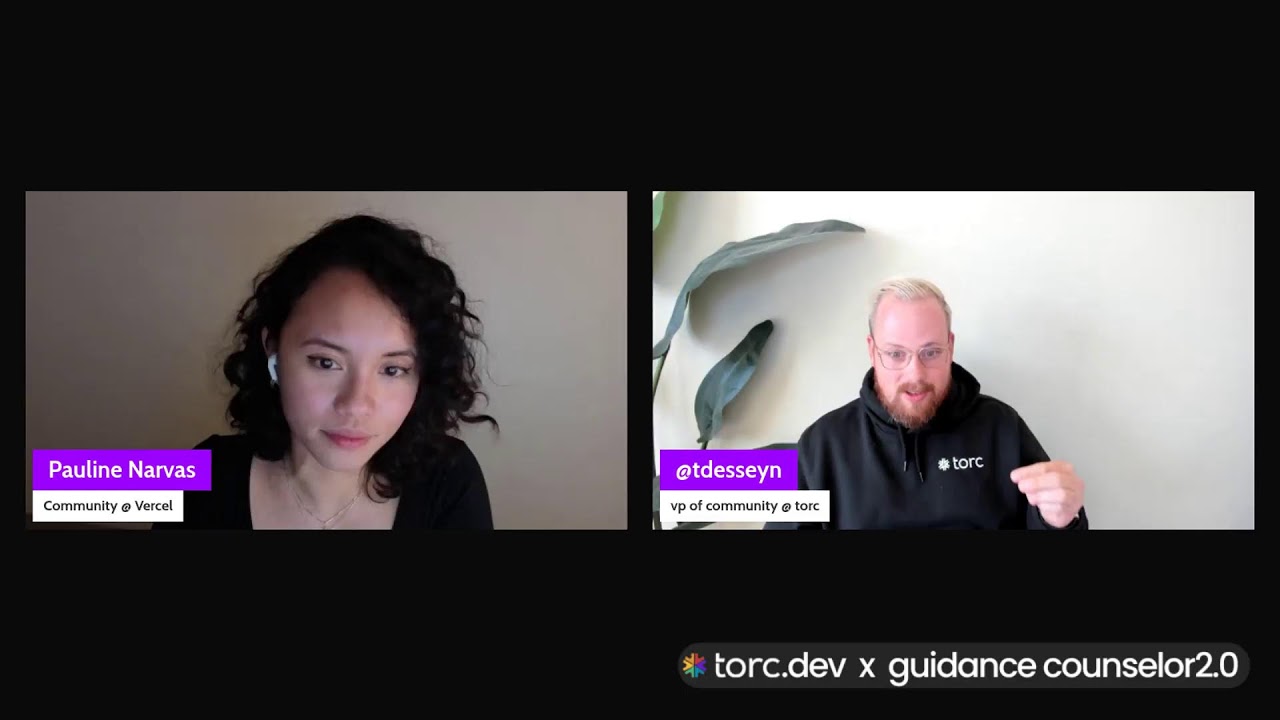
In this unscripted live conversation, host Taylor Desseyn chats with Pauline Narvas, Staff Community Manager at Vercel, about the tactical side of building and scaling a developer community. They discuss Vercel’s central community platform built on Discourse, the recent launch of Vercel Community live sessions, the technical setup that embeds YouTube streams via StreamYard, and the new events calendar aimed at reducing friction for community members to present. The dialogue moves into broader community‑building themes: the importance of constant activity, leveraging social media, documenting work publicly, and the trade‑offs between meet‑ups and conferences for ROI. Pauline shares her personal journey, the value of “building in public,” and offers practical advice—like offering free coffee‑chat office hours and always treating the community as humans. The conversation ends with a concise, human‑focused mantra for community leaders: show up, listen, and be empathetic.
Chapters
I'm just— I want to hang out with your whole team.
I know, I know, just hang out with the whole team. All right, uh, good morning everybody. Um, happy Thursday. Once you get over the hump day, it's Thursday and Friday, just FYI. Um, excited for this one. You know, it's so funny, Jason— Jason was giving me heck. Jason's kind of whole like thing at Torque is just to give me heck. And he was like, didn't you just have her on? I was like, yeah, yeah, yeah, but it was such a great conversation. We needed to make it happen sooner rather than later. So excited for this episode to have Pauline back on the show. Staff community at Vercel, staff community engineer at Vercel. I'm excited, pumped. It's a great conversation. If you did not check, if you did not happen to get our last conversation, go to my YouTube, Torque's YouTube. I know Pauline's posted about it too. It was a great conversation. It was really good. I got a lot of DMs. I got a lot of DMs from it. A lot of people are pretty pumped about it. So excited for part 2. We're going to get a little tactical today. There's no set questions. I was hanging out with Pauline. Life's nuts with both of us. We both said it's so crazy. So Pauline's got to jump 5 minutes before 10 Central, or yeah, 10 Central my time. So we're going to dive into it today. So Pauline, let's give what the people want, give what they need. I don't know the saying. Let's give them what they want. Who are you? What do you do? We'll go from there.
Yes. Good morning, everyone. It's so nice to see so many people already in the chat. So excited to hang out with you all. So for those who don't know me, I'm Pauline Navas and I am a staff community manager at Vercel. I've been working in the community space, I would say, like, pretty much all my life by accident. Most of the time I go into that, like, my journey in the previous chat. So if you want to, like, watch that video, I go into a little bit more depth of how I got involved in community. But yeah, really excited to just keep chatting about community. I honestly can speak for hours about this. Yeah, we've done like zero prep, but I'm happy to just like—
No prep.
Yap on.
No prep whatsoever. So I'm curious, so you were chatting backstage. It's crazy right now. We're crazy. Like Jason, prime example, sent me a Loom video on how to do something today and I didn't even watch it yet. If you work with me, I only receive about 50% of the information. But we're all busy, we're all iterating, we're moving fast. I, I'm seeing— shout out to Vercel, shout out to you, shout out to Cap. I'm seeing more stuff coming out from the Vercel camp probably in the last, uh, few weeks, um, than I have seen in a while. So shout out to y'all. Um, I, I wanna, I wanna kind of get in. You don't have to reveal too much, you don't reveal too much. I mean, I'm an open book, I don't really care. But, um, what— how are you guys viewing this year? How are you guys viewing DevRel? How are you guys viewing community? Give me kind of some themes and then I'll obviously share as well on kind of how we're viewing things.
Yeah, absolutely. So it's super exciting right now in the community space at Vercel. We obviously had the wonderful Kat join us recently and she's going to be looking after a lot of our community programs. I won't reveal too much because she's working on some really awesome stuff that should be out soon. But I guess from my direct team in community, like the Vercel community specifically, we have a couple of things that we are looking at. And I think the most— the biggest investment of time right now is our Vercel community platform.
Okay.
Which is our forum where people— where our customers and users come in and ask questions on how they can be successful on Vercel. And it's great. It's a good start for a lot of these conversations to happen. But we want to build on top of that and really make it into, like, an all-in-one community platform where all the central kind of community engagement happens.
Okay.
So that includes, like, one thing we shipped. I don't know if we shipped it when we were chatting, but last month we shipped our very first Vercel community live session, which is essentially very similar to this where we have someone from the community or, like, one of our customers or someone internally to just do a deep dive, like, office hours style on what's going on at Vercel. What are they building? What are we— what's the exciting projects that's really— that people need to know about? And really kind of give a face to Vercel.
Yeah.
And show that there's a lot of people who make this company run well and, you know, kind of really make it shine, um, and be one of the best out there. And so we wanted to highlight those folks a lot more. Um, so that's an initiative that we launched in December, and we have so many fun sessions coming up. Um, one, I just need to like do a quick promo. Yeah, please.
Yeah, yeah, might as well. Quick promo.
I'm gonna use this platform just to promote. We have one, um, with Malavika, one of our amazing product managers, who is going to be talking about how you can protect your Vercel sites from common attacks. And that's like literally a 30-minute session. If you all want to learn more about how you can protect your Vercel sites, please join us. And I think from like a really nerdy perspective, the reason I'm so excited about these Vercel community sessions is it's on our platform. It's Vercel.community. It's built on top of where conversations are already happening.
Love it.
We basically use a plugin with Discourse where you essentially embed a YouTube video through StreamYard. It's a bit hacky. It's not hacky, but it's definitely complicated with how we've set it up. But it works so well because we have an inbuilt chat that's not on YouTube or other platforms, but directly on the community platform itself. itself. And it took quite a lot of work to get that all set up. But I really love the result because we have basically all of the conversations in one place, which is one of the things that we wanted to build in the Vercel community. That is the North Star, to keep all these Vercel discussions happening in one place, like at least one central place. I know there's always going to be chatter about Vercel across everywhere.
Sure.
But yeah, so that's kind of one of the things that we're really excited of doing. We'll see a lot more in-person kind of events across the world. Yes, that's so exciting. And just generally, you'll see a lot more from the team as we continue to expand. We have a lot of fun initiatives lined up. I wish I could share them all with you.
I know, I know.
We'll see. Maybe privately.
Yeah, absolutely. Absolutely. And so I think it's interesting because I think one of the hardest parts about building community is it's so fragmented. Right? So you got Discord, Slack for like kind of chat communication. You got, uh, you know, Telegram, WhatsApp, text, you know, whatever. Then you got the social medias and then you got the Reddit. I mean, it just is— it's, it's, it, it's, it's extremely, extremely, uh, complicated, uh, on how to do that. So you guys, it sounds like, are literally trying— are you guys like— is this like— I mean, you can like blink twice type of situation? Are you guys trying to build a product for community people in general?
No, I wouldn't say that. It's more about trying to set, from my perspective anyway, a playbook of how it could be done. I know people run communities in lots of different ways, but I've been in this space for so long, I've seen all of the different problems that have popped up and I'm like, okay, I really want to— I have this idea of what it could look like with what we have right now, which is discourse. And I'm just We're just putting all of our energies into building that central hub. But like you said, community is kind of everywhere and it's a balance, I think, of having our own platform where we are engaging with people and our community and our customers know that this is the place to talk to people at Vercel officially. But there's also things like Reddit and Twitter and LinkedIn and all these other spaces that we still have eyes on. We have eyes everywhere to make sure that we're there.
Yeah.
meet our community with where they are. But it's also like a bit of a balance in that. But we are like, my team at least is focusing all of our energies into building this Vercel community platform and making it one of the best examples of what community could look like on a discourse kind of setup. So yeah, that's what I'm really excited about. I could nerd about this technical stuff Yeah, yeah, yeah.
No, I love that so much. So what are some other themes? You know, again, we don't dive into initiatives, but like, what are just some themes that y'all are talking about? You know, I think one of the things that, that I'm really trying to do is activity, right? I think, you know, you and I talked about that backstage. I was talking to Taz yesterday offstage. He goes, he goes, he goes, I have literally never met any— I've never met a team who has iterated faster and are doing more things than you guys. And I think that was his biggest compliment for our team. Because, you know, I, you know, I think so. I, and I say this all the time, and, and, and aside from beliefs, like, I grew up Southern Baptist, right? So like, I was always in the church Mondays, Wednesdays, Thursdays, Saturdays, right? Very, very kind of traditional church growing up. And like, you know, I think what— whether— whatever your views on religion is, I think institution— religious institutions, I think, do a really good job building community. I think you just do, no matter what religion, whatever. Like, I think like at the end of the day it's about community. And so I've pulled a lot from kind of my upbringing, but I want something every single day. Like, like, and I think too kind of pulling from the TikTok shops these days, pulling from, um, uh, you know, I think it's like QVC back in the day. Um, I think honestly, uh, when it comes to like, um, you know, the moms back in the early 2000s selling the leggings on Facebook Live Like they were all— they were always streaming, right? Streaming right now, Kai Cenat, right? You have all these streamers going, like— and I wrote a blog post about this, or newsletter, about how I think every company should have multiple streaming shows, right? Like Barstool Sports. Like, people fall in love with Jason for different reasons than they fall in love with me. And then Hima's on the chat. Hima's basically— everybody in Mexico knows Hima, right? So she's like— everybody falls in love with her. Right. And so that's kind of what I'm thinking about is kind of having all of these shows. So I'm kind of curious what you guys are kind of thinking about.
I have to say, with the show's perspective, I totally agree. I remember, I would say, the golden ages during the pandemic. I was subscribed to every person in tech who was doing regular shows because I felt like I had an avenue to connect with them. And I still feel like I mean, it's obviously faded away in a little bit because everyone wants to have that in-person kind of like event and connection. But I still feel like there's places for this, for streaming and like basically online events. And actually, you've nailed it for us as well. We are doing more online events. So we're trying. I hope one day we could get to your kind of level and your capacity because right now our team is quite small. small. But we've already had conversations with fellow community engineers on the team. Like, do you want to run one of these Vercel community sessions? You co-host with someone else in our community, one of our customers, or even a fellow Vercelian. And let's do more of these things. Because we have so many things going on. We actually shipped an events calendar in the community.
Oh, yeah.
And you can see everything that is— that's not even, like, I would say there's more of them, but we've probably missed. And I'm trying to find all of them right now that's going on in Vercel. And it's a mixture of in-person and online. But the thing that my team is focusing on mostly is that online space.
Yeah.
Getting the lowest level of friction to get people on stage, our customers on stage talking about their stories, community members sharing what they've built with Vercel, and also us as well. We need to talk more about what we're building and kind of the behind the scenes. And I think that is the key. Like, if there's anything that I would like take away from what we're doing in the team, the key focus is like really highlighting the people, whether that's like people internally, but also our customers. And that is kind of like our north star, like showing the humans almost behind like the brand, behind the products, behind the people who are like—
Amazing.
Building things. Yeah, exactly.
Yeah, I love that so much. Yeah, and shout out to Jason, uh, on our team. We are using a Vercel— I'm not technical, Jason— we're using a Vercel app or Vercel page. We're using Vercel, uh, for our community page. So if you go to— what's, what's, what's the link? I'm gonna put the link up here. It is— nope, that wasn't it. Hold on. It is actually— Jason, just, just where we are hosting. That's it. Yeah, yeah.
Ever so.
Oh, we're doing that. Sweet. Uh, Jason, drop, drop the link in the chat. Uh, but basically, like, one thing I, one thing I want to do is, like, is, is my thought was like, we need a calendar where people can come to, um, and basically just hit it and be like, hey, like, this week, like— and we even just pivoted again, we pivot all the time— where we're gonna put all of my podcasts, all of Brianna's All of Hima's, all of Jason's on our community page. So then literally, like, we probably have 2 to— I, I would say, Jason, correct me if I'm wrong, or Hima, correct me if I'm wrong, I'm pretty sure we have 2 to 3 streams going every day. Every day.
Impressive.
And the thing is, is that, like, I just think activity when it comes to community is huge to get people in. If you're dormant, again, like you guys, I've seen more activity. Yeah, from Vercel. I have seen more activity, shout out Hank Taylor, from Laravel. At the end of the day, it's activity. I think the problem is in community teams, it's like, oh, we'll post a blog article. Oh, we'll do one webinar panel that's not live, which I have another set of issues with that. Then it's like, oh, we're done for the week or done for the month. I don't know if you have any thoughts on that.
No, totally. So aligned with what you said. It is about activity. It's keeping that momentum up. It's making sure that you actually engage with the people who are using your product, who's part of your community, whatever it is. And that's kind of what we're doing as well at Vercel. We are focusing mostly on these live events, but we are building on top of the foundations we've already created with this Vercel Community platform and really finding ways to increase engagement by increasing activity. Like you said, it's not just answering questions from people about how do I do this on Vercel, this is broken. It's not about that. It's about having organic conversations in it, bringing people together to talk more about why they're using Vercel or their ideas for feature requests.
Yeah.
And then also having these virtual spaces they can connect with us instead of just writing to us asynchronously, having this discussion, exactly what we're doing right now. But we want to really double down on that. And I think the activity is the key to making sure that your community stays alive and stays active and stays just fresh with new ideas and things.
Yeah. And listen, I hate to say it. I hate to say it, but if you're not using social media and you're not on Twitter and you're not on Bluesky and you're not on LinkedIn and you are not posting and engaging and letting people know what's going on, you're obsolete. Like, that's my hot take. And I feel like a lot of people are like, oh, we can send out an email newsletter, or like, we can, we can, we can send out like a text, and that's— and like, that, you know, that's activity. It's like, dude, like, what I've realized is, um, prime example, I, I've posted— so I posted, like, I have my vlog, right? My, my bi-monthly vlog. And I still have people go, who I know go, oh, I didn't even know you had a vlog. So now literally I have, I literally, and this is a little peel behind the onion, I'm literally looking at my list right now on Apple Notes of things I tweet about consistently every Monday, Wednesday, Friday, Tuesday, Thursday. They're just the same things over and over and over again. Because what I've realized is that just because you think you talk about it a lot is not enough.
I mean, I feel like, is that really a hot take? Because I feel exactly the same.
Okay. I don't know. I mean, listen, I've been in other organizations that don't feel that way. So that's why I said that.
Yeah, I definitely feel like, actually, you know what? You're right. Now you've said it. Now you've said that, I would tend to agree. I feel like some people, some organizations may just assume that people will come to us because we have a cool product. But it's not that. You have to keep talking about what you're doing, what you're building. And I actually love that you and your team are always on the top of my feeds. Maybe because I engage with you folks a lot, but I always see you folks. I kind of know what you're always doing, which is great. I feel like just behind the scenes, I didn't even ask, like, how is everything? Because it just felt like I saw, I know. Because I engage with your content, like, all the time.
Yeah, no, and again, like, you know, I'm, you know, I know, I know Torque's the biggest fan of the Vercel community team, and, and obviously I know we're chit-chatting about doing some stuff, but like, you know, again, like going back, yeah, what Jordan says here, that's a great social media hack. I mean, literally, like, it's like Tuesday, Thursday. So like, just to give you some ideas, like on Tuesdays and Thursdays, I, I tweet consistently Torque Discord, Torque Jobs platform, promote a previous podcast you're on. I was just on Contagious, uh, Tejas Kumar's podcast. Cross-promote another social media channel that I have. Some people don't know I have an Instagram. Some people don't know I have a TikTok. Vlog promotion, Dads and Tech promotion, and a virtual event promotion for Torque right there. If we're talking about social media strategy, which I'm always fascinated with, that's 2, 4, 6, that's 7 tweets right there where people are like, I don't know what to post. Just document. What are you doing?
It's about doc— I feel very passionate about this because a couple of When was— I would say like a couple of years ago before it became like documenting your life and vlogging and things became a thing. I've been documenting my life on my blog since— for like a couple of years now, since 2008.
Yeah.
It was like my online diary. And I think that's kind of how I got started with tech and got connected with the right people because people found my blog and they were like, oh, that's really cool that you're like talking about tech and like improving like getting more women into tech and being part of all these initiatives. It's really cool. Do you want to chat? And then it kind of snowballed. Honestly, just documenting what you're doing, what you're building online. And building in public goes so much— just goes a long, long way. And I remember in my old company, that's what I was basically doing. As much as I can, just yapping on about the company, about the—
Yeah.
product. And it's the best way to build a following, build customers who are interested in what you're doing and just yap, keep going across all the platforms.
Absolutely. And again, it's so cool. This is the 3rd conversation this week about community. We had Kent C. Dodds on Monday, we had Taz, yes, on Tuesday, and then you today. And even Brianna and I went live yesterday to talk about some Torque updates about community. I do want to go back. I, I want to ask you, how are you guys thinking about— because this kind of goes off of Kent C. Dodds's conversation about conferences, sponsoring conferences— without, without obviously giving too much away, like, how are you guys viewing conferences? What conferences you're going to? What conferences you're sponsoring? What's kind of the conversations, um, that you guys are talking about at a high level?
That's, uh, that's great. I feel like the— so I'm not too involved in the conference conversations right now. It's more like like a different— like the events team at the moment. But I can tell you that in previous roles I've had as a community person, our focus was mostly on where our users were. Like, if our users were— our customers were attending, like, I don't know, like some— oh, actually, a good example is KubeCon, which was a conference I went to every single year for, like, 3 years.
Yeah.
That was— the reason we went there was because that that was where, like, our target kind of persona, our customers, and our community, like, most active community members were going to. So we were like, it makes a lot of sense for us to have a presence there. And I tend to have the same stance. It's like, for me, it's like, who are the people we are— who are the people that we want to use our product? Let's go to where they go. And if we don't know that yet, like, do some interviews, talk to your customers. Literally just ask, are you— what are you using for your personal development budget? Like, for conferences, like, where are you going? And then kind of like find those patterns and then go from there and sponsor them or get involved, send the team. But yeah, that's kind of how I would approach it.
I love that. Yeah, I mean, one thing we're talking— I mean, again, Torque, you know, we are— we've already dug our lane in LATAM engineers, right? So we are We have 3 or 4 conferences we're going to in Latin America this year. Really excited about. I think the other side than what we're doing, and I think a lot of people are doing this right now, but we're hopping on the AI train, wanna help staff up LLM engineers or ML engineers or whatever. So we're looking at AI conferences, right? And one thing I was texting with a conference organizer the other day and he's like, hey, I'm thinking about bringing back X conference. And I was like, all right. He was like, what do you think? And I said, I think with the way we are viewing conferences and viewing budgets, that I think conferences that are actually very specific now, I think get— is going to get a better ROI from a, from a, from a, um, sponsorship perspective. I think like the general— maybe another hot take, maybe not— I think the general conference circuit, I, of course, like you have Render who's big, Got that, right? And all things open, big, got that. And even all the other bigger ones. But I think like the mid-sized conferences, the 3 to 1,000 person conferences, I think the more drill down you can go in terms of skillset, what you wanna do, I think you're actually gonna get more sponsors.
I also, maybe this is even a hotter take.
Hotter take.
I would even say that maybe conferences isn't the way to go these days with sponsorship, especially because, you know, we're all on budgets and stuff. I would actually argue meetups are probably the best way you can get a good return on investment. Um, we, I'm— we're still like, you know, bringing meetups at Vercel like to become a thing. Like Cap is like leading on that and it's, it's great. But I, again, we'll use an example from my previous, uh, role. Uh, in that one, I would say we had higher engagement in the meetups because they were— we branded them directly as this company's meetup. And, you know, we are in your city, we're coming to your city, come join us. And we got the best conversations from like prospects, current customers, just proactive community members. We got the best return on investment from meetups than in conferences, I would say. Just because they create— you create more of that direct kind of relationship with people that go to the meetups in comparison to a large conference that has, like, thousands of people and you're talking to so many people a day. But how many of those people actually, like, convert to something, like, useful, like being part of a community? But I would say meetups are the way to go. And if you are thinking of hosting meetups, you should use Guild. by Taz. So yeah, obviously he would be happy I mentioned that.
Yeah, big, big Taz fan for sure, and big Gil fan. I think what you said was interesting because Ken C. Dodds brought that up on Monday. Kent basically was like, I guess Tailwind does this. Basically it's like a series of meetups and they're like tiny conferences But like, if you think about it, like, and, and if you think about— again, I pull everything from fashion and pop culture. Like, you know, you have these companies that do limited drops in different cities.
Yep.
Right? They don't open up a store, they just do a limited drop, right? And so I think— I do think that's an interesting trend of, hey, what if, what, what if we hosted 3 meetups in 3 cities over 3 months around these topics. And it is a Torque blank, or it's a Vercel meetup series, whatever it is. I think that's a very interesting thing because the ROI is like, all right, we're gonna pull— if we have 100 people show up to a meetup, and then you gotta make the meetups cool, which is like a whole nother conversation in itself. If you have 100 people show up at that meetup and it's all you, and then you get to give out your branded swag, which by the way, Torque's gonna have some sick swag. I'm excited. We're working with a designer now. Like, I think like if you get 100 people in your ecosystem that are all bought into, if they buy 100 buyers and you continue to replicate or duplicate or triplicate that across the board, then you got 1,000 buyers that are really, I think that's the thing.
I think I totally, totally agree. And I feel like you also have, um, you like, in comparison to a conference, it's just the like lower lift.
You don't have to stress. And that's what Ken C. Dodds was saying too.
It's so much better. And you can literally show up with a bag of swag and like just feed the folks that go to your meetup and that's it. And you don't even have to brand everything. It's just everyone is all in one place. You get to to make those connections, have those interesting discussions in a much smaller scale. So I actually am all in for meetups more than conferences. I will talk about that forever. I love that.
I love that. All right, we're about at time. I want to log off a little early just so we can get the recording quality correct. We're having some issues with quality recordings. Any last pieces of advice for people specifically who are building community at a company?
Okay, firstly, if you do have any more questions about community building and specifically in a company, I recently started doing coffee chats, very casual coffee chats with folks, and I've had some incredible discussions over the last couple of weeks. So if you are interested in chatting with me one-on-one, completely free, it's only 20 minutes, you can hear me, yeah, tell me about your community issue or your problem with building in your company, then we can talk about that in a little bit more detail. So I just wanted to pitch that. And also I just feel like one of the things we can get really bogged down with all of the, like, how can we do this? The tactical stuff, like, you know, the technical details of how to build community, but it becomes almost like a robotic playbook. But one thing I will always, always stand by is remember that the community that you're building is for people. You are talking to humans, and all you can do to become like the best, most genuine community person out there building a community in your organization is just to show up as a fellow human being and just listen, listen to the feedback, like be empathetic and really just like lead with like people in mind. And that's it. That's like my mic drop. There you go.
I love it. Well, y'all have a good one. We are— do I have to start something tomorrow? I think I have something tomorrow. Yes, I have Steven Sherry. He's a CTO staff engineer in Cincinnati. Great around the interviewing process. So we're back on the job search tomorrow after 3 wonderful days of community talk. Pauline, thank you so much. Stay on so I can say bye to you backstage. Y'all have a great one. We'll see y'all tomorrow morning.
Peace. Thanks everyone.
Bye.
More from taylor



tech doesn’t have to be the only thing that brings us together #techcommunity #techcareer

I want to give back to y’all that make the tech community so great #jobsearchtips #techjobs




spend a little time investing in yourself #linkedin #linkedintips #careeradvice


