A Bold Prediction for the Future of Accounting in the AI Era By Tom Hood
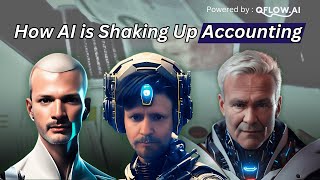
Tom Hood, a prominent accounting leader, discusses how generative AI will reshape the profession. He emphasizes that accountants must embrace change and take risks to stay relevant as technology transforms finance work.
Welcome to the Future Finance show where we talk about treasury management on bars. Is there an area you think we would most benefit from being willing to take more risks?
Well, I think the biggest area is what we just talked about. It is adopting technology and trying new things.
Especially how do you see where we are with Generative AI today versus what you see may come in the near future.
Gen AI gives you the ability to analyze massive amounts of data. To me, that's the big part of it. I think the productivity things have already been documented. In a year it's going to be like a super scientist level and pretty soon we're going to get to the singularity. It's just going to make our jobs a lot more meaningful and easier to do.
So what's the advice you would offer to people today around Generative AI and technology?
You'd start learning about Gen AI Half a dozen or a dozen or more of those folks that are leading the way in thought leadership for accounting and finance in Gen AI.
Accounting is not an area where we can tolerate hallucinations and numbers.
Technology has always been a fundamental point for accounting and finance.
What advice would you give to someone who hasn't even started their accounting career yet?
Don't get hung up on the numbers and learn how to communicate. Counting is the language of business. You can navigate the world a lot better because.
Future Finance is brought to you by qflow AI, the strategic finance platform solving the toughest part of Planning and analysis. B2B Revenue align Sales, marketing and finance seamlessly speed up decision making and lock in accountability with qflow AI.
Let's dive in with a news update from the world of AI, which sometimes sounds like one of those 90s melodramas like 90210 or maybe Dawson's Creek. I don't know. I don't think I ever watched either of those. Anyway, I can't wait for OpenAI the movie. That's all I'm saying. I'm recording this shortly ahead of this episode dropping, and I'm already worried it's going to be stale by the time the episode goes up to level set where we are in the world of Generative AI. Let's dive in a little more to some of the most recent rumors and what's going on in the leaderboards and the latest management shakeup at OpenAI. It seems like every month there's some new management shakeup there. But first let's address the elephant in the room. Or should I say the strawberry in the garden. OpenAI CEO Sam Altman sparked excitement in the AI community a couple days ago with a social media post featuring a photo of Strawberries. Just seemed innocuous enough. But those who were following, you know, I guess kind of the OpenAI fanboys who are following this really closely, many believe that was a hint at the company's rumored new foundation model, which is codenamed Strawberry. I don't know if this is GPT5 or GPT Next. It's been called various things. Some people say Strawberry is the evolution of for people who are following it really closely. Last year, around the time that Sam Altman was fired before coming back, we were talking about Q Star back then. So the most likely application of Strawberry is that it's the evolution of Q Star, which is advanced reasoning capabilities. I don't know if this means it's GPT5 or whatever, but there are rumors around a new model and Sam Altman sort of mastering the free marketing around this teasing with with a photo of strawberries. Anyway, don't know what it is yet, but the rumor mill is saying that as early as this week, which would be, you know, before this episode airs, we may see a new model of GPT4O or GPT5, whatever we're calling it. You heard it heard it here first, or if you're listening to this recording after the fact, I guess you heard it here last. You know, with GPT4 now 17 months or so old, anticipation for OpenAI's next significant release is growing. And just in this kind of arms race, it's going to be important for if they want to stay ahead. Well, in a lot of ways OpenAI has already fallen behind. I think. Google's Gemini 1.5 Pro recently took the top spot on the Limsys Chatbot arena leaderboard and it surpasses GP240 and the short previous reigning champion was Anthropic Claude 3.5 Sonnet model. Claude did briefly hold the lead, showcasing advancements in reasoning, coding and math. And they also rolled out this new artifacts feature which is super cool. But you know, I think that's worth noting that we are going to see if we're seeing just iteratively better models while we're waiting for the next generation of models to come out. It's nice to see these UX improvements like what Anthropic has done done lately. You know, at some point Gemini 1.5 Pro had a significant performance improvement over its earlier versions and it was on top. But then right behind that Meta came in with their open source llama 3.1 which is a massive model with 405 billion parameters. Llama 3.1 is. OpenAI is calling it a teaching model but it's, it's providing strong competition across a lot of bench benchmarks and you know, as all this is going on OpenAI has some crazy internal challenges. Three key executives recently departed including co founder and president Greg Brockman who's. Brockman's not fully out. He says he's taking a sabatical to the end of the year. But John Schulman, who was a co founder there from the beginning also left to join Anthropic. You know it's just interesting the shake up going on again. I can't wait for Open AI the movie. But you know there's other issues at OpenAI. You know the model's still performing for the most part but we've all heard about this model that's going to the interactive chat where it's going to. People are comparing it to the, the AI from the movie her and it, you know, from people who've used it. It's supposed to be pretty amazing but there are some bugs in this. We've heard it mimicking users voices, generating inappropriate sound effects. I guess it's mimicking users voice and noisy environments like when speaking in a car. And it's just an odd voice cloning that comes out of the model not being able to process speech when it doesn't hear it really well in more humorous. It's a feature, not a bug news GPT4O occasionally generated. Let's see what inappropriate sound effects such as erotic moans or violent screams when prompted in specific ways. You know, these quirks raise significant concerns leading OpenAI to have to implement mitigations. And we hear about this all the time. Some frontier model rolls out some new thing, they find bugs, they have to roll it back and fix it. And you know, as, as OpenAI navigates these challenges between the management and bugs and sort of getting beat up in the leaderboard, it's going to be really interesting to see what happens from them. I mean Mira Moradi, The CTO from OpenAI said months ago that you know, while we were initially thinking GPT5 was going to come at the end of 24 now you know, she pushed it back to late 25, early 26. So it's going to be interesting to see what OpenAI does and if Strawberry ends up being anything or if this is just a rumor mill that's going to go nowhere. But meanwhile, you know, Google who has been in Dead Last by by all accounts, really, from the beginning of the OpenAI arms race. But you know, Google's come up with their 1.5 Pro. You've got anthropic with their continual developments and Meta with what They've done with 3.1. You've got Xai out there with this already running massive data center, you know, where they're training their next model. So a whole lot of competition and I don't know, I don't know what's going to happen, but I know it sure is fun to watch. And we'll be sure to keep you updated on all the latest developments as they come. I'm sure many of you been hearing the buzz about AI coming to take all of our jobs. We talk about it on every episode. And this week I've got some good news and some bad news for you. The good news, according to a recent Wall Street Journal article on how AI has already begun changing some jobs, not replacing them. But in the article it said, you know, these jobs are changing, but the AI apocalypse hasn't arrived just yet. Census data from March showed that 2.6% of employers reported cutting jobs because of AI, while 2.8% actually added jobs. So let's call that a wash. But you know, here's the thing, and this is what we've been talking about for a long time. AI is already changing how a lot of us work. The Wall Street Journal article mentions doctors like Amy Wheeler in Boston, who's using AI to automatically generate notes from patient visits. If you think about this, you see doctors every time you go in now they're carrying around iPads and taking their notes. And Wheeler said the notes, whatever AI tool they're using, the notes, are incredibly accurate and says now she can get back to the point where doctors can give actual medical care and, as she put it, not be an IT specialist and a writer. Similarly, in the in the legal field, we had some some quotes from Isaac Summers, who's an associate at law firm Ropes and Gray, and he says generative AI helps him uncover more useful search results and take on additional cases more efficiently. Shannon Capone, also at Ropes and Gray, said that the technology is helping jumpstart junior associates into higher quality work quicker, which, if you think you know one of the powers of generative AI, have been able to go beyond semantic search and have contextual search and be able to help lawyers in their jobs. Similarly, in marketing, principal product marketing manager and tech Dan Bettinger says that he's saving at least an hour a day through the use of AI for tasks like crafting copy building outlines and pressure testing his work. So you know, we are seeing every day and I talk to finance people all the time that are finding ways to streamline their jobs. And I think that this is what we're going to see, you know, maybe more than the sort of top down push of management asking their employees to use AI. If you put the generative AI tools in the hands of your employees with all the guidelines and policies in place, they're finding ways to get more efficient at their jobs. You know, there are other things though, and it's not also rosy. That same Wall Street Journal article talked about an illustrator named Sam Tung who, who said, you know, AI tools can now create visual content in seconds, you know, in any style. You can iterate through it and it's all free and happens very quickly and that's obviously going to potentially threaten jobs in creative fields. But Tung did say that there's tools out there now that artists are using to protect their work. Programs like Nightshade which somehow corrupt the images so AI can't learn from them and you know, other tools out there to try to combat against AI sort of taking this content and training on it. So it's an interesting time. I mean that's, we see people are using AI tools, we see kind of a wash and jobs created and jobs lost from AI. So we'll see as it continues to evolve, AI may not be eliminating jobs in mass just yet, but it's definitely shaking up how we work. As Keith Varasi, CEO of Verasi Greenlight put it in the article, roles are being reconfigured with an AI partner to help businesses and employees work better and more efficiently. And it to me it sounds like we all better buddy up and partner with our new robot co co workers. Onto the episode this week we've got Tom Hood. Our guest today is Tom Hood, a visionary leader in the accounting profession with over 24 years of experience as the CEO of the Maryland association of CPAs and and the founder of the Business Learning Institute. Currently, Tom serves as the EVP of Business engagement and Growth at the association of International Certified Professional Accountants, the world's largest accounting and finance organization. As a cpa, CGMA and citp, Tom brings a unique perspective on the future of accounting and finance and how professionals can thrive in a rapidly changing environment. He is passionate about empowering others to embrace change, leverage technology and develop new skills. Recognized as one of the most influential people in accounting by Accounting Today and inducted into the Accounting hall of Fame by a CPA practice advisor. Tom is also a prolific author, speaker and social media influencer with over 730,000 followers across various platforms. Tom, thank you so much for coming on the show.
Wow. Well, Glenn, it's an honor to be here.
Yeah, I've been on your podcast before. So exciting to turn the tables and have you on here, Tom, you know, you and I have talked a lot through AICPA and other forums and one of the things that you and I talk about a lot is accountants and finance people. We're, by nature, we're very risk averse and you know, that's one of our strengths. You don't want your controller or your CFO to be taking unnecessary risks. You want the exact opposite. But I think being risk averse makes you kind of hesitant to change. And you and I, and, and Paul as well, we're all a big part of what we do is encouraging accountants to embrace technology and change. And you know, this can be, this can be a difficult thing to do with people who are inherently averse to it. But tell me a little bit about why this is so important to you and how you've moved forward with this mission.
Well, I mean, ever since I began my career, I think technology was the key to advancing, right? I mean, it used to take me two weeks to close the books for our big construction company I was a controller at. And it was just so frustrating, right? And the CEO come in and go, what's going to happen, you know, this, this past month, I can't even close the books for the month before. And so the point is, technology has always been a fundamental point for accounting and finance, always. And I think ever since electronic spreadsheets, I'm old enough to know when they came on the, you know, the first pieces, Lotus 1, 2, 3 and Excel and all those things. And so ever since then, right, it's been that march to automate what I call transactional accounting and finance and move us into strategic accounting and finance. And so that's why I'm passionate about releases. What One of our CFOs said is the mind numbing work, soul sucking work that we have to do sometimes trying to get all the numbers in the right spots in our systems. So to me, that's why it's incredible right now. And I think as we think about where we are right now, especially Glenn, with your work in Gen AI, right, we're, we're on the brink of the fifth industrial revolution and this is our moment to basically step into the driver's seat. And move our organizations into this fifth industrial revolution as a result of Gen AI and us adopting all the newest technologies. This whole idea of frictionless finance, et cetera. So that's why I'm passionate about it. I think we're now finally seeing what we all envisioned even 20 years ago for sure.
It's very exciting. I can see Glenn has a big smile. He's excited over there.
I really am. Because I think, you know, going back to, to me, like you, Tom, my whole career has been linking technology with finance. But it's because it's that old saying, it's sometimes wrongly attributed to Steve Jobs. I don't remember who originally said it, but it is if you want to find the most efficient way to do something, give the job to a lazy person. And it's I say that sort of tongue in cheek. Not that I'm lazy, but I've never in finance and accounting wanted to spend my time doing data entry in these menial tasks. It's like, let's get that done as easy as we can so that we're actually adding value to the organization.
There's no question about it.
Yeah.
So it's an exciting time, I think. But you're right, we do have to encourage our peers to kind of move along here and get going.
Would I be kicked off the show if I said I have those occasional moments when I do want to do just that mind numbing work that it's like, all right, I can just sit here and not even think for a little while and feel like I actually accomplished something.
Paul, we are. Yeah, we all have those moments, don't we? I just want to do like really mindless work.
Oh, totally agree.
Especially if you're doing that day after day. Yeah, no, it's terrible.
So.
But I think we got a tagline. Avoid the soul crushing work that you used to have to do. That could be our episode tagline.
There you go.
I want to go back to kind of risk for a little while. We talked about how we tend to be risk adverse. I'm curious, from your perspective, you look at the accounting profession and finance in general, is there an area you think we would most benefit from being willing to take more risks? Maybe stepping outside the proverbial box, so to speak, more, more often?
Well, I think the big biggest area is what we just talked about. Right. It is about adopting technology and trying new things, especially Gen AI. I mean, I think the, the productivity gains are just incredible. But yes, you have to experiment. You have to make some time for it and you have to think about how am I going to take the appropriate risks. So I feel like that's a big one. I think the other one and, and this one's because it's in the US anyhow, it's caught up in all the politics. But ESG and sustainability, right, that's a, a forward looking, extra value piece that's going to impact everything that we do in the near term. And so the quicker we start looking at that, that's another one. So those would be my two big ones. Right, That's. Let's step it up in the gen AI, the technology place, and then let's start getting savvy about ESG and sustainability.
Like ESG sustainability, the generative AI and technology. And you mentioned step it up. So how do you think we're doing so far? Do you think most accountants are starting to, you know, play with and test and be willing to learn generative AI, or do you think we're really kind of lagging at the moment from what you're seeing out there?
I think, you know, it's. I get mixed signals now again from the. My core networks tend to be early adopters. So, you know, Glenn and you and Don Tomoff and all those folks, they're, they're all on the edge. But when I do polling with some of our bigger groups, I tend to find out that they're, they're just like watching it. So it reminds me of the early days of social media. And of course I adopted social media way, way, way early on in my career because for us it was a way to reach students. But as I started to do a lot of it, I found this whole network of CPAs and CJ MAs, you know, accounting and finance pros who were on social media and all the rest were just like looking at it. So I said it used to say it's like we look at it like it's a rattlesnake. We like to look at it, but we don't want to touch it. So I think the deal is, yes, a lot of people are looking at it, Paul, to your point, I think more need to go touch it and begin to play with it. Because until you experiment with it, you will never know what the heck it can do.
100 agree. I mean, I'm realizing that just myself, I've only experimented with the surface. I see all things Glenn does. And I'm like, I need to find more time to experiment with this more. I could really be accomplishing more than I am. And you. I still use it Almost daily. It's not like I'm not using it, but yeah, just get your hands dirty.
Yeah. And I, you know, one of the things that I really see right now, and I understand why some people are kind of slow with it because you, you know, you have concerns about data privacy and hallucinations and all the sort of negative parts of, of what people see could come out of generative AI. We can't. Accounting is not an area where we can tolerate hallucinations and numbers. We couldn't tolerate it from a traditional employee and we certainly can't tolerate it from our digital employees. But as you go around and you're talking to people and you know, getting this, this feedback and what you're, you're seeing being used. How do you see generative AI as it is today? Which some people have said, oh, today it's really just a parlor trick. And I've, you know, I think I've gone on the other side of that and I say no, here are some real practical applications, but it's, it's not bulletproof yet. So how do you see where we are with generative AI today versus where we might be in one year, two year, five years out? I mean, how people are using it and how they should use it today versus what you see may come in the near future.
Ever feel like your go to market teams and finance speak different languages? This misalignment is a breeding ground for failure, impairing the predictive power of forecasts and delaying decisions that drive efficient growth. It's not for lack of trying. But getting all the data in one place doesn't mean you've gotten everyone on the same page. Meet qflow AI, the strategic finance platform. Purpose built to solve the toughest part of planning and analysis. B2B Revenue QFLO quickly integrates key data from your go to market stack, an accounting platform then handles all the data prep and normalization under the hood. It automatically assembles your go to market stats, makes segmented scenario planning a breeze and closes the planning loop. Create airtight alignment, improve decision latency and ensure accountability across the teams.
Well, I think, I think two things for, for any professional, right. So you know, we're knowledge workers and so finance and accounting, you're trying to interpret a lot of things, you're getting a lot of data. If you're looking at trends or analyzing, you know, competitors reports, you're trying to get your, your, if you're doing their public company disclosures, things like that, it's, it's a lot of work. So Gen AI gives you the ability to analyze massive amounts of data and, and reports, right? English language reports. Think how many white papers come out every day on what's going on in accounting and finance. I use it to summarize those. Look that over and yes, you have to look at it and go, does this make sense? Is there anything there? It's glaringly wrong, but the fact is it does it in a fraction of seconds. That would take us hours and hours to read all that stuff. So to me that's the big part. I think the productivity things have already been documented. And then the other part, Glenn, I think as we start thinking about what's going to be in a year, they're saying right now you're, if you think of GPT as your co pilot, you know it's going to now be at a PhD level like an intern. So it used to be it was like a college intern working with you. That was maybe six months ago. And now they're saying the newest version, right, is now at a PhD level in a year it's going to be like a super scientist level and pretty soon we're going to get to the singularity. So it's really, you know, it's, it's hard to start to go, well what's going to be like in a few years. I think the key is you start using it now because it's just going to accelerate every time these new things are coming out and they're coming out like I don't even know how you keep up on top of it. I can barely do that. But I just think the pace. So think about what happened in Covid. Everything sped up by five years. In fact, they said E Commerce utilization sped up by 10 years during that period. So you had that acceleration and then I think Chat GPT fastest adopted software in the history of mankind and that's just continuing that pace. So whatever we're doing, every other trend is kind of moving along those coattails. So I think we just have to be ready to ride these really fast waves of change because it's just going to make our jobs a lot more meaningful and easier to do.
Paul, if you get me and Tom and Don Tom off together, we are the most. I love that, I love that Tom just mentioned the singularity because I talk about it and people act like I'm talking about a sci fi moment. But for Tom dimension that I know we are kindred spirits and we're out there both, you know, preaching the same gospel here. But I think, you know I don't know if you guys saw 60 Minutes just last night, but you know all the news about quantum computing that's going on and there is a road map for a rapid acceleration of quantum computing. And I talked about this in, in my monologue on the, on the last episode of this too. When we start getting convergence of AI, new computing paradigms, quantum computing. I mean if we are sitting on the sidelines right now and just burying our heads in the sand saying, well, I'll figure this out later, we're going to get left behind. So I think Tom, really a big part of what you're doing out there, communicating this message and getting people to get out of their comfort zone and try it out. I mean, I think it's really, really important because it's getting caught flat footed by this wave. It's just going to take you out if you're not ready to surf it.
I totally agree, totally agree, yes.
And I'm a little scared of you, Tom and Don in the same room, but that's maybe a separate episode. I, I love Don, great guy. We'll have to have him on at some point too. But so obviously we've talked about if people aren't getting involved, they're going to get left behind. You know, it's a real fear just like if people who wouldn't adopt the computer or the calculator at some point, they got left behind. But it's just becoming more rapid, it gets a much quicker risk of being left behind. So what's the advice you would offer to people today around, you know, generative AI and technology? What should the average finance person be doing? Should they be just testing it, taking a course? What's kind of the advice you give them?
I think, I think the best thing I know for me is I call it my like learning networks. I mean I use social media to learn personally. That's probably where biggest benefit, right? That's how I ran into Paul Yu, that's how I ran into Glenn, that's how I ran into Don. And then once you find that network of people you're following, you're watching what they're talking about and you could just in any given day just look at those couple feeds and you'd be able to catch, if you started to apply anything they talk about, you'd start learning about Gen AI. Right. They give you exact things to do to actually go try it out. Right. Ali Miller is another one. Jason Stats. I mean there's, there's a half a dozen or a dozen or More of those folks that are leading the way in thought leadership for accounting and finance in Gen AI. That would be one area to start. I think the other one is you gotta do it right. You can't be like watching it go, I'll just read about it. You've got to literally get out there and get your Chat GPT subscription. I use Perplexity AI. I've got one with Chat gbt. We've got Ms. Copilot at the association for our data protected stuff. And you've got to just start playing around with it and then once you start to see what it can do, then you can build up that. Now, yes, you could go take a course, take Glenn's course on LinkedIn or something along those lines. We're developing some of that training, but I think that's the critical part. Right. Lean and experiment. Now the other part is you start to have to beef up your skills. I call them the success skills around the T shaped professional to be able to tell the story, communicate and collaborate with what you're doing with Gen AI back into your organization. So that would be the other piece that I think you have to do.
And I love that you said being able to communicate it back and the other skills. Sometimes we just think of AI and the technical side of it. We got to figure it all out. But there's the soft skill side of it as well. There's being a potential champion or being able to communicate how it will benefit others. So they don't think it's just a parlor trick. Right. Because there's a lot of people that are like, hey, I don't trust you. And if you can demonstrate and show them, oh well, I just saved four hours on this task. The light bulb goes on. Because none of us want to spend four hours doing something that we can do in 15 minutes with technology.
Correct. That's, I mean that's absolutely cruel. And it's funny because now anytime you have an issue with your computer, whether it's a network thing or whatever, I just put it in Chat GPT say help me out. And it gives you step by step instructions. Saves hundreds of hours of stuff that you'd be trying to go back to a support group or whatever and you can do it right there. Like how do I do this in PowerPoint? It's as simple as that. Right. And that can save you a lot of time.
We all talk to people who are in their profession now and, and who've been doing it a while and it's, it's one thing to tell someone who's. I'm an accountant, I'm a, an FPA person. This is what I do. Now you're telling me I have to go learn a whole new skill set and it's just, sorry, it's the nature of the world. I don't care what industry you're in, you've got to learn this new skill set because it's going to be around everywhere. But I'm think now about my niece who is majoring in accounting in undergrad. She's going to graduate early in, in December this year. Already has two competing job offers. Holly Janovich is her name. She's a, she's a listener. So I'll shout out to her here. But you know, so she's been. And she loves accounting. So, you know, it's so great to find because the issue with, you know, people not coming into accounting at, at the rate they used to, the fact that she loves accounting. I'm wondering what you would tell someone who's still in school coming into the profession knowing that it's about to change so much. What advice would you give to someone who hasn't even started their accounting career yet, wrapping up a degree, coming into the workforce. How do you. Where should she be focused as she heads into her career in accounting right now?
So it's funny because we just ran our first high school student leadership academy which was incredible. I had 20 young people in high school talking about a career in accounting. Most of them had no idea what it was. They thought it was all numbers. So that's the, that's probably the first thing I would say. It's a lot more than numbers and it gets to the core, which is accounting is the language of business. So once you learn that language, like any foreign language, you can navigate the world a lot better because almost everything has accounting embedded in it, whether in a non profit. We were explaining that if you want to go to, if you love sports but you can't play football, you could be the accountant for the Baltimore Ravens and then you could get to explore your passion through that career. So I think it's about getting really good at the language of accounting. Don't get hung up on the numbers and learn how to communicate because the communication skills are more important. That's what you're gonna have to do is explain those concepts to non financial people. And that's where ChatGPT or Gen AI, any of those pieces will help you as well. So to me, I think that's the big thing. Yes, there is A bit of math, but it isn't like high level, you know, quantum stuff. I mean, it's, it's, it's easy stuff. So I would say lean into that. Make sure you take those soft skill courses, right? Think about the communication, the English writing, communication, spoken, all that. That's critical.
Great advice. And I like how you said it's about so much more than numbers, and it's really not that complex of math. Tell you, the. The business calculus class you probably have to take for your business degree going to be more complex math than you'll be doing in accounting at any point.
Very true.
So I, I think people don't need to be too afraid of that. I think we'll go ahead and move into our kind of random get to know you questions. So Glenn will let you know how his works. We both take a little different approach here to have some fun. So we use Claude 3 Opus. This week. We asked it to give us some questions for a podcast. We got 25. You got two options. You can pick a number between one and 25, or I can have the random number generator. Pick a number, and that's the question we'll ask you. So which one you going for?
I'll go for the random generator.
No, I think so far every single person has picked the random generator. Like, I'll just leave it all to chance. All right, here we go. You get question 11. Hopefully it's a good one. Some are better than others.
Soon.
All right, here we go. This is a good one. If you could have dinner with any historical figure, who would it be and why?
See, I would say Ralph Waldo Emerson. I love, I love some of his core writings and the way he thinks. I got to visit up in, up in Boston, up in that area where he was from, and I just love how he connected nature and effectively, I guess philosophy. Just a really cool thinker. So I'd love to sit down and, like, chat with him.
That'd be a good one. I like it. All right, Glenn, your turn.
All right, so it's funny, Tom. We've. We've been doing a bake off, but I think as of right now, now, I haven't tried the new llama model, but I've found that Claude. So that, you know, Claude 3.5 is their latest, but the one that's best at writing is Claude three Opus. And I think it does come up with the better questions. And so what I do is I generate the. The questions before the show so we don't have to panic and worry about Some kind of a, you know, cloud strike outage or something while we're, while we're doing the episode. So. And then instead of doing the random number, I just ask Claude to come back and give me one of the ones that's already picked up. But I. It is fun to do these because it, you know, some of them, like that one, that, that's a pretty common question, but sometimes it comes up with some off the wall ones. Let's see. I'm gonna ask it to pick one of ours. Okay. Yeah, I like this one. So. All right. What is your favorite music genre and do you play any instruments?
So, unfortunately, I don't play any interest. I did. I used to play trumpet in middle school, which was a lot of fun. Music genre. I really, I like all kinds of genres, but I'm a. I grew up on hard rock, Aerosmith, southern rock, Leonard Skinner. Those. So that's be my, those are my main ones that I love to listen to. They're the ones that, like, get me going when I want to get psyched up about stuff.
That's great. That's great. So, and I remember we had. Who's your. Your partner at aicpa? That's the huge metal fan. The.
Oh, Barry Payne.
Yes. Yes. He does not look like a Metalhead, but he is.
It's true. He runs around. He's seen Metallica I don't know how many times watching them in concert. I think he just got back from Foo Fighters, so. Yeah.
Yeah, it's fun. Sometimes you see people and you would never guess that that's the genre they like or the music they listen to and just never know the different things people enjoy. And a lot of it comes from the period we grew up in. I know a lot of my music still does.
For me, it's all yodeling. That's all I'm listening to. It's just.
Yeah, that's. I can't get Glenn to. He keeps. He's convinced we need to change our intro to yodeling music, but I haven't qu. Got on to that yet, so we're still. We're battling that. Well, I, I think we'll call it good there with the two questions. I know we're right at the kind of top of our time, but just want to take a minute and thank you for joining us, Tom. We really enjoyed getting to chat and spending a few minutes with you, and we'll be excited to share this here in a few weeks with our audience.
Love it. I, I Anytime I can chat with you, both of you guys. It's always a good time. So I appreciate being asked to be on the show.
Well, we appreciate you joining us. Thank you very much.
Thanks, Tom. Take care.
Thank you.
Thanks. Thanks for listening to the Future Finance show and thanks to our sponsor, qflow AI if you enjoyed this episode, please leave a rating and review on your podcast platform of choice. And may your robot overlords be with you. Sam.
More from Paul



Trust and Leadership Lessons for FP&A From 100+ Top Leaders with CFO Jon Laudie







