AI and ChatGPT Skills Every Finance Expert Needs to Automate Data Analysis and Reporting |Tom Hinkle
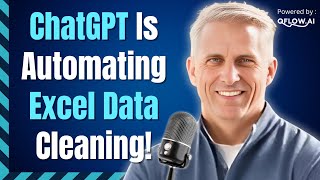
This is a YouTube podcast episode titled "AI and ChatGPT Skills Every Finance Expert Needs to Automate Data Analysis and Reporting | Tom Hinkle," recorded in March 2025. The episode features a conversation between Glenn and Tom Hinkle, a Microsoft MVP and analytics expert, discussing the impact of AI and generative tools like ChatGPT and Microsoft Copilot on finance, data analysis, Excel usage, and coding. They explore how AI automates routine tasks, the evolving role of finance professionals, and the importance of communication and domain expertise in the future of finance. Paul Barnhurst, normally a co-host, is mentioned as absent due to illness but does not participate in this conversation.
Welcome to the Future Finance show where we talk about.
I, for one, welcome. Our robot overworks. AI is fantastic, but it's still not smart. You think about what it's doing, grabbing everything and analyzing it based on what you put in and saying based on everything I see out there, this is what I think the answer is going to be. I can't invent something brand new out of thin air.
Tom Hinkle has been in tech for decades. Before AI, before smartphones, before data ruled the world.
From bank of America to Wells Fargo, he's seen how technology reshapes everything.
Now he says the real revolution isn't AI itself, but the people who learn how to use it.
Now you have a different metric. Now you can do 10 times as many things in a work environment as you did before, other than solving a really difficult problem that took you 10 hours to do. Now you can solve 10 problems in the same amount of time. You know, setting up a FPA model, if there's 10 steps, there's like six, seven or eight that you do on every single model. Before you get to the specifics of this one, well, AI is going to be able to do all that stuff for us. That's going to free the analyst up to do to spend more time on insights and finding patterns and doing some of the more exciting stuff. And people have to get really comfortable with this. These are skills you built up over your life that you're proud of and, and that you're good at. And that's true. But unfortunately, you know, especially in the space world, technology progress just keeps going. You got to keep learning.
Future Finance is brought to you by qflow AI, the strategic finance platform. Solving the toughest part of Planning and analysis. B2B revenue aligns sales, marketing, and finance seamlessly. Speed up decision making and lock in accountability with qflow AI. Welcome to the Future Finance Show. This week we are joined by Tom Hinkle. Tom Hinkle joins us from Charlotte, North Carolina. He is a Microsoft MVP with a strong analytics and database background. He is a versatile problem solver with a passion for tackling complex challenges across industries and disciplines. With over 20 years of experience, he brings a logical mindset, a deep understanding of business processes, and an adaptable approach to every project. Tom thrives on identifying gaps that hinder growth and efficiency, leveraging any tool at his disposal to drive meaningful solutions beyond his technical expertise. Tom's true superpower lies in his ability to build strong relationships and foster collaboration. His knack for clear communication, bridging the gap between technical and non technical audiences has made him a trusted mentor and leader in cross functional projects. Always ready for the next challenge, Tom is committed to making an impact wherever he goes.
Welcome to Future Finance. Paul is a little bit under the weather today, so the dynamics of the show are a little bit different. You've got the, the Glenn and Tom show today, so we'll be diving in solo here. So I think we are going to use Paul's intro though. So that was before when Paul was feeling better, but now we've got Glenn and Tom. So Tom, welcome to the show.
Hey, thanks. Great to be here Glenn. Looking forward to you having this conversation. A lot of interesting things happen in the, in the tech space these days.
Yeah, absolutely. And it, it's funny this conversation, this is our, our second time. We tried to get it going this week. I know you and Paul had been trying to get something going for a while before that. So at least half of the Future Finance team is here and we're, we're excited to dive in. So I guess to get started, tell us a little bit about kind of your background, what you're doing now and, and how, how you got here.
Well, I started, I'm just going to tell our, for our viewing audience, I'm over 30, if you couldn't tell that already. I know I look young, but many moons ago I got a computer science degree from NC State and you know, these degrees changed. Now you had data science degrees, data engineering, data things. A lot of I think was similar. We focused a lot on algorithms and I focused on database technology and how to work with data and you know, use that to drive applications. So I spent you know, first 10 years or so in tech space and then things changed around 9, 11 and I moved into the business side in banking and finance where I really became focused on reporting and analytics. So for the last 15 or 20 years I've been in different banks. I'm in Charlotte, North Carolina. There's Bank America, Wells Fargo, TIAA, Truist, you know, they're all here to some degree. So that's kind of where I am now. I'm still doing data and analytics, trying to learn the new tools. But it's funny the, it's like many sports, even the, even the baseball pros, when they go to warm up in their practice, they just start by throwing the ball back and forth to each other and then maybe throwing a couple ground balls too to pick it up. The basics are always going to be in whatever tool you choose. So that's, that's kind of where that's where I ended up. And I'm, I enjoy the work. I love. It's like playing a game. It's like solving problems. So that's really fun too. Whatever tool you use. Yeah.
And it's, I know, you know, one of the first things, I think before Paul even told me who you were, he talked about this, the Minesweeper game that you built in Excel. So I, I was just ready to, you know, have one of Paul's Excel geeks come on and, and just, and primarily talk about that. But it's funny that you say, you know, the tools don't matter because I think, you know, was it Satya Nadella has been saying tools are about to get a whole lot less important if you believe what what he says, which basically his, his comments were around SA is if all this software is just a UI layer on top of a database and really what we need is that database. If agents come about or when agents come about, depending on how optimistic you are, when agents come about, that UX layer isn't going to matter. It's just going to be here's our data schema and tell the agents to go, to go do this for us. So I think that agnostic approach to tools is about to like really come front and center and it's going to be. So with your background in analytics and database design, being tool agnostic and just knowing that you've got to get those key, you know, data science principles and how you're going through and working with the data, what do you think is going to happen in areas like workforce analytics and compliance reporting? I mean are there, where do you see these trends going and with, and maybe, maybe you have to answer it two ways. One is while the human is still the main driver of this and two, what if these agents take over and if, if, if, if we get closer to AGI and, and, and generative AI and, or, or not just generative AI, but AI in general, you know, are taking over a lot of what we do. What do you, where are you kind of reading the tea leaves right now on that?
So I, I look at it, this AI is a, is an incredible tool. I think it's one of the paradigm changing tools that are out there. You know, there's a couple different parts that, couple different things I've seen in my career. One of them was I'm old enough to be around before what everybody knows is the modern day worldwide web, the Internet. I was around when it started and people were just writing simple HTML There was no interaction in pages. That was a game changing technology. A couple years later, the first smartphone came out, the iPhone. Now, it took a little while for people to really realize the potential of that, but that became a huge paradigm shift in our technology world as well, because people now could. You didn't have to go into a meeting or do a share to get somebody's information, report you have on your phone, whatever you want, and somebody could design a mobile report and send it to your phone. And I think AI is the same sort of thing. Now for me, I look at AI differently than a lot of the people do. I think, I think a lot of people are really wowed by oh can do all this magical stuff and everything here. For me, what I see it doing is all the rudimentary kind of grunt work, if you will, that we all know how to do and have to do, and we've got proficiency with it. There's one example I'll share. When Excel 2007 came out, they added a button called Remove duplicates, which, and I'm just going to talk Excel a lot today because whatever tools we work with, with Python and Power Bi and Tableau, Excel is always a part of every solution. It still is. And I'll get in religious discussions with people on this. But. But it is. But this button that came out in Excel 2007 was remove duplicates from a table. You, you could define what a duplicate was. Is it one field or multiple fields? And you click a button and it removed all the duplicates. That seems really trivial today because we've all lived with it for 15, 20 years. But before that I had to have a Visual Basic macro to run on a table to remove duplicates or do it manually by sorting, looking through them and deleting the rows. So that button became a tool to just take a bunch of busy work out in. One of the data cleansing things is removing duplicates. That's what I see AI is going to do across the board. You asked about a couple industries and a couple things, but I think that's really where you're going to see the most benefit is that, you know, setting up a FP and a model or actually forgetting a couple of the examples you asked. But saying it by these models there's, you know, if there's 10 steps, there's like six, seven or eight that are pretty standard that you do on every single model. Before you get to the specifics of this one, well, AI is going to be able to do all that stuff for us with very Very minimal interaction to the AI tool. We say, hey, I want you to go clean my data. I want you to remove the duplicates. I want you to identify any categories that seem similar and call those out to me and present them separately so I can make a decision. And I want you to make sure all the numbers are formatted to two decimal places. That's going to be the extent of your cleansing of your cleansing coding and it'll be done. And that leads. That's going to free the analyst up to do to spend more time on insights and finding patterns and doing some of the more exciting stuff in the AI space. But, but for me the game changer is just taking off all that busy work that's just, it's trivial to do.
Yeah. And I think already like cleaning data sets outside of Excel. I, I frequently one of my use cases for chat GPT all the time is I will take a data set in a CSV and have you know, because it, whether it's date formats or missing values and, and just all, all the, all the data cleaning that you have to do. Generative AI is pretty good at data cleaning and that's, and that's before it's fully integrated via Copilot into Excel and everything. And it's just, you know, Microsoft didn't invest whatever they're up to now, $15 billion between across the different, their different investments. You know, they're going to get this right. Copilot is going to get there. And I don't, I don't know if, if you're having any luck with Copilot right now, I'd like to hear it, but I guess kind of on that vein, you as a Microsoft MVP and a big advocate for Excel and I'm, I'm right there with you when you know, I, I love to do stuff in R or, or Python. Not R as much anymore, maybe more Python. But the place I, the place that I start is always Excel. I mean it's, everybody does quick visualizations and all that and yeah. And it, I, I don't think Excel is, is going anywhere. But how do you see like. And I'm honestly, I have not. It's it's kind of like dipping my chocolate in the peanut butter. Like I'm not a great coder, but I'll do some stuff in Python. I have not messed around at all though with Python. In Excel I can't, I can't join those in my brain. But I see with, with Python and Excel and with Copilot, you know, getting there And I know it'll get there soon, but what do you see? How do you see AI changing Excel in the coming years? And maybe it is just like I see like all the formulas that we, that coming up in my FPA background. You know, I was, you were very proud of your complex formulas you did, and the nested if statements and all that. And I feel like maybe that's going to go away. Like, yeah, we're going to, you're just going to, in natural language, just tell it what you want to do and the AI will go do it. But what are you, what are you saying? What do you think is going to happen to Excel with AI?
Sadly, I agree with you, Glenn. And coming from a coding background, I'm also really proud. Because you know what? Any room I'm in, I'm the best coder in the room, I'll tell you that right now. No, I think that's, that goes along with coding. There's, there's, it's not an arrogance, but there is an ego to many good coders where they really, you know, they, they found some ways they've, everybody's got a different style and they've tweaked it and, and done some things. But yeah, we're going to have to let that go a little bit. You know, back to my example about the remove duplicates button. I made a macro that went through and removed the duplicates at a touch of a button. It wasn't necessary at all anymore because it was a button pressing on a ribbon. So I had to let that go. Now, I still think you're going to have to have the technical knowledge to do it, because AI is not magic. It's based on an LLM, which is large language models, which goes out and looks at everything that's been done in the Internet. Everything I say, but looks at a large set of information and based on that, comes up with some recommendations. So it's not always going to be perfect and you're going to have to look under the hood or sometimes you're going to have to test it and see what was wrong. And for that, you still need the knowledge. But to your point, we're not going to be sitting there from our computer for, you know, half a day or two days, coming up this, with this really, really robust and elegant formula that solves our problems. We're going to have AI do it. And it's maybe not going to be the way we do it, but if you focus on the outcome, hey, it's not the way I do it, but I got it done in a tenth of the time and it works. Now you have a different metric. Now you can do 10 times as many things in a work environment as you did before, other than solving a really difficult problem that took you 10 hours to do. Now you can solve 10 problems in the same amount of time, but it's not going to have your personal stamp on it.
The interesting thing to me, so the day that we're recording this, either this morning or yesterday, I saw it this morning. So OpenAI just rolled out their, their first commercially available agent operator they're calling it. So that's, you know, operator was level three of their, of their roadmap and with agents going back to Satya Nadella again, I don't know why I'm just quoting him exclusively in this episode, but his thinking around agents is when you hire someone, you're hiring the person. And how did he put it? If you're, if you're hiring a data analyst or a financial analyst, you're kind of hiring the analyst plus, plus his or her spreadsheets. You know what I mean?
Like you're, they're coming with work experience too. Yeah.
So, and what he was saying is in the future you're going to be hiring a person and the agents that they've created. So if you've got, you know, just like building a really cool macro, if you've got a great workflow that you've, you know, you've built this special agent that does month end close and the, you know, budget actual report or whatever. And, but what's interesting to me to think about is what for the human in the loop and assuming, you know, we're not all just checked out at the, on the holodeck and doing our thing while the robots do all the work for the human in the loop. I think like you said for domain expertise, one, if you're a finance person, you know the right questions to ask, you know, when it's appropriate to use, I think we were talking about it the other, other day when it's appropriate to use EBITDA versus net income. And you know, you know, sort of the specifics and you know, the difference between, you know, kind of your, your gross margin and your net margin and all the things that come with being a finance person. But what I think is going to be more important is, and this is with your analytics background is people having data science skills. You don't just intuitively know that correlation doesn't mean causation and you don't know how to, you know, all the stuff that goes with that and how to sort of look at data and what it, what to think about a histogram and standard deviations and all that. So I guess all that is to say if being the best coder in the room isn't your claim to fame anymore, what do you think? What do people need to be thinking about people that are not as, you know, young people like Paul, not old guys like me and you?
You know, I think with young people, and I was this way too, like they have no fear, they have no barrier for fear. They think they're going to change the world. In many cases they can. But so I don't think we have. Yeah, we have to worry about guys like you and I and what, what the next step is because they just, they're fearless. One of the, one of the big benefits. But I think what it's going to do you hit the nail on the head there. Like I know some statistical stuff I can go in, I can hit. Well, now it's chat tpt but you know, you and I used to live in Stack overflow, I'm sure and I can go and I can get some, some code to write something that'll do some cluster analysis or some correlation code or things like that. Because the AI is going to do all that work for us that we were normally doing, 80, you know, 80, 85% of our day was just doing this type of work. It's going to free us up to, to have more innovation and to be, to learn more of those statistical models, learn for, you know, learn more of those advanced things and then also learn how we plug those into the business. That's the innovation part. AI is fantastic, gives you a lot of answers and we might get my, may get pushback from this, but it's still not smart. And that's kind of counterintuitive by saying artificial intelligence, if you think about what it's doing, it's going out to, like I said, everything on the Internet, grabbing everything and analyzing it. And based on what you put in and saying, based on everything I see out there, this is what I think the answer is going to be. So it's still deterministic. It's going off of past things that have happened. It can't invent something brand new out of thin air. Now people are probably going to come at me and be like, what about the ad generated pictures? Well, I don't know how that algorithm works, but I guarantee you it's something similar, you know, hey, draw. I want you to draw a picture of me, you know, standing on the moon with the sun behind me and a dog walking around me. It's going to pick up all those keywords and go look at all the pictures that's pulled in with those keywords and synthesize something because of those. But there's not really innovation there. It's analyzing data that's already out there, but we get to really flex our muscles and become more innovative with what we can do. Sorry if I ramble a little bit there, but that's kind of where I see that the opportunity lies. When we get AI, it's like, oh, no, I'm not out of a job. No, I get to do cooler stuff. I can pass off this stuff to the AI bot or agent and, and then I can come up with some neat new things.
Yeah, I was talking to someone the other day about, you know, AI is great, but human in the loop is very important. And, and it's, you know, Yann Lecun said the, the current, you know, where we are with LLMs right now, they're as smart as a cat, basically. You know, it's like they're not, it's not like you said, it's not true. You know, it's, it's weird because if you listen to this sound bites, you know, oh, a PhD level reasoner. Well, the only reason it's PhD level is because it's referring back to papers that were written by PhDs and IT, you know, and it has access to all this data. So it's, you know, it's the world's deepest generalist, you know, so if it's read all, all, you know, collective digital data that's out there of all history, you know, anything that we've digitized is, is what it's trained on. I mean, that's kind of inconceivable, but to your point, it's, we're not seeing these breakthrough new ideas. And, and the best way for me to. An example of that is if you get these things to write, they can write an email, they could write a meeting agenda, but they're so by nature going to be cliche because that, that's the, it's statistical probability of what's most likely to come next. So there's phrases that are, yeah, but if you get it to write anything like it, it just catches these phrases that, and it just sounds so anodyne and watered down because it's just taking the.
I'm going to share with you my favorite prompt because I use Chat GPT just about every day. And let's talk about Copilot in a second too. But I use it a lot for communications. And here's the other thing it's helped me with when I'm making a PowerPoint deck or an email that needs to go to leadership or something, you know, the older you get, the more cognizant you are that the communication has to be tight, robust, has to grab people, use the right words. I've kind of stopped. I've kind of stopped really trying to craft those exotic emails. And I'll write an email that has the points I'm trying to get across. Like, and it'll, it'll be an email, but it'll be, you know, something I'd have to go back, you know, over for an hour or two before I send it out. I'll just take that email. That's not perfect. Go to Chat GPT and my prompt is make this better and, and, and then just paste my email in. Now, like you said, a lot of it could sound cliche. So again, here's that aspect of I'm going to go back and read what it said and I would tell you just this is just a guess, But I'd say 85 to 90% of the time I send the email, ChatGPT gets back to me. And here's the rub. Like some people might go say, oh, that sounds like AI in there, but it truly sounds way better than what I wrote. But it's the same information. And here's the kicker. I wrote the substance of the email to begin with, so I don't feel like that's cheating. I feel that's using a tool and to make my product better, no different than using a spell checker.
Ever feel like your go to market teams and finance speak different languages? This misalignment is a breeding ground for failure, impairing the predictive power of forecasts and delaying decisions that drive efficient growth. It's not for lack of trying, but getting all the data in one place doesn't mean you've gotten everyone on the same page. Meet qflow AI, the strategic finance platform Purpose built to solve the toughest part of planning and analysis. B2B Revenue Qflow quickly integrates key data from your go to market stack and accounting platform, then handles all the data prep and normalization under the hood. It automatically assembles your go to market stats, make segmented scenario planning a breeze, and closes the planning loop. Create airtight alignment, improve decision latency, and ensure accountability across the teams.
Yeah, yeah. And you know, and that is one thing it is very good at is synthesizing and organizing data. Because whether you take meeting notes or I know several people who will, you know, open up a recording app on their phone, walk around talking to themselves like sort of free flowing ideas and then take the transcript of that, dump it into an LLM and have it synthesize it and come up with their action items to do list and, and all that. And it's very good at that. So it's about, it's about how you use it. And if you're writing marketing copy, you can probably get a rough idea of where you want to go. But then you know, take out, just keep that human in the loop and refine and go from there. But if you're sending a company wide or you know, an email to a management team or to you know, other co workers, it. You're not trying, you're not trying for a Pulitzer. You're trying to be effectively communicating. And I think that to your point, these tools are great at, at organizing the data and putting it out. So yeah, it's that exoskeleton thing.
Well, I do actually.
So we, we alluded to this earlier and I, I'd love to include this in, in the show notes and before we get too far into the, the robots in, in space, I do want to go back to Microsoft Excel because you built that a Minesweeper game in Ex. In, in Excel using VBA and I, I love just what, like I said, I want to, we'll, we'll put it in the show notes so that the, our, our users can, can check it out. But tell us about building the game, what led you to do it. Yeah, just give us some background on that.
Yeah, I'm, I'm, you know, I'm older but I'm a constant learner and you know, with all the tools we've had up for analysis, analysis stuff. I used to be a fantastic coder and I did a lot of C and then I really got into VBA and like really deep, like you know, one of the eight people on the planet understands class modules and what they're for and why you don't need them very often and things like that. So this was a project for me to just kind of like, let me see if I can rebuild Minesweeper within Excel because Excel kind of has an interface that lends itself to be like a grid. And you know, if you're not familiar with Minesweeper, it's similar to the Battleship game we had as kids, where you find things. So this project started off as something I was going to do just on my own to, to just have something to work on. Throw in a portfolio. That's the new buzzword for looking for work these days. You got to have your portfolio. And then before I got started, anytime you have a project like that, you know, it's. It's a little bit of time going through it in your head, how you're going to, you know, flow out the program, what you're going to have to do. And when I got it done, I said, hey, why don't I see if I can do this in Chat GPT? Let Chat GPT write all the code for me. And so I did it and it was done in three hours and there's nothing in there I couldn't have done myself, but it would have taken me a few days to do. And it was really cool because I got to just. And I'll tell you too, it was done in six prompts. That's it. To write this whole thing, I'm talking not just the engine of the gameplay, but the presentation too. I mean, my first prompt was totally based on setting up the game board. And I basically went in there and just like I'm talking to you, Glenn, here's. I'm going to tell you exactly how I would design this in the beginning, this first step. And that's exactly what typed in ChatGPT. Okay, Glenn, what I want to do in building this Minesweeper game is I want to go out and check my workbook and see if there's two tabs named Minesweeper Game and Minesweeper Hidden. If they're not there, create two tabs that have those names. From there, give me a rank. Give me a grid of cells in each of those sheets. Same thing, exactly like that in each of those sheets. I didn't go back and re put the sheet names in, I just said it conversationally in chat GPT and I said, give me a 15 by 15 grid starting at cell D10. And I don't remember the exact reason for that. So you sell D10. And what I want you to do is when you have that grid, make these range names. And I gave it a range name for each one of those. And then color each cell gray and make each cell look like a square because, you know, in Excel the cells are rectangular. And most people would probably go in there and say, well, I'll just resize them myself. No, I just told ChatGPT make the cells look like squares. So it resized the cells for me too in those ranges. And that was my first prompt. And it built the structure for, you know, kind of built the wireframe if you will, for the gameplay. And then the next one was because the way I designed it is you have this gameplay tab and you have this hidden one that has all, where all the bombs are. So the next prompt was simply place 25 bombs within the range on minesweeper hidden. Make sure they don't overlap each other. So it randomly places bombs out there. That's prompt number two. So that's how it came about and I had to go in and tweak some things. The very first thing I did wrong was in the first prompt. When it came back, it came back in Python code. So I had to go back and say, hey, write this in vba. But that's the cool part. You could have said write it in R, write it in C, write it in Java. Like you can just pick the language and it'll write it. So I'll pause for a second if you have any questions on where I should go for.
Yeah, so I mean that use case is so good and this speaks to why that domain expertise is important because no one would ever call me a good coder. I was a half ass coder because the only kind of coding I ever did was citizen development. And the reason I, the only reason I ever had to code is I would ask it for something and they would be like, yeah, you're back of the house, you can get the back of the line. And I'd never get anything. So I'd end up doing stupid stuff on my own laptop with, you know, setting up my own tables and running SQL queries and, or you know, doing things with Python and you know, to the point where like back in the day the, the developers would, they called it a Hooper loop even my name's Hopper, but Hooper loop rhyme. But because I was, I would never close my loops properly in Python and so they would just, you know, the roofs loops that would just run, run forever and. But when ChatGPT came along, my ability to code went way up because things that would take me forever just because I'm not sitting in front of that blinking cursor and if you, I don't think you could go and get it to code for you on a, in a reliable way. And may this is getting better every day. So maybe by the end of 2025 this won't be the case. I don't think if you didn't, if you didn't know anything about coding, you couldn't ask it to go create a Python script for you and run it. I, I don't know, may, maybe you could, but you wouldn't even know what environment to do it in.
Need to know like the basics of what like a loop is or what you know. Yeah, you know what an assignment is or something like that. You need to know some of the basics because it's, it's again it's looking at all this information. In some cases it's coming up with a new idea based on these five things that seem similar. So you're going to have to tweak it a little bit.
But the amazing thing, again it goes back to that exoskeleton. You can then because you've got that skill set, you just become that much faster at coding and you can, you're basically move more to a QC role and like making sure that you know, you've got it architected the way, the way you want to but the actual writing of the code and I don't know, do you use like GitHub, Copilot or any of any of the coding assistant tools these days?
I have, like I said, my, my job right now. I don't have to do a ton of coding unless it's like SQL where it's, you know, that's more joins and you know, creating data frames and data sets. But I use those a lot now. I haven't used those yet.
What about Copilot in Microsoft? Are you, have you seen a lot of use cases for that? Are you using it today or.
Let's talk about that and the MVP thing too a little bit. So yeah, I'm an mvp. Woo hoo. And that means just. Microsoft saw a couple posts I made and thought that I'm a good ambassador for their tool set and I'm always championing Excel and the Excel versus Python battles and things like that, but we get to see things early. Copilot has had a rough start, but I think Microsoft is like in the last week even has done some things to make it better and I want to communicate this. Copilot is now included in a Personal Office365 license. So before it was going to be an extra charge like $30 and I actually didn't have access to it because we're supposed to get it for free as MVPs but their mechanism for getting it to us, it just wasn't working. The tenants weren't working outright and it because the model is they're supposed to charge for it. Anyway, long story short, it's now in 365. It came right up and now it's part, it's integrated. So I'm just starting to get my feet wet in working with Copilot and I'm gonna do the same sort of things I did in Chat GPT. Just before I write that formula, I'm gonna go ask Copilot what it is and that's how you get better. Just doing the reps. But I think it was a very smart move of them. I think they are increasing the O365 bundle by like $7 a year. But to me, I'm much more, I'm like, look, charge me whatever you want to charge me and put all the goodies in the bag. Like, I don't want to pay $100 for Office 365. An extra 25 for Copilot, an extra 15 for Python, you know, an extra 10 for Power Pivot. Like just put it all together in a bundle, pay it once a year and it's good. So for those of you with Office 365, you got it now. It's good.
Yeah. And I think it's going to, I mean it is only going to get better. And there's. I, I do think Microsoft has a very smart strategy around Copilot. And it's. The writing's on the wall, you can see where it's going. It's just how quickly can they, can they get there?
So, and people have to get really comfortable with this because like you, like we talked earlier, these are skills you built up over your life that you're proud of and that you're good at. And that's true. But unfortunately, especially in the space we're in with technology, progress just keeps going. You got to keep learning. You have to keep up with things and move to the next thing and be able to let some stuff go at times that's hard to do.
And maybe one way to roll it all together would be in one of the prior conversations we had, you've talked about, or you've talked about this a lot, the importance of communicating complex technical concepts to non technical audiences. And I, you know, it's interesting, you know, you were talking about aggregating your thoughts into an email, synthesizing them, going out using chat, using the technology for that. But I think as we get further removed from the grunt work of put, you know, of building these reports and doing all that, that communication becomes even More important that you know that the real human thing of being able to genuinely communicate a concept. So what do you think about that ability? How critical is that skill in the finance team of the future? And what advice do you have for finance professionals now who are kind of want to improve their storytelling through data? And that's, you know, either with AI or without, but just in general that's going to be more important.
Well, that is, that is a tough skill and it takes a long time to learn. I think I'm decent at it, but there's people that go to school for communications, they're really good at it. But this is another, it's actually another area of AI I'm really going to start looking into. I just recently upgraded to the paid version of Chat GPT and you know, a lot of things that help with these roll offs and things is making short videos on things to explain to people. Well now some of these AIs or these agents, they actually have video creation agents or ChatGPT or GPT tools to do that. So I'm going to start playing with those and seeing how those work again. So still writing the concepts. Hey, I need to explain, I need to. Well, let's just take what I'm talking about. I need to explain to somebody who's a non technical person what an AI agent is. Can you help me write a video to do this now? I could do that. That'd be exciting. I spend all afternoon, I'll put my lights up, I'll get my lighting right, I'll record it, my dog will start barking, the kids will come home from school. But I'm going to see what the videos do. I mean, we're still going to see that video presence look pretty much like Max Headroom from, you know, 30 years ago. But if it can communicate eloquently and give the message, that's, that's something I think can help too. Hope I answered your question.
Yeah, no, absolutely. And it's funny when you say, you know, looking like Max Headroom. So I don't know if you've seen some of the early video creation stuff. There's that Will Smith eating spaghetti. Have you seen this video? There's all meme around it. But how creepy and like nightmare fuel those first videos were to how good the videos are now and that, you know, just a little over a year and now imagine another year. Imagine five years. I mean it's going to be deep fakes and you know, maybe you and I will just phone in future podcasts where we have our, you know, our.
Digital avatars ask some questions about AI, and then everybody, everybody out there, LinkedIn will just have bots that will watch the video for them and summarize the main points.
Yeah, it's, it's a, it's a wild world right now, but it's.
Well, I think we're gonna, we're getting ready to wrap up. But along those lines, I think one of the big things is it's so easy to access so much information and extra, and so much extra information. I think it's gonna be up to us as AI users to be able to cull that down. Because, yeah, you can give somebody every definition they want in the world, but most people don't want to hear all that. They want to hear relevant things like, hey, tell me the three most important things out of 10, and then I'm good. If I want more, I'll come back for the rest. But that might be something that we have to be cognizant of, not, not just giving everybody everything because then it's overwhelming.
Yeah, well, that goes back to the storytelling bit. It is finding the signal in the noise when all this information is out there, that you have to be able to tell that story and to be able to grab what the meaningful data is in this, you know, fire hose of data that's coming at us every day. Well, we are getting towards the end of the show. And so normally at the end of the show, I think we've gotten better at creating these questions. We have a grab bag of random personal questions. And normally when Paul's here, he has an approach that he uses, and then I have an approach that I use. So what we started doing initially, we would just ask and we would try different models from Claude to Gemini to ChatGPT to llama and we would say, come up with 25 fun personal questions that we can ask our guests. But what we started doing is I built a GPT and then Paul, I don't know if you built a GPT or if he's just doing it, but we'll actually take like your LinkedIn profile and whatever. If you've got a website, we'll take that and we'll dump that into the GPT and say, come up with a list of 25 questions. And then so the delivery, normally, Paul, he gives you two options. He can either do a, a random number generator or you pick a number and we ask that question. And then for me, because I've already done it in the GPT, I'll just say Give me a random question and do that. But since Paul's not here, I think I'm going to give you his, his approach. You can either pick a number one through 25 and I'll, I'll read you the question from that or we'll just, we'll let chat GPT pick for us.
I would love. I'm going to go do this later. Giving me a choice 1 to 25. I want to say that 7 is probably the most commonly picked number when you ask people that. So I'm going to pick 18. Okay, let's see if that one. Okay.
This is pretty good. I think if LinkedIn had a feature where you could list personal quirks, what would yours say?
Mine would say that I talk to strangers all the time. And that got worse with COVID I'm more of an extrovert, but going into work really helped that. And I say that because, oh my God, my family hates it when I do that. I'll talk to anybody walking along the street or stripe a conversation. And I think they hate it because a lot of times when you start conversations with people, everybody wants to talk. But I'm not coming with something 100% original. Every time, like if I see somebody walking the grocery store, it's like, hey, you know, did you leave your cart out there? And then the next time I go to another grocery store tomorrow, see the same thing and my kids hear the same conversation starters over and over again. So they really get annoyed with that. But it's just a way to make connection with people, I think.
And I think it's funny as you say that and as a father and thinking about all the times that I annoyed or embarrassed my kids, it's one of those things that like, you start doing it and then you realize, wow, I've become that dad or whatever and 100%. Yeah. So you crank it up when you're around the kids. Maybe, or at least I do. But it's. I don't know, maybe it comes with our. Just where, where we are in life. But I hear you on especially after Covid and Ben, you know, anytime in lockdown where you weren't interacting with people, just getting that, that one on one contact is great.
So. Yeah. Well, let me add, let me have one little thing to add because this one's I think is funny again. To keep the day light and entertaining. When we do, when we go put our name in somewhere for food or, you know, in a drive through or whatever and they ask your name, I always say my name is Groot. And that way when my order's up and they say, hey, order for Groot, I could say, I am Groot.
I love it.
Love.
And your kids go running.
They.
They scramble whenever that happens, right? Yeah.
I'll be in car, dad.
So my wife. I need to tell my wife to do that because. So her name is Kerith K E R I T H. And no one, no barista has ever gotten it right. It's always Karen, Carrie. Who knows what they're going to come up with? So she just tells them a random name. And I think, how are you? How do you even remember what you told when you call it? But it is now. I need to tell her. She needs to just tell them her name's grouped.
It's so awesome. It's really fun.
Well, Tom, I really appreciate you coming on the show. I hate that Paul couldn't be here because, like I said, I know you guys have been trying to get this conversation going for a while, so I. I do appreciate your time and, and, and thanks again for coming on.
This is great. Great to talk to you today, Glenn. We'll talk soon.
Thanks for listening to the future finance show and thanks to our sponsor, qflow.AI if you enjoyed this episode, please leave a rating and review on your podcast platform of choice. And may your robot overlords be with you.
More from Paul




Trust and Leadership Lessons for FP&A From 100+ Top Leaders with CFO Jon Laudie






