AI Finance Club: What Three Members Learned from the Experience with Eve, Jurgen & Bukie
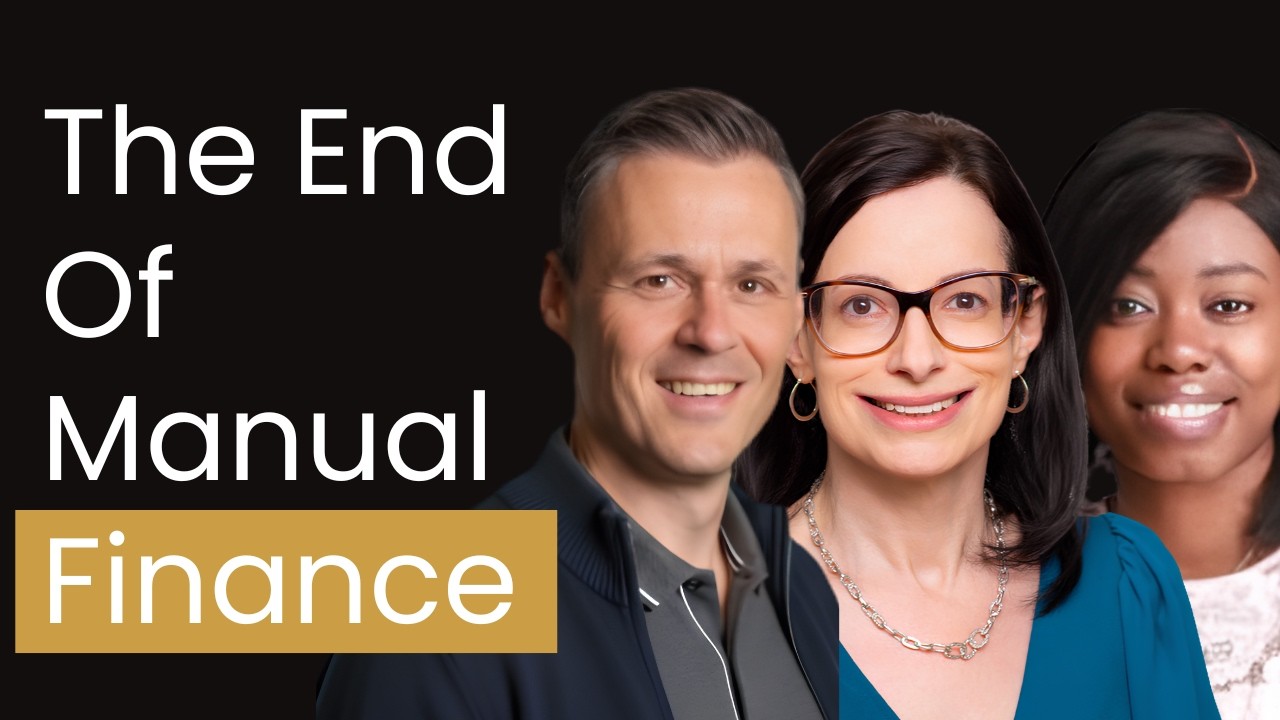
This content was created by Paul Barnhurst. This content was uploaded by Paul Barnhurst. This is a YouTube episode titled "AI Finance Club: What Three Members Learned from the Experience with Eve, Jurgen & Bukie" (published 2026-08-06T11:00:23Z). It is a panel-style interview hosted by Paul Barnhurst (the FP&A Guy) with guests Eve Ryder (global procurement leader), Juergen Lang (fractional CFO, Lang Consult GmbH), and Adebukola “Bukky” Bafariji (FP&A professional and creator of CFO Intel). The conversation focuses on AI in finance and procurement—covering the AI Finance Club community and accelerator, practical tools and workflows (Claude, Codex, custom GPTs), members’ projects and demos (CFO Intel, a Monte Carlo cash‑flow tool, a procurement policy agent), how AI changes time spent in Excel, governance/auditability, and advice for newcomers. The tone is conversational and instructional, aimed at finance professionals exploring AI adoption.
Chapters
We've all heard recently this company is laying off because they just invested in AI. What does that mean from a future of work standpoint? What does that mean from a job security standpoint?
I mean, I think at the end of the day, we're here to make change. What difference did we make? And AI can't replace that. So it's the human judgment.
AI was posing a real risk for me, for my solo business, and a huge opportunity. And then what I did, I went all in. I started building my whole AI expertise. Today's panel features 3 leaders transforming their workflows through the AI Finance Club. Meet Juergen Lang, founder and managing partner at Lang Consult GmbH, also a fractional CFO specializing in sports and tech. And Eve Ryder, a global procurement director with past experience at Amazon, State Street, and American Express. And Adebukola Bukky Bafariji joins us with 15 years of FP&A experience, pushing the limits of technology by developing CFOintel.
For any great finance business partner, you have two muscles. You have your strategic muscle, you have your tactical muscle, and you can't do without either of the two.
AI keeps producing convincingly wrong answers. Everybody knows that, especially when the spec is unclear. And you cannot just tell the AI not to hallucinate. That's just not working because its sole purpose is to produce an output.
Use the right tools. Without tokenizing, have the right audit trail, and then use it within the appropriate governance and regulatory framework.
What do you believe is the most important skill to develop to be successful with AI? Hello everyone, welcome to FP&A Unlocked. Thrilled to have you with us today. We're going to go ahead and talk about where finance meets strategy. I'm your host, Paul Barnhurst. Aka the FP&A Guy. And each week we bring you conversations and practical advice from thought leaders, industry experts, and practitioners who are reshaping the role of FP&A in today's business world. And it's changing rapidly. That's why I'm super excited to have this episode about AI. We're gonna be talking quite a bit about AI, the AI Finance Club, and I have with me 3 guests that are joining me this week. So we have Eve. Eve, welcome to the show.
Thank you. Thank you for having me.
Excited to have you. We have Juergen with us. Welcome, Juergen.
Welcome.
Thank you.
And then we have Buki with us as well.
Welcome. Thanks, Paul. Thanks for having me.
So we're going to start. I'm going to give each of our guests just a minute to introduce themselves versus you listening to me read something. I think that'll be much better here. So why don't we start with Juergen this time? If you could just take a minute and introduce yourself to the audience.
I'm Juergen. I'm based in Hamburg, Germany. I work as a fractional CFO, mainly in sports, hospitality, and tech. And SaaS too. Yeah, before, prior to founding my own firm almost 5 years ago, I spent more than 15 years in leading finance positions at EY, Deloitte, and the sports marketing industry. Yes, the part that matters most for today is probably the last 2 years. And I had 2 years ago a conversation with Nicolas Boucher. He's the founder of the AI Finance Club. It, that was my, let's say, personal AI moment. I like to call it like this. I saw that time 2 things. AI was posing a real risk for my a solo business and a huge opportunity. And then what I did, I went all in. I started building my whole AI expertise. I've spent roughly 30% of my whole time, of my available time on building AI expertise and building my, let's say, AI agent harness. I like to call it like this. During that time, I also joined the AA Finance Club and the accelerator. And in the meantime, now I'm part of the coaching team. Um, yes, during the last 1.5 years, the work changed dramatically. I like to call it From 90% Excel to 90% Claude Code and Codex. That's currently what I'm opening first in the morning and closing last in the evening.
I think a lot of people— so thank you for the introduction. Uh, fun fact, when you mentioned, uh, sports marketing, graduated from ASU at the time they had the number one MBA program in the US for sports marketing.
Oh, nice.
I had several students I graduated with that are multiple big kind of sports marketing roles all over the globe. So fun area. Why don't we go to Bukky next and let you go ahead and introduce yourself?
Thanks, Paul. Thanks again for inviting me. Hi everyone. I'm Bukky Fafereji and I chuckled at Jürgen because of what you said about Claude and Codex. It can be very addictive because I find myself also spending all of my time in Codex and Claude, but I'm an FP&A professional, 15 years of experience supporting businesses in FP&A, go-to-market, and business analytics. Worked in verticals like SaaS, manufacturing, professional services. And more recently, similar to Juggin, I have been doing a lot of building, vibecoding AI. And so my journey in AI also started about 2 and a half years ago where I was kind of like exploring, especially when ChatGPT came out and I was like, okay, how could I level up? How can I start to use this in my workflows and all of that? So that arc has been very interesting. 2 and a half years later, things that I've been able to accomplish with AI. Most recently, I built from scratch. Scratch, so from concept in my head all the way to production deployed software, I built my AI-powered financial intelligence platform called CFO Intel. And what it does is it provides CFO-grade insights with a paper trail. And so that has been really validating and fulfilling for me to accomplish with AI. I'm really excited about, you know, what the future looks like, what else I can keep accomplishing with it. And that said, happy to be on this episode. I'm looking to having a great episode with the rest of the folks. So thanks again for having me, Paul.
Thank you. Eve, go to you next.
Hi, my name is Eve Ryder and I live in New York City in Union Square, Manhattan. Great location. And I'm a little different. I am not in FP&A. I am in procurement. I'm a global procurement leader. I've stood up functions, done everything from cost savings risk management, governance, anything finding new suppliers, but I've always worked in finance very, very closely with FP&A. So very relevant. And AI has the same application. I'm getting my procurement buddies to all join the AI Finance Club because to help with the analysis, unlocking insights, building automations. Being able to teach Claude. I love the idea of these skills, creating the building blocks and then pulling it together into a monthly workflow. It's just amazing. It's life-changing. It's bigger than Excel, bigger than Windows or even the internet. So I'm enjoying every moment. And my background is Amazon, American Express, and State Street. And I'm doing some interim fractional work right now with a variety of mid-size firms and looking at full-time, but also considering doing fractional longer term and also maybe some part-time trading.
Got it.
Appreciate the introduction. I'm not sure we can allow a procurement person on the show. Kidding. Because I started my career in procurement.
Oh, I know.
I'm with you. I spent 4 years as a contract specialist with the Navy before I went back to grad school and switched. Switched careers. I've done my, uh, procurement stint, as I like to call it. I also did time at American Express, so I worked there as well. So have a few things in common there. All right, so this is a question I like to start every episode off, and I'm going to throw this one to, to Buki here, and then, you know, Jurgen or Eve, if you want to add some thoughts, you can. But if I was to ask you what great FP&A looks like— I know you spent a lot of years in the FP&A chair, What would you say? How would you describe it?
Thanks, Paul. So for me, we say great FP&A, I would say, um, great business partnering. And if I was going to kind of click down on that, I would say for any great finance business partner, you have two muscles, right? You have your strategic muscle, you have your tactical muscle, and you can't do without either of the two. Right? So when I talk tactical, you know, like you're talking about your technical skills. So financial modeling, right? Building dashboards, your critical thinking skills. So, you know, the things that make you actually do your work, data mining, right? Can you get a bunch of data and then squeeze insights out of it? Right? So can you use Excel? Can you use, can you write queries? So from that aspect, you need great technical skills to even just do the job. That's just like the cost of admission in doing the role. And then the other side of it is the strategic piece of it, right? So that's where, okay, now you have all this great data, you've gotten the insights. Now what do you do with it, especially with regards to the business, right? So you then need to help translate what those numbers mean. So it's the business doesn't care that you built a 40-tab Excel spreadsheet. It doesn't care that you use Power Query. It wants to know, okay, what does the number, what do the numbers say and how does it impact the business? And if you cannot communicate that in a way that they can actually, that is actionable to the business, then you're not really doing the other side of the role, which is being strategic and using those soft skills that make you a a full, complete FP&A business partner. So having those strong technical skills and then having the soft skills to, you know, together have you as a full business partner to the business. And the only way you can literally drive influence is, you know, showing up, translating the results, communicating what it means, and, you know, letting them know how it impacts the business so that the business can then go on and execute on it. So in a nutshell, start being like being a business partner with your muscles, your strategic muscles and your technical muscles. I call it this way that being an F&A business partner is part art and part science. You need the two, you know, to be a great F&A business partner. So that's what I feel. That great FP&A is.
Okay, appreciate that answer. Juergen, anything you'd like to add or any thoughts there?
Honestly, not too easy to bring additional value to that really profound answer that Rukhi already gave. But what's pretty clear for me that FP&A is not the report. It's not the report. It's, as Rukhi also said, it's a decision behind it. It's the report helps you make. I think we'll talk about it later. You can build beautiful decks, especially in the age of AI. It's so easy doing that. It comes almost at no cost. But if nobody can act on it, uh, or it has, then just, it has failed. And, uh, and, and what's also important for me, uh, figures, they have to be, let's say, um, defensible. You have to make them defensible. You need to show where every number came from that you present. Um, because great FP&A turns numbers into decisions. People can actually, uh, stand behind them. And, uh, yes, I think that's more important in the age of AI than ever before.
Great points. Appreciate that. Eve, coming from the procurement side of things, anything you'd like to add?
I mean, I think at the end of the day, we're here to make change. That's Seth Godin quote. We're not here to answer emails or do reporting. It's like, what difference did we make? And AI can't replace that. So it's the human judgment. What? So what? Now what? What are the insights? And we'll get into that. AI Finance Club has It's really helped me unlock that from AI as well. So helping the business drive margin, find the right suppliers, the right capabilities, mitigate risk, and drive growth.
Love it. All right. Thank you for that. So we're gonna spend most of the rest of the, the time talking about AI. I'm gonna ask you some questions about your experience with the Finance Club. I'm gonna give a little bit about it and then I'll turn to one of you to give a little bit more. So this is run by Nicholas Boucher. I know he has over 3,000 members in it now. There are several other instructors that help, has masterclasses, a circle community, courses you can take, webinars, and just a number of resources designed to help you get up to speed with AI to be more productive. So that's how I describe it in a nutshell. I've spoke at it before. I have access to the community. I know Nicholas and I have been friends now. I think we met for the first time probably 5 years ago now. So it's been, it was before AI even came out that we, uh, we've been connecting with each other and know each other. So I know he's doing a lot of good work there, but Eve, I'd love for you to just give a little more of a description. How would you describe the community and kind of how it works?
AI Finance Club is 3,000 CFOs, fractional CFOs, finance pros, and a few procurement people who snuck in, all learning how to leverage AI, hands-on practical knowledge. And it's everything from knowing the tools, whether it's Claude, OpenAI, Copilot, ChatGPT, but what does it mean for finance? How do I use it for analysis, unlocking insights, creating interactive dashboards, automations so that we free up the day-to-day and have more time on the analysis, the relationship building, and the so what. What are we going to do with this information? What should change in the next 90 days? So you learn from each other. There's excellent masterclasses. There's constant updates. So every time there's a new update, like Claude, these, these LLM tools are constantly upgrading their models. You'll see a really great post about what it means for you. And some tips and tricks and some examples. And then there's the AI Accelerator, which is a 6-week intensive course, hands-on, helps to build. So you do 30 live muscle, you know, building exercises, 6 projects so that you ship product. And I know we're gonna get into this. Jurgen was the star of our Cohort 1. And Buki, I know you were already creating your own tools even before this, and I think you're both coaches, but amazing, amazing opportunity to learn from people day to day.
Thank you. So I'd love to know, and we'll start, I think we'll start with Bukky and we'll work around here, kind of what made you decide to join? How did you come to that decision that it made sense to join the community? So we'll start with you on that, Bukky.
Yeah, sure, Paul. So, um, yeah, like I said earlier, when ChatGPT came out, like, that was the first of the AI LLMs that came out. I was kind of doing it on my own, right? So kind of experimenting, pushing the envelope, like, okay, how far can I go with this? You know, but there was only so much I could accomplish on my own. And I'm a proponent of joining communities where I can learn with other professionals, right? So I, I kind of had a sense of, I was already scouting for, okay, is there any community where, you know, we can learn AI together, AI and finance together? And so when I discovered AI in Finance, I'm like, okay, let me check out this community and see, right? So it helped also because I think when I joined the first informational class, there was something about if you joined, like, you know, 30 days refund or something, like if you were on there for a while and you didn't really, you're not feeling the community, you could get reimbursed. I'm like, okay, well, let me check it out. And I joined and I've been, I've been in the club for like almost a year now. Because the value has been immense. To Eve's point, there are a lot of high players in the community. There's a lot of sharing. There's a lot of learning as well. So you're not just consuming, you're also contributing back to the community, right? You can define how you want to engage. There's a lot of resources on there as well. So for me, it's been validating in a way because I wanted to kind of grow along with people, right? So, you know, the saying that says, if you want to go fast, go alone. If you want to go far, go together, right? I feel like we are all elevating each other. We are all kind of pushing each other to be okay. Hey, someone would do something and say, this is how I kind of put this workflow together. And this is, these are the results I got. And then people like, oh, great. You know, and they'll take that same example back to their own work as well to go implement. And the same way someone will say, hey, I'm struggling with this. And then there's someone to jump in and say, hey, have you tried this? Have you tried that? You know, so just having that kind of community and it's a community of CFOs and senior finance leaders too. It's a global community. So, right. If I think about 85 countries, so yeah, it's a great place to be. I think, you know, I say, you know, but, um, that's been my experience so far. I've enjoyed. You know, being in the club and I'm excited to see the other things we keep doing and pushing in there as well.
Eve, how did you end up joining the community? What was kind of your story?
So I was on LinkedIn and I see a post from someone named Nicholas Boustet and he's like, free AI masterclass, CFOs, but it's for CFOs. And I'm like, should I do it? I'm not a CFO. And so finally I got over it. I signed up. I'm like, I hope he accepts me. And then I signed up. This was probably, yeah, spring of last year. And then learned about the class, signed up immediately, and joined May of 2025. There are about 500 members. It's now grown to 3,000 members, and it's been amazing ever since. And then I also joined the first accelerator, um, in January of this year.
Got it.
All right.
Thanks. How about you, Jurgen? What's your story? How did you end up, uh, joining the community?
As I already said, my, my story was really personally related. Um, I, I, I met Nicholas roughly a bit more than 2 years ago, and then we had just, just a, a virtual discussion about the chances that ChatGPT, that was—
Right. He's in Germany now, isn't he?
He is. Yes. He's, he's in southern Germany and we, we met in Germany. Yeah, when he said there are some huge changes coming, and I, yes, as a solo entrepreneur, I, as I said, I saw some risks at first and I was a bit skeptical too because this whole new world seemed a bit strange to me as an Excel guy. But as I said, I saw an opportunity and this was the reason why I really heavily invested. I invested really 30% of my available time as a fractional CFO. For, um, really expertise building over the last 2 years, not only the last half a year, also the time prior. And at the same time I decided, okay, you do, do that by yourself. Why not exchanging with other people? And then I, I talked again to Nicholas and he, he said, you come join my group, join, join the A Finance Club. And I did that. And for me it was more or less not being the only guy. I want, I searched out for people who face the same issues, who face the same challenges, who, who, who face the same, yes. You see the, the same risks probably and chances. And that's why I joined. Um, yeah, it was a great time, as I said. And I participate in the accelerator too in January in the cohort 1. And now in cohort 3, I'm one of the coaches. Yes, it was a great journey and a great exchange.
Thank you for that. So I wanna ask a question. This isn't, wasn't necessarily in the list, but I'm curious to see the answer here. So before kind of joining the community and now, How much time did you spend in Excel versus how much you're spending now? I want to see something. So Bukky, kind of rough, rough estimate. How much has it changed? Would you say?
I don't even really spend time in Excel anymore, to be honest. Like I said, I've kind of like graduated to the level of always thinking of, okay, automate, automate. How can I make, how can I bridge the gap from A to Z in the fastest, quickest, most defensible way to Jurgen's point. So I'm also always obsessed obsessed about, can I defend this? Can I defend this? That's like my non-negotiable. But in terms of, am I spinning my wheels in Excel formula and all of that? I don't spend too much time in that anymore. I pretty much kind of start from a workflow standpoint. Like, okay, how can I do this? And what are the tools I can build together to make sure that it's giving me the output that I want and is serving it in a manner that I can defend it? I would say in a nutshell, to answer your question, Paul, I It's been, there's been a vast difference from an AI application standpoint for me. Okay.
How about you, Juergen?
In my introduction, I started with a rather provocative exclamation. I said initially 90% Excel, now 90% Claude Code Codex. That means 10% Excel. That's probably not fully true because I'm still using Excel. Yes. But what I do not longer do is manual work. I, I use Codex and Claude Code to play around in Excel to, to modify all the stuff I want. I give the specifications and the AI is doing the changes in Excel. Of course I have to look at it. I talked about guardrails and stuff like that and edge cases. That's very important because you are the human gate in the end. Uh, but yes, the manual work, the manual building of an integrated model is no longer the case I'm, I'm doing because also clients, they do not pay you anymore for it because they know especially because of these strange LinkedIn posts sometimes. The models can do it, the AI can do it, and this reason why I automate as much as possible and the manual work is just gone.
FP&A guy here. I hope you're enjoying this episode as much as I enjoyed recording it. I love speaking to Eve, Buki, and Jurgen and hearing how the AI Finance Club has accelerated their use of AI and changed the way of their working in finance and even procurement. And with that, what I want to share, if you're interested in the AI Finance Club, you can learn more about it at my website. You can also use my discount code YNVTUWKG for $100 or 10% off. So you can go to thefpandaguy.com, click on my educational resources, go to the AI section, and go to the AI Finance Club, and you can learn more about it there. I encourage you to check it out, and if you're interested, consider joining the club. Like I said, I've got an exclusive discount for you. You get $100 off. That code once again is YNVTUWKG. If you have any questions about the community, don't hesitate to email me. Eve, any thoughts here? I know you're in procurement, so you probably weren't quite the same, maybe the same with Excel, but any thoughts there?
So definitely spent a lot of time. I've always spent a lot of time in Excel. And AI has definitely cut that in half. Just some of the basics or cleaning up a chart. I used to spend way too much time trying to fix charts and PowerPoint. And then AI has unlocked a lot of dashboard analytics, dashboards, insights, and really cleaned up the quality of the appearance. Because for Excel, while comfortable in Excel, I've learned, I've gotten that FP&A polish to my spreadsheets. I think it's gone to the next level. And I've been able to do amazing dashboards, which I do check in Excel, and I have an audit trail. And it's great to have this work product, to build this work product in your role. Or if you're looking for a role or trying to win new business, you want to have work product that you can show. So not just that you took a class or you're part of AI Finance Club, here's what I built. And work product is the new resume. I need to post more on LinkedIn and get a little shy. But I definitely use it and I'm using it in different, uh, for different projects for different clients and also putting a portfolio together. Together. So I'd say it's cut my Excel in half, probably from before, could be endless number of hours of Excel, but let's say 20 hours of Excel down to 10 hours of Excel, because I'm still learning and testing, want to be comfortable, want to document the processes as well. So I don't forget and I could keep everything fresh.
Appreciate that. I kind of had an idea what the answers would be, but I wanted our audience to hear that. So, so appreciate that. What's the favorite thing you've built, either kind of tool that you've vibe-coded, workflow you've automated, maybe your thing you're most proud of, favorite, saved you the most time. You can define that however you want, but kind of with AI. Maybe we'll start with you, Jurgen.
There are several tools, but I think at least the most important one from a client perspective, at least that was the tool the client paid most of the money so far, It was a Monte Carlo simulation, a cash flow tool that I built for a SaaS company. They just shifted their revenue model from a license to a subscription model, and they wanted to see how this revenue dip that, that, that may, may come from a J-curve result in the cash position. And I, yes, I, I built that model for them based fully based on AI. And what I liked is how, how it changed the conversation. Instead of just saying revenue will be X and we could talk in prob— we just could talk in probabilities, um, which was difficult, more difficult before. For example, what, what are the odds that the liquidity stays above a certain line? That was one of the question. There is something a CEO could actually decide on because the model really gave the possibility to do that. Um, but the part I, I, I'm, I'm proudest of, um, is probably invisible. That before the simulation, um, I did some, let's say, unglamorous work, making sure the numbers tie back to source systems. You see, I always come back to that crucial point because I checked the edge cases. I made sure that the output could be challenged. And that is why a client could actually trust it and he paid for it. And it was not built to look good in a 5-minute demo because I hate these demos. I think you all got that now. It was built on a holdup when someone challenged the number. Yes, I was pretty proud of it because the client really saw the value added for him. And it was, of course, very interchangeable. It was HTML, Java-based. And yes, it looked pretty good. The question, could that also have been done with egg by egg by Excel? Yes, that was possible in Excel. But I think the way I could sell it to the client was much easier with the age of AI now.
Yeah, no, makes a lot of sense. I mean, the reality is you can build just about anything in Excel even without AI, right? Before AI ever came, there's a question of should you, does it make sense? And I think that's what a lot of people are trying to figure out. And it varies depending on the role complexity, how much you can do with AI versus Excel. Also your learning skills, seeing a lot of different things, but there's clearly it can clearly help, no question. And it can do things— there are certain things that are better for AI than doing in Excel, for sure. So it totally makes sense. I get what you're saying. Eve, how about you?
So when I was in the AI Accelerator, I created everyone's favorite topic, procurement policy. So a chapter— love those policies— procurement policy mod— you know, where you have to use procurement No one understands the policy. Everyone's in tears. So I was like, there must be a better way to do this. Now, what took time creating the actual agent or the GPT, the custom GPT, was pretty easy. But having to— I created basically a fictional policy. Having to break that down, trying to simplify it and explain it was a great opportunity for process improvement. And what I should have done, and what I would do in the future, is I ran it through AI again, whole separate chat, and I said, here is the policy and process. Map this out. It took a while. And tell me how it could be more efficient using first principles. So where are there duplicate approvals? Or where are there points of confusion? Because it's not necessarily procurement. Often finance has to approve it, legal, the business, and then it has to be approved again during the contract process. So I got a lot of great ideas and I would have a work session to simplify. So you always hear about before you build any AI tool, use this as an opportunity to simplify the process, document the process, find points of confusion, and then just use the app as a supporting tool. The app is not going to streamline your process for you, unless you, if you can ask it for ideas. So that foundational work is really important. And then I submitted it and my coach said, hey, wait a minute, how do I know this is real? Go back because I hadn't attached the actual policy itself and I hadn't attached enough use cases. So I went back again and I like that rigor. I like that challenge and I built out more detail and more explanation with tables and I tested more use cases and I resubmitted it. So it was a great learning example and one of my favorite pilots.
Cool.
Thank you for sharing that. How about you, Bukky?
Yeah, sure. I would say without any shadow of doubt, my favorite work so far has been building CFO intel from scratch. And how that started out was I was, I just took the idea of, hmm, okay, how far can I go with this? I wanted to quote unquote automate myself out of most of the grunt work that comes with FP&A. So I was like, okay, the deterministic part of it, the calculations, the, you know, putting stuff together. And I just started building. So I just, you know, no prior experience, but I was like, okay, let me take a stab at this. Let me take a stab at this. So I built it to a point where I felt, hmm, okay. In fact, at some point a version of me was asking, how far down the rabbit hole have I gotten? What have I gotten? What am I doing here? Like, why do you think you're a software developer all of a sudden? Right? So I was having that conversation, but then I Annabelle reached out and said, hey, we're collecting pieces from people. What have you been doing with AI? And I'm like, okay, well, I have been doing this. I can share this, right? And she shared it on the feed and the response kind of blew my mind, right? Because prior to that, I was just like, okay, I'm just, you know, putting stuff together. But the level of response that I got and feedback kind of validated what I was doing, that I was, I had something, that there was something here, right? Like I had mentorship inquiries. I had people saying, oh, you've inspired me to go build something. Right. I think, I think I also got featured on the milestone announcement as well. So I'm like, okay, wow, this is a big deal. Like I should take this more seriously. Right. So I then continued building it out up to the point where I now have gotten it to its full production deployed. And now I'm at the piece where I'm now getting an engineer to look in and start to look at, okay, what are the gaps from a security standpoint before I then officially bring it to market. So that has been super, super great. I would say without any doubt that I'm very proud of that. And then most recently as well, another idea that I'd been sitting on a finance concept as well. I did it in an AI hackathon at Journey Foods and it won third prize for Best Builder Award too. So I'm like, okay, you know what? I think I unlocked new skills at this point with AI and I'm excited to see how far I can push it. So yeah, that, it's been, those have been my two favorite experiences so far.
FP&A guy here. I want to take a minute and share something I've been working on. I've spent Several months adding new affiliate programs to my website. Probably wondering why affiliate programs. Well, I can't train you on everything, but I can show you and give you trusted resources with exclusive FP&A Guy discounts in many cases on my website. I have several of the top FP&A AI people in the world. I have the top certificate programs. I also have other programs like Excel, Power BI. I'm bringing you some of the top people that train in the world. There's Nicholas Boucher with exclusive discounts, David Fortin, Matt and Karl Seidman with exclusive discount, the top programs, FPAC, FMI, and more. So go ahead and check it out on my website, sign up. And if you have a question on what program is right for you, go ahead and message me. I'll get back to you, LinkedIn, or you can email me. So go to thefpnaguy.com and check out my trusted list of resources for you to upskill yourself. Love it. Thanks. So is the plan to release your software and sell it commercially? Are you— how are you— why are you thinking about it?
Yeah, so I'm thinking— so right now I have it in two forms. I have it like as a SaaS software, and then I recently data portable workflow for Codex and Claude. So right now, I think right now it's more marketable with the Codex-Claude workflow because there's already buy-in with that. I'm just going to ride the wave on that versus, you know, there's that reservation of, hmm, it's an app. Do I need another SaaS platform? So I'm still kind of figuring those pieces out. Like I said, I kind of like accidentally stumbled on this, but I'm trying to put on my founder entrepreneur hat and see, you know, how far I can take this. But I really, really believe in the product and I think that is something I can take really far.
Yeah, got it. Appreciate that. The next question I want to add, it's clear you're all big fans. You feel like you've got a lot of value out of the Finance Club. I mean, that's obvious. What are maybe areas you'd like to see it improve or changes or could even be concerns people might have or things they should be thinking about before joining. So anything you can share around that, and maybe we'll go ahead and start with you on this one, Bukky, if you could go first.
Yeah, sure. Um, what I would say, uh, not so much concerns, but more like feedback. Um, either you're trying to join or you're in the community, you joined already, is I feel like there might be some reservation from I don't know much. And so people might tend to be quiet or not kind of like, you know, show up and say, hey, I've done this or this is what I'm working on. And I feel like the best way to learn is to share. So if you're learning and you're, you know, it's a loop, you're learning, you're sharing, you're learning, you're sharing. That's, that's the only way you can level up for, you know, for lack of a better word, right? So. If, if I'm doing something and I share it and somebody says, hey, there's a better way you can do that. Now I've learned something new versus if I just keep it to myself because I'm like, oh, I think that Paul probably know this more than me, or I have a gap. I don't want to do it. So just put yourself out there, be curious, right? It's just what I would say is at any level where you find your expertise at, you will always learn. And the way the community is structured. There's always someone who's smarter than you. You're not the smartest person in the room. So just having that sense of, okay, I can always learn. I feel like there's no shame, there's no judgment, right? So just kind of show up as yourself, show up ready to learn, be curious, ask questions, engage. I think with that kind of little mindset shift, that would help, you know, you get to whatever point you're trying to get to. And it's not a one and done. It's not you do it and you're— it's a continuous loop. It's you're learning something fresh every day. There's fresh content. AI is changing and then you're learning it. So everyone is growing at the same pace at the same time. And, you know, just, I would just say, just, you know, remove those reservations and just show up as yourself to learn and grow.
Appreciate that. Why don't we go over to you next, Eve, on this one?
Right. So to add to Boopie's point, AI is not a spectator sport. And I think with the AI Finance Club, you do have a lot of participation in training workshops and we have a live stream. Anyone can share a use case. So for example, in Boopie's CFO Intel use case, was posted earlier this year and we were all blown away and we wanted to learn more. We'd like to see more of that. Now in the AI Accelerator, one of the beautiful things is you have to post your daily exercises. So everyone learns from each other. So like Jurgen Lang would always somehow be the first to post. I don't know how, it was magic. And the best, he would always have the best—
I figured it would be Europe, it was earlier in the day.
Yeah.
Hi, I'm Jürgen. Let me see, wait. And then I'd be like, oh, that's too complicated. But then I would, you know, I would see what other people did and sometimes it would really inspire me and get me going on my, on my project or I'd do my project and I'd come back because I love to see how other people do it. So I like, I love this idea of encouraging people or firing them to share their work in the live feed, um, for AI Finance Club, like get outside the shyness. Maybe there's an incentive or a lottery. And then I have another idea. So I, I am the biggest fan of AI Finance Club and AI Accelerator, and, uh, I want to have a procurement supply chain subgroup, no extra cost. I've floated this idea by Annabelle, but I'm going to discuss it with Nicholas. Because there's a few people in the group who are procurement or they're finance and they have operations of procurement. So even if they don't have procurement in their title, they're responsible. And they're like, oh, I'm, so like, I'll post something and they'll be like, oh, I'm going to bring that back to my team, or I'm going to try that, or I'm going to bring it back to my procurement folks. So I think it would add another dimension and maybe one for operations. There's a lot of COOs. CFO, but they really are the COO. They do everything. I also have a huge network of procurement people who are like, Keith, can you sell me, you know, can you demo what you're doing in AI? And I'm happy to do that. And I'll, I'll probably start doing that as well. But if they could ch— I'm gonna get 'em to join the AI Finance Club and accelerator, because I'm like, make the investment today in your future, for your current job, for your future job. Create that differentiation. And AI is not a spectator sport too. There's no substitute to getting in there and building right away. So like the AI Accelerator, first week you have to build a dashboard. May not be a very good dashboard. Mine was interesting. I show you the before and after, but get in, build it. You'll see what you really know. Because I thought I knew AI. I'm like, I've been to webinars. I'm reading articles, I, I watch podcasts. I must know. It's very different and you see the process and you get better and better. So the AI Finance Club, you keep your skills sharp because it's year-round. You keep that muscle. It's just like the World Cup. World Cup players train 25 to 40 hours a week during the regular season, so you can only imagine what they're doing for the World Cup. So you wouldn't just watch an Oscar, you wouldn't just watch a soccer match or try a few things. You, you need to do it day in or at least week in, week out and really build whether it's a dashboard, an app, an automation skills, and really start to use it in your day to day. Build up your portfolio. So I think I'm, I'm a big proponent of the marketing as well. So that's another, I want to take that further as well. And because I think there's something completely unique. I mean, I've done other trainings. There's nothing like it in terms of the applicability or right mix of strategic and hands-on that's really meaningful to your job and you'll walk away with real tools that you can use in your day-to-day work and in your portfolio. So I just want to keep seeing it continue to grow.
Thank you for that answer. Appreciate it. Anything you'd like to add? Any, any thoughts there, Jurgen?
Yeah, I'm just thinking about, because a lot of things have been said, I think I can, it's very difficult to add something new, but I think every advantage that we just heard about the AI Finance Club, about the community, there's one thing. That has to be clear. It's not coming by itself. You have to be willing to invest some time. You have to be interested in learning something. You have to believe, of course, in this new, in that AI is no longer a hype. It used to be, it's no longer a hype, it's reality. And it will advance. When I look at the disruptive development from December until now, when you just project that to the future, There, there might also be some, I'm really looking forward to it, but, um, there's also some risks inherent with that, I think. But okay, it's another point. But you have, you have to, you have to be willing to invest some time because I, I also had some discussions with, with clients, especially older CFOs, according to my experience, who say, why, why should I, uh, learn stuff from you guys? Because, um, I know how to chat with ChatGPT, Copilot, and Claude. Yes, probably you know how to use AI as a junior developer. But now AI transformed to a senior partner. Discussion with the senior partner is completely different because it's now like, it's no longer a conversation, it's no longer like a Google question and answer stuff. It's a conversation, it's a brainstorm, it's a specification-driven approach. And then implementation like the tech guys used to do over years now. And that's exactly the muscle I think you learn from, from not only from the expert in the group, but from the whole group. Um, when you listen to these things, that, to these webinars, stuff like that, if you are open for all, to all this stuff, to open to this information, to these new developments, and not afraid of learning them, willing to learning them, then you can really stay ahead of the market. That's a huge USP.
Thank you for that answer. And I'm going to just share one thing here before we move on to the next question. So for anyone who is interested, I do have a kind of an overview on the AAF Finance Club on my website. I have several finance programs there. But also I've worked with Nicholas and I have a special discount code that will give people 10% off if they're interested. So I think this code was created by AI because no person would have wrote this code. So I'm going to share it here. There'll also be an ad that you guys listen to, but here's the code: Y-N-V-T-U-W-K-G. Who came up with that code? That's all I had to say. Almost all my other ones are something like FP&A Guy or FP&A 30 or the, and I'm like, they sent me the code and like, are you serious? But anyway, so there, there's my one complaint. No. Um, uh, but you can also see that in the show notes. So if anyone's interested in the club, I'll be doing several more episodes like these of different programs, but just wanted to share that for anyone. That was something Nicholas gave me as a special one for, uh, some of my audience and things. All right. So I want to ask one more question, then we're going to go a brief FP&A section, a brief get-to-know-you section, and we're going to wrap up. So the last question I want to ask before we move into these sections, what has you most excited? Or if you want, you can say most nervous, because I think there's always a little bit of both with AI and technology. So Jurgen, we're going to let you go first on this one.
Yes, I think I already mentioned it a bit. I'm in various development groups. I'm sometimes I'm the only finance Science Guy and was honestly at the beginning tough to follow them, but now I'm pretty, I'm quite, quite able to do that. But as I said, when you see the really huge change, especially from December now until June with the Opus 4.6, Opus 4.7, 4.8, and now the fabled, the fabled version also GPT-5.5, this turnaround from being, from seeing AI as a, from a junior developer, there was less last year to a really senior partner who knows things sometimes much better than I do. Um, it, it's great for my daily work. As I said, the output is great. The clients pay for it. Uh, you can build nice shippable versions of it. But, uh, I ask myself, what happens in 2 years? What's happened in 3 years? Now the human gate is the most relevant aspect here. Your domain knowledge in finance is, is that, is the knowledge you get really well paid for, even in the age of AI. But if this, if this is the case like this in 5 years, honestly, I do not know. And that's the thing that really sometimes bothers me a bit.
Makes sense. I think we all have a little bit of nervousness of where does this end? What does it look like? Because there's moments where you're like, all right, this is going pretty quick. And then there's kind of moments where you're like, oh, wow, that went really fast. I think the, the, the Opus versions there, they came out in pretty quick succession. Was a big step forward that surprised all of us. Because I remember I was testing all the modeling tools and none of them would get the balance sheet to balance, and they were, they were subpar compared to where we are. Then we tested Claude and it was like, oh wow, this is a huge difference. And so I totally know what you're talking about, is like, okay, so do we have another Leap-like clap? What does that look like? So it's a good question. Why don't we go to you next, Bukky?
I like how you phrased the question because I have the high points and I have the points I'm nervous about. So let me start with the— let me start with what I'm happy about. I'm happy about the fact that AI now exists. Ideas that you would have killed because you didn't have the budget, you didn't have the timeline or the team to put it together, right? A lot of ideas are in the graveyard right now because, yeah, I can't attempt it. But now, just a few sleepless nights, get some tokens to burn, and you probably get your MVP at some point in a few weeks or a few days, depending on how fast you're going. So As far as that's concerned, I'm really happy with the direction of AI where, and to Joergen's point, now with domain expertise, we actually have an unfair advantage too as finance professionals. If you're building like an AI app or like a workflow, we have the domain expertise to kind of do more depth to it because we know what good and bad looks like and we can define it. We know what to spot check. We know what to say, no, we're challenging that assumption. So that part has been great, right? To kind of go out there and build those tools are now available. But the other flip side to it that I was kind of nervous about is also the effect of AI from a job security standpoint, right? So now, like, I know, I know we've all heard recently in recent times this company is laying off and it's AI, and this company is laying off because they just invested in AI, right? And what does that mean from a future of work standpoint? What does that mean from a job security standpoint, right? The formula we were given was go to school, get a master's degree, and put your head down, and you're going to be great for life till you retire. Well, I feel like future of work now is going to look very different, especially with AI. And I think it has— a lot of us are thinking, okay, what's next? What's next? A lot of people are pivoting out of full-time roles into more fractional roles now because they're like, okay, I want to own my own destiny going forward. I want to ride the current wave and see how I can just reframe myself and reposition myself in the job market. So I think a lot of people are thinking about a lot of things, right? The wheel is spinning in our heads. Okay, what does job security look like going forward. I wouldn't say cannibalization, but it feels like that in a way where, oh, now cloud design, now cloud can do this. And, you know, like SaaS companies that were built to provide a particular service, AI is doing all of that now to some degree, right? So it just makes you wonder like, okay, is there a bigger conversation to be had? Is this more like a policy conversation even at this point? Like, is there a boundary we need to put? So all of this is still up in the air, and these are things that I mull on to kind of think of, okay, where are we going with AI? Yes, it's powerful, but how far the edge should we push it? Right? So those are just kind of thoughts that I've been thinking about.
Thank you. Appreciate that. Yeah. And I think everybody's wondering how far do we push it and what's best for society? Where does it end? We're all, we're all in this journey together, whether whether we want to be or not. So we just, we figure it out. Eve, your thoughts.
I'm excited about, and it sounds like a cliché, but really AI is a true value multiplier for FP&A, for finance, procurement, supply chain. Meaning, what does that mean? Value, correct? What does value multiplier mean? It means 1 1 5. You can do so much more. In your job than you could ever before. So you're gonna spend a lot less time on the transactional work, the monthly close, the day-to-day. You should have more accurate work if you set it up correctly. And so much more time to do the fun stuff and the value add, which is finding the new insights, finding the risks. You can have all these risk indicators. Forecast, like the cash flow that Jurgen was going to make. Cash flow is the new EBITDA according to a lot, you know, it's all about cash flow. We got to make sure we protect that. There's a lot of great tools for that. So I wouldn't be afraid to say that it truly is a value multiplier if you use it right. And it takes a little time to set it up correctly. I love this, the Claude approach where you set up skills. So I'm doing a, I'm building a competitive bidding tool and it's going to be a set of skills because I want to teach Claude what are the different categories. I don't want racing, otherwise going to race off and just say lowest price and only have one supplier per category, but I really want to take the time to train it. You know, IT, SaaS, AI, ERP, marketing, consulting, you name it. And then the competitive bidding, really, it should start with what are your needs? Ask the— I'll build some parameters, but have Claude interview the user and ask the right questions. Because a lot of times people think they need an RFP, but they're really not ready. And certainly we can have a conversation. But it may help as well to have it go through questions. What are you trying to do? You know, big picture in one sentence. What would good look like? What is your solution today? Start coming up with some requirements. And then maybe it's an RFI. You just want to see what's out there. But in that case, you don't need to torture the suppliers with this huge RFP. And then when you are ready to do assuming you need a formal RFP, you often don't, you could do a, a less formal, but what is the right level of questions as opposed to this formal RFP that goes out to all these suppliers who then have to spend time filling in all of these fields. And what customer, what you can do also is have AI pulling some of the information that exists from internal tools or external, save the supplier some time, and then have all this great information come back, analyze it, say what's missing, and so that it's more of an iterative process and it can do the analysis and presentation. And then you still need human in the loop because things can go wrong and you want to make sure, because really every project is so different, the requirements get very customized. And specific. So the watch out and the opportunity is governance. And when we say governance, I'm talking internal governance, whether you're fractional, whether you're a big company. And that is have some structure around how you do AI. Have some sort of a policy, an acceptable use policy. Any of the AI tools can help you create that. Rules of the road, some sort of a playbook of what you can do, not to do, best practices. Don't go crazy with the tokens, use the right model. And ethics and governance as well. Like, this is what we don't do, this is what we do, this is what we don't do. And then the regu—
I'm gonna cut you off there on the governance just in the interest of time so we can kind of wrap up, 'cause we're almost at time already and have a few more questions I'd like to get to. But thank you for that answer. I appreciate that. So this section, here's how it's going to work. Just to keep it going quick, I'm going to ask a couple of FP&A questions. You get 30 seconds. If you go over 45, I'm going to stop you and keep going so we don't go too long here. So I just want real short kind of first thought. We'll start with Pookie on this one. If I asked you what is the number one technical skill that FP&A professionals need to master, what would you say?
I'll say financial modeling because that's like the hallmark of any FP&A. That's where you start from. So just having those great technical skills of building a model and making it give you the output that defends the business standpoint. So yeah, any average FP&A should at least a minimum have really good, solid financial modeling skills.
That's an answer I've heard many times before. Jurgen, how about you?
For me, it's clearly the shift from Excel to a development mindset, I call it like this. Even if you never write code, the skill now is to specify precisely and think like a developer, in my opinion, because define what good looks like, think through the edge cases, translate that clearly enough so coding agents like ClockCode, Codex can build it. The agent does the typing, but the scarce skill in my opinion is to precise thinking in front of it.
I've heard similar, a lot of times I've been hearing a lot more lately, data modeling, design thinking, systems thinking, developer is another one that kind of goes along those lines. So I appreciate that. Eve, what's your thoughts coming from procurement? What's the number one technical skill you think FP&A needs?
Be able to frame the business problem and the implications and the next steps.
That's a good one. You definitely have to be able to frame the problem. So I appreciate it. Love that we got 3 different answers. That's what I like about this. This is almost everybody has a different answer. All right, now we'll go in the reverse order here. What's the number one soft skill FP&A professionals need to master? So we'll start with you, Eve.
Communication, um, relationships, empathy, curiosity, being able to have those collaboration skills, really understand and listen to the other party to understand their needs, even if they can't articulate it. They may not understand. That's our job, is to be consultants, ask the right questions, and help find a solution that works for them.
I got it. Love it. I like that you added empathy and curiosity in there. Those are some of my favorite answers. But, uh, get lots of great ones. Jurgen, what's your thoughts?
I would agree in terms of communicating the so what. Um, that means you can have the most, let's say, rigorous model in the building, but if you cannot tell the client what it means for their decision in their language, it dies, it dies in the deck. And here it doesn't matter if it's AI or Excel.
Got it.
All right.
Bukky.
Yeah, sure. I was gonna, so I'll add a little to Jurgen's absolutely yes on this point. And then to, um, Eve's point as well. I love that she kind of distilled what emotional intelligence is, cuz I think that's one skill that We don't put a name to it, but it actually shows up in how we work as FP&A partners. And so what she said about curiosity, about empathy, these are all things that kind of come in the role from a soft skill standpoint, right? So how do you regulate yourself? Self-regulation, especially when you're having those tough conversations or when you're challenging assumptions and telling business leaders why they can't have 10% more budget or expense. For the next fiscal year, right? So just having those conversations, being self-aware, um, it's, it's a broader, um, umbrella, but all under it, it still wraps up under emotional intelligence and just knowing how to influence without authority, right? So leading, even if you don't have a job title, leading with influence, even when you don't have the specific job title to do it.
Like that emotional intelligence. That's a good, uh, self-awareness. See, that's why I do podcasting. I don't have to have as much self-awareness. I just talk. Wait, no, I'm kidding. All right, we'll keep going here. I have one more under the FP&A section, then we're going to spend about 2 minutes kind of getting to know just a little bit about you, some fun questions. So last one here. What do you believe is the most important skill to develop to be successful with AI? And why don't we start with, we'll go ahead and start with Jürgen on this one.
For me, it's a judgment backed by real domain expertise. As already mentioned, AI keeps producing convincingly wrong, wrong answers. Everybody knows that, especially when the spec is unclear. I always said that. And you cannot just tell the AI not to hallucinate. That's just not working because its sole purpose is to produce an output. And so the skill is looking at the output and knowing from real domain knowledge, whether it's brilliant or plausible, plausible but wrong. I'd like to end like, AI can draft, your judgment is what sides.
So you mean I can't just stick in the instructions, don't hallucinate?
You can, yes, you can do it. But according to my experience, it's not really working.
Yeah, no, I know. I had to have a little fun.
Eve.
I would say the most important skill is design thinking and being able to structure the problem, use the right tools without tokenizing, uh, have the right audit trail, and then use it within the appropriate governance and regulatory framework. And there's something called harness, um, harness prompting that's going to be more important. So it started with prompting, which is you tell it what to do, and then context, give AI a sense of what you're try to do and the context behind it. Now it's about the harness, which is the constraints and the design features, and you're gonna hear more and more about that. So I think that's a critical skill.
You're definitely hearing more about the harness, the context, the instructions, the examples, right? The more and more you can give it guardrails and restrictions, the more likely the probability of what it's gonna output is what you want. The less guardrails, less restrictions, the more freedom it has, the more likely it is to go in different directions because it's probabilistic, right? We're not dealing with, it's not like math. 1 1 always equals 2. Just not how it works with AI. So I love that one.
I was just going to add to what you said that you want, I think, proper governance and structure. Will give users the confidence to use AI because you do have some AI rejectors and companies or clients who are nervous about any use of AI because they don't know what they don't know.
Sure. Yeah, agreed.
Puky. We mentioned this earlier, but I would say critical thinking. And I think it's very closely related to judgment as well. Just again, knowing what good looks like, what bad looks like, so that you can look out for it and say, hey, Even when you're putting like AI workflows together, or if it's coding in say Cloud Code or Codex, I read my code, right? So some people just kind of put a prompt in and walk off like, mm, come back in 10 minutes and you know, everything is all baked and you're ready to go. But I push back on my code. Like I read my code and I'm like, sometimes like this doesn't make any sense. Why are you doing this? Right? So knowing what good looks like, knowing what bad looks like would also help you define your final output. If you're working with AI, same way we use critical thinking in Excel building, in financial modeling and all of that, from an AI standpoint, it's still the same principle. And what helps you know what good versus bad is, is your domain expertise. Again, back to that. When you know what you know, what the business, how the business runs, when you've embedded yourself in the business so that you know firsthand information, okay, this is how we do business. This is what it looks like. That gives you the domain expertise. Then you know how to feed that back into what you're trying to do or develop to say, okay, well, this is a non-negotiable. This is a no-go. This is what I'm looking for. You can define those requirements. And that would, when you fine tune it like that, you can guarantee that you always have a better output. So I would say for sure, critical thinking.
That's a great one. Critical thinking. So thanks for that. Again, I like that y'all took a similar, but slightly different direction. And I think what it shows is, you know, there's a well-rounded group of skills that are needed. It's not necessarily one thing, but I like to see how different people think there. So thank you for those answers. And I think one thing you said, Mookie, on the code and, you know, the domain knowledge, I've started now use it to help build my website. Not an area I have expertise, but the more and more I do it, now I can go back and I'm like, I really could clean out that code. And, but I go through every single line and edit it myself. And not the code per se, but the descriptions it uses and the wording. And I'll challenge it and go back and forth. It's not like I just produce a page, throw it up on my website, and hope it sells.
Yeah, absolutely.
Some cases I'm probably spending more time around the copy than I was before, but now I can write the code instead of having to go pay somebody to write it.
Exactly.
So, you know, AI, yes, it's a force multiplier, can allow you to do things, but that domain knowledge still makes a huge difference. And I'm seeing it a lot in some of the things I'm doing as I struggle through it to try to have an understanding. So I appreciate that. All right. So this is the get to know you section. We have 3 quick questions we're going to ask, and I'm just looking for short answers. So we're 15, 20 seconds here. We'll kind of go through this quick since we're a little over an hour now. And I'm sure there's a few people going, why are they still talking? But that's okay. If they are, that's their problem. So these are just fun little questions I'll ask. We'll start with Eve here. If you could have any superpower in the world, what would it be?
I would love to have all the time in the world to do everything I want to do, whether it's AI.
So you would either live forever or be able to stop time so you can do everything you wanted? I like it.
Exactly.
Spooky, how about you?
I would love a perfect recall, photogenic memory.
I'm not sure I'd want to remember some of the things I did.
Well, that's true, but also So it would make my life so much easier and better too.
There would definitely be some advantages, no question. Jurgen, how about you?
Easy one. I think a great superpower for me would be being able to set my token cost to zero.
That's a good one.
Spoken like somebody who uses a lot of tokens.
That's a good one.
I don't want to ask what your monthly bill is after that. All right, next one. If you could recommend one book to our audience that you think they would enjoy reading or that you think they should read, you can go either way. Uh, go ahead and share that. So, um, we'll go ahead and start with you, Bukky.
Yeah, I would say Own the Room. I actually have it here. Okay. The camera can't catch it. Own the Room. It's, uh, executive, uh, presence. It's about executive presence. So how you show up, um, You don't have to be the loudest in the room. You don't have to be the most extroverted, just having, identifying your signature voice so that when you kind of speak up and lead, um, you can influence decisions. You can influence and push, um, agendas forward, even if you don't have the job title of a leader, right? So, um, it's a really great book that I recommend, especially for FP&A partners, because we always find ourselves kind of presenting in meetings, presenting to leadership. And so you want your, the hard work you've done behind the scenes on your laptop, on, you know, all the data crunching, all of that. You want to be able to present it in a way that they actually, okay, she's trustworthy. I can take her. I can take her word and I can, you know, run and execute on what she said. So that's a great book that I recommend. All right.
So Own the Room. Eve, what's your book?
The topic of governance and regulation. Lead the Machine by Arvind Mehta. Just came out in March. Great overview. Quick read on the principles of governance, a read of regulation is forming, and things for you to think about so you can create it in your own business.
Thanks. Jürgen, do you have a book to hold up?
Yeah, well, honestly, I do not, but honestly, I also read a lot of nonfiction business finance books and stuff like that, but none of them comes close to the reading joy I had the first time I read Tolkien's Lord of the Rings. Nothing has matched it since, and I stick to that.
Lord of the Rings, love it. I like reading fantasy books. I don't read a lot of business books. I'm like, I work enough. I need a turn off. So everybody has their different approach.
All right.
Last get to know you question, and then we're going to wrap up and let you guys go. So we'll start this one. We'll go ahead and start with Eve on this one. If you could have dinner with any one person in the world, someone who's alive, who would you have dinner with?
Seth Godin. He's an expert in marketing and influence management. First heard him speak at American Express in 2006, and I'm going to try to clone him as a skill in AI. He really brings me back to the basics and talking in human language and what does this really mean? So I find him very inspirational.
Alrighty, Jürgen, who you taking to dinner?
Magnus Carlsen. Chess was the first field where the machine decisively beat us humans. And I'd love to understand how you keep playing at world level when you know AI will always out-calculate you. That's exactly it.
When you know the machine can win.
Yes.
All right. Mooki, who you taking to dinner?
I was overthinking this one. I couldn't land on one person. I'm sorry. So I focused on more on the dinner. Give me great food and give me great company, right? There are a lot of of great people out here in the world, especially people with excellence and grit. That's like my super mixture, right? Just be excellent and, you know, have that grit to back it up. So give me people with that same characteristics in the same room, great food, I'm good to go.
All right. So you bring the great food. I'll come show up as the person.
Yeah. All right.
I want to thank all three of you for joining. I think this has been a great conversation. And before we wrap up, one, I'll mention you can reach out to these people on LinkedIn. You'll be able to see there a link for each of them in the show notes, but I'll just give them last, you know, couple seconds. Any last parting advice you want to give before we close here? And why don't we start with Bukky on this one? We'll let you go first.
Thanks, Paul. This has been a great episode hanging out with you guys today. I was going to say to everyone watching. Join. If you've not used AI, if you've not gotten on the AI hype, it's not about hype. It's literally the next era. And so the earlier we get on, the better. And if you haven't gotten on yet, no worries. You're not late. The next best time is now. Hope you watch this through the end so that you can learn about all the great advantages you can get using AI in your everyday life. And so don't be scared to jump in and have fun.
Thank you. Really appreciate that, Bukky. Eve.
Remember, got to jump in and do the AI, got to do the work, practice, build your muscle, and work product is the new resume. That's a new way to build your reputation, whether inside a company, for your next role, if you want to build a business. So results and actual work product mean more than anything these days. So if I can do it in procurement, so can you.
Perfect. Jürgen.
First of all, thanks for having me too. What I want to tell people is when you see a nice looking AI built finance model, do not stop the demo. Ask where the numbers come from. Ask who signs off when it's wrong. I can draft and speed up the work, but it cannot be the one who signs. And I would summarize in one sentence, probably AI should amplify your judgment, not replace it.
I'll give an example. Somebody asked if AI is wrong on something, are they responsible, like the company? And the company was like, no, SaaS isn't responsible. You still ultimately sign off even though you have a subscription. Through us, you, right? At the end of the day, if something's wrong in a 10-K or 10-Q, you can't blame it on AI. And so just, that's one of the most important things to remember in all of this. AI is a tool. Human judgment is critical to the process. And so I just want to thank all three of you for joining me. It's a pleasure chatting with you. I really enjoyed it. So thank you so much for carving out some of your time and chatting with me today. So thanks.
Thanks, Paul.
Thank you.
That's it for today's episode of FP&A Unlocked. If you enjoy FP&A Unlocked, please take a moment to leave a 5-star rating and review. It's the best way to support the FP&A Guy and help more FP&A professionals discover the show. Remember, you can earn CPE credit for this episode by visiting earmarkcpe.com. Downloading the app, and completing the quiz. If you need continuing education credits for the FPAC certification, complete the quiz and reach out to me directly. Thanks for listening. I'm Paul Barnhurst, the FP&A Guy, and I'll see you next time.
More from Paul




Trust and Leadership Lessons for FP&A From 100+ Top Leaders with CFO Jon Laudie






