An Evaluation of the FPI AI Program and How 3 Finance Pros Are Using AI Today
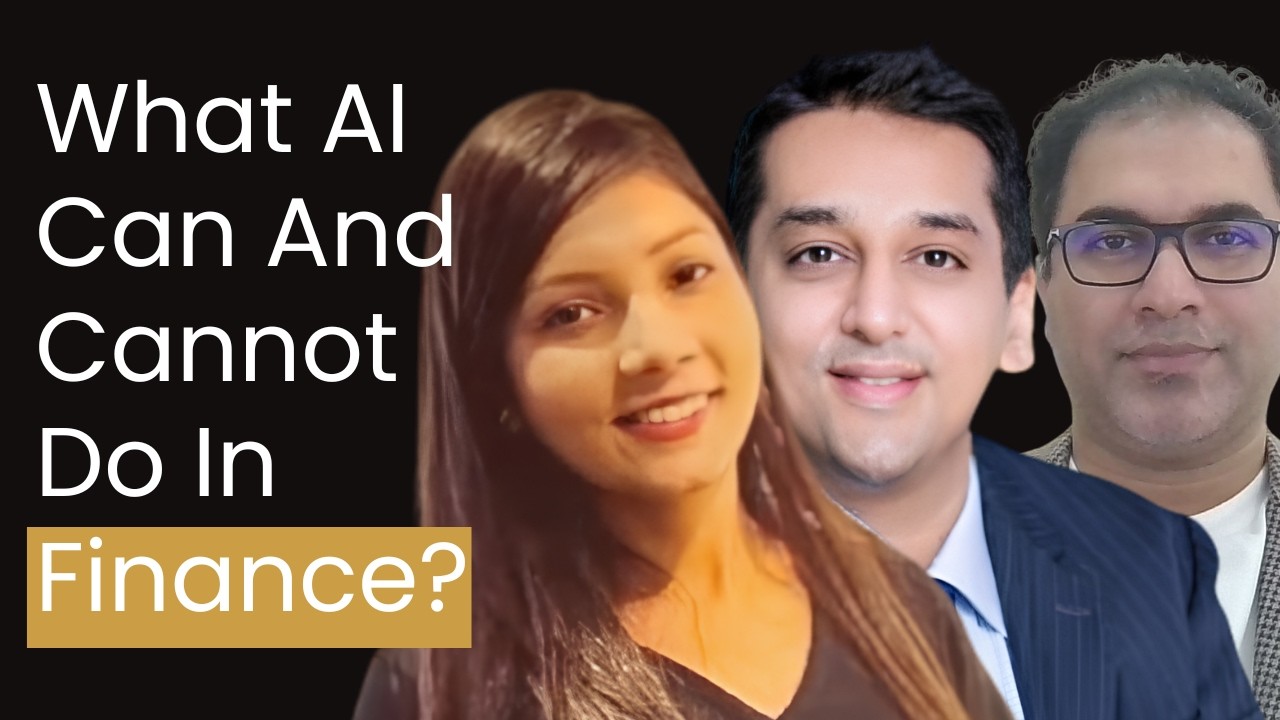
In this episode of FP&A Unlocked, host Paul Barnhurst interviews three finance professionals—Nitesh Mukhi (Finance Director at Presight AI), Rohit Menon (Regional Finance Manager at BioLitec), and Sweta Jelani (Chartered Accountant and FP&A Manager). The conversation begins with brief personal backgrounds and each guest’s definition of great FP&A, emphasizing the blend of business understanding, accurate numbers, and actionable insights. The core of the interview explores why each participant enrolled in the Financial Professionals Institute (FPI) AI/FP&A certification, describing the program’s timeline (mid‑2025 to end‑2025), format (approximately 8 hours over a month, weekend sessions, tool‑specific workshops on ChatGPT, Claude, Copilot, and agentic AI), and supplemental special classes. They discuss who the program is designed for—from junior analysts to senior finance leaders—and highlight the most valuable outcomes: improved prompting skills, exposure to real‑world case studies, and reinforcement that AI is an enabler, not a replacement for human judgment. The panel debates common AI hype, such as claims that AI can build a full financial model in minutes, concluding that quality input, domain expertise, and verification are essential. Implementation challenges are raised, including data security, enterprise‑level tool access, and the need for basic coding knowledge in some sessions. Participants share feedback on course improvements, such as simplifying Python‑related content. The conversation moves to future excitement about enterprise‑scale AI freeing up time for strategic work, and each guest lists essential technical, soft, and AI‑specific skills for FP&A professionals. The episode wraps with light‑hearted segments—super‑power wishes, book recommendations, dinner guest choices—and final advice encouraging finance professionals to embrace AI learning now while the opportunity is ripe.
Chapters
AI has probably been the biggest technical evolution in my lifetime.
Don't fear AI. Human civilization is full of examples of new inventions and new events coming, and humans have survived it.
For some problems, we really don't need AI right now. So AI is not the solution to each and every problem.
This is not gonna replace me, and it is only going to help me to manage my work effectively.
Today we're joined by 3 distinguished finance experts: Nitesh Mukhi, Finance Director at G42, who spent over 2 decades navigating global finance at giants like FedEx, Schlumberger, and KPMG Audit. Rohit Menon, a regional finance manager at BioLitec, who brings nearly 2 decades of global finance mastery with extensive experience across healthcare, medical technology, and multinational business environments. And Sweta Jelani, a chartered accountant and FP&A manager Who transitioned from audit to financial planning. AI can definitely help you in crunching data, but the assumptions and the discussions and the human element, that is something which AI can't do.
The better the input, better the output. So you keep improvising. First of all, as a user, don't just stick to one AI tool because—
This is the right time when most people are at the stage of learning AI. This is an opportunity which will not come in a few years down the line.
What do you believe is the most important skill someone needs to develop to be successful for using AI in finance? Welcome to another episode of FP&A Unlocked, where finance meets strategy. I'm your host, Paul Barnhurst, aka the FP&A Guy. Each week we bring you conversations and practical advice from thought leaders, industry experts, and practitioners who are reshaping the role of FP&A in today's business world. Together, we'll uncover the strategies and experiences that separate good FP&A professionals from great ones, helping you elevate your career and drive strategic impact. This week, I'm thrilled to welcome 3 people on the show. We have with us Nitesh. Welcome to the show.
Hi.
Hi, Paul.
Excited to have you.
Same here.
We have Rohit. Welcome to the show, Rohit.
Thanks once again, Paul, for having me.
Excited to have you. And Sweta, welcome to the show.
Thank you, Paul. Thanks for having me.
Yep. Excited to have you. So today we're going to be talking about AI and some training all 3 of these people did around AI through the Finance Professionals Institute. But before we get into that, where I want to start is I'm going to ask each of you to just give a little bit of your background. So tell our audience a little bit about yourself. And in this case, we'll start with Nitesh, then we'll go to Sweta, and we'll finish with you, Rohit. So if you could just tell us, the audience, a little bit about yourself.
Hi everyone. My name is Nitesh Mookhi. I am currently working as a finance director with Presight AI, which is an AI analytics and a big data analytics company in Abu Dhabi. Over the past 2 decades, I've worked with— worn a sort of several hats, such as an auditor, a financial analyst, a treasurer, and an FP&A manager. Worked across firms like Schlumberger, FedEx, and KPMG, and have worked in various jurisdictions and gone through several different kinds of experiences in finance. Thank you.
Thanks.
Appreciate it.
Shweta, go ahead.
Okay. So my name is Shweta Chhalani. I am a chartered accountant based out of India. I started my career in audit at one of the Big 4s, and I actually didn't enjoy it that much. Somehow I stumbled into FP&A and I would say it's one of the best decisions that I've made in my career. I've been working as an FP&A manager at one of the subsidiaries of Thomas Cook, and it's been 2+ years for me to be in FP&A and I do have good opinions about it. So yeah, really excited to be here, Paul. Thank you.
Awesome.
Love it.
I'm glad you found FP&A. I, uh, I never went the accounting route, but I've heard some people say audit can be a challenge. It's usually a pit stop, not a career for most people. So, all right, Rohit, go ahead.
Yeah. Hello, everyone. My name is Rohit Padan. So, a South Indian, born and raised in central India. It's been almost 15-plus years in Dubai, and having worked for over 19 years. Had a great opportunity to work with various multinational companies, had the privilege to work in various roles. And then I think it was the year 2023 where it was a turning point for me. And then yeah, decided to take up the FP&A course and basically try to move out of myself from the comfort zone and exploring better options because I think that's when everyone needs to also give it a thought that, okay, what skills should I adapt more to grow in finance? So yeah, I mean, that was a journey and yeah, currently working as a regional finance with one of the medical device companies called Bioritec, a European, Austrian-based company.
Yeah.
Well, thank you. Appreciate that background. So I pretty much start every episode with asking this question, and I'm curious to see how different they are. The question I typically ask is, what does great FP&A look like, or how would you describe it? And I think for this one, we'll start with you, Syeda. If you want to give your definition, how do you think of great FP&A?
Okay, so for me, great FP&A would be an anchor where business understanding and numbers work together in a way that decision-making becomes easier for the stakeholders. And By that, I don't mean that you have to present your numbers accurately. Of course you have to, but it goes beyond that. You have to show why the numbers look the way they do, what's driving them, and present it in a way that one of your stakeholders, they enter the room and they look at your analysis and they are ready to say, yes, I can make a decision out of it. So that's how I look at it. That's the kind of version that I want to be.
Got it.
Appreciate that. Nitesh, I'd love your thoughts on this. What would you kind of add to this, or how do you think about it?
For me, FP&A is a function where sort of it's forward-looking and not only just doing an analysis of the, like a rearview mirror, it's basically turning the operational reality of business and sort of explaining it in terms of its numbers and narratives. At the same time, it's decisive, drives value, and helps in sort of bringing some benefit to the shareholders. And at the same time, explains and gives a narrative to the numbers. So for me, that's what FP&A is. It's more forward-looking, decisive, and strategic in nature.
Appreciate it. Rohit, anything you'd like to add? I know it's kind of hard when you go last, but we'll give you an opportunity.
Yeah, I think Shweta and Nitish have already covered, but I think it's definitely goes far beyond budgeting and reporting. And as we see now that, you know, the team in multinationals, FP&A team, the impression is changing. So, you know, and Shweta already had mentioned that, you know, it's to not just to submit the reporting or the management pack to the, you know, senior stakeholders, but also how we can present the data with the diagnostic analysis instead of just showing the root cause, like what next after that. I think this is what now management is looking at it. And yeah, I think I can say that, I mean, now these days with all these courses, certifications, FP&A team is definitely evolving and able to connect the financial data with the operational insights and have a better business understanding.
Yeah, it's definitely grown in importance and We can see with all the training out there that the role continues to change and be elevated. So it's an exciting time to work in FP&A. All right. So what I want to talk about, and we're going to be talking about this quite a bit today, is each of you took, I think, the AI FP&A program from Financial Professionals Institute. And so where I want to start is kind of asking each of you why you joined. Like, how did, how did you make that decision to join the program? So in this case, we'll go ahead and start with you, Nikesh. If you could just tell a little bit of kind of how you decided to join that journey to ending up taking that certificate.
So Paul, for me, in terms of where I was in my career, I already had spent 2 decades in finance and have gone through several roles in the past. And in fact, FP&A was also one of them. So the basics around budgeting, forecasting, et cetera, was something which I had already gone and sort of experienced it in a real-life scenario. But I wanted to sort of pressure test myself with regards to current trends, especially when I took the program, which was somewhere around mid of 2025 till end of 2025. That's when the program went on till artificial intelligence agents, tools, technologies had already started making its inroads as far as the finance function was concerned. And I wanted to sort of even see how the financial planning and analysis concepts and the AI sort of merge. And I found at that point in time, the AIFP&A and also the CGFP&A, I think the course goes by both the names, was offering a sort of insight into those elements and hence sort of got curious and joined the program.
Got it. No, thank you. Appreciate that. Sweta, what's your take on this? How did you end up in the program?
So I would say why not? Because AI is the hype right now. I mean, with all the fearmongering and all, almost every conversation these days is about AI. And somewhere around February, I saw that AI FPA got added to my CGFPA module. So I had enrolled for that with FBI and I could not attend the February cohort, but I attended the May one. I have been using ChatGPT for a while now, but I wanted to understand how I could be using it in my work. So I was looking forward to a structured learning course. So that's how I entered this.
Could totally understand wanting a structured learning course. And I think you touched on something that we've all dealt with. There's a lot of kind of fearmongering, a lot of fear of missing out and You know, until you educate yourself, you don't understand. Yes, it can help, but what's the right balance? Because you go on social media and it makes it sound like you should be doing everything with AI. And I'm going to guess if I asked all 3 of you, there's still lots of stuff you're not doing with AI, that it's not perfect for all your use cases. So Rohit, what was your kind of journey? How did you end up taking the course?
I think after completing the certification, uh, back in 2024. And of course, we all know ChatGPT, but yeah, I think the drawback is you need to have that advanced subscription. So this AI FP&A, I think it got me interested with the, you know, core structure, I would say, where I myself wanted to try, okay, how I can apply AI with real business cases. And of course, when you are in that group community, there's always an opportunity to know what's going on in other business, how those industries are applying AI, or is it embraced or is there a, they feel stuck. So I think, yeah, this was one of the things. And also I think when you reach to an intermediate level and then when you have a team, you definitely wanted to not just only setting up the KPIs, but also want to make sure they have the most advanced tools where you can train them and to keep on encouraging that how this can make you more efficient, free up your time. So, I think, yeah, these were the factors that I wanted to enroll for.
No, I appreciate that. And I think you mentioned in there also having a team. So, imagine as we have employees, there's kind of two sides of it. One, you want to lead out and be an example. And two, you don't want them to get way ahead and you're trying to follow, understand what they're doing. Because I think, you know, AI has probably been the biggest technical evolution in my lifetime, I would say. You know, yeah, you could make the argument maybe the computer. I am that old. I remember my first computer when we got it when I was in, I think, junior high, or the internet. But, you know, definitely AI is one of those kind of watershed moments, especially as it got better and better. Right? Is it all of a sudden you're like, wow, it's actually giving good answers, you know, versus the very first when it came out and there's a lot of making fun. I mean, it had good value, but there was still definitely a lot more hallucinating. So next I'd like to, uh, just kind of get a little bit of an overview of kind of how the program worked. So maybe Rohit, if you could just talk a little bit of what's kind of the format, how's the, how's the program set up for that AI FPA?
It was shorter, I would say maybe 8 hours. So probably we are talking about a month if it's a weekend class. So it includes, of course, ChatGPT, which I had used it by then, but then I was looking forward to Claude and Agentic AI and Copilot. So I think, yeah, so 2 hours per topic and then, yeah, this was the whole format.
Okay, anything either, you know, Sweta, or anything you'd like to add to that, to the format?
Yeah, so I think, Paul, I'll sort of take that. I believe it depends on when. I think Rohit took the course a bit earlier. So I think myself and Sweta probably came a bit later. And at that point in time, artificial intelligence had evolved. The people who are conducting the course, such as Dhaval and Asif, I think in addition to the Normal programs. They also had certain special classes on weekends where they have sort of taken us through ChatGPT, Claude. In fact, Dhaval sort of took us through Manus. It's one of the other platforms where you can develop agents and even Copilot. He, I think there were separate sessions done where you had certain people who are experienced with Copilot to sort of give us use live cases of how things are working. Because the most important thing is, yes, we all know LLMs. It's a no-code kind of an environment, but to see actual use cases, people who have done it to take you go-live. So, I found that particular aspect quite prevalent in the course. And it was not only in the course, in between the courses as well, they kept certain special classes, et cetera, as such. So, that was quite interesting.
And I think you make a great point. I know I was talking to Asif. You know, he was mentioning, I was asking about, you know, one of his courses and he'd given me some recordings of one. He goes, well, you can always join the August one. It keeps changing a lot, right? Everybody's constantly changing what they're teaching, trying to keep up with AI. And I think that's a real struggle for people. And there's a balance. It's like, do I need to know every new thing? Like you can catch yourself kind of chasing the, what I like to call the The shiny toy syndrome where every new model, you got to figure out exactly what it can do versus, well, is it doing my work well? Why don't we just focus on that right now and I'll figure it out when I have time. So I'm sure it's with the courses, we're all struggling to figure out what the right balance is here. Anything you'd like to add about the programs, Gaurav?
What I liked majorly was that they covered good case studies, which are actually applicable for my work because otherwise I would be too reluctant to try it by myself. So they covered covered variance analysis, management reporting, and then there was data cleansing that they performed using really messy data. So they literally showed us how to use a tool for a certain case study that you may, you know, be performing tomorrow at work. So that's how good it is in terms of giving you the push to start using AI.
Yeah. Seeing actual use cases is always really Really helpful. I'd like to get some thoughts of who would you say the program is for? Is it for someone who hasn't used AI much, you know, someone very experienced? We'll start with you, Nitesh. If I asked you, who do you think the program's for? What would you say?
So I think it's a mix of people. I think it covers all levels because it starts with a very basic coverage of what FP&A is, and then it goes through basic modeling, basic variance analysis, basic management reporting, right up to use of AI, the various other tools like Power BI. And then it also talks about data presentation, data storytelling, business partnering, and advanced management reporting. So I would say it sort of covers from people who are young financial analysts, FP&A professionals, finance managers, And then also people who have come from accounting and auditing backgrounds who want a glimpse of what FP&A is all about. It sort of also gives a good insight into that. And then it takes off and it also provides concept clearances around for CFOs and finance leaders. I'm a director of finance, so I came predominantly to see the new trends and the artificial intelligence related concepts, how I could leverage AI in my work as such, because as rightly mentioned by all of you, it's not about just knowing what the LLM models are all about. You have to see actual use case. And also there were data enthusiasts and tech savvy finance professionals. So I think it sort of covers a broad spectrum of people.
No, and I understand what you're saying when you say need to see the AI use cases. I'm involved in, I just wrapped up a course through Claude itself. And I'm taking 2 other courses right now to try to get more up to speed on AI. So I can totally understand that one. So I'd love to know from your guys' perspective, what was the most valuable thing you gained from the program? What do you think it was most helpful with? And Rohit, we'll start with you first on this one.
Because we could see that how finance is evolving. And I agree with Neetesh, the previous comment that, you know, It should definitely be for growing finance professionals and understanding how this can maybe take them to the leaves, depending upon whether it's a lean company structure or working in a big, large multinational. So for me, I think what was the valuable thing that the— I was more of a concept plus system oriented. So When I had the opportunity, it definitely gave me a better understanding, better mindset that, okay, this is not going to replace me. And it is only going to help me to manage my work effectively. And then I can focus more on the business-related, be a better strategic partner, business partner. So, I mean, I would say that was my key takeaway. Yeah.
You make a great point about the, it's not going to replace you. You know, as I always say, yes, will some people lose their job with AI? Of course they will. I'd be naive if I said nobody's going to lose their job. Industries, companies will change quite a bit. Roles will change, but AI will augment and help us. Like I always say, once we hit AGI, if we ever hit that, all bets are off. But until then, It's about continuing, you know, to kind of improve yourself and recognizing how can I be better with the tools? You know, like so many people are like, AI is going to replace everybody. Spreadsheet ended up leading to more jobs, not less. Computer led to more jobs. Internet led to more jobs. The early studies I saw were saying they expect overall AI to create more jobs, but will it be disruptive? Of course. So I think you make a great point because I see people like, Well, I'm going to lose my job tomorrow. You could lose your job. Are all the jobs going away? No. So you need to make sure you're preparing yourself for what the future looks like is kind of what I tell people. So I'd love to get your thoughts on this. What was most valuable for you from the program? What was kind of the key takeaways for you?
For me, I think the most valuable skill that I developed after doing this program was to prompt well. Because otherwise it used to be a vague ask. And this course actually taught me how to make my prompt, keeping in mind what my context is and what, how do I want the format to look like, and basically designing it in a way that I get a good output. And it is totally dependent upon my question. So that's, that's a skill that I have developed really well post doing this course. And there are more, more things, but yes, prompting well was one of the greatest skills.
Thank you for sharing that. Um, Nitesh.
So I think as mentioned by Rohit and Shweta, I think artificial intelligence, real-world applications, and I sort of concur with you as well that artificial intelligence, uh, or LLM models is just an enabler with regards, but you still need domain expertise. It can't be that. You do not have domain expertise and you just start doing AI and you'll learn everything. No, I don't think it's gonna work that way. It's an enabler. It's gonna enhance your work. And I think it's going to help you in your day-to-day work. And what I learned in addition to probably the AI and the technology aspects, I would say is I like even a subject like strategy, sort of the way they went about explaining strategy frameworks with case studies, because you sort of seldom You learn about all the concepts like Porter Five Forces, PESTEL, and BCG matrices, but to see it in use cases, it was interesting. And even the segmentation, the business segmentation, the way they went about doing product P&Ls, et cetera. So it was quite interesting to see those aspects because both Asif and Dawal come from finance backgrounds and they sort of brought their expertise to the particular course. So I think that those were the good aspects which I learned about.
There's something you said that has been kind of an axe I've been grinding, a point I've been making again and again. AI is a magnifier. If you know what you're doing, it will magnify that. If you don't, it will magnify that. It's just a question of when. And so I'm going to throw out a question. We'd love to kind of get your thoughts. Anyone who has spent a lot of time on LinkedIn sees all kinds of promises with AI. I see everybody smiling. And, you know, one of them I've seen is, hey, AI can build your financial model in 5 minutes, right? Just, just tell it what you want and walk away. So I want to give you guys an opportunity to just give your thoughts on that because that's one that drives me crazy. So now having used AI and kind of how you think about that. So we'll start, Rohit, we'll start with you on this one. FP&A Guy here. I want to take a minute and share something I've been working on. I've spent several months adding new affiliate programs to my website. Probably wondering why affiliate programs. Well, I can't train you on everything, but I can show you and give you trusted resources with exclusive FP&A Guy discounts in many cases on my website. I have several of the top FP&A AI people in the world. I have the top certificate programs. I also have other programs like Excel, Power BI. I'm bringing you some of the top people that train in the world. There's Nicholas Boucher with exclusive discounts, David Fourteen, Matt and Carl Seidman with exclusive discount, the top programs, FPAC, FMI, and more. So go ahead and check it out on my website, sign up, and if you have a question on what program is right for you, go ahead and message me. I'll get back to you, LinkedIn, or you can email me. So go to thefpnaguy.com and check out my trusted list of resources for you to upskill yourself.
Yeah, I do, I mean, spend a decent amount of time on LinkedIn. I do see various surveys, you know, posts. I think probably before I answer that, I would like to add a You know, small survey, which I ended up taking up and commented, like, you know, there was a survey that, okay, when you prompt and then by the time AI is giving you the output, so what do you do? You just scroll or you just go and get up and take a coffee or you actually, you know, prepare for the second prompt. What should be the one? So how I would say, And only an expert can say that, okay, a financial model can be prepared in 5 minutes. But of course, somebody who has just started to use or believe in AI, I would say, need to spend more time. I mean, in the various type of, you know, use cases or prompts. So unless, as, and also, you know, adding to what Nitesh had mentioned that, you know, you need to be an expert in you know, understanding whether this prompt is helping you or you need to change further. So yeah, it's a mix, I think. Yeah. Experts can always say it can give you a result in 5 minutes, 2 minutes, but then yeah, one needs to practice it for sure.
Yep. Swetha, any thoughts? Anything you wanna add to that?
I think when I look at such posts, the first question that pops up in my head is, are your organizations really applying these? Tools, because in my organization it is still not happening and we are still trying to figure out the real bottlenecks for which we want to use AI literally, because there are too many problems. And for some problems, we really don't need AI right now, and we need to do some analysis as to really if it is beneficial or not. So AI is not a solution to each and every problem, but yes. I think it's going to take a lot of experimentation enterprise-wide to figure out where we would be using AI solution and where you would be continuing as we are already doing. Great point.
And I love that you brought that up of, look, AI isn't the solution for everything. I was doing a webinar on Excel and someone asked, well, can I just do this monthly process that I do every month with AI? And I said, why? It's an easy solution with Power Query. You know, 1 plus 1 always equals 2. You're not going to get any variability. Why wouldn't you just build it as a proper automated process versus sending it to AI? Not to say AI can't help, but so often, like, well, shouldn't I just use AI for that? I don't care what technology you use. And really your boss doesn't at the end of the day. Yes, everybody wants to show AI returns. But you make such a great point. It's about the right tool for the right job. And we're all trying to figure that out. And it's going to vary depending on how clean your data is and how structured your processes are. It's not a simple, in every situation you use AI for this. It's going to vary. So go to you, Nitash, your thoughts on this.
So I think, yeah, I sort of concur with all of you. And apparently, when co-work came in from Claude and Copilot, I think the impression was that it'll come into your computers and it'll start reading the files and they'll be able to sort of solve everything. But I think one very important element, which we all forget, is there is a human element in all our roles, right? Especially the FP&A role. You have a concept of business partnering where you are engaging with operation teams, you're engaging with the human resource teams, and because your budgets and your Forecasts are like a living organism, right? Because it's sort of assumptions are changing on a regular basis. So yes, AI can definitely help you in crunching data. It can't make you a model in 5 minutes, et cetera. It can make you a basic sort of a framework model, but the assumptions and the discussions and the human element, that is something which AI can't do, that a human being has to do.
Thank you. Yeah, I think you summarized that well of saying, You have to have human judgment. Even if it builds you a model in 5 minutes, it doesn't mean you're done. Great, great point. So as you guys went through the program, where do you think is an opportunity to maybe improve the program or something that you would've liked to maybe be a little different? Any thoughts around that? I know it sounds like all of you really enjoyed the experience, but I always like to ask that question because I think we all know we can improve and it helps people to go in with their eyes wide open if they decide to do the program? So we'll start with you, uh, Sweta, on this one.
Uh, so, uh, there was one session where they taught us building your own GPTs, and for that, I think somebody— I mean, the audience kind of needs to have a basic understanding of Python, and I came from a background where I had no understanding of Python. So although I took that session, but I was half nodding, and rest of the session I could not figure that out. Maybe if I go back and do it again, I'll be able to understand it better. But yes, that was one session where, because I'm not a techie, so I could not understand it so nicely.
That can be a challenge, especially when you have a big audience, is sometimes not everybody's at the same level. So great point there. Appreciate that. Good feedback for them. Nitesh, we'll go to you next.
So I sort of concur with Shweta. I think it was, I think a few sessions were there on learning the technical codes, which was Python and the SQL language, which I understand. I think it's a critical part. But you know something, when I have to build something in terms of an agent or some kind of a program, I actually go to the LLM and sort of make the Python code. I ask them for the Python code and sort of make the agent myself. So technically, I was of the opinion that maybe I'm not the right person to learn that coding. So nothing with the program, it's just that maybe that's something which I don't intend to do, the coding aspect of it. So I think that is something which I found a bit slow in the course as such.
Okay, good feedback.
I think it had covered everything, but as I said, or maybe I'd like to say is that these, you know, you need to have like advanced subscription. to explore more. So I think, and the use cases, yeah, whether it is relevant to you or no. So I feel that, I mean, Asif and Dhaval being experts, I mean, they have a lot of use cases, as Nitesh also mentioned. So you need to, I think, your takeaways, it's on you, like, okay, whether out of these 4 modules. And then also, as Shweta mentioned that, okay, in the organization that she's currently working, it doesn't really have those kind of subscriptions or doesn't even encourage. So you need to see that, okay, whether it is ChatGPT or Copilot, I mean, which is now currently I'm using it, Claude for sure, it's being used at the group level. So I do know that, okay, I would come across certain use cases which I can capitalize it. So one needs to also know that, okay, what are your organization's capabilities? Because of course nobody would say, Put the data out there in the, you know, unsecured AI, and then yeah, you're compromising your company's data. So that is something one needs to be mindful of. Otherwise, I think overall the content, everything was good. Yeah.
Yeah. I mean, being careful of data is always an important one that we have to understand. I'm curious to know what's your favorite thing you've built or maybe automated you've done with AI so far? You know, you can share in work or you can even share personal if you want. Those are always interesting to hear, as I know we also use it in our own lives. So we'll go ahead and start with Rohit. We'll let you go first on this one. FP&A Guy here. We'll get back to the show in a minute. This section is unscripted. When I started my business, I had 2 main goals: to be trusted and for my content to come across is authentic and helpful. I've heard from many of you that I've accomplished those. Today I have 3 goals: to be trusted, authentic, and have the best beard in finance. All right, enough with the jokes, enough with the fun. What I'm asking for is I'm asking for you to help me out. If you've enjoyed the show, if you've enjoyed an interview, if you found it helpful in your career, can you please leave a rating and review? That helps more people find the show, helps me grow the show, helps me grow my business. So I'd really appreciate it if you could take a moment and leave me a review. You can do it on Apple, Spotify, YouTube, wherever you listen, or you can go to my website, thefpandaguy.com. That's fpandaguy.com. Go ahead and go to Wall of Love, go down to the bottom, and you can click to leave a testimonial. Thanks for doing that. Thanks for listening.
Sure. I think, yeah, as I said, the curiosity of, you know, before joining the course, how I'm going to apply this into real business. So yes, I think I've done recently, you know, analysis on the healthcare, you know, financials. So, you know, implemented to see, you know, how I can do the profitability analysis better. Build a process documentation, I would say, through Copilot, and also drafting a policy locally. So I think these were the few implementations which I've recently done it. And yeah, it was just, I think, quite saved a lot of time because if you know the content that you're looking for, if you have the knowledge of certain concepts, I think, yeah, you save a lot of time. And yeah, it was accepted as well. It's been reviewed and signed off. Yeah. So these were the 3 implementations.
Always nice when you save time. Nobody complains about that. How about you, Nitesh?
So as I said earlier, for me, AI currently in terms of the LLM models, because I use Copilot Cowork in my work environment as well, it sort of does a lot of heavy-duty financial crunching. So one of the sort of projects which I sort of work on, because I have to work with growth team quite in terms of on a regular basis. So a lot of data crunching in terms of the data which we get in terms of targets or the financial analysis and to figure out whether the return on equity is accretive or not. So there is some agent which I have developed, which sort of does that. In addition to that, it does a basic check of Going through the net and sort of working out the cross-border taxation rules and the foreign direct investment rules, et cetera. So at least you have a basic profiling ready before you sort of look at the deal. So I think that's something which I'm quite proud of in terms of what I have done.
Thank you.
Appreciate that. And we'll go to Sweta. How about you?
I've been using Claude personally a lot for my LinkedIn post where I create infographs and any carousels. And that's been very helpful for me. Other than that, at work, because I was recently involved with a business transformation project and I was supposed to give a business requirement document to a software developer, and I did not have access to Claude at work, but they had. So I used their Claude and gave my requirement and got a business requirement document in a couple of minutes. And I think I really got very surprised because anybody who has done it, they know that those documents are really dense and difficult to draft. So I was really happy about it. And yeah, I mean, it was surprising for me.
I think it is. It can be really surprising, especially when you mentioned Claude. To me, it felt like there was kind of a watershed moment about 6 months ago, especially on the modeling side when I see all of you nodding, right? When Opus kind of 4.6, now we have Opus 4.8 came out, it felt like the tool made a big jump in a lot of areas for the work we do. And not to say it was bad before, but I think people who maybe tested it early on are like, ah, it doesn't work well. It's like, okay, you, you always have to be testing. It's getting better and better. And I know what you mean by dense documents. I've given it some things and comes back and it's like, okay, I probably would've spent a couple hours doing that. And now I gotta spend 20 minutes reviewing it versus 3 hours writing it. Huge fan of when it does, does stuff like that. So I want to ask each of you, if someone's watching this episode and they're kind of thinking about joining this program, what advice would you offer them? And we'll start with you, Sweta, on this one, and then we'll go to Rohit, and then we'll let Nitesh go last. So we'll just go in that order.
So my advice would be that you should do it not because AI is going to change your life, but because this course will give you that structured learning stage. You will, you will develop that urge to try AI in one or the other task at work or even personally. Otherwise, you'll keep saving reels and hacks and you will never really go back in those folders to see what works, what doesn't. And if you do this course for 4 weeks, it's just what, 8 hours? You give those 8 hours and then you will have that tendency to use AI. So the willingness to experiment, I think you should do it.
All right. Thank you. Appreciate that. Rohit.
Whether a basic or advanced level user on AI, or you wanted to know more, I think, yeah, this probably changes your mindset. And then, yeah, as we all know that it's going to be a technical expertise world where each and every role requires a certain amount of technical expertise. So we need to go with that. You know, flow. And, you know, AI definitely, I think, you know, leaves one message, which is like, you know, the human judgment is always good to have some kind of, you know, system capabilities which can, you know, give you better results, or at least the impression that, okay, you know, it always helps to, you know, create something new and Something which will also push you out of your comfort zone because you would, you know, during the process you would come up with your own, you know, real cases, business scenarios, things like that. So yeah.
Thank you. Nitesh?
So I think, yeah, you should do the course because I think it is first of all an organized sort of structure which is in place with which they are giving the course. And in addition to that, the AI part, yes, I think as spoken by But also delve upon the experience of the people giving the course because they all are from— they have the domain expertise and they've worked in finance for so long. So I think that is something which you don't get with LinkedIn Reels and all the other web-related videos as such. It's sort of a context setup and a use case, which is very important for you to understand the context.
Thank you. Appreciate that. Now I want to ask each of you, what are you most excited about as we go forward, kind of future of technology and AI? What has you most excited? Or if you want, I'll even flip it around. What are you most concerned about? I'll give you the opportunity to take it either way because I think we obviously feel a little bit of both sometimes. And we'll go ahead and go Rohit, Sweta, and we'll finish with Nitesh on that one. So go ahead, Rohit.
Probably I would Say that it's gonna be more of access being given to experts who can really change the process. And it's gonna, I think for sure during the process, you're gonna feel that it's gonna free up a lot of time and then you can use that time on businesses, developing those relationships with the stakeholders, other departments. And, you know, add more value to the business, I would say, to reach to sustainable growth. You know, this is what I think the senior leadership team always looks for. So I think, yeah, I think the future is going to be like that. So yeah, I think I would encourage that, you know, especially people at intermediate level to senior level. So yeah, this is, this is definitely for them.
Yeah.
Alrighty.
Thank you for that. Swetha, we'll go to you next.
I am excited about how my role is going to evolve and using technology, how much time I'll be able to save because there are a lot of redundant tasks that even I want to avoid and use on something which is interesting. And also, I am more excited about these enterprise-level implementation for AI tools. What kind of bottlenecks we are going to solve. And firstly, figuring it out, the entire process of speaking to stakeholders, trying to figure out what AI tool we should implement, and then doing trials and errors. So that's what I'm pretty excited about because I've worked in smaller setups and I know how many issues they have. So.
I love something you brought up, the excitement of the enterprise. I think that's an area where a lot of people are struggling. AI is kind of being implemented a lot one-off in a lot of companies, not all, some companies have done a really good job, but I think the true benefit becomes when it's an intelligent layer, which requires an enterprise solution because you got to make sure it can take in all your data and really help everybody be smarter. So I really appreciate that. I think that's one of the things that's most exciting is we really start to figure out how do we leverage this across the entire company? With all our data. But I'll go ahead and let you share your thoughts, Nitesh.
It's quite exciting. The way I see it, Paul, is it's sort of freeing you up with a lot of data assembly, data crunching, and especially if you are able to sort of implement at an enterprise level, then it sort of also does a lot of a basic level correlation of data, et cetera, and it frees up your time. to think in much bigger and larger areas and sort of become having a more sort of a support in terms of your decisions. So I think it's going to sort of free up you and sort of take up more strategic kind of decisions in terms of what you are actually currently doing.
Great. Thank you. Appreciate that. All right. So we're going to move into what I call kind of, we have 2 standard sections. I have a brief FP&A section and then a little bit of a get to know you. The goal here is to keep these answers relatively short, 30 to 45 seconds, especially given we have 3 people to answer each of them. And I'm going to ask 3 questions. 2 of these are ones I ask on every episode. And then the 3rd one is one I kind of adjust a little bit for this episode. So I'd love to hear each of your answers. It's amazing how many different answers we get for this question. So we're going to start with you, Nitesh. What is the number one technical skill that FP&A professionals need to master?
Financial modeling is something, budgets, forecasts. This is something quite critical, right? They have to do that.
Okay. So financial modeling. Rohit, what would you say?
Yeah, I think probably I would agree with Nitesh. If you cannot, you know, interpret the financial data into your reporting. So I think, yeah, this is one of the key features we have as technical skills. Yeah.
That's no fun. You're going to go with the same answer. I'm kidding. I get that sometimes. I think the last episode I had 3 different answers from the people. It was really interesting. So we definitely get the same sometimes. I'm kidding you. That's a very common one. But, uh, Sweta, we'll go over to you. What's your thoughts?
I sort of agree with them, but, uh, just because you want a different answer, I would say, uh, both business and financial acumen. I think that's very important. If you have one and not the other, it's not not going to work. So you need both.
Yeah, you definitely need both, right? I mean, even though I ask what the number one is, there's not just one skill you have to have. It's more just kind of curious to see people, how people will answer it. So now we're going to ask you, what's the number one soft skill, kind of human skill that you believe FP&A professionals need to master? That's what I will go ahead and go with you first. And I, that way you won't, you know, have to feel like you're at the end and Coming up with something different?
Sure. I would say storytelling and also ability to build relationships with your stakeholders. So that's something that— this is an asset that compounds over time.
Okay. Storytelling, ability to build relationships, both very important. Nitesh?
Sort of concur. Business partnering, communication, storytelling. And I think there are 2 more aspects I would say is the empathy. to understand the other person's view. And also very critical is to sort of have the mental ability, you know, to sort of achieve what the goal is. So I think these are the human elements I would say for it.
You know, I'm gonna say you brought up one of my favorite answers, and that's empathy. I am a huge, huge believer that the more we can have that in FP&A, the better a business partner we can be. So now that I've biased it, we'll let Rohit go. I'm just kidding.
Communication skill. So if you're not able to explain the best analysis and you're not able to interpret and clearly explain it to the stakeholders, so yeah, then I think you're not winning. Yeah.
I've worked with people and I've had times where I did not do a good job of communicating. I can tend to be very detailed. I've had times where my boss is like, you've lost me.
Stop.
Let's go back. Walk me through it. And so it's a skill, truly learning how to communicate, be a good listener. It takes practice. So I really appreciate you bringing that one up. All right. So this one I want to ask, obviously, given we've been talking quite a bit about AI, what do you believe is the most important skill someone needs to develop to be successful for using AI in finance? So we'll go ahead and go Nitesh, Sweta, and we'll finish with you on this one, So go ahead, Natasha.
So I'll still say that you need the domain expertise because I, as I mentioned earlier as well, AI amplifies. I agree, right prompting, et cetera, that's important, but I still feel you need to have domain expertise so that you can sort of ask the right questions.
So understanding what you're doing versus giving that to AI. Love it. Go ahead.
Oh, I absolutely agree with him because if you don't know what to ask and where to reach, you cannot prompt it well. Also, you need to have some patience to verify, at least right now. You cannot just give it a prompt, get an output, and send it across. You need to have the patience to verify and maybe give it back and then get an answer. So that's a loop that you have to solve for some time.
100%. I would just say anything I give it that's complex, I've been using it to help build a lot of websites, is I ask it 3 times to review, it'll come back and say, here's all the changes to make. Review again, review again. And every time it comes back with a couple more. And so I try to have it self-check itself as well as reviewing it myself, because we all know that it's not going to be perfect. Just because it can save us time doesn't mean we should trust it. Rohit.
I think the better the input, better the output. So you keep improvising, first of all, as a user. And yeah, Don't just stick to one AI tool because sometimes, yeah, I mean, past few months I realized that, okay, ChatGPT wasn't giving me that kind of great response and I switched to Copilot. Copilot was giving me all the, I think the advantage also, if in your company, if you have Copilot, it kind of integrates with your emails work. So it gives you all the most updated, you know, Uh, information. So yeah, just improve, keep improvising the input so you get the, you get the better output.
I agree with you. You know, at the moment, there's definitely differences you're going to get from each model, and there are times when it may make sense to use something else. You may not have that opportunity in work, but if you do, it's a good one. You know, myself, I have accounts to Claude, paid accounts Claude, ChatGPT, and Copilot, and I switch between them. Certain tasks, I'll ask all 3 when I'm trying to decide what I want to use, and I'll narrow it down and I'll ask them in a kind of like a bake-off. They keep going back and forth with me, you know, kind of being in control. Most people don't get that ability at work to be able to switch back and forth between 3 of them, but there's times I'll even pull in a 4th and just kind of until I'm comfortable that I like, you know, that I've got, I've maximized whatever I'm trying to accomplish. Usually that's more marketing stuff and how I'm going to word something versus math. problems, not your finance, typical finance stuff. But all right, we're gonna move into the get-to-know-you section. So again, we're looking for, you know, relatively short answers here. Have 3 questions, just kind of fun to get to, get to know each of you a little bit better. So the first one, if you could have any superpower, and we'll start with Nitesh on this, what would it be? What would be the superpower you want?
Well, I can forecast everything without Anything so that once I have the superpower, that's it. I'm done. I don't have to do it.
So I'm taking you to Vegas if you have that superpower. Yeah. We're going to go make a lot of money.
Or the stock market.
Yeah. Either one. Stock market usually takes a little bit of time. Vegas, we can get it all in one night. Sudeep, how about you?
I think I would want to be invisible and want to know what my stakeholders really thought about my analysis. After I've moved out of the room. So I want to be invisible when they're discussing once I'm out.
So invisible. All right. So we got superpowers in forecasting, invisibility. Let's see what Rohit's superpower is going to be.
I think, of course, it pretty much relates reading the senior stakeholder's mind because it's like sometimes you just prepared a presentation and then, yeah, you just come out of the room. And then, yeah, you see in the next 5 minutes you have a new email or maybe a better breakdown of what you have already presented. So reading that, I think, mind, which we all know, I think over a period of time that, okay, this might be the possible expectation, but yeah, sometimes it gets difficult.
I think these days they are also giving us solutions that you could have done this via AI. Look, I've done this. So that's really frustrating, but it's happening.
One thing I found interesting is I think all 3 of you tied your superpowers to work. I'm not sure I would have tied my superpower to work. So I like it. It shows how dedicated you are. I probably would have went with something totally unrelated to work. Like, I don't know, being super strong or something like that. Okay. So next one, if you could recommend a book, maybe a favorite book you like to read or something you think the audience would enjoy. What would you recommend? And Rohit, we'll let you go first.
A book by Morgan Housel. It's about explaining the money part, which is it's not important that you have the money, but how you behave. And it teaches you certain strategy, being basically a difference between rich and wealthy. So I think I would recommend that.
The one on money. What was the name of the book again?
I think it's by Richard Morgan. The Psychology of Money. Yeah.
Okay. Yeah, I've heard of that. Psychology of Money, Richard Morgan. Great. Nitesh.
I have 2 books. Both are from PE investors because I like to understand the concept of investors. The Most Important Thing by Howard Marks and Common Stocks and Uncommon Profits, because they tell you aspects which you should look at it when you are sort of evaluating your business.
Okay, great. Swetha, how about you? What's your book?
So there are a couple of books that I would recommend. There's one on strategy by Harvard Business Review. I've not completed it, but it does cover a good number of case studies. So that's one. And then there is Breaking the Habit of Being Yourself, which is also a nice read if you want to change yourself. So yeah, those are my 2 recommendations.
Sorry, Paul, if I may add one more book, because I think this is something really, you know, this was in with my last organization. The CFO actually gifted me this book, The Cultural Map. So when you work in an MNC, you know, you work with various nationalities. So how you, you know, as a leader, how you, you know, interpret their personalities, don't being judgmental in the very initial stage. So, you know, things takes time to open up, and each, uh, you know, culture or nationality has its own way of expressing. So I think, yeah, that is one of the books, uh, which I think it's, it's a must-read for everyone.
Yeah.
Thank you. All right, so next one is, if you could have dinner with one person alive in the world today, who you gonna take to dinner? Nitesh?
Probably Warren Buffett, because sort of really admire the person, you know, as to how he has gone about running a successful organization, and he's been a successful investor. So definitely Warren Buffett.
Is he retired now, or is it the end of this year?
I think he's retired. He's sort of not in active kind of—
That's what I thought.
I thought he had retired now, which is, I mean, he's like 90, so you got to eventually retire, right?
So, so, so effectively, I can ask him if he's interested for dinner.
Yeah, exactly. Well, let me know how that goes. And if you can get a plus one, let me know. I'll come with you.
Yeah, sure.
I'll do it.
Rohit, who are you taking to dinner?
I think Satya Nadella, I think, because it aligns with AI, the person who brought the AI and then what he did with Microsoft. So yeah, I think probably him to understand more from the senior leader point Yeah, he'd be a great one to pick his brain.
So appreciate that. And how about you, Sweta? Who are you taking to dinner?
I think, Paul, I would like to have dinner with you because you are a treasure trove of all good and, you know, rich FP&A content. So I would like to go on a dinner with you.
All right. Well, I'm going to make that my new commercial now. I think you're the first one that said they were taking me to dinner. So there we go. Alrighty. Well, thank you, each of you for joining me. It was great getting to know each of you a little bit, chat with you. I think this will be great for our audience. And before we wrap up, I'll just let you each go around and any last thoughts, anything you want to leave the audience with. And we'll go, we'll go with you, Sweta first. We'll go with Rohit and we'll give Nitesh last word here. So we'll go in that order.
So I would say that, uh, first of all, if you are in FP&A, this is the right time when most people are at the stage of learning AI. This is an opportunity which will not come to many in a few years down the line. So it's a place where everybody's trying to learn, and you can have leverage if you learn quicker, faster, and sooner. So I think do that. Start learning in whatever ways you can. Just try experimenting.
Great advice. All right, Rohit.
I think it's most of the professionals, finance professionals, that taking up a certification is very key in this stage of their career. And FP&A is one of the famous names, and one should definitely take up this course, not only to learn more conceptual learning, but also brings additional or add-ons in terms of how AI, what AI can build capabilities within the FP&A function. So definitely look out for this course and yeah, you are gonna just feel happy about it after completing the course.
Yeah.
All right. Thank you, Nitesh. Any last thoughts?
So my thoughts are, don't fear AI. Human civilization is full of examples of new inventions and new events coming, and humans have survived it. It's just a new way of doing things. The domain expertise still counts. The fundamental way of doing things still counts. Invest in yourself because learning compounds, and that is what will keep you in stead for the future and sort of do the certification. I think that'll add a lot of value to you.
So I love that. Continue learning, learning compounds. Well, thank you all 3 of you for joining me. I appreciate it. I appreciate you carving out some time on a weekend as we're recording this on a Saturday. So I really appreciate it. So thank you so much for joining me.
Thank you very much, Paul. It was a pleasure.
Nice to meet you all.
That's it for today's episode of FP&A Unlocked. If you enjoy FP&A Unlocked, please take a moment to leave a 5-star rating and review. It's the best way to support The FP&A Guy and help more FP&A professionals discover the show. Remember, you can earn CPE credit for this episode by visiting earmarkcpe.com, downloading the app, and completing the quiz. If you need continuing education credits for the FPAC certification, complete the quiz and reach out to me directly. Thanks for listening. I'm Paul Barnhurst, the FP&A Guy, and I'll see you next time.
More from Paul




Trust and Leadership Lessons for FP&A From 100+ Top Leaders with CFO Jon Laudie






