Budgeting Strategies for Business Leaders to Maximize Growth and Efficiency with Aaron Goss
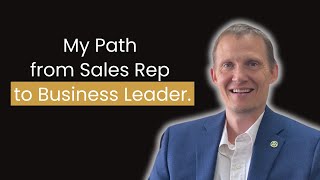
This is a YouTube video titled "Budgeting Strategies for Business Leaders to Maximize Growth and Efficiency with Aaron Goss" published in October 2024. It features a detailed interview and conversation between Paul Barnhurst, the host known as the FP&A Guy, and Aaron Goss, a business leader and former president of Brothers Paving and Concrete. The discussion covers topics related to financial planning and analysis (FP&A), budgeting processes, leadership, business partnering, and the evolution of financial strategies in private and private equity-backed companies. The content also includes personal anecdotes, career insights, and advice for FP&A professionals, emphasizing the importance of empathy, communication, and understanding the business beyond numbers.
What does great FP&A look like to you?
Good FP&A means my controller, my CFO can show me the trends, show me the patterns. They don't pin me down for 45 minutes on something that should take eight or nine minutes. There's already a culture problem for most companies between the finance team versus everybody else. And that cultural problem is this great.
FP&A starts with understanding the business and building those relationships. What you see is the number one technical skill.
B accurate practice, how to present the numbers.
So what do you see as the number one human skill that FP and.
A professional need to master empathy towards other employees?
What advice would you offer to our audience?
Yeah, just again, be a partner First.
FP and A Guy here. Have you ever wanted to level up your FP&A skills? Then check out the FP&A guys ultimate course bundle at the FP&A guy dot com. That's the fpanda guy dot com and use code podcast to save 25% get started learning today hello everyone. Welcome to FPA tomorrow where we delve into the world of financial planning and analysis, examining its current state and future prospects. Paul I'm your host Paul Barnhurst, aka the FP&A Guy and I'll be guiding through the evolving landscape of FP&A. Each week we bring thought leaders, industry experts and practitioners who share their insights and experiences, helping us manage today's complexities and tomorrow's uncertainties. This week I am thrilled to be joined by Aaron Goss. Aaron, welcome to the show.
Thank you. Glad to be here.
Yeah. Excited to have you. So just so the audience knows, I've known Aaron, what's it been, about 30 years now?
Yeah, yeah.
Aaron and I met when we were in California. We both did missions for our church, Church of Greece, Christ of Latter Day Saints, and we were companions together for a few months. So Aaron and I have known each other for a long time and really excited to have him on the show. So a little bit of background about Aaron. Aaron comes to us from the Virginia area. He graduated from Brigham Young University with his Bachelor's degree and earned a Master's of Public Administration from asu. He A few years ago he started as a part time sales employee at Brothers Paving and Concrete, then moved into a full time role as their Chief Revenue Officer. Did that for about eight months and then was asked to serve as President of Brothers Paving and Concrete. And today we're going to talk about some of his experiences in budgeting. Going from a small company to privately Held and one that continue to grow, how those things changed for him as the leader of the company. But where we want to start, Aaron, is I'd love to ask you from your opinion, you're working in a budgeting and forecasting. What does great FPA look like to you? What. What is a great business partner for you?
So for me, which I had the eyes of, of a president or a CEO. And so I think that looks differently from that viewpoint than from, for instance, a controller or cfo. And so from my viewpoint, good FPA for me means you're. It's not going to weigh me down on a bunch of details and formulas and things that are important to that entity, meaning the finance department, but not important to me. Not because I don't care, but it's important that there's enough details that is helpful but not so much as weighing me down. And then second and thirdly for me, good FP&A means my controller, my CFO can show me the trends, show me the patterns, obviously give me basic points like revenue and profitability, things that I always care about. But again, they don't pin me down for 45 minutes on something that should take eight or nine minutes. And that's what good FP&A looks like is they get to do the work that they do, but don't dump it on me. Let me do my job as CEO. And I know that's probably unique from a CEO or President's viewpoint, but that's what good FP&A looks like is. Show me the data, show me the trends, show me the focal points, but don't dump stuff on me so that I can go ahead and do my broader vision and broader role.
I'm curious, did you feel like often they would dump data on you? What did that look like every day?
And I had great, great team members. The nature and the personality of an FP and a person is details and data. That's just why they're good at what they do. And I wouldn't want to change that. The nature and personality of a great CEO or president is a very wide lens of you got HR issues and you've got, you know, equipment issues and you got client issues, etc. And so you need to balance each other out with those different personalities and roles. And so it was a constant struggle between them catching on to my vision and me appreciating theirs, which meant there was a constant refinement of they wanting to give me more details than I wanted, some of which I needed most of Which I didn't. And me reacting to that with appreciation but also being able to guide that.
You know, And I would agree with you, finance people by nature are very detailed. That is something I have got caught up in more than once. Or like, just give me the big picture, stop with all the details, I don't care. You, you can definitely relate to that. Why don't you tell our audience a little bit more about your background, kind of how you ended up, you know, serving in that role as president. I know you don't have a traditional background where you spent most of your career in corporate America, so to speak. So I'll take a minute and just tell a little bit about yourself.
Yeah, so right out of college I went to an IT firm called Tenfold. It's just an entry level guy and, but I was in the client appreciation or service sector and had a great experience that included some overseas experience with, in London. And after 9 11, that changed a few things. With that I went into consulting for a little bit into real estate. And then from there I was invited by the Church of Jesus Christ of Latter Day Saints to become an administrator and a teacher in their educational department. That surprised me because I had never considered that, but it felt right. So we did. And that went into about a 20 year career stint that I really enjoyed. I found I was really good at and near the 20 year mark of that. A good friend of mine said, you know, you'd be good at sales. And that made me laugh because I, I, I disagreed. But after three or four years of, of gentle prodding, I, I tried it part time and found I was pretty good at it. And, and in fact that led to me going from part time sales to CRO. In fact, just to be vulnerable and show how ignorant I, I was at the time is when he asked me, hey, we're gonna go national with this, with this company. Would you like to be a CRO? My first question was what's the CRO? And I mean I laughed myself with that. And he says a chief revenue Officer. And then my next question, Paul, seriously, was what's the Chief Revenue officer? And so they went from there. And so I learned quick. What I learned though was my skills in the educational field and then the IT field before that really do translate over to the business world very quickly. A great leader, a great coach, a great communicator is great. Whether you're in the insurance or the airlines or the real estate, it didn't much matter so long as you're honest, had integrity, could Learn quick, humble. And that's not always true with the technical things such as fpa, FP and A. You need a deep, broad understanding of obviously what you do with the numbers and the spreadsheets and the financial tools. With general leadership, it's a different skill set. So I could transfer over and, and they gave me a shot and I didn't do too badly. In fact, we did great as a team and we're able to make go from 49 million to 71 million in two years and from 6% to 16% profitability, and we're really proud of that. But, yeah, my, my road from here to there was a little bit unique. It wasn't decades in the making.
And thank you for sharing. I appreciate you sharing your background. I know it's, you know, unique to many of the guests we have. So I want our audience to hear that there's a lot of different paths to where we end up and I'm going to give you a moment to have a little fun here. So as I mentioned, you and I have known each other for 30 years. So any fun stories or experiences you want to tell the audience about me that they might not know?
Oh, Paul, that's a dangerous question.
I know. It's not the first time I've done this. I did that with my partner, my training partner too, and I got, I got. Go for it.
All right, well, I'm going to share a mission experience that we had together on. So I, I trained Paul on the mission for, I don't know, we'll read together for about two months, three months, something like that.
Two, three months.
And I think it was either the first day or the second day that we were together. We went and got you a bike and you wrecked on the bike by you. You drove over a manhole that was partially open. I don't know if you remember this, Paul, but.
Oh, I, I remember wrecking. You had to remind me of that.
I had been on my mission for about a year or so. And so number one, I would. Had ridden my bike more. But number two, I'm just a lot more athletic than Paul. And so it was a funny memory. I can still see you go over the handlebars onto the street, sprawling out books and everything else. And you're, you're great natured about. You are always great natured about everything you did, but it was a funny memory I have of you really just embarrassing yourself in front of me on that first couple days. But, you know, from there you've. You gotten me back Plenty of times I have been thoroughly embarrassed in front of my family and friends because of you. And I. I deserve probably every moment of that. But that, that's a memory I have of you that is. Is pleasant and funny still today. Today.
All right, there. There we go. So now everybody can picture me going over the handlebars. We'll get back to fpa, but I figured we'd take a moment and have a little. So you and I chatted ahead of time preparing for this interview. And, you know, we talked about the budgeting process and how different it was when you started at the company versus when you were bought by private equity and just kind of the changes that happened. So can you talk a little bit about first what it was like when you were privately owned, what the budgeting process consisted of?
And I would say my tenure there as CRO and president was split about half and half between private owned versus backed by private equity. And that was my experience budgeting wise when we were a private company. We ended our last year as a private company, about almost 49 million. And really our budgeting process was, what did we do last year and what does our gut tell us again for next year? And we did budgeting year by year, and that was about as scientific as it got. And to be fair, it was good enough to grow from 0 to 49 million over the course of 35 years. Right. So I'm not necessarily knocking that, but the opportunity to become sophisticated and refined and more detailed was obvious to me and to others. And so really that's what it was before. And then after we were bought by PE firms, they really forced us to say, you guys gotta be a lot more professional and better and more detailed. And we did, and it worked. And so without making fun of what we did before, that was really the difference. And I've talked to a bunch of other presidents who are still privately owned. Most of them don't want to admit that that's what they do when the reality is even when they have a controller or cfo, they still, as the president, when they finalize the budget, that's still what he or she is doing. Even though the controller or CFO may be doing something more than that, the controller who approves that budget is still kind of just looking at past numbers, checking the gut and signing off on it. And so we moved on to, to better ways after that.
And I'm curious, do you think you could have done better had it been more sophisticated with the private company? Obviously you scaled and you grew, but maybe Talk about what you saw after seeing a more sophisticated process as some of the strengths and weaknesses to what you were doing.
Yeah, absolutely. We could have done better. And so some of the things that we obviously moved to that we could have been doing before and would have helped us just change the process. Again, we don't want to change the vision and viewpoint of the CEO or president versus the controller. We want them to have the different viewpoints. They have, like we just mentioned, more details and data on that controller side and more the wider view on the president side. But a couple of things we could have done earlier that would have made a big difference. For instance, making and forcing the CEO and president, if not this controller, CFO or whoever else may be on that team to fill out certain data points and forms in order to finalize and approve the budget. An example that, that we did is for instance, instead of saying, hey, you did a revenue of X amount last year and so we think you should, you know, grow 10% next year or we think we can, or something to that effect, asking the question why, for instance, where are their sales going to come from? Or if there's cost cutting, where do we anticipate that instead of just the gut check? Yeah, we're going to figure it out one way or the other. I can't anticipate the politics or the economics or whatever else. And that's very natural for that private company to do, mainly because they don't have to answer to anybody. If they're wrong, then they're wrong. It's embarrassing. They disappoint themselves and move forward. Once you're backed by P and E, you're afraid to look bad and you're afraid to get fired or whatever it may be. Right. And so just filling out a certain process of forms of why do you back that up? You don't have to fill out, you know, pages and pages, but at least give some data to back up your budget and why you approved it and how you came to that. And that can look differently for different companies. But so our brother's pavement and concrete, for instance, we went from me just approving it, signing off to it to I had about a three page document that I needed to fill out that either backed up or explained our budget. And that turned into really a whole back and forth between me and the national side called Pave America. And it just got better and better. So I think I've, I rambled on long enough. But that's one thing that just make sure you refine the process so that you don't overwhelm the CEO, but that he or she get more involved with that budget and not just lean on it and not just do a gut check.
This sounds like, if I'm hearing you right, the biggest change was from the gut check of, hey, I think we could do 7% to really having to put some planning behind how you're going to get to 7%. Not just, hey, we're going to accomplish 7% and we'll figure it out throughout the year, but more, we think we can get 3% from raising prices and 2% from new customers and those type of things. Really more digging in and having a plan of how you're going to accomplish it.
That's right. And I'll give you the dynamics of, again, where it becomes more obnoxious versus helpful. My controller, who I really love dearly, his name is Bill. And if, if Bill would say, hey, Aaron, you think that you're, we're going to cut costs by 2% overall. Where does that come from? And I might say, yeah, I've already talked to our logistics manager and our shop manager, and they both think that they can cut it, you know, $1 million next year or whatever. That, to me, as CEO is good enough. I've already talked to those managers. They've given me a number. His instincts will say, yeah, how are they going to cut it a million dollars? Where is that going to come from? Which is a wonderful question that I don't care about anymore. That's what I'm paying them to do. And so there you're right. That 3%, 7% growth or whatever it is that needs to be shown, where's it going to come from and how. But the amount of details needs to be very thoughtfully thought through so that it is sophisticated, not obnoxious, but yet still helpful. And that will look differently on the CEO version versus, you know, the, the FP and a team and then the others. So, yeah, but absolutely.
So do you think in that situation, let's just take that example. Hey, logistics is going to give you a million and your floor, the other group's going to give you a million. Is that something where ideally you give that to the cfo, he would ask, hey, what's the details behind that? So you can figure that out. How do you view it?
No, no, that's a great question because I'll tell you what happens when you do that. The CFO then looks like he's got authority over those other managers. Now, if he does, then, yes, if they report to that cfo, he or she, then yes, then CFO should ask that question. If they don't report to the cfo, that's they report to the CEO directly or something like that, then later on that CEO should say to, let's say the logistics manager, okay, you need to get more details to the CFO so that he or she is aware of that and they can follow up. But I'll tell you, if the CFO does that directly, that creates a culture problem. There's already a culture problem for most companies between the finance team versus everybody else. And that cultural problem is this. Most of the finance team never get out of their seats or their office. They don't go on sales calls. They don't go out to look at the equipment. They don't because they're really busy at what they do, right? But that puts off the idea that they don't really understand how the business works. All they care about are numbers and spreadsheets. And to avoid that, I think it's really important that CFOs and controllers do not go to the other managers asking for more details unless that's been instigated by whoever their direct reports are. And in some cases, you know, they do report directly to the cfo and that would be appropriate in those instances.
FP and a Guy Here Today I want to talk about the FP and a guys ultimate FP and a course bundle. This bundle includes over 10 hours of content recorded by Ron Montero and myself, many templates and great lessons to make you a better FP and a professional. The content includes FP and a business partnering, how to manage tough conversations, build world class relationships and hold the business accountable. Includes Modern Excel, which is a real game changer for the way you'll work in Excel. Excel Tables the gateway to modern Excel Power Query, a game changer for transforming your manual processes and loading data and then dynamic arrays. Next we cover modeling design principles. In this course we talk about the importance of designing models in a certain way and how important it is that you think about design. And last but not least, driving value through smart analysis how you can conduct data analysis to be a better FPA professional. Go ahead and sign up for this bundle@the fpnaguy.com that's the fpnd a n-d a guy.com use the code podcast to save 25% get started learning today. Sure, I get what you're saying from a leadership standpoint and I appreciate you talking about finance because one of the biggest things that I see between good and great finance. Great finance understands the operations and partners with the business average. Your good finance gets caught up in the numbers. And there's a difference. You'll find, and I would argue what I've seen is construction industry, which I would kind of, you know, consider you a part of. You're doing some of those type of things. And some of the industries that have been around a long time tend to be slower in adopting that business partner mindset of finance. You're seeing that a lot in technology and SaaS, and that, that, that changes the dynamics in the culture when you can do that, when they can be viewed as a business partner. Because I agree with you and I've been in roles where finance is looked at as the police or somebody that really doesn't understand the business or just back office. It's like, just leave me alone, let me do my job. I don't care about the numbers. And it's, how do you find that where it's. You're all a team together, that's when you're most productive.
That's right. I would say if that, you know, one of your last questions that you told me that we probably ought to discuss, which I hope we still do finish with, is, you know, what should FP and A do to become great? Right. What are some of the takeaways? And to be a partner as part of the solutions, not just a reporter of data and not just what other people have to do. And so you mentioned construction and how that might be slower to adapt to that. I'll give you another one though, is in the education industry. We would talk often with our budgeters and so forth, and they wouldn't have, they wouldn't have much of an understanding of what it's like to be in the classroom or to work with the volunteers and so forth as the president. The very first thing I did for the next six months was I sat down and I sat all day long with my AP person, with my AR person. I would go all day long on sales call with the guys that went out there to the concrete and asphalt. I was in the shop. I didn't try to become an expert in any of those fields. That wasn't my business. Right. What I wanted them to do is know that I was trying to understand why their job was hard. That is impossible to do as a, as a president or as a controller from your desk. And so if there's anybody listening to your podcast or watching it now, there's one thing that you can do to take it away, say look for opportunities. If it's a half an hour at a time, it's an hour. And I don't care if you're IT or SaaS or whether you're in construction. The concept is the same. And so that is a huge win because then when you go to the table of look, our costs are too high or revenue and this is how we do it. Distill the culture is you're looking at spreadsheets. You don't understand how hard it is to go out there at 103 degree weather or when you have an angry teenager or whatever it may be. Right. And that just brings down the walls and then you find the solutions a lot faster.
100% agree. I've always said, you know, great, great. FP and A starts with understanding the business and building those relationships, understanding what others are going through. You're not going to be an expert in every area, nor do you need to be. Just like a president doesn't need to be. But the better you understand it, the more you can have those conversations and empathize, the more they can look at you as a partner versus just a guy they got to submit some numbers to that they want to get, get off their desk so they can go back to work.
Exactly. In fact, when we worked with private equity, Paul, I can't tell you how many times those private equity employees who are great people would come in and say, I understand your business, I've been studying it for a year or whatever it is. But they would claim understanding because of a bunch of data. It was a great start, fantastic. But the instinct from every single person in the company was you don't understand our business. All you do is you understand our financial business, which is a very small part of what we do, a crucial part. But yeah, we're kind of beating that dead horse. You're absolutely right.
Yeah. And that doesn't surprise me in private equity. Right. Many private equity organizations are very numbers driven. What are the margins, what are the benchmarks? And okay, I understand the business. Here's the benchmark you need to get to here. Right. And it's, it's an easy way to manage. And if your business can accept that and deliver on those numbers, great. But it's not a way to build those relationships which are, are two different things. So I, I'm curious, if you were to start over as say a president at a company tomorrow, what would you do differently in budgeting and forecasting or how would you like to see the process work?
Ideally, that's kind of funny. So, as you and I, I resigned, you know, last month. Wonderful experience. And we left on very, very good terms. But I'm about to start my next phase. I haven't decided exactly where that is yet, but I ask myself that question all the time, which is, okay, I'm about to be another CEO of a new company or president, depending on which way I want to go here. What will I do differently? And one of the things that I will do differently is as a CEO, I will understand financial documents, I'll understand valuation, I'll understand what makes it difficult for my finance team to do their job well, and I'll understand how to do finances. Not because I'm going to correct them or anything like that, but I need to know why it's hard for them to serve me and the company so that I can either help them or, or I can prevent chaos from ensuing. And so I'll give you one, one quick example of that. On the sales side, our average project was about $60,000 per project. And so at the end of each project, the salesperson would need to submit, you know, the final numbers of the costs and whether it went well and did we get paid, all that kind of stuff, right? And sometimes they're slow at handing in all that information, and the finance team wants that information at the end of the month or whatever it may be. And there's a conflict between that reporting. The sales people are frustrated because they've got 17,000 sales calls coming in at any direction at any time. They're on the road. And so to get pinged, you know, every hour for, from the finance team saying, where are your numbers? We need you to report these, otherwise we're in trouble. Right? That's fine for the first five months, but after a while, they just ignore each other and they get angry because the sales guy is going to get commissions regardless. They made the sales, right? In the meantime, the finance team is like, we're going to get in trouble because our data is not going to be accurate or whatever it may be. And so they just, they're in a natural conflict with each other. As the president and CEO, knowing that's the pinch point, at least one of the pinch points, I learn quickly what I can do about that and what I should not do about that. Both sides want me to correct the other, right? That's. That's the instinct. If, if you can get her or him to do this, then that. Then we're all good. That's not really the answer. But as the president I of my next gig. I will be making sure that my finance team is clear with me on what makes life difficult from them day to day. And then how can I be a partner to that solutions, not a referee and not you know, the bad parent that goes around correcting everybody else on behalf of the finance team. But I would do that on probably the first two weeks of being my next, my next position.
I, I, I appreciate what you said there of you know, not being the rest the referee or policeman, but understanding the pain points and how do you help solve them? I mean I've worked with sales people and I've dealt with trying to get numbers from them. But you know, I found it always worked best when I built a good relationship with them and I knew him well enough that we could actually talk and we were friends. Like I'll give an example, dealing, you know, working with cells. I took a new, I was promoted into a new role and one of the things I had to do was approve any cells that were made over 10% off list discount. Right. So if it was over list I had to go through and I quickly found out what had been happening because the system was set up in such a way that they could sign the contract whether I approved it or not. So I rejected one and they called me like well the customer already signed it. Why am I approving this? Like this is stupid. And you know, I corrected that which didn't make the salespeople very happy. And some of my let go through but we got to the point where started having conversations even beforehand say here's what I'm looking at doing, here's why here what I think the long term benefit is. And sometimes I might say yeah, that makes sense, let's go with that. Other times I'm like look, the margins still don't work. That deal doesn't make sense and here's why, let's discuss options that we could do. So it became more of a conversation versus me just being a policeman where okay, that's 12%. I don't like that. You got to get two more. How do you know the customer? Why does that matter? They're trying to trust their judgment and not just, you know, reject everything. And I found over time that worked well. Even though I will admit many of them hated me at first because I played a little bit of the policeman. But it I also really focused on that relationship side and how do I make sure they're getting their needs met while still meeting our margins and the overall businesses needs and it's, it's a balancing act.
Yeah. And I'll give you another one. Within the finance department, it's the same concept. When you're the referee or the policeman and it works because you get the behavior you want out of it, the organization comes to depend on that person as opposed to the process. Right. And so when the behavior will stay the same in a negative way so long as they think they can. Right. But when you can help that solution and that team mentality that when that happens, then it is a solution regardless of whether you're involved or not. And so within the finance team, for instance, let's say AR and AP are at each other's throats, right. Because they have different mission statements. In theory, they're together, they want to work as a team. But every now and then resources can be scant. Right. Or time or whatever it may be. Right. And so once again, they may go to their CFO complaining about how that team, Arkansas is doing this and AP is doing that or whatever it may be. Right. Same exact concept to say great cfo, I do need you to take care of it. I don't need you to go in and slap people in the hand. People put in timeout. Sometimes we do discipline, we fire, we hire. But the goal is to make the team cohesive so that they are working together so that you don't have to go in the next 20 times and do that. That's. Those are the kind of things that I learned in the other entities. Right. Especially if you want to learn that really fast, go live with a bunch of high schoolers in a classroom for 20 years and you'll learn really quick a number of things at least you should. Right. It's not a whole lot different from the board meeting, but yeah, that would be something I do change in my next if I would start over again. And when I do start over again, which is instead of taking a few months to figure out some of those things, specifically with the finance vision versus other managers visions, what my role is and how I can be helpful to that.
Thank you for sharing that. I like that. So we're going to move into what I call kind of some set sections that we have. And the first one is just some FP&A questions I like to ask. So we'll get your perspective. As a non fpa, as a non finance person, what do you see as the number one technical skill that you believe FPA professionals?
Well, the first one is so obvious I'm not going to share a whole lot of thought on it, but that's be accurate, you know, keep yourself and me out of jail.
Right?
So that's a skill set that is so obvious that you can't, you can't ignore it. But the one that I think is, and I think most people on finance teams do understand that, and they try hard to be as accurate as they can. But one that is something that I think a good thing to work on that's not already being worked on is practice how to present the numbers. So many of the finance teams know their numbers and they care about the accuracy, but they're not very good to tell you the truth about presenting them. And here's the real problem they think they are. They think that they're good at presenting them because they're accurate or because they're thorough, because there's a lot of graphs and all this other stuff which is part of a good presentation. But typically the best presenters are on the sales team. That's why they're salespeople. And I would say the finance team could learn a lot from the sales team about what to say, what not to say when you have a window of 30 minutes or 5 minutes or whatever it is to present data, information that you feel is vital and important and when to shut up and when to focus and so forth. That is a skill that needs to be developed generally by finance teams and then vice versa is also true on the sales side. They could learn how to stop cutting corners and fudging numbers just to win over someone or convince someone something. Right. And they could go to no better source than a finance team on making sure that. So there's a lot they can learn from your. But that is a skill set that I would encourage anybody on the finance team to work on, which is how to present. And if you instinctively listen to me now and say, yeah, I'm already good at that, then you're the person I'm talking to. Oh, man, you might be good at it, but go ask the CEO or go ask the person that you present and say, I really need to know. Not if I'm good at it, because many will be honest, but many will tell you what you want to hear because they're nice. Ask them how can I improve with my presentations with you one on one with our discussions with the group when we're, you know, a board meeting or whatever it may be. Right. And that would be a skill set.
I would encourage looking to level up your career and build skills that make you stand out to FP and a hiring managers how about earning a certificate from a world renowned business school? Wharton Online and Wall Street Prep have partners partnered to create an eight week online financial planning and analysis certificate program. You'll learn the art of forecasting, analysis, business partnering and financial storytelling from Wharton Online's world class faculty. Coupled with first hand exposure to technical and interpersonal skills with real world applications as practiced in top corporations. Space is limited, so level up your career today and use the discount code. The FPA Guy 300 to receive $300 off tuition that is the FPA Guy 300 to receive $300 off tuition. Learn more by going to Wallstreetprep, Wharton UPenn.edu I really like what you said there of asking for specific feedback. If you just ask somebody if it's good, probably 80% of people, oh yeah, you did a fine job.
Yeah.
Yes. What could I do better? Or what did you not like? Then you're opening yourself up, which is a level of vulnerability because some may really be very blunt with a lack of filter. But if you're willing to take that, you will get better. Even if it hurts a little bit at first, it shows that you really want to improve.
Yeah. And a classic example is when someone tells you, hey, this is what you could do to improve instinctively. If we say, I already do that, what a great opportunity and just flip it. If someone in the finance team came to me and said, hey Mr. Goss, it would be great if you. If my instinct was I'm already doing that, shut up. I've just lost the opportunity to really hear what they're saying and to maybe add value. That humble characteristic is really powerful. And so yeah, do it because you'll help yourself and the team. Even if you, if your instincts say, yeah, that's not accurate information, it may not be, but even if it's perceived, it's valuable to listen to and contemplate.
Thank you, I appreciate you sharing that. So what do you see as the number one soft or human skill that FP&A professionals need to master?
Well, we kind of already mentioned it and this is specific to fpa, but empathy towards other employees and so understand why it's difficult to be the tech guy, meaning the technician or whatever it depends on. Every company is different. Right. But do whatever you can to break out of your mold and see from their point of view, which is not numbers and spreadsheets. Very few people besides the finance team live on those spreadsheets. And so get out of that for the day, the hour, whatever it is, and shut up and Just listen to what it's like to be a mechanic and get your hands greasy. I know you're not going to be a mechanic, you're not going to fix whatever it is they're fixing. But just the experience of doing that for whatever it is that you're allowed to do that will allow you to understand why after 10 months or 10 years, they're still struggling with whatever it is. A great example is if in the finance team they're saying, we've been saying this for years and they still haven't done it. That might be true, and it may be true that they still need to do it. But what the finance team hasn't done then is they haven't been able to be influential. And to do that, use your soft skills, get out there and get to understand that by not being a finance person for a while. And that's a, that's a incredibly powerful skill set.
Thank you for sharing. And I know I've been blessed or learned a lot from running my own business. Now I look at finance differently. Right. Seeing all those different experiences changes that perspective where you realize, okay. That some of that stuff you're doing wasn't really important that you may have thought was definitely been a good learning for me. I want to move into the section where we get to know a little bit more about you. So I have a couple questions I'm going to ask you here. What's your favorite or favorite hobby or passion? What do you like to do in your free time?
Some of the top ones include hiking. I love US History. I love hockey. I'm not a player. I used to play some roller hockey and ice hockey. But out of all those, the thing I like to do the most is hike. I mean, I'm sure that those who are viewing this can see I'm walking around right now in a park. I love to go hiking. A good. Whether it's a one day hike or an overnighter, that's my thing.
All right, we'll come back out to Utah, we'll go hiking.
Yeah. Cool.
Alrighty. What is the one book? If you could recommend just one book to our audience, what book would you recommend?
Just one. Just one.
I'll give you two if you want. I'll give you two.
A classic one. Good to great. This is a great one by Jim Collins. One that came out just within the last six, seven years is called Win the Day. It's not a book about FP&A. It's a book about taking your role, which could be CEO or FP and a. Or a mom or whatever the role is and really making it more powerful. And so that's a shorter book by Mark. Oh, my goodness. I should have looked this up beforehand. Look it up. It's called Win the Day. His first name is Mark. His last name, I think it starts with a baby. But it was the most influential book I've read in the last couple of years.
Great. I like that. Another one by Mark that kind of along those lines, if you ever read it, is the Fred Factor by Mark Sanborn.
Yeah. Yeah. Another good one.
All righty. Favorite travel destination. If you could go on a vacation tomorrow. Where are you going?
Kind of boring, but I. Because I like to hike. I would go to the Shenandoah Valley here in Virginia and take an RV or, or have a cabin or something like that and hang out for a week. A bunch of rivers and lakes and, and just go see some black bears. That's my thing. I. It's. Most people more exciting would go to Vegas or Miami or Istanbul or, you know, Beijing. I'd go in my backyard.
Yeah, I, I'd been to the Shenandoah, the national park there once, and it was right this time of year, October, just gorgeous with the fall leaves. It was a fabulous trip. So I, I can understand why you'd like that. That'd be fun to spend a week there.
Yeah, it's awesome. Yeah, I'm kind of a boring guy. I drive a. A Prius or a minivan. You know, I'm, I'm semi retired, Paul. I, I'm. I've done well. I like really boring things like the Shenandoah Valley, which is quiet. I like it.
I'll vouch for that. I always found you boring. Oh, wait, did I say that out loud? No, I say that jokingly since we're friends.
Good friend. But.
Next question. If you could have dinner with one person alive in the world today, who are you taking to dinner?
There's an individual. I won't give her name because I don't want to embarrass her, but severely physically handicapped, and I know of her. We've met three or four times. She's here in D.C. very busy and very intricately involved with the community. She's been on board of directors both for businesses and non profits. I really admire anyone who can be extremely successful, however we define that without needing the accolades that come with it. So although I know her and she and I can communicate by text and phone calls, so forth, I would love to. To spend three hours at dinner because she inspires me. And it's not a famous person. It's just someone who is good to the core. I would trust her with my bank account. She could watch, you know, my grandkids or whatever it may be. That's how much trust I have in her. And yet she's had to overcome so much, and by and large, the world does not necessarily recognize her for that. And she is perfectly at peace with that. And I really admire people like that and I would love to have dinner with her. So I'm sorry I can't give you.
Your name, but that's the person that is totally fine. We don't. I'm guessing most of our audience wouldn't know the name if you said it, so I understand. I appreciate you sharing that. We're going to move to the wrap up here. Just have two questions left for you, and then we'll let you go so you can go about your hike there without having to talk to me. So the first one we hit we talked about earlier, but I'll give you an opportunity to elaborate a little bit. You know, we talked about. What advice would you offer to our audience to be better, you know, business partners, FP and A business partners. Anything you want to reiterate there?
Yeah, Just again, be a partner for solutions, not just a reporter of data. So I made the habit of every week to have a one on one with my cfo.
And.
And that was usually about an hour. And so once a month we would go over the P and L and the other three weeks we would talk about other things, whatever was on his agenda or my agenda. So that one hour of time was very well spent. It was a great investment because I would force him to turn off his phone, I would turn off mine, and we'd put a sign on the door. And so they. People knew to come and interrupt us if there was, you know, an accident or an injury or something like that, but not for anything else. And I did that, by the way, for four others as well. My CFO was very, very important to me and Bill understood that he was. His role was absolutely critical. But I don't know if his role was more critical than my operations manager or my sales manager. And that was a cultural change because CFOs, because they have, you know, the purse strings and because they have access to data and things like that. There is a natural assumption that they are more important than others. And that might be true, but it might not. As a man of faith, I love the teachings in the Bible and of Jesus and so forth. And one of those things I take to heart, which I would encourage the financial teams and how to be a partner for solutions and not just a reporter of data, is to know that the greatest leadership is one of service. How can I be of value to you? And that's something that is not a business strategy for me. That is part of a philosophy of life that I carry into business with me, and that's served me quite well and served my clients and my employees quite well. And Bill, when he caught on to this, that wasn't me teaching him. I think he already had it. But we refined each other in that he was able to go from cfo, all numbers go through me, and I help you other team members and managers with your numbers to make sure we do a good job in the company. It went from that to, how can I help you be successful? That pivot of not only behavior but attitude made it so that the conflicts died down, both the obvious ones and the silent ones that were there that you couldn't quite talk about. And it allowed us as a company go from 49 to 71, from 6%, 16%. Our safety scores went up, our ability to have lower turnover was improved, and we just, we thrived. And it was in large part because of the five or six leaderships, and one of them was my CFO that was able to become that solution as a partner as opposed to just someone that brings data and bad news or good news that others have to act on because he just. He can't be the manager. He's only the finance guy. And. And that shift was just incredibly powerful for the company.
Thank you, Aaron. I. I really appreciate that answer. And I love that mentality of how can I serve? Great, great value in that, of how can you help others achieve their full potential in any way you can related to your role? I mean, obviously, there are some things that may not be in your purview, but the more you can help people, you know, free up their time, make it easier for them, serve them, the more successful you're all going to be together. I agree with you. I've always been a big believer in that philosophy as well. And we'd just like to wrap up first this. Thank you for your time. I've really enjoyed chatting with you today. Last question I have. If someone wants to learn more about you or possibly get in touch with you, what's the best way for them to do that?
So I. I think your assistant asked for my Facebook page on there. I don't know if you can put that in the podcast somehow, but yeah, we can. LinkedIn is probably the best one and then anyone can email me if they want. I'd love to chat with any of your listeners if they have further questions and so forth. So my, my email is a goss v a mail.com as VA as in Virginia. So yeah, give me an email or contact me on LinkedIn and love to chat.
All right, well, thank you again. Thanks for joining me and enjoy the rest of your day. Aaron, thanks.
It's good to see you again. Paul.
Yep, Good chatting.
All right, bye bye.
Thanks for listening to FP&A tomorrow. If you enjoyed the show, please leave us a five star rating and a review on your podcast platform of choice. This allows us to continue to bring you great guests from around the globe. As a reminder, you can earn CPE credit by going to earmark cpe.com downloading the app, taking a short quiz and getting your CPD certificate to earn continuing education credits for the FPAC certification. Take the quiz on earmark and contact me, the show host, for further details.
More from Paul




Trust and Leadership Lessons for FP&A From 100+ Top Leaders with CFO Jon Laudie






