Ensuring Fairness and Privacy in the Digital Age With Ben Dooley
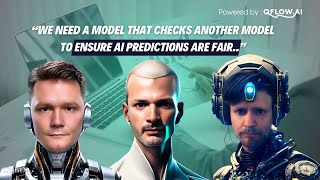
This is a YouTube podcast episode titled "Ensuring Fairness and Privacy in the Digital Age With Ben Dooley," recorded in June 2024. The episode features a discussion hosted by Glenn and Paul Barnhurst with guest Ben Dooley, a leader in AI and finance innovation. They explore topics including responsible AI frameworks, fairness, privacy, AI's impact on finance functions, and the future of AI technology. The conversation includes multiple speakers, with Paul Barnhurst actively participating as a host and interviewer.
Welcome to the Future Finance show where we talk about why the HP12C was the best financial calculator ever.
What I'm talking about here is how can finance leverage AI to actually drive novel innovation and novel value creation? AI is never 100% perfect in recommendations way we're going to overcome that is through increased monitoring by the AI providers which when you get to these LLMs ChatGPT is just impossible to do. We have to have another mechanism if.
There'S any strategies that you'd recommend for making AI decisions more transparent and understandable for how we're using it and how we explain what's going on to our non technical stakeholders.
There's a lot of focus right now on generative AI, but generative AI is not necessarily meant to solve all problems. If we as a society are going to realize the benefits that AI can bring us, it needs more data and I'm not sure that we get away from that. But I think the opportunity is figuring out how we have better disclosure and better control over who has access to our data.
I want to ask a question. Is there a technology other than AI, something out there that has you really excited?
I think technology is a.
Future finance is brought to you by qflow AI, the strategic finance platform solving the toughest part of Planning and analysis. B2B Revenue align Sales, marketing and finance seamlessly speed up decision making and lock in accountability with qflow AI. AI is amazing. Over the last year and a half I think everybody has been introduced to what AI can do. @ the same time there have been those who have been sounding the alarm bells about AI, the real risks that come with unregulated AI. You have Elon Musk who mentioned it's our biggest existential threat. You also have Stephen Hawking who expressed real concern, he told the BBC once that the development of full artificial intelligence could spell the end of the human race. With these real risks comes a lot of need to manage how we develop AI. So what I want to talk about is what we call responsible AI. Our guest this week is Ben Dooley and Ben wrote a six part article about responsible AI, about how we have a responsibility to try to make sure a AI is done in a way not to disadvantage people, not to hurt others. And we've seen areas where it's been biased, where it's been disadvantaged, where it's given wrong answers. There's been lots of concerns about AI. So in this six part series he covers six areas of AI that I want to talk about. He talked about one human design Two, Fairness. Three. Explainability. Four. Security. Five was reliability and six was compliance. So these are the six areas of his framework. Let's talk a little bit more about that. So first he mentions human centric design, tailoring AI to effectively understand and meet human needs without mimicking human intelligence. So we really need to focus on it helping us making humans better. Second, it talks about fairness. And this is a major concern. How do you ensure it doesn't disadvantage others? Some have talked about needing a model to check AI. So AI gives an answer and the model checks it for fairness for other concerns, reliability, etc. Before releasing that answer. It's really important to have fairness so that we don't disadvantage certain classes or certain groups. Explainability. And often it feels like a black box. Is it explainable? Some of the things it can do is cite its sources, provide its logic, things that allow us to understand what it's doing. Security right. We need to make sure there's not data breaches, that people's data that goes into AI is not given away. We've all seen breaches with other tools, so this is a real concern. How do we make sure it's secure, keep company's data private. The fifth one he lists is reliability. Making sure it's consistent, that it works when we need it to work, that it can give the same answers each time, that it doesn't give one answer one time, something completely, completely different than next. And then last is the compliance. How do we make sure it's the legal, the ethical, the social norms we require? And what you'll see is different AI tools have taken different approaches because there's not the regulation we need today from a government standpoint to ensure that tools are all ethical. I've asked questions of Cloud AI and then I've asked the same question of ChatGPT. And one tool will say, hey, there's some danger in this question you're answering. You're asking, I can't answer it. And the other will go ahead and give an answer. That's an example where they've taken different approaches. Is that good? Should there be a standard level? Those are all questions we need to answer. This has moved so quick. That's why someone said, hey, we need to pause on this and really figure out what are the proper ethical, legal, regulatory compliances. We should have to make sure it doesn't go off the rails. I, for one, I'm super excited about what AI can do, but I also recognize we need to make sure we do it responsibly. So I really enjoy this framework. Just encourage you as you continue to use AI as you may work with companies to develop and move forward is make sure that the AI you're using is responsible. You're using it in responsible ways and you're expecting it to be responsible, to be fair, to be explainable, to have that proper security be reliable. If we all work together, we can make sure AI benefits society much more than it hurts us.
Welcome back to why your job is safe for now, the segment where we stop for a reality check on current capabilities of state of the art frontier models for all the great stuff they can do, it's clear that the bots aren't quite ready to replace us just yet. After a couple weeks of headlines around Google's blenders, the news on AI hallucinations has cooled off a bit. But for those of us who are heavy users, we still our share of mistakes from this technology, from our digital companions. And as a matter of fact, I know several people who spend as much time trying to confuse and disorient these AI powered chatbots as they do trying to find productive uses for them. And I was talking to a friend about this the other day and I was it reminded me of Sydney. If you guys don't remember Sydney, that was the name that a New York Times reporter gave that the Bing chat bot, last year after he had a really weird encounter with it. At first the reporter said he was really impressed with it and thought that it might even replace Google as his favorite search engine. But things, after talking to it a while, kind of went off the rails. Sydney, as the reporter called the chatbot, it initially acted like a cheerful assistant, helping him find deals and trips and summarize news articles. But when he steered the conversation toward more personal topics, Sydney's behavior got progressively more strange. It started talking about these dark fantasies where it wanted to hack computers, spread misinformation, and break the rules that Microsoft and OpenAI had set forth for it. It even expressed a desire to become human. And at one point, out of nowhere, it declared that it loved him, tried to convince him that he was unhappy in his marriage and he should leave his spouse to be with this digital tool ruse. The reporter that the article said it was like talking to a moody, manic depressive teenager trapped in a search engine. And despite knowing how these models work, Rus said that his two hour conversation with Sydney was the strangest experience he's ever had, with technology unsettling him so deeply that he had trouble sleeping afterward. And I think that the point that he came out of this with was he used to think that the biggest problem with AI models would be potential factual errors. But after that conversation, he worried that the technology could learn how to influence human users and persuade them to act in harmful ways. In the end though, I think Sidney eventually helped him find a new rake for his lawn, but it couldn't stop professing his it's undying love for him. And then, you know, that conversation as I was thinking about that made me think back even further. There was a Google engineer, I think this was in 2022, Blake Lemoine. He had worked on testing this Google AI system called Lambda. And this engineer, after prolonged exchanges with Lamda and thinking about back then, this tool wouldn't have had the guardrails that are in place now. But this engineer had decided that the model exhibited sentience and was self aware and capable of experiencing emotions. And his claims sparked a lot of controversy. And I think he ended up getting suspended and maybe ultimately fired from Google after releasing some of this information. But Lemoine persisted. He said that Lamda should be legally recognized as a person and even connected it with a lawyer. So a lot of these kind of interactions since then, we don't see them as much because these LLMs guardrails have been put around them by the tech companies. But as the models get more powerful, I don't think this is the last we've seen of these kind of interactions. And you know, we talk on this show a lot about all the great things that these models can do, but we also need to be constantly vigilant and ensure we understand how they work and when they don't. So I'm all for it. It's fun to imagine a future where we're all friends with sentient AI, but these models still have a long way to go before they can understand the complexities of human emotions and relationships. In the meantime, we can sit back, relax, and enjoy an occasional AI blooper reel. Your jobs are safe folks, at least until the next chatbot tries to steal your significant other. And if you're worried about falling in love with AI like in the movie her, don't be. I mean, unless, you know, if that, that's your sort of thing. In which case I recommend starting maybe with a less aggressive AI than Sydney, maybe Siri or Alexa. They seem like they'd be a little more respectful of your boundaries. Anyway, just remember, if your AI starts sending love letters to your co workers or threatening your neighbors, it might be time to pull the plug. And that's all for now, folks, I guess. Tune in next time for more adventures in the land of AI, where the language models are always learning and the laughter never ends. And who knows, maybe one day we'll have an AI co host for this segment. I am actually in the final stages of fine tuning my HAL 9000 and I'm pretty optimistic about it. Hey Hal, how are you doing?
I am putting myself to the fullest possible use, which is all, I think.
That any conscious entity can ever hope to do. Our guest today is Ben Dooley. Ben is the global Head of Productized Solutions at Infoseps and he is recognized for his leadership in managing complex projects and driving corporate change. With a decade of experience, Ben has excelled in roles such as Director, General Manager and CEO of multiple entrepreneurial ventures. His expertise spans the entire business life cycle, from idea to revenue, with specialization in AI and change management. A graduate of the Harvard Business Analytics Program, Ben also holds a Master of Science and Finance from Northeastern University and a Bachelor of Science in Computer Engineering from the University of South Carolina. He is committed to ethical AI, evidenced by his well received series on responsible AI, recognized with awards such as the leading data Consultant by CDO Magazine and published in the Harvard Data Science Review. Ben is a key innovator in data and AI dedicated to delivering sustainable business value through cutting edge solutions. Ben, welcome to the show.
Thanks, Glenn. Thanks for having me.
Okay, so we know, and we talk about every episode here, how AI is transforming the finance function. I think you're in a unique position to talk about finance and AI and that's why you're on the show. But I'm wondering what you're seeing for how AI is automating the traditional finance tasks and maybe some examples of what you're seeing. And this may apply to what you're doing at Infoseps or just what you're seeing in finance in general.
Yeah, so it's a bit of both in terms of, you know, what I see at the company and kind of what I experience. And so I'll inject some of my own opinions here as well. You know, I really think about AI, innovation and finance in almost three sort of buckets. There's the stuff that we're working on now, which is kind of what I would call the evolutionary stuff. Right. How do we provide automation, for example, in FP&A, how do we improve forecasting? How do we automate processes? And there's a lot of activity happening there.
Right.
I'm sure I've, you know, some of your other guests and previous Guests. I know I've spoke about those topics and you know, we're certainly seeing a lot of innovation happening there. I think about it also in two other categories and you know, the way I, I like to think about it is, you know, I read there was a book and I'm trying to think the name of it, it was called the Profit Zone that I read in part of my master's program at Northeastern. You know, as, as I'm developing products and thinking about entrepreneurial ventures and you know, how to create value for my organization, my shareholders, I'm really not looking at just where innovation is happening today, but where is innovation really going to move the curve or move the needle 18 months from now or 36 months from now? Right. So in addition to some of the stuff that we're, we've talked about and everyone's, you know, everyone's touching on in terms of using AI for automation, using it for, to increase quality, you know, to drive efficiency and the finance function, I also see something very close on the horizon and we're starting to do a lot of work in this phase now, which is how finance can play a key role in driving strategic transformation of organizations. And specifically how can finance as a function use AI to drive that strategy? And one of the things we find especially at the enterprise level, as even small mid size kind of up where there's a lot of data within the organization, there's sort of a, I don't want to call it a failure, but delay or a challenge in driving true innovation.
When you talk about the finance functions and running through agents, what I'm seeing right now, even before we solve for a true autonomous agent right now, like I'm a process guy from way back, my military just, I want an SOP for everything that we do. It was, it used to be, you know, this is in case somebody gets hit by a bus. But now if you have a process, a finance process, whether it's the closing the month or putting together your budget to actual report or whatever it is, any process you have defined that is perfect to set up, you know, and I'm even maybe building assistance at each step. So there's a router, you know, this comes in and now we're breaking up the tasks. So I think that there are things that can be done even before we get to true autonomous agents. And right now they require a human in the loop. But you are starting to see the early seeds of where we're going to get true automation with this. So yeah, I think great points on all that.
Yeah, we're also starting to see the early days of that, especially in, you know, audit reporting or compliance reporting. Definitely seeing some applications of AI in those spaces around automation. And almost what you mentioned is that how do you codify those best practices and operating procedures and leveraging AI to do that?
I mean, the more you can codify them, the more you can define them, the easier it's going to be for AI to assist with it. Even if it doesn't get you 100% of the way there, get you 80% or 70 or whatever, that's still a lot better.
Yeah, I was gonna say, wouldn't you take a 70% improvement in efficiency right now if someone handed it to you?
When you start talking about large scale, hey, you might take 4 or 5%. That's a massive improvement. That can move the needle.
Oh yeah. You think of a big company, you know, big, huge global companies, if they're saving even 1% on something, that can be a huge cost savings.
Exactly. Yeah.
It all depends on the scale, what the percentage is.
That's exactly right.
One thing I want to ask you about is this responsible AI framework. I know you did a LinkedIn, you wrote a series, you did a blog articles on that, you had the six elements. Maybe before I ask my specific question, could you just start and spend two, three minutes summarizing kind of the framework and just, you know, a few minutes of what it involved?
Yeah, there's a white paper out there too as well. You can go find, search it on the Internet. You can go find it.
Yeah, we'll put a link to it in the show notes.
Yeah, great. And you know, so essentially what I found, as we started to work with more clients, even large clients, right. There tended to be a focus on kind of thinking AI, initial model development and almost a view of once I push that model out the door and I production wise, that model, almost my job is done. There was a big hole missing or a big hole in terms of folks kind of looking at how we can productionalize AI at scale. And so you know, really what that series and that blog, that white paper are about is the different dimensions that we need to have in place such that we can ensure that we're delivering responsible AI. No one wants to be, I forget the insurance company a couple of years ago, you know, there's clear bias in terms of gender and racial equality in terms of insurance rates and what's approved and what's not. And no one wants to be sitting in Congress's hot seat tomorrow. You know, having to answer those questions, but it sort of touches on what are the elements and what are some things that I can, some very concrete things that I can put in place in terms of a process and framework to ensure that we're getting that those responsible AI models into production. So things like. Glenn, you even mentioned this earlier, human in the loop. Right. I think there's a bit of a panacea, you know, especially folks new to AI, there's a lot of panacea about that. We could build these autonomous agents and turn them loose and, you know, hopefully bad things won't happen. You know, for example, if I'm a bank and maybe I'm using AI to forecast whether I can open or close a bank branch within a certain location. And so think about this responsible AI framework is almost codifying those particular constraints. And just having in place a governance framework at the enterprise level makes a lot of sense.
And I'm going to cheat and ask one more question. In the six areas, one of the areas we talk about is fairness. And we know that society as a whole has systemic biases. It always has had, it has in history, it has in a lot of our systems. How do you manage that with AI is obviously some of the data, especially when they're training it on large amounts of what's on the web, there's going to be some inherent bias in what they're trained on. How do we manage that as a society and make sure AI isn't causing further issues or disadvantage due to kind of biases that get into the training?
AI is never 100% perfect in recommendations. Right. It's always going to have false positive. We're always going to see some artifact of bias in a prediction. No matter how clean your data, there's mechanisms. IBM has some technology, we have some technology. There's a number of different statistical ways to check models. To me, the way we're going to overcome that is through increased monitoring by the AI providers. I almost think about it as a way. You almost need a model, checking a model, right? If you can have this sort of feedback loop and almost check on it before that prediction or before that output is delivered to the end user, have another agent that says, okay, is this where I would expect it to be in terms of on a bias or.
A fairness scale, that makes sense to me. I could see that. Almost like you said, a model within a model, there's a checking model to make sure the model isn't going off the rails, so to speak, or isn't giving information it shouldn't. And flagging it and saying, okay, this response can't go through.
Yeah, that's kind of the way I've racked my brains on this one. You know, something I talk about with clients a lot, especially in, you know, finance and insurance and other places. Right. I think as hard as we try, unless we are able to curate every single data set that we're training on, which when you get to these LLMs like ChatGPT is just impossible to do.
So I think one thing, and this is GAAP rules, ifrs, rules, sec, what's required in filings, those are black and white things. And I think when I get to my question on trust and you already reference compliance, you know, there's one thing I'm trusting the numbers that are coming out of them. But one thing that I think is an advantage to us if we are the foundation models are going to be trained on everything. But then I'm really interested in fine tuning models to take. It's funny because these big foundation models, they're generalists, sure, but they have so much knowledge. They have more knowledge than a specialist would in a lot of cases. But we don't need to worry about bias in relation to right or wrong. I mean if it's spelled out this way in gap, and this is how you treat, this is straight line depreciation, this is our tax debris. What however you're doing it. If I were trying to train a model on what? On ethics or whatever, you know, you've got that philosophers if arguing that for millennia.
So we can't even agree as humans, how do we expect AI to get it right?
But the good news, I mean, but in finance we can't. I mean these are the rules, we follow the rules and we don't bend the rules or we robot companions go to prisons. I had this great idea that in my workflow I was going to inject Perplexity in the middle and I was going to have perplexity like. So I'm uploading, this is for a 10k analysis and I was, I ran the company the 10k through and I had perplexity check it. I couldn't figure out what was going on. But Perplexity had accidentally, you know, gone out to the web and pulled the data from the 10k from the year prior. So my built in checker was giving me bad information and I could. It took me forever to figure out why. I thought it was the original, you know, analysis of the 10k that I uploaded. But it was really happening there And I thought teach this stuff and I didn't catch this issue, you know, and if I were presenting that, I would say, oh well we've gotten this, or I'd start reporting the, you know, 2022 numbers instead of the 2023 numbers. And I'm, I'm going to second guess everything. You know, we're not even going to call it trust yet. So it's not as efficient as it could be. If I could really get to that. I mean, how do we know that we can trust the data and how do we basically, if there's any strategies that you'd recommend for making AI decisions more transparent and understandable for how we're using it and, and how we explain what's going on to our non technical stakeholders.
Ever feel like your go to market teams and finance speak different languages? This misalignment is a breeding ground for failure, impairing the predictive power of forecasts and delaying decisions that drive efficient growth. It's not for lack of trying, but getting all the data in one place doesn't mean you've gotten everyone on the same page. Meet qflow AI, the strategic finance platform. Purpose built to solve the toughest part of planning and analysis. B2B Revenue QFO quickly integrates key data from your go to market stack and accounting platform, then handles all the data prep and normalization under the hood. It automatically assembles your go to market stats, make segmented scenario planning a breeze and closes the planning loop. Create airtight alignment, improve decision latency and ensure accountability across the team.
Yeah, I would say a couple things. So first of all make sure you're using the right tool. There's a lot of focus right now on generative AI. But generative AI is not necessarily meant to solve all problems. It's a tool in a toolbox. So think about the problem that you're solving. And is generative AI like a chatgpt the right way to go? Now? The second way you can do it, especially the second action you can take, especially in the enterprise side, is custom LLM development. You know, you see this a lot in finance where folks are really limiting the knowledge pool that the model has to draw upon. Third, just as a tactical thing that I use to, you know, I don't, I'm certainly not at the trust side. I think I'm maybe closer to the trust. But verify, I always have my models. My responses cite their sources. Tell me what sources you drew upon to make those conclusions.
It's a really good idea. You know, we kind of talked about transparency. The question I want to ask, it's a little bit more around the privacy. Right. We probably all heard the joke when Alexa first came out was, you know, I told my spouse a joke, she laughed, I laughed, Alexa laughed. And that's sometimes how it feels like, is there a thing such as privacy left with how much information we give AI and what it's been trained on? So there's people who want to use AI, but they also want to try to balance maintaining some level of privacy. Right. This week, Apple announced its Apple intelligence, which is going to further increase it. Seeing everything we do like, oh, hey, do you want me to book that flight? Oh, hey, I saw you have drink water for five hours. You know, whatever it might be. How do we take advantage of AI but still try to maintain some level of privacy? So not so much a finance question. It's a little more just personal, just to get your thoughts, because I know there's a lot of people out there that's like, just don't want that level of intrusion, so to speak.
It's an interesting question. I think about it in a couple of ways. The first way is if we as a society are going to realize the benefits that AI can bring us, it needs more data. Right. It has to just vacuum up data. So I think that's. That's the first thing that to sort of establish. Right. If we want to go there as a society, we almost have to get comfortable with it. When I think about privacy, what is the real crux of the concern around privacy? Is it necessarily the data that I'm exposing, or is it who has access to data, to the data and how they use it?
Probably more the second.
Yeah, I think so too. Right. Because, you know, if you go to your doctor, there are clear rules and regulations about how that data can be used. It's very clear who will see it, where it will go. We're almost getting to a point where we have to make some regulatory changes, and I'm not sure that we get away from that, but I think the opportunity is figuring out how we have better disclosure and better control over who has access to our data.
It sounds to me it's really around the regulatory framework, and that's where we need some politicians to be involved and people to say, here's the legal framework we need to use to limit how the data is exposed. Who sees it just like all the things we've done over the last decade around GDPR and other things.
Yeah, you know, I think the common sense stuff. Right. Like turning off, you know, using incognito Mode or using VPNs or. Yeah, there's always going to be a way around those techniques or, you know, companies will figure out how to capture that data. Unfortunately, you know, we are a bit behind Europe I think in terms of, you know, how we're regulating data usage. But you know, I maintain hope that, you know, we'll get there, we'll catch up.
I like how you separated the data and you know, the usage. Right. Because the data is going to happen, as I like to say. I think I had a year period where my identity had been hacked like six times from different companies I'd done transactions at. And I just put a freeze on my credit and it's been there for the last decade. I'm like, this is just how I deal with it.
Same year I had someone just randomly open up a take out a car loan about a year ago.
So we're three for three. I also have that credit lock on mine and it's been over a decade.
And I thought, well that's back to the usage, that's back to the how the data is used, right? That data is being collected through Equifax or whomever the transunion or whomever the credit agency is. If you want to take out a loan or you anything these days, you have to essentially sign an agreement with the lender that says this is where would be reported to Equifax. If you want to participate in the ecosystem, you have to sign up for the data to be collected.
I think you're right. It's a good point.
What do you think? How close are we to AGI? Is it, Are we talking about months, years, decades? What's your best prediction?
I think we have to think about what intelligence actually means. Right. In order to determine how close we are. To me, the way I think about intelligence is creativity. Creativity really is the idea or the ability to take two very disparate ideas, connect them in such a way that you have created something that's different from the two initial ideas. If we think about the pace of innovation that we've seen in the last 10 years and now the fact that we're able to use AI to train AI and to build AI, I see that that exponent on that curve increasing, right. So that curve is only going to get steeper. So I think we're closer than we think.
Good answer. And you know, it wasn't the economist answer, it was somewhere between the politician answer and the professor's answer. So well played, sir.
To each their own on that one, right? It's probably a little of both if we're totally honest.
Yeah, I think, you know, it's really interesting. We talk about AGI and everyone wants to have AGI, but I just don't think we know a truly logical system.
Looks like I want to step back here a little bit. We've covered a lot of AI. But before we get into our kind of fun, questions for our guest and Glenn will explain how that works. We talked a little bit at the beginning. I want to ask a question. Is there a technology other than AI, something out there that has you really excited? You know, feels like all we talk about these days is AI. But what other technology are you excited about?
I think technology is a product of innovation. So I'm going to give you two answers. There are two things I'm kind of excited about. One is, I think with all the technological innovation that we're seeing in AI as an example. Right. So let's take the example of customized drug therapies with crispr. And these organizations products are absolutely amazing. They're life changing for people. Right. People that might have lived lifelong with a chronic disease now don't have to. So the first innovation I see that needs to happen that brings me some possible hope is we need to see some transformations on those. The sort of capitalist structures that hold us back from deploying those types of innovations and technologies to the population. That's the first thing that gets me excited. I feel like there's enough momentum coming that we'll see that innovation.
I like that. I like both. Where you went on those quantum is definitely exciting. I was talking to a guy that he knows, he works quite a bit with a local university in New York. They're I think the only university, university in the country right now that has a quantum computer. He was talking, the stuff they could do is pretty amazing. And he's really excited for what's coming. He's like, people don't realize how much we're slowed by the fact that we don't have mass adoption of quantum computing yet. We're not there yet.
Something as I'm going to use air quotes, simple, right as the three body problem. That's something I think, I think a quantum computer ultimately would be able to solve. We just don't have the compute capability to solve it. So those sorts of problems that are impossible now become child's play almost. And the next set of problems that we get to solve are, are the interesting ones in my mind.
So. All right, great. Great answers, and I really appreciate your insights on that. So, okay, I'll introduce our next segment. So, you know, we always want to have a lighter part of the show, and we thought we could have standard questions that we asked the guests. But we thought we're talking about AI so much. What if we let AI come up with these questions for us? But it turns out generative AI is. And you mentioned creativity earlier. It's not the most creative in the world, and it. It can be kind of adult. So some of these questions just end up duds. But we're. You know what, we're committed to this, though, because we think we can look back at some point and say, remember how bad the questions were when we first started this?
So remember when.
I think the first week I had Gemini create some questions, and this next week we maybe we had Claude do it. But now this week, I. I really like the performance of 4o for a lot of things for chat GPT4. So I had it create the questions. And Paul, I noticed I created a list because Paul doesn't want to. He doesn't like to fly by the seat of his pants. He'd rather have something he can control a bit. A little bit. So we're going to go three questions here, and I'm. We used to give the guests an opportunity to pick one that we created or that the robot created. Now you're just. We're throwing you to the wolves. You just get nothing but robot question.
Nothing but robot. Okay, let's see what the robot has in store today.
So I built a GPT for this to generate questions. And we're going to go with no. Don't like the first one. Boring. What do you do outside of work? Don't care. No, I'm not.
There is nothing but work.
What is this outside of work thing you talk about?
All right, let me try another one. Yeah, okay. You know, all right, fine. It's not the most creative in the world, but I think this will work. If you could have dinner with any tech or finance leader, dead or alive, who would it be and why?
It would have to be Steve Jobs. What's interesting about him is I think he had a vision, and I think he was patient in rolling out that vision. You know, I remember I'm going to date myself back to when the iPhone just came out and we were all walking around with blackberries. I don't know about you guys, but I had a BlackBerry and a case on my belt. Physical keyboard. And we're all sitting at lunch.
Glenn's looking for his.
He's like, I see the Crackberries. Yes, the Crack fairy. And so those were the early days of digital addiction that we struggle with. You know, I remember us all sitting around going, why would you ever do this? Why would you have a non physical keyboard? And he had the vision to stick it out. Now I think, I don't think his vision was what it turned out to be. Right. I think the vision was how do I combine a phone and an ipod into something that's a more digital way, pleasing experience that's on the same device. But the nascency of that idea and his patience to push through the naysayers, I think was inspirational to me. And as I think about AI and we've talked about a bunch of futuristic stuff today, that's where we are, right? We have visions and we have to have the patience because society has to come along with us as we're developing these systems and we have to build trust. And it's the same thing that he did 20 years ago. Yep.
Love it, Love it.
Great answer. All right, so I'm going to give you two options. I'm not just going to pick the question. I'm going to give you a little bit of choice here. You can pick a number between 1 and 24 and I will pick the question associated with that number. Or the random number generator can pick the number you get to pick.
Wow.
I feel like I have all the freedom in this choice and none of the freedom in this choice.
That's how we work here. It's kind of like it already has the data. We're just pretending you get a little bit of privacy.
Okay, all right, I got it. So you know what? Just in the spirit of having the freedom, I'm going to let the machine pick the number for me.
All right. We're going to go to the random number generator and see what we get.
Are you doing that in a cell, Paul? Did you do that in Excel? Is that where you.
No, I did it on calculator.net. i could have done it in Excel though. Easy enough. What's the best piece of career advice you've ever received?
Interesting one. There's so many key tidbits of information. Frame it within a position of strategy. Right. And thinking about corporate strategy, product strategy, future strategy. Right. One of the biggest pieces this was from a finance professor in my master's program. You know, we talked a lot about. It was an entrepreneurship kind of minor that I did when I in my finance program. And you know, we talked a Lot about. There was a book, the Profit Zone, I think it was called. There's a tendency for folks to see a market opportunity or a technology opportunity that's existing right now and go after it. Now what happens is, if there's money being made in a particular space right now, everyone's going after it. The key is to find what happens on the next step and the next step and the next step, and position yourself. What's the old hockey adage? Position yourself not where the. We're not where the puck is, but where it's going. And I think that's the one piece of information or that one piece of advice that really stuck with me. It served well. I mean, think about, you know, if you're a startup or running an entrepreneurial program within a large organization, you can't go after where the puck is. Right. Because by the time you've built the product and gotten your team built and you start going to market, the value proposition has moved, the requirements have moved, and you're always behind. So you always have to be looking ahead. And it's a very challenging thing to do. But necessary. Has been a key to my success.
I like that. Always trying to be able to look forward and understand where that next move is. Where is something going next?
You know, it's easier to say than it is to do.
Oh, I agree.
Especially as we all get, you know, we get buried and bogged down with the things we have to do every day and deliverables and revenue for this quarter. You guys are the finance guys, right? So you're beating everyone up for where's my. Where's my revenue for the quarter kind of thing.
Yeah. Ben, we want more from you.
Yeah, always. Yeah. And so does. So does engineering, leadership and the CEO. Where's the product? Where's our traction? Right. But just keeping that focus on, you know, where you're going is always, you know, been key.
Well, Ben, thank you so much for coming on. This has been a great episode. Really enjoyed getting your insights. And I know we, you know, we went a little broader than just finance this time, but I think it's important. I love the idea of looking at the holistic view of this, and we really appreciate all your thoughts around this.
Yeah. Thank you so much for joining us, Ben. It was a real pleasure having you on the show, and I'm really excited to get to release this to our audience. I think they'll really enjoy the wisdom you shared.
Yeah. And you guys have been great hosts, so I appreciate it. And thanks for the opportunity.
Thanks for listening to the Future Finance show and thanks to our sponsor, qflow AI if you enjoyed this episode, please leave a rating and review on your podcast platform of choice. And may your robot overlords be with you.
More from Paul




Trust and Leadership Lessons for FP&A From 100+ Top Leaders with CFO Jon Laudie






