Enterprise FP&A Software - What Makes Farseer Unique in This Space
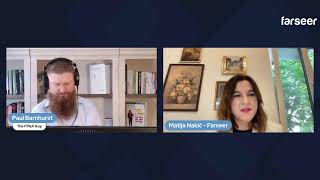
Paul Barnhurst interviews Matja Nakic, CEO of Farseer, about their enterprise FP&A software. They discuss the product's spreadsheet experience, calculation engine, and how it scales for large organizations, plus where AI fits into their vision.
Welcome everyone. We'll get started here in a minute. We don't start till the top of the hour, but we're excited to have you. If you're already out there and listening, just let us know where you're coming from, where you're dialing in, so to speak, for the, for the meeting. And we'll get started here in just a moment. And just so anyone knows, if you hear some noise in the background, they're celebrating at Farseer. They just did a new release. So Atia will get to go have some fun after this event.
Yes, everybody's waiting for me, but I'm glad to be here with you, Paul.
Well, thank you. We'll give it another minute or two and we'll get started here. Go ahead and we're going to go ahead and kick off a little countdown that I like to do and then we'll, we'll get this thing started. So, so here we go. Foreign thank you everyone for joining us today. We're excited to have you wherever you may be coming from. I'm super excited today to have the CEO and one of the co founders of Farseer with me and I'll give her the opportunity to start by introducing herself, telling you a little bit about herself. But before she does that, I just want to say a little bit about Farseer from my perspective. It was almost two and a half, three years ago now. I first learned about Farr as they had reached out to me and did a demo. And you know, some of the things I've enjoyed, I've enjoyed working with them. I love that we're seeing innovative technology and startups from the region. They're from in Europe. Being in Croatia there, that's one of my favorite places to go. I did a MBA course over in that part of the world so it's always fun to get to meet people there and it's a place I always keep saying I'm going to go back to. So I'm really excited to see Farseers growth and to give you the opportunity to learn more about them today. So again as we go through this, you're welcome to ask questions and please let us know where you're coming from in the comments. Just let us know where you're located in the world and any questions you have. So I'll go ahead and turn it over to you to give an introduction. Matija Maria hi Paul.
Hi everybody listening. My name is Matja Nakic. I'm the co founder and CEO of Farseer and Paul Already did a great intro, but we are a SaaS for business planning, modeling and analysis and we belong to the third generation of FPA or XPA tools. And we are very lucky to be on this journey and to try to change the way things are done, especially in the enterprise domain.
In yeah, we're excited to watch it happen. We have one guest so far let us know is coming from Budapest. So again, just let us know where you're coming from. So the first question we want to start with is why did you start fare? You mentioned wanting to change the enterprise space, but tell us a little bit about how it came about, kind of that backstory.
Sure. So Zenko, one of the co founders and myself worked in a telco company together and we were, you know, young engineers and we were both managing our own departments and we did a lot of planning, forecasting, analysis, a lot of collaboration with, with other departments and of course it was all done in Excel and it was a nightmare. And you know, as, as engineers we couldn't believe that's the way things are still done, you know. And this was more than 10 years ago and the story started from Zerinko trying to solve our problem back then. And with time we both left that company and went our own ways. But Zerinko started working on the very, very early version of Farseer, which was not even called like that at the time. And then the other two co founders, Matti and Luca joined, they're also computer engineers and they had their own development agency and they really jumped at the opportunity to solve this problem, which seemed to be not solved yet. Right. Because when I also joined the team, that was the thing that got me really excited. You cannot not wonder why Excel is still dominating in this space and enterprise planning solutions, as robust and as kind of powerful they are, they never reached mass adoption. So we really saw this as an amazing challenge from an engineering perspective, but also from go to market perspective. Right. So this is kind of the origin story of Farseer.
Well, thank you for sharing that. And as we go through this again, if you have questions, feel free to put them in the chat. First question I'd like to ask is, you scaled the product, you've been at it several years now. What's been the biggest challenge? Scaling and creating an enterprise product. What's that big challenge you've run into?
Data. Heaps of data. We didn't really go the typical startup route. Our first customer was an enterprise customer and we barely had an MVP at the time. And we thought that we're super clever. We had the spreadsheet and everything. We had the calculation engine in the back, we had the little BI module that was doing some things. We had all the core components that we still have today, but every single line of code was rewritten compared to those times and now. But we immediately hit into the problem of performances and started developing our own in memory database because data is vast even for SMEs today and it just keeps growing. And this is, you know, this is something that I'm really glad that we did that we went against the grain because normally the VC logic is first sell to other startups in the accelerator or incubator or in our portfolio, then start selling to SMEs and then, you know, one day you will graduate to sell to enterprise. And I'm really glad that we went against the grain because it really made Farseer what it is today. We have built a world class in memory database called Ramadb that serves as the modeling and calculation engine and it can crunch tens of million cells in real time. So this was really the biggest challenge and I think it will be a forever challenge, right? I think we will never be able to rest, lean back and say, okay, we're done here. So this is, this is the most exciting part. Developing the technology that can ingest all the data and give all the flexibility to the business users that they need.
And I'll just add a little color there. From my perspective, that's something I regularly talk to CEOs and people in this space is the challenge of managing all the dimensions. A calculation engine that can quickly forecast something by product and by region and by legal entity and by account line and whatever else it may be. You know, you get up 6, 7, 8, 9, 10 dimensions and your need for calculation and the speed it exponentially grows. And starting enterprise is really hard because enterprise always has a lot more dimensions than your startups typically need. That's one of the biggest challenges many of these tools face is scaling. So anyone who's, you know, selected or tool or really dealt with the slowness appreciate, you know, what Farseer has done here. It's a lot of work to create a calculation engine, especially from the beginning, that can handle large companies with lots of products. So that's, that's exciting to see because not, not many of the startups, like you said, I've gone that route. Everybody kind of goes the more like you mentioned, you sell to the startups, your friends and families, the incubator, you slowly start scaling and one day you hope to get that enterprise customer and manage it and you've kind of gone the opposite route.
Maybe we just like pain, I don't know.
But.
We just, you know, I think as individuals, all four of, as the founding team have a long history of just going outside of your comfort zone in every sense possible. And I think when we combined the four of us, it was meant to be some extremely difficult path that, that, that we had to take, you know.
Yep. And you know, kind of adding to that, how has it been trying to grow, raise funds? I know you've raised a little bit of VC funds in a region of the world that isn't known for startups. Right. You don't typically, at least I don't. I know most people don't think Croatia when you think VC backed startup. So how has that challenge been? Has you found that harder or easier or what's your thoughts there?
Yeah, well, a few years ago I was cursing this geographical lottery, but I think this was a blessing in disguise because when you're bootstrapped or underfunded, you just make decisions really fast and it creates this amazing sense of urgency and priorities line up, you know, pretty fast. There are no five priorities, there's one priority. Right. And there has been a lot of madness going on in 2020 and 2021. And honestly I'm glad that we're not in the boat of startups that raised under, you know, anywhere from 25 to 50 x multiples of array ARR. And in the end of the day we already have a US based investor and we're building a great product and a great business and we already have a lot of interest from some of the biggest and most known funds in the world. So I think in the beginning it was a bit harder, but it might have even you know, it might turn even good for us. And in the long term I'm, I'm sure we will, we will get the opportunity to, to talk to the best VCs. So I think, you know, you can manage from Croatia as well.
Yeah, that's the great thing today is it's much easier to manage from any, anywhere in the world. You know, 25, 30 years ago, very different. But technology has made it so you can connect with anyone, anywhere, anytime.
Absolutely.
But I, I like the part where you said a few years ago you were cursing the, the region. I can, can relate to that in different ways and just kind of those challenges. So glad to see you're getting more of those investors and growing. But help us understand what is it that makes Farseer unique in the marketplace, right. This is a very crowded space in general. There's a lot of, lots of options out there. And, you know, I've done a few surveys. The biggest thing people struggle with is understanding the marketplace and knowing where to go and find tools. So help the audience understand what is it that makes Far Seer unique.
Sure. We have basically three tenets of our product. The spreadsheet experience, the world class calculation, power and flexible modeling. And I will kind of explain what, what we think when we talk about things like this and when we, when we build all these things in the product. Spreadsheets are the best way to work with large amount of numbers, period. And Farseer really has the best user experience. At least we like to believe that. And our, and our customers seem to agree because we are like a spreadsheet on steroids. And the reason why Excel dominates, you know, for 35 years plus is the spreadsheet UX. It has a lot of challenges, you know, but the spreadsheet is definitely something that's ingrained in our brains. And this is something that we try to keep and eliminate all the, all the negative sides and of course amplify, right, to sprinkle it with some special modeling and planning magic. The second thing, you know, the second tenant or the performance tenant is that we really learned that real world models are extremely complex and big and they're just getting bigger all the time. And performance degradation is universal constant. And you will, you will hit it 100% of the time in bigger companies. And we believe that a tool that has infinite processing power is better positioned than the tools that don't have it. And we seek high and low to find a solution that we can build on top of, right, because that's easier and cheaper. But we haven't been able to find something that will allow us to control the full experience. So we like to say that we're full stack modeling and planning tools. And then the third one is the flexibility of modeling. And what we have seen happening with our customers with Farseer is something that really informed our vision of the product and amplified it since they built immensely complex models and a lot of them go beyond the business planning domain. One of our biggest customers is now building an ESG module, which is basically a separate category of software. Right. One of them built a marketing operations plan, some basic versions of project management, project profitability, timesheets. So I would say philosophically, we're more of a successor of Excel than a successor of enterprise planning tools. And yeah, that's kind of the three core tenets and I would say the three core differences of us compared to everybody else.
Thank you for sharing that. Again at the calculation engine you have that spreadsheet experience. Really like how you, you, you shared all that. And also mentioning, I think it's important for people to realize, as you've pointed out, yes, we talk about FP&A software, but it's operational planning software. You even have a customer that's doing esg. You've created that experience that allows people to build within that spreadsheet environment and develop reporting. And that opens up a lot of opportunity beyond just financial reporting. So, you know, even though I often call it 3rd gen FP&A tools because that's where I come from, it's really, you know, much broader than that and that it can support different planning. And I know you have customers that do planning beyond, you know, financial.
Yeah, Snop. You know, we, our customers do financial consolidation in Farseer as well. We just had a different philosophy from the start and maybe it's because of our lack of financial experience. We try to distill everything to kind of building components because what finance is in the end is just math. Right. So we tried to build a platform, these legos that can help you build whatever. And it seems that our lack of knowledge is working in our benefit at this point.
Yeah, I know you've used the LEGO example before and I want to ask a question. As you've scaled and grown and you're still continuing to, you know, try to build this company, was there ever a moment like an aha moment, like you felt like, all right, the products, you know, where we need it to be for now, or really feeling comfortable like, all right, this is gonna work. Because you know, you go through all those challenges and days where you're trying to find the first customer, you're trying to get to mvp. Was there ever like just maybe one moment where just step back and looking like, wow, we've really started to get where we want to go. I know you're not where you want to be. We all like to continue to grow and scale, but was there any of those kind of moments along the way?
Actually, a few days ago, because the team was working, that's why we're celebrating. Right? He was working for a few months on the, on the new version of our in memory database and when we put the first production ready model on top of had even better performances than we expected. So we have anywhere from 2 to 4x improvement in performances, which is amazing. It depends on the model, of course, and three times less memory consumption. And it's kind of a quantum leap. And I really hope we will keep leaping in this way, but there's been a lot of other small moments. Like the first time that you see your customer actually building something on their own, whereas in the beginning you're like in a boat trying to hold all the holes without water going in. And then you see your product getting really mature and your customer is building something in front of you. And that's some really amazing things.
Yeah, I could imagine how that's really exciting. So you've mentioned a little bit you like the enterprise customer, but can you elaborate a little bit more on what's the ideal customer for you guys? Who should look at Farseer and. And who's maybe not a good fit? Because we know no software fits everybody, if we're being honest, right?
No, definitely. Definitely not. So our ideal customers are companies that have an established planning process, that probably have at least a small FP and a team, and that are using Excel and maybe an enterprise planning solution. Usually it can be a combination of both. And they have a lot of spreadsheets, a lot of planners, and a lot of pain. And it seems that, you know, the bigger the company, the bigger the pain. But we focus, or our sweet spot is our companies that are between 500 and 5,000 employees. We can solve the problems of big enterprises, but big enterprises are a little bit slower, you know, and we want to be fast in this phase. And we also noticed that this, let's say upper mid market, lower enterprise segment is underserved in terms of planning tools. So this is where we fit the best. And we have customers from all industries. We have customers that are financial institution telcos, wholesale, retail, manufacturing, and we are really industry agnostic. So that's approximately it.
So, like, I'm going to tag it the three Ps. Lots of people, lots of process, lots of pain.
Yeah, yeah.
And usually it's that third one is when we decide to go with a tool that's designed as an enterprise tool. I mean, I love.
I lost you.
Paul, can you hear me now?
Yeah. You're back.
Yeah, it looks like. Sorry about that. Looks like we lost the stream for just a second there, but we're back. So I was gonna say, you know, I think I can definitely appreciate that pain of Excel when you get to a certain size. You know, as I tell everybody, I don't use a planning tool as a business of one. I don't need one. Spreadsheet's great. I don't have the pain, I don't have the people. But once you get to a certain point, you need something more.
Yeah. And like you said, not every soft, every software is for somebody. Right. And we had a lot of customers that. Well, a lot we had, you know, we have one per month or two per month that come in and like, want to have a cool planning solution. But then we tell them just, you know, just build a better Google sheets or if you need our help, we will help you. But you don't need this yet. You know, it's not, the pain is not there.
Yeah. And I think that's important to let people know because there's definitely times when, yes, you're. It's not the, the cost and the headache of transitioning or the challenge, whatever you want to call it, because there's going to be a learning curve. There's going to be. That cost isn't always worth it. You know, I'll tell that to people too. They'll ask me, you know, what planning tool to go to and it's like, well, let's, let's talk about it. My favorite is I always get, well, what's the best tool? Well, what. What are your needs? Varies depending on your needs and also depends on what you want. What's the best.
You shouldn't do it because all the cool kids are doing it, right? Yep, it has to.
And speaking of that and the cool kids, it feels like the cool kid these days is AI, so to speak. Right. All we hear about. So how are you guys thinking about adapting to this rapidly changing environment of AI?
AI is easier to build than a machine that can crunch 100 million cells in real time.
I would agree.
Yeah. Our thoughts are a bit kind of Stark on this. FPNA tools don't build AIs. You know, if we were claiming that we do, it would be bollocks, right? OpenAI builds AI and catching up with AI is not that difficult. You just need to figure out a good use case and use the standard, let's say stock AI stuff. We are already building some things in this domain and I think you've seen our kind of AI based modeler and we're building a AI based explainer as well. But we truly believe that this is the cherry on top of a cake and we really want to make sure that the cake turns out really well. And this is the basics, right? The calculation engine, the spreadsheet experience, the BI component. And then of course you need to have all these neat tools. But we're definitely developing things, but we're not focusing very hard on it. And I think there's a lot of smoke and mirrors in that. It is like you said, all the cool kids are doing it. So you really need to think it through as, as a vendor, you know, when, why and and how you will implement AI. So that's what we're trying to do. We're trying to be very thoughtful about it because we, we don't have unlimited resources. And probably even the big vendors, if you talk to them, they will complain about resources. Right. There's never enough resources. So we're experimenting, we're testing stuff out already with some customers. But like I said, we have our eye on the cake, on the main thing.
Yeah, there's a lot you said there. And a couple things I liked is first, right? No company has unlimited resources. I haven't gone into a budget yet saying, hey, can I give people back? As a planner, I've never had them start with that. I may have started with we need to take away resources, unfortunately. But I've never had the business come to me and say, please take them away. Right. We all feel challenged. I like how you mentioned, you know, solving the calculation problem and there's so many other areas beyond generative AI. I know you guys have done a lot with machine learning, statistical modelings. Winter are a lot of people will say they have AI and you know, it's those type of things sometimes they're mentioning. And so I think, you know, there's a lot of marketing behind this. And you really have to understand as I like this such thing. Someone was listing a bunch of tools. These are your AIFPA tools. Like there isn't an AI FPA tool. There's not a pure play AI that doesn't exist. There are tools that do a good job of incorporating technology, of which AI and machine learning is one of those. But what's more important is can they meet your business needs? Can they process what you need? Do they have the flexibility? And yes, if they lay in AI correctly and I think will become more and more of how do you lay it in the overall product. That's great, but I'm with you. I think we share a similar vision. I'm sometimes take a step back when someone's like, it's just a full AI solution. What does that mean?
I mean, LLMs are not precise enough for finance and you know, use with caution. Use with caution. I would say so that's maybe the final message all you got to do.
Is look at some of the recent things Google's Gemini has said, not even related to finance, to know you got to be cautious. So tell me, I want to ask one question, then we'll come back to your vision and we'll wrap up here. But one thing you did that I thought was fun. Fun is your company. You created a monthly newsletter called Enterprise Punk. Not typically the name you see for a newsletter. How'd that come about? What do you share in it? What makes it different? Tell me about that.
One of our investors, and he's a guy who did the whole founder journey of a very successful, founded a very successful SaaS. And we were talking about some things and we get quite philosophical in our conversation sometimes. And he said, guys, what you're doing is you're trying to disrupt all these existing tools. And it's, it's so punk, you know, but it's, it's still enterprise and when. So, so it's, it's his, it's his term. So when we started our newsletter again, because we had a newsletter before and it was kind of bland, right? Like the top FP and A to whatever, you know, like, yeah, we didn't, we didn't find it interesting. So we thought probably nobody else finds it interesting either. It kind of drowns in the sea of all the same stuff. Everybody's writing about the same stuff. So we said, why don't we write about things that we are really passionate about that we're really interested in. So, you know, every two weeks a couple of us, we get the task from the marketing and a couple of us are picked, hand picked to write a small article for the Enterprise Punk newsletter. And we just hope that the passion resonates. And we write a lot about software, enterprise software and how things are changing in AI as well. But we also write about some fun things like, you know, books or movies or some icons that are a very good source of inspiration for modern business people. So, yeah, that's Enterprise Punk.
Great. I love it. And I know anyone can sign up for that. I know it's on your website.
Yeah, everybody can sign up on the, on the website. And we promise to keep it fresh and fun and not to, not to sell anything through, through the newsletter. I lost you there a bit. Paul, are you back?
Sorry about that. I'm back here. We just lost it. Lost you for a second there. Hopefully that doesn't happen again. The joys of technology. So you mentioned the Enterprise Punk. As I mentioned, anyone can find that on the website. But one question I want to ask you as we wrap up and let anyone know, please feel free to submit any questions out there that you have. You can also go to the website to learn more. Sign up for their newsletter if you registered for the demo days, their demo is still available on that site for 30 days after the event. So you can see a demo of the tool. But where I want to wrap up is can you talk about the products, kind of your vision? What's that general vision for the go forward? What should people be thinking about for you in the future?
We want to become a platform for building enterprise apps and we're building the technology that will be the basis of it, the, the database, the, the Ramadb. And we also, like I mentioned already, we're being kind of pulled by, by the market in this direction and we think that today there are just way too many SaaS tools in an average company. And then you have like 130, 150 SaaS tools per company and then you have thousands of spreadsheets and people are just becoming human data gateways. And we really want to make the life of any business person, basically, not just finance people, easier, more streamlined, more automated and have everything connected to really make Farseer as the single source of business truth, regardless if it's HR data, financial data, kind of accounting data, going even deeper from where we are now, and customers data and things like that. Because in the end, for your purposes, you need connection, right? You need everything to communicate together, to be able to manage the processes and to get reports in time. So that's our vision. And this is of course a journey of 10,000 miles. But I think we have really great basis for it and we have a great team and a really good product sense. So it's very exciting to wake up every day with this big vision and to keep working on it.
Well, thank you for sharing that. I'm excited and I try to stay neutral in this marketplace, but I know there's few tools I'm always rooting for and you guys are one of them. I love what you're doing. So keep building, keep growing. I wish you and your team the best of luck at Farseer and appreciate everybody who's attended. And if you want to know more, we've put those in the comments. There's the link to sign up for Enterprise Punk. There's a link there to go to the demo days. If you've registered, you can go in one of them. I love what you're doing, so keep building keep growing. I wish you and your team the best of luck at Farseer and appreciate everybody who's attended. And if you want to know more, we've put those in the comments. There's the link to sign up for Enterprise Punk. There's a link there to go to the demo days. If you've registered, you can go in and re see a recording of Farseer's demo and you know you can reach out to their team as well. And thank you so much for joining me. I really have having the opportunity to chat with you today.
Thank you Paul and thanks everybody for listening. Have a great day. Bye.
Thanks.
More from Paul



Trust and Leadership Lessons for FP&A From 100+ Top Leaders with CFO Jon Laudie







