Evolution of FP&A and Insights on Wharton Online Program with Christian Wattig
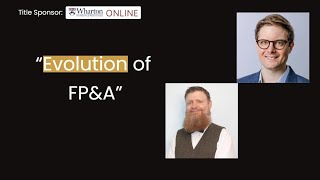
This is a YouTube video titled "Evolution of FP&A and Insights on Wharton Online Program with Christian Wattig" published in May 2024. It features a detailed interview and conversation between Paul Barnhurst, the host, and Christian Wittig, an FP&A educator and program director. They discuss the current state and future of financial planning and analysis (FP&A), the impact of AI and technology, Christian's career background, his educational initiatives including the Wharton Online FP&A certificate program, and practical advice for finance professionals. The content is a conversational podcast-style interview focused on FP&A professional development and education.
In a perfect world, what would you like to know about your business today to make better decisions tomorrow? People sometimes don't ask finance for help with getting more insights because they think they can't do it with AI. Also, with FPA and planning tools and software, it will be possible that you don't have to pull data from lots of different sources. Analysis is really about how do you get from raw data to insights. Best financial model is useless if the quality of the inputs you're getting from different teams isn't there. When it takes me something more than a minute to do in Excel, it has to be a better way. It's a really good book for FP&A professionals. And it doesn't say FP&A in the title. It says CFO lens.
What's one thing you've learned from this whole experience that would make you a better FP and a professional?
When you're just taking people and walking them step by step through how I build a Financial model from scratch, it's really a different way of teaching and I found that I really enjoyed doing that and so I try to do.
This Week's episode of FP&A tomorrow is brought to you by the Financial Planning and Analysis Certificate Program from Wharton Online and Wall Street Prep. Hello everyone. Welcome to FP&A tomorrow where we delve into the world of financial planning and analysis, examining its current state and future prospects. I'm your host, Paul Barnhurst, guiding you through the evolving landscape of FP&A. Each week we are joined by thought leaders, industry experts and practitioners who share their insights and experiences, helping us navigate today's complexities and tomorrow's uncertainties. Whether you're a seasoned professional or just starting your journey in FP&A, this show has something for everyone this week. I'm thrilled to welcome to the show Christian Wittig. Christian, welcome to the show.
Thank you, Paul for having me today.
Yeah, really excited to have you. So let me just give a little bit of background about Christian, then we'll jump into our first question we ask everybody. So Christian's coming to us from New York City. He's currently serving as Program Director for the Wharton Online FP and a certificate, which we'll talk more about later. He's also Founder and Managing Director of FP and A Prep. He has a BS in Finance and an MBA in Strategy and Change Management. And he's worked for fast growing companies such as Data Rails and Squarespace and global multinational companies such as Procter and Gamble and Unilever. He has a great background and we're thrilled to have him. So the first question we like to ask, what does great FP and A look like today to you? What is great FP&A?
Yeah, that's a great question, Paul. So to me, FP&A is at its best when you make a concrete recommendation that helps the business move forward. You know, that's where your variance analysis, your financial model, or your storytelling really pays off. Because you can say, hey, I did this analysis. This is the insight I have, and this is what I think where real opportunity lies. And if you then have a chance to implement, if that then gets implemented, and you have a chance to track that opportunity, that can be super rewarding. And I think that's what makes FP and A fun. And that's also where FPA professionals can have the biggest impact by making these concrete recommendations. It's not easy. It doesn't happen every time you do a variance analysis because, you know, your FP and A skills need to be top notch to get there. But I think it's really FP and A at its best.
Yeah, I really like the way you explain that. I've heard, you know, a number of different ways people explain it. And I like the fact of being able to give concrete recommendations that help move the business forward because, you know, that involves so much more than just the analysis. So I appreciate that answer. So I'm curious, we've talked about what great FP&A looks like today. How do you maybe see that changing in the next five to 10 years with AI, with the fact that FPA has changed a lot over the last few years? You look at Covid and everything else, it's become more to the forefront. How do you kind of see it changing or kind of morphing going forward?
Yeah, So a typical month in the life of an FP and a analyst could look like this, right? So at the beginning of the month, you spend a few days and getting the data for the actuals, understanding the data, reconciling it, maybe you also have to clean it up a bit to make it easy to process. Then you spend a few days working with your business partners, getting their forecast inputs and making sense of them, pulling them together from different emails and slack messages and different sources. And then if you have to bring all of that into your financial model, you have to update that. You have to crunch the numbers. When you're done with that, you spend a few days updating PowerPoint slides, right? Creating charts and visualizations in Excel, bringing all of that into a presentation that then gets shared with business, with the leaders of the business. And then you might already be two weeks into the month. Then you finally have time to do business partnering to talk to the heads of the other departments and see how can you help them, how can you move the needle, how can you do deep analysis? And I think over the course of the next five years, that time period of creating the reports and making sense of the numbers will be compressed by a lot. I think that with AI, and not just with AI, but also with FPA and planning tools and software, it will be possible that you don't have to pull data from lots of different sources. It's just all right there for you in the cloud or in the data lake in an easy to use database. And then you can update all your reports, everything at the click of a button. And probably AI will even be able to do some basic variance analysis, you know, some basic, hey, why do we have a difference here? What's behind those numbers? It won't get to a point where you don't have to do any analysis anymore because there's a lot that goes into connecting the dots, but it will compress the time where you can spend the vast majority of the month with business, partnering with going out and challenging people, holding people accountable, helping them reach their goals and doing deep analysis.
Yeah, I agree with you that it won't do everything for us. As I've said, I think we'll get a lot of the what, you know, kind of the why what happened, just you missed by this much. But that now what the so what that requires that judgment and you might get a little bit of that, but it's never, I don't think at least in the near future it's going to be doing all that for us. I agree with you. It definitely should compress the time frame with all the technology we have coming, AI, FPA tools, data sources being integrated better so that you're not pulling 10 different files and trying to figure out why Delta airlines is spelled 12 different ways. Right. Which we've all done. Good, good point there. I tend to agree with you. So next question I have is, can you tell our audience a little bit about yourself and your background and then we're going to jump into some of the things you've been up to over the last year as you started your own business.
Sure, sure. So now I'm a full time FP and a educator. I teach through online courses. I do in person corporate training in person at Virtual and now I'm also the director of the FP and a certificate program that was put together by the Wharton School and Wall Street Prep. And before that I was an FBA practitioner. I started at Procter and Gamble. It was fantastic to start your career at a large company because, you know, there I had the chance to work partner with different teams, I had fantastic mentors and I had the chance to work on a financial model where we evaluated whether to launch Thai detergents in South Africa. And that was really cool because the whole business case only made sense when you commit to building a factory there, $100 million investment. So I learned a lot about building flexible models there because the assumptions kept changing all the time. And then I worked at Unilever, spent years there, seven years there. And that was a great experience too because every one and a half to two and a half years I moved into a different role internally. And I led the marketing, finance and analytics team. For example, I led the logistics finance team where I had FPA and accounting report to me, which was a fantastic experience to really connect the dots there. And then after my mba, I moved into tech because I loved working in consumer goods at these large companies. But I always felt that, oh, would be interesting to see if you work at a company where decision making is happening quickly because at these large companies, you know, you have the regional team, the global team, you know what I'm talking about. You also worked at large companies?
Yeah, I started my career at American Express, you know, very, very large company, much like, you know, Procter and Gamble. So I get it.
Yeah. And so these large companies, everyone has to agree before anything happens. And so that can take some time. But then I worked at Squarespace, which is a medium sized tech company and it was fortunate that it was there when we took the company public. So I had a chance to work closely with the CFO on how do we tell the financial story of the business. Was leading an FPA team there and that was a great learning experience because when you take a company public, you have to tick the box everywhere. You have to understand all your financials, you have to put it into context, you have to know how it compares to competitors because you'll get, you'll get all these questions from the analysts. And then I moved to Data Rails, which is a small early stage startup and it's an FPA software company. And there I had the chance to work directly with clients finance teams of small medium sized companies to help them develop better FPA processes and implement the software. So yeah, I Had a chance to work at very large companies, very small companies. And what surprised me was that the challenges that FPA people face, actually very similar. You know, the numbers are completely different, the metrics are different, but things like how do I improve forecast accuracy or how do I have more influence with my business partners, or how do I tailor the presentation to the audience? Now, these are all common challenges and that also really motivated me with building my educational company.
Yeah, it's surprising how many of the challenges are similar. Like you mentioned, there's definitely some differences and some different challenges, you know, regardless of where you work and company size and all those things. But there's one like you said, accuracy. Building those relationships, telling the story, you know, that stays the same. Whether it's a 10 person company or a thousand person company, you need to be able to do it. It just becomes more complex or has different, you know, inputs and outputs that you got to consider depending on size. So I'm going to switch gears here a little bit. We'll come back to some of those questions, but I want to start here with what's it been like running your own business? Now, I know you did it part time for quite a while, but you've been full time now since summer of last year, is that right?
Yeah.
So what's the experience been like?
Yeah, so I started teaching actually. How long is that? Six or seven years ago when I was at Unilever, because there I. I was leading the internal finance leadership development team where I would create courses for my fellow finance colleagues. And now I was at Unilever North America and the finance team was pretty big there, over 50 FP and A people. And so we developed those courses and when I first taught it, I wasn't sure. It was a pivot table course back then, developing Excel skills. And I wasn't sure would I be able to teach people something new. Then I had 10 people sitting across from me in this conference room and then I saw people's eyes light up when I got something. And that was just so rewarding to see that you can have a real impact and make a real difference with people's skills. And that was super motivating for me. And that is when I caught the back end, I just thought about how can I help more people? How can I teach FBA more broadly? And then I partnered with Maven. So that's a company that develops, that helps people launch online courses that are taught live. And they sent me through a training program that taught me how to take my knowledge and turn it into an. An engaging, interactive, live online course. And now from then, it really. I was surprised how quickly that took off and people started enrolling. And I had 20 people per cohort and had 30, then had 50. And I've been running this live cohort every two months for the last two years. So we just finished cohort 16 in January. It was a lot of fun every time. And now I'm excited to do even more of that with the Wharton Partnership.
Thank you for sharing that and the backstory and kind of how you fell in love with training. I'm curious, so since you started your own business, what's been your maybe most memorable or favorite experience you can share with us?
Working for yourself? I find it very motivating. Also stressful at times because there's no. No paycheck coming at the end of the month. As you know, it's a. It's a big difference there. But one of the most memorable experiences was when. When I just was walking through downtown Manhattan at about, you know, 5pm in the evening, and I saw people coming. If you haven't been to Manhattan yet, especially midtown Manhattan, you know, at the end of the day, there are just throngs of people, tons and tons of people coming out of the offices and walking home. And I was like, huh? I don't have an office anymore. I don't have a boss anymore. I don't have someone who tells me, oh, you know, the day is over. Go home. Or no, you know, there is a. There is an emergency. You have to stay until 8. And that was really eye opening to see all these people, and they're like, oh, you know what I'm doing? It's very different.
Yeah, I bet. I think everybody has that moment with their own business when you realize in certain ways how different it is from what you were doing beforehand, because it's very different than when you're working for somebody else. So with running your own business, one of the things you recently did is you accepted the opportunity to be the program director for the Wharton Online FP and a certificate. You've mentioned that a little bit earlier. I know. That kicks off, I believe, in May, the first cohort. Tell me about that. Tell us about that program.
Yeah. So the program is jointly founded by Wharton, that's a large US Business school, and Wall Street Prep, that's a finance training provider that's been around for over 20 years and who are teaching finance professionals both online and in person. And the program is quite unique because it combines the technical skills you need for FP&A, modeling, forecasting, et cetera with the interpersonal skills. So that's business partnering, building relationships, holding people accountable, challenging people and also storytelling and presenting. And that hasn't really existed in the market before, especially not in collaboration with a well known university where then people at the end of the program they get a certificate. So how it works is it's a six week program. Each week has a different focus. So for example, in the first week relay the foundations talk about the FP and A is a career, different roles, different, different career paths. And then in the second week it's all about budgeting, planning. How do you develop an annual budget that even when the numbers get outdated a few months later, still relevant and still gives you a way to use as a yardstick and learn something about the business by comparing it to it. Next week is all about forecasting, different forecasting techniques, driver based planning, zero based forecasting, time series analysis, lots of forecasting techniques. And also how do you get the bias out of your forecasts which when you're working with a bigger team can often happen. And that's something that's actually pulls through the entire program is it's not just about what you do at your desk, it's also how you collaborate with the cross functional team and how you bring their inputs in. Third week is about analysis. How do you get the data and how do you get clean data and then how you analyze it. And I heard rumors that there's an FP and a expert contributing to it whose name also starts with Paul.
I have no idea what you're talking about.
Yeah, so I'm very excited to work with you on that as well. And analysis is really about how do you get from raw data to insights. Then in the next week we talk about financial modeling, what are best practices, what are modeling standards and not just how do you do the model in Excel, but also how do you challenge the inputs, how you make sure that your data is right and how do you check and review your finance financial model. Then we talk about business partnering, how do you build professional relationships, how do you hold people accountable? That's an entire week as well. And then we look into financial storytelling, presenting, how do you tie everything together? Does it always have to be a presentation? Can it maybe also be a one pager? How do these one pagers work? And how do you set up your performance management calendar? When do you do your management reporting deck? What should go into that reporting deck, how do you manage that? And the last week I'm really excited about because it's about the future of finance. We have some speakers coming who talk about AI, who talk about generative AI and how do you use that in finance, talk about data science and then we also talk about how do you navigate the recruiting process. So how do you which questions are getting asked in FP and a interviews, what are some case studies and what are some possible ways to navigate that and to answer those questions. So it's a comprehensive program. As you can hear, we cover a lot of ground and it's in depth. So every week is about 10 hours of content which is a combination of videos and exercises and also office hours and we even have in person meetups all over the world. So yeah, I'm really excited to do this.
Looking to level up your career and build skills that make you stand out to FP and a hiring managers. How about earnings certificate from a world renowned business school. Wharton Online and Wall Street Prep have partnered to create an eight week online financial planning and analysis certificate program. You'll learn the art of forecasting, analysis, business partnering and financial storytelling from Wharton Online's world class faculty coupled with first hand exposure to technical and interpersonal skills with real world applications as practiced in top corporations. Space is limited, so level up your career today. Enroll by May 13th and use the discount code the FPAGUY. 300 to receive $300 off tuition. That is the FPA guy. 300 to receive $300 OFF tuition. Learn more by going to 1 Wall street prep Wharton UPenn. EDU. Yeah, sounds like an amazing program. Excited for that to come out. I know you've been working really hard on that. Speaking of working hard, I'm curious what's been the hardest part of coordinating and putting that program together as Program director, What's been the most challenging part of that?
Yeah, so fortunately. So the program is fairly comprehensive, right? So it's eight weeks each week it's about 10 hours, so 80 hours in total of self paced videos and exercises. Fortunately, I don't have to do that alone. So as the, as the director, one of my tasks was bringing in other experts, bringing in guest speakers. So we have other FPA experts like yourself, like Nicolas Boucher for example. And we also have about 10 CFOs of companies across different industries who come on the program and who share their best practices for running finance for fpa. But I'm contributing the majority of the, of the. Of the content, about 35 hours. And that was challenging because I challenged myself not just to use what I already have because over the years I developed a lot of content but I wanted to make sure to go through everything, to update everything and to see how can I make it more hands on with more exercises. And that was quite a project to create those 35 hours of content and do it really well. But you know, I had great support from the people at Wall Street Prep. They review everything, what, what, what people share, share their insights from what they've learned over the last 20 years. And yeah, it was a, it was a very good experience.
Great, I appreciate that. What's one thing you've learned from this whole experience that would make you a better FP and a professional? If you were working in FP and A or even as an instructor teaching people FP and A, what are maybe one or two key takeaways?
So from being an instructor point of view, what was a great reminder is just how first of all how much fun it is to teach through exercises. You know, as you can probably tell, I love talking about FP&A, but when you just taking people and walking them step by step through how I build a financial model from scratch, it's just, it's really a different way of teaching and I found that I really enjoy doing that and so I tried to do as much as possible. And as far as FPA goes, it's just interesting to see to me that, you know, I mentioned how every week focuses on a different topic, modeling, forecasting, etc. But the really the common thread is that all of these topics, to be good at them, to be truly good at them, you have to bring the cross functional team in or interact with them in some shape or form and do that well as well. Because for example, the best financial model is useless if the quality of the inputs you're getting from different teams isn't there. So you need to manage that or the best financial presentation doesn't really get you anywhere. If people just nod and move on, you have to get them to actually take action. And that was really eye opening again to see how important that interpersonal element is in FP&A.
Yeah, that's definitely something. I've learned a lot with the teaching and bringing things together and you know, having run my own business, I would focus much more on the interpersonal if I went back into FP&A tomorrow in a full time role. Not to say I didn't know it was important before and didn't work on it, but I would put even a greater emphasis on that. Particularly, you know, how do you influence, how do you really tell that story and drive the right recommendations and you know, much more of that thought leadership side, if that makes sense, versus the, the analysis and digging deep in the Excel. As much as I love a good spreadsheet, you know, and love digging into Excel, that only takes you so far. I, I, I'm with you on that. There's a lot of, a lot of things I can relate to there. So I know one of your favorite things, as you've said before in fpa, is teaching and mentoring. What is it that you love about that? What keeps you, you know, going each day gets you up in the morning to teach people?
Oh, it's just how. So I, I, I teach through my online courses and, but I also teach, teach in person and what I love about teaching in person is that you have that direct feedback. You know, you're, I'm, I'm on zoom or you know, I'm standing in front of a room and just seeing that those aha moments when people finally get something or they work through a particularly difficult exercise and then, you know, I show them how I did it and you know, that's just the feedback you get there about. Oh yeah, I never thought about it that way or I didn't know what, I don't know what I didn't know about fpa, that's just really rewarding because my hope is that people take that, go back into their teams and it doesn't just help them have a better forecast accuracy or more accurate models, et cetera. But my hope is that it also makes FPA a bit more fun for them and a bit more rewarding because then also the other people in the team feel that. And I feel like if you really know what you're doing and if you know that the challenges you're facing are similar to the ones that people in other companies face and that the approaches, while not always straightforward, but that there are solutions that the problems you have, other people have already figured out how to solve them. My hope is that that will make people feel a little bit less stressed and a little bit more upbeat about going to do to work. And that really is, in the end, the ultimate goal. Because that's infectious. Enjoying the work you're doing is infectious. And then everyone's performance and the feeling that you're actually achieving something goes up.
Yeah, if people are happy at work, performance goes up. If they're enjoying what they're doing and you're helping them solve pain points. Right. Nobody wants to spend five hours on a task that can be done in 15 minutes. And if you can help, give them the tools to do something quicker or better or, you know, make a bigger impact. It makes a real difference in people's lives, you know, versus working all night or whatever the case may be. So do you have a favorite story you can share with us from teaching? Maybe a favorite experience student, Something that's just stuck with you?
Over the last few years, I've been teaching FPA bootcamp. I had over 400 students. And what was always like really, really cool was when I met people in person, you know, because I teach it through zoom. And one from a student of mine, he's a fractional cfo. He lives in Manhattan as well, where I live. And we met already four or five times now. We had dinner together, we talked. That was really cool. Another lady, she is based in Vietnam, but she visited New York City as a tourist and she wrote, hey, I'm in New York, maybe we can meet up. And I had coffee with her and we talked about how she implemented what she did. Then I was at a conference last year and I just happened to run into a former student of mine there. And that's just really cool because there you can. It can sometimes feel that you're a bit removed from people when you're just always teaching over zoom. And having that personal experience in between is really fun. And that's also why I like doing in person training.
No, I agree. There's nothing better than making those connections from in person training. I mean, yes, you can connect with people over zoom and virtual, but there's something different when you're face to face and sitting down and having that kind of bonding experience. It's just. It's different than virtual. So I hear you on that. So couple more questions here, then we're going to move to our rapid fire section. So what I want to ask next is financial storytelling is really critical to FP and A. We've heard a ton of data storytelling, financial storytelling, that we all need to be better storytellers. And as finance professionals, how do we become great storytellers? What are some tips or tricks you could offer our audience to be a better storyteller?
Yeah. Yeah. So I think many finance people fall in a trap a bit when they are thinking about how they can become better storytellers. Because it's. It's called storytelling, but it's really not that much about how you tell the story. I would argue, you know, it's much more about uncovering the story and really separating data from insights. Because when you have a really, really strong insight, it's easy to tell a story around that. And so what I. And what. What I notice is working with clients when I do consulting, for example, is that often when I look at management reporting decks, they do the variance analysis, you know, comparing actuals to forecast, to budget to prior year. And, you know, to give you an example, it may say something along the lines of, well, we missed our forecast for professional fees by 50,000 because Deloitte was more expensive than before. That's not enough. Right. That doesn't really help you tell any story because. Okay, good. So we know why professional fees were unfavorable to forecast. We paid more for Deloitte, our auditor. What does it mean? Right. Where does that. What impact does that have? What should we do there? Nobody knows. Right? So you need to take it a step further. You need to dig deeper, and you need to really uncover what is the so what in this case? You know, in this example, maybe you've done some digging. You talk to the people who hired the auditor, or maybe you read the contract yourself and you realized, oh, Deloitte, actually, it's not that we had more hours with them. They actually increased the price quite significantly year over year. And so based on that, you actually, you can make the recommendation, hey, maybe we should do a tender. Maybe we should look at changing our auditor because the Deloitte price just seems to be. Seems to be too high. And then that's a. So what? You know, then you can make a concrete recommendation, you get to the actual root cause, and then telling the story becomes easy. Now, the story essentially is all about, okay, what's the beginning, the middle, and the end? Right? The beginning is we discover that there's a variance, right? The middle is, we did some digging. We figured out that it's Deloitte. The end is, what should we do next? Let's run a tender. Because they increased. They increased the price on us. And so people need to recognize when they've done enough digging. I think that's the other challenge with that. People don't know how often do they have to peel the onion or do more digging? And when people ask me this, you know, what I tell them is the rule of thumb. A rule of thumb you can use is if the insight you uncovered suggests one or two clear actions, then you've done enough digging. If there could be a million things, then you need to ask more questions or dwell into the data. Another example is, well, you know, we missed our revenue forecast. Why? Because organic sales performed less than promo sales in the year before. Or even if you drill it down a level further and say, hey, product A in this and this region didn't perform as well, that doesn't tell you anything, right? There could be a million reasons why product A in this region didn't perform as well. But if you keep digging and you figure out, for example, well, product A in this region didn't perform so well because the website didn't convert free users to paying users as well as before, then you have a real root cause. Because then there's some very clear actions that come to mind. You know, you can talk to your marketing team and say, hey, did you change anything on the website? And maybe hire someone, hire a copywriter and see, can we test something? Can we improve something on that website? So this is really, I think the core of financial storytelling is getting to that. So what to that, so what to that real root cause.
Hey there, it's your host, the FP and a guy. And today I'm thrilled to talk to you about Plan Buddies, where professionals meet excellence. This isn't just any community community. It is a community ran by and for planning professionals. At Plan Buddies, we're all about fostering connections, sharing knowledge, and providing mentorship among FP and A experts. Ready to elevate your career? Visit plan-beddies.com and become a member today. And here's a special treat. Use the promo code, the FPNDaguy that is the FPA guy, for an exclusive 25% discount on your first year membership. I agree 100% with you. You know, when I teach that and teach about variance commentary or whatever it might be, you really want to get to that. So what, right? If you have an insight, as you mentioned, it makes it much easier to put the presentation together versus I just have a bunch of data and I'm trying to figure out how do I tell it to people. You know, leadership wants actions, they want recommendations, they want insights that can drive it forward. And then it's a matter of figuring out what the best visuals are. And we could spend, I'm sure, a whole podcast just talking about that, how to think of that within the storytelling. But I think it's a really good point. What you talked about, needing that ability to have some insights to help with the story and to have something you can give action for. So this next section is called Rapid Fire. So how this works is you get no more than 15 seconds for each answer. At the end, if you wanted to elaborate on one of the five questions, you Can. So feel free to elaborate on one if you want. So the first one is, what is your favorite thing about Excel?
Flexibility and ease of use.
What's your least favorite thing about Excel?
That even after 37 years, it's still cumbersome to use on Apple computers.
Let me guess, you have a Mac nowadays.
I have both, but yeah, I would love to be able to use Excel properly on the Mac, but I can't.
Yeah, I, you're not alone on that. I think there's a lot of people that bothers. How are you using generative AI today?
Yeah, so I, I, I, I love those chatbots because when I have an idea About a new FPA lesson or newsletter article or a LinkedIn post, I run my idea through that and I brainstorm it and it just can really help to enrich an idea and help me think more deeply.
So you're using it a lot to kind of brainstorm and enrich your ideas. Is that kind of the main area you're probably using it?
Yeah, I think it's good for that middle section of content creation. I don't think it's very good with coming up with something to talk about. I think it's still pretty terrible with finishing with creating a finished product, but it's fantastic in the middle part, you know, I have an idea, I go back and forth, brainstorm with, with the chatbot, and then I take those bullet points and turn it into a finished product myself. That's usually how I like to work with it.
Got it. So next one. What is the number one technical skill that FPA professionals need to master?
Financial modeling. And specifically doing financial modeling so that whatever you're building is flexible and error free.
That would be nice. Error free. What is the number one softer human skill for FPA professionals to master?
Building meaningful professional relationships.
It's a good one. I like it. All right, so this next section is our get to know you section. And before we jump into that, anything you wanted to add to the Rapid fire? Was there any additional thoughts you wanted to add to any of those questions?
Just that actually you mentioned Excel, you mentioned generative AI. I think the two go very, very well together as well. That's something that really continues to blow my mind is that I have that rule where when it takes me something more than a minute to do in Excel, when I try to do something, move data around or organize data, and it takes me more than a minute, there has to be a better way. And so I would used to go to Google and search or go find YouTube videos. But now I can just go to ChatGPT, say, hey, I want to do this and this in Excel. Can you help me how to do that? And then it tells you step by step where to click, where to, and how to get to that result quickly. And that's just really amazing to me.
I agree, it is amazing. I definitely have used it a number of times to help with different things. Hey, help me write this formula because I can't remember the exact syntax or I'm trying to do this, how should I do it? So I agree with you. Excel and Generative AI together is a. Is a great one to work together. All right, so under the get to know you section, these are some more personal questions. So the first one, what's your favorite hobby or passion that you have?
Yeah, that keeps changing. But I love photography, you know, especially now I have very active tools, year old at home and I love taking photos of him because he does so many silly things all day long. And sometimes I also like to just take a walk with the camera to do some, some street photography because I find it very meditative and helps me, you know, think things through and focus and be really open to what's in front of me. So. So I enjoy street photography as well.
I like it. What is a book you can recommend to our audience? One book you'd recommend for them to read?
Actually, I'm gonna recommend two. So there is the CFO Lens by Ravi Kumar. I don't know if you can. If you can see that.
Yeah, I can see that one.
Do you know that book?
I do not. I haven't read it.
It's a very good book. It's written by the father, former CFO of IBM India. And it's a really good book for FPA professionals. You know, there aren't that many out there, but. And it doesn't say FPA in the title. It's a CFO lens, but it's. It's fairly applicable for FPA and talks about modeling, but it also talks about building business, understanding, analysis, cost management. It's a really good book. And the other book I would recommend, it's not a finance book, is how to Think Like a Roman Emperor by Donald Robertson. Okay, so this is about Marcus Aurelius and Marcus Aurelius, for those of you who don't know, it's just really interesting historical figure. He was the emperor of Rome about 4,000 years ago, three, 4,000 years ago. And he. Don't quote me on that. It may be a little bit, but It's a long time ago in ancient, ancient, ancient Rome. And he is known as he was the most powerful man in the world. Much more powerful really than anyone now. But he challenged himself to be mindful of everyone around him, to be really to be just a good person. And he wrote a diary. He wrote down, you know, reminding himself not to fault people, you know, to be nice to people and to be really thoughtful, logical, but. But thoughtful. And this book is a modern interpretation of that and it summarizes the philosophy behind that. And I just found that very interesting.
Agreed. Well, thank you for sharing both of those. I'm sure we'll have some people going out there online and finding them, so thank you. I appreciate that. What is your favorite travel destination?
Hands down, Germany. Going back to see my family. You know, I'm originally from Germany. I moved to the states just over 10 years ago, but my family is there, my parents are there, my brother is there and so I love going back to see them FP and a.
Guy Here I want to personally invite you to the upcoming third Generation FP and A Tools Showcase. It is a virtual event you don't want to miss. On May 30, join FPA Professionals and industry leaders as we delve into the latest innovations transforming financial planning, discover cutting edge solutions from top providers and learn through in depth sessions including company overviews, product demos and customer success stories. As a Circle CFO or FPA Professional, this showcase is tailored for you. You will be able to get insights from experts such as Glenn Hopper, Water Bourne and myself. Spaces are limited so go on over to my LinkedIn page and learn more in the featured section or check out the show notes for the link. To register for this event, you will not want to miss the third generation FP&A tools Showcase. See you there. So family, going to see family and going back home. Always a good combination. If you could have dinner with one person in the world alive today, who are you going to pick?
Alive today. That's a tricky one because if you would say historical person, then you know I would love to have dinner with Marcus Aurelius for example because just such a fascinating character. Or with Richard Feynman. I heard that he's a really cool guy to hang out with people alive today. There's this author, his name is Yuval Noah Harari. I read a few books that maybe people know he wrote Humans, I think it's called A Few Other Books and he just seems such a small smart guy and so interesting to talk to. I'd love to have dinner with him, because I feel like you can have very deep and interesting conversations with this guy.
Got it. That'd be a good one. Alrighty. So we're coming up on the end of our time. So last question I have for you is what advice could you offer our audience to be a better business partner today?
Yeah, so that's a great question. Look, I would encourage you, encourage you to simply go walk over to your business partner who you work with most closely, or if you're remote, set up a zoom call and ask them this question. In a perfect world, what would you like to know about your business today to make better decisions tomorrow? I find that that question can really be eye opening because people sometimes don't ask finance for help with getting more insights because they think they can't do it. And so if you say, well, in a perfect world, what metrics would you like to have? What data would you like to have? What would you like to know that can sometimes lead to something where either you can just give them that. Give them those metrics, those insights, or you can get them something that gets them at least halfway there? And by doing that, you can demonstrate that you want to do more than just partner today? Yeah, so that's a great question. Look, I would encourage you to simply go walk over to your business partner who you work with most closely, or if you're remote, set up a zoom call and ask them this question. In a perfect world, what would you like to know about your business today to make better decisions tomorrow? I find that that question can really, really be eye opening because people sometimes don't ask finance for help with getting more insights because they think they can't do it. And so if you say, well, in a perfect world, what metrics would you like to have? What data would you like to have? What would you like to know that can sometimes lead to something where either you can just give them that. Give them those metrics, those insights, or you can get them something that gets them at least halfway there. And by doing that, you can demonstrate that you want to do more than just cutting budgets and update forecasts. You know, you want to help them reach their goals, and that can make a huge difference in the relationship.
Great, great advice there. I would totally support that. Go talk to your business partners and understand what their biggest pain points are and how you can help them. So as we wrap up here, why don't you share with our audience how they could learn more about the Wharton Program, connect with you, anything you'd like to Share just kind of from all the stuff you're doing.
Yeah. Thank you. So the Wharton program launches for the first time in May and then we run a cohort three times a year. I regularly offer my program FP and a bootcamp as well. It's a two week program and I'm also working on launching a new FP and a course. Can't say much about it yet, but the easiest way really to stay in touch with me is to connect with me on LinkedIn. You can also send me a direct message on LinkedIn. My inbox is open. Anybody can send me a message there. That's probably the easiest way to get in touch because email things can get lost, things can land in spam. So yeah, I follow me on LinkedIn. That's how you know what, what's going on in my universe. If you want to learn more about the Wharton program, there's a link in my on my LinkedIn profile. And maybe you can also put something in the in the show notes. We will. And yeah, just say hi on LinkedIn.
Sounds great. Well, I know I've seen you a lot on LinkedIn and I'm sure I'll see you around. But thank you for taking some time with us today to chat and really excited to share this with our audience and for them to get an opportunity to get to know you a little better. So thank you, Christian, appreciate it.
Thank you so much for having me today.
Paul, thanks for listening to FP&A tomorrow. If you enjoyed the show, please leave us a five star rating and a review on your podcast platform of choice. This allows us to continue to bring you great guests from around the globe. As a reminder, you can earn CPE credit by going to earmarkcpe.com, downloading the app, taking a short quiz and getting your CPE certificate to earn continuing education credits for the FPAC certification, take the quiz on Earmark and contact me, the show host, for further details.
More from Paul




Trust and Leadership Lessons for FP&A From 100+ Top Leaders with CFO Jon Laudie






