Finance secrets for driving business success through FP&A with Jim Caltabiano
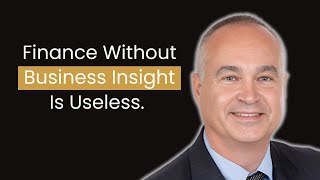
This is a YouTube video titled "Finance secrets for driving business success through FP&A with Jim Caltabiano" published in September 2024. It features a detailed interview conversation between Paul Barnhurst, the host known as the FP&A Guy, and Jim Caltabiano, a seasoned finance leader and former CFO. The discussion covers best practices in financial planning and analysis (FP&A), including connecting insights to business strategy, managing data quality, the importance of understanding the business, and the evolving role of technology and AI in finance. The content is educational and aimed at finance professionals seeking to improve their FP&A skills and business partnering capabilities.
From your perspective, what does great FP&A look like?
Great FP&A is all about being able to connect insights for the business. Use your skills, user insights within finance, all the great analytics that you have to help support the enterprise. If you don't understand the business, it's just numbers. Take the time, learn the business, learn your people, learn what makes it tick and then you can start to make the tweaks that you want to and changes that you think are good for the organization.
How do you get comfortable making decisions knowing that the data is rarely ever going to be 100?
It depends on the also the decision you're trying to make. I think that main thing once again is part of the role as CFO is also to make sure it really understands how clean is that data. We're relying so much on the information, the data coming out, but it won't matter if the data is dirty. Actually it's more dangerous as you get it clean. Master data, keep it clean. When you have the data and the insights and you're able to have that connection because you understand the business and you build relationships with your business partners, that's where the real power is. It's very easy to rationalize away the data. AI is going to be unbiased as long as the data is not.
FP and A Guy Here. Have you ever wanted to level up your FPA skills? Then check out the FP&A Guys Ultimate Course Bundle at the FP&A Guy.com that's the Fpanda Guy.com and use code podcast to save 25%. Get started learning today. Hello everyone. Welcome to FPA Tomorrow. Well, we delve into the world of financial planning and analysis, examining its current state and future prospects. I'm your host Paul Barnhurst, AKA the FPA Guy, and I will be guiding you through the evolving landscape of fpa. Each week we are joined by thought leaders, industry experts and practitioners who share their insights and experiences, helping us navigate today's complexities and tomorrow's uncertainties. This week I'm thrilled to welcome to the show Jim and Cal. Jim, welcome to the show.
Thanks Paul. Great, Great to be here. Excited to chat with you today.
Yeah, really excited to have you. I know we got the opportunity to chat ahead of time a little bit. I'm looking forward to doing this interview, so I'll give a little bit of your background and I'll let you add to that here in a few minutes. So it comes to us from the LA area. He has served as a senior finance Leader and CFO for multiple companies, including companies such as Del Monte Foods and Campbell's. He has his Bachelor's of Science in Finance from Syracuse and an MBA from Duke. And what we'd like to do is we start with this question for each guest. From your perspective, what does great FP&A look like? What is great FP&A?
Paul, the ultimate question, right, great FP&A is all about the insights. It's all about being able to connect insights for the business, period.
How do you do that? I'm just curious, how do you make sure you're connecting insights and not just giving data?
Yeah, I mean that's, that's really the key. That's why, you know, data is, is becoming faster.
Right.
So the real value of FPA is, is even more the generating the insights. You know, when I started my career 30 years ago, you had to spend more time just getting the data, you know, and not having quite as much time on the insights. Even though that's really what true FP and A people really want to do. Especially spend the time on the analysis, the insights. What's the recommendation? I think in today's world, it's even faster, right? Because getting data, getting a report is quicker, it's easier. The problem is the insights are still what the key is. That's still the secret sauce for, I think great FP&A.
I would agree with you. I think that's a great way. I really like the way you define that. And you know, providing insights that drive action really helps you be so much better as an FPA professional. So why don't you take a minute and just tell our audience a little bit more about your background, how you ended up where you're at today and just kind of your, your career.
Yeah, sure, Paul, thanks for the time on it. Yeah, it's been, it's been quite a journey actually. So as you noted, I started, actually went to school at Syracuse. Like you mentioned finance and actually marketing too. So the background there was I didn't do the traditional finance accounting path. I kind of of did finance and marketing because I really, really define myself I think more as a business guy than just a pure finance. I'm a business guy, right. So I grew up in the Syracuse area, went to school there, you noted. I went to Duke and after that I really started about a 30 year journey through FP&A and finance leadership, senior roles in the consumer packaged goods industry, mostly food and beverage. So I was very fortunate after graduate school to spend five wonderful years at Procter and Gamble in Cincinnati. Great company, great, great place to learn and develop. And really, really, when we talk about data and insights, P and G was great at, you know, saying, hey, we have plenty of data. This is about the insights and how you communicate it. And also getting your point across more succinctly too, which was great. I then spent big plots of my career, almost nine years with General Mills, mostly in the Minneapolis area, but also up in Toronto, Canada and spent about a decade with Campbell Soup Company in New Jersey, Canada in Toronto and then in California for some roles. And finally, last couple of roles I was with Ajit Moto Foods. So Ajinomoto is a very large Tokyo based company in the food space out here in Ontario, California. And then my last role was actually with Del Monte where I was both CFO and then switched and actually went into a role as Chief Technology and Sustainability Officer. And right now though, I'm out looking for my next gig. Paul. So there you go. And enjoying a nice severance summer which I, which has been great.
Well, we'll let the audience out there know that a, if they're looking for somebody in the package, good space to reach out to you.
Thank you very much.
Appreciate it. When you said Ontario, took me a second, right? You're talking Ontario, California, because you just said Toronto and I think Ontario and.
I've lived in both. So there you go.
I gather that through that, and I've been to both places, I, I know what you're talking about. It just took me a second. So when, when you and I chatted the other week, you shared a philosophy that you've used throughout your career that I'd like to just dig into a little bit. You said your, your focus has always been business first, function second. Can you elaborate on what that means?
Yeah, I mean to me the, the, the role, right, what we do in, in regardless of whatever function you're in, it's there to support the overall business enterprise, right. And so sometimes I think particularly in larger companies, right. But also in smaller companies, you get into this, you, you're kind of doing your functional style, right? And what I always tell people, particularly because in the consumer packaged goods space, food, beverage, you know, big cpg, you know, it's, it's always going to be a sales and marketing oriented environment, right. So the finance that you're doing there, you're doing finance, not for finance, right. I tell folks that always would come into the CPG industry. If you're really in love with finance, go, go on, go, go. Do I Banking, go do something like that. Right. If, if that's really, if that's really, really your passion. Right. But ultimately if you're going to work in really good FP&A, it's to support the business cause. And so what I don't like is functional silos. Right. What I try to encourage my teams is you gotta know why we're here. We're here to support the enterprise. Right. Use your skills, user insights with its finance and all the great analytics that you have to help support the enterprise. So always try to put the business first and your functional priorities second. If at all possible. That will get you a long way in the long in, in career and in business success.
I think it is great always putting the business first. Okay, what's the strategy of the business? How does what I do tie to that? The example I always gave a business first function second is I had every. About once a quarter commissions would come due the same time as our forecast or you know, a couple times a year. And I would get called occasionally going your forecast not in the system. You're late, like do you want me to pay people or meet an arbitrary deadline for a forecast? Never once did they say meet the arbitrary deadline.
Right.
It's like AR people. And so I think those, you know, that's just one small example, but I'd love a couple examples from your career of how you've applied that or how you've had your employees apply that in the workplace.
Yeah. You know, I think a lot of it, some of the best examples are maybe when you run into an organization and I've taken on, you know, several different kind of, I'll call them almost maybe turnaround or organizations that maybe were just not a fine tuned machine, if you will.
Right, sure.
And one of my examples, basically the organization, the f. The finance organization in particular was a little bit, I will call it shell shocked. And what I mean by that is, you know, they'd really lost the ability to have a seat at the table for the conversations. And so the organization really was more focused on just keeping your head down. You know, don't just peace as the organization is to get that linkage that you talked about to the business. Right. So the key role that I needed to do in that situation was to get our teams to understand how the work they did actually is a translation of business. Right. It's, it's, it's business results and how it drives the business forward.
So they're going to say how long did that process take to get the business or get finance where it was business first and help them get from being kind of shell shocked and survival mode. Because I would imagine that's not a quick transition.
No, it's, it's probably, it was probably 18 to 24 months realistically. Right. And it comes down to having a series of small victories. Right. You get in there and you start proving the worth and you get your seat back at the table. You basically help the broader organization understand that finance is there. We're objective, we're going to help drive decisions forward. That gets you and earns the right to have a seat at the table. But it's taking and using the ability to partner with the business. That's what gets you back into the game. And doing finance in a silo, if you're not connected to the business and just kind of generating things, it's just a lonely, a lonely existence and it's not fun. And we're a crucial function in driving any business forward regardless of what the industry is.
I'm 100% with you. I've been in roles where finance really isn't involved in the business and it's not fun. I want to work with the business and partner with them and be able to see, make a difference versus you. Just be quiet, return your report every month and leave us alone. Like, I joined a company and one of the first things I did is ask to attend the sales call because my role was coordinating between sales ops, finance and data analytics. And it was a heavy coordination role. And they're like, oh, we'll just send you, we'll just give you access to Clary so you can see all our deals. Which was their way of saying, we don't want you on the call. We don't want you to know what's going on because there's a lot of moving things around, a lot of timing to fill the pipeline and that eventually leads to a big gap. It's a question of when.
Correct.
And that's what happened eventually. But it was, you know, once we got a new cfo, he's like, nope, not happening. I'll be on that call. We're having them, here's how it's going to work. And we continued to work through that, but it was definitely a challenge at first.
Yeah. I mean, one thing I'll just add to that is I think you've, you've gotta, we talk about. When I say business first, function second, you have to have that desire to learn the business. You have to, whatever the industry is like you, you, you need to it's almost impossible to be a really good FP and a leader. Okay. With developing insights. If you don't understand the business, it's just numbers then, and you may be able to identify trends, but if you don't really understand the underlying business and how it works, those insights are pretty shallow. And so that curiosity is very important for an FP and a professional.
Yeah, Speaking of that, I'd love to know what's your roadmap? You get a new opportunity, you go into a company. How do you first go about learning the business? Do you focus on kind of looking through the P and L, talking to each leader, going out on site visits? Do you have a kind of a playbook you like to use to get in and really start learning things?
Yeah, I'll tell you, it's evolved, right? So earlier in my career, it was more of the classic, I'll call it more of a traditional academic approach. Right. Let me read through the reports, let me look at the PowerPoints. Let me study. Right. You know, probably the last 15 or 20 years of my career, that playbook I've thrown out, the playbook is to absolutely get out and see the operations. You know, especially if it's a manufacturing company, you got to see the operations. But also, very importantly, listening, right? Listening to your business partners and listening to your team. Right? That's how you actually learn. So, you know, it's one of those where, you know, again, probably earlier in my career, be like, I'll just read the report and learn. I'll study if you will. Now, it takes a little longer, but the actually meeting, talking, listening, what's on your team's mind, what's on your business partner's mind, because not only do you, you know, get a deeper understanding of what's going on, you're starting to build that relationship because that is a huge part of building trust and confidence in an organization. So the other thing is, you know, you don't go into a place knowing everything because you don't. Right. You have to have that humility. You've gotta, you know, you've got a. Certainly a skill set that you bring in. That's why you're there. That's why you, you know, got the role. But the idea there is, you know, take the time, learn the business, learn your people, learn what makes it tick. And that's probably the most important trait, I think, is, is just asking questions, listening, learning, you know, and then, and then you start to get your own. Okay, now I can piece things together. I understand it Better and then you can start to make the tweaks that you want to and changes that you think are good for the organization. But you know, you don't go into like a bowl in China shop. Doesn't work very well.
I agree. I love how you said throw out. You threw out your old playbook of the academic. I'm just going to read everything and I'll learn about the business. That's often how I did it. And the last couple hires I did one of my companies, we started to really set up a program because hadn't been doing a good job. And in that first week you had him spend a day with customer support and with product. Yes, they went through some decks, but a lot of it was out listening on the phone, talking to people, trying to figure out they get them on a sales call, whatever it might be. So much of that first week was meeting people and seeing their job and they transition much smoother and quicker than other ones where hey, just read about this, read about this. We'll show you how this report works and eventually you'll have some conversations with the business.
So I think it's a really good discussion, Paul. I mean the fact is the real role of FP and a right is to deliver those insights to help drive the business forward. And it's very difficult to do that if you don't understand the business. And the best way to understand the business is to feel it, touch it, smell it, right. Get out there and actually see what is going on. Once you have that understanding and you've actually kind of physically seen it, touched it or understand the processes, then that analytics and insights that you bring as an FPA professional, they start to link because then the numbers start to flow and it tells the business story and generates the insights. That is a critical, critical piece. And it's just you can't just do that from reading a report. It's almost impossible to get the depth you need.
Yeah, it is amazing how much better the conversations will be when you really understand things. There's things when I provide suggestions like, yeah, that's not possible and you don't understand why. And sometimes it's because lack of knowledge of the business and other times like, oh yeah, it's a good idea, we hadn't thought of that. And the better you know the business, the more often you're able to provide some kind of insider suggestion that's possible versus just throwing them out where it's like, yeah, you don't understand, can't do that, can't do that can't do that. And you're just going through a bunch of can't do type thing.
That's right. That's correct.
We've talked a lot about sharing insights and how important that is and how finance, you know, really is a translator and a conduit, their job. So how do we make sure that we're not just delivering reports? What are some of the things that we should do to make sure insights beyond learning the business, you know, is there a certain way you like to kind of analyze data or how do you help your team make sure they're going beyond the reports and really providing insights to the business?
Yeah, it's a great question. You know, one of the, I think the most important things that we need to do right, in FPA is don't just take the report. Okay. Because there's a real, there's a real desire broadly not across business. Right. You want, you want, you want the report to tell you the answer, right? Generally does not. It generally does not. And taking that next step to get the insights, what I try to do and always encourage my teams to do is dig a little deeper. And what I mean by that is try to maybe try and get. I love triangulating data. I like saying, okay, I see the, you know, the conclusion you're drawing from this, which is good, that's good analysis. Now take a look and are there a couple other data points? Are there a couple other situations, a couple of analyses that can be maybe confirm or deny or disconfirm, if you will, Even though it's not the right word, the answer, right triangulation is really important because you know, that right answer doesn't just spit out of machine. I mean, if it does, well, it kind of does, right to a certain extent. That's why I'm saying data spits out of a machine. But the insights particularly now are going to be more and more and more important. And I think you need to look at multiple data sets to try to triangulate information. I'm also really a range guy. I love ranges. Like, you know, when we talk about FP and A, you know, we have this, this idea that, oh, the more detail, the more precise, the more accurate. Incorrect. That is incorrect. Right. Your data is probably going to be. Your point estimate is probably going to be wrong. Highly likely. But the range, especially if you pull a couple of different insights in, you're probably going to be pretty spot on to an acceptable range. And understanding what that is is really important for an organization too.
FP&A Guy Here today I want to talk about the FP&A Guy's Ultimate FP&A Course Bundle. This bundle includes over 10 hours of content recorded by Ron Montero and myself, many templates and great lessons to make you a better FPA professional. The content includes FPA Business Partnering, how to manage tough conversations, build world class relationships and hold the business accountable. Includes Modern Excel, which is a real game changer for the way you'll work in Excel. Excel Tables, the gateway to Modern Excel Power Query, a game changer for transforming your manual processes and loading data, and then dynamic arrays. Next we cover modeling design principles. In this course we talk about the importance of designing models in a certain way and how important it is that you think about design. And last but not least, driving value through smart analysis, how you can conduct data analysis to be a better FP and a professional. Go ahead and sign up for this bundle@the fpnaguy.com that's the FPEND a n d a guy.com use the code podcast to save 25% get started learning today. Yeah, I think ranges have become much more important. There's the sensitivity analysis and then there's scenario analysis, which I now like to call scenario management. And then there's also just probability. Sometimes you're running whether you're doing Monte Carlo or other type of statistical that you can do to get comfort around your risk. Because like you said, we almost always submit a number for a budget and it's a point estimate. But anyone in finance knows there's a range around that point estimate and typically there's some de risking that goes into it because you understand there's a range to give you a better chance of hitting that number. As I say, if I could forecast with that level of accuracy, I would be sitting on a beach somewhere, you know. So it's, it's not about being right. Like I did, I had one time where a month, all the businesses rolled up to within like a hundred dollars on millions and someone's like, how do you forecast so well? I just kind of laugh. I'm like, they were off quite a bit in different areas. It was dumb luck.
The God of offsets, right? The, the law, law of large numbers. If, if there's enough in there, you get the offsets, you know, you don't look at and sometimes you catch the break, you know, but sometimes you don't. And they all those variances all move in the same direction, especially when it's bad. It's not fun, right? But it happens no, but ranges. Ranges are good. Ranges are good. I think one of the interesting things that you bring up there when you're talking about budgeting, right, and how things are rolling up is as you're building up, especially the more complex an organization, right, you're getting inputs from different pieces of the organization. And what you have to be very cognizant of as an FP and a leader is, is how much risk or opportunity have they already built into theirs? Because what happens is, right, as you scale it up to the CFO and corporate level, if everybody's de risk something or everybody's stretching, you don't have a good budget, you're leaned one to one to, you know, one side to the other, right? So you've got to. That's another piece of it. I really love to encourage the organizations that I work for. Give me a straight down the middle 50, 50 forecast. Give me your best, and then give me a risk and opportunity range. Don't bake it into your forecast. Just give me your straight. If you had to like bet straight up 50, 50, what would it be? And then give me, give me, give me the outliers. That's okay on both sides. That way, you know, especially as you're rolling up all of those particular things, you can kind of vet it and then say, okay, now what does the overall risk profile look for the organization as I scale this entire thing up?
That's a really good way to do it because what happens if you don't, like you said, you're one way or the other most the time, maybe they all net out, but usually they don't. They usually end up being one side or the other. And I've seen both of those where way too many opportunities went into the plan. And I even told them, like, this isn't going to happen. This isn't achievable. So as you mentioned, you know, ranges to forecast, you have to have them. And I think I really like how you said, look, just build me a straight forecast and then give me the risks and opportunities so you don't run into that problem where, hey, we're way under or way over. I've been there. I've seen times where I didn't build a forecast, we inherited it, where they put 50 million a stretch in, which was 10% of our revenue, and it was just a disaster. Every month explaining to the CFO, yeah, we pulled down 3 million. Oh, we're taking down the next forecast, 6 million. Oh, we're coming down 10 million. It was just, you know, a continual IT race to the bottom. And that's never a good situation.
It's, it's never ever a good situation. I think the other thing too, when you, if you ask for a 50, 50 forecast and then when you're asking for risk and opportunities, you take it the next step and you ask for probabilities on the opportunities. Right. Because then you start to get a sense for, okay, how real is this? Is this just a, you know, a sandbag? Is this a real concern? Are you confident like you're going to get this next customer? That revenue stream is coming in. You know, if you give me a 25 probability, I'm not putting that opportunity in the forecast. But if I see a 50, 75 and I'm balancing everything out, maybe it goes in. But that's another piece of just trying to get at that next level of probability around the risk and opportunity.
Yeah, I think it's great. I've done that before. We wait all of them by probability from, you know, it's in the bag. We just didn't put it in the plan for this reason to. Yeah, we threw it in there, but don't plan on it. Right. You have everything in between. We talk about that. We talked a lot about probabilities, odds. One other thing I want to talk about, you're dealing with data is the common challenge we have is incomplete and just dirty data.
Yeah.
How do you manage that as a finance department? How do you get comfortable making decisions knowing that the data is rarely ever going to be 100%?
Yeah, I mean, I think the main thing once again is multiple sources of triangulating information. I think you just don't, you know, it depends on the. Also the decision you're trying to make. You know, if it's just, you know, a report, there's no real decision being made. It's probably not as big of a deal. But, you know, if you're talking about, hey, we're going to do this product launch, we're going to, we're going to eliminate these products because they're not profitable or, you know, this, we're seeing this issue at a plant. I want to see multiple sources of information. Right. Because any one individual source of information, like you said, there's going to be noise in it. It tends to be though, if you dig a little deeper to try to understand it, first of all, with multiple sources of data, but also to try to, before you make the decision, before you make the call, is go a little deeper. Is the data clean? How effective is it? It's never going to be perfect. But is it like way off or, you know, so combination of going deeper in that one data set to say, okay, how much noise do I have in this thing? But also introducing a couple other things. Triangulate it and it points you in the same direction. I view that like, look, you have probably 80% complete data. You're never going to get complete. I mean, not if you're moving fast enough, right? You have to assemble enough pieces of the picture. There used to be this game called Classic Concentration way back in the day where you turn over pieces of the puzzle and try to guess what's behind it, right? That's kind what this is about. Turn over a few of those pieces of the puzzle and says, okay, now I feel like I've got a pretty good sense for the right decision. But just touching upon that briefly, the whole concept of data and data cleanliness is becoming even more. It was always critical, right, Paul? But now with AI and everything, it is even more critical that, that data master data in big hump. It has to be clean, right? And so part of the role as CFO is also to make sure I really understand how clean is that data, right? How clean is it, who owns it, how do we know it's good and it's effective? So this partnership now between finance and it is even more important than it's ever been because we're relying so much on the information, the data coming out of these algorithms that are happening. But it won't matter if the data is dirty. Actually, it's more dangerous because now you're getting data faster and it's wrong. And if it's still wrong, you're just getting wrong data faster, which is not a good thing either. So, you know, there's got to be a real implication for understanding data, data cleanliness. And then as you get it, clean, master data, keep it clean. What kind of governance do you have around it? Because I've been through many, many situations in my career, right? We do a, we do a special project, we clean up our master data, and then we don't govern it. And then two years later you're doing the same damn thing again. And it's kind of silly. So there really needs to be good boundaries because it's becoming even more critical than it ever was before.
And I'm curious, you mentioned your last role you did CTO for. I was Chief Technology Officer. How did that change your perspective on data? Or did it. How did that help you kind of see data from a different Lens.
Yeah, it was great. I've managed IT departments before as part of my CFO roles, but this last role allowed me to get a little deeper, right? And the spaces that we got deeper in on the technology side were obviously cyber. You know, everybody is very, very onto that big time and the risks related to that. But generative AI and what was going on there too, and how you start to think about what's coming next. Probably the biggest thing, though, for me was just given what's coming down the pike was really putting an emphasis on master data and cleanliness of master data. And probably the biggest change from having being able to be a chief Technology officer and get a little closer under the hood on technology, was one of the gentlemen I worked with that was our head of it, Great guy. He really started to reframe some things. So now as you're thinking about, you know, data lakes, right? Information being pulled into something where you can use different graphic interfaces to pull the information out. So a Power BI or whatever is making sure that data is clean. And instead of thinking of data as a system, start thinking of data as a product, right? So the data that's in there is actually owned by the business. It's owned. And not just owned, it's verified. They have to certify that information. Because if that happens and you get the right subject, IT departments before, as part of my CFO roles, but this last role allowed me to get a little deeper, right? And the spaces that we got deeper in on the technology side were obviously cyber. You know, everybody is very, very onto that big time and the risk related to that. But generative AI and what was going on there too, and how you start to think about what's coming next. Probably the biggest thing, though, for me was just given what's coming down the pike was really putting an emphasis on master data and cleanliness of master data. And probably the biggest change from having, you know, being able to be a chief Technology officer and get a little closer under the hood on technology, was one of the gentlemen I worked with that was our head of it. Great, great guy. He really started to reframe some things. So now as you're thinking about data lakes, information being pulled into something where you can use different graphic interfaces to pull the information out. So a Power BI or whatever is making sure that data is clean. And instead of thinking of data as a system, start thinking of data as a product. So the data that's in there is actually owned by the business. It's owned. And not just owned, it's verified. They have to certify that information. Because if that happens and you get the right subject matter experts looking at the underlying master data or whatever it could be, it could be supply chain information, whatever that then is certified and it's in the data lake, then I feel really good that pretty much anybody can go in and start using the information. I know it's right, I know it's consistent, but that is hard to do. It takes a lot of time. But it's really important and it's going to become more important as we go forward.
I, I couldn't agree more. It's so important on the data front and AI is only ramping that up. Companies are now going to make sure their data is clean, but you got to make sure, okay, why am I using AI? What data needs to be clean? Just don't go clean everything up because you can spend a fortune and some things you may not get value from. So there's that, that why that underlines all of it. But then you have that, you have that master data. Having a certification process is huge, you said, or you end up as we've all done. You clean something up, a year later you're cleaning it up again. You're just like, why didn't we fix this at the source?
And the source of a lot of this. It isn't an IT project. Okay. Data is on business and the subject matter experts of that function need to be the ones to certify and verify.
Yeah. Because it similar to we're support functions, we're not generally going to know the level of detail. We may be able to look at it and say something's wrong.
Yep.
That doesn't mean we should be the one certifying it.
Absolutely.
Unless we've worked in that role or have some deep experience that allows us to be an expert.
Right.
You know, something you mentioned earlier and we've talked a little bit about is, you know, models and detail. The most detailed in the model in the world isn't necessarily more accurate. How have you balanced, you know, detail versus simplicity? How do you think about that? Because it seems like it's the age old struggle we all deal with. How detailed should I be? How simple should I be?
You know, I think a lot of it comes down to what you're trying to answer. Right. I mean it really does. Like what, what's the profile of the question that you're trying to address? You know, if it's, if it's, you know, not that super critical, then you don't have to have as much detail, but at the same point in time, too much detail slows things down as well. So again, I like ranges and I think if you use multiple data sources and you use ranges, you're going to get in the right space. I think what happens a lot is what I've asked my teams a lot is, look, here's the information that comes out. Here's, here's the report, here's what you're looking at. Here's your initial analysis. Let's say you have again, some products at a manufacturing plant that you think the report says we should discontinue them because they don't make, quote, unquote, make money. I want you to dig deeper and I want you to now take away the accounting methodologies and I want you to follow the cash flow on this thing, okay? Because especially in manufacturing, things are fraught with allocations, right? And depending on the situation, if a plant is not at full capacity, then you're pulling something out and you're like, oh yeah, we're going to save this much money because, you know, we're limiting this, this product loses money. It's like, oh yeah, but you forgot all the allocations that are fixed at the plant that aren't going away. And all this SGA corporate stuff, it didn't go away either, right? So you need to think about it differently. You need to, to say, what am I trying to address? And that tells you what level of analysis you need to do, including the level of detail and number of sources of detail. Again, it'll point you in the right direction. But then you still need to dig deeper, Paul. I mean, honestly, one of the things I always coached my teams on is don't go for the simple route, okay? If a system spits out a number and it's as simple as that, you're not really needed. Sorry if that's not, you know, we can. And that, that is, that is what we're all going to face with AI, right? It's, it's not that we're going to be able to get information easier, okay? The issue is, are those insights correct? And that still is the human mind. That's still that interaction of that data and what it's telling you and your own intuition. Because also I tell my teams, trust your gut too, okay? Trust your gut as well. If it doesn't seem right, ask the next question. Let's keep dig a little deeper.
Looking to level up your career and build skills that make you stand out to FP and A hiring managers. How about earning a certificate from a world renowned business school. Wharton Online and Wall Street Prep have partnered to create an eight week online financial planning and analysis certificate program. You'll learn the option art of forecasting, analysis, business partnering and financial storytelling from Wharton Online's world class faculty. Coupled with first hand exposure to technical and interpersonal skills with real world applications as practiced in top corporations. Space is limited so level up your career today and use the Discount code the FPAguy 300 to receive $300 off tuition. That is the FPA guy. 300 to receive $300 off tuition. Learn more by going to Wall street prep, wharton upenn.edu. you know, the way I like to describe it, I worked with the guy is being able to have that kind of this make the sniff test. Having the ability to look at something and just be able to say on the surface, knowing nothing about it, this just doesn't look right. I don't believe this could be right. Like I worked with the guy and he had taken over a role I had and he'd pull numbers and they would look like order of 10 times what we were expecting and he'd have no. He just couldn't comprehend why they were wrong. Well, this is what the system gave me.
Yes.
That means we have 120 of the entire business in the world. That's not possible or whatever it might be. So that's huge. Of just having that ability to do sanity checks beyond understanding the numbers, any of that. Just that sniff test and that gut that can help you at least directionally dial things in that, you know that.
Sniff test is the gut I'm talking about, right? It's like it doesn't feel right if something just seems off. I've always asked my teams, no matter what it is, just ask the next question, just dig a little deeper. Don't necessarily just rationalize it away. If your gut's saying you know something just doesn't pass the sniff test, right. Just go a little deeper and maybe it's fine, but maybe it's not. That I think is some real power in there. Because one of the things with finance, right. And FP&A is we have to be very objective. We have to be very data driven and objective. You know, there are natural biases that are set up in businesses for good reason. Right. Marketing and sales need to be more, you know, focus driven, more optimistic. They need to do that. Right? Supply chain is going to be a little more conservative. Like, man, I want to run this stuff like I want it just like it's just the nature of the business. Finance needs to play it right down the middle, right down the middle and be ruthlessly objective in what we're doing and our analysis and speak with information, speak with data. And when you have the data and the insights and you're able to have that connection because you understand the business and you've built relationships with your business partners, that's where the real power is.
I really like the term you used about being, you know, objective. When we talk we use the word ruthlessly objective. And one I've heard is, you know, dispassionate, hard headed analysis in that just remove the emotion, lay the facts out on the table, let them be what they will be and then figure out what you do because of those facts. Because as soon as you bring emotion into it, you tend to bring bias into it as well.
Absolutely, absolutely. And it's very easy to rationalize away the data. Right? It's, it's if you don't have the strength and conviction of finance. And again, it doesn't mean being hard headed and stubborn in and of itself. It's just keep bringing the facts and make sure that they're at least understood. And by the way, that doesn't mean you know, the decision is going to be maybe the one you advocate, but at least make sure the voice is heard because there will be a desire to rationalize. Maybe the data is telling you something and people just don't want to accept it. Right. And that's not easy. That's one of the tougher jobs in FP&A is to actually be the contrarian against a popular opinion. But you have to do it. That's one of the most important things we do in our roles.
And something I've heard and I haven't got to try it much, but I've heard generative AI is great to ask for a contrarian view like giving it some data and asking it to poke holes and be kind of that other side of the argument because it will think of things that you may not think about and then it gets your mind going. You're like, oh, what about this, what about that? So I just kind of wanted to bring that in that that's a funny area where you can potentially use generative AI.
Absolutely, yeah. I mean again, I think it's any additional source of information or data that can add to the decision you need to make is very, very important. And it does, you know, if again AI is going to be unbiased as long as the data is not skewed. Right. That is a good check, I think, in balance, in terms of making the soundest decisions you can.
Yeah. As long as the, you know, you've written the algorithm where it's just analyzing the data, you don't have bias in the data, you're good. You know, the reality is all of our generative AI, we know has some bias and you have to look for it, but when it's trained on a specific data set that there's no bias in, it's just strictly returning facts. That's a great, great way to check. And that's usually what it's doing when it's running numbers.
Yeah. And I think the key there is to not rationalize away the data and what it's saying. At least, at least engage with that perspective. Not just like, oh, this is. Yeah, no, no, just dig in. And maybe it's wrong or maybe it, maybe it's, you know, it does, it's good data, but it doesn't really sway our decision. But maybe it should, or at least be considered.
I still remember the story when he said, at least be considered. So I worked with a guy in Arizona that worked at American Express. He had done a PhD in physics, and he had this data set. And he went to his professor on this little part of the data set. He said, this is odd. Maybe we should dig down and study this. And his professor said, no, stick with the original. Let's work at this data. And that data he had been looking at. The next year, the guy that won the Nobel Prize studied that area of a data set that was in the data that he had been looking at. And he told that story of just like how different things would have been had they just looked at that data. And obviously that's a huge example. That's not typically what's going to happen if you don't look at some data. But, you know, it could be on a smaller scale or a bigger scale, but look at those hunches, look at those outliers and just at least get comfortable with them. Even if you don't do anything, you.
Know, at least, like I said, engage with the data, engage with it, and then go from there.
Agreed. All right, so this next section, we like to ask a couple standard FP&A questions, looking for kind of quick answers where you stand on each of these. The first one, we like to start with. Number one technical skill that FPA professionals should master.
I, I actually think it's that, that range you're getting comfortable using multiple data sets and Ranges because you, you 80% is what you're going to get.
I like it.
Number one, soft skill, active listening skills by far.
I love that you didn't just say communication, but active listening, because that is so underutilized. It's one I had to get better at.
No, Paul, I mean, it is probably the most underutilized soft skill in business, period, because there's so much that comes from it when you practice it.
So any advice? If somebody's listening, they're saying, I want to get better. As an active listener, what would you recommend they do?
I mean, you have to be cognizant of. It's hard to do. We all like to talk and get our point across, right? I mean, that's just human nature. So you, you literally need to actively tell yourself sometimes to just shut up and listen. I mean, it's as simple as that. But it's hard, right? And, and again, the bias is we generally, almost all humans listen to respond. That's, we're just conditioned that way. But I mean, I have tried really hard over the last 10, 15 years to hone in these active listening skills because, number one, we were talking before about how you learn a business. One of the best approaches is to actively listen to your new coworkers, your team. You get good insights. The other thing is, very importantly, you build relationships because people want to be heard. That's really important.
Thank you for sharing that. And I, I agree with you. Sometimes it's just telling your mind, shut up and focus. Stop thinking about the next question or what you're going to say and just listen. And just a constant reminding yourself till it becomes ingrained at some point where you actually start finding yourself, oh, I'm really listening. I'm not thinking about what's next. It may not be very many times that happens, but it gets better.
It always gets better. And, and when you do it, Paul, right. When you do get good in active listening, build those, or like I said, you build those relationships. And even though you know, you may not agree, you may be in a different situation. People that you are listening to feel like they've been heard and understood. And that is huge.
100% agree, Jim. You know, even if you make a decision they may not like, if they at least feel understood and heard, they're usually willing to support it, to back it.
Very common. I mean, and that's, that's common for most of us, right? I mean, just because you have an opinion, that's, you know, you offer an opinion, doesn't go that Way. As long as you've been heard, you go with it and you execute.
Agreed. What is the software? You can't live without an fpa.
I'm still old school. I'm still Excel. I'm sorry, that's all I got.
Yeah, lots of people are. You're not alone.
I mean, it's just. It's just you can still do so much in Excel.
Well, and, you know, funny you say old school, but the amount of changes they've made over the last decade to Excel is pretty amazing. I know it is not. If it was the Excel of 1983 and we were all still using it, or 85. Yeah, 85. I'd have some real problems. But it's not. It's so much more than that today.
Don't make me homesick for Lotus. One, two, three. Okay.
I did use that.
I used it in college, dude.
At college was Excel for me.
Good.
Phew.
Good for you. I was at that transition where Lotus 123 started, and then we were moving to Excel. So there you go.
Yep. And we. I think we had Quattro Pro for a while when I was a kid. I still remember the strip you'd put on top of your keyboard that would give you all the commands to use, kind of like shortcuts today. All right, this is the get to know you section. We're going to ask some questions to know more about you as a person. So, Jim, what's your favorite hobby or passion?
You know, I really like hiking. You know, you mentioned before, I live in. Near Los Angeles. I live out in the suburbs. We have beautiful, beautiful. Just hiking trails and canyons through here. And the weather's good most of the year, so I really enjoy getting outside and hiking. It's just. It's just gorgeous.
Yeah, I love to hike as well, and I've done a lot of hiking in the Sierra Nevadas. There was fabulous Whitney and Mammoth and Yosemite, all that. So beautiful.
It's gorgeous.
Beautiful country, for sure.
Sure. Yep. Definitely.
If you could recommend a book to our audience to read, what book would you recommend?
Yeah, you know, there's a. There's a book in a course that I took, but the book is one called Getting Things Done by David Allen. It is. It is one that is incredibly focused on productivity and efficiency, and it's. It's a really outstanding book. And not only the book, but I was fortunate enough, now, about 20 years ago when I was at General Mills, to actually be able to take a course that he taught. It really really helps with efficiency, productivity. It's well worth the read. There's some simple tricks and tips that can really help you be a lot more efficient in juggling the multiple things we have to juggle every day.
I have to check that out. I could definitely be more efficient.
I think you'd really like it. I really do.
Good. No, I appreciate that recommendation. So getting things done. I'll check that out.
David Allen is the. Is the author. Yep.
David Allen. Okay, got it. Getting things done.
Perfect.
All right. If you could travel anywhere in the world tomorrow, where are you going?
I like Tokyo. I've only been there a couple times on business, but. And I wish I had more time there, you know, it's just. It's an amazing city. It's an amazing culture. Safe, clean. But there's just so much to do and experience. There's so. I thought it was fascinating. Great city.
That's a place I want to go. My daughter wants to go there. We had a cousin that was here from Japan for about six weeks, and she like, I want to go to Japan now on vacation. We're like, not this year. It's like two months away. Maybe next year.
But it really is a wonderful country. It really is. And you guys would enjoy it. And Tokyo is just fascinating. The size of the place is incredible.
I'll have to. I'll definitely. It's on my list. I'd love to get over there. I haven't been to Asia yet, so it's somewhere I want to go. All right. If you could have dinner with one person in the world who's alive today, who are you taking to dinner?
I would love to go with Phil Jackson. So Phil Jackson going to. With a sports analogy. So Phil Jackson, Right.
As a Jazz fan, it's hard to hear Phil.
I know, I know. But you know someone. Someone, right, that has played the game, but then has coached and won 11 different. 11 championships in the NBA. Two different massive, you know, winning organizations with the Bulls at the time and Lakers. But the key is, how did he win so many. With so many different pieces, how was he able? And you think about the egos involved, right? So you have talent, but how do you make the talent actually work? What leadership skills? How did you motivate these guys? They have all the money in the world. They're talented as can be, but somehow you got them to jive. I would just love to tap into that.
I agree with you. It would be fascinating. He was one of the best. Not necessarily X's and O's coaches he had great assistance for that, but he was able to manage relationships and egos extremely well. I mean, look at the relationship between Pippen and Jordan today. Don't even talk to each other. But yet, you know, he had him working together very well during their career. He kept Rodman in check for three years, which that's quite the task. That alone. Right. You know, Kobe Bryant and Shaquille o'. Neal. That had to be a difficult two to manage.
I just would love to tap into that because that's, that's a form of leadership. You know, he had the blessings of talent.
Yes.
Too much. So how do you manage it? I think, I think it'd be fascinating to learn how he pulled it off.
Yeah, I would love to learn some of his leadership skills. I, I think that would be really interesting. All right, so here's the wrap up. We have two last questions we're going to ask you, then we'll let you go. First is if you could offer our audience one piece of advice to be a better business partner. What's that advice?
Shut up and listen.
I figured there was probably going to be active listening.
Just active listening because it is something that can unleash so much goodwill. You're going to learn, first of all, you're going to learn the business. Right. But again, you are going to build those relationships and it is a very underutilized skill. Extremely underutilized, especially in bigger organizations. So, yeah, try to listen. Try to listen and learn.
Perfect. Last question. If someone wants to learn more about you or potentially get in touch with you, what's the best way for them to do that?
Yeah, probably the best way is just the email. It's J Caltibiano. So, you know, you got the spelling in there, right? So J Caltabiano cloud.com love to hear from folks, see what they think. I think it's a great discussion here because we're talking about all the technical things too that FP&A does. But what we've hit upon, I think a lot today, Paul, which is something that I've continued to discover over my career, the soft skills, man, they still matter a lot. And the combination of the two are incredibly powerful.
Well said. I mean, when you combine someone with good technical skills and good soft skills, that's somebody you want to keep. You got a good employee, they're worth so much when they can really manage relationships and provide insights.
100%. And it's, and it's, it's good for the organization and it's great for the employee. And the individual because you know you're contributing. Because we all want to contribute. We all do.
Yeah, we all want to make a difference. Nobody just wants to punch the clock every day. It gets really old after a while.
Big time.
Thank you so much for joining me, Jim. I've really enjoyed chatting with you. It's been a real pleasure to spend a little bit of time with you and excited to share this with the audience.
Thank you, Paul. I really appreciate the time and I wish everybody out there good luck and good work and good insights as you move forward. Thank you guys. Appreciate it.
Good luck, driving insights and thanks for again for being on the show.
Jim thanks for having me, Paul. Appreciate it.
Thanks for listening to FP&A tomorrow. If you enjoyed the show, please leave us a five star rating and a review on your podcast platform of choice. This allows us to continue to bring you great guests from around the globe. As a reminder, you can earn CPE credit by going to earmark cpe.com downloading the app, taking a short quiz and getting your CPE certificate to earn continuing education credits for the FPAC certification. Take the quiz on Earmark and contact me, the show host, for further details.
More from Paul




Trust and Leadership Lessons for FP&A From 100+ Top Leaders with CFO Jon Laudie






