FP&A Business Partnering and Influencing with Ron Monteiro and Paul Barnhurst Webinar
This is a YouTube video titled "FP&A Business Partnering and Influencing with Ron Monteiro and Paul Barnhurst Webinar" created in January 2024. It features a live interactive webinar with Paul Barnhurst and Ron Monteiro discussing strategies for financial planning and analysis (FP&A) professionals to become effective business partners and influencers. The session includes jokes, audience engagement, discussions on trust, business acumen, communication skills, and practical examples from their careers. The content is educational and aimed at finance professionals seeking to improve their impact and influence within organizations.
All right, welcome, everybody. We'll get started here in a minute. We got another minute before we get started, but we got Ron and I here, and we're super excited to share our thoughts with you at this FPA Business Partnering and Influencing webinar. But before we get started here, I got a joke. Ron, what's the difference between an accountant and an FPA PNA professional?
Tell me. Paul, I've heard this a million times, but tell me one more time.
A million times. Wow. Ron's heard my jokes a lot, but I'm sure there's others in the audience that will actually appreciate it, the people that are out there. So when an accountant gets creative, they go to jail. When an FPA professional gets creative, they get promoted. And if you can hear us out there, please just let us know where you're coming from. We'd love to know your location. And it's top of the hour, so we're going to get started with a quick little countdown and then we'll jump into the presentation here. So please keep the comments coming. All right, well, it looks like we've had a lot of comments coming in, so we're just going to run through a few of those as we get started here. So looks like we have someone from St. Petersburg, Seattle, Brazil, Germany, Philadelphia, Kansas, India. We got a student with us from Montana. We got another from Toronto. From your neck of the woods, Ron.
There you go. There you go. Hey, Jennifer.
Manitoba. We got enough, man. There's the Canada people are coming out. They're representing Wisconsin, so. Great. Well, we're really excited to have you. And one thing you'll find with Ron and I, whether it's a webinar, our training, whatever it might be, we want it to be interactive. We want to have fun. So you'll hear us tell some cheesy jokes. If you don't like them, just groan inside and, you know, pretend like you do. No, you can always ask me to stop. Ron does from time, so.
So, Paul, let me. Let me get into the little jokes. And by the way, hey, Celine, I've worked with you for a while. And Isaac from Kenya. I was born in Kenya. Still, great to see you guys. Welcome, Donna. So. So, Paul, what are very tall expenses? And Celine, jump in if you know the answer to this.
I have no idea. Ron, what could they be?
Overhead, buddy. Overhead.
That's right, overhead.
All right, I think we should move on, Paul. I think the folks didn't come for standup hour. But anyway, let's get into it, and we're really excited. So Paul and myself really love teaching FP&A and we both spent a number of years in FP&A, which we'll talk about. So today we're really going to focus on how do you become the best business partner and really influence the business to drive fantastic results, to drive higher engagement, to love your job even more. So Paul, myself going to tag team. But what we really encourage is ask questions in the chat. We love having good dialogues to go through this.
Right.
And the questions always lead to fantastic discussion. Okay, first of all, thank you very much. Really appreciate you all taking the time. We understand time is the most valuable asset. So really want to ensure you get a tremendous amount of value from this session. And Paul and myself always talk about it's important to say what are 1, 2, 3 things you're going to take and implement in your day to day.
Right.
It's all about how can you improve your day to day and have the best impact in 2024 that you can. Okay, Paul, turn it over to you for a quick introduction.
All right, so if you don't know me, my name's Paul Bartonhurst. I go by the moniker for my business as the FP and a guy that was something that came about on LinkedIn a few years ago and stuck. I have both a bachelor's and an MBA as well as a Master of Science and information management. About 12 years of FP and A experience, you know, 15 plus years total experience. Almost 20 now work for companies such as Digicert, Solera, American Express. Been running my own business for the last almost two years. I do podcasts, FP and a Today Financial Modeler's corner. I'd say kind of FPA influencer. I share a lot of thoughts on LinkedIn and then obviously I get the opportunity to train quite a bit. Ron and I do a lot of training. What you're going to see today is from our, one of our courses, a lot of it that we share around business partnering. So that's a little bit about me and I'm going to turn it over to the storytelling guy.
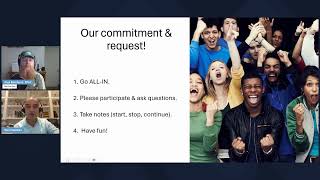
Yeah, fantastic. And I would just echo. And Paul is one of the premier FP and A influencers in the world. And his podcasts actually are in the top, I don't know, 2, 3% of all finance podcasts the world as well. So kudos to him. And the one thing I will say is Paul, actually I saw him two, three years ago when he first started. The improvement is tremendous and that's what we always talk about. It's how do you keep improving every day, keep trying things every day? And I'm privileged to work with a gentleman like Paul who really has that attitude. So for myself, I grew up in Kenya and I moved to Canada and I called the storytelling guy by Paul, But I was actually very shy and a lot of trouble doing any presentation. So again, I've worked on it and now Paul myself do for a living. But where I got my FP and A experience was mainly at Kraft Foods. And I see Selen, who's a friend of mine, who worked there as well. And it was truly a culture of being a business partner. You're at the table, you're helping make decisions, and we'll talk a lot about what it takes to get there. I also work for wonderful companies like Campbell's, Kruger products. And similar to Paul, I train for a living. I do training for a living, coaching. I'm a speaker, so I do public speaking now and a podcast. So host as well. But my podcast is a little bit more amateur. I should say a lot more amateur than Paul. But anyway, fantastic to have all of you on the call. Okay. Our commitment, we go all in. You'll see that. Please do the same.
Right.
Jump in with questions, comments, keep the chat going. Absolutely love it. And one of the things that we both always stress is take notes, right? Because even if you never look at those notes again, there's higher retention and implementation. So again, we really want to stress that implementation. And last but not least, we started with a few jokes. Have some fun. If you have any Excel jokes you want to put in the comments, do that. Paul really needs new material. Okay. Paul, over to you.
Alrighty. So we've run through the introductions here. We're going to talk a little bit of what we just kind of call modern FP and A or modern finance. We're seeing a lot of changes today. Constantly, you know, that's constantly happening. We'll go into business partnership, and then we're just going to briefly talk about our February FP and a course cohort that we have coming up here and just share, you know what, some of the benefits and how it often solves people's pain points. So we're going to jump into the material here, and I think you guys will really enjoy it.
Fantastic. And Paul, just before I get into these next couple slides, there was a question about a recording. Is there a recording that can be sent out to participants?
Yeah, we are recording this.
Okay, fantastic. So thank you for the question. So we did want to start with some industry statistics and both Paul and myself have been involved with a group called FP&A Trends. Larissa Melnichuk, you may know her from LinkedIn and they do a lot of cutting edge research in terms of where we're at. We always try to say we where is the profession right now? And this chart, you know, you can look at it from a glass half full or glass half empty perspective but where it what it shows is for respondents, 45% of time was spent on low value activities. The red and the orange.
And so raise your hand if that's you. Throw that out in the comments.
Yeah, jump in. I'd love to see where you are on that scale. Only 34% on that insight generation and driving actions.
Right.
And the glass half full part of me says how do we move our profession more and more to the right side of this page? How do we move more to understanding the business, driving the business, like really being a partner as we go forward. So really important to say where are we now? And a little bit of self reflection for all of you to say where are you and where's your organization? And what is those 1, 2, 3 things to move to the right side of this page. Another cool piece of research they did was around what are the important roles within an FP and a team. And what's really important is when I first started in FP&A, it was very theory call it static.
Right.
You got these roles, you do your job, you run through, forecast things like that the world moves faster than ever before.
Right.
So it's really around. How can we take advantage of for example AI and say, you know, that architect. The data scientists become much more prevalent than they were before. Paul, I know you have some good thoughts on maybe defining that architect and data scientist for the group.
Yeah. So when I look at this, right, let's just kind of split it up. Analyst is a typical role you've always seen, you know, influencer and storyteller is really the communication side. It's become so much more important over the years as we need to be more strategic. The architect and the data scientists show how big of a role technology is playing. I think the data scientist is pretty self explanatory. We're starting to see more and more of that need with AI. Sometimes you see what you'll call the citizen scientist instead of the data scientist. But really being able to bring in AI, machine learning algorithms, things that can work with huge volumes of data and find trends becoming much more common to see that in FP&A. I know someone who ran the first data science team for Facebook in finance and did some amazing things that changed the way they forecasted. And the architect is almost like a connector, right? With all this data, you need someone that can help speak to it. I've often played that architect role in my career where talking to the it, helping with the BI tool or whatever type of thing we need to implement. So these are really the five roles. And obviously it doesn't mean every company needs five people. It's the five most common roles we see. And sometimes someone's doing all of those, sometimes someone's doing two or three of those, but those are the type of roles we're seeing in FP&A today.
Fantastic. Okay, so what we typically start with is just a little bit more of a broader overview of how we see FP and A.
Right.
And the four pillars and look other people could define a little bit differently. The four pillars Paul myself choose to talk about through FP and A is number one analytical skills.
Right.
We almost consider that table stakes. You need to have a foundation of great analytical capabilities, whether it's being able to do a net present value analysis and irr, maybe it's a rate versus volume on a P and L. Those are all important skills and they'll continue to be important. The next one's budgeting and forecasting. And this is where both Paul and myself have been involved in budgeting exercises that seem to go on forever.
Right.
And what happens is you start losing the value. So we like thinking about how can you take that process and make it as value added as possible and help drive the business.
Right.
As opposed to being that process we all never look forward to going through. So again, a concept, for example, like a Sprint budget or a Sprint forecast could be really important in these times. Management reporting and data visualization. We love showing some visualization and how you can get to a much quicker understanding if you show a visual versus if you show a chart of numbers.
Right.
And again, lots of great opportunities there to improve. And last but not least, business partnership, influencing and storytelling.
Right.
So again, that combination of skills and as we grow, we typically are very strong in one or two of them. How can we round that out? How can we push on the ones that maybe we're not as comfortable with a growth mindset? Okay, so. So again, there's many things involved in business partnership, right? So here's a few that Paul and myself are really passionate about.
Right.
How do you earn that seat at the table such that Your business partners are saying, hey, we want Paul at the table. We want Marianne, we want Brendan. You know, all these folks, like, how do we earn that seat at the table? We'll talk a lot about it. Actively involved in the business.
Right?
Both parties contributing meaningfully.
Right.
There's. There's a lot of times where I've been in certain companies where the business partners, be IT sales, marketing, supply chain, almost say, hey, finance, can you send me a P and L? And then that's their level of involvement. We say, we want to get much past that. We want the P and L is cool, but how do we then interpret it for them and almost get to that decision making, Right? Both parties benefiting. And really a classic one plus one equals three. How do we be partners such that we take that business to the next level? Paul, any thoughts on this?
Yeah, I mean, I think, you know, the big thing is we all want to earn the seat at the table. And one of my favorite stories. So it would have been the second podcast I did, guy by the name of Jack Alexander. If you get an opportunity to listen to it, I highly encourage you. It's kind of a master class in fpa. Just had him on again this week for a second round. But he talks about one time he was sitting in a meeting and with a bunch of people, and they're talking about how finance earns a seat at the table. And he tells the story. There was a VP who took his fist and pounded it down on the table and said, you just demand it. And he was like, no, it's not quite how it works. Right. It's a process. There's trust involved in this, and we'll talk about those things. But as we continue forward, you know, share your thoughts. How do you. What do you think is important to business partnership? You know, what are the key things you've seen as we continue to talk to this? Because we all learn together, but.
Yeah, and I love some of the comments coming through.
Right.
So, Marianne, thank you for that book reference. Lead with a story. Absolutely love it, Brendan. Yeah. Essential to understand the business, which we'll talk about. And Celine's even used it on cover letters.
Love it.
I love it. Okay, so we're going to play a little video and would love you to see what they do to the finance team. Yeah. And thank you, Brendan. Listening is key. I had one client who had used the term generous listening, which I thought was really cool.
Right.
Active listening being another one.
Start with the listening tour. When you have a new role. Not hearing the Volume. Give us one second here. While he's doing that, I'll share one more Excel joke. So if you need to store an Excel error message in Excel, any ideas what cell you should store it in? I'll. I'll type it in here, and we'll see how long it takes people to figure out as we're waiting for them. Column fu, row two. All right, hopefully we got the video working out. I'll give you.
All right, we'll try it one more time. Paul, give me a thumbs up if this sounds working.
Think more. Drink coffee. Stop thinking. Start doing hatch design. Kill the design. More coffee. Design something totally original. Okay. Not that original. This original. Now it's time to make something. Do it again and again.
That's good.
Kick out the committees. Call on the engineers. Call in the car guys. Call on the nerds. Not those nerds. Those nerds. Blow off lunch, blow off dinner, blow off weekends, sleep. Okay, that's enough sleep. More coffee. Build a prototype.
Mold it.
Shape it. Hate it.
Start over.
Build another prototype.
Mold it.
Shape it. Love it. That's good. Kick out the committees again. Why? Because they lead to compromise, and compromise leads to this. Okay, back to it. More coffee. Give it some kick. Give it more power. More power. Never too much power. Give it 40 mpg. No, 41. Give it a smartphone app that can start the engine. Give it a huge display. Bigger. No, bigger.
Good.
Give it a starting price under 16 grand.
Uh.
Oh, the finance guys. You can't do that. Kick out the finance guys. Take it to the track. Tweak, tweak, tweak, tweak style. Take it to the car shows. Call the critics, call the marketing team. Win some awards, get a celebrity endorser. No, no, no, no.
Yes. He's perfect.
I am.
Yes, you are making a groundbreaking car.
It's that easy. All right, who noticed what they did to finance? Throw it in the comments. So, you know, obviously they didn't love finance, as we. You probably all noticed. Right? They kicked him out of the room. Right? We got kicked. Exactly, Louis. We. We unfortunately, sometimes we get kicked. Kicked them out. And, you know, that perception is unfortunately, all too real sometimes. You know, I've heard the term cf. No. Right? Because you guys are always saying no. I had someone tell me one time said to a finance leader, do you guys ever have anything positive to say? And here there was a. I think it was Business Insider or Fortune had a kind of a stereotype of all the different businesses.
And.
And what they said about finance was pretty revealing. Treat any suggestion to modernize practices as a grave insult. Right. So basically, idea is, hey, we just want to stay in our spreadsheet. We don't care if it's 30 years old. Leave us alone. Technology doesn't matter. A little bit of an exaggeration, but unfortunately, that's kind of sometimes how we're treated. And the second one, treat small expenditures as a huge deal. Like, wait, you want bagels? Are you kidding me? Why would we do that? You know, and. And that type of. That type of thing really hurts our reputation because unfortunately, that's often how we're viewed. I once worked for a company where one of the leaders said to me, this is the first company I've worked at where I enjoy legal more than finance. Like, hey, wait a second, I'm hurt. Right? Not exactly how you want to be viewed, because we know what people's, you know, lawyer jokes are even more common than accounting jokes. So here's how people often view us. But how do we want to be viewed? And I would argue, you know, the list here on the left is what we want to be seen as. We want to be seen as a strategic business partner. We want to have that seat at the table. I want the people I support to say, where's Paul? If they're making an important decision, why isn't he in the room with us? He provides value. He's my advisor. Right. You're part of that decision making. And I, I bet if I ask how many want to be treated that way, see what we get. You know, feel free to throw it in the chat. How many feel like they're. They have that relationship in their business often. It's not what we have. We're still often fighting for that seat at the table, and we're gonna spend quite a bit of time talking. What are the things we can do to better get that seat at the table?
Absolutely. And what we'd want to go to now is we'd love some participation around what are some skills and behaviors of great business partnership? And frankly, if you want to put up, hey, what are some terrible skills, Just put that in the chat as well. But we'd love some specific skills around what does it take to be a great business partner as we run through the next few slides? Okay, so. So the way we've couched this out is around, hey, what are seven strategies to become a great business partner? We'll run through most of them. If we run out of time, we're too. We're cool. We'll run through what we have Time for. But we'll ensure we have time for questions. And thank you, Marianne, for kicking it off. Flexibility without losing sight of the ultimate goal. Absolutely love it. Communication from Luis. Absolutely. Great. And keep them coming. We'd love to see that and. And think about, hey, where are you very strong at? And where are some areas to improve on business acumen? Thank you, Carlos. I think does help. I think Tammy's on their growth mindset. Sorry, Paul, I missed that.
Celine said, hate to say it, but being likable helps a lot.
There you go. There you go. Help CEOs execute their vision. Yeah. So keep them coming. Absolutely love it. So. So here's a few things from our perspective. So, number one, learn the business, invest that time, right? Adopt that student mentality. And I've seen individuals who may come into an organization and adopt that, hey, I already know a lot about blah, blah, blah, and they don't take that time to learn. And two things. One, it kind of goes against what Celine was saying, because people don't quite appreciate that. And secondly, you miss opportunities to learn. And then I had this one gentleman, he used to come in to new roles, and at craft, we had a rotational program. And for the first few days, he would literally lock himself in his office, study the P and ls. And when he emerged from there, it was pretty cool to say, look, he had really understood the trends on all the big P and L lines and what that facilitated, he was able to then go and ask great questions.
Right?
And asking great questions is absolutely a fantastic way to do it. So annual reports, investor calls. One of the other observations I have is a lot of finance people become insular within their company. And having that broad perspective really helps with that seat at the table that we're talking about. Okay? Building on that research and understand your products, your competitors, your customers, really, really important. And one of the cool coincidences I had in my career when I joined craft, they actually had a program where we had to visit the factory. We went out on a sales call. I actually got a chance to present pricing to a company called the Second Cup Coffee Co. In Canada. And the person who I was presenting it to was yelling at me. It was a formula pricing. There was no subjectivity in it. But what it enabled me to do is really understand the battle that our salespeople have every time they try to put in a pricing recommendation. So again, you start building that empathy. You start saying, how can I really understand and help facilitate that? As opposed to looking at it just from a spreadsheet point. Of view.
I think we need to put a comment in here. It's important to understand the financial insights and reading between the lines, what the numbers mean. Oh, and you need a beard like mine. Just so you know, Ron. So thanks, Jeff. I paid him to throw that in there, so I figured I had to put that one up there. Just, you know, have a little fun here.
Yeah, Jeff, it's, it's, it's kind of like what's that guy Harden on in basketball? He can never shave it now. Right, okay. And then Andre, I appreciate you putting a great comment there. Key problems. Companies do not have clear rules on how the decision is taken. And again, I love that because then it's about how do I have a principled approach to making decisions. And one of the companies I went into, it was interesting. The CEO actually gave me a physical binder called the wow binder, which was the ways of working. And it defined almost who, who, who's in the racy, right, Responsible, accountable, who do you consult and who do you inform? So love that. So if you see that opportunity where decisions are not made in a, in a methodical way, is there a simple framework or process to help do that?
Right.
And that's about picking that low hanging fruit. And another CEO who Paul and myself work with, names Brian Kerr, who some of you may know, he's now the CEO of Coworker Dairy in Canada. He talks about curiosity being the most important skill for FP&A.
Right?
And this was an FP&A person who he was an accountant, became FP&A, he went to sales marketing and he's now the CEO. And curiosity is what he boiled it down to. Okay, so this gentleman, another CEO who's a mentor of mine, he works for, he's the CEO of Kruger Products. And again he had the path of accounting to fpa, sales, marketing and now the CEO. And here's the things he wants from his FPA or broadly his finance team influence the business way beyond just sending a report. How do you be part of those decisions? Again, we talked a lot, we said earning many times on this call. There is a lot of investment in order to be invited to the table. Balance optimism with reality. Again, we've got a pretty cool slide coming up to say why don't we have that half glass, half full approach, right? Enablers of the business, managing risk, really, really important. And jump in with anything else you guys think we may have missed.
Okay, so you know, this one is huge on, on building trust. So there's a great book The Speed of Trust by Stephen. Mr. Covey, that's the son of Stephen R. Covey, the seven habits of highly Effective People. Probably a lot of people have heard of it. So, you know, just throw out in the chat if any of you have heard of the concept of a trust tax or a trust dividend. And then I'm going to explain this. I'm going to guess. Most people on the call remember, you know, September 11th, that happened in the US when New York was attacked. You know, I still vividly remember where I was in the days after that. There was a tax due to a lack of trust. And what I mean by that is before that event, all right, it might take you 15 minutes to get through security. You go through the gate, you get on your plane, all of a sudden it took two, three hours or the skies were completely shut down because they could no longer trust anyone. And there also became a literal tax in the sense of there was a security tax on all your airline flights. So that's an example of, you know, when trust is completely eroded, it leads to a tax. And obviously, you know, it can be small with a little bit of trust and build. And then there's the concept of a dividend. And so, you know, think to yourselves, what would be a trust dividend? And the example I'll share of that is FedEx. FedEx was the first to do overnight shipping. People trusted they could do it, so they were willing to pay a premium for that trust. You know, one other example, I don't know how many saw this. This is very relevant in the news. Carta, just recently. So Carta is the number one cap table tool in the world for managing private companies. Cap tables, they also sell in a secondary market. When people want to share their private shares, they share data publicly. And we're approaching people on a cap table when they didn't have permission to do it. So they were approaching and trying to get them to sell their shares and it came out public and the trust was just gone. They're having huge issues because they violated people's trust. So at the core of great business partnership and business is trust. And so, you know, I want. And so, you know, I want to share for work with someone that you'd love to go have a beer with or go to a game, but you'd never want them to be part of your work project. How many of you have ever had a moment where you didn't trust your kids because they did something they shouldn't have? So I like to say to be trusted is a greater compliment than to be loved. Obviously, you know, if you have good parents, you're going to always be loved or work right. But that doesn't mean that you're going to be trusted. Trust is earned. So how do we do that? Because that to me is at the foundation of great business partnership. Obviously you need to know the business. There's a lot of things you need to do, but you got to build that relationship of trust. So how do we do that again? Going back to the Speed of Trust by Stephen M r. Covey. He talks about four things that help us build credibility and trust. Can we flip to the next slide here, Ron? Ah, it's not here. I thought we had it. Okay, I'll just talk to it real quick. So there's four concepts that he talks about. Starts with integrity. Pretty straightforward. Be transparent. Be honest. Don't hide bad news. Don't. Don't mislead people. The second one he talks about is intent. I bet if I asked for a raise of hands, we get everybody to raise your hands. Obviously we don't have that capability with streamyard, but if everybody was. We were in a room and asked you to raise your hand, I'd say almost all of you probably would raise your hand saying, hey, would you like a promotion today? Right. But focus on meeting your business's need, not on getting promoted. And the promotion will happen. Have the intent of your partner in mind, not your needs. Third is capabilities. Right. You can have great integrity and intent, but if you're incompetent and hopefully we don't have anyone on the call like that. But you know, if you're not able to do the job, you can't develop the trust because the fourth one is deliver results. And that requires having the capabilities. So to me, trust really comes down to those. Those things. And I think the first two are easy. They're a mindset thing. Make a decision, you're going to act with integrity. You're always going to be transparent. You're going to share things up front, make the decision, you're going to have the right intent. The next two come down to work ethic, learning your growth, mindset, committing yourself to those things.
Yeah, fantastic. And I love Andre's comment in there around, how do you get out of a spreadsheet? How do you go see the factory floor to really understand the business? And it made me think of one of my experiences as the VP of finance of a beverage manufacturing company and the P L was not good, let me put it that way. And so I had the luxury of the factory was attached to the office, and I would go in there three, four times a day. And interestingly enough, after going in there a number of times, I started noticing this one line area was always down mechanics there. Just utter chaos. And the cool thing was when the P and L actually would come through, I'd be able to recognize it and tie it back there.
Right.
So I love that comment around really getting out there and understanding the business from many different angles. If you get a chance to go to factory, go. If you go out on a customer, go. I even went to a marketing commercial shoot one time to just get that 360 view of the business, to put yourself in other shoes, other people's shoes. And the other benefit is people really appreciate it.
Right.
I know when I went out to the factories, people said, wow, Ron cares more about just the P and L and it's a way to build a relationship. So absolutely love that comment.
And I'll add one other comment you mentioned. You know, a lot of FPA people don't have real life experience outside their desk. I'm a big fan of encouraging FP&A. People are possible to look at doing a rotation outside of finance. You may come back, you may not. But understanding the operations of the business, whether it's working on a project, whether it's actually taking a role. I had a role in the business and now running my own business, I can tell you it's made me a better FP and a professional. You cannot underestimate the importance of really learning the business. If I had to say, you know, outside of trust. Trust and learning the business are probably my top two things as we go through all this. And then here's Ron's favorite friend, Debbie Downer. If you know who Debbie is, let us know in the chat.
Yeah, so it goes back to an old Saturday Night Live skit, which is just fantastic. So check it out on YouTube if you haven't. But one of the things that I reflect on in my career is finance was typically painted as almost like that function which didn't have any fun. That was kind of the negative piece. Always pointing out risks. And look, the risk. Pointing out risks and being really at business continues to be very important. But how do you bring that authentic, positive and fun energy to the table?
Right.
To really break that stereotype, to say, we're just as capable and we're gonna bring it to the table.
Right.
So that's why Paul, myself, we're super passionate about. We don't wanna Be that Debbie Downer, that negative function that will actually get you ejected from the meetings as opposed to invited. So really, really appreciate when we see finance, people are like, yeah, going to bring our energy. And we're proud of being finance, we're proud of being accounting because that's what we're going to bring to the table. Okay, so, so one of the things I reflect on, so when I was first a finance director, I was working on this project and it was to have a co manufacturing company and basically we ended up signing the contract and there were some questions I had in my mind around profitability, things like that, but I was somewhat silent. I didn't say enough, I didn't ask the questions and I didn't quite have the confidence to do it. And funny enough, this situation actually turned out quite horribly. There was a fire at the plant, the profitability was negative and I swear I worked on about 50 iterations of the path to profitability. So what I always advise is look, when you feel that gut rising, when you say, hey, I have a question, I want to ask a challenging question on the business proposition, ask the question. And again, there's beautiful techniques like scenarios, sensitivities to say, how do I be that great finance partner? To ask the question early or share the bad news early with a solution mindset, right? Saying nothing many times is the worst thing you can do as a finance person. We still, we still want to do it in a very solution minded approach, but really, really important to have that courage. And again, coming back to the circle of this, if you understand the business very well, your questions are going to be that much better.
Right?
So you know, next one is act like an owner and you know, be willing to have those difficult conversations and make the difficult decisions. I share an example where I made a big, a big difference for the business in the long term. But I will admit I was hated in the short term. I had some upset salespeople with me, I got into a new role and what happened is anytime it was over a 10% discount, finance was supposed to sign off, right? So in Salesforce it come to me and say, hey, need your approval for a discount. And one came across my desk and I looked at it and we were going to lose money on the deal. And so I denied. I, you know, I rejected it, say not approved. And I get a call immediately from the salesperson, he's like, well, the customer's already signed the contract. And so what I'd come to find out is in our tool they were allowing Them to basically issue the contract regardless of whether I approved it or not before the approval. And we went through and switched all that. And there is some grumbling by sales guys. But what I did is I acted like an owner and I had the difficult conversations with them saying, hey, look, this is why I'm doing it. This is why it needs to happen. And is when we have deals that don't make financial sense, it hurts you and it hurts me. I know you want to get your commissions. So what I ask is, call me ahead of time and let's have that conversation and I'll work with you. And there are times when I made exceptions and I approved deals and there are times when I rejected them, but it made a big difference. And it got to the point where what happened instead of never hearing from the sales guys is they would call me ahead of time and ask, hey, does this work for a deal? Does this make financial sense? I want to give this type of discount and here's why. And then we go, well, no, I don't think that makes sense, but this might make sense. I say, yeah, I think that works. And it really resulted in a great relationship with the sales team. But at first it started with a tough decision and something that they weren't happy about.
Yeah, I know. I love that example, Paul and like Andre's comment around, you know, bad news, Right? So the term bad news. And I remember early in my career, for example, we had a bad month. Then I would almost take it personally. And it's important to step back and say, okay, in some ways, you are reporting the news, of course. So does it make sense for me to take that negative approach or to have more of that solution mindset? So totally agree. If it's bad news, let's share it, but let's find those scenarios, suggestions, solutions, all these things to bring to the table. So absolutely love that comment. And just building on Paul's example. So here's an example from my career. So Philadelphia cream cheese, global brand, was a market share leader, 90 market share. And the marketing team's like, okay, we want to expand beyond cream cheese. And they came up with this product called Philadelphia Cooking Cream. Okay, so if anyone recognizes it, throw it in the chat. And it was basically going to take over the world of pasta. Okay, so it's going to be the next thing for Alfredo sauce. And it was going to dominate. Paul's licking his lipster. He's so eager to taste it. But all kidding aside, the business proposition called for a multimillion dollar Spend on capital. And the product hadn't even been proved out. So the cool thing was this was later in my finance career and we worked with the engineering team to say we're going to spend probably 10% of what the original business proposition was. We still had phenomenal packaging and we launched the product. So again, we saved the money, tremendous amounts of capital up front. But then what happened was the product actually worked for the first couple years, but then it completely tailed off. So again, think about that as acting like an owner to say, we're gonna find a solution, but we're almost gonna treat this like it's our own cash.
Right?
And a lot of times, especially in a public company, it's very easy to lose that focus. But when you step back and say, yes, I'm gonna act like an owner here, it's really, really okay. So soft skills, right? So again, Paul and myself do a lot of training with many organizations around the world and people love technical skills.
Right.
We just had a training session that, you know, we sent out a meeting notice yesterday. Got like so many registrants right away for soft skills. For some reason, it's a little bit more of a leap. But there's a popular statistic from the Carnegie institute that says 85% of your success as a business person and a human being comes from communication skills.
Right.
So we always say, yes, continue to invest in that technical side, but really, really important to invest in the soft skills. And again, coming back to my career, I was super shy. I would never say anything in meetings. But as I went through some of my experiences, I had amazing coaches, mentors, and I was pushed out of my comfort zone.
Right.
In a supportive way.
Right.
There's always what I call the Goldilocks zone, where you're still pushed out of your comfort zone, but you're not way out there. And again, I had lots of amazing mentors and encourage you all to just take that leap, take that step and say, I am going to volunteer to present or I'm going to speak more in a meeting. Okay? So one of the frameworks we talk about, we'll share a couple of frameworks that we use for storytelling is what we call the ACE framework. Okay, so number one, understand your audience.
Right?
Are you speaking to a finance person? Sales, marketing, supply chain, and really trying to understand what's in it for them.
Right.
Would a one pager suffice? Do you need a 20 page document? What's their level of comprehension for financial terminology? So really important to start there. Once you go there Then you say, I'm going to cater to insightful, interesting and impactful content for that audience.
Right?
Almost letting go of, hey, here's what I want to bring to the table. Let me cater it to Paul, right? So Paul's my audience. Here's what I'm going to bring to the table that he's going to understand very well, and it's going to lead to a great conversation. And last but not least, when it comes to presenting body language, voice are super important. I recently took a public speaking course and it was very insightful to say the audience will never have as much fun or never have as much energy as a presenter.
Right?
So if you. If it's a month end meeting and you're kind of very soft and timid, maybe camera off, that's what the audience is going to reflect back on you.
Right?
But again, with Paul, you know, Paul, myself start with jokes very intentionally to bring a fun, energetic environment to the table. So, again, little things like that can make a massive difference. And this framework may be a handy framework for you to use.
All right, so this is one of my favorite frameworks because I like to bluff people. I'm good at those type of games. No? So I'll tell the story. Anyone who knows me knows I'm highly analytical and I can be very detailed and often want to get into the weeds. Early in my career, I had a director one time where we had an agreement. Anytime I got too detailed on a call, he would send me a direct message and tell me to pull it up, right? Focus on bringing it up. And so I had this one general manager I was supporting, and one day he looked at me, Paul, and he's all, I'm going to teach you a principle. Have you heard of the bluff principle? And I'm just looking at him like.
What in the world are you talking about?
And then he said to me, he goes, bluff stands for give me the bottom line up front. You could share all the details you want after that. And his voice said, I won't read them. I don't care for the details. I want you to just get to the point. And that helped me a ton in my career because there are some things I was sending him on a daily basis and I started, okay, here's the number just in the first line. Just give people what they need. Then if you need add detail, go ahead, but make it easy for them, you know, yes, we in finance are in the weeds, but that doesn't mean everybody else needs to know about those weeds. So this is a great principle. It works great with email in conversations. There's times in presentations when it makes a lot of sense to give the answer up front. Not always. Sometimes you go through the data and then you show it at the end. But ask yourselves in different situations am I getting to the point in the most efficient and effective manner or am I giving somebody a bunch of details they don't need because that will hold you back in your career if the answer is I'm giving a lot of details that they don't care about doing? This was a really helped me a lot with my career.
Yeah, fantastic. And a couple of nice comments coming in. So Celine did a presentation for HR and they really appreciated that she took their background into consideration. It made me think of a cash presentation that I did for a cross functional audience and I had a big dollar sign there just to bring a different approach and say yes, I want to make sure educational, entertaining and really catering to the audience. So I appreciate that Celine. And then Andre, a little bit of a challenge to us to say a little bit overemphasis or excessive focus on people and soft skills. And you know, for me this is one where I would disagree with the comment because I've seen where finance doesn't put enough focus on that. And then sales, marketing, supply chain, all the other constituents sometimes drown out the finance person or team because they don't have the confidence or skill set that they've developed. So I, I really come back to. It's an end, it's yes, phenomenal technical skills, super important. But the soft skills are also important. So yeah, get what you're saying Andre, you're saying it's a little bit of an obsession sometimes. I do agree with you. It is a nice balance between the two soft and, and technical which lead to a phenomenal results. Okay, so, so lots of book recommendations of Paul myself can provide. Here's one. It's like, it's like a hundred year old book, probably Dale Carnegie and it's very simple things that are not often done.
Right.
Think about being genuinely interested in others and their business partners.
Right.
A lot of people when they have conversations, it's what I call tenants.
Right.
People are just kind of waiting to, for the other person to stop and they're going to respond as opposed to really listening.
Right.
Really taking the time to listen. And one of the skill sets of listening is to play it back. Hey Paul, can I play that back to you just so I understood you correctly. And so there's many little techniques that can Use to be a great listener, right? Ask your stallers, your stakeholders about what's important to their business. And one of the things we always say, what's your pain points?
Right.
And if you can help solve some of those pain points, again, massive wins there in terms of business partnership, building rapport. Paul, myself, one of the things we always do in our training sessions is, hey, tell us what you love outside of work. And it's amazing to see the smiles on people's faces, right? So Paul loves Excel, I love soccer. Like is kind of true. But you be able, you start forming common bonds and people start bringing their energy.
Right?
I love that. Marianne, listen to hear, not to respond, right? And then smiling, right? A smile is so easy to do, but not often done in finance settings.
Right.
Enthusiasm and then limiting complaining.
Right.
Finance, we have a lot to complain with, with budgets, month end systems, all these things. But how do we put a little bit of a lid on it? Maybe limit the amount of time and say, how do we go forward? Yes. Thank you, Andre. Fantastic comments as you went through the session.
All right, so now we just want to share a little bit. That's really most of the business partnering. I'm going to share one last concept that we didn't cover in here, but we cover in the course. As we talk about this, one other thing you always want to be thinking about is it's a term from the 70s. The what, the now what, so what? And so the idea behind that is, you know, always ask yourself what's important, you know, what what's the story as a business partner? But you need to go a level deeper. And this is where that analysis, you know, Andre talked about, often those technical skills come in. It's like, okay, so what happened? So the next question is, so what? Why does that matter? You know, if your business partner tells you you have this pain point, why is that a pain point? Why does that matter to the business? And then the last part is what's most important that really brings this business part, partnering together is the so what. It's where we give those recommendations and those info insights. That's how we influence the businesses through that so what? And so I just wanted to share that kind of framework as well, because it's, it's one of my favorites and it's one we talk quite a bit about in the course in more detail. So now we just want to share just, you know, a little bit about our course. This is a section from it and you know, some of you might be interested in taking it so some of you may not totally fine. But we just want to share it. So Ron and I have been fortunate enough to train companies all over the globe. We've done training in Israel, India. Now most of this has been remote. You know, we've done Canada, all over the US we've worked with Fortune 500 companies, billion dollar companies, small companies and we, we just have a passion for teaching people and so a little bit of go ahead.
It's cool to see a couple of students from Highliner I've seen and maybe some other customers numbers that we've had here and here and it's really around how do we work with finance teams on technical and the soft that we talked about to really increase your engagement productivity. Fun across the table and, and the one thing I would say is when Paul myself started call it three years ago, this page was blank. So think about anything that you want to do and if you put yourself towards, if you really go all in, it is possible.
Right.
We look at this page now we kind of pinch ourselves right. To say we're in a really fortunate situation because we went for it.
Yep.
And then just a little bit about the course, just so you guys know, you can see the testimonial. I'm not going to read that. But you know our next cohort is coming up in February, mid February. You can see the dates there. It's a 10 hour course. So last year we ran four cohorts. We had about 75 students. We had participants in several countries around the world. And is what you'll see is our focus is to make it practical training. We're going to have breakouts, we're going to have exercises, we're going to put you in breakout rooms and you'll get to work with other people. You know, often your employer will reimburse you for the course. We've had companies sign up individuals and so what we want to let you know is if you enjoyed this session, you enjoy the material that we share, we'd love to have you in the course. You can always reach out to. You reach out to us with questions. This is a little bit about it. Obviously we go into more depth in business partnering and give you some exercises in the actual course. And so what we'll what we'll go ahead and do here, you saw a little bit about the course but here's where you can learn some more. You know we can make the ad the the deck available. We also have our newsletter. You can contact us directly and what we'll do here Is we're going to open this up to question questions that you guys have. We have been about another 10 minutes here, so please throw them in the comment. Let us know what questions you have about business partnering. Or you can ask something about the course or you can totally change subjects and ask me something about Excel if you want. And if nobody asks questions, I might tell some dad jokes. So you probably want to ask questions. That's not a threat. Where's my dad jokes book, Ron? I'm not seeing any questions come in yet.
Yeah, let's have. There we go. No, that's just an lol.
All right, here you go. Ron, how does Moses make coffee?
I don't know.
He bruised.
There we go. There we go. Okay, so Jeffrey wants the jokes, but I don't. So we're going to move to the questions. I'm just kidding, Jeff. We'll come back to a joke. So what are your thoughts on fractional cfo, FPA roles? Paul, do you want to start?
Yeah. So, I mean, I think fractional cfo, FP and A roles, it's becoming very common. It's a great way to go. Make sure you have enough experience to provide the value to the business. Because one of the biggest things they want from FPA is those advisory services. I'm not saying you have to be a CFO. You need 30 years of experience, but I've seen people with one year, one year of experience try to, you know, take that role. So there's lots of opportunity out there. It's becoming much more common. Small companies need it, but they can't afford a, a full time CFO. 3, 400,000, right? They could hire our 200 or whatever the number is. They could hire a few salespeople and early on that's much more important. So I think it's a great role. There's a lot of great resources out there. I know Michael King has a newsletter. He does as well as some training. He trains people how to be a fractional cfo. So I'd highly encourage you to check him out. He's on LinkedIn, he has a website and he was on my podcast. If you look it up, it was around fractional cfo, you could find it. So I think he's a great resource to learn more. But I think it's a fabulous way to go and it's definitely in demand these days.
Yeah, absolutely. And I think it, I think a lot of the skills we've talked about are really important as you try to kind of build those relationships with Potential clients to be a fractional cfo. And I know there's one customer where I'm not a fractional cfo, but I actually do their monthly governance meeting. And again, it was a wonderful way to break out into it to say, hey, let me start small and prove myself and then go there. So absolutely love it. Okay. So Celine, have you ever come across a team member where you felt you just couldn't break through? Yeah, with me it's. With Paul, I'm just kidding. So it really reminded me of the story where I was working. I was working with a salesperson and I was doing a cost center report. That was one of my primary responsibilities. And I would do a 20 page presentation for the this person. And honestly it was just not getting through A couple minutes into this meeting, it was a physical meeting. I could just see him leaning back and stepping away and it was a little bit of me not understanding what his interests were. So what I did was I converted that 20 pager to a one pager. I got some great advice from a mentor and he started engaging much more and our meetings got shorter. So again, his attention spans of financial details, detail wasn't quite there. And the solution was actually going with a much higher level approach. And all he really wanted was a thumbs up, thumbs down, or if we're off, what can we do about it? So again, I think there's many different ways. I would try different ways to get through that person. But you know, I do agree there's some people who frankly you can't get through to. So you got to say, okay, what's my best approach to get, you know, the information there without overdoing it.
Right.
And so again, I always say it takes two to tango and so that person has to have that interest as well. But I would encourage different ways of trying.
I think another thing, if you can figure out what one of their pain points are and address them, that goes a long way. Also trying to get to know them personally. But there are some times where you're just stonewalled and you're may never be able to connect with that person if that's really critical to the role and the job. It may just be time to move sometimes. And that's hard to gauge when that's the right decision. But you know, try to let your guard down, remove emotion and you know, connect with them. There's different, different approaches and everybody typically has some way you can get through them, but it can often be very hard.
Amazing. So there's another question there, Paul.
Yep.
I'll take this one. How do you assess the risk of emerging AI software replacing the FP and A roles in the future? Future. Started to read an article about this in the other day. I'll just say run and hide. Wait, no, no. I'm on a serious note, you know, it's something we're all still trying to figure out. There'll be things that FPA will do that we haven't even thought about yet. But what I will say is most studies have shown FPA overall or not fpa, sorry, AI is going to create more jobs than it eliminates for the economy. I've seen some studies that say that, that I definitely think some companies will hold off on hiring because of AI. But I don't think we're going to see layoffs, maybe some isolated incidents. You still need people for the strategy. The human. I see it much more of human and AI together are going to accomplish more than humans. Or then AI is going to replace humans. I really see it as an end. It's humans and AI. And I would encourage everybody to start learning about AI now so that you're prepared as it continues to roll out and continues to make a difference because it can make you more effective. I can tell you Ron and I use it regularly in our business. I know. I. You know, go ahead.
It was interesting. So I. I didn't know anything about Chat GPT when Paul. Paul told me probably about a year ago.
And.
And it was really a game changer for me because I would typically bury my head in the sand, play the ostrich. But with Paul's influence, I'm really open to it and saying, hey, how can it enhance? And. And one of the things Paul does in our P and A course, which is pretty cool, is he actually uses Chat GPT to do a competitor analysis.
Right.
So we have this one cohort of students in a tool company. And what he did was he went to the annual report for. For a competitor use Chat GPT, the paid version, pulled it down and did an analysis in seconds. Like it. It was really cool to see. And look, it's not perfect. So you still got to have a close eye on it. But again, I would never have even been exposed to it. So I think it's pretty cool. Yeah, we can definitely recommend an AI course. Luis. I think there's one by Nicholas Boucher who does that. But it really is being open to that learning and saying, how can it enhance rather than replace?
Check out Nicholas Boucher. And if you reach out to me, I can send you some links. You can email me on that. I know him well personally. He has a lot of great AI stuff. There are others to follow as well from time to time. We mentioned some of those people in our newsletter, but there's a lot of great courses out there. So Jason asked any favorite FPA software? Of course, Excel, right? Isn't that everybody's favorite? I joke. But seriously, that's one of my favorite tools. Beyond that, I have a lot of software I like. What I always tell people it depends on your company, your needs, how you're growing, where you're going. Because if you're a multinational global company, I'm going to give you a totally different set of tools to look at than if you're a 5 million dollar company company or a 50 million if you're a company that's all cloud based or on prem or your level of complexity. Because there are over a hundred planning tools in this marketplace. And so it really depends and I know people hate that answer, but it really does. It depends on your company, your growth, your size, your team, you know, what's important to you. Some people want to stay in Excel or spreadsheets and there's some great tools there. You know Data Rails that sponsors my podcast, they're a great tool that's built in Excel. Some people want to completely get away from Excel and want to replace it. Some want somewhere in the middle, some want something that works with their BI tool and there's some great tools like Actaris. So that's a really hard one to answer. But if you know there's, if you're really looking at tools and you want some further advice, again, email me. I'm happy to kind of have a conversation with you and based on your needs, give you what I would consider a short list of tools to consider.
Cool. So Paul, I think we're done the question. So I think we should wrap it up and I, I want to say a massive thank you to everybody on the call. Really appreciate the conversation, the joking around, the comments. It really is helpful for Paul myself to say let's have a dialogue as a community and really grow together. So Paul, maybe last word from you with one of your favorite jokes.
All right, we're just going to take a dad joke here. What superpower do you get when you become a parent? Supervision.
All right, so we'll end on that fantastic note. Once again, thank you very much. Wish you all a fantastic 2024. And yeah, please reach out to us if you're interested in the course or. Or refer to other people. We, we really want to make a difference this year and we want to have full court. So really, really appreciate it.
So we look forward to seeing in the future. And best of luck to becoming the best business partner. You can thank everyone.
Thank you. Have a great day.
More from Paul




Trust and Leadership Lessons for FP&A From 100+ Top Leaders with CFO Jon Laudie






