FP&A Techniques for Aspiring CFOs to Boost Career Growth with Jack McCullough
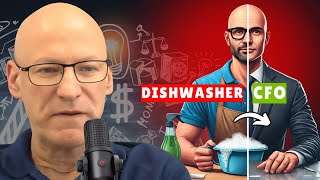
Paul Barnhurst talks with Jack McCullough about what CFOs actually need to know: how to present to boards, talk to board members, stay realistic without killing optimism, and handle a difficult CEO.
I'm learning that one out of four CFOs who were born in the United States or raised in the United states worked at McDonald's in their life. It's, you know, because I do ask, you know, what was your first job? It's remarkable how often I get McDonald's, Burger King, Wendy's.
So what was your first job?
My first job, I worked at a dishwasher as a. If you don't count paper routes. My first job, I worked at a dishwasher at a seafood restaurant down like Winnequam in New Hampshire. So it's called the Rusty Anchor. So.
So you did have a paper out? I had one as well. Our younger audience is probably papers. What's that?
Yeah, I got up an hour before my sisters to work on the paper. I made like $6 a week. Like, why'd my parents make me do that?
My parents did it with pretty much all of my siblings. I think all seven of us at one point had responsibility for the paper out. We probably did it for like 30. My dad probably did it for 30 straight years. Were driving people around a lot of times, depending on who it was. My sister always got drove around. I usually was on my bike.
Yeah, I. I was a bike, too. Yeah. My sisters, they had babysitting jobs back then. Girls babysat, boys had paper roofs. So.
Yeah, I. I get it. My sister did the paper out, and I don't think she ever had to ride the bike on it. Wait a second. But it was also early in the morning, so I get it.
Yes.
So, all right, so board presentations. In your mind, what's the key to making sure you put together a board deck? A good board deck.
Yeah, I'd say the main thing. There's two things. First of all, understand your audience. Right. If your board member is a group of scientists versus people who maybe are from a VC firm or who are CFOs from publicly traded companies or something like that, they're just going to have different expectations from what a CFO presents. It's got to be the same facts, of course, but it's how you present it. So understand the composition, the expertise, the level of financial literacy, and slightly different from that, their own perception of their level of financial literacy. I have found out that certain people think that they're financial experts, but they're not. And it's. Those are tricky to present in front of because they ask questions that they think are thoughtful and they're not. So really, you know, it's the main thing. Understand the audience and Then define clear objectives. You know, before you even start it. Just say, okay, what is it that I want people to come away with? Right? Usually the cfo. It's not cheerleading. You know, you leave that to the CEO and maybe the sales and marketing people, if they're also presenting on it. But it doesn't have to be a dull, uninteresting presentation either, right? If you're excited by the company's prospects, it's okay if that comes out during the presentation. On the other hand, if you're, you know, you have some concerns, this isn't the time to be a wallflower and keep those concerns to yourself. So it's a great opportunity. So define objectives, what it is that you want people to learn from your presentation. And always keep in mind, the presentation is about the audience, it isn't about you. And finally, send it in advance. I learned this the hard way. Just as a good practice, you should be communicating with your board of directors regularly. I'm not saying daily, but there shouldn't be surprises at a board meeting. So, you know, if your company missed its numbers by 5%, they shouldn't be learning that at a board meeting. They should have learned it at the board meeting the month before, in a conversation or something. I did do that once, and it's like, why am I hearing about this now? You know, I might have been able to help you. I might have been able to play a blah, blah, blah, so, you know, no new information. It's a platform to discuss information that everybody has had an opportunity to review before the meeting. So.
So how often should you be communicating with the board? Are you giving them, like a monthly package? Like, how do you think about that? You know, I know you have your occasional board meetings, often quarterly for companies, but you mentioned, you know, no surprises. So is it just sending them the financials monthly, or how do you think about making sure they're aware before going in the board meeting? Is it just getting them the deck ahead of time or how do you think about that?
I encourage CFOs to, at a minimum, meet with the audit committee members, each one of them, preferably one on one. But again, if there's five of them, that might be a bit time consuming. But occasionally meet with them one on one, just to go over things without the CEO on the call. By the way, you're not doing it behind her or his back, but just, you know, their presence might inhibit candor. It might prevent them from asking questions that they want to ask of you. So you should proactively Communicating with your board members between board meetings. Now, and the other thing is, you know, if you have 12 boards, 12 board members, you should probably meet with each of them again, one on one over zoom or whatever, two or three times a year. You know, there are companies that have 30 or 40 board members. And you know, if you were just meeting with them two or three times a year each, you wouldn't be doing any other work. Right. So you've got to balance it a little bit. But there's such, you know, it's such an important relationship and you know, they do represent the owners of the company. Right. And the, they're a very underrated resource for CFOs, too. You know, the VP of Sales should call them because if you're trying to reach a customer, board member might know a board member at that company. You want advice, you need a connection, whatever. The entire C Suite should feel good about reaching out to its board of directors who are, you know, invest in the company to make you more successful.
I, I really like the point where you emphasize look at him as a resource because I, I've heard that where, oh, the board member knows so and so. And we got this customer because they introduced us. Right. If your board members are cheerleaders in helping you, there's customers they can introduce you to, there's things they've been through, or they can just be a sounding board. There's a reason they're on a board and it's not because they haven't done anything in their career.
Right.
They're going to have a lot of experience.
Yeah. I occasionally get one who's on the board because they have a rich parent.
But for sure, you always have one. Sometimes you have a CFO that has a rich parent.
Yeah. Or in my case, just because I was so good looking that I didn't have to put in the work to get the role. So.
Yeah, I wasn't going to say that. I mean, your looks speak for themselves.
But yeah, and I can say something like that because this is a podcast where most people won't actually know what I look like. So trust me, I'm handsome, everybody. So, you know, it's really such an important relationship. And the side bonus there, Paul, is most CFOs, and there's a lot of data that's contradictory, but it appears that CFOs tend to change jobs every two and a half to five years depending upon whom you ask. So, you know, it's really good if that's the case. If you have a board Member with whom you have a really good relationship with, not only for the reference, but for your next job. I don't know. And, you know, you know different people than me. I don't know anybody who's only on one board. You know, every board member I know is on three or four boards. Right. So, you know, you just go to them and say, hey, Paul, I've loved being part of this company for three or four years. I think it's good for my personal growth. By the way, I think you might benefit from a fresh perspective here looking for my next CFO job. Who do you know? So not only those companies, but each one of those companies has six board members. It's like, hey, you know, Mary's with a hot startup. You might be perfect for that. Let me introduce you to her. If you don't have that relationship, they're not going to go out of the way to help you, no matter how good you are at your job.
Now, the real question is that a hot AI startup.
Yeah, yeah. There's one or two of those out there right now. Right.
So, yeah, one or two. That's probably. I think that you make a lot of great points because at the end of the day, job and work is. It's a relationship business, whether you're finance or sales or wherever you are. So important to develop relationships as they'll help you in your career and not just because they'll help you. We should develop, you know, good relationships to be good people. But there's so many other benefits in that networking and really learning to know your board and develop that strong relationship.
Yeah. I mean, you know, being nice is its own reward. But yes, it. It also does have some, you know, benefit to it, so.
Yeah, exactly. The next question I wanted to ask you is how do you balance.
Mentioned.
You don't want to be a cheerleader, so how do you balance optimism versus reality? You don't want to be. You don't want them to come in and be Debbie Downer either. We've seen kind of both extremes of that. So how do you balance that with the board? Because you want to make sure you're transparent. Any advice around that?
Hopefully optimism and realism are the same thing in. In most cases. Right. But there's a burden on the CFO boards. Expect them to tell the truth, the whole truth, and nothing but the truth, so help them God, as the saying goes. So you can't. You don't spin things, you don't exaggerate, you don't make errors of omission. The board deserves and needs the full truth. It doesn't mean you have to present it in a negative way. Right. But you need to. But yeah, you can't be a cheerleader. It's a juggling act all the time. What can get a little scary for CFOs is sometimes a lot of them have shared with me, they work for CEOs who are overly optimistic. And CEOs by their nature are optimistic. Founders of companies, they have to be believing what they wouldn't have started the company if they weren't. And then professional CFOs, they're very confident people. They think they can overcome any challenge thrown at them. It lends itself to a natural optimism. Where it gets tough for CFOs is he's too optimistic. And I'm not even saying that they're lying. It's just if everybody thinks that the company is going to grow 14% year over year, and the CEO is in front of the board of directors saying, I think we're going to grow at least 25 with a chance of 50%, what do you do there? If you're the CFO and you're in the room and he says that or she says that. Right. That's a really uncomfortable situation. Most of them would say you can't lie. But you don't have to go out of your way to say, hey, Frank's wrong. That's not the way it's going to go down. You know, if you're called on, you know, say a silent prayer if you know that sort of thing. But you won't be called on. But you know, if you're called on, you have to tell the truth. But as long as it's a difference of opinion, most people don't think that you have to like, go out of your way to give your opinion. The issue is when it becomes to the point of it's just an irresponsible opinion.
Sure. If you know, hey, that's just not possible. Right. It's one thing to be optimistic. And so it's like, hey, you know, that's a great number that we do have some reservations about achieving that or whatever it might be. So people realize if you're asked, hey, there's real concerns and if it's completely wrong, sometimes you, you have to manage that. It's never a fun one. When it's like, no, no, that's just not right.
Yeah, exactly. You know, I worked at a company and the guy who's very honest, but like, I thought his revenue projections were Crazy. On the other hand, like his last company, he made them. It was, it was a, you know, Inc. 50 company. It was the fastest growing company in Massachusetts. He took them public and they had a $6 billion market cap at a point, not a lot of Massachusetts companies of that age had. So who am I to say that he's overly optimistic? Right. I might have felt it. And if, if a board member called and said, what do you think of this? I would have been truthful. But sometimes you get to have faith in the CEO's vision. And by the way, if you don't, maybe it's time to polish up the old resume. Too nutty. And it doesn't require lying. If you just, hey, I just, you know, she's not the one, he's not the one, whatever. You don't belong there. You know, you need somebody that you can believe in, that you can stand behind, that you think will get you through the rough times and that you want to work for and build something great with.
I agree with you. But what if they're a psychopath?
Yeah, that happens once in a while. Good luck with that. Because as you know, I did write a book on that. You know, that the quick advice is if you're convinced you're working for psychopath, you know, maybe start to make the graceful exit. So it's not a lot of good things come from working for psychopaths. However, you know, one thing I've learned since I wrote the book is a lot of people associate psychopaths with evil, and often that, in fact is the case. However, they're not inherently evil. Their biggest thing is they just can't. They have absolutely no sense of empathy. Everything exists for their benefit. So, you know, they're not crushing people because they get any pleasure from it necessarily. They just, this person's in my way. So I'm going to remove them. And if it ruins their lives, they'll do it. But yeah, I've known people, several people since I wrote the book who worked for psychopaths. None of them look back on the experience fondly and say, but, you know, it was difficult, but it was a growth time for me. I'm glad I did it. I haven't had a conversation like that yet. And yet there are some very successful CEOs who a lot of people think are psychopaths. So, you know, I mean, one was Steve Jobs. A lot of people have thought he was a psychopath. Probably the best CEO of our lifetime, don't you think?
You have to be right up there I mean, if he's not number one, he's top two or three, for sure.
Yeah. I mean, there's, you know, history. There's, you know, Henry Ford, Steve Jobs, you know, Bill Gates. I think Elon Musk is probably in that category now, a handful of others, but, you know, not, not too many.
So I agree with you. And so, yeah, I, I think when we talked last time, I remember you mentioning Steve Jobs as an example. And it's a tricky in that. Yeah. Could you learn a lot from Steve Jobs? Sure. But if it's a unhealthy work environment, is that where you want to be? Everybody has to decide.
Yeah, you can make yourself absolutely miserable. And then again, Steve Jobs there would, despite his oddities, and maybe he wasn't the nicest guy, but there's no indication that he was unethical in business. A lot of them are, especially as you don't want it at all, but especially as a cfo, you don't want to work for a company that was perceived as unethical. Right. I mean, they weren't psychopaths involved. But how would you want to present a resume that you worked for a company like Enron? Right.
I mean, yeah, if your list of companies is WorldCom, Enron, Arthur Andersen, you got a problem.
Yeah. Yeah. The one thing that you leave a job with is your reputation. You know, hopefully you make some money, get some learning experiences, but absolutely. The one thing that's going to follow you to the next one is your reputation, and it better be a good one. So.
More from Paul



Trust and Leadership Lessons for FP&A From 100+ Top Leaders with CFO Jon Laudie







