How AI Cash Flow Automation Helps CFOs Reduce Late Payments & Improve Working Capital - Carlos Vega
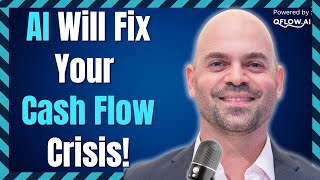
Carlos Vega, CEO of Tesorio, discusses how AI automates cash flow forecasting and payment collection for CFOs. Machine learning cuts late payments and improves working capital by predicting cash needs before problems happen.
Welcome to the Future Finance show where we talk about the top 10 reasons we hate paper legends, but guts.
Whoever was there in that room, I don't know if it was Bezos himself or his CFO at the time who like gave them the guts to put forth that letter and then actually execute that strategy. That's who I would want to meet. And not small, but how young Amazon was at the time, that's some guts. Carlos Vega, Co founder and CEO of Tesoro. A visionary transforming how businesses are optimize.
Cash flow With a decade in finance.
From Lazard to GM's pension fund, Carlos brings unmatched insights into financial innovation.
Yeah, I know you had started a factoring company and then after that in 2015, what prompted that company?
Our whole idea was like, look, we will help them solve their working capital hole, but help them understand their cash flow and create models for them so they can go get a proper line of credit.
How did you think about that?
As you're building a tool, cash flow is actually more of a data problem than a finance problem.
The biggest challenge, whether it's finance team or the companies themselves are facing is sort of what you've chosen to focus focus on in cash flow forecasting.
But.
Future Finance is brought to you by qflow AI, the strategic finance platform. Solving the toughest part of Planning and analysis. B2B Revenue align Sales, marketing and finance seamlessly speed up decision making and lock in accountability with qflow AI. Welcome to another episode of Future Finance. I have here with me my co host Glenn Hopper. And this week we're going to be interviewing Carlos Vega. Carlos, welcome to the show.
Hey, thanks for having me. I'm really excited to be here.
Yeah, excited to have you. So let me read a little bit about Carlos's background and then we'll jump into things. Carlos Vega is the co founder and CEO of Tesorio, the world's first connected financial operations platform. Tesorio is an AI powered financial operations platform that helps businesses turn revenue into real working capital by automating collections, optimizing cash flow and enhancing financial visibility. It enables finance leaders to move at AI speed, reducing dso, increasing investment velocity and improving capital efficiency. Carlos journey in finance spans over a decade, including time in investment banking at Lazard in Latin America, co founding a factory company and working closely with the CFO of GM's pension fund. Carlos holds an MBA from the Wharton School and a BA in Economics from the College of Arts and Sciences, both from the University of Pennsylvania. Love the background, Carlos. We're really excited to Chat with you and Glenn's going to hit you up with his favorite question here.
Yeah, so Paul noticed this before I did, which is funny because this has been something that I can't believe more universities and more people aren't pursuing. So just by way of background, I got my MBA, you know, back in the like.com era because I'm old as dirt. And then I went back later and got a master's in finance with a grad certificate in business analytics. And I thought at that time, so this was in, you know, 2015 or so I thought at that time, how is every MBA program not going to include a major focus on analytics? Because we were seeing what's going on with, with data and more and more people using it and sort of the whole data driven decision making. And to me that was part and parcel with what an MBA should be. But you are one of the few people I've actually talked to who has the MBA where you specialized in innovation through analytics. And I'd love to hear about the program, what you learned about it or you know, what, how that was different from a traditional MBA and how that kind of maybe changed your career trajectory, if so, and just what the focus has been and what that meant to you to sort of get the business and analytics at the same time.
Awesome. So that, that's a great question and it's, it might be a more colorful answer than what you signed up for. But long story short, whenever I get asked like, hey, was the MBA worth it? I always tell people, look, if, if you want to start a company and you're going to go through an mba, you need to chart your own course.
Right?
Like, you can't just, you know, if you're going to go get an MBA and go into banking or strategy consulting, you know, you can go pick, pick from the list, take a course, do the internship and go where you have to go afterwards. But this, this title, Innovation through Analytics is something that I made up. So it's a customized degree and now there is a degree at Wharton focused on data analytics. At the time this was 2012 to 2014 is when I was there. You know, the term big data was, was the hot term of the moment. And I, I had been studying under a guy named Peter Fader who's actually in the marketing department, but he teaches, you know, quantitative marketing and, and probability modeling. And I had also taken classes with a guy named Ethan Mollick who is now actually very well known in the AI space. At the time, he was the entrepreneurship teacher.
So I'm going to interject. Ethan is good friends with the professor in my program. They both went to the PhD program at MIT together with Kareem Lakhani. So they're both, they were in the program together.
And Kareem, so you know, you know him.
Yeah, yeah.
So, so basically here was my approach to the mba. I would tell every professor at the beginning of the semester, like, look, I'm taking your class, but I'm actually starting a company. And the reason I signed up for your class is because I think your coursework can help me with my company. And so there's some homework I might not do, but like, I will care more about your materials than anyone else. And so, long story short, there's a couple of things that happened. One, with Professor Mollick, I was able to get course credit for working for the university's controller. And so I actually worked for the controller and would have to prepare reports. And there, there were like academic requirements for it. But my goal was to research and understand the space and how controllership worked in order to help inform my company. With Professor Feder, I was like, look, the need for analytics and data and probability modeling and finance is massive, right? There isn't anything that, you know, I don't need to go take a finance class. I already worked in finance for a decade. I worked at Lazard doing M and A for God's sake, you know, like, come on, like, what can I do? And he was like, well, guess what? I had actually prepared this curriculum for the dean, focused on data, data science for MBA students. But it got shot down because it was too quant heavy. And what we do here at Wharton is we create leaders of businesses, right? We don't create like, you know, data nerds. And what ended up happening at the time is he said, take the curriculum, I will sign off on it and you can create a customized degree path. And so I was doing all this innovation or entrepreneurship work with Professor Mollick and these classes, quantitative classes from Pete Fader's list, combined them and Pete Fader signed off and we made up a term on the sheet. We're like what should we call it said Innovation through Analytics. And that was it. So now it is actually it has been approved again. This was before, I know it sounds like a, it was a little over a decade ago. It sounds like ages ago, but now there is a focus and a concentration on this at Wharton. It's one of the more exciting ones. And yeah, that's the story, like I said, a little bit More than you asked for. But it was quite a, quite a roundabout way to get there.
No, that's great. And it really, like you said so many things that just were like making my brain fire and this is what, what, what I've talked about all along. And you know, the fact that you were working with the marketing professor because of the quantitative marketing. Marketing jumped way out ahead of us because they, especially in E commerce kind of businesses or, or, or SaaS or where they had more data, like marketing suddenly had all this data to play with. So I always think of financial analysts as the, you know, OG BI guys. But we just, you know, what was our data back, you know, back then it was, well, it's GL data and that's what we have. But I came up through telecom where we had all kinds of data and yeah, so you know, customer churn and you know, and just in all the network outages and customer service calls and everything. So being able to use data in my financial forecast, for me, early on those were tied together.
But I mean the early, you know, you know, the early SaaS models were inspired by the telecom like Zora's first customers.
Right.
Zoro is one of the first SaaS companies. SaaS billing companies.
Right.
Like their, their background and DNA has a lot to do with, with telecom where you go look at utilities, like these other industries that had that predictable. Like what is SaaS? Right? Like the, the true innovation of SaaS is changing the way that Wall street can value these companies because it's predictable, forecastable cash flow model.
Right.
Versus lumpy license fees that existed in telecom and utilities and all these other spaces way before. So it's funny you bring it up, but that's, and that's where you know, marketing had the recency. Frequency monitor, RFM modeling.
Right.
And that's existed since like the 70s. So it's like all these things that are now in, in tech and in SAS and finance. Actually you're right, they, they, they come from these other, other areas.
Caught, you caught the wave early on and you, you kind of read and saw where things are going and I think at about the time you went back and got the NBA, that's probably when I remember the conversation. I don't, I know Elon Musk had a lot to say during, during that period. But there was a, always have a lot to say. But it was, oh, you know, the MBA is a pointless degree. You don't need to get it. You need the business experience and all that. So the fact that you knew going to get in the mba, it's like, well, okay, I'll get the key courses, but I'm gonna chart this and craft it in a way that is going to propel your career forward. So that's, yeah, kudos on the foresight and ability to see and kind of read the tea leads.
I got lucky.
Yeah.
You know, sometimes it's better to be lucky than good, as they say.
Right?
Yeah, there's a balance there. We want both. So, you know, I know you had started a factoring company and then after that, in 2015, you co founded Tesorio. What prompted that company? How'd that come about?
Yeah, so. So in factoring, I was working on that. I was at Lazard doing M and A on the side with, with a friend. And our whole thing was like, look, if you're familiar with factoring, it's when you're purchasing receivables at a discount.
Right.
So someone's getting 95 cents on the dollar to get their money now. And our whole idea was like, look, we will help them solve their working capital whole, but help them understand their cash flow and create models for them so they can go get a proper line of credit. Everyone was like, just give me the money, I don't care. Which made it feel, rather than helping businesses, it felt like payday lending for business. And so then when I went to get my mba, I was like, look, I want to solve this problem. Like, clearly people have a hard time understanding cash flow. There's a whole bunch of reasons why. I think even personally, it's kind of an enigma. But we wanted to help people understand their cash flow so they can be more sound financial decisions. And that's ultimately what led me down the path.
Got it. So you found with factoring, even though you wanted to educate them and help get them off the factoring, it was almost kind of, so to speak, that drug. They just kept wanting to do it and do it and do it and didn't care about the education side. Why do you think that was? Do you think it was a lack of knowledge, just convenience? Or what drove most founders just say not and CFOs and companies to say, now we're just good with the factoring approach.
Yeah. Again, I think, I think it's a fundamental thing where people don't understand cash flow, like fundamentals well enough.
Right.
Like, I think a lot of people say things like, you know, I just focus on growing my business. Cash flow will take care of itself.
Right.
You go look at the, you know, all the Harvard Business review studies on Amazon versus Walmart. Right. And why Amazon won because of their strong cash flow.
Right.
Or all these different things that, that exist for proof why optimized cash flow actually gives you a stronger business. And so, you know, we would hear stuff like that, like, hey, I've got, my margins are super high. I don't mind paying an extra 1 to 2% on, you know, factoring versus what I'd pay on a line of credit. Like it's fine, I don't care. All these things are just like nearsighted. And I think that was the gist of it. You know, folks were optimizing near term and not long term results.
Yeah, everything you said makes sense. And also I'm going to guess that time if was probably early. Right, Right after the crash. Right. Early 2010s.
Yeah, it was, it was, that's about right. It was 09, 2010, 2011. It was in Panama. But still that was a global financial crisis. So.
So you ran the company in, in Panama, I was gonna say US you'd also have really low interest rates, so almost free money. Interesting. So how was that starting a company? You started the first one in Panama and then you did one here in the US Is that kind of.
That's right, that's right. Yeah.
I'd love to know what's some of the difference. What were the biggest differences between kind of founding a company in Panama versus here in the U.S. so I, I.
Think the biggest difference was like the nature of the company. Tesorio is a tech company. Fundamentally. The first company was a financing company. I feel like the biggest differences there are like at the time the access to talent in the US was just phenomenal. The market's also a zillion times bigger, so there's a lot more potential. So any problem you find that might be, you know, there's four and a half million people in Panama, so you can imagine there aren't that many companies compared to the US Right. More people commute into New York City every day than are in the entire country of Panama. To give you a sense of so. So any small problem you find in the US is going to have more of a market than down here. I think that was, that was a real big difference. Yeah. But as far as starting company, Panama was actually surprisingly straightforward to do so but for the type of company, I don't think at the time I could have started it in Panama. Now things have improved. There's, there's more access. Remote work is actually a thing now. Like you Know, I'm in Panama right now, and most of my team is across 11 different countries in the Americas. I think now. Now might be a different story. Yeah.
Thank you. So, question I have just. I know you started kind of cash flow forecasting. Did you ever think of doing more of the whole planning and budgeting or kind of, how did you think about that as you're building a tool? Because I know there's a, a lot of similar integrations you're doing.
Right.
You're connecting to a CRM or a ERP tool or a bank. And so what was the kind of reasoning to say, look, we're just going to stay focused, really, on 100% kind of optimizing that cash flow versus more general budgeting and forecasting?
Yeah, so that's a, that's a great question. And, and it's tied to a couple of things. Like, if you take a step back, the way we view things is that cash flow is actually more of a data problem than a finance problem.
Right.
Like the data exists out there for every bit of cash that's going to move. Uh, as an example, like the, you know, just a little twist of thought here is like, you know, every dollar that's going out the door, when it's going to go out the door, whether you're paying a vendor, you're paying an employee, you're paying rent, you know, you get to choose when that money goes out. But then you're sitting here trying to figure out your cash flow based on when you're going to get paid. But guess what? Your AR is someone else's ap. So there is somewhere out, out there, in some system, someone's head, some email, like it exists somewhere. Exactly when you're going to get paid. If you can get to the right person, the right system, you could know with exactitude.
Right.
Like what your cash flow should be. And that's kind of the point.
Right.
That's why, that's why we say it's more of a data problem than a finance problem. And so then you start to think about that. It's like, all right, if I'm doing FP and a, you know, forecast and things like that, the execution of that forecast happens somewhere else across the myriad teams and departments, right?
Sure.
If I'm working on cash flow and, you know, money goes out the door or it doesn't, it all comes back to your bank account. And the execution of that usually goes back to some system in the office of the cfo. And so the reason why cash flow was more Interesting to us is because it's more of like a, a contained ecosystem. It's not saying that overnight you can map the whole thing, but like, let's say you're looking at a AR forecast of when my money's going to come in. I can quickly double click into that, look at exactly what are the invoices that are predicted to come in, have that connected to my email and a dunning system and a team collaboration system and instantly select those and say, hey, can you send reminders? Send the reminders myself or basically the actionability of it, right? And so at the end of the day, cash flow is much more actionable and we, we always talk about insights to action or keeping the data flows and the workflows interconnected. And we've always talked about that. But now with AI, it's even more important, right? Because now any action you take, you have correlated. You have perfect attribution, if you will, right? So you have the action correlated to the why and then also to the outcome. So now you can start to optimize that better over time. So it's actually, if anything, I'm even more excited to be focused on this space and not the other one because I think there's even, you know, with greater connectivity potential and greater actionability, there's, there's a lot to do. It's pretty exciting.
Ever feel like your go to market teams and finance speak different languages? This misalignment is a breeding ground for failure, impairing the predictive power of forecasts and delaying decisions that drive efficient growth. It's not for lack of trying, but getting all the data in one place doesn't mean you've gotten everyone on the same page. Meet qflow AI, the strategic finance platform. Purpose built to solve the toughest part of Planning and Analysis, B2B Revenue. QFlow quickly integrates key data from your go to market stack and accounting platform, then handles all the data prep and normalization under the hood. It automatically assembles your go to market stacks, makes segmented scenario planning a breeze and closes the planning loop. Create airtight alignment, improve decision latency and ensure accountability across the teams.
I was going to say, I feel like preaching to the choir here and I'm getting excited and jumping up and waving my bible around here. So I'm winding up right now to just lob you a softball question, but as you go through this, I'm thinking, you know, put on your Verne harnish cap and the cash is king mentality. And I've worked with so many like time and materials, billing companies that do not understand, like, if you're managing your business through your income statement, but your, your DSO is 70 days or something, I mean, you're looking at data that doesn't tie to the reality of how you run your business. And you know, I work in the SMB space a lot, so it's a lot of businesses that they're not sitting on, you know, massive piles of cash. They're not exactly, you know, paycheck to paycheck, but it's very tight. So as I think about all that and kind of problems I've had to solve for it seems like it's always difficult to shift people from that income statement mindset to the cash flow mindset. And all this is exposition as I wind up. The softball question for, you know, is, and I think from what you just said that the, the biggest challenge that whether it's finance teams or the companies themselves are facing is sort of what you've chosen to focus on in, in cash flow forecasting. But do you, I guess what I would ask is do you think cash flow forecasting is something that's maybe underlooked and that this is the sweet spot where Tesorio can really excel and that's why you feel good focusing there? Or, or do you have any anecdotal, you know, stories of, of working with, with your clients where you're, you've kind of given them this insight?
Yeah. So, yeah, we definitely need to have an offline combo and nerd out about cash for sure. But where I would say is for us, like, cash flow forecasting is just this outcome that occurs. Like once you're like running your business properly, it's more like predictability. I kind of joke around like, you know, forecasting is for the weatherman, right. Like they can afford to be wrong. You can with cash or you can only run out of money once.
Right.
So, so like the thing that we're very focused on is like the building blocks up to a forecast. And that's why we started with the order to cash process, because that is a one part of cash that like I was saying earlier, you don't control.
Right.
And that's a part where like you do have to stitch together more and more systems and more and more workflows or, you know, human actions that have to be, the data has to be structured so that it can then inform the, you know, what is going to happen there. And so to your point like that, that's, you know, like to, to give an example, right? Like you can have a team that's trying to forecast cash flow and they're going to look at typically, let's say they're forecasting in your collections. They're typically going to go and look at your billings forecast, apply a DSO assumption and then look at your agings and say, okay, what percent from each bucket do I think I'm going to collect this quarter? Sum those two different areas up and like, here's my collections forecast. But what does AI allow you to do?
Right?
Like we say there's like three main buckets, allows you to clean your data, allows to structure unstructured data, and allows you to use granular data.
Right?
So on that bucket, right? Like, what if you could go and look at all of the data that exists in your system from order forms, signed contracts or, you know, whatever, See that the data that's in, let's say your Netsuite and your Salesforce or your QuickBooks and whatever CRM you're using is accurate, right? Like the, the sales guy didn't screw up the, the billing and the shipping address or something like that. All the classic things that happen, right? Or the PO didn't get missed, right? Like they actually added all that. So your data is clean.
Great.
Then there's structuring your data. Like you're exchanging emails with your customers and you're saying, hey, when are you going to pay me? When are you going to pay me? Like, I promise money will get there by the state. You know, classic promise pay dates, right? Or you know, you're submitting into Cooper or Reba and they're sending you an email back that's saying like, your invoice was rejected because you got forgot to fill out this field. That's a classic. That's the worst. Because the clock doesn't start on the net terms until they approve the invoice, right? So you have to jump on those ASAP, right before, because you know, it's net 60, net 90 or whatever. And that clock isn't going to start until the invoice is perfectly submitted. So you have to make sure that's clear so you can structure that information.
Right.
And get that into a system that automatically creates a task for the person to go address it. Or AI, that system has an agent that automatically goes and takes care of that for you. And then there's like the next step, which is looking at granular data. Like, so you take all of that information I just mentioned and you want to come up with a collections forecast. It's like, let Me look at every single invoice that every single customer has ever paid. Me train a model for that customer and then for every open invoice for all of my customers, predict when they are likely to get paid given how old they are today already and then do a bottoms up granular analysis of what my collections are going to be from all of my open ar. That was impossible to do before, but you can do that now, right? And I mean these are the types of things we do, right? And so it's back to, back to your question. Like that's, that's where I think it's exciting to think about cash flow and all these things add up, right? Like today we're very focused on order to cash. We have forecasting on the AP side as well, not as developed as this.
Right.
But like there are other data inputs that we will be adding over time, you know, from say other procure to pay systems or from, we already do bring in bank transaction data and things like that. But that actionability, I think that's where today we get the biggest bang for our buck and our customers do as well.
What I love about this, so first off there's the, you know, is, is my CFO hat and just thinking about the problems I've gone through with collections and getting people to understand and get and especially uploading into all the various different invoice systems that, you know, just horrible nightmares. But then from a tech side as you walk through all this and I guess I haven't thought about it enough, but you have an opportunity. There's a lot of businesses out there that are kind of AI washing. They're, you know, they're, they're just saying oh it's AI, but it's really, it's some kind of rule based system or you know, whatever, whatever it is in the background or that, you know, the, there's vaporware, that there's nothing there. But with what you guys are doing, you have the opportunity to do cool stuff with you know, classic AI, the machine learning and doing predictive analytics using the data and you know, helping forecast that way based on trained on data. But because there's the communication piece and all that, I could see really practical benefits with generative AI in what you're doing too. And I'm wondering if you're, if you're leveraging both, you know, kind of the classical machine learning algorithms and if you have found practical applications of generative AI yet.
A hundred percent. So I mean we started a conversation with the concentration in business school, right? Innovation through analytics. What I was doing with Pete Fader there was using RFM technology to try and forecast cash flow by looking at exactly what I just highlighted. Like, if you can look at every single payment across every single customer, it's not too different than what marketers do, which is look at the buying patterns of consumers on a website or things like that, right? It is. And so the idea that the switch that I was working on with Fader was like, can you apply like that? That's all based on like, each human has a different buying pattern. You know, they talk about like a Poisson distribution. Like it's like a coin that you flip. Do I buy or do I not?
Right.
And so it was like, can you assume that of organizations? Because organizations have a culture too. And like, as a group, they have a pattern that can be, you know, inferred as well. That was like the leap of faith that we were testing, right, That I was working on with Fader and turned out there is.
Right.
And it's kind of interesting. And so like all along, I mean, before this AI stuff. And I love that you separated machine learning from gen AI, because we've been doing machine learning for a decade, right? Like at Tesorio and we found that sort of pattern, right? And just for an interesting point of view, we found that invoices have the similar type of modeling and behavior as like, as humans and life insurance. It's a survival function. And what you're forecasting is like, how long they will die. Dying means they get paid, right? And so like how late something is already will determine how much longer it's going to live or how much later it's going to exist. Kind of like a human, right? Like how old you already are is the biggest input on how long, how much longer you have to live. And so it's a similar thing with invoices. So that was a fun insight. But then on the AI side, we found tons of applications. The one that we did within like, like over winter break of 2022, like, you know, the Christmas break. My co founder, the natural thing, like, let me have a gen AI, like push a button, auto write my email for me. Like that was basics, right? But the, the more complicated use cases, which are more exciting are. I already alluded to a few of them. Let me read through all of my communication with my customers and summarize, like every engagement that I've had with them to understand if I'm a sales rep or a customer success rep or anything. I can now use all of my financial information about that customer to inform my decision on the next upsell or the next renewal.
Right.
Or if I'm forecasting my collections. Let me get extract all useful information from all the communication structure that and automatically update my forecast.
Right.
That's something else we're doing. So it's like the structuring of unstructured data I say is one of the most powerful uses of Gen AI along with some other things we'll announce soon about like more like the think of it like operator from OpenAI recent. You know that launch where there's like an agent that's actually not navigating a website for you and doing things. We'll have some pretty cool announcements coming up soon.
There's one that I was thinking of and this was came from Professor Malik months ago on his One Useful Thing newsletter. I don't know if it was his original research or if he was quoting someone else's, but that AI is significantly more. These LLMs are significantly more persuasive than. Than humans. And he the the study was people who believed conspiracy theories when they presented them to an AI. The AI could be more successful at talking them out of a conspiracy theory than. Than a human would be.
That's amazing. I missed that.
Yeah, I missed that one as well. I'm gonna have to go look that one up.
But my brain went to. I wonder if an AI would be more successful in convincing a slow paying someone. Slow paying an invoice to pay better. Because I I used to in one at one of the businesses where I was was the cfo. I wasn't just a consulting cfo. I would. The person who was doing collections would sit outside of my office and I would hear her have the conversations with the pat payables person on the. On the other end and just hear those conversations. And how interesting would that be if you had whether voice activated or via an email a way to have a AI assistant trying to collect for you.
Well let me. Let me not freak you out too much. The other day in about five minutes I created a. Some other player in your space was working on AI collections agents.
Right.
And you've seen the AISDRs and all this that are out there getting a ton of funding. I was like this does not seem that hard because back to cash flow. Cash flow is deterministic, right? Like if you're trying to sell something to someone, there could be a million and one excuses why you're not going to buy but if someone owes you money there is a contract that tells you exactly when they're supposed to pay you, why they're supposed to pay you? When they got notified that they had to pay, like, all the information is there. So I was like, hey, you know what? I think that can be injected into a prompt. So I took. It took me five minutes. I turned on, like advanced audio on my phone and I was like, you are a collections agent. This and that. You're going to have a conversation with me to try and convince me to pay. Here's the information on the invoice. Remember to be polite, but you have to be very persuasive. That's all I did. I could play the recording for you. It was. It took me five minutes. And I had an AI collector. And so just for what it's worth, I had a similar hypothesis to yours and I decided to test it and it worked really well. It even offered me a payment plan. When I started pushing back because I was being very difficult on purpose to see what would happen, offered me a payment plan. And then I said, like, wait a minute, how are you giving me a payment plan? You're not authorized to do that. I was like, no, no, no. You know, I will have someone from my team follow up with you in order to. Whatever. Wait, but you're going to receive payment? I'm not going to give you payment. Like, no, I didn't say I would. I. You know, we have your email on file. Like it was it. So it's. And I didn't train it to do all of this. And so it's your point. It's. The capabilities are amazing, exciting.
I tried one today called Boardsy, where they called, asked a bunch of questions about what your business needs are, and they go through LinkedIn and they basically say, do you need me to connect you with so and so. And so I mentioned podcast and they brought up some senior financial analyst. And do you want me to connect them to you as a potential podcast guest? I'll go ahead and put together the email to connect the two of you. And I said no at the time because I was like, I'll use this again later. But it's a three, four, about a four or five minute phone call, maybe a little longer. And at the end of it, I had an email with the person's LinkedIn profile and offering to connect me.
That's incredible.
Pretty crazy what you could do. I know one guy that's already got business from it, using it.
Okay, that's awesome.
All right, I think we're going to move on to our kind of fun section here at the end where we get to ask a couple personal questions. So how this works is we fed the questions we had for you and your profile into copilot and told to come up with some kind of fun, thought provoking, get to know you questions.
Copilot did these.
No, no, sorry. Chat. GPT.
Okay.
And so we have 25 questions here.
Oh my God.
And you. We're not going to go all of them. Don't worry. We're just going to do two. You get, you get to either pick a number between 1 and 25 and I'll ask that question, or I can use random number generator to pick your question.
Do random. Go for it. Let's, let's go full AI.
It's always fun to see what people say on that. We get a good mix. All right, you get question 13. And I have no idea what that question is.
That's the, the day I got married. June 13th.
There we go. All right. Congratulations. But that is not the question. Many entrepreneurs have rituals or habits that keep them grounded. Do you have any personal routines that help you stay focused?
I mean, it sounds lame to mention, but like, I, I really like playing tennis and sticking to like a sport like that that's competitive, but it's, it's, it's enough good pressure. I find like that, that to be incredibly helpful. But we are talking about AI. So something I am working on on the side right now just for fun is I'm trying to create an AI chief of staff that will be plugged into, you know, I use tools to take notes during all my meetings. Right. We're a remote company, so they're all on zoom. So it's very easy to do that. You know, there's, you know, my calendar, there's different aspects, you know, different Slack channels and things like that, which, which we can track. And basically having a, a tool that can automatically keep track of, you know, key items, you know, help me create like operating cadences and things like that. I think, I think that should be pretty exciting. So that's one thing I'm working on on the side for that.
Cool.
Fun, super cool.
That's.
Yeah.
I'm trying to figure out how I could have even. It doesn't even have to be the, the level of a chief of staff. If I could just have some assistant to, to help with all that. I'm, I'm constantly like, trying to figure out ways. And I've played around with Operator. I did do one kind of cool thing with Operator. I had this List. It was just in a note file, just a text file of all these upcoming speaking engagements. And I, I was like, I kept thinking, oh, I've got to go put these in my, in my calendar. I had Operator go through and this was a, a great use of Operator. I had it go through, find the text, and then I opened up my Google Calendar, you know, so it had Google Calendar open and then my list, and it went and created all these items in my calendar for me. And I thought. And it took forever, but what did I care? I was off doing right things while.
I was doing work. While you care.
Yeah. Yeah. And then I realized, wow, this is what Operator. You know, it's still buggy and early, but that's going to be RPA for everyone. When Operator comes out, it's. Or when it, you know, when it finally reaches maturity.
So.
All right, so I take a slightly different approach than Paul. We, We've tried. We were doing a bake off for years, but. Or for years. That's in dog. Or in AI years. It's for months, A couple, couple weeks.
AI years.
So we, you know, we've done Claude, we've done Gemini, and we. And chat GPT. And so while Paul does the random number generator, I just have the, the GPT spit out and we'll have, we'll see what it comes up with. Okay. If you could have.
All right.
If you could have lunch with any financial leader, past or present, who would it be and why? And I wonder, at Wharton, you may have had, you may have already had lunch with some pretty cool financial leaders, but yeah.
Interesting. A financial leader is the default answer.
Here just Jamie Dimon. Is that what everybody says?
Or so it's funny.
Like, I did in that list too.
Yeah. Yep. Yep.
I feel like I don't know the answer to the name, but, like, I've always been intrigued by, like, how early Amazon was on you. You remember their letter to shareholders? I think it was like it was either like 04, 06 or 08. I don't know. It was like, I don't remember when it was, but when they, when they announced to the world, like, look, we don't care about profits. We're not going to be profitable anytime soon. Stop asking us to do it. Free cash flow is the only thing that matters. The textbook definition of the value of your equity is future cash, the present value of future free cash flows.
Right.
And that's all we're going to care about. That's what we're going to optimize the Guts. Whoever was there in that room. I don't know if it was Bezos himself or his CFO at the time who, like, gave them the guts to put forth that letter and then actually execute that strategy. That's who I would want to meet. Because now it seems obvious in hindsight, but back then, I mean, that was. That was a different ball game. And it changed. Allowed them to do everything they did. That's always been super inspiring to me.
Great, great answer. Way stronger answer than I was expecting. Way better than just saying Jamie Dimon or Warren Buffett. And actually, while you were saying it, I just googled it. I found the letter. It was 04. So now I'm gonna go.
It was oh, four.
Because it was really. Yeah. So thinking back, I mean, it was. You know, it wasn't until AWS really took off.
Not the thing, like, Exactly.
I mean, 21 years ago, which sometimes seems like forever and other times it doesn't seem very long.
Yeah, yeah, yeah. And not small. But how young Amazon was at the time.
Right.
Like, now they can do whatever they want. They could dictate to the market. Anything back then took some guts.
Yeah. If they say, hey, we're not going to be profitable for next few quarters, we're doing this every month. Okay.
Eps was the way everyone care. Everything cared about. They're like, we're not going to give you your earnings per share, so stop asking. Like, I mean, think about it. That was amazing.
Great example. I. I really like that one. Well, Carlos, we've really enjoyed chatting with you. It's been a pleasure. It's been a lot of fun, and, you know, best of luck with Tesorio, and thanks again for coming on the show.
Awesome. Thank you so much. Really appreciate it. Always enjoyed the conversation. And just to leave you with one, I. I feel like I. I need to repeat it every time I get a chance, but it came from one of our customers. He said, remember, revenue ain't real till you get paid. And that's the basically the gist of a lot of what we do here. So I just wanted to leave you with that one. I know we're connecting on all the potential cash conversations we'll have later on, which we definitely should pick up on. All right, thanks.
I love that one.
Thanks, Carlos.
All right, take care.
Thanks for listening to the future finance show and thanks to our sponsor, qflow.AI if you enjoyed this episode, please leave a rating and review on your podcast platform of choice and may your robot overlords be with you.
More from Paul




Trust and Leadership Lessons for FP&A From 100+ Top Leaders with CFO Jon Laudie






