How AI (Like ChatGPT) Is Disrupting Finance and Reshaping Investment Decisions with Joyce Li
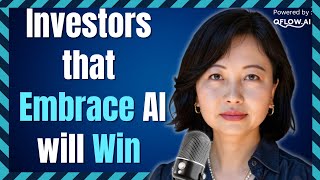
This is a YouTube video titled "How AI (Like ChatGPT) Is Disrupting Finance and Reshaping Investment Decisions with Joyce Li" recorded in April 2025. It features a podcast-style conversation among multiple speakers including Paul Barnhurst, Glenn Hopper, and Joyce Lee. The discussion centers on the impact of AI on finance, investment strategies, AI trust and adoption, and the evolving landscape of financial technology. Paul Barnhurst actively participates as a speaker, engaging with Joyce Lee and Glenn Hopper in a detailed exploration of AI's role in financial planning and analysis.
Welcome to the Future Finance show where we talk about treasury management on Mars.
AI trust building requires a lot of things. We put AI to a higher standard than human.
Do you think AI will ever be able to replace human intuition in investing? And why or why not?
AI can definitely replace a big part of it today. Today's AI is not ready in doing that because Joyce Lee is a top.
Advisor in AI and finance, helping companies use AI to make smarter business decisions. With nearly 20 years of experience in investing and a background in both finance and technology, Joyce works with top executives to ensure AI is used effectively and responsibly. She's a Wharton mba, CFA charter holder and Stanford certified in AI. And her insights are shaping the future of finance and governance.
University of Chicago last year did a paper and this was even before ChatGPT 4. This was using ChatGPT 3.5. It was better at predicting directionally earnings per share for companies than human analysts were.
You should not build a complicated workflow around a existing AI model capacity. You can always assume that would change.
He co founded a company, Avarand AI, an AI powered financial planning platform. What you learned from that whole experience.
18 months ago at that time, people are very skeptical. What I learned, and that goes into why we ended up not continuing is.
We'Ve all heard the term that used to be said is nobody ever got fired for buying IBM. How much of a role do you think AI and tech is playing in that change that we're seeing?
So here are my hypothesis.
Future Finance is brought to you by Qflow AI, the strategic finance platform. Solving the toughest part of plus planning and analysis B2B revenue align cells. Marketing and finance seamlessly speed up decision making and lock in accountability with qflow AI. Welcome to this week's episode of Future Finance. I'm again joined by Glenn Hopper and we also have Joyce Lee with us. Joyce, welcome to the show.
Nice to be here.
Yeah, really excited to have you. So let me give a little bit of background about Joyce. Joyce Lee is a CFA and a seasoned investor, board director, entrepreneur and AI strategist. With nearly two decades of experience managing multi billion dollar investments and serving on boards, Joyce now advises board directors and business leaders on the development of AI strategies and governance frameworks. Recognized as a top artificial intelligence voice on LinkedIn, Joyce holds an MBA from Wharton and a master's degree in computer science from the University of Virginia. Impressive background. We have two Wharton people here I think. Right? You did Wharton as well, didn't you Glenn?
So I was going to say Paul knows I'M normally just arrogant and cocky and think I'm the smartest guy in the room everywhere I go, you know. But then Glenn Joyce, you come in here and now I'm like, now suddenly imposter syndrome is kicked up for me. So I'm really looking forward to our conversation here because your background, you know, there, there are not a lot of people, I think that really exist at that kind of perfect juncture between technology and finance where you can talk as a, as a domain expert in both and with your background and your experience, I mean, I think you are you the pinnacle of those two right there. So, really excited to have you on and talk to you today.
Thank you, thank you for the kind words. And now I don't know what to say to match that description.
I have a feeling you'll do great.
Yeah. So looking at your background and when Paul and I were talking before the show, I, I know I, I, I can picture how you got here, but you know, the first part of your career as a cfa, you're focused on investments and then now as kind of the technology's moved along, you've switched and you're really focusing on AI. And because you had the master's in computer science, I imagine with that you kind of look towards everything with that sort of logical, sort of cs, sort of engineer developers approach. But can you walk us through the transition and when, like when you realized it was time to kind of make the switch from, you know, primarily focus on investing to now it's time to really lean in, into the AI part of it?
Yeah, absolutely. I know it's always a little bit surprising when people see my LinkedIn and say what's going on? For me, it's not really a switch, it's like a natural evolution. I started coding at the age of nine and then as you mentioned, I had a computer science degree. So I always have that foundation knowledge inside me. And in the period where I was investor, I actually spent a lot of time researching the AI usage in business models. Of course, for almost 10 years it's all about big data, machine learning, e commerce, social media and all that really high end, almost exclusive club of AI usage. And I never even thought I understand the economics of that model really, really well, like how much you need to spend, what time lag you have to wait until you see the return on investments, all that stuff. So that you can imagine my shock when I came across ChatGPT at the end of 2022. Actually there was at a cocktail hour, a networking hour, where I Ran into people from OpenAI at that time, really a small startup not many people knew about. I completely got blown away. I know that feeling has happened to many, many people in the world later but because I understand the economics so well for the last generation of AI usage, I completely see what the potential could have been with this cheaper and more accessible type of AI. So therefore I decided at that time that this is what I'm going to do next. Of course it still take me a couple of twists and turns to get where I am now, but the direction is very clear for me.
Yeah, and similarly, you know, it was sort of, I kind of liked that barrier to entry before generative AI came along of and there's several other other people out there and you know, Paul Christian Martinez is who I'm thinking of here where there's those people who you, you can write Python and you work in finance and it gives you this, this sort of extra advantage and it was more of a, an exclusive club. But I say that kind of half jokingly because now with generative AI it's, you know, your natural language becomes the, the programming language of the future. And the fact that we're opening up, I think it, it makes the industry better. I mean when you give more people access to the tools but even though they don't understand programming, one of the things that I focus on a lot is but you need to, if you haven't studied it before, you need to lean into data science and understand, understand what we're doing. You don't have to write the Python but you have to know, you know, this is regression, this is clustering, this is classification and all the, all the components of that so that you know the right questions to ask. And are you, when you're talking to companies now, as an advisor here, are you seeing that people, are people understanding kind of the potential here? I mean I know everybody's talking about it and they get it sort of in this vague area but when you get in and start talking specifics, what's the kind of the response been from, from the people you're talking to.
So if you are talking about what needs to happen or what they need to know before the level of questions they ask. I would say for the audience I face, usually people start with very sort of boxed and what can this do? Can this make my workflow easier? It's okay. I mean everyone starts somewhere. I would say it's very natural for people to think about low hanging fruits, workflow, productivity enhancements. But I always want to encourage them to think about. Really imagine what's the end goal here? What's, if it's a CFO position then it would be what's the end sort of business return that you're looking for. If it's a, you know, sales leader that may be what's the, you know, the, the sales target that you are trying to achieve? Think that and then backwards and say what needs to happen to reach that. Usually that opens people up. So you, you mentioned data science. It really, we can even say it's a data science decision making framework. And of course for Glenn you are looking at it with a data science lens. For me it's always looking at it from a almost investment analysis lens. And for someone else could very well be what's my competitive edge? Like how do I maximize that type of angle. I think the beauty of AI is you don't really need to, need to be, you know, have this one set of skills that fits all the great question asking criteria. So, and then going back to what really needs to. I encourage people to learn a little bit before they really think about the next level of AI fluency would be how would you evaluate if a result is good or bad. Think a little bit like again like going to the end goal, how do you evaluate that end result is good or bad and then come back to oh, in order to evaluate this maybe in certain areas I need to really understand a little bit more basic concept of, you know, decision making, data science concepts, the models, very high level because that's needed for me to decide whether this reasoning model generates good analysis versus the other one. Right. So I hope that answers your question. I sort of went a little bit over in terms of the, the framework I usually use.
Yeah, no, and I think that that's actually a great answer. And I did talk to actually he, we, we had him on, on this show before I believe. But I was talking to someone several months ago about when you trust AI and when you trust the responses and how AI can lose our trust by giving a wrong answer. And I thought he summed it up pretty well. And he said, you know, if you hire someone, if you hired 10 employees and they mostly gave you the right answer to you wouldn't fire any of the employees because they gave you a wrong answer one time. But you also, just like with your employees, you're not going to just take whatever they give you at face value. You're going to use your own intuition and expertise and evaluate that. And you know, as, as the answers come in, it's not like if you're plugging numbers into a calculator and it's deterministic and you know, 8 times 5 is 40 or. I hope I did that math right. That'd be funny if I got that wrong. But it's because it's generating new content. I mean it's just like with a person sometimes it's going to be a wrong answer. But I thought it was a great point you made that your assessment of it and the kind of the human in the loop remains very important.
Totally agree that human in the loop is huge. I want to ask you a question about. You mentioned how you made the transition. You kind of learned a lot and it's had its kind of bumps and things. I think one of the things you did is early on you co founded a company, Avarand AI, an AI powered financial planning platform. And it looks like you pretty quickly pivoted away from that because about seven months or so. So talk about that experience and what you learned from that whole experience.
Absolutely. First of all, I want to clarify the financial planning here that we're talking about is financial planning for private wealth, not the corporate finance.
That's what I thought. Yep. Yeah, we should make that clear.
Thank you.
Because I know your audience are a lot of them are in the financial planning area anyway. So we were, we had a vision and going continuing that realization that AI is very different this time around. We feel like for example the private wealth advisory industry has been doing what they're doing in similar ways for a long, long, long, long time.
Sure.
And one thing that some of these high net worth but low liquid asset professionals cannot get a holistic financial planning is because again a business model doesn't work in existing economics and set up. So what we were thinking is with AI we can by definition we can have unlimited scenario planning tailored to your needs. It may not be monetary, it could be completely different type of needs that AI is able to make that work. Regardless what you need. Well, how special you need is without thinking about the economics of the advisory firm, does it make money or not? So that's the whole landscape. And I would say one thing I realized and me and I and my co founder realized is how different building in AI is versus building in traditional before gen AI. The reason being we used to think we have to hire a team of engineers before we launch our MVP because we have all these great thoughts about different parts of the modules. And we also have this ambition of fine tuning our AI model at that time is llama2 plus using of course OpenAI APIs as well. What we ended up realizing is with all these really interesting tools and open source foundational, you know, some of the code base out there, we are able to pack all these sort of demands technically speaking that used to maybe you need three people, four engineers to work with between the two of us, with both of us code, but we with a lot of help in the open source community. I feel like this is tremendously eye opening for me and I would shameless to say although it lasts seven months, but we felt we packed maybe traditional two years of startup experience into it. And what I learned and that goes into why we ended up not continuing is technology side is the easy part. The building trust, the channel, you know, the conversations are the tougher part. And at that time, if I won by the cloud now it's hard to believe but two years, about 18 months ago at that time people are very skeptical about trusting what AI gave them. Even we show them side by side how the planning can save them. For example tax in certain scenarios they just don't believe AI is that good. So they need another human to do the whole calculation again and then show them that's actually a good answer. So we feel like timing is not great. But again what I learned is trust is so important. And also how do you not to deny the shortcomings of AI which is making us stuff from time to time sometimes doesn't give you a strict answer like going around and around. How do you make that a advantage rather than a disadvantage? How do you build that Sort of brainstorming around that. And lastly I would say because it's almost like feeling like building on a quick send one model. I think Glenn mentioned this before. One model you use. This day, three months later when we are at second generation of our mvp, the model has completely changed. So we realized you should not build a complicated workflow around a existing AI model capacity. You can always assume that will change that really force us to learn how to focus on the problem you want to solve rather than falling in love with the solution you are you feel you are elegantly building because that solution will be irrelevant two months from now. Yeah, so that's my learning. And all of that really fit into by the way where I'm doing right now because I feel like oh, I've been through that pain and I know now how to tell from signal versus noise. I do feel I have a little bit more confidence in doing that.
I've always wondered about that because I think thinking of a broke from A broker dealer perspective or like Wealthfront, you know, they've had their robo advisors for, for years. And I think about using generative AI and the fact that they can hallucinate. And I think about so many things you read where it says, you know, I'm not licensed obviously difference for, for a broker dealer. But there's so many things you read that it's like, you know, this is not financial advice, I'm not licensed if this or whatever and everything sort of the, the caveats that go around it. But then at the same time, you know, University of Chicago last year did a paper and this was even before ChatGPT 4. This was using ChatGPT 3.5 without even using a code interpreter. This was just the straight LLM, a study at University of Chicago. It was better at predicting directionally earnings per share for companies than human analysts were for. You know, there were, there are some criteria in there like human analysts were better for startups and stuff because AI needed the data to go behind it. For startups and small companies, humans did better. But I think about that and the access that we have and sort of Wealthfront just as an example because they're who everybody's heard of. But the whole idea of democratizing sort of this financial advice and you, if you can put it, you know, if you can have these robo advisors so that people who don't have access to, you know, a personal financial advisor and everything, it's, it seems like a great resource but that's, that's a real problem to solve is. I mean, I know we're getting better at hallucinations and there's guardrails that you can put around it and everything. But it's a, it's an interesting spot because we know, and I think maybe people who understand what's happening under the hood a little better might understand it might better. But that's a, that's a lot of trust because I say, I say all the time, yeah, we're trust but verify on everything. But if you're talking about your, you know, your investment strategy, that's a lot to really lean into the, to the robo advisors to, to hand over the keys to them anyway. Maybe, maybe better. They give advice and suggestions and you take that just as you do anyone else's, but don't let them trade on your behalf. I don't know, I don't know what to.
Yeah, I, I do think AI, the trust building requires a lot of things and many fields. We put AI to a higher standard than human. When they made mistakes, we really want to put them in the penalty box and then fix them, which is, I think it's fair. That's why we can leverage on AI. But I do think that trust element has to be built around firmware, around evaluation, around audit. Really happy to see that this is now being worked on by many, many players in the ecosystem. We used financial planning as a teaser because I work on it, but really it's all in fpa. Right. And how do you trust the conclusion recommendation? How do you trust the due diligence? All that and I see it everywhere now. Now that people feel AI is not going away, let's make sure that it works for us.
Yeah, I agree. There's definitely more of a push to be able to validate now because it's not going anywhere. And to a certain extent there may always be a little bit of the black box concerns, but so much more. Right? Give me your sources, tell me the logic you use. You know, deep research comes back with 30 sources and you can see on the side with ChatGPT at least how it thought. So you're not filling feeling completely like okay, hopefully this answers right? Especially asking about something you don't know. At least you can kind of go read an article and start to get an idea. So it's getting better. But yeah, it's a, it's a big concern, especially FP and A. We, we like to see all the numbers, right. As we like to say give me Excel, give me my spreadsheet, don't give me a black box. And you know, AI to a certain extent is the black box. It's exciting times. I know, I've been excited for it. And you and I have talked a little bit about how technology and AI is really changing the landscape, especially for small companies. We've all heard the term that used to be said is nobody ever got fired for buying IBM, right. That old tagline of okay, just be safe. I'm always going to go with the big player because I know at least I can hide behind that. Well, I went with the industry leader but we're starting to see some companies early stage series A landing some public or pre ipo. I've seen one that landed the largest retailer in the world. You talked about another one I know you know of where they landed a large company. It's getting ready to go ipo. How much of a role do you think AI and tech is playing in that change that we're seeing? Ever feel like your go to market teams and finance speak different languages. This misalignment is a breeding ground for failure, impairing the predictive power of forecasts and delaying decisions that drive efficient growth. It's not for lack of trying, but getting all the data in one place doesn't mean you've gotten everyone on the same page. Meet qflow AI the strategic finance platform. Purpose built to solve the toughest part of planning and analysis. B2B rock revenue QFLO quickly integrates key data from your go to market stack, an accounting platform, then handles all the data prep and normalization under the hood. It automatically assembles your go to market stats, makes segmented scenario planning a breeze and closes the planning loop. Create airtight alignment, improve decision latency and ensure accountability across the team.
I've been thinking about this a lot because for me as an investor for so long, especially in public companies, it's so rare for me to see that sort of risk taking, well traditional sense risk taking move to adopt a new vendor so early on their development. So that's why it really take my interest and did a little bit more research and thinking around it. So here are my hypothesis and I'm really eager to hear your feedback and thoughts on that. Both of you. So one is again like everyone is building on quicksand, right? So as I mentioned like the underlying AI model becoming so good to ignore. First of all the decision has been made. You have to consider AI in any sort of things you do. You can choose not to end up using it, but you have to consider, right? So that's the way already at that stage. And the second thing is AI native startups are building very very fast and that match again when the end users are also dealing with this quickly evolving landscape they want to if they really truly focus on a problem then they are not going to fall in love with their existing solution. So therefore they want someone who can really help them to build that solution and grow together. And I think when you and I talked about this early startup, landing a deal with pre ipo, I think that's the biggest number one reason because the client is growing so fast and waiting for existing vendors to work on it three weeks and come back with a proposal or solution three weeks later is just not going to work and therefore they are willing to open up this window to test out the new products. And the second thing is I do think the entire ecosystem is moving to enable that because if you think about the data layer, the cloud player like Amazon, AWS and others are putting together privacy guardrails, data security guardrails, so everyone is taking those like the heavy lifting into their layer in the implementation. So when the application layer comes in, the startups are able to say, okay, we work with these vendors who are already solving the tricky again, the trust building is accelerating. I do think everyone is working towards that whole goal. And lastly, and this is developing hypothesis so I need to hear what you think is I do feel a lot of us in these, either leadership position or management position do have that ambition to make things better, work more efficiently and think about how things can be completely revamped to, you know, take a step further. Instead of people say they don't get fired by, you know, recommending IBM, but these days a lot of people are doing what they do only because their bosses or their bosses and bosses from 20 years ago have been doing this way. So they inherited but they hate it. Right. So it's almost at home. You have all these interesting apps to play around and at work you're playing a software maybe with the concept from the 90s. So there's always this ambition in some of the leaders, more forward looking leaders to look at this as a interesting window to assert that agency and think about okay, how do we make this company more forward ready and more future ready and giving my domain knowledge now that I assume AI can make anything happen, how would I redesign my workflow, how would I redesign my staff organizational structure? And that's an opportunity. I do see some really ambitious leaders start to step up and say this might be more worth considering and that creates the opportunity for new vendors. Again, like we're together type of thing now. I want to hear what you think.
Yeah, so I'll go and then I'll let. I'm sure Glenn has some thoughts here too. You know, on the first one, I agree the agility, the flexibility, the right. These new companies that are AI native from the beginning and they're small, are much more agile and can address needs much quicker. Where in the old days a big tool had a lot more functionality and you know, you went with them because they had all that and that's still generally tool true. Right. If they've been around 15 years, they have more. But that small tool can develop what you need. Those couple things missing much quicker than they used to. I think one that you didn't mention I think plays a role and it's been there, but it's become much bigger is these smaller companies, there's so much capital out there now if they're really successful, there's not that concern that they may Run out of money or not be able to find somewhere to raise capital. Because there's always been that, well, will they be around in a year? And so I think that's helping some. I don't think that's a big part. I think it's a little bit security. I think you're right on. Right. Because everybody wants you to have that SoC2 and all those different security compliances and that's a 612 month journey. If you're doing that on your own, it's a, it's hard, it's a lot of work and it takes time. So having the cloud player doing it for you and connecting to it and then saying, yep, we trust you, that's an easier streamlined process and we'll get you in the door with bigger companies where before you didn't have the money or the time to do it like you can today. And then your last point, I would add one thing to it. I think the ambitious is a big part of it. I was talking to somebody else and they also mentioned a lot of the leaders now are becoming those that grew up in a digitally native environment.
That's right.
So the older solutions just aren't enough. Right. They grew up with the phone in their hand and a tablet and seeing things that were possible and they're just like, why are we doing it this way? And so I think that's a little bit of it as well. As you mentioned, the ambition. And so I think there's a much more willingness to be open because they see the benefits even though it may be a much smaller player, saying I trust them, I can see how it will help our workflow, help our employees. It's a risk I'm willing to take because they grew up in an environment where they saw technology move so fast.
I'm going to come at this from a slightly different angle because I've spent the bulk of my career helping businesses in the SMB space and I want to go, let's say, let's go way down. Like businesses less than 25 million a year in revenue. And these businesses don't have a lot of resources. Some of them barely have FP and A, they're probably in QuickBooks or zero. They get the canned reports. It maybe takes them 30 days to close their, their books. And if you can come in and shorten that and give them even like the base level of fpna, they're, they're excited, but they're getting the same kind of pressure that mid cap and larger companies are for implementing AI. And they also, maybe it's been my experience, they have an expectation that AI is going to be more of a magic wand and that it's just, you just come in and wave the AI magic wand and it fixes everything. But you've got to do so much work under the hood and it's not, it's not sexy work, it's not fun work. It's like, you know, some of these businesses, it's like, well, first we have to get your chart of accounts straight. We're going to do that and that's nothing to do with AI, that's just getting our data right and then it's getting data in order and then kind of coming up with the data dictionary and everything. But for these SMBs, I'm telling them on, for the most part, look, let's get your data straight now because the SAS providers are going to eventually have generative AI rolled into their tools and it's going to be available to you. Then what they think they want, they just, it's, it's too out of reach for them. It's, it's very bespoke right now because like I give pitches to clients all the time and I've stopped, I've kind of changed my shift. What I give to mid cap companies versus what I give to an SMB company are two very different things. So for a mid cap company I love to go in and say, okay, look, we're going to go in Snowflake, we're going to use cortex. Let me show you how we can go in and integrate the LLM into. We're going to pull your GL data, we're going to analyze it, we're going to do this, we're going to pass it through and do this and then, or we're going to do, you know, something similar in Azure or break down and look at your GL or like OpenAI just rolled out the new SDK for agent building and all that and super cool, you know, basically the responses tool is going to deprecate the assistance which I've got so many things set up using those assistants. I know they're giving us till like mid-2026, but I'm a little worried about this. But you know, for an SMB, if you don't, if you're not a tech company and you don't have developers on staff, you don't know you can build a GPT but you can't build an assistant. So a lot of this stuff is out of reach for you. But there are tools out there that to the point you guys are making, they're coming online really quickly and they can do this stuff. So if You've been a QuickBooks customer for years and some AI powered new tool comes along and you're, you know, you're not a public company, you don't have the audit requirements and all that, you might be pretty quick because if, how long is it going to take Intuit, how long is it going to take Oracle, how long is it going to take, you know, these ERP providers to implement the, you know, to incorporate gen AI and if I really want to use it and some tool comes along and I've been on QuickBooks for 10 years, that this new tool has AI built in, I might make that switch really quickly, especially if it's using AI to help migrate data, my historical data and bring it over into this new system and everything. So it's what I wonder is how long it's going to take for these kind of the battleships, the players that have been around since the 90s and have all this information and have all the market share, how long is it going to take them to get beat out by these new kind of young upstarts and a lot of people, you know, if you're a public company and you've got audit requirements and all that, you're not going to just dive in and jump on the bleeding edge technology that's out there. But for a lot of businesses there may be solutions coming sooner than what they'll get from the systems they use today.
Although I would just add one point, it's for their larger companies. They could stay put for the existing vendors for a long time, but then for certain specific needs, they may, you know, plug in someone that's new just to make that specific needs. Either is supply chain, whatever it is, make it a lot more modern.
Yeah. And if they have, you know, if they're, if they have a data lake or whatever and they can, they could have a whole other layer. It's kind of the AI layer that they treat that's outside of their basic ERP or EPM or whatever. But to your, to your point there, I mean, everybody's getting pressure. Everybody's got this sort of FOMO about oh, if I don't get, if I don't get AI, I'm going to get left behind and you know, a sense of it, but also a lot at the same time. People are saying, well, what can generative AI do? Am I going to be able to reduce head count? Am I what what's the how am I going to get the ROI on it? But you, you recently wrote about that the Fed survey that showed adoption of Gen AI has been quicker than traditional AI, machine learning or even PCs. So with all the kind of uncertainty and, and the sort of non deterministic nature of it, why do you think it is that the adoption has been so fast on this compared to those sort of historical, you know, like OpenAI. I can't remember what the numbers of how quickly they got to 100 million users or whatever it was compared to like Spotify or Instagram or you know, technologies that came before.
I may be dating myself but I feel like I experienced that early adoption of PC Internet.
Oh, I remember all of it too.
But I would just say on the maybe personal use front the reason is pretty straightforward. One is it just requires a lot less technical know how to get started and also it requires a lot less money to get started. I know now it's hard to imagine but when Internet first came out it's really expensive to get connected with the dial up, right? And then when the PC first came out it was also a couple thousand dollars per machine. So it's very, very, very expensive. It's not like you can just stop by and buy one type of decision. And now we sometimes joke that I feel like on days I feel like I'm the chief of staff between all the AI chatbots because I sort of test this out and then what do you think? And then oh, that CH chatbot thing this way. What do you, what do you disagree at? It's almost like I, I can pay for paid version of all this together I don't but if I pay it's not a lot of money per month and, and it's very, very accessible. But on the corporate side I would say going back to our, our language, the all I is very quick to justify. So especially on the functional domain specific usage, for example we talked about accounting side of things. Some of these tools are very quick to implement but also easy to evaluate. I think that's a big part a lot of people are now stuck in. How do I evaluate and be certain that to pause earlier point this black box produce the right result not just now but ongoing after I implement it. But for some of the tools in some of the more black and white rule based functions it's very easy to evaluate and that helps to build the confidence and really help the adoption. Lastly, I would say the competitive pressure is real. It's unlike Internet or PC people can just move A little bit slowly to see what's the right way. You almost, you can drive your own car at the speed you prefer. But now it's all, at least in my conversations it's constantly what are you seeing? What are other people doing? What are other companies thinking about over the next year or two? Of course it's all high level discussion without disclosing any details, but really showcase that everyone feels like this has such huge impact on their business model, their pricing, their competitive landscape, market share and also their reputation as either a, you know, technology enabled or technology left behind company. Right. So yeah, so you do see that urgency a lot more amazing to watch.
That urgency and just how quick and I think, you know, cost. There's a number of things you mentioned there that, that play into that. But it's so different that speed of which we've seen compared to prior tools and software. And I don't see that changing. It feels like every day it accelerates. Right. There's something new all the time. And, and so appreciate that it's been a great conversation. We're going to move to. This is kind of our, what we call our fun section where we ask some personal questions and how we do it is we give your bio the questions we came up with and in this case I believe I gave it your substack your newsletter website and said come up with 20 fun and kind of unique questions to ask our guest. So I use chat GPT 4.5 for this. And so Glenn and I have a different way of asking our questions. We each have one.
I'm honored you spend some money on Token on.
There you go. Yep. All right, so here's, here's how this one works. You get to pick a number between 1 and 25 or you can let the, let the random number generator pick and that's the question I'll ask you.
I'll pick 12.
12. All right, let's see what we get for 12. I'm not even sure what this question is. Ah, this is kind of a fun one.
Yeah.
AI had a personality. How would you describe it?
That's an interesting one because you sort of feel like AI has different personalities across the board. Right? Different chatbots have different personalities.
How about ChatGPT? If you want to pick one, we'll go with ChatGPT.
I actually use Claude more. So let me go with Claude then.
I use Claude quite a bit too. I really like Claude.
Okay. I would describe it this way and then see if you like it or not. I have a teenager, high schooler boy. So you can imagine what I'm dealing with. I feel like Claw has that personality as if Claw were me and I were the teenager. So I would just keep saying that you're not good enough or tell me something that's how do we trench this better And Claw almost, almost like acting like my mom as a teenager. Be super patient, be super professional and really care about how I feel. Yeah. Sometimes it just, you have to say to Claude, be direct pointing out where my weaknesses or where the statement weaknesses But I sometimes feel like cannot help that Claw is trying to be me as I were to my teenager.
That's great.
That's a good answer.
It's funny when you compare them because Claude has its own sort of guardrails and things that it won't do. ChatGPT I put a picture of someone in and I was in the chat GPT earlier today and I wanted it to give me a description of the person in the picture and it said oh no, I couldn't do that. And I said why not? And it said well you know, we don't want to offend anybody and you know, by describing them. And I thought oh chat GPT so then I went over to the bad kid, went over to Grok and it gave me like a, a five paragraph description of the picture and it's just, it's interesting because the, you know, the personality. So the personality of the teenager.
See?
Yes, exactly.
Yeah, you get a lot, they have no problem the filters. I'll tell you what I think.
Yeah, but that's, I mean with these AIs the personality is based on the safety or whatever guardrails they put on them. Because if you think about it, these things, having read the whole Internet, they could get really weird based on the dark corners of the Internet. So it's all about the sort of, the management and what they decide. So that's a whole, we could do a whole different episode on, on the guardrails and, and you know what these, how these respond and, and all that. But I will say Paul 4.5, you know, however many tens of millions of dollars it cost to train and that it was kind of a bust that you know, originally that was going to be chat GPT5 and then it came out and they were like, well, I don't know, it's kind of, they're saying.
It'S got a little more spoiled.
We're so spoiled.
Right.
So but I will say the questions from 4.5, this whole list, it's, it's among the Better questions that we've gotten. So, you know, for the. The $100 million or whatever it costs to train it, now we have slightly better interview questions to do.
That's all that matters. Glenn, come on, let the rest go.
Yeah, yeah. And the. So Paul and I take a different approach here. And I always figure since the AI is the one that created the questions, I'll just let it pick a random one to ask for us. So the question, there's no human in the loop on this. You just get the AI to answer it. And the question that it came up with for mine is, do you think AI will ever be able to replace human intuition and in investing and why or why not?
Well, first of all, we need to understand why. What is the role of human intuition in investments? A lot of that we say is intuition, but it's actually pattern recognition and also somebody. Yeah. So in that sense, I would say intuition. If we define intuition that way, then AI can definitely replace a big part of it. But what is not? I would say today's AI, Again, today's AI is not ready in doing that because I do think that requires a lot of specific domain post training. And I don't see, at least to my knowledge, I don't see a lot of successful domain specific post training on Gen AI yet for this purpose.
Maybe that's our next business. Maybe we go into that one together. We got.
Definitely open to that. Yeah.
All righty.
Appreciate the answer. And we loved having you on the show, Joyce. It's been great chatting with you. I have a feeling we could probably go for a couple hours, but our guests, our listeners might get a little bored with that. But thank you so much for joining us. We'll make sure to put your contact information in the show notes. And it was a real pleasure chatting with you. So thank you for carving out some time for us.
Thank you, Joyce.
Thank you very much. It's been a pleasure.
Thanks for listening to the Future finance show and thanks to our sponsor, qflow AI. If you enjoyed this episode, please leave a rating and review on your podcast platform of choice. And may your robot overlords be with you. Sam.
More from Paul




Trust and Leadership Lessons for FP&A From 100+ Top Leaders with CFO Jon Laudie






