How CFOs Can Reduce Manual Reporting and Increase Strategic Impact Using AI with Brian McGowan
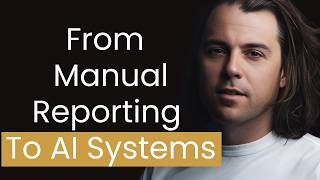
Brian McGowan, a former engineer and founder of Alpine, discusses how AI automates repetitive finance work like transaction classification and chart-of-accounts mapping. Using Claude API, his platform cuts monthly client work roughly in half while freeing CFOs to focus on strategic insight rather than data-churning.
Chapters
Models are never right, but sometimes they're useful. I see the CFO's role or an FP&A person's role as providing an analytical framework for the entire organization. It's not just for the CEO. Today our guest is Brian McGown, a rare CFO who can read a balance sheet and develop API integrations. After starting his career in engineering, he spent 15 years as a CFO. He founded Alpine to deliver more tech-driven fractional CFO services as well empower other CFOs. Increasingly AI-based world, things like business acumen and strategic expertise and experience are more and more important. In this increasingly automated AI world, there's going to be more and more of a premium on experience and expertise and the ability to have insight. If you're using an AI tool to build a financial model, like you need to be able to explain how the balance sheet relates to the P&L, relates to cash flow. Whether you're a fractional CFO or you're in-house, your real value is strategic partner. What does great FP&A look like?
How would you you define it. So welcome to another episode of FP&A Unlocked. Are you tired of being seen as just a spreadsheet person while others get a seat at the table? Well, then welcome to FP&A Unlocked, where finance meets strategy. I'm your host, Paul Barnhurst, the FP&A Guy. Each week we bring you conversations and practical advice from thought leaders, industry experts, and practitioners who are reshaping the role of FP&A in today's business world. Together, we'll uncover the strategies and experiences that separate good FP&A professionals from great ones, helping you elevate your career and drive strategic impact. Today's guest is Brian McGowan. Brian, welcome to the show.
Thanks, Paul. Good to see you.
Yeah, excited to see you. So we get a little bit of background about Brian and then we'll jump into things. Brian McGowan is the rare CFO who can read a balance sheet and build an API integration. After a decade running finance and tech, he founded Alpine in 2021 to solve a problem he'd lived. Great CFOs were drowning in manual work instead of doing strategic thinking. Finance might be in his blood. His grandfather was commissioner of the IRS. I don't know if I should congratulate him or feel sorry for him.
IRS is better days, I guess.
Yeah. Oh, you know, but his approach is decidedly modern with degrees in electrical engineering and an MBA from Cornell, plus 4 years at Intel. He combines financial rigor with technical chops. In the AI era, that means building platforms that handle the repetitive work so CFOs can focus on what matters. Love the background and welcome again to the show. Excited to get to chat with you.
Yeah, likewise.
So we start pretty much every episode with this question. I always love to see how different people answer it. From your view, what does great FP&A look like? How would you define it?
So I don't know who this quote is actually attributed to. I've seen it associated with different people, but there's a, there's a mantra that I like to live by, which is that models are never right, but sometimes they're useful. And it's something that I try to apply across the board, whether in technology or, or CFO work. It basically, what that means to me is I see the CFO's role or an FP&A person's role as providing an analytical framework for the entire organization. It's not just with CEO, it can be sales leaders, marketing leaders, operations, et cetera. And so if you are, if you can create a structure, if you can provide a framework that allows for, supports effective decision-making across the organization, I feel like you're doing your job.
Like that. So kind of providing that framework and support across the org. And you know, the quote, at least one I always think of, there's one that was by George Box, who was a physicist. He said, "All models are wrong, some are useful." That's probably some genesis of that. I've seen different versions of that float around, but that's the one that's always, I've always kind of like, I joke, it's like the same thing. All data is messy, some actually, you know, has value.
Yes. If you can align around the notion that you're not trying to predict the future, you're trying to imagine versions of the future, and is there a way to feed that back into contemporaneous decision-making? That, that's the job.
Yeah. We don't predict the future. You're not a soothsayer.
Not yet. I mean, there's all this news about Anthropic's new model. We'll see what that can do.
When does that drop?
Well, they're saying they're not gonna release it because it's too powerful and it's gonna hack into government systems. And so they're trying to put together this consortium of companies to figure out how to regulate this thing, which, how much of that is marketing hype? I don't, I don't really know.
Interesting. I only saw one link, an article about data security concerns with the new model. But either way, it's amazing how quick it's all moving. And that's what we're gonna talk quite a bit about today. So our audience knows we're gonna dive into AI and talk about some of the things that, Ryan's doing in that front. And I'd love to know, just kind of start off, what's the number one thing in your job you're using AI for today?
My job is a lot of different things. So it's, it's software development, continuing to kind of build and, and iterate platform. And that was my path into AI. It was kind of a, a natural first application for language models. And so I've been using various models and tools for software development for 18 months now, going back kind of the original Cursor release. So that side of the house a ton. And then over the last 6 to 9 months, I've started to embed integrations throughout platform that I use daily as a fractional CFO and that other CFOs use. And so have really tried to do it at ground level around a lot of different kind of finance operational functions.
Got it. So obviously you're using Cursor a lot on the development side for your software.
Not anymore. So like it started with Cursor. That was kind of really the first mass adoption tool on the development side. I started using Cloud Code, I don't know, maybe a year ago and it really took a step function at the end of last year. Really incredible what you can do with Cloud Code specifically. I haven't tried some of the other tools. That's kind of my primary driver day to day in terms of software development.
Yeah, I know 4.6 took a huge leap a few months back. It definitely feels like all we've heard now is Claude the last few months. Everywhere I turn is something about Claude.
Yeah. Yeah. It's amazing what Anthropic's been able to do just in the, in the last 6 months.
I've always liked Anthropic. It's always been one of the models I've used the most, but I can see the change over the last few months.
So, yep. So everything in my platform that necessitates an AI integration, whether it's analytics, transaction classification, driving actions within the platform, that's all the backend is an integration with Anthropic over their API. Sure.
No, I know a lot of people definitely use their, their API. So I'm curious, kind of stepping back before we get a little deeper in AI, you started your career in engineering before going back to school and getting an MBA and switching to finance. So what motivated the switch?
I was a Lego kid, math and science, and I started my career at Intel, which, you know, recent struggles notwithstanding, was a really fascinating company to be at in the early 2000s. I got really interested in their history. You know, if you read Andy Grove's biography, there's a couple other books written about Intel. You know, they were, they were obviously one of the original Silicon Valley companies and paragon of American innovation manufacturing. And you know, they made some really interesting strategic decisions in the '80s to get out of memory and focus on microprocessors. And the, the whole initial 8-bit Intel Inside campaign was one of the most brilliant campaigns of all time. I don't remember those. Super Bowl commercials with dancing in the bunny suits and everything.
I just remember seeing every computer slapped on Intel inside. I mean, when you're just a part inside something and you can get them to slap that on every single one somebody's buying, you've done something right.
Yeah. And so I got really interested in kind of the intersection of, of technology and strategy and decided that's kind of where I wanted to be. Not even necessarily finance, just how to position technology, how to grow technology businesses. So went back and did an MBA after working for Intel. Really some of my favorite classes in business school were accounting. Like you mentioned, it must be in my blood somewhere. And I ended up after business school working for a number of, I'm from the New England area. I was living in Boston, worked for a number of companies that come outta MIT and Harvard. And it was sort of organic. It was kind of, well, you know, you're the only person in the company with an MBA. You can, you can run the books too and, and, you know, build the forecast for our investors and our board and everything. And so it's, That's kind of how I, how I fell into it.
So you, you basically got voluntold because you had an MBA and made sense for you to do the finance stuff.
Uh, and fortunately I ended up enjoying it quite a bit and have spent the last, you know, 15 years now as a CFO in various capacities.
Well, that's a good thing you enjoyed it, obviously, and you can see how it's, uh, shaped your career. But it's funny sometimes how we get into things. You know, I've told this before, I got into FP&A basically because I gave me a promotion. Oh, you're going to pay me more? It's a finance role. Okay, I'll take it. You have a technical degree. I know you like to code. So how has coding helped you kind of in your finance career? So not so much in the software platform, but just as a CFO, either being able to code from a thinking standpoint or in work, how, how have you seen that help you?
Yeah, so even go back to those days with kind of startups back in Boston, you know, I've, I've always been building automations and API integrations and trying to make my job a little bit easier. And that, that's evolved a lot over the last 10, like APIs were a relatively new thing 10 years ago. And, you know, various of the accounting platforms have supported them to differing degrees. Say what you want about Intuit, like they've really supported the kind of open ecosystem. And so I, I've always kind of played around the edges and specific workflows to make my job easier, getting data in and out more efficiently. Building custom integrations, things of that nature. And, but honestly, like the, one of the biggest advantages has been understanding the backends of accounting systems, um, and other kinds of business systems. As you may or may not know, accounting was invented in the 13th century in Italy. And it's, it's what was kind of laid out at that time that has driven the sort of object models and schema behind QuickBooks and NetSuite and Intact. And so they're not really conventional. Softwares in a lot of ways and understanding kind of how they operate under the hood has really helped me as a CFO.
Got it. Yeah, I can see we're definitely helping with getting at data and understanding how the data flows and things like that. 'Cause yeah, like you said, double entry bookkeeping and recording that is not typically how you would see most databases record transactions, most software.
Correct. And it's really exciting what's happening now with some of the new entrants in that space and how they're reconceiving of how an accounting system can and should be structured.
No, we're seeing a ton of activity. I have, I've been tracking some of it and I think I'm up to the tools, I have about a list of about 10 newer tools, kind of ERPs, accounting software, and between all of them they've raised, I don't know, $750, $800 million. It's a big opportunity. You don't need a huge amount of market share when you, ERPs and accounting software are not cheap.
Oh yeah, when the addressable market is the entire world, it's, yeah, there's, it's a big sample.
Every business in the world needs it. And it's a core software. Not a bad business if you can get a, a little percent. So I know a few years ago you started Alpine, you know, you're, you're a fractional CFO platform. So what really motivated you to start the platform? Was it kind of to meet your own needs? You felt like the market needed it, or kind of how did that journey happen?
It was very explicitly to solve my own problem.
That's kind of what I figured.
I mean, not how it works, even initially with a notion that kind of offer it to other CFOs. It was really just, I was practicing and practicing fractional CFO. You know, you've got somewhere between 6 and 12 clients at any given time, and inevitably they're all on some combination of back office systems. You know, we're principally interested in the ledger, but CFOs, we want to know what's going on in the CRM and in Stripe and they got an AP system and what have you. And so, uh, in, in part just kind of out of my own laziness, like I I just got tired of— I do not want to log in and export another trial balance and paste it into a model and make sure that things are working. I just— it's not how I want to be spending my time. And so, you know, at the time, most of these systems had APIs, some better than others, like I mentioned. And so I kind of started there, kind of started, uh, just building integrations, building kind of uniform data warehouse across my client portfolio, and then just sort of different widgets and applications on top of that. And You know, it's eventually turned into this, you can think of it as kind of an operating system for fractional CFOs and really accelerated in the last few months with my ability to develop quicker, all of these new interesting integrations and plugins and everything. And, but you know, when it comes down to it, like I, I still like being a fractional CFO, working with entrepreneurs and, and business owners and understanding different business models. And I'm, I'm always going to be the first customer.
I love that. And, you know, some of the best products are ones that we develop to solve our own needs, and then it's just scaled from there. We understand the pain point and we see the benefit, otherwise you wouldn't have built it.
I've been involved with projects where you're trying to solve something where you're not the user and you're just sitting in a room with a laptop and a whiteboard and trying to imagine what people's issues are, and it's, it's a lot less fun.
It's fun when you're solving your own problems. I imagine the first time you had the APIs all working, you get the report, okay, that was just all automated. Now all I got to do is this, this, and this instead of, you know, 20 steps, it now becomes 5 or whatever.
Yeah, to be quite honest, like, you know, if you're— whether you're a fractional CFO, you're in-house, you know, your, your real value is strategic partner. Do you have an intuitive sense of business and finance and accounting? And the more time you're spending moving data around and manipulating it, the less you're spending in those other areas.
Well, that's just it. When I was a director of FP&A, I worked at a company that You know, we had systems that were very dated. One of my director of FP&A roles, and I spent a ton of time cleaning up data because it was the only way I could get to decent analysis. And it was just, it was painful. I mean, I spent a ton of time, you know, in Power Query more than I'd ever want to admit. We made a ton of progress, but it's like, I'd much rather be figuring out this commission plan or the strategy for this customer or talking with the salesperson and, you know, seeing how we can grow this. Instead, I'm trying to figure out why we have 10 different versions of the same product. With different names that, you know, don't match. I think every FP&A professional has been there, and that's some of the exciting stuff of how AI can help with that. You still got to have a decent data foundation, but it can help you with cleaning and matching data. You know, I'd love a little bit of your AI journey. I'd love to kind of talk a little bit about that and more how you're using it in your fractional CFO, you know, business versus the coding side. I know you've done a lot of coding and may ask question there, but would love a little bit of kind of your journey, how you started and what you're doing today.
Yeah, there's, there's a lot there, quite a bit there. You know, I mentioned starting on the technology side, but you know, with, with respect to finance and accounting, my approach has been pretty organic. You know, it's as of middle of last year, I had a pretty good sense of kind of what AI could and couldn't do and limitations and hallucinations and all of that just from having experience on the development side. I'm like, all right, so how do we, how do I start integrating this both as a, as a user platform in a scalable way? And, you know, I, things like analyze this data and give me trend, like that's table stakes. Like I, I was much more interested in what are processes, procedures, workflows, things like that where I'm spending time that's not really creating value for me or my client. And I'll give you an example. So. When I get involved with a client, one of the first things I do is get the chart of accounts organized. And as I'm sure you know, like you'll, you'll come into a business, maybe they started with the default chart of accounts in QuickBooks and there's been kind of chart creep over the years and it's not well organized. And maybe they use account numbers, maybe they use other kinds of dimensions, but it's, it's never the same. And it's always a challenge. If you're going to stand up a budget, you want a degree of an organization, right? And the traditional way of doing this is you have a lookup table in your model workbook where you say, I'm going to group, you know, these 6 accounts into a T&E line. I'm going to set a budget group rather than I don't want to set a budget against airfare and cars and hotels and, and what, maybe you do. In most cases, I don't, or professional services or, you know, there's some convention to this. And so that's always the first thing that I do. And like, this is something that AI is quite good at is it can, it can parse natural language. It can figure out kind of groupings and organizations and things like that. So like one of the first AI tools I built into my application was a kind of a chart of accounts mapping and organizer. And as with most AI tools, it's not perfect, but it'll get you 90% of the way there. Like, all right, it did a pretty good job. I've got these kind of nominal logical account groupings. I'm going to tweak a few things. And now I have this foundation for the company. I can go and do my reporting, do my model, everything else, and I'm not having to manage the VLOOKUP table and inevitably somebody adds an account and didn't tell me and oh crap, I've got to fix that. So I've tried to find kind of like point areas in this sort of natural progression of a CFO engagement where I can start hooking things in.
So really, as I'm hearing, it's kind of the workflows. And the first one is obviously every company You go in, the chart of accounts is typically a mess. It's how can I organize that in a consistent way that makes it easier for customer after customer? Take the 90% of, take the common, you know, the standard chart of accounts from QuickBooks and say, okay, all that's going to get mapped here. Here's some other ones I see a lot, map them here, use AI to make assumptions for that, that it can't map, and then you review the final table.
And, and that's a process that maybe used to take me 3 or 4 hours and I only needed to do it once. But, you know, if you're onboarding a new client once a month or, or whatever it might be, now I can do that in 3 or 4 minutes and then I'm on to the next task.
What are some of the other kind of workflow things? You mentioned that one. Where'd you go from there on the, on the workflow front? What are the other areas you're looking at for AI?
One of the things I've been working on lately and, and hoping to have in production next week is So, you know, the genesis of Alpine was wrangling data, right? Is you have all of these different systems, it's not conformed. And so like my initial task of platform was like, let's get everything kind of structured and uniform such that I can feed it into whatever kind of workflows that I want to build. The other challenge I have as a fractional CFO is like you're managing all of these relationships. You know, maybe you have 6 or 8 or 10 clients and different personalities, different needs, different schedules, different requirements. Um, typically you're managing communications across a lot of different platforms— email, Slack, text, you know, in-person meetings, virtual meetings, meeting notes. You have all these channels of interaction with your client. And, you know, the problem with using sort of AI point solutions is they don't have all of that context. Like, you can feed a snapshot of a P&L into Claude XL, it'll build a really nice looking model for you, but it's, it's not getting the data updates, but it's not, it's also not really getting all of that client context. So I built this whole kind of client context engine where it's, it's pulling in your emails with a client. It's pulling in meeting notes. If you're managing tasks, all that kind of stuff. So in addition to, hey. The model can see a real-time P&L, it can also see your interactions with the clients. So, hey, I'm like working on the model. I, as a human, forget a lot of stuff. I forgot I had this conversation with the CEO 2 months ago and he mentioned this was happening and, you know, that's going to have an impact on cash flow or revenue or whatever else. That's really like the next layer for me is, and, and for my users is, okay, how do I, how do I pull really everything about that relationship into whatever the current issue or conversation is.
That's incredibly handy, right? The more context you can give AI, one, the more time it saves you, but even more important than the time is the better the answer you get.
Yes. That's what it's all about. And, and like, I mean, this is one of the limitations of, of language models is it will very confidently tell you something you don't have a great sense of. Confidence level. And so the more that you can layer onto it and give it structure and give it background, the better the result's going to be.
You know, one of my favorite— when you talk about confidently with the answers— is we had an LLM that, you know, try to get the balance sheet to balance. It wouldn't balance. We were testing in Excel, an Excel agent. We asked it to keep looking. It's like, I found this, and it got a little closer, got a little closer. And it was like, I don't know, $1.3 million off on a billion dollars. And it said, That's only a 0.3% variance. That's not how a balance sheet works. Do you know what the word balance means?
So I have a whole kind of system prompt layer that's very finance and accounting specific. And you literally have to include things like a balance sheet must balance, like provide the source whenever you're quoting a number.
Yeah, we were talking, well, a good example of that is on a webinar yesterday and Glenn Hopper shared, right? If you ask an LLM to build an amortization table. Not use code, but just build it.
It'll build it.
And at first glance, it will make sense. The problem is it's just building it off probabilities. It's not doing any math. It's taking, it's been trained on 50 amortization tables, so it's just trying to make 'em look right. As you start looking at the numbers, you're like, oh wait, that one doesn't make sense. And every single one after, this whole thing's a mess. How do you manage that kind of the, with AI? I know you're doing a lot of coding, so I imagine anything that needs to be deterministic, are you writing kind of your own Python code? You're having the AI generate some code, because I know there's a balance, right? There's certain things probabilistic is fine, like that chart of accounts, make an assumption, you know, your monthly commentary, whatever. There's lots of areas where I don't care what word they used, I get the context. If the math is wrong, you got a problem.
I learned in the pre-AI world as a CFO that I'll say like, I don't need help from AI to make a balance sheet that doesn't balance. Like I can, I can mess that on my own quite easily. And so, you know, I really got into the habit of building parity checks into, into these workflows, into this output. And so very simple example is you've got a 3-statement model, you know, is the cash flow statement footing to the balance sheet, right? And by building cash flow statement and. does the change in cash match the actual difference on the balance sheet? And so, you know, in, in spreadsheet world, the way to do that is you just, you just put in a little, you put in a line with a check and some conditional formatting and it turns red if it doesn't, right? And so, I mean, I still do this. Like I, I have my agents building a model, but it's still putting the parity checks visually into the workbook or into the dashboard. So when I'm looking at it, I know when something's wrong. But there's something analogous going on in the backend as well. If it's building a balance sheet, there is a literal parity check in the code to make sure things like balance sheets balance, or we have the right valence on, based on account type, debit, credit, et cetera. So CFOs and accountants have these analogs kind of on the technical side that I think are really important to develop trust in these systems.
Yeah, I know Claude released Skillz, some of those things. How has that helped now that it's, you know, much easier to give instructions, to give detailed, even to code some of it, references, all those things? How has that helped in the work you're doing with AI?
Maybe this is a politically incorrect analogy, but it's kind of like, I have 3 kids, it can be like working with toddlers. You gotta create boundaries and rules and kids feel safer when they have boundaries and rules like that. And I think the AI does as well. And so whether it's on the development side or the finance side, and anytime it messes something up, which it still does, I mean, it's gotten a lot better, but it still does. You can, you can create a rule, you can put that into the context. And on the finance side, that's kind of like the tuning element of this is as me as a user and as other users are getting into it, you know, weird stuff is going to happen. Like, it still does hallucinate, it still does. You're just incrementing these, these kind of guardrails around the agent and the model.
Yeah, I mean, I think it's a good way to look at it. I like the toddler analogy. We'll call it politically incorrect, but that's okay, we'll go with it. What's the thing you're most proud of that you've kind of automated a workflow with AI? Thing you're most proud of that you've done so far?
Oh man, I had a project just a few weeks ago. You brought up amortization, so It's a different kind of amortization, but it was a real estate investment firm that was managing, I don't know, 50 or 60 properties. And they needed to issue K-1s, which is a couple weeks ago. And nothing about what was coming out of their accounting was correct. And so, and very tight timeline. So like, I think I got engaged, you know, business tax is due March 15th. Investors wanted K-1s a week ahead of that. Like, I think I got engaged on March 1st. Something like that. We need P&Ls by property because we don't know how to do the allocations. Like we're, we're basically at square one here. And so what I was able to do is first get connected to their accounting system. So all of a sudden I have all of the data in my warehouse. It's structured. So I know what's actually in there. I know it's wrong. You know, like I'm looking at the sort of principal interest on these properties. It's like, huh, why is interest the same every month? Or why are they booking everything to principal for the property? Or, you know, all the mortgages were standard amortization, but the accounting was just completely wrong. And then I could feed in the PDFs of all of the mortgage agreements. And like you were saying, it generated kind of the principal and interest tables so that I could match that against what was actually in the accounting system, generate all the pro forma P&Ls, and then feed the adjustments back into the ledger. Obviously that was highly bespoke kind of project, but it involved, you know, some heavy duty finance, a lot of custom code. You know, like I could spin up custom interfaces so they could see these kind of bridge P&Ls by property. And it's pretty cool. I felt pretty good about that engagement.
How much time do you think you saved, you know, being able to use AI, being able to code, say you had to do that all yourself? Would you have hit your deadline?
Oh, no way. In a pre-AI world, that would've taken, without kind of my existing foundation of a platform, that would've taken multiple people weeks to months to do.
Pretty amazing. And that's the thing sometimes people don't realize. Yes, AI gets things wrong. That doesn't mean it still can't be really helpful in finance. And that's kind of part of the why I want to bring, you know, people like you and others that are seeing those huge time savings on is to help people realize that there is big opportunity here. How much would your analysis work you do now, how much would you say runs through Claude?
Yeah, I don't, I don't think of it as kind of a, as a replacement. I, yeah, I think of it as a support. You know, my philosophy is in a, in an increasingly AI-based world, things like business acumen and strategic expertise and experience are, are, are more and more important. And so if I can build systems and, and workflows that support my ability to be more focused on that, then— when you say analysis, it can mean what, what was the top line?
That's a very loose— let's say this. How much time do you think in a month on, on average you're now saving with AI?
I mean, again, for me it's two sides of the house. Like, on the development side.
Let's, let's talk the fractional, let's ignore the software for a minute. I know you're getting huge benefit on the coding side, but let's just talk kind of that FP&A, fractional CFO, the finance work.
I think in terms of fractional CFOs and like the amount of time, so if you're spending 30 hours a month on a given client previously, with AI and data normalization and integrations and all of that, I'm probably cutting half of that. You know, so not having to do model updates and produce the analysis and particularly kind of in the initial part of an engagement when you're doing all of that setup. So, and that's not just AI, that's also just the whole platform, the whole substrate.
Sure. There, there's other automations behind that and technology. Sometimes I think we think everything's AI and sometimes good Power Query or a good API or just a good rule-based process is all you need.
Across all those things, it's maybe half of the time that I would formally spend on a given client.
So material. I mean, it's, it's, it's a substantial savings, obviously. So let's talk, I mean, obviously, you know, coding, you do a lot of coding, you have your own platform. Let's take a minute and talk a little bit about the average FP&A person or kind of average finance. Assume someone who has never coded before, you know, they might, they know Excel, they might know a little SQL or Power Query, but they don't consider themselves a coder at all. What advice would you give them as they're kind of trying to figure out this whole AI journey?
I would say the first thing to kind of develop some intuition around is the limitations and that it had personality. And this doesn't even necessarily have to be finance specific. You know, like I use AI in a ton of different ways. And so, you know, like pick one of the models, get a $20 a month subscription and just start engaging with it. In, I mean, it could be everyday sorts of aspects of your life and your work. And what you'll start to get a sense of is like, what, what do people mean by context? Right? So if you had a long running conversation with ChatGPT or Claude or Gemini, what you'll notice is it like, it's gotten better, but it still degrades over time. And so you'll start to develop kind of an intuition of how and why that happens and what the implication is. And then also other kinds of. Limitations, whether it's hallucinations or kind of like you were saying with composing emails or jumping in or, or, or just filling in gaps that you didn't really want it to fill in. And so you'll start to develop this kind of intuition before you can get into kind of finance workflows and things like that. And then beyond that, like if you want to start getting more specific, I know you've, you've posted a lot about Claude for Excel and Milly models and, and things like that. Like get practical. Right? Like that, that's always a solution for me is, is pick a problem in your client or if you're in, in-house somewhere, like a thing that you're trying to solve and make sure it's not mission critical. And I just find it's, it's always more realistic if I'm working with real data with a real problem in the real world. And so, you know, pick, pick one of these tools and try to solve one thing. And then there's, there's a very meta element to it. Like AI can be very helpful. In helping you understand how to use AI.
Yes, I definitely have noticed that. I know what you're talking about on the whole.
And, you know, like, not to be an Anthropic homer, but like, they're— they have really good documentation. There's so many tutorials and stuff out there. I just think Anthropic has done such a great job of supporting the community and the ecosystem.
Yeah, and you're totally fine. You could— you feel free to be a homer. I think right now everybody sees Anthropic in the lead. If they're using other tools, I mean, at least the majority, right? They've done a really good job the last few months. I'm like you, I've jumped more and more on Anthropic. Even 2 years ago, I liked them best mostly for writing, for, uh, writing posts, summarizing my podcasts. And now I like them for a lot more of everything.
Yeah. And, and, and I'd add like, it's, you know, even if you don't have a background in software development, like it's, it can still be incredibly helpful to have basic intuition understanding around, around data structures. So, and you can do this with the chat AI, like you can just talk to it about SQL and like, if you can get access to a database somewhere and just start getting your head around how data is structured, how tables relate to each other, basic object schema, I think that's really critical kind of foundational knowledge. Like you don't need to have, you don't need to be able to write code. But having this sort of just data facility can be really helpful.
So I'll speak to that a little bit because I 100% agree with you. I did my Master of Science in Information Management, you know, so there were some data table type classes in there and I did report writing for about a year and a half out of grad school before I moved into a more traditional FP&A role. So a lot of SQL and reporting out of, you know, complex Excel files and things, but learning that data and okay, when do I write code, when do I build a table to do something? Has helped incredibly, whether it's Excel formulas, whether it's using Power Query, whether it's just being able to think about how the data needs to connect to get good input out of it. And so I'm, I'm 100% with you. I, I found that, uh, kind of that base invaluable for me. And I don't consider myself a coder. Yes, I know some SQL. Yes, I know some Power Query, but I don't write Python. I've, you know, never been one of those people that wants to code. I find the data side invaluable. So I'm a, I'm a big believer in that.
I agree with you there.
What do you think is kind of limiting most people from getting more out of AI? What do you think that, you know, kind of the big problem we need to overcome in finance is?
Yeah, so I'd say one element of it is, is kind of the limitations that we've talked about. You know, there are, there are still hallucinations, there are limitations in how it gets applied. But something that I felt that, that might resonate with people, it's just kind of a generalized anxiety around it, especially the last 9 months. It feels like things have changed so quickly. And in the Linux world, even just the last 2 to 3 months, I mean, it's just, I just feel like it's exploded in 2026 so far. And I, I totally understand how like that can be overwhelming and disheartening in a way of like, shit, am I, am I keeping up? Am I? Is this coming from my job? You know, like I, I feel that on a daily basis. And so I can understand kind of the anxiety and the resistance. And what I'd say is all of these people who are, you know, posting hype on LinkedIn or I've created a one-person $100 million company, like none of these people are any smarter than you are, you know, and, and a lot of what they're saying probably is, it's not. Grounded in reality. And so don't be intimidated by a lot of what you see on social media or other types of media. Like a lot of that is not really the, the, the real world. And, um, with finance professionals in, in particular, like in this increasingly automated AI world, there's gonna be more and more of a premium on experience and expertise and You know, the ability to have insight and if you can figure out tools and processes to deal with everything else and you can focus on that part of what you offer, you know, that's that. I don't think that's going to go away anytime soon.
Great advice. I particularly like the whole reminder. Look, social media is curated. Take it, all of it with a grain of salt. Some more than others for sure. But yeah, the, the LinkedIn stuff, use my prompts and save half of the million dollars or whatever.
Yeah, it's like I replaced my entire finance team with, you know, Claude and Zapier. All right.
So I want to move on. We have an FP&A section where I ask some pretty standard questions. Then we have a little bit of a get to know you, some fun questions, and then we'll wrap up here. So if I asked you, what's the number one technical skill that FP&A professionals should master? What would you say?
I'm going to sound so old saying this, but like fundamentals in accounting. Honestly, how do financial statements relate to each other? Debits and credit, you know, like just the logic, the substrate behind everything that we do. And maybe you would consider that technical, I don't know, but, and anything you do on top of that is going to ultimately relate to that. And so if, and if you're using an AI tool to build a financial model, like you need to be able to explain how balance sheet relates to the P&L, relates to the cash flow.
Appreciate that answer. What about softer human skill?
I think the best thing you can do, whether you're a fractional CFO or you're just, you know, you're doing FP&A at a larger company, can, can you inhabit the mindset of the, the entrepreneur and the business owner or whoever the principals of the business are? You know, what, what are they trying to optimize for? What are they worried about? What are they thinking about? What do they want visibility into? How do they like to consume information? You know, some people Some people like visuals, some people like numbers. To what extent can you just sort of empathize with who, who your customer is, whether it's a client or a boss or a colleague or anything like that, you know? And if you can use that to inform your processes, your work outputs, uh, I think that's what's going to make you successful.
Which Excel mistake that you've made over your career has taught you the most?
I have definitely put balance sheets in front of boards that don't balance. If you're looking at something that a financial professional's put together and you see that, you can't trust anything else that person puts in front of you, right? Then you're checking everything. And so for me, it's been, and not that it ever got to a state of perfection on this, but it's what are the simple checks and balances and quality controls that I can embed into my processes that I'm not degrading that trust.
And I'm curious, when that balance sheet doesn't balance, how often was it a formula mistake versus not understanding financials?
For me, it was typically somebody added an account that I didn't catch. It is like, it's typically process stuff and, and having multiple cooks in the kitchen. That's why that was one of the first features I built. It was like, I need a better handle on the chart of accounts and I need to know Oh, like something changes or something's off.
All right, so we're gonna move into the get to know you section. I have a few questions I just want to ask. Uh, what's your favorite hobby or passion? What are you doing in your free time?
Yeah, so I'm, I'm a musician. Um, so this is a small part of the collection. So I'm typically playing in a band at any given time. And then I live down the road from you in Utah. And so I really enjoy all the kind of recreation that, uh, is offered here. Backcountry skiing, there's no snow this year, mountain biking, you know, those kinds of things.
Yeah, I was going to say skiing this year was lousy if you were a skier. All right. I'm curious to see how you answer this one. If you had to listen to one song and only one song for the rest of your life, what are you picking and why?
My favorite artist is a guy named Jason Isbell. He's been around for 10 or 15 years, kind of in like the Americana, somewhat folky genre. He's won a few Grammys. He's got a ton of incredible albums and songs. He wrote one when he was He might have been a teenager when he wrote this. It's called Decoration Day, and it's like, it's like a fuckner album. I mean, it's just like legacy of the Civil War and family dynamics in the South, and it's just a banger of a song. And he played it. I saw him in Salt Lake here last year at a front row, and he played it. It was awesome. Nice.
So that's going to be your song. Appreciate that one. What's your favorite food?
I really like Mexican food. Been to Mexico a bunch of times. First on the list.
So what's your favorite Mexican restaurant for those listening in Utah or might visit here?
Red Iguana or Red Iguana 2. I mean, you really can't go wrong and they're, they're around the corner from each other.
That's mine as well. So we just put a plug in for Red Iguana. If you're listening, come sponsor an episode. All right. What's one business belief you hold that you think most people would disagree with?
There's probably less disagreement on this than there used to be. Just because of, of how things are evolving. But I just, I think there's, there's so many paths to building a business, you know. Like, it's, it's very easy if you're living in LinkedIn or Twitter or in certain parts of the country to think that, like, the only way to build a business is to go raise venture capital money and kind of get on this treadmill. And, and, like, that's such a small slice of the world, right? And so I really support the notion of just different, different paths to being successful as an entrepreneur. And, you know, I've, I've tried to live this, like I'm, I'm not VC funded, you know, I still have a services offering that is, is kind of keep me going. And I, I think there's just so many ways to be creative and to inject your personality into building business.
I'm not sure how controversial that is now, but definitely you do, a lot of people have the idea you have to go that VC or raise capital route or you can't build. And I've never bought into that. Do I think it makes sense in certain situations? Sure. But for the vast majority of businesses, there's not, you don't need it to be successful, I think. All right. So as we wrap up here, kind of the last question I want to ask, what advice would you offer to our audience to be a better business partner?
I just rewatched Ted Lasso. Have you ever watched that show?
I'm familiar with it, but I haven't watched it. I know what, I know a little bit of the premise of the show.
It's one of my favorite shows. Uh, and I think it's a great study in kind of leadership and teamwork, and it's also really funny and and heartwarming. Uh, but there's, there's a key scene, I think it's in the first season where, he's trying to impart a message, which is, which is be curious. He meant it in terms of just interpersonal relationships and not being judgmental with people or what might be going on in their lives. But I think that applies here, whether it's adopting new tools, maybe you're initially intimidated by, whether it's getting to know a new client or a new colleague or a new, I think the most important thing when you're, you're trying to drive the direction or you're having a role in driving the direction of the business is is to be curious as to what am I not thinking about? What am I avoiding? What am I, what questions should I be asking? You know, how can I be as much of a sponge as possible so that I can do my job the highest level?
That's an answer I get a lot. I love that answer cuz I think it's critical to FP&A. You gotta understand what's going on around you and being genuinely curious is the best way to do that. All right. Last thing, if somebody wants to get in touch with you or maybe learn more about, you know, Alpine or the things you're doing, how should they do that?
Got a website. It's, it's getalpine.com. So Alpine with a Y. You can email me brian@getalpine.com. Brian with a Y, Alpine with a Y. I'm trying to have a presence on LinkedIn. I'm not, I'm not nearly where you are, Paul, but you can find me on there. I'll mention one quick other thing. I just launched another business with my brother. In the mental health and recovery world. It's kind of a space that's, that's pretty important to us. My brother's an executive at a recovery center in, in Connecticut, and so we built a payments patient management platform for those kinds of residential facilities. That solves a real problem in that world. Uh, and that, that business is called Care Ledger. So if you're interested in that space as well, I'll be having some more content around that. Cool.
Well, congratulations on starting that. I mean, that's a very important area to have good resources for. We need more of that. All right. Well, thank you for joining me today, Brian. I appreciate you taking some time and getting to chat and enjoy hearing a little bit more of, you know, how you're thinking about AI, how you're incorporating it in the work you're doing.
Yeah, absolutely. Thanks very much, Paul.
That's it for today's episode of FP&A Unlocked. If you enjoy FP&A Unlocked, please take a moment to leave a 5-star rating and review. It's the best way to support the FP&A Guy and help more FP&A professionals discover the show. Remember, you can earn CPE credit for this episode by visiting earmarkcpe.com, downloading the app, and completing the quiz. If you need continuing education credits for the FPAC certification, complete the quiz and reach out to me directly. Thanks for listening. I'm Paul Barnhurst, the FP&A Guy, and I'll see you next time.
More from Paul




Trust and Leadership Lessons for FP&A From 100+ Top Leaders with CFO Jon Laudie






