How Data Storytelling Can Transform Your FP&A Strategy with Brent Dykes
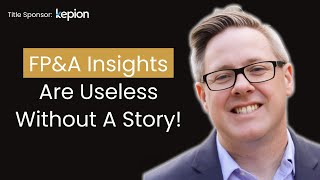
Brent Dykes, a data storytelling specialist, talks with FP&A expert Paul Barnhurst about why numbers alone don't move decisions. They explore how narrative and visuals turn data into insights that stakeholders actually care about, and why intuition and data work better together than either one alone.
Aspect of great FP&A is just bridging that gap between financial data and business strategy.
How would you define kind of data storytelling as you feel like the term's often been hijacked?
For me, I look at it as there's three core elements. Obviously a data story is going to be based on a foundation of data. The other two elements, obviously the narrative is critical and then often we use visuals to help tell that story.
When you think of FP&A, what do you think is the number one technical skill they need to have?
I think financial modeling.
What about that? Softer human skills, communication skills. If you could offer kind of one final piece of advice for finance to get better.
Yeah, I think try and develop your.
This week's title sponsor of FBA Tomorrow is kpop. And now a message from our sponsor.
Planning in Excel works until it doesn't when manual error prone back and forth planning in spreadsheets prevents you from scaling across products, customers or complex scenarios. Consider Kepon. Recognized by Gartner for financial planning and trusted by industries such as manufacturing, CPG and not for profit. Capillon offers the flexibility and control to scale, automate and plan your way. Learn more@capillon.com that's Kepian with a K K-E P I O N.com hello everyone.
Welcome to FP&A tomorrow where we delve into the world of financial planning and analysis, examining its current state and future prospects. I'm your host Paul Barnhurst, AKA the FPA guy, and I'll be guiding you through the evolving landscape of fpa. Today we are fortunate enough to be joined with by a data analytics expert, somebody I'm thrilled to have on the show, Brett Dykes. Welcome to the show.
Hey, thanks Paul. Great to be here.
Yeah, really excited to have you. So a little bit about Brent Dykes. He hails from Lehigh, Utah. These days we both live in Utah. He taught data visualization at the University of Utah a couple years ago, about three years ago, he started his own business called Analytics Hero. He's the author of the fabulous book, highly recommend it called Effective Data Storytelling. And he earned his MBA from my alma mater, Brigham Young University. Did I cover it?
Yeah, that's a good, that's a good overview of my last few years.
All right, great. So this is a question we ask everybody. And so I'm curious to get your take. Not being a finance or FPA person, when you think of budgeting, forecasting, you know, think of fpa. What does great FP and A look like for you? Working in the business.
Well, I think one thing is clarity. Right. So when you're making, when you're trying to leverage the financial data to make better decisions, you want to see clear insights that are going to really tell you something and help you shape that strategy or make the right decision. Another thought that comes to mind is going beyond just what happened to why it happened and what should be done about it, or what's going to happen next. You know, a lot of the times when I look at reporting, sometimes it's just, you know, rear view mirror stuff and really no guidance on how to move forward. And then I think another thing is getting engagement and buy in from your stakeholders. Right. And so there's, there's different ways obviously that I focus on in that area to get engagement from the audience. And then just. I think another good aspect of great FP&A is is just bridging that gap between financial data and in business strategy.
I, I love your answer there, particularly that last part of bridging that gap between business strategy and finance. If we just bring the numbers, nobody really wants to deal with finance. It's like, how can you bring it together to the business? And as you talk about clarity to the insights and the, you know, what's next, don't give me just what's in the rearview mirror, but help me look out and figure out how we best proceed forward. I think that's becoming more and more important as we look around this world that seems to constantly be changing one crisis after another, it feels like.
Right, yeah, absolutely.
I mean, I think ever since COVID it feels like it's just been accelerating and hasn't slowed down.
Yeah, no, I think one, one of the key things is, you know, as we have all this data, as we're collecting all this data, how do we leverage it to really make better and smarter decisions? And I think when we went through that phase of COVID I think a lot more people are looking towards the data and saying, how can this help us manage situations like this, you know, maybe even situations like this where we've never experienced a global pandemic. And so, yeah, like we don't have, can't really go back to the Spanish flu of the 1900s. I think we can learn some lessons there. But in terms of today's world, just leveraging that data to make better and smarter decisions, you know, across the board is going to be really helpful. And I think more and more people are attuned to that. Sure.
Yeah. It's not like we have many people alive that remember the Spanish flu or the quality of data like we have today to analyze and gain insights from what happened.
Right?
Yeah, yeah, sure, we can learn and sure, there's some studies, but it's just different. All right, so I'm curious. You graduated in marketing, but, you know, for what I could see in your career, it looks like you pretty quickly gravitated toward the analytics side, the date and data storytelling. What particularly interested you in that area within marketing?
Yeah, so I, I started my career more on the marketing analytics side. I worked as a marketer and then got my MBA and then got into analytics consulting. And so I was working with a lot of marketing people. And as a consultant, we would either work with clients who are working with a lot of data, or we ourselves are providing, you know, serving as an analyst for them. And there was a real issue around communicating with data effectively. And so I found like, wow, you know, this is a real skill that is deficient in my space. And people struggle to take complex data and communicate it in a meaningful way and really extract the insights and communicate those clearly. And so I saw it as an opportunity to really. It aligned with my passions. You know, I've always been interested in data and technology, and so it was really something right up an alley that spoke to me.
I'm curious, why do you think it is, especially your field? But just in general, I've seen as well as finance people struggle so much to communicate what the data is telling them. Right. It's often a real challenge, whether it's the vigils, the narrative, the story, the whole part. Why do we struggle with that so much, do you think?
Well, I think there's inherently this complexity already with the data. Right. And so just us trying to grasp it and find those signals within the noise is really hard. So that's the first thing. And then the second thing is then we get excited when we find something. We turn around and want to share that eagerly with other people. But then we forget to realize that these people haven't spent as much time in the data. They may not know all the metrics and data like we do, and then that. That messaging kind of doesn't resonate with them as. As we thought it would. And. And sometimes we forget the curse of knowledge that we have that we've spent time analyzing this data, looking at the numbers backwards and forwards, and then we go to share it, and we don't realize, wait a second, these people aren't as up to speed on these metrics. They may not have all the context that we have in our heads, and we fail on that front because we don't communicate our information clearly and effectively to them.
Yeah. One of the best lessons I learned in my career was around that. I spent six months on a project, obviously knew the data extremely well, had got everybody aligned. The head of sales, the account manager, my cfo, the general manager on this new commission plan, and figured it would pretty much be a slam dunk to take it to the cfo and didn't really spend much time on the presentation.
Right.
And I got in there, we got about 10 minutes into the meeting, and he looked at us and he said something to the effect of, this guy, this idea is stupid. Why would we do this? And I was kind of, like, dumbfounded. Like, I wasn't expecting that answer at all. And he called in the general manager into the meeting, who wasn't part of it, and he talked to him for about five minutes, explained things, and he signed off on it and, like, ended the meeting. And I was kind of like, okay, what just happened? And I asked my boss. I'm like, okay, obviously that didn't go well. I did something wrong there. You know, walk me through kind of what happened. He goes, your analysis was brilliant, but your presentation lacked. And it's kind of like what you were talking about. I done all the analysis and knew it, but I didn't bring them along for the story.
Right.
He got lost. And it was just a real reminder of how important that last part of analytics is. How sometimes we can get so focused on the analysis and wanting share it that we don't think about how to share it.
Right. Yeah. That's that critical last mile. I call it the last mile of the analytics marathon. I wrote an article on Forbes about the analytics marathon, and. And that's really where data storytelling lives. In that last mile where we're trying to. We've. We've done. We've done a lot of the hard work, you know, just getting the right data, finding an insight that. That's huge. And then we stumble on that last mile where we. Where it turns around to communicating it effectively to other people. And I wonder how many good insights have just been wasted. And, you know, probably the analyst or the finance person is wondering what went wrong. You know, I guess that wasn't a good insight when it. In actuality, maybe it could have been a really great insights just failed on that communication part. And then that's where it went sideways.
Is that why you wrote effective data storytelling is to kind of help people with that last Mile. Was that the thinking behind the book or what was the impetus for writing the book?
Yeah, I mean, there are some triggers. Yeah, there's some triggers. I, I mean, obviously I. Working in consulting, working with my clients and fellow consultants, I can see there's a lot of struggle in how they're communicating information and data. So that was the first thing. Then I also, as I started to get interested in data storytelling, I saw that there was a heavy focus on data visualization and almost making that the, the main focus of data storytelling. I'm like, no, no, no, no. There's. There's the narrative part that is probably equally, or maybe even more important, like how do we form a narrative around our findings? And then I also saw a lot of dashboard vendors that were misrepresenting what data storytelling was and telling people that, that data storytelling, you know, their tools were providing data story storytelling. And really all they were providing was just maybe a fancier way of reporting. And for me, I saw that as a danger, that data storytelling was becoming just another way, another throwaway buzzword. And I was. And I saw real potential in data storytelling. And so I felt so passionate about it that it encouraged me to write another book. This one has been a passion project since I started it.
And so I'm curious, how would you define kind of data storytelling is. You feel like the term's often been hijacked. Everybody has a different opinion. We all hear the term storytelling. So when you're talking data storytelling, what does that mean?
Well, for me, I look at it as, there's three core elements. Obviously, a data story is going to be based on a foundation of data. So we've done some analysis, we've found some facts, we've got some data. And that's different than a story with data where. I recently talked about that in a LinkedIn post. Right. I drew that distinction between a data story, which is the foundation, it comes from an analysis. Its foundation is in data, as opposed to a story with data where you may have a narrative that you've already come up with that you're trying to maybe tell people about a new product launch or some new features. And so then you're sprinkling in some data to kind of as evidence to reinforce why those new features are important or should be important to customers or prospects. So those are two different things. Now, the other two elements is obviously that the narrative is critical. With a data story, we're using the narrative structure, we're using different narrative elements to really engage the audience, make our content memorable. And persuasive. And then often we use visuals to help tell that story. Because when people see a chart or data not in a table, it's often going to resonate more with them because they're going to be able to see the anomalies, they're going to see the patterns or the trends in those numbers and then speak to them at a much deeper level. So it's really, it's a combination of all three of those things, a foundation and then the visuals to then complement that and help to tell that story.
Totally makes sense. And I know exactly what you're talking about. I've seen your little circle that shows the three and talk about how you bring them together and it makes change. I, I share that a lot with people because I think it summarizes it really well. And from my opinion, I'd love to get your thoughts. I think, you know, finance people in general do a really good job with data right now. They probably got better with visual. Sometimes we tend to be too numbers driven, as we like to call it, our wall of numbers. But in my experience, we've really struggled with the narrative. I'm going to guess in general, that's probably where most people struggle with the story.
Yeah, it's true. When I've, whenever I've done a survey of like people on a podcast or on a webinar or whatever, it's usually about 2/3 of the people, they say, of those three, the data, the narrative, and the visuals, 2/3 of them will say narrative. So it's definitely. I feel like it's the area because, yeah, I often, I'm doing workshops with, with analysts and data science professionals, finance professionals. A lot of the audiences that I work with are very data savvy. Data is not the challenge. It's. It's really like, okay, I've got something meaningful to share. How do I fashion it into a story that's going to really resonate with people? And, and so that narrative piece is definitely a core focus of what, you know, I think people come to me for help with.
Okay, and what's involved in the narrative? Is it the trying to bring emotion into it? You know, to get people to relate? The trying to find the right balance between facts and story, or. Why do you think we struggle so much with the narrative?
Yeah, I think one of the things is that I, I think we've been trained for a long time to summarize our information.
Right.
One of, one of the things that's been communicated to us is that we need to Take all of this complex information and summarize it down. And a summarization of a story is not a story anymore. It's. It's a summary. And so I think sometimes we overlook the power of narrative, which is that narrative architecture arc, right? So with a summary, we give all the important information up front, but with limited context. Right. And limited depth. And. And I think what we give up in that case, the sacrifice we're making is really that engagement of the audience. So when we follow that story arc, we're. We're basically introducing the status quo. We're kind of laying the setting. We then have some kind of anomaly that we've detected in the data. Or maybe, you know, we saw sales shoot up or sales fall down or something happened. And maybe that might have even come from our audience where they asked, why did our sales go up or down? And so they've already given us our hook of our data story. Right. And then from there, we then launch into the details of like, okay, well, here's what's going on. This is connected to this, and this is connected to this, which then means this, which is our aha moment. I call that the main inside of the data story. So we've kind of taken the audience through. We've identified a problem. We then unravel it kind of like an onion. We start peeling back the layers of the onion to then reveal an insight, and we're taking them through almost like a guide. In the past, I've used the metaphor of a tour guide where, you know, we're taking people on an archaeological dig site, and we are the experts, we're the archaeologists. We've been working there. We know all the artifacts and everything. And so we have some visitors who are coming through this dig site, and they're like, what's. What's happened here? What did you uncover? And rather than showing them all of the minutiae and unimportant details, we're just giving them the highlights of what's really important. And then hopefully then attaching that to action. I think that's another area. I see that on the analytics side, I don't know if it's the same on the finance side, but often I'll see a lot of analysts. They will go through that storytelling. They'll. They'll do their big reveal, and then they're kind of just throw it on the audience's laps and not do any digging into. Okay, so what does that mean? What. What are the options that we have? What do you recommend? What action should we take. And so that's something that I encourage my book as well. We're not just stopping at hey, introducing the insight and then here you go and, and good luck. No part of the analysis process and the recommendation, the value that we add is analytics and finance professionals is actually saying okay, so we found something meaningful here. Here's the three things you can do with it. You know, one I'm going to recommend, here's an aggressive approach that we can take to addressing this problem. Here's kind of a conservative approach, and then here's something in the middle and, and then the audience, you know, the stakeholders can then make a decision based on that. If we just stop at the insight and say here's a problem, yeah, you could start a conversation, I guess, but how much will be accomplished? Whereas if you come in with recommendations and options, that's so much more rich. It's a richer experience for the audience. It's, it's, you're adding more value. I, I think that's a real important thing that we need to, you know, that we should be doing. And that's what a data story, a well crafted data story will help you to do planning.
Excel works great until it doesn't. When you need to scale across products, customers or complex scenarios and the manual error prone back and forth spreadsheet planning becomes insurmountable. Consider Kepion, recognized by Gartner's Magic quadrant for financial planning software. Kepion brings the flexibility you love in spreadsheets to a streamlined scalable platform that grows with you trusted by global orgs across industries and corporations including manufacturing, CPG and non profit and more. With Kepion you can plan your way from high level forecasts to granular detail. It's more than just software. It's planning on your terms, freeing you for analysis and insights to move your business forward. Discover what you can achieve with Kepion. Visit kepionwithak.com that's K E P I O N K a k dot com.
Yeah, I, I like how you said hey, if you just come in, you know, with just the problem, you're, you're missing that opportunity. People have plenty of problems. You're just throwing something else in their lap to solve versus those recommendations. You know, I also like to call it the what, the so what and the now what. You probably heard that, you know. Yeah before a lot of times finance and I say way too often we're good at the what. We maybe cover a little bit of that. So what. But we forget about that. Now what? And that opportunity to give a recommendation. Because I think that like you said, the call to action, whatever you want to call it, don't end with just, hey, here's the insight. Why is that insight important? Because we can all find insights. It's what you do with them that makes them important.
Absolutely.
So I'm curious, I want to step back just a little bit for a minute. I know you've worked with a lot of customers to help create a data driven culture. And to be able to have good data storytelling in an organization, you got to have good data. You got to have that culture that helps drive decisions to be made by data. So what do you recommend to people when they're maybe in an org and most decisions are made by gut and you're working in finance, you're like, this data is telling me this and you want to help. What does it take for an organization to really start to be data driven so they can get to data storytelling?
Well, I can, I see data storytelling as a means to developing a data culture. So it's not like where you have to have all of the data culture figured out. So one of the things. So what is culture culture is the way that we do things around here, right? That's a simple phrase. And I like to think of the data culture is we do things around here with data. So when we're making decisions, when we're taking action, when we're, you know, whatever projects we're working on, it's always a priority. We're always thinking of, where's the data? What does the data say? How can we get data? How are we going to measure this? I mean, it's a constant focus. And so when you, when it comes to data storytelling, you, you know, I think a lot of companies or organizations are somewhere in their journey. Some are just starting, some are really mature and have developed, you know, a data culture. For a lot of those companies in the middle, though, I see data storytelling as a means for getting more people interested in data, hearing data, you know, in meetings and different things. Because basically I use the analogy of when we want our kids to learn how to read or appreciate books, what do we do? We read to them, we read the books and we tell them stories. And then over time they start to develop their own curiosity and then they want to what, read books on their own and pick what stories they read. I think it's the same process with data storytelling. We get some of those people in your organization that are data savvy, probably within your finance, within your analytics teams and then have them start to craft what I call our deep dives. Going in, taking a look at a customer segment, looking at a market, looking at a category of products that you're selling or whatever it is. And do do a deeper dive, tell a story, share an insight. And then those people that are in your organization that are maybe more gut driven, you know, they're going to learn something each time they hear one of these stories. Maybe they're not the ones making the decision on this, but they're learning about the customers, they're learning about market segments, they're learning about trends, different things in the, in the industry that may be going on as you share these stories. And then they become over time a little bit more deliterate. And then they start to ask questions about the data and then they start to get curious themselves. And then that's kind of how I see this process working. And how data storytelling can help you to develop a data culture makes a lot of sense.
I mean, if you want any type of culture, you start by modeling it by doing that behavior. And if you want a data driven culture, one of the keys is data storytelling. What better way than tell stories with data and show people that it has value? I'm curious. You talked about it a fair amount in the book. I know there's some different stories. I think you gave the example of hand washing and some others. How do you get somebody to come on board? It seems like often if you just throw the facts at them and just throw out the data, that's not enough. Why is that? Why do you think it's so important that you're crafting a story around that versus letting, as we like to say, the facts speak for themselves?
Yeah, I mean, often we say this, we get excited. We can see with clarity that the data is valuable. I think there's some things we have to think about from the audience perspective. We need to make sure that we're aligned with what's important to them. You know, if we're doing an analysis for a department and we're trying to help them make some decisions, do we clearly understand what their goals are? Do we understand what, what objectives, what are they trying to achieve this year, this quarter? And make sure that when we're sharing data stories, when we're sharing insights, that they're relevant and meaningful to those audience. I mean, that's one of the first mistakes we can make. We can get really excited about maybe something we found in the data, but we're sharing it with the wrong Audience, they don't, they're not focused on that. That's not one of their key priorities. They're looking over here and we're looking over there and that's a first disconnect. And then in terms of just getting people. I think a lot of the things that financial professionals are looking for is engagement and buy in. You know, when you're sharing information, you want to get that engagement and buy in. Well, a table of numbers, you know, 100 rows and maybe 30 columns is not the tool to get engagement. It's, it's, it's the recipe to put.
People to sleep is to get a glassy eyed look.
Yeah, exactly. And, and we want to make sure that we get buy in. And so often the interesting thing, when I started studying the psychology behind data storytelling, now this is something that I felt like nobody really looked at it. When I, when I saw the other authors who touched on this topic, I got really curious because I wanted to understand why, why do we, why do our brains react differently to narrative as opposed to facts? And there's a number of different factors involved, but one of the key things is that when we tell a story, we activate cortisol in the brain of our audience. And if you know what cortisol is, it's a stress hormone. And what does that do? It gets their attention. They're, they're listening, they're trying to follow where the story's going. So that's released into their bloodstream. The other thing that's released when, when they did their studies and, and found that oxytocin is being released into the bloodstream when they're hearing the story. Now what is oxytocin? Well, it's, it's, it's a kind of like an empathy hormone where we, we, your audience is now much more amenable to acting on what you're sharing because you've put it in a story format. You're, you're touching those emotions, you're triggering that release of that hor of those two hormones which are beneficial to getting that engagement and that buy in and getting their awareness and their attention. I think those are all things that finance professionals, analytics, data professionals, we all want people to pay attention to us and to, we want our messages to resonate. And how do we get, that is when we, when we tell a story and start to take advantage of those things that are happening in people's brains that, that help us to communicate better and get our messages across more, more strongly than we would with just dumping a bunch of data on their lap.
I like that you studied that. I. In your book. I've been reading about that. The psychology section that you have and some of the different studies. I know you talk about Daniel Kinnaman, the Think Fast and Slow and a number of other examples. And I just. I just remember reading that. The cortisol and the other. And I think often we forget about that. There's a psychological reason behind this too. It's not just that, oh, hey, tell a story. Because sometimes I think people think we need to tell a story. Isn't that for my little kids? You know, I put them to sleep and I read them a story. But we as humans, we want to create stories out of things. You talk about that in the book. Right. Isn't it kind of our human nature when we see something, we want to make a story out of it?
Absolutely. So I, you know, from Daniel Kahneman, if you've read the book, Thinking Fast and Slow, he talks about system one and System two.
Yep.
System one is our intuition. Right. It's our unconscious mind processing information very quickly. And then system two is our analytical mind or our conscious analytical mind. Now, System one does a lot of pre processing of information for us. And what is it doing? It's basically trying to make sense of the world around us. And it establishes narratives to basically say, okay, well, Paul's a pretty smart guy, so, blah, blah, blah. And so then this is gonna, you know, and, and so I'm gonna make. I'm gonna craft this whole story around Paul being this smart guy that does xyz.
I like it. Keep going.
Yeah, yeah, keep going. Yeah. Stroke of the ego here. But no, like, that's a narrative that forms in our brain. Now when we're telling a data story, we might come with a contrarian position, and then we need to form a note. We're not just dropping data. You know, actually, Paul may not be as. As bright as we know. I'm not going there. But. But no, if we have. If we have counter evidence, it's not enough to just drop that on somebody's lap and say, there you go. This disproves your current narrative that you're operating on. No, we actually have to package that in a new narrative because we need to replace the old narrative with a new one. We're not just, you know, there's a great quote that I heard and now I'm forgetting the name of who said it, but basically they said you can't. You can't replace a story with a fact. You know, you basically have to. Basically, you have to change. You have to add. You have to bring them a new story to replace the old story. And so that's, you know, when we're communicating things, it's really important that we package them as stories because that's how the brain is trying to make sense, you know. And so when you're prepackaging something in a narrative, the brain, you know, probably unconsciously is going, oh, this is great. Thank you. Thank you for putting all that hard work together so I can just absorb the whole thing.
Thank you. Well said. And as you were saying that, I couldn't help but think in your book, you tell a story how early in your career, I think you might have been doing an internship or very early on where you worked on a project, found some insight, where you recommended they make a pretty big change in the company, and you were kind of ignored, for lack of a better word. The manager kind of like, oh, that's nice, go sit in your corner type of thing. Can you tell that story and why it went wrong? Maybe that from your book?
Yeah, I shared that in the first chapter of the book because for me, this has been a journey to kind of to find storytelling. Because I probably earlier in my career, I probably didn't believe in the power of story. I felt like story was like, oh, that's just, you know, that's just twisting the numbers and, you know, it's bias and all that stuff. And it's not. It's hokey. It's. It's, you know, it's emotional stuff. It's not important. But over time, I've shifted quite a bit. I've really softened my perspective on that, and I really see value in a lot of that. So anyways, going back to that story, when I was an MBA student, I was one of multiple MBA students, and we were all trying to make an impression to kind of land a job. And sure, being somebody who was an international student studying in the US During a recession, it was hard to get job offers. And so I was. I had a lot riding on this. And. And so anyways, we were preparing to present to our SVP of E Commerce, who is a very interesting character because he came from a military background. He was a special force, a former special forces helicopter pilot. He went to a prestigious business school after he got out of the military and was a very intimidating character to present to. Yeah. Anyway, so as I was preparing my midpoint presentations. This is just a midpoint presentation to show how our project was doing or going where he could give us feedback. I had stumbled across some feedback on our shipping policy. So this is an e. Commerce Department. One of our pillars was our shipping policy that we felt it was really important to our customers. It differentiated us in the marketplace. And so as I was reviewing customer feedback on the survey, I realized a lot of them didn't really value the shipping policy as much as we thought they did. And so I was. I was debating whether I should include this in my presentation, because technically, it wasn't really part of my project. It was kind of a side discovery that I had found. But being the good corporate citizen and maybe eager to impress and show how diligent I was, I decided, you know what? I'm going to include that data point in my presentation. So fast forward a couple of weeks later. I'm in the boardroom, he's in the middle. There's other managers and directors around the table, and I get to the slide with that data point, and it didn't have the result. It didn't. Didn't have the impact I thought it would be. He looked at it one moment, for a moment, and then he said, bullshit. And then I was like, oh, my gosh, I have just tanked my oper. What have I done here? And I was a little bit frustrated. I. I wasn't expecting that reaction. I. I thought he might say, oh, Brad, that's really interesting. You know, what other data do you have on that? Or maybe you could take a closer look at, come back and next week and follow up with some more discovery. You know, I was expecting a positive reaction, not a negative one. And luckily, I had a mentor who jumped in, gave me some cover fire, and I got out of there relatively unscathed. But it taught me a valuable lesson in terms of communication. I. If I had really, truly valued that, that potential insight, I. I should have told a story around it. I should have packaged it and communicated it much better than I did. Especially maybe I was very well, I was very naive and thinking that, hey, Brent's trying to shake, you know, he's just dropping a fact that he found based on some survey data and, and leaving it at that. That. That to me, was very foolhardy of me and taught me a very big lesson that I need to do a better job. And so I've tried to do that throughout the rest of my career.
FP and a guy here today. I want to Talk about the FPA guys, Ultimate FP and a course bundle. This bundle includes over 10 hours of content recorded by Ron Montero and myself. Many templates and great lessons to make you a better FPA professional. The content includes FP and a business partnering how to manage tough conversations, build world class relationships and hold the business accountable. Includes Modern Excel, which is a real game changer for the way you'll work in Excel. Excel Tables, the gateway to Modern Excel Power Query, a game changer for transforming your manual processes and loading data and then dynamic arrays. Next we cover modeling design principles. In this course we talk about the importance of designing models in a certain way and how important it is that you think about design. And last but not least, driving value through smart analysis, how you can conduct data analysis to be a better FP and a performance professional. Go ahead and sign up for this bundle@the fpnaguy.com that's the fpnd a n d a guy.com use the code podcast to save 25% get started learning today. Thank you for sharing. I really appreciate that. I've had similar experiences. One early in my career I thought the data would speak for itself and I didn't really have to influence people and everybody just looked at me like, go away. But it's a good idea. My boss likes it and never went anywhere. And I look back now and I'm like, you didn't even try to tell a story. You didn't even try to influence them. You just threw it at them and expected them to agree with you. You know, and so I think those lessons are often the most valuable where, you know, we come away with it didn't go as planned. If you're willing to look at it and say, how can I learn?
Right? Yeah, it's the curse of knowledge. I mean that, that comes up a lot. You know, we, if you work in data you work with, you're going to have the curse of knowledge. And it's hard for us to not recognize that and then communicate poorly and people are like, I'm not feeling it the same way you're feeling it. I don't understand it like you understand it. And then we don't have the impact that we, we feel we should have. You know, in many cases we should have that impact. It's just that it's that communication piece that's letting us down.
Yeah, my big challenge for a lot of my careers, I'd get too detailed. I want to share all the facts and it's like, nope, they don't care about all the detail. They need to know the numbers are right and what they should do and where they go and how it informs strategy not. Well, we look at these 36 and oh, I want to tell you about this one little thing that doesn't matter. I don't care about the work you did. That's why you did the work.
Right. And if you're ever worried that like I've seen some data professionals, financial professionals there, well, what if I get asked this question? What if they, what if they ask me this or that? That's why you have your appendix. You can have a hundred slides in your appendix. It doesn't matter as long as you can navigate to the appropriate slide easily. But do you need to walk them through all of the details and answer potential questions that, that maybe they're not even thinking of? And, and unfortunately by dragging in through the weeds of all the details of the data, you're now you're, you have a much higher percentage chance that you've, you're going to lose your audience because they're going to, you know, to what you were saying earlier, their eyes are going to gloss over, they're going to go to sleep, they're going to start checking their phone, they're going to start thinking about their next meeting and guess what? They're not thinking about what you're sharing.
Yeah, you, you've lost them, you've lost that opportunity to connect with them. And so I want to ask a question. We've talked a lot about data, but I was looking through your LinkedIn. You ran a poll last week that I thought was interesting, that I think relates here. You ran a poll about the role of human intuition and decision making. So kind of what prompted the poll? What role do you think it should play? Maybe talk a little bit about.
Yeah, I mean more and more I've run to the term data humanist or humanism and I think that's a very interesting, it probably reflects where I'm at right now in kind of my philosophy, where I still value the importance of. Obviously I'm a big advocate for data.
Sure.
The potential for automation in many cases and data driven decision making is really critical. But my viewpoint has softened because I also value the importance in the role that, that human beings play, especially with AI. You know, like we have AI now walking into our professions and then maybe people who are less knowledgeable saying, oh, I could probably automate a lot of what you're doing and looking at automation as this cure all magic wand that's going to just do everything. And I'm saying to back up, I see incredible potential from AI, sure. But, but I also see tremendous Value from human beings who have that contextual awareness, human judgment, empathy, creativity. These are all things that AI lacks today. And so I, I really view it as, in many cases, technology augmenting our ability to do our jobs better, eliminating the laborious, manual, crappy stuff that I hate to do in, in freeing me up so that I can focus more on the strategic stuff where I can add more value. And, and so I'm, you know, I think that data humanism kind of was the trigger and just how really we need both data and human people to come together. And is it intuition over data? No, I, I want to listen to the data and see what goes there. But then also, you know, sometimes how we, the approach we make and the decisions we make does need to rely more on intuition because in some cases we have unknown new challenges or situations that past data doesn't help us at all. I mean, it, it's irrelevant to this, this new normal that we're facing or this new challenge that we're running into. And, and so it can be that, you know, I really believe in the combination of both data and intuition coming together to really drive better decision making.
Yeah, I, I interviewed a behavioral economist, Mara Betterman I think was her name, spent over a couple years ago now, and she talked about how study after study shows human judgment. With data, you get the best outcome. Right. And if you're willing to look at the data, but the data doesn't often tell you the strategy you should take, at least the details you should do, it may point you in a clear direction.
Yeah.
That doesn't mean it lays out the steps for you.
Right, right.
I agree with you. It's that combination. I think sometimes we think AI is going to solve everything. It's like. No, it's not. At least I don't see it anytime soon.
No, no, I, I think as human beings we add value and, and it's in certain areas. I mean, there's obviously other areas where, you know, what AI could do it better than us and fewer errors and less bias potentially. You know, so there's, there's definitely roles for both sides, but I think it's, it's really about understanding where we add the most value and, and then emphasizing those. And, and I feel like data storytelling, I feel like that is an area where we, as human beings, we've been telling stories for thousands of years. We have these innate storytelling capabilities that I believe anybody can unlock with, with some practice and with some training to tell better, more powerful stories. And that's what's Robots, they don't need anything else other than the data. But if, but we're not presenting to robots, we're not presenting to machines or presenting to people who have, you know, meat computers in their heads. And, and those meat computers are a little bit more definitely they're powerful, but they, they respond to emotion in, in other things, not just the data.
Yeah, there's, there's emotion, there's a rational and irrational side and all of that in humans. And you need to tap into that. If someone in our audience is listening. I know a lot of finance people struggle with telling that story. What's the recommendation? Where, where should they start if they want to get better at data storytelling? What do you usually tell people? Is there a framework, is there an area? How do you encourage people to get better at this?
Yeah, well, the first thing I'm going to say is, go read my book, go buy my book, read my book. Follow me on LinkedIn. I will recommend it.
I'll give it a thumbs up.
Follow me on LinkedIn. I share a lot of blog posts, so that's another thing. But yeah, I think it's getting starting to read books. That's an easy step, first step. Then from there I offer training and different things so I can actually coach and train teams of professional, you know, I've done it for finance teams, I've done it for analytics teams, I've done it for even business teams, marketing teams, customer support, customer success management teams, and different things. Anybody who communicates with data can get better at this. And so then I think another thing is just looking at how other people are communicating information within your organization, outside of your organization, starting to notice when somebody does something that you like or in an effective manner that speaks to you and feels like, oh, wow, that was really powerful what they did there. And start to record or capture those examples and then use that for inspiration with your own work. But yeah, there's lots of different paths that you can take. And I think obviously there's free content and then there's paid content. But the first, the key thing is to just start and, and start thinking, how can I, how can I get better at this? How can I improve? And recognizing that maybe, you know, the communication aspect is, is going to be just as important as your ability to be analytical and find the insights. Because at the end of the day, you can be the Einstein of finding insights at your organization. But if you cannot communicate them effectively, there's a good chance many of them will be wasted because nobody understands what you're Communicating or they don't understand what your points are and they go nowhere.
Agreed. Thank you for sharing that. Speaking of, I know you have your book and a lot of training. You're working on your first digital course. How's it coming? When does it come out? Tell us about it.
Yeah, it's. It's been. It's been something I've been working on for several years now, and I'm kind of embarrassed to say that because it's been something I've picked up, started working on and then I get busy with client work and then I put it down and. And then I pick it up again when it gets slow and then I put it down again. And so now I'm. I'm like, okay, no, this has got to happen. So I was targeting getting it done in October, but now it's looking probably more like November. But it's definitely going to happen this year. I have to, you know, I have to get it out there. I've already started recording the lessons and so it's going to be just to give an overview of the course. It's going to be six sections. So first section is the introduction to data storytelling. Then then looking at the first two pillars, which are first three pillars, so data narrative and visuals. Then I have a section on delivery as well, because I think that's also another key part of it. And then the last, the sixth section is just going through some examples of actual data stories and talking about things like AI and how we can leverage that in our data storytelling. So I'm excited to launch that. There'll probably be about 60 lessons or modules within that. It's going to be a masterclass. And then later on I'm thinking of doing more of an essentials class, which will be kind of more narrow scope, maybe people who don't want to get into all the nitty gritty. And that'll be once I've got the masterclass out, then I'll focus on the essentials and get that out as well. So you'll have a couple of options there, depending on how deeply you want to get into this topic. And then you also have an upgrade path if you take the essentials and then you're like, oh, wow, this is. I want to learn more. Then you can, you can upgrade to the master class. So, yeah, I'm excited to get that out. It's long overdue and. And I know we've been talking about a lot, and ever since I started talking to you, I think I've mentioned my course and now it's. Now it's. Now it's happening.
So, yeah, we've definitely talked about it a few times, so I'm excited. We're looking forward to that coming out. So thank you for sharing a little bit about that and if there's anything like the book, I'd recommend it to people. People. So excited to see that come out. All right, I'm gonna ask a couple FPA questions because we like to get the thoughts of some people who aren't, you know, I know you train a lot of finance people, but haven't worked in a finance role. So when you think of fpa, what do you think is the number one technical skill they need to have?
I think financial modeling. I mean, as somebody outside of the finance world, I. I think that would be a core skill that I would go to finance people for, and if they didn't have it, that would be a problem.
Makes sense. And that's one that even in the profession gets often mentioned as the top excel. Financial modeling are usually the most common answers. What about that softer human skill, communication skills? I figured that you were going to go somewhere in that area. Call it a hunch, maybe storytelling or communication. All right. Are you currently using generative AI today?
I am, yeah. I'm mainly using it for brainstorming.
All right, and how, how's that helped you? How do you find it works?
Yeah, it's. I mean, as a independent person, you know, basically it's just me and my daughter working, and my daughter doesn't come from a data background. And so my ability to kind of bounce ideas off people is limited because I don't have, you know, somebody who's working with me that I can kind of do it. Sure. And so chat GPT becomes my way of bouncing ideas off. Off somebody, you know, with. I kind of, you know, find the professor. They're my ta, you know, this tool is my ta and I can kind of get somebody who kind of knows a little bit about what my world is and provide a perspective and, and help me on that front. So that's. That's helpful to me.
Thank you for sharing that. So now we get to ask you the opportunity to tell us what drives you crazy about us FP&A and finance people. People. I'm sure you've had to do more than one budget where you're like, this is driving me crazy.
I think one of the things is to focus on too much detail. I find getting, you know, data tables with, you know, like what I mentioned earlier, 100 rows and 30 columns. Yeah. Like overkill. There's just too much minutia here. And it can be, you know, kind of, you know, I can experience the glossing. Eyes over experience that many stakeholders probably experience as well.
Yeah, you'll get a laugh. I think you'll appreciate this because it. It tells a story and it kind of pokes in front. My training partner, Ron Montero, he worked for Craft, and they released a commercial when he worked there. And they show everybody getting super excited. You hear one turn the other. It's a budget meeting. Dab. It's. And they all get in there, and it's because they had bagels with cream cheese on them, and they're all just eating them. And you see the guy up at the front, and we can see here from our algorithm that. And everybody's just looking at them like, you know, what are you talking about with all these charts everywhere?
Right.
And, you know, we kind of show that as this isn't how we want to be perceived, but this is often how we are perceived, you know, and there's a reason for it. We've often earned that reputation with being too detailed. So thank you for sharing that. All right, we have a little get to know you section. This is just a couple minutes here. Can ask you a couple questions. What do you like to do in your free time? What's that hobby or passion that you enjoy?
A couple things. I. I love collecting comic books, and so that's. That's kind of a passion of mine. And then the other thing is ice hockey. Being a Canadian, I think, you know, now with Utah, we have our own hockey team finally.
So Utah Hockey Club.
Exciting. Yeah.
When you go into your first game.
The October 19th against Boston Bruins.
So this week. Nice.
Yeah.
And they're undefeated so far. Probably not when this comes out, but if they are, then they're really doing well.
Yeah, exactly.
All right. If you could recommend one book, obviously, beyond your own to our audience, what book would it be?
Yeah, there's a really good communication book out there that I read several years ago, and I still recommend it. It's Made to Stick by Chip and Dan Heath.
Okay. Made to Stick. I like it. All right, next one. If you can go anywhere in the world tomorrow, where are you traveling?
I would love to go back to Japan. I've been there several times for work, and every time I go there, I just love the scenery, the people, the culture. So if there's anybody who wants me to come to Japan to deliver a workshop or speak engagement sign me Up. I love Japan.
All right, that's on my bucket list. If you could have dinner with one person alive in the world today, who are you taking to dinner?
I would love to go to dinner with Adam Grant.
Why Adam?
Well, he's just. I feel like he's really. So. If you don't know him, he's an author. He's written several books, and he looks at human psychology and just how we make decisions. And I just think that he's. He's got some really good, good perspectives that he shares in his books and in his podcasts and his interviews that I've seen. I'd love to sit down with them and just have dinner with him. I think it'd be fascinating to kind.
Of be a lot of fun. I was lucky enough two years ago he was the keynote speaker at afp.
Okay.
Fabulous. Watching him present, I really enjoyed it. So, yeah, I agree. The Adam Grant would be a fun one to sit and talk with. Yeah, I know it's like. It's a little much, but. All right, if you could offer kind of one final piece of advice for finance to get better at data storytelling. What's that kind of last piece of advice you're going to leave us with?
Yeah, I think. I think try and develop your empathy for your audience. The more you understand your stakeholders, the better you can partner with them. And I think that's something that sometimes we take for granted or we overlook, that we don't really take the time to really understand what are their priorities, what are their needs, what are they focused on, and how can we help them to achieve their goals. And so I think having a little bit more audience, empathy can be really important, because especially I think sometimes analysts make this mistake. They kind of expect their audience to come up to their level, and. And that could be a mistake because they never get to their level. They get lost. And so with empathy, we reach down to their level. We understand, you know, what they understand and how they feel and what they're thinking about the numbers. And we try and make it relatable and approachable for them to come away with. So. So it can help them make better decisions and help them to learn more about the business. And. And I think that's. That's really critical.
Thank you for that. I appreciate it. That's one that's come up a lot lately is empathy, and I'm glad because I do think it is definitely an important skill. Last thing, if someone wants to learn more about you or get in touch with you, what's the best way for them to do that?
Yeah, probably the best way would be go to effectivedatastorytelling.com that's my book website. You can go there and learn more or you can also connect with me on LinkedIn. So I'm constantly publishing content, putting out content there. So that's a good way to, to stay abreast of what I'm, what I'm thinking and what I'm sharing.
Thanks. Appreciate that. And I can vouch for his content on LinkedIn. I know you have a lot of great content. I see it come across my feed all the time and I appreciate it. Have enjoyed your book and really appreciate you carving out some time and talking to us as a finance audience. Because data storytelling comes up so often for us in finance and I think it's something many people struggle with. So thanks for carving out an hour of your time to chat with us.
Thanks Paul. Thanks for the invitation. Glad Glad I could join.
Thank you. We'll look forward to your course here soon.
Thank you.
Thanks for listening to FPA tomorrow. If you enjoyed the show, please leave us a five star rating and a review on your podcast podcast platform of choice. This allows us to continue to bring you great guests from around the globe. As a reminder, you can earn CPE credit by going to earmark cpe.com downloading the app, taking a short quiz and getting your CPE certificate to earn continuing education credits for the FPAC certification. Take the quiz on Earmark and contact me, the show host post for further details.
More from Paul




Trust and Leadership Lessons for FP&A From 100+ Top Leaders with CFO Jon Laudie






